This is the content of the pop-over!

NCCT Surgical Technologist - Tech in Surgery (TS-C) Practice Tests & Test Prep by Exam Edge


NCCT Surgical Technologist  product image
(4.4)
Based on 20 Reviews

  • Real Exam Simulation: Timed questions and matching content build comfort for your NCCT Surgical Technologist - Tech in Surgery test day.
  • Instant, 24/7 Access: Web-based NCCT Surgical Technologist practice exams with no software needed.
  • Clear Explanations: Step-by-step answers and explanations for your NCCT exam to strengthen understanding.
  • Boosted Confidence: Reduces anxiety and improves test-taking skills to ace your NCCT Surgical Technologist (TS-C).

Featured on

NCCT Surgical Technologist Online Practice Test Bundles

BEST VALUE
20 practice tests

$174.00

$799.00

SAVE $625

Only $8.70 per test!

  • 100% Pass Guarantee
  • 20 online practice tests
  • 100 questions per test
  • Bonus: 100 Flash Cards + Study Guide
  • Instant access
  • Detailed Explanations
  • Practice tests never expire
  • Timed, untimed, or study guide mode
MOST POPULAR
10 practice tests

$99.50

$399.50

SAVE $300

Only $9.95 per test!

  • 10 online practice tests
  • 100 questions per test
  • Bonus: 100 Flash Cards + Study Guide
  • Instant access
  • Detailed Explanations
  • Practice tests never expire
  • Timed, untimed, or study guide mode
5 practice tests

$69.75

$199.75

SAVE $130

Only $13.95 per test!

  • 5 online practice tests
  • 100 questions per test
  • Bonus: 100 Flash Cards
  • Instant access
  • Detailed Explanations
  • Practice tests never expire
  • Timed, untimed, or study guide mode
1 practice test

$39.95

  • 1 online practice test
  • 100 questions per test
  • Instant access
  • Detailed Explanations
  • Practice tests never expire
  • Timed, untimed, or study guide mode
Quick Select
Tap to choose a bundle

** All Prices are in US Dollars (USD) **


NCCT Surgical Technologist - Tech in Surgery (TS-C) Resources

Jump to the section you need most.

Understanding the exact breakdown of the NCCT Surgical Technologist test will help you know what to expect and how to most effectively prepare. The NCCT Surgical Technologist has 170 multiple-choice questions . The exam will be broken down into the sections below:

NCCT Surgical Technologist Exam Blueprint
Domain Name
Surgical Care  
     Pre-Surgical Care and Preparation  
     Intra Operative Care  
     Post-Operative Care  
Additional Duties  
     Administrative and Personnel  
     Equipment Sterilization and Maintenance  

NCCT Surgical Technologist Study Tips by Domain

  • Maintain aseptic technique throughout the case—if sterility is in doubt, it’s contaminated and must be replaced (common trap: “it probably didn’t touch”).
  • Anticipate surgeon needs by following the procedure sequence and handing instruments correctly (priority rule: pass instruments firmly in the functional position and announce sharps when transferring).
  • Count sponges, sharps, and instruments per facility policy with the circulator (red flag: any change in staff or closure requires a count—never sign off on an incomplete count).
  • Protect patient safety with positioning, padding, and maintaining the sterile field over the patient (common trap: allowing unprepped skin, hair, or nonsterile equipment to contact the sterile drapes).
  • Manage specimens using correct identification, handling, and transport requirements (red flag: never place a specimen on the back table unlabeled or in the wrong medium—verify patient identifiers and source).
  • Ensure hemostasis and field clarity by preparing suction, sponges, and energy devices appropriately (contraindication cue: confirm grounding/return electrode placement and integrity before activation to prevent burns).
  • Verify patient identity with two identifiers and match consent to the exact procedure/site—red flag: missing signature, wrong laterality, or consent that doesn’t match the schedule.
  • Complete the pre-op “time-out” setup (documents, site marking, allergies, implants) before incision—common trap: assuming the mark is correct without confirming procedure and side.
  • Assess allergy and sensitivity risks early (latex, chlorhexidine, iodine, antibiotics)—contraindication cue: rash/hives history or prior anaphylaxis requires alternative prep/medication pathway.
  • Prepare skin and hair removal correctly: clip (do not shave) only if necessary and as close to surgery as possible—red flag: shaving causes microabrasions and increases SSI risk.
  • Set up sterile field and supplies using aseptic technique and verify sterility indicators—priority rule: if packaging is wet, torn, or unlabeled, treat as contaminated and replace.
  • Perform counts per facility policy (sponges, sharps, instruments) before the case begins—common trap: starting without a baseline count or failing to document/count items opened after the initial count.
  • Maintain the sterile field at all times; red flag: an unsterile touch or a tear/wet spot in a drape is an immediate contamination that requires correction (replace or re-drape) rather than “covering it up.”
  • Perform accurate surgical counts (sponges, sharps, instruments) with the circulator per facility policy; priority rule: any count discrepancy is treated as retained-item risk—stop closure progression and initiate search/radiographic protocol.
  • Anticipate the surgeon’s needs by staging instruments and supplies in sequence; common trap: opening implants/specialty items before confirmation (correct size/side/expiration) increases cost and breaks traceability.
  • Use proper tissue handling and exposure techniques while passing instruments safely; red flag: hand-to-hand passing of sharps without a neutral zone or clear verbal cue increases sharps injury risk.
  • Respond promptly to intraoperative breaks in asepsis or equipment failure; priority rule: communicate immediately to the circulator/surgeon and correct the source (e.g., replace contaminated instrument, secure a backup device) before proceeding.
  • Support patient safety during positioning and intraoperative monitoring tasks within scope; contraindication: never adjust patient position or remove safety straps without coordination—dislodged lines, pressure injuries, and falls are preventable intraoperative hazards.
  • Maintain sterility during wound closure and dressing application; red flag: any strike-through or wet/loose dressing requires immediate replacement under sterile technique.
  • Perform accurate final counts (sponges, sharps, instruments) and document per facility policy; common trap: assuming counts are correct when staff change occurs—initiate a relief count.
  • Specimen handling: verify patient identifiers, source, and required preservative (fresh vs formalin) before leaving the room; red flag: unlabeled or mismatched containers—stop and reconcile immediately.
  • Prepare the patient for transfer (lines secured, drains/pumps functioning, dressings assessed) and give a structured handoff; priority rule: airway/oxygenation and hemodynamic stability before transport.
  • Assist with postoperative pain/nausea management and safety positioning as directed; contraindication: do not apply heat to numb/insensate areas or near fresh bleeding sites due to burn/hemorrhage risk.
  • Room turnover: segregate biohazard waste, remove sharps safely, and begin decontamination per policy; common trap: breaking down the sterile field before specimens and counts are verified as complete.
  • Maintain environmental controls in the OR (positive pressure, limited traffic, doors closed) — red flag: propping doors open or frequent in-and-out breaks sterility and increases SSI risk.
  • Handle specimens per facility policy: correct container, preservative (e.g., formalin if ordered), and complete labeling at bedside — common trap: unlabeled or mismatched patient/site/time details triggers a chain-of-custody and ID error.
  • Assist with patient positioning and skin protection using padding/straps and grounding pad placement when applicable — priority rule: protect bony prominences and nerves (ulnar, peroneal, brachial plexus) to prevent avoidable injury.
  • Support counts and documentation by communicating additions (needles, blades, sponges, small items) immediately to the circulator — red flag: opening items off-record late in the case increases retained item risk.
  • Manage waste and sharps safely: segregate biohazard, dispose sharps without recapping, and replace overfilled containers — common trap: filling sharps past the line or hand-to-hand passing increases needlestick risk.
  • Assist with room turnover: terminal/ between-case cleaning, restocking, and checking suction/ESU/lighting function before the next patient — priority cue: don’t assume “it worked last case”; verify safety checks to avoid delays and intraoperative failures.
  • Verify patient identity with two identifiers and match consent, procedure, and laterality before transport; red flag: any discrepancy triggers a stop and immediate notification of the RN/surgeon.
  • Maintain accurate documentation for counts, specimens, implants, and equipment issues; common trap: charting “per protocol” without recording the actual action/time.
  • Follow chain of command and facility policy for scope-of-practice and delegation; priority rule: never perform tasks requiring licensure (e.g., medication administration) even if asked by a provider.
  • Apply HIPAA and minimum-necessary access in all communications; red flag: discussing cases in hallways/elevators or sharing identifiers on unsecured devices.
  • Use correct time-out and site-marking workflow per policy; common trap: proceeding when the surgeon is not actively engaged or when documentation is incomplete.
  • Report and document exposures, sharps injuries, breaks in sterile technique, and near-misses immediately; threshold: any blood/body-fluid splash to mucous membranes requires prompt follow-up and incident reporting.
  • Verify decontamination before prep/pack/sterilize; red flag: visible soil or dried bioburden means the item is not ready to enter the clean assembly area.
  • Select the correct cycle for the device (steam vs low-temp) and check manufacturer IFU; common trap: processing heat- or moisture-sensitive items in steam sterilization.
  • Package with proper load configuration and chemical indicators; priority rule: place an internal indicator in every package and do not overload sets or the sterilizer chamber.
  • Confirm sterilization parameters and documentation (time, temperature, pressure, BI/CI results); red flag: missing or failed indicator results requires quarantine and recall per facility policy.
  • Perform routine sterilizer monitoring and maintenance (Bowie-Dick/air removal, leak tests, preventive maintenance); common trap: skipping daily air-removal testing on pre-vac steam units.
  • Store sterile items to maintain sterility (event-related sterility) and inspect packaging integrity; red flag: wet packs, torn wraps, or broken seals are contaminated and must be reprocessed.


Built to Fit Into Your Busy Life

Everything you need to prepare with confidence—without wasting a minute.

Three Study Modes

Timed, No Time Limit, or Explanation mode.

Actionable Analytics

Heatmaps and scaled scores highlight weak areas.

High-Yield Rationales

Concise explanations emphasize key concepts.

Realistic Interface

Matches the feel of the actual exam environment.

Accessible by Design

Clean layout reduces cognitive load.

Anytime, Anywhere

Web-based access 24/7 on any device.
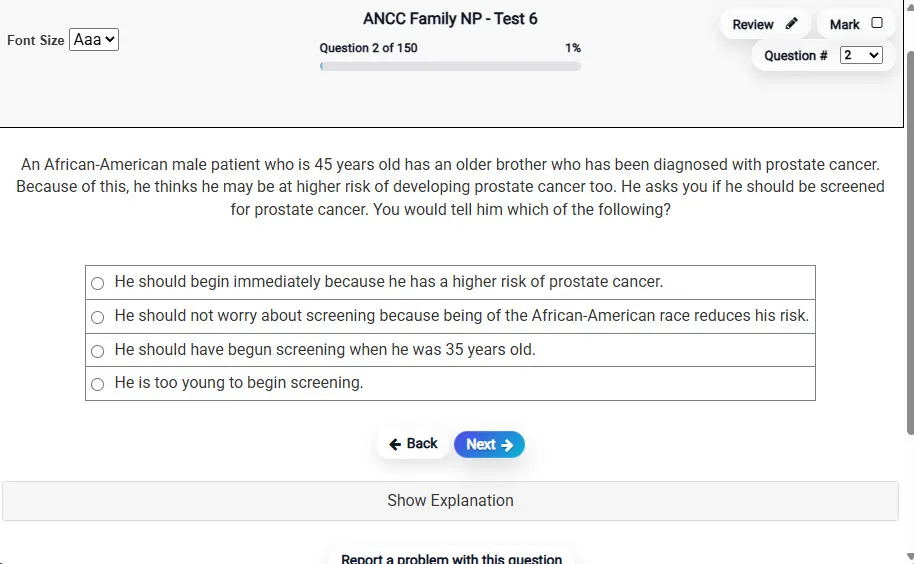
Answering a Question screen – Multiple-choice item view with navigation controls and progress tracker.
Answering a Question Multiple-choice item view with navigation controls and progress tracker.

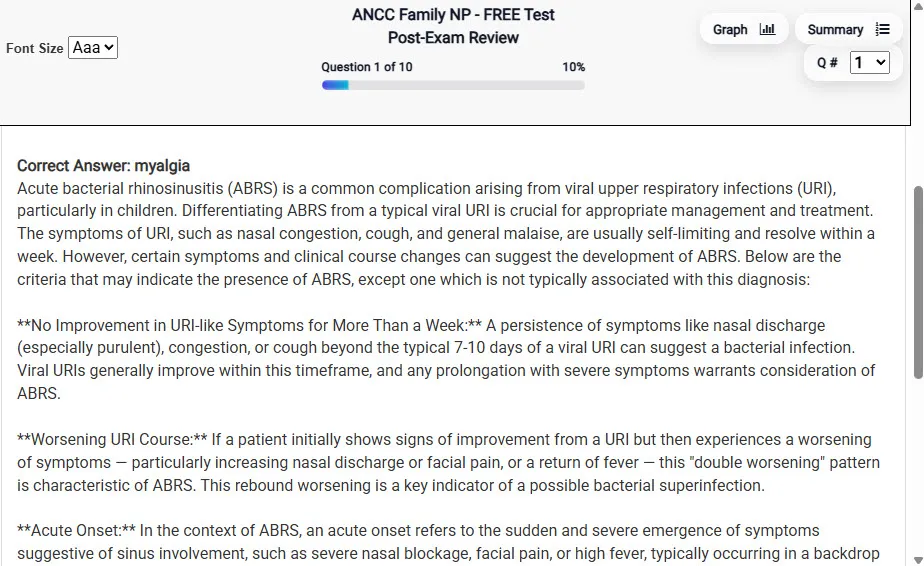
                           Detailed Explanation screen – 
                         Review mode showing chosen answer and rationale and references.
Detailed Explanation Review mode showing chosen answer and rationale and references.

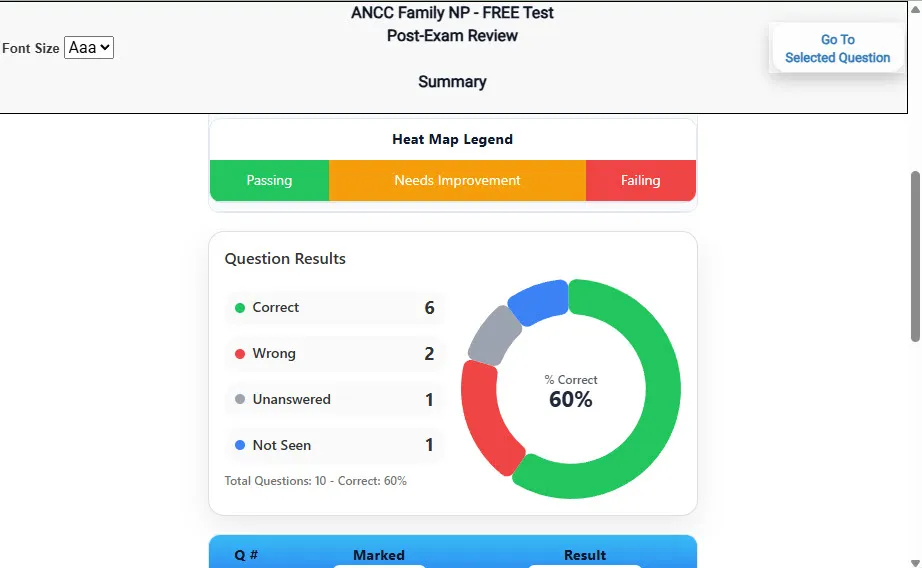
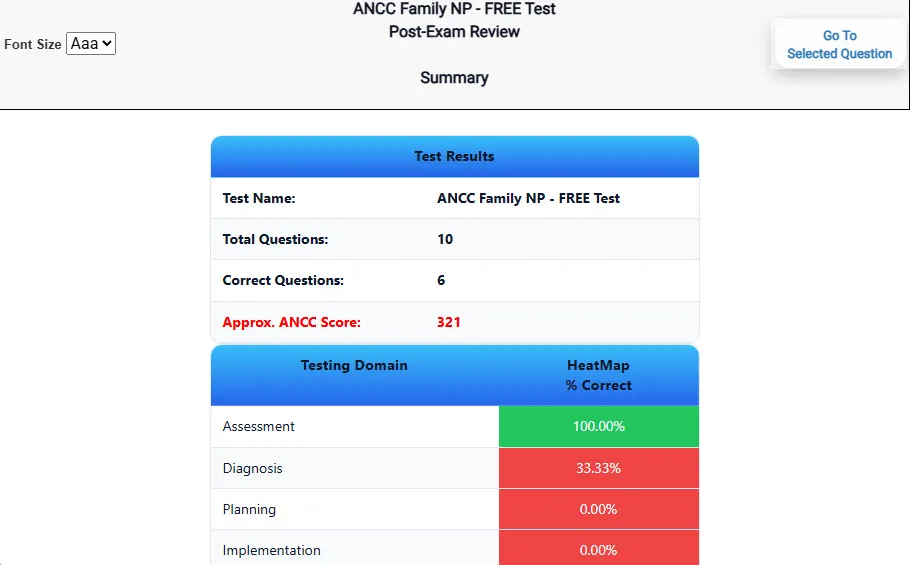
                           Review Summary 1 screen – 
                         Summary with counts for correct/wrong/unanswered and not seen items.
Review Summary 1 Summary with counts for correct/wrong/unanswered and not seen items.

                           Review Summary 2 screen – 
                         Advanced summary with category/domain breakdown and performance insights.
Review Summary 2 Advanced summary with category/domain breakdown and performance insights.

What Each Screen Shows

Answer Question Screen

  • Clean multiple-choice interface with progress bar.
  • Mark for review feature.
  • Matches real test pacing.

Detailed Explanation

  • Correct answer plus rationale.
  • Key concepts and guidelines highlighted.
  • Move between questions to fill knowledge gaps.

Review Summary 1

  • Overall results with total questions and scaled score.
  • Domain heatmap shows strengths and weaknesses.
  • Quick visual feedback on study priorities.

Review Summary 2

  • Chart of correct, wrong, unanswered, not seen.
  • Color-coded results for easy review.
  • Links back to missed items.

Top 10 Reasons to Use Exam Edge for your NCCT Surgical Technologist Exam Prep

  1. Focused on the NCCT Surgical Technologist Exam

    Our practice tests are built specifically for the NCCT Surgical Technologist - Tech in Surgery exam — every question mirrors the real topics, format, and difficulty so you're studying exactly what matters.

  2. Real Exam Simulation

    We match the per-question time limits and pressure of the actual NCCT exam, so test day feels familiar and stress-free.

  3. 20 Full Practice Tests & 2,000 Unique Questions

    You'll have more than enough material to master every NCCT Surgical Technologist - Tech in Surgery concept — no repeats, no fluff.

  4. Lower Cost Than a Retake

    Ordering 5 practice exams costs less than retaking the NCCT Surgical Technologist exam after a failure. One low fee could save you both time and money.

  5. Flexible Testing

    Need to step away mid-exam? Pick up right where you left off — with your remaining time intact.

  6. Instant Scoring & Feedback

    See your raw score and an estimated NCCT Surgical Technologist score immediately after finishing each practice test.

  7. Detailed Explanations for Every Question

    Review correct and incorrect answers with clear, step-by-step explanations so you truly understand each topic.

  8. Trusted & Accredited

    We're fully accredited by the Better Business Bureau and uphold the highest standards of trust and transparency.

  9. Web-Based & Always Available

    No software to install. Access your NCCT Surgical Technologist - Tech in Surgery practice exams 24/7 from any computer or mobile device.

  10. Expert Support When You Need It

    Need extra help? Our specialized tutors are highly qualified and ready to support your NCCT exam prep.


Pass the NCCT Surgical Technologist Exam with Realistic Practice Tests from Exam Edge

Preparing for your upcoming NCCT Surgical Technologist (TS-C) Certification Exam can feel overwhelming — but the right practice makes all the difference. Exam Edge gives you the tools, structure, and confidence to pass on your first try. Our online practice exams are built to match the real NCCT Surgical Technologist - Tech in Surgery exam in content, format, and difficulty.

  • 📝 20 NCCT Surgical Technologist Practice Tests: Access 20 full-length exams with 100 questions each, covering every major NCCT Surgical Technologist topic in depth.
  • Instant Online Access: Start practicing right away — no software, no waiting.
  • 🧠 Step-by-Step Explanations: Understand the reasoning behind every correct answer so you can master NCCT Surgical Technologist - Tech in Surgery exam concepts.
  • 🔄 Retake Each Exam Up to 4 Times: Build knowledge through repetition and track your improvement over time.
  • 🌐 Web-Based & Available 24/7: Study anywhere, anytime, on any device.
  • 🧘 Boost Your Test-Day Confidence: Familiarity with the NCCT format reduces anxiety and helps you perform under pressure.

These NCCT Surgical Technologist practice exams are designed to simulate the real testing experience by matching question types, timing, and difficulty level. This approach helps you get comfortable not just with the exam content, but also with the testing environment, so you walk into your exam day focused and confident.


Exam Edge NCCT Reviews


I just wanted to say thank you! Your study guides have been more than a blessing for me. I passed the ncct medical assistant's exam with no problems, other than self stress. Thanks again. Will recommend to anyone taking future exams.

CHARLES, KINGSTON, NY


NCCT Surgical Technologist Aliases Test Name

Here is a list of alternative names used for this exam.

  • NCCT Surgical Technologist
  • NCCT Surgical Technologist test
  • NCCT Surgical Technologist Certification Test
  • NCCT Surgical Technologist - Tech in Surgery test
  • NCCT
  • NCCT TS-C
  • TS-C test
  • NCCT Surgical Technologist (TS-C)
  • Surgical Technologist certification