This is the content of the pop-over!

NCC Inpatient Obstetric Nursing (RNC-OB) Practice Tests & Test Prep by Exam Edge


NCC Inpatient Obstetric Nursing  product image
(4.4)
Based on 22 Reviews

  • Real Exam Simulation: Timed questions and matching content build comfort for your NCC Inpatient Obstetric Nursing test day.
  • Instant, 24/7 Access: Web-based NCC Inpatient Obstetric Nursing practice exams with no software needed.
  • Clear Explanations: Step-by-step answers and explanations for your NCC exam to strengthen understanding.
  • Boosted Confidence: Reduces anxiety and improves test-taking skills to ace your NCC Inpatient Obstetric Nursing (RNC-OB).

Featured on

NCC Inpatient Obstetric Nursing Online Practice Test Bundles

BEST VALUE
10 practice tests

$99.50

$399.50

SAVE $300

Only $9.95 per test!

  • 100% Pass Guarantee
  • 10 online practice tests
  • 100 questions per test
  • Bonus: 100 Flash Cards + Study Guide
  • Instant access
  • Detailed Explanations
  • Practice tests never expire
  • Timed, untimed, or study guide mode
5 practice tests

$69.75

$199.75

SAVE $130

Only $13.95 per test!

  • 5 online practice tests
  • 100 questions per test
  • Bonus: 100 Flash Cards + Study Guide
  • Instant access
  • Detailed Explanations
  • Practice tests never expire
  • Timed, untimed, or study guide mode
1 practice test

$39.95

  • 1 online practice test
  • 100 questions per test
  • Instant access
  • Detailed Explanations
  • Practice tests never expire
  • Timed, untimed, or study guide mode
Quick Select
Tap to choose a bundle

** All Prices are in US Dollars (USD) **


NCC Inpatient Obstetric Nursing (RNC-OB) Resources

Jump to the section you need most.

Understanding the exact breakdown of the NCC Inpatient Obstetric Nursing test will help you know what to expect and how to most effectively prepare. The NCC Inpatient Obstetric Nursing has multiple-choice questions . The exam will be broken down into the sections below:

NCC Inpatient Obstetric Nursing Exam Blueprint
Domain Name % Number of
Questions
Maternal Factors 14% 14
Fetal Assessment 20% 20
Labor and Birth 29% 29
Obstetric Complications 20% 20
Postpartum 10% 10
Newborn 5% 5
Professional Issues 2% 2

NCC Inpatient Obstetric Nursing Study Tips by Domain

  • Screen for hypertensive disorders using current criteria (e.g., BP ≥140/90 on two readings ≥4 hours apart) and treat severe-range BP ≥160 systolic or ≥110 diastolic as an emergency—don’t wait for proteinuria to act.
  • For diabetes in pregnancy, prioritize tight glucose control and recognize fetal risk from both hyperglycemia (macrosomia, hypoglycemia at birth) and maternal ketoacidosis; red flag: nausea/vomiting with normal or mildly elevated glucose can still be DKA.
  • Address Rh status early: Rh-negative, unsensitized patients need prophylaxis at 28 weeks and after any potential fetomaternal hemorrhage (bleeding, procedures, trauma); common trap—forgetting postpartum Rh immune globulin when the newborn is Rh-positive.
  • Interpret maternal infection risks with action steps: GBS-positive or unknown with risk factors requires intrapartum antibiotics; priority rule—penicillin is first-line unless true anaphylaxis history drives alternative selection.
  • Assess substance use and prescribed meds for perinatal impact; red flag—benzodiazepines, opioids, or SSRIs may affect neonatal adaptation, so anticipate monitoring needs rather than stopping abruptly without a plan.
  • Identify hemorrhage risk factors in the maternal history (prior PPH, uterine surgery, multiple gestation, anemia) and correct modifiable issues; threshold cue—Hgb/Hct suggestive of significant anemia warrants treatment planning before delivery.
  • Interpret fetal heart rate (FHR) patterns by first naming baseline, variability, accelerations, and decelerations; red flag: absent variability with recurrent late or variable decelerations suggests significant fetal compromise.
  • Differentiate decelerations: early = head compression, variable = cord compression, late = uteroplacental insufficiency; common trap: documenting a “late” deceleration without confirming it begins after the contraction starts and nadirs after the peak.
  • Use intrauterine resuscitation priorities for nonreassuring tracings—maternal lateral position, reduce/stop uterotonics, IV fluid bolus, oxygen per unit policy, and consider tocolysis; priority rule: correct tachysystole first (more than 5 contractions in 10 minutes averaged over 30 minutes).
  • Know when to apply adjuncts: fetal scalp electrode for unreliable external monitoring and intrauterine pressure catheter (IUPC) for accurate contraction strength; contraindication/red flag: avoid internal monitoring with suspected placenta previa or active genital herpes lesions.
  • Recognize Category II vs Category III fetal heart rate tracings and escalation expectations; red flag: Category III (e.g., sinusoidal pattern or absent variability with recurrent decelerations or bradycardia) requires immediate provider notification and preparation for expedited birth.
  • Incorporate biophysical profile (BPP), nonstress test (NST), contraction stress test (CST), and Doppler findings into risk assessment; threshold cue: a BPP score 0–4 is concerning for fetal hypoxia and typically prompts urgent evaluation/delivery depending on gestational age and clinical context.
  • Prioritize accurate labor progress documentation using the 3 Ps (powers, passenger, passage) and alert the provider for arrest patterns (e.g., no cervical change despite adequate contractions)—common trap is assuming “slow labor” without reassessing contraction adequacy and fetal position.
  • Differentiate true vs false labor: true labor contractions become regular, intensify, and cause cervical change—red flag is vaginal bleeding, ruptured membranes, or decreased fetal movement with “contractions,” which warrants immediate evaluation.
  • After rupture of membranes, verify fetal heart rate promptly and assess fluid color/odor/amount—priority rule is to suspect umbilical cord prolapse with sudden FHR deceleration/bradycardia, especially if the presenting part is high.
  • Use intrauterine resuscitation for nonreassuring FHR (reposition, stop oxytocin, IV fluid bolus, consider oxygen per policy, treat hypotension)—common trap is increasing oxytocin when tachysystole (e.g., >5 contractions in 10 minutes) is present.
  • Manage analgesia/anesthesia safely: check maternal BP and FHR after neuraxial placement and treat hypotension promptly—contraindication cue is to avoid giving additional sedating meds in a patient with respiratory depression or excessive opioid effect.
  • Anticipate and respond to second-stage and delivery risks: support effective pushing, monitor for shoulder dystocia signs, and know unit emergency steps—red flag is “turtle sign” or failure of restitution, requiring immediate maneuvers and calling for help.
  • For hypertensive disorders, treat severe-range blood pressure (SBP ≥160 or DBP ≥110) as an emergency—stabilize and notify the provider; red flag: persistent severe headache, visual changes, RUQ/epigastric pain, or hyperreflexia/clonus.
  • With magnesium sulfate therapy, priority rule is toxicity surveillance—hold and report if respirations <12/min, absent deep tendon reflexes, or urine output <30 mL/hr; keep calcium gluconate immediately available as the antidote.
  • For postpartum hemorrhage, quantify blood loss and assess uterine tone first; common trap: missing uterine atony when the fundus is “boggy”—perform fundal massage and expedite uterotonics per protocol.
  • Suspected placental abruption is a maternal-fetal emergency—painful bleeding, uterine tenderness/rigidity, and tachysystole are red flags; do not minimize bleeding because abruption can be concealed.
  • In placenta previa, avoid digital vaginal exams until previa is ruled out by ultrasound; priority cue: painless bright-red bleeding in the 2nd/3rd trimester warrants pelvic rest and immediate provider notification.
  • For obstetric infection/sepsis (e.g., chorioamnionitis), treat maternal fever with fetal tachycardia and uterine tenderness as high risk; common trap: attributing fever to epidural alone—prompt cultures/antibiotics and close maternal-fetal monitoring are priorities.
  • Prioritize postpartum hemorrhage surveillance: quantify blood loss and assess tone/lochia frequently; red flag is a boggy uterus with heavy rubra/clots—massage and escalate per protocol rather than assuming “normal lochia.”
  • Assess uterine involution trends: fundus should be firm and descend about 1 cm/day; trap is charting a firm but deviated fundus without checking bladder distention—assist to void/catheterize per orders.
  • Screen for hypertensive disease complications postpartum: persistent headache, visual changes, RUQ/epigastric pain, or severe-range BPs are priority findings; red flag is new neuro symptoms after delivery—treat as possible postpartum preeclampsia/eclampsia.
  • Monitor for infection: endometritis often presents with uterine tenderness and foul-smelling lochia; trap is attributing maternal tachycardia/uterine pain to “afterpains” without checking temperature and risk factors (prolonged rupture, cesarean).
  • Prevent thromboembolism: encourage early ambulation and assess for unilateral leg pain/swelling; red flag is sudden dyspnea or chest pain postpartum—consider PE and initiate rapid response.
  • Support feeding and mental health: assess latch/milk transfer and screen for mood disorders; red flag is postpartum psychosis signs (hallucinations, delusions, suicidal/infanticidal thoughts)—this is an emergency, not “baby blues.”
  • Initial stabilization follows NRP priorities—warm, position airway, dry, stimulate, then assess respirations/HR; red flag: HR <100 needs PPV, and HR <60 after effective ventilation needs compressions.
  • Thermoregulation is critical because cold stress worsens hypoglycemia and respiratory distress; trap: delaying skin-to-skin/hat/radiant warmer in a wet infant.
  • Glucose screening is prioritized for at-risk newborns (SGA, LGA, IDM, late preterm, symptomatic); red flag: jitteriness, lethargy, apnea, or poor feeding warrants immediate glucose check and treatment.
  • Respiratory transition: TTN is more likely after cesarean and usually improves within 24–72 hours; red flag: grunting, retractions, cyanosis, or persistent tachypnea requires prompt evaluation and pulse oximetry.
  • Hyperbilirubinemia monitoring hinges on age-in-hours and risk factors (hemolysis, bruising/cephalohematoma, prematurity, poor intake); trap: relying on visual assessment alone instead of TcB/TSB and plotted risk.
  • Infection vigilance: assess maternal risk (GBS+, chorioamnionitis, prolonged ROM) and newborn signs; red flag: temperature instability, respiratory distress, poor perfusion, or feeding intolerance prompts sepsis workup per protocol.


Built to Fit Into Your Busy Life

Everything you need to prepare with confidence—without wasting a minute.

Three Study Modes

Timed, No Time Limit, or Explanation mode.

Actionable Analytics

Heatmaps and scaled scores highlight weak areas.

High-Yield Rationales

Concise explanations emphasize key concepts.

Realistic Interface

Matches the feel of the actual exam environment.

Accessible by Design

Clean layout reduces cognitive load.

Anytime, Anywhere

Web-based access 24/7 on any device.
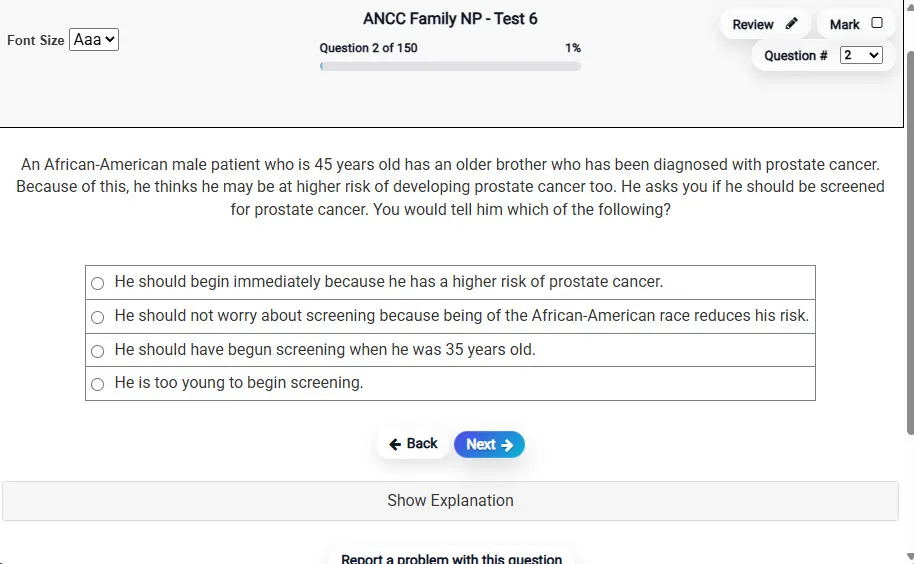
Answering a Question screen – Multiple-choice item view with navigation controls and progress tracker.
Answering a Question Multiple-choice item view with navigation controls and progress tracker.

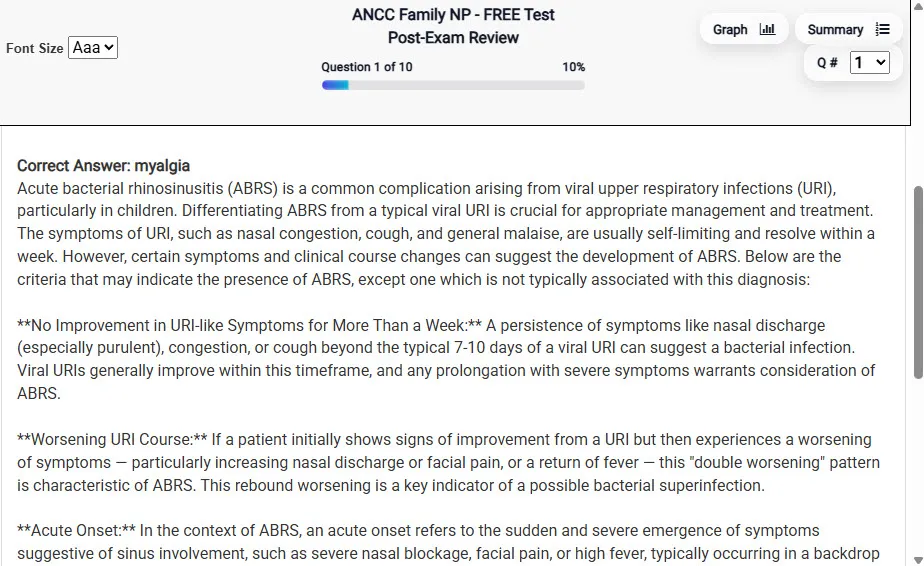
                           Detailed Explanation screen – 
                         Review mode showing chosen answer and rationale and references.
Detailed Explanation Review mode showing chosen answer and rationale and references.

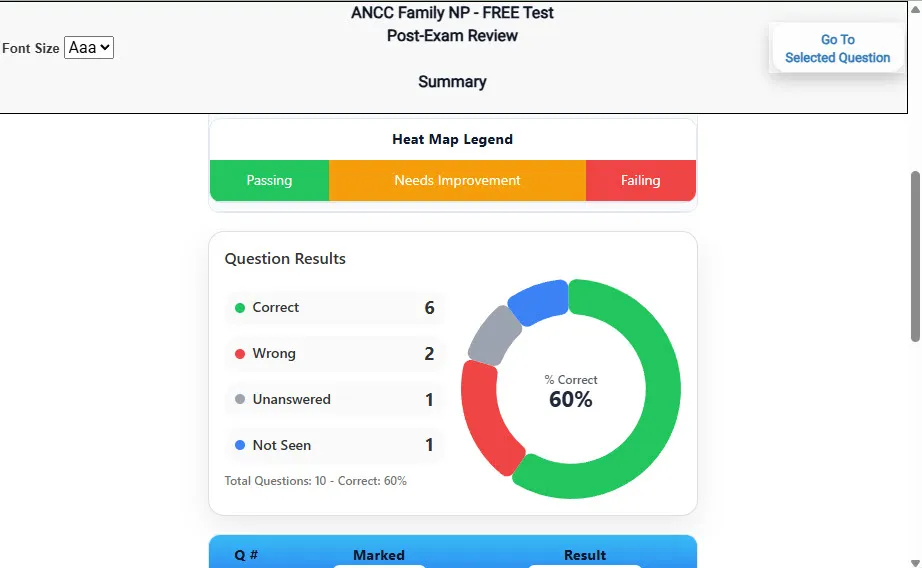
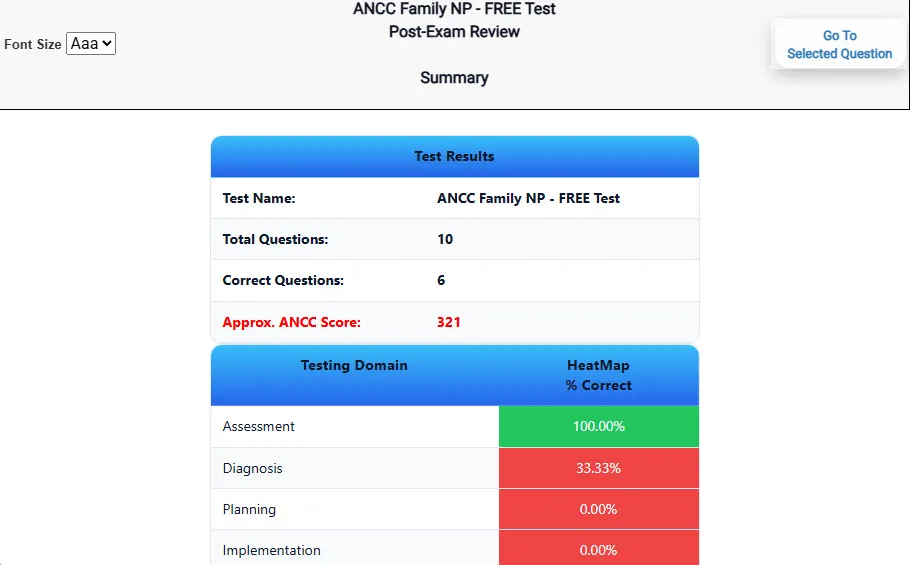
                           Review Summary 1 screen – 
                         Summary with counts for correct/wrong/unanswered and not seen items.
Review Summary 1 Summary with counts for correct/wrong/unanswered and not seen items.

                           Review Summary 2 screen – 
                         Advanced summary with category/domain breakdown and performance insights.
Review Summary 2 Advanced summary with category/domain breakdown and performance insights.

What Each Screen Shows

Answer Question Screen

  • Clean multiple-choice interface with progress bar.
  • Mark for review feature.
  • Matches real test pacing.

Detailed Explanation

  • Correct answer plus rationale.
  • Key concepts and guidelines highlighted.
  • Move between questions to fill knowledge gaps.

Review Summary 1

  • Overall results with total questions and scaled score.
  • Domain heatmap shows strengths and weaknesses.
  • Quick visual feedback on study priorities.

Review Summary 2

  • Chart of correct, wrong, unanswered, not seen.
  • Color-coded results for easy review.
  • Links back to missed items.

Top 10 Reasons to Use Exam Edge for your NCC Inpatient Obstetric Nursing Exam Prep

  1. Focused on the NCC Inpatient Obstetric Nursing Exam

    Our practice tests are built specifically for the NCC Inpatient Obstetric Nursing exam — every question mirrors the real topics, format, and difficulty so you're studying exactly what matters.

  2. Real Exam Simulation

    We match the per-question time limits and pressure of the actual NCC exam, so test day feels familiar and stress-free.

  3. 10 Full Practice Tests & 1,000 Unique Questions

    You'll have more than enough material to master every NCC Inpatient Obstetric Nursing concept — no repeats, no fluff.

  4. Lower Cost Than a Retake

    Ordering 5 practice exams costs less than retaking the NCC Inpatient Obstetric Nursing exam after a failure. One low fee could save you both time and money.

  5. Flexible Testing

    Need to step away mid-exam? Pick up right where you left off — with your remaining time intact.

  6. Instant Scoring & Feedback

    See your raw score and an estimated NCC Inpatient Obstetric Nursing score immediately after finishing each practice test.

  7. Detailed Explanations for Every Question

    Review correct and incorrect answers with clear, step-by-step explanations so you truly understand each topic.

  8. Trusted & Accredited

    We're fully accredited by the Better Business Bureau and uphold the highest standards of trust and transparency.

  9. Web-Based & Always Available

    No software to install. Access your NCC Inpatient Obstetric Nursing practice exams 24/7 from any computer or mobile device.

  10. Expert Support When You Need It

    Need extra help? Our specialized tutors are highly qualified and ready to support your NCC exam prep.


Pass the NCC Inpatient Obstetric Nursing Exam with Realistic Practice Tests from Exam Edge

Preparing for your upcoming NCC Inpatient Obstetric Nursing (RNC-OB) Certification Exam can feel overwhelming — but the right practice makes all the difference. Exam Edge gives you the tools, structure, and confidence to pass on your first try. Our online practice exams are built to match the real NCC Inpatient Obstetric Nursing exam in content, format, and difficulty.

  • 📝 10 NCC Inpatient Obstetric Nursing Practice Tests: Access 10 full-length exams with 100 questions each, covering every major NCC Inpatient Obstetric Nursing topic in depth.
  • Instant Online Access: Start practicing right away — no software, no waiting.
  • 🧠 Step-by-Step Explanations: Understand the reasoning behind every correct answer so you can master NCC Inpatient Obstetric Nursing exam concepts.
  • 🔄 Retake Each Exam Up to 4 Times: Build knowledge through repetition and track your improvement over time.
  • 🌐 Web-Based & Available 24/7: Study anywhere, anytime, on any device.
  • 🧘 Boost Your Test-Day Confidence: Familiarity with the NCC format reduces anxiety and helps you perform under pressure.

These NCC Inpatient Obstetric Nursing practice exams are designed to simulate the real testing experience by matching question types, timing, and difficulty level. This approach helps you get comfortable not just with the exam content, but also with the testing environment, so you walk into your exam day focused and confident.


Exam Edge NCC Reviews


Inpatient OB. I passed!

Melinda , Yukon, Oklahoma

Lots of repeat questions. Questions were too simple. Did not prepare me for my certification exam.

Rebecca , Charleston, South Carolina

Would have been nice to get quicker response regarding the fact I still had a couple of tests left instead of needing to buy more!

Stephanie , Wolcottville, Indiana


NCC Inpatient Obstetric Nursing Aliases Test Name

Here is a list of alternative names used for this exam.

  • NCC Inpatient Obstetric Nursing
  • NCC Inpatient Obstetric Nursing test
  • NCC Inpatient Obstetric Nursing Certification Test
  • NCC
  • NCC RNC-OB
  • RNC-OB test
  • NCC Inpatient Obstetric Nursing (RNC-OB)
  • Inpatient Obstetric Nursing certification