This is the content of the pop-over!

Lightning Deal Alert – 12% Off Ends at Midnight!

Strike while the savings are hot! Use promo code FlashSale at checkout for 12% off any Exam Edge test or bundle. Hurry—the clock is ticking!

NASM CPT (NASM-CPT) Practice Tests & Test Prep by Exam Edge


NASM Certified Personal Trainer   product image
(4.9)
Based on 32 Reviews

  • Real Exam Simulation: Timed questions and matching content build comfort for your NASM CPT test day.
  • Instant, 24/7 Access: Web-based NASM Certified Personal Trainer practice exams with no software needed.
  • Clear Explanations: Step-by-step answers and explanations for your NASM exam to strengthen understanding.
  • Boosted Confidence: Reduces anxiety and improves test-taking skills to ace your NASM Certified Personal Trainer (NASM-CPT).

Featured on

NASM Certified Personal Trainer Online Practice Test Bundles

BEST VALUE
5 practice tests

$69.75

$199.75

SAVE $130

Only $13.95 per test!

  • 100% Pass Guarantee
  • 5 online practice tests
  • 100 questions per test
  • Bonus: 100 Flash Cards + Study Guide
  • Instant access
  • Detailed Explanations
  • Practice tests never expire
  • Timed, untimed, or study guide mode
1 practice test

$39.95

  • 1 online practice test
  • 100 questions per test
  • Instant access
  • Detailed Explanations
  • Practice tests never expire
  • Timed, untimed, or study guide mode
MOST FLEXIBLE
Question Bank

As low as $59.95

500 Questions

Choose 1, 3, 6, or 12 months
A second login is required.

  • Exam Edge content in a powerful question bank
  • Customize Tests
  • Multiple Test & Flash Card Modes
  • Track performance over time
  • Instant access
  • Detailed Explanations
Quick Select
Tap to choose a bundle

** All Prices are in US Dollars (USD) **


NASM CPT (NASM-CPT) Resources

Jump to the section you need most.

Understanding the exact breakdown of the NASM Certified Personal Trainer test will help you know what to expect and how to most effectively prepare. The NASM Certified Personal Trainer has 120 multiple-choice questions . The exam will be broken down into the sections below:

NASM Certified Personal Trainer Exam Blueprint
Domain Name % Number of
Questions
Basic and Applied Sciences 15% 17
Assessment 15% 17
Exercise Technique and Training Instruction 20% 23
Program Design 25% 29
Considerations in Nutrition 12% 14
Client Relations & Behavioral Coaching 10% 11
Professional Development - Practice & Responsibility 8% 9

NASM Certified Personal Trainer Study Tips by Domain

  • Apply the SAID principle: adaptations are specific to the imposed demand, so match exercise plane, speed, and posture to the goal (red flag: “general strength work” is assumed to transfer equally to sport skills).
  • Use the length–tension relationship to coach range of motion—muscle force is reduced at extreme shortened/lengthened positions (common trap: loading end-range when control and joint centration are poor).
  • Respect the force–velocity curve: heavier loads move slower and emphasize maximal strength, while lighter loads move faster and emphasize power (priority rule: don’t chase speed if technique breaks down).
  • Differentiate lever systems and torque: longer moment arms increase torque demand at the joint (red flag: changing limb position can spike difficulty even without adding weight).
  • Understand muscle actions and DOMS: eccentric actions create higher force and more microtrauma than concentric actions (common trap: introducing high-volume eccentrics early and mislabeling expected soreness as “injury”).
  • Know the cardiorespiratory basics: stroke volume and a-vO2 difference drive VO2, while ventilation rises with intensity (threshold cue: if talking becomes difficult, you’re near/above ventilatory threshold and should adjust intensity for novices).
  • Begin every evaluation with NASM’s health screening (PAR-Q+ and health-history) and obtain medical clearance when any red flag is present (e.g., chest pain, dizziness, uncontrolled hypertension) — don’t test first and ask later.
  • Use static posture assessment (anterior, lateral, posterior) to identify predictable patterns (e.g., feet flatten, knees valgus, forward head) — common trap: guessing overactive/underactive muscles without noting joint deviations.
  • In movement assessments (e.g., OHSA), stop the test if pain appears and document the compensation(s) you actually see (arms fall forward, low-back arches, heels rise) — priority rule: pain overrides performance scores.
  • Apply the Overhead Squat Assessment as the primary “global” screen and use single-leg squat/step-down and pushing/pulling assessments to narrow cause — red flag: compensations on one side only suggest asymmetry to address first.
  • Collect objective baseline metrics (resting HR, BP, girths, body composition) using consistent conditions and equipment — common trap: comparing results taken at different times, hydration states, or measurement sites.
  • Select fitness tests based on readiness and goals (e.g., submax cardiorespiratory tests for deconditioned clients) and avoid maximal testing when contraindications exist — threshold cue: if BP is elevated or symptoms occur, terminate and refer.
  • Use NASM’s progressive exercise continuum (stabilization → strength → power); red flag: loading power moves before the client can hold neutral spine and control tempo.
  • Coach core bracing and breathing (ribs down, pelvis neutral); common trap: cueing a Valsalva-style breath hold for novice or hypertensive clients.
  • Prioritize alignment checkpoints (feet, knees, hips, shoulders, head) in every pattern; red flag: knee valgus or feet turning out during squats/lunges—regress and cue glute/foot control.
  • Match tempo to the phase (e.g., slower controlled eccentrics for stabilization); common trap: speeding reps to “get it done” which typically shows up as momentum and loss of joint control.
  • Apply spotting and setup rules first (rack height, safety pins, stable base); priority rule: if you can’t set safeties or spot properly, choose a safer variation (DB, machine, or floor-based).
  • Give concise cues and stop sets on form breakdown; red flag: pain (sharp, joint-focused) vs. fatigue (muscle burn)—pain means modify, regress, or discontinue.
  • Build programs using NASM’s OPT phases (Stabilization → Strength → Power) and don’t skip Phase 1 when movement quality is poor—red flag: repeating strength blocks despite persistent knee valgus or trunk sway.
  • Order sessions with the NASM template: warm-up, core, balance, plyometric, SAQ, resistance, cool-down; common trap: placing high-skill plyometrics after heavy lifting when fatigue elevates injury risk.
  • Use the correct acute variables per goal (sets/reps/tempo/rest) and treat tempo as a programming lever; priority rule: slower tempos and shorter rest generally increase stability/endurance demand, not maximal power output.
  • Progress systematically with stable-to-unstable and simple-to-complex choices, but don’t add instability if it reduces force production needed for the goal—red flag: doing heavy strength work on a BOSU.
  • Integrate the Corrective Exercise Continuum (inhibit → lengthen → activate → integrate) into program blocks; common trap: stretching without targeted activation, which often leads to the same compensation returning.
  • Plan regression/progression and weekly volume to manage overload and recovery; threshold cue: if performance drops across sets or technique breaks before target reps, reduce load/volume or extend rest before progressing.
  • Estimate energy needs by starting with BMR and layering activity (e.g., “moderate” vs “very active”)—red flag: using a one-size calorie target without adjusting for body size, NEAT, or goal timeline.
  • Use macronutrients to support the goal (fat loss, performance, hypertrophy) with protein prioritized for satiety and lean mass—common trap: dropping protein too low during caloric restriction, which can increase muscle loss risk.
  • Time carbs and protein around training when performance or recovery is the priority—cue: if a client reports low energy mid-workout, check pre-exercise carbohydrate intake before adding more stimulants.
  • Hydration affects performance and perceived exertion—red flag: frequent headaches, dark urine, or cramping may signal inadequate fluids/electrolytes rather than a “bad program.”
  • Read labels for serving size, added sugars, and calorie density—common trap: assuming “healthy” packaging means appropriate portions (e.g., multiple servings per container).
  • Stay within NASM scope: provide general nutrition guidance and refer out for medical nutrition therapy—priority rule: refer to an RD/MD for eating disorders, diabetes management, pregnancy-related nutrition, or GI symptoms that persist or worsen.
  • Set expectations early with informed consent and clear scope of practice; red flag: client asks you to diagnose, treat injuries, or prescribe meal plans—refer out.
  • Use motivational interviewing (open questions, reflections, affirmations) to elicit “change talk”; common trap: righting reflex—lecturing or arguing increases resistance.
  • Prioritize rapport with active listening and empathy, then align goals using SMART outcomes; cue: if goals aren’t measurable or time-bound, adherence typically drops.
  • Support self-efficacy by setting small, achievable weekly commitments and tracking wins; red flag: repeated missed sessions without a plan—reduce barriers before increasing intensity.
  • Apply behavior change strategies (stimulus control, implementation intentions, social support) tailored to the client’s stage of change; common trap: action-stage programming for a precontemplation client.
  • Maintain professionalism—confidentiality, appropriate boundaries, and consistent communication; red flag: dual relationships or oversharing personal details can undermine trust and liability protection.
  • Stay within NASM CPT scope: teach exercise, general wellness, and non-medical nutrition guidance; red flag—prescribing meal plans/supplements to treat conditions or advising medication changes requires an appropriate licensed provider referral.
  • Use informed consent and PAR-Q+/health-history intake before training; common trap—starting sessions without screening or ignoring “yes” answers that require medical clearance.
  • Document everything (screening results, program rationale, session notes, incidents) and protect privacy; priority rule—store client data securely and share only with written authorization.
  • Know when to stop a session and activate emergency procedures; threshold cue—chest pain, severe shortness of breath, fainting, or signs of stroke means stop exercise and follow EMS/AED protocol.
  • Maintain professional boundaries and manage risk: avoid guarantees and use clear written agreements (rates, cancellation, liability); common trap—overpromising outcomes or relying on verbal-only policies.
  • Practice evidence-based professionalism: keep certifications/CPR-AED current and use credible sources; red flag—training clients using “viral” methods that conflict with established contraindications or lack safety rationale.


Built to Fit Into Your Busy Life

Everything you need to prepare with confidence—without wasting a minute.

Three Study Modes

Timed, No Time Limit, or Explanation mode.

Actionable Analytics

Heatmaps and scaled scores highlight weak areas.

High-Yield Rationales

Concise explanations emphasize key concepts.

Realistic Interface

Matches the feel of the actual exam environment.

Accessible by Design

Clean layout reduces cognitive load.

Anytime, Anywhere

Web-based access 24/7 on any device.
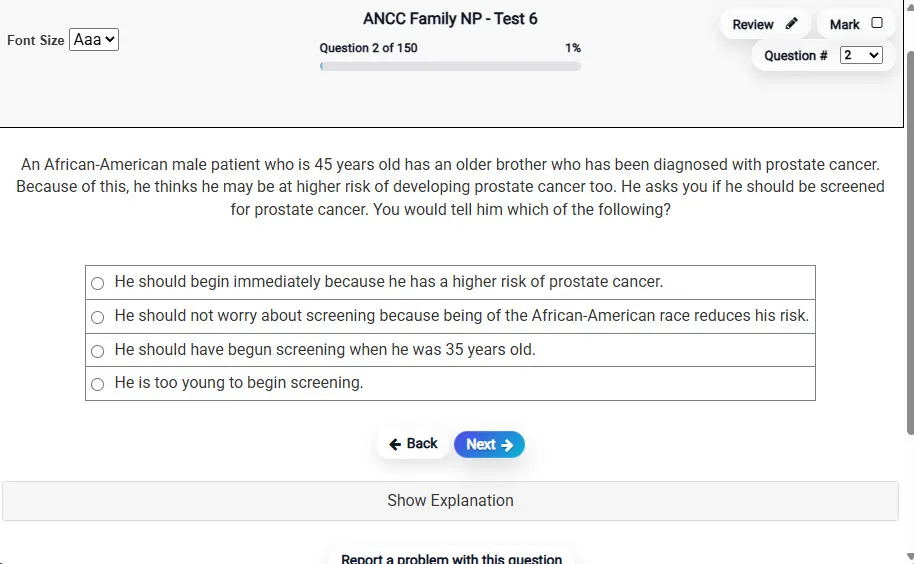
Answering a Question screen – Multiple-choice item view with navigation controls and progress tracker.
Answering a Question Multiple-choice item view with navigation controls and progress tracker.

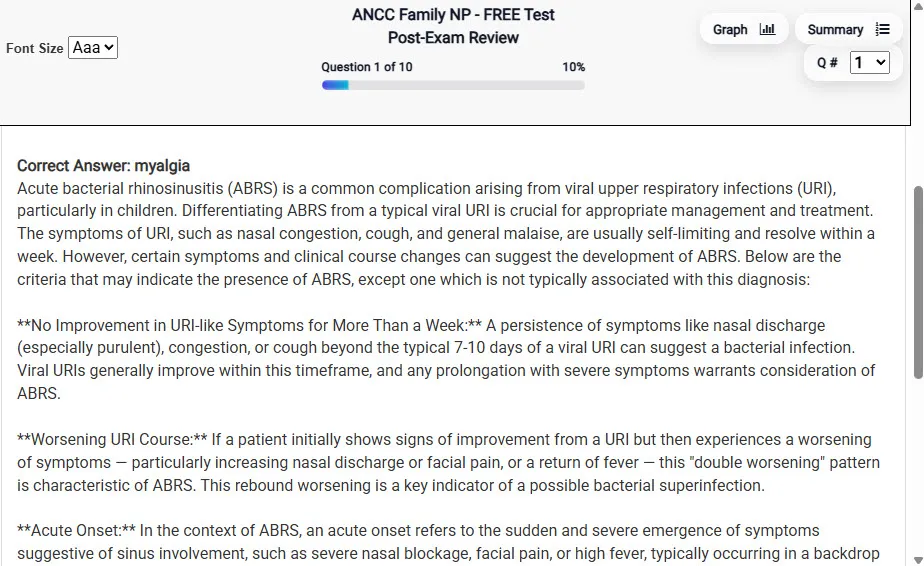
                           Detailed Explanation screen – 
                         Review mode showing chosen answer and rationale and references.
Detailed Explanation Review mode showing chosen answer and rationale and references.

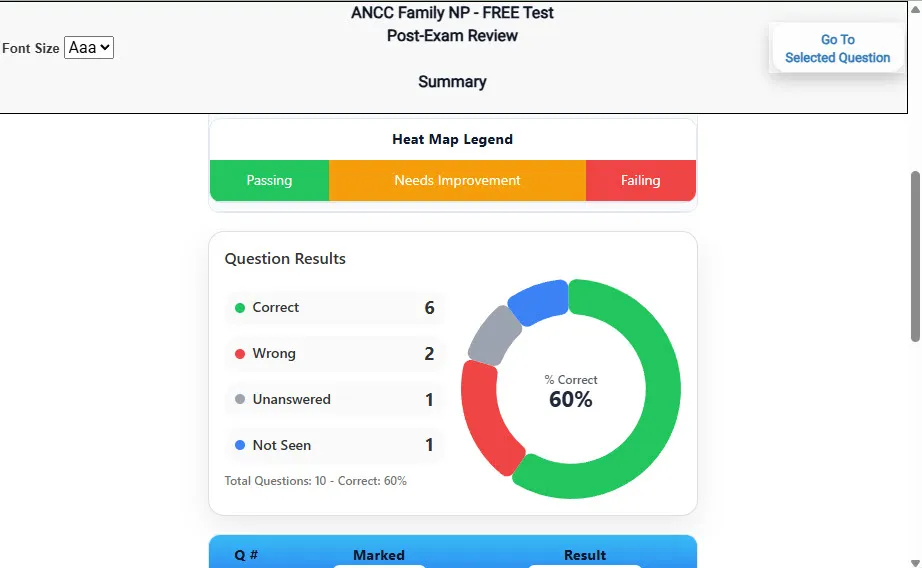
                           Review Summary 1 screen – 
                         Summary with counts for correct/wrong/unanswered and not seen items.
Review Summary 1 Summary with counts for correct/wrong/unanswered and not seen items.

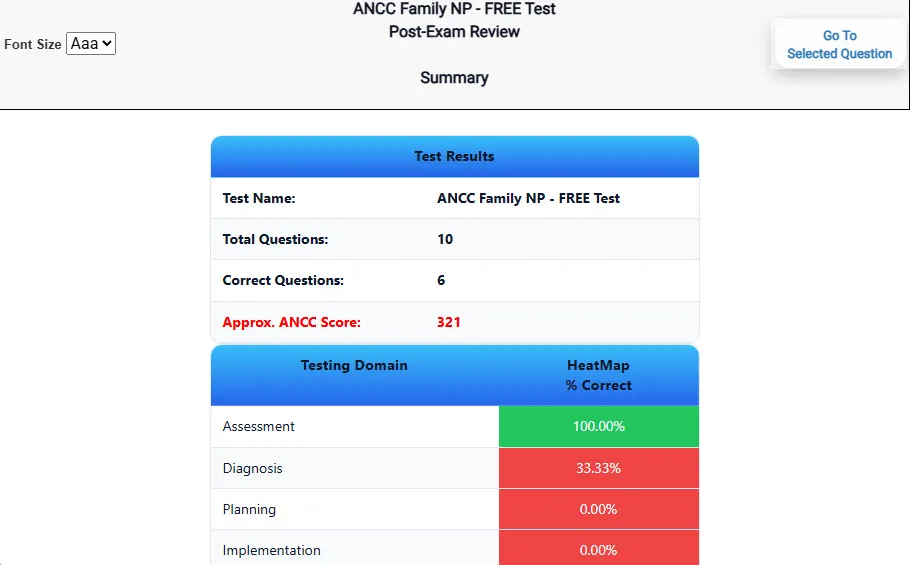
                           Review Summary 2 screen – 
                         Advanced summary with category/domain breakdown and performance insights.
Review Summary 2 Advanced summary with category/domain breakdown and performance insights.

What Each Screen Shows

Answer Question Screen

  • Clean multiple-choice interface with progress bar.
  • Mark for review feature.
  • Matches real test pacing.

Detailed Explanation

  • Correct answer plus rationale.
  • Key concepts and guidelines highlighted.
  • Move between questions to fill knowledge gaps.

Review Summary 1

  • Overall results with total questions and scaled score.
  • Domain heatmap shows strengths and weaknesses.
  • Quick visual feedback on study priorities.

Review Summary 2

  • Chart of correct, wrong, unanswered, not seen.
  • Color-coded results for easy review.
  • Links back to missed items.

Top 10 Reasons to Use Exam Edge for your NASM Certified Personal Trainer Exam Prep

  1. Focused on the NASM Certified Personal Trainer Exam

    Our practice tests are built specifically for the NASM CPT exam — every question mirrors the real topics, format, and difficulty so you're studying exactly what matters.

  2. Real Exam Simulation

    We match the per-question time limits and pressure of the actual NASM exam, so test day feels familiar and stress-free.

  3. 5 Full Practice Tests & 500 Unique Questions

    You'll have more than enough material to master every NASM CPT concept — no repeats, no fluff.

  4. Lower Cost Than a Retake

    Ordering 5 practice exams costs less than retaking the NASM Certified Personal Trainer exam after a failure. One low fee could save you both time and money.

  5. Flexible Testing

    Need to step away mid-exam? Pick up right where you left off — with your remaining time intact.

  6. Instant Scoring & Feedback

    See your raw score and an estimated NASM Certified Personal Trainer score immediately after finishing each practice test.

  7. Detailed Explanations for Every Question

    Review correct and incorrect answers with clear, step-by-step explanations so you truly understand each topic.

  8. Trusted & Accredited

    We're fully accredited by the Better Business Bureau and uphold the highest standards of trust and transparency.

  9. Web-Based & Always Available

    No software to install. Access your NASM CPT practice exams 24/7 from any computer or mobile device.

  10. Expert Support When You Need It

    Need extra help? Our specialized tutors are highly qualified and ready to support your NASM exam prep.


Pass the NASM Certified Personal Trainer Exam with Realistic Practice Tests from Exam Edge

Preparing for your upcoming NASM Certified Personal Trainer (NASM-CPT) Certification Exam can feel overwhelming — but the right practice makes all the difference. Exam Edge gives you the tools, structure, and confidence to pass on your first try. Our online practice exams are built to match the real NASM CPT exam in content, format, and difficulty.

  • 📝 5 NASM Certified Personal Trainer Practice Tests: Access 5 full-length exams with 100 questions each, covering every major NASM Certified Personal Trainer topic in depth.
  • Instant Online Access: Start practicing right away — no software, no waiting.
  • 🧠 Step-by-Step Explanations: Understand the reasoning behind every correct answer so you can master NASM CPT exam concepts.
  • 🔄 Retake Each Exam Up to 4 Times: Build knowledge through repetition and track your improvement over time.
  • 🌐 Web-Based & Available 24/7: Study anywhere, anytime, on any device.
  • 🧘 Boost Your Test-Day Confidence: Familiarity with the NASM format reduces anxiety and helps you perform under pressure.

These NASM Certified Personal Trainer practice exams are designed to simulate the real testing experience by matching question types, timing, and difficulty level. This approach helps you get comfortable not just with the exam content, but also with the testing environment, so you walk into your exam day focused and confident.


Exam Edge NASM Reviews


NASM Certified Personal Trainer Aliases Test Name

Here is a list of alternative names used for this exam.

  • NASM Certified Personal Trainer
  • NASM Certified Personal Trainer test
  • NASM Certified Personal Trainer Certification Test
  • NASM CPT test
  • NASM
  • NASM NASM-CPT
  • NASM-CPT test
  • NASM Certified Personal Trainer (NASM-CPT)
  • Certified Personal Trainer certification