This is the content of the pop-over!

MTEL Visual Arts (17) Practice Tests & Test Prep by Exam Edge


MTEL Visual Arts  product image
(5.0)
Based on 25 Reviews

  • Real Exam Simulation: Timed questions and matching content build comfort for your MTEL Visual Arts test day.
  • Instant, 24/7 Access: Web-based MTEL Visual Arts practice exams with no software needed.
  • Clear Explanations: Step-by-step answers and explanations for your MTEL exam to strengthen understanding.
  • Boosted Confidence: Reduces anxiety and improves test-taking skills to ace your MTEL Visual Arts (17).

Featured on

MTEL Visual Arts Online Practice Test Bundles

BEST VALUE
20 practice tests

$174.00

$799.00

SAVE $625

Only $8.70 per test!

  • 100% Pass Guarantee
  • 20 online practice tests
  • 100 questions + 2 essays per test
  • Bonus: 100 Flash Cards + Study Guide
  • Instant access
  • Detailed Explanations
  • Practice tests never expire
  • Timed, untimed, or study guide mode
MOST POPULAR
10 practice tests

$99.50

$399.50

SAVE $300

Only $9.95 per test!

  • 10 online practice tests
  • 100 questions + 2 essays per test
  • Bonus: 100 Flash Cards + Study Guide
  • Instant access
  • Detailed Explanations
  • Practice tests never expire
  • Timed, untimed, or study guide mode
5 practice tests

$69.75

$199.75

SAVE $130

Only $13.95 per test!

  • 5 online practice tests
  • 100 questions + 2 essays per test
  • Bonus: 100 Flash Cards
  • Instant access
  • Detailed Explanations
  • Practice tests never expire
  • Timed, untimed, or study guide mode
1 practice test

$39.95

  • 1 online practice test
  • 100 questions + 2 essays per test
  • Instant access
  • Detailed Explanations
  • Practice tests never expire
  • Timed, untimed, or study guide mode
Quick Select
Tap to choose a bundle

** All Prices are in US Dollars (USD) **


MTEL Visual Arts (17) Resources

Jump to the section you need most.

Understanding the exact breakdown of the MTEL Visual Arts test will help you know what to expect and how to most effectively prepare. The MTEL Visual Arts has 100 multiple-choice questions and 2 essay questions. The exam will be broken down into the sections below:

MTEL Visual Arts Exam Blueprint
Domain Name % Number of
Questions
Creating Works of Visual Art 30% 30
Visual Art in Context 20% 20
Interpretation - Analysis Evaluation of Art 20% 20
Visual Art and Other Disciplines 10% 10
Integration of Knowledge and Understanding (open response) 20% 20

MTEL Visual Arts Study Tips by Domain

  • Begin with a clear intention (message, function, or formal problem) and select media/technique to match; red flag: a process description that never links choices to purpose.
  • Apply the elements and principles deliberately (e.g., value for emphasis, scale for hierarchy, rhythm via repetition); common trap: naming elements without explaining how they control composition.
  • Demonstrate safe, correct studio practices for the medium (ventilation for solvents, blade direction, kiln/glaze handling); priority rule: safety violations outweigh aesthetic success.
  • Show control of materials through evidence of technique (clean joins, consistent line quality, intentional brushwork, stable construction); red flag: “happy accidents” used to excuse unresolved craftsmanship.
  • Use an iterative process—thumbnail sketches, prototypes, revisions, and critique-informed changes; common trap: presenting the first idea as final without documenting refinement.
  • Plan for presentation and durability (mounting, framing, finishing, labeling, proper digital output settings); threshold cue: work should be display-ready with intentional choices, not last-minute assembly.
  • Identify how patronage, religion, politics, and economics shape style and subject—red flag: describing a work without linking choices (iconography/materials/scale) to its historical context.
  • Connect art to specific movements and time periods using defining traits and exemplars—common trap: naming a movement (e.g., Impressionism) without citing concrete visual evidence that matches it.
  • Address functions of art (ritual, propaganda, commemoration, domestic use, public space) and intended audience—priority rule: always state purpose before judging effectiveness.
  • Discuss how materials, techniques, and technology (e.g., printmaking, photography, digital media) affect production and distribution—cue: note when reproducibility changes access, authorship, or message.
  • Compare cross-cultural works with attention to cultural values and visual conventions—red flag: applying Western formal criteria as the only standard or treating cultural symbols as universal.
  • Include ethical and legal context (cultural appropriation, repatriation, copyright/fair use in classrooms)—contraindication: using copyrighted images without permission/attribution when educational guidelines require it.
  • Start with objective description (subject, medium, size, visible elements) before interpretation; red flag: jumping to meaning without citing what you actually see.
  • Analyze formal qualities—line, shape, color, value, texture, space, and composition—and link each to its effect; common trap: listing elements without explaining how they guide attention or mood.
  • Use appropriate art vocabulary (e.g., balance, contrast, rhythm, emphasis, proportion, unity/variety) and support claims with specific visual evidence; priority rule: every assertion needs a “because” tied to the artwork.
  • Interpret meaning by connecting imagery and formal choices to plausible themes or messages while acknowledging ambiguity; red flag: making biographical or historical claims you can’t justify from the work or prompt.
  • Evaluate quality and effectiveness using explicit criteria (intent, craftsmanship, originality, coherence, audience impact) rather than personal taste; common trap: “I like it” as the main rationale.
  • Compare and contrast works by identifying both similarities and differences in style, technique, and purpose; threshold: include at least one concrete similarity and one concrete difference with evidence for each.
  • Connect visual art to history/social studies by using primary sources (e.g., posters, monuments, propaganda) and requiring students to cite specific visual evidence; red flag: treating artworks as mere illustrations without sourcing or contextual claims.
  • Integrate ELA by pairing studio work with an artist statement that uses correct art vocabulary and supports intent with process choices; common trap: vague reflections (“I just liked it”) instead of evidence-based language.
  • Link art and mathematics through proportion, scale, tessellations, symmetry, or perspective with measurable criteria (e.g., grid enlargement ratios); priority rule: accuracy matters—show calculations or construction steps, not just a final image.
  • Bridge art and science via color/light, anatomy, ecology, or materials chemistry (e.g., archival vs. fugitive pigments); contraindication: unsafe practices—require proper ventilation/PPE and age-appropriate material handling.
  • Connect art and performing arts by translating rhythm, tempo, or narrative into visual compositions or set/costume designs; red flag: superficial “theme matching” without mapping specific elements (line, value, space) to performance features.
  • Use technology/media arts intentionally (digital imaging, animation, photography) with explicit criteria for originality and copyright; common trap: unlicensed images or overreliance on filters instead of purposeful editing choices.
  • Answer the prompt in a clear claim->evidence->rationale structure; red flag: describing an artwork/activity without explicitly stating what it demonstrates about art concepts and student learning.
  • Integrate at least two elements/principles and one technique/process (e.g., value contrast + asymmetrical balance + glazing); common trap: listing vocabulary without tying it to specific visual evidence.
  • When given student work samples, diagnose strengths and needs and propose one targeted next step; priority rule: align feedback to the stated objective rather than personal preference or style bias.
  • Address materials, tools, and safety/management considerations with a concrete classroom move; red flag: overlooking age-appropriate constraints (e.g., solvents, blades, ventilation) when selecting media.
  • Include assessment criteria (what counts as proficient) and how you’ll measure it (rubric descriptors, checkpoints, critique prompts); common trap: grading effort only instead of observable outcomes tied to standards.
  • Make at least one connection to context or meaning (artist intent, audience, culture, history) that supports your analysis/plan; red flag: adding an unrelated art-history fact that doesn’t strengthen the argument.


Built to Fit Into Your Busy Life

Everything you need to prepare with confidence—without wasting a minute.

Three Study Modes

Timed, No Time Limit, or Explanation mode.

Actionable Analytics

Heatmaps and scaled scores highlight weak areas.

High-Yield Rationales

Concise explanations emphasize key concepts.

Realistic Interface

Matches the feel of the actual exam environment.

Accessible by Design

Clean layout reduces cognitive load.

Anytime, Anywhere

Web-based access 24/7 on any device.
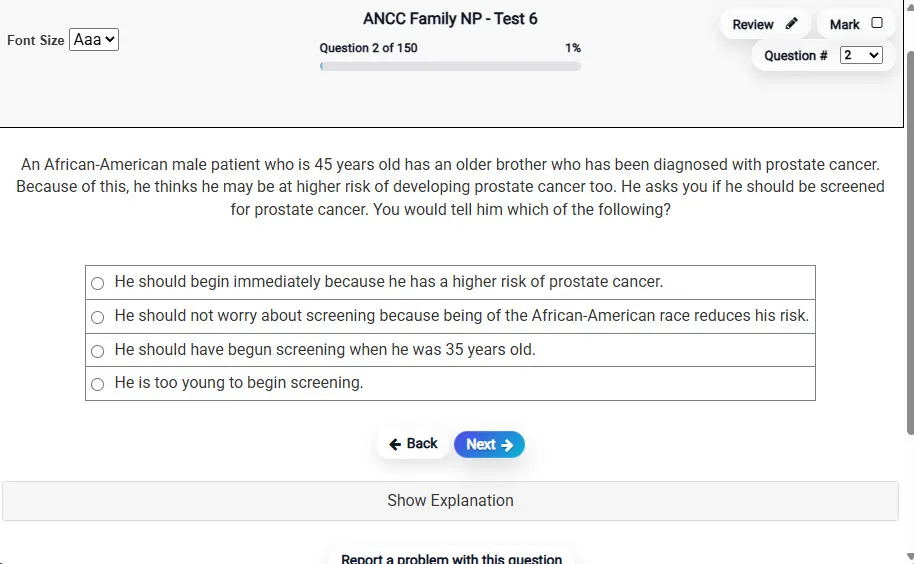
Answering a Question screen – Multiple-choice item view with navigation controls and progress tracker.
Answering a Question Multiple-choice item view with navigation controls and progress tracker.

                           Detailed Explanation screen – 
                         Review mode showing chosen answer and rationale and references.
Detailed Explanation Review mode showing chosen answer and rationale and references.

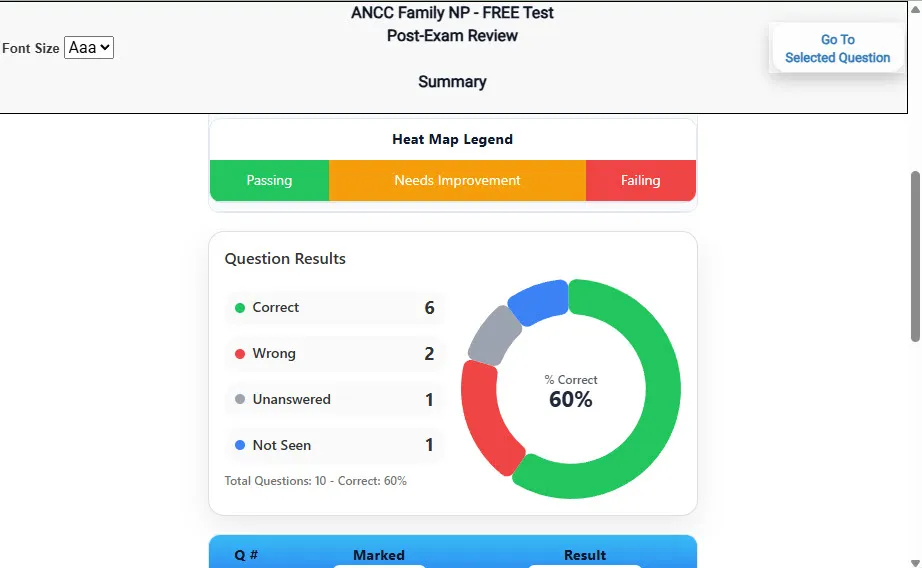
                           Review Summary 1 screen – 
                         Summary with counts for correct/wrong/unanswered and not seen items.
Review Summary 1 Summary with counts for correct/wrong/unanswered and not seen items.

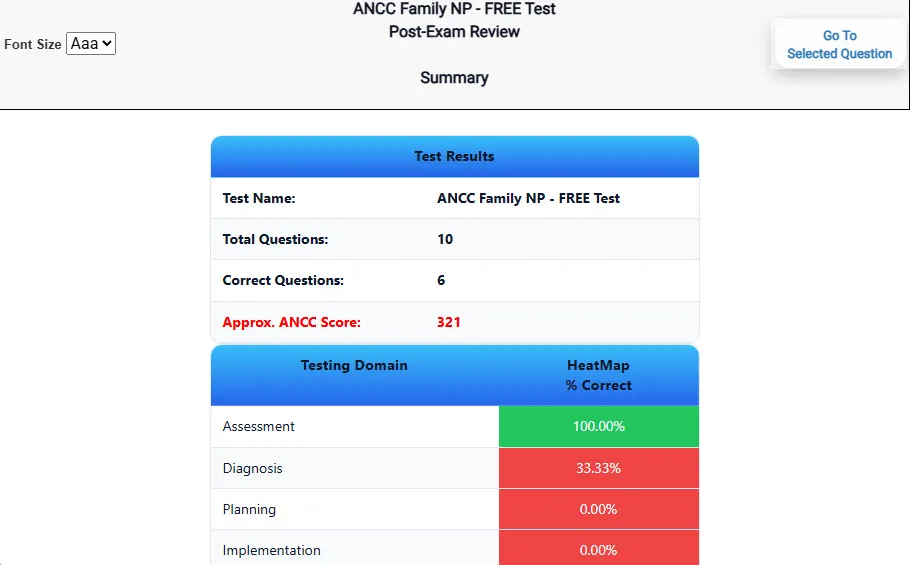
                           Review Summary 2 screen – 
                         Advanced summary with category/domain breakdown and performance insights.
Review Summary 2 Advanced summary with category/domain breakdown and performance insights.

What Each Screen Shows

Answer Question Screen

  • Clean multiple-choice interface with progress bar.
  • Mark for review feature.
  • Matches real test pacing.

Detailed Explanation

  • Correct answer plus rationale.
  • Key concepts and guidelines highlighted.
  • Move between questions to fill knowledge gaps.

Review Summary 1

  • Overall results with total questions and scaled score.
  • Domain heatmap shows strengths and weaknesses.
  • Quick visual feedback on study priorities.

Review Summary 2

  • Chart of correct, wrong, unanswered, not seen.
  • Color-coded results for easy review.
  • Links back to missed items.

Top 10 Reasons to Use Exam Edge for your MTEL Visual Arts Exam Prep

  1. Focused on the MTEL Visual Arts Exam

    Our practice tests are built specifically for the MTEL Visual Arts exam — every question mirrors the real topics, format, and difficulty so you're studying exactly what matters.

  2. Real Exam Simulation

    We match the per-question time limits and pressure of the actual MTEL exam, so test day feels familiar and stress-free.

  3. 20 Full Practice Tests & 2,040 Unique Questions

    You'll have more than enough material to master every MTEL Visual Arts concept — no repeats, no fluff.

  4. Lower Cost Than a Retake

    Ordering 5 practice exams costs less than retaking the MTEL Visual Arts exam after a failure. One low fee could save you both time and money.

  5. Flexible Testing

    Need to step away mid-exam? Pick up right where you left off — with your remaining time intact.

  6. Instant Scoring & Feedback

    See your raw score and an estimated MTEL Visual Arts score immediately after finishing each practice test.

  7. Detailed Explanations for Every Question

    Review correct and incorrect answers with clear, step-by-step explanations so you truly understand each topic.

  8. Trusted & Accredited

    We're fully accredited by the Better Business Bureau and uphold the highest standards of trust and transparency.

  9. Web-Based & Always Available

    No software to install. Access your MTEL Visual Arts practice exams 24/7 from any computer or mobile device.

  10. Expert Support When You Need It

    Need extra help? Our specialized tutors are highly qualified and ready to support your MTEL exam prep.


Pass the MTEL Visual Arts Exam with Realistic Practice Tests from Exam Edge

Preparing for your upcoming MTEL Visual Arts (17) Certification Exam can feel overwhelming — but the right practice makes all the difference. Exam Edge gives you the tools, structure, and confidence to pass on your first try. Our online practice exams are built to match the real MTEL Visual Arts exam in content, format, and difficulty.

  • 📝 20 MTEL Visual Arts Practice Tests: Access 20 full-length exams with 102 questions each, covering every major MTEL Visual Arts topic in depth.
  • Instant Online Access: Start practicing right away — no software, no waiting.
  • 🧠 Step-by-Step Explanations: Understand the reasoning behind every correct answer so you can master MTEL Visual Arts exam concepts.
  • 🔄 Retake Each Exam Up to 4 Times: Build knowledge through repetition and track your improvement over time.
  • 🌐 Web-Based & Available 24/7: Study anywhere, anytime, on any device.
  • 🧘 Boost Your Test-Day Confidence: Familiarity with the MTEL format reduces anxiety and helps you perform under pressure.

These MTEL Visual Arts practice exams are designed to simulate the real testing experience by matching question types, timing, and difficulty level. This approach helps you get comfortable not just with the exam content, but also with the testing environment, so you walk into your exam day focused and confident.


Exam Edge MTEL Reviews


I wanted to thank ExamEdge for helping me pass this teacher test the  first time. I had a lot of material to absorb in a short space of time and so I purchased the 15 practice tests and by test 15 I was so much more confident due to getting consistent passing scores. Thank you again, in my ...
Read More
Paul, Quincy, MA

I would like to commend your site in assisting me in passing the high school math test MTEL. I used your tests for practice and review and passed the test the first time. I was a little worried going into the test because the online tests were at such a high level. I found that I was very well prepa ...
Read More
Julie, MA


MTEL Visual Arts Aliases Test Name

Here is a list of alternative names used for this exam.

  • MTEL Visual Arts
  • MTEL Visual Arts test
  • MTEL Visual Arts Certification Test
  • MTEL
  • MTEL 17
  • 17 test
  • MTEL Visual Arts (17)
  • Visual Arts certification