This is the content of the pop-over!

MTEL Reading Specialist (08) Practice Tests & Test Prep by Exam Edge


MTEL Reading Specialist  product image
(5.0)
Based on 17 Reviews

  • Real Exam Simulation: Timed questions and matching content build comfort for your MTEL Reading Specialist test day.
  • Instant, 24/7 Access: Web-based MTEL Reading Specialist practice exams with no software needed.
  • Clear Explanations: Step-by-step answers and explanations for your MTEL exam to strengthen understanding.
  • Boosted Confidence: Reduces anxiety and improves test-taking skills to ace your MTEL Reading Specialist (08).

Featured on

MTEL Reading Specialist Online Practice Test Bundles

BEST VALUE
20 practice tests

$174.00

$799.00

SAVE $625

Only $8.70 per test!

  • 100% Pass Guarantee
  • 20 online practice tests
  • 100 questions per test
  • Bonus: 100 Flash Cards + Study Guide
  • Instant access
  • Detailed Explanations
  • Practice tests never expire
  • Timed, untimed, or study guide mode
MOST POPULAR
10 practice tests

$99.50

$399.50

SAVE $300

Only $9.95 per test!

  • 10 online practice tests
  • 100 questions per test
  • Bonus: 100 Flash Cards + Study Guide
  • Instant access
  • Detailed Explanations
  • Practice tests never expire
  • Timed, untimed, or study guide mode
5 practice tests

$69.75

$199.75

SAVE $130

Only $13.95 per test!

  • 5 online practice tests
  • 100 questions per test
  • Bonus: 100 Flash Cards
  • Instant access
  • Detailed Explanations
  • Practice tests never expire
  • Timed, untimed, or study guide mode
1 practice test

$39.95

  • 1 online practice test
  • 100 questions per test
  • Instant access
  • Detailed Explanations
  • Practice tests never expire
  • Timed, untimed, or study guide mode
Quick Select
Tap to choose a bundle

** All Prices are in US Dollars (USD) **


MTEL Reading Specialist (08) Resources

Jump to the section you need most.

Understanding the exact breakdown of the MTEL Reading Specialist test will help you know what to expect and how to most effectively prepare. The MTEL Reading Specialist has multiple-choice questions . The exam will be broken down into the sections below:

MTEL Reading Specialist Exam Blueprint
Domain Name % Number of
Questions
Reading Processes and Development 32% 32
Reading Assessment 16% 16
Reading Instruction 16% 16
Professional Knowledge and Roles of the
Reading Specialist
16% 16
Integration of Knowledge and Understanding 20% 20

MTEL Reading Specialist Study Tips by Domain

  • Connect components of literacy (phonological awareness, decoding, fluency, vocabulary, comprehension, spelling, writing) as a reciprocal system; red flag: treating comprehension problems as “just decoding” without checking language/vocabulary.
  • Know developmental progressions (print concepts → phonemic awareness → alphabetic principle → orthographic mapping → fluent reading); common trap: skipping explicit phoneme-grapheme instruction when students appear to “guess” words from context.
  • Differentiate typical second-language acquisition from reading disability by analyzing error patterns and oral language; red flag: attributing persistent difficulties in phonological processing/word reading solely to limited English proficiency.
  • Use word-reading theory (phonological recoding, syllable types, morphemes, orthographic patterns) to explain miscues; priority rule: if accuracy is low, address decoding first before fluency speed goals.
  • Understand how vocabulary and syntax support comprehension across narrative and informational texts; contraindication: relying on background knowledge activation without teaching academic language and text-structure cues.
  • Recognize factors influencing reading development (motivation, engagement, text complexity, cultural/linguistic experience, access to print) and their interaction with instruction; red flag: increasing text difficulty before students demonstrate stable accuracy and adequate prosody.
  • Select assessment types to match decisions (screening for risk, diagnostic for root causes, progress monitoring for growth, outcome for proficiency) — red flag: using a single benchmark score to design instruction without diagnostics.
  • Verify reliability/validity and administration fidelity for each tool — common trap: changing timing, prompts, or scoring rules and then treating results as comparable across students or dates.
  • Use multiple data sources (CBMs, running records, spelling inventories, language measures, work samples) to triangulate needs — red flag: over-weighting one subtest when other indicators contradict it.
  • Interpret progress-monitoring trends with a clear decision rule (e.g., aimline vs. trendline over 6–8 data points) — common trap: making program changes based on 1–2 low scores or obvious outliers.
  • Ensure fair, accessible assessment for English learners and students with disabilities by using appropriate accommodations and language-informed interpretations — red flag: concluding a reading disability when the pattern is consistent with limited English proficiency or inadequate opportunity to learn.
  • Communicate results in actionable terms (skill deficits, present levels, recommended instruction and intensity) — common trap: reporting percentile ranks only without describing what the student can do and the next instructional targets.
  • Design explicit, systematic instruction that follows a clear scope-and-sequence (model → guided practice → independent practice) and verifies mastery before moving on—red flag: introducing multiple new phonics patterns or strategies in one lesson without checks for understanding.
  • Match instruction to the student’s assessed need (e.g., phonological awareness, decoding, fluency, vocabulary, comprehension) and document the linkage—common trap: defaulting to more comprehension worksheets when the root issue is word-level reading.
  • Teach phonics/word study with cumulative practice and immediate corrective feedback, including explicit work on syllable types, morphology, and irregular words—priority rule: if errors are consistent and pattern-based, reteach the pattern before adding harder text.
  • Build fluency through repeated reading, phrased reading, and accuracy-focused practice using appropriately-leveled texts—red flag: pushing speed goals when accuracy is below expectation, which can reinforce guessing.
  • Strengthen vocabulary and language comprehension by teaching word meanings in context (multiple exposures, student-friendly definitions, morphology, and usage) and embedding discussion—common trap: relying only on dictionary copying with no application in speaking/writing.
  • Teach comprehension with explicit strategy instruction (e.g., monitoring, questioning, summarizing, text structure) and content-rich reading/writing tasks—contraindication: overprompting with strategy checklists that replace authentic meaning-making and text evidence.
  • Know the reading specialist’s core roles—assessment leadership, intervention design, coaching, and program evaluation—and a priority rule: recommendations must be data-based and tied to documented student needs, not preference or convenience.
  • Differentiate direct service (targeted intervention) from indirect service (teacher coaching, collaboration) and watch a common trap: providing “tutoring” without a written plan, progress-monitoring schedule, and clear entry/exit criteria.
  • Operate within legal/ethical boundaries (confidentiality, informed consent when required, responsible data use) and treat this as a red flag: sharing identifiable student data in emails or meetings without a legitimate educational interest.
  • Use consultation skills effectively—set a shared goal, model/observe, give actionable feedback, and follow up—and avoid the trap of offering broad advice without specifying the instructional routine, materials, and fidelity checks.
  • Support culturally and linguistically responsive literacy practices and consider a contraindication: do not interpret limited English proficiency as a reading disability without evidence from appropriate measures and language background data.
  • Lead schoolwide literacy improvement (MTSS/RTI alignment, screening systems, intervention scheduling, professional learning) and apply a threshold rule: if universal screening shows grade-level risk rates are elevated, prioritize core (Tier 1) strengthening before expanding Tier 2/3.
  • Triangulate evidence across screening, diagnostic, progress-monitoring, and outcome data to define a student’s reading problem; red flag: making placement decisions from a single score or one benchmark window.
  • Interpret assessment results through the Simple View of Reading (decoding × language comprehension) to target instruction; common trap: treating low comprehension as a “strategy problem” when oral language is the primary need.
  • Link error patterns in phonics/word reading (e.g., confusions with vowel teams, syllable types, morphemes) to a specific scope-and-sequence adjustment; priority rule: address the highest-frequency breakdown that blocks accurate reading first.
  • Integrate fluency data (accuracy, rate, prosody) with comprehension outcomes; red flag: pushing words-per-minute goals when accuracy is below an acceptable threshold and is suppressing meaning.
  • Use knowledge of text complexity and task demands to select materials and scaffolds (decodability, morphology load, syntax, background knowledge); common trap: moving students to harder texts without ensuring prerequisite word-recognition or vocabulary supports.
  • Apply evidence-based MTSS/RTI decision rules when evaluating response to intervention (fidelity + adequate time + trend line vs. aim line); red flag: concluding “nonresponder” without documented instructional fidelity or sufficient data points.


Built to Fit Into Your Busy Life

Everything you need to prepare with confidence—without wasting a minute.

Three Study Modes

Timed, No Time Limit, or Explanation mode.

Actionable Analytics

Heatmaps and scaled scores highlight weak areas.

High-Yield Rationales

Concise explanations emphasize key concepts.

Realistic Interface

Matches the feel of the actual exam environment.

Accessible by Design

Clean layout reduces cognitive load.

Anytime, Anywhere

Web-based access 24/7 on any device.
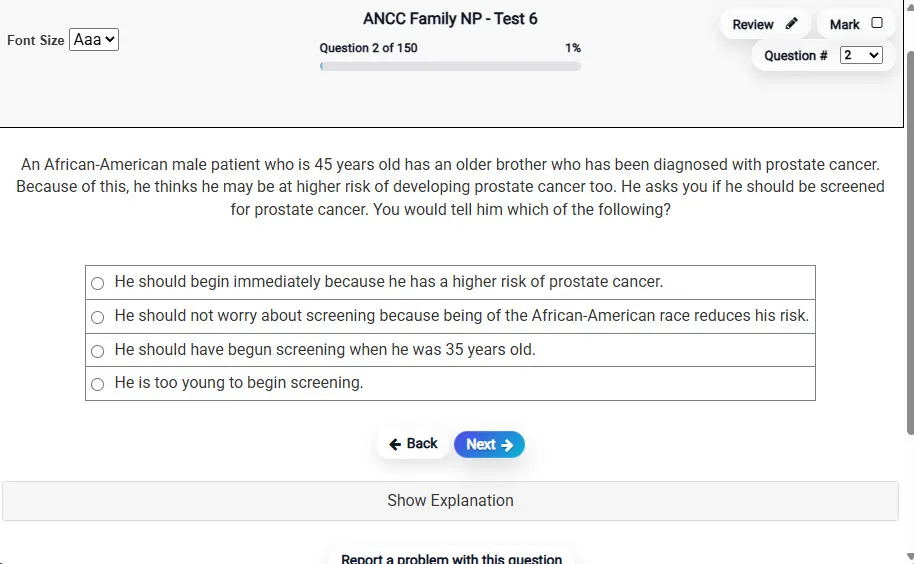
Answering a Question screen – Multiple-choice item view with navigation controls and progress tracker.
Answering a Question Multiple-choice item view with navigation controls and progress tracker.

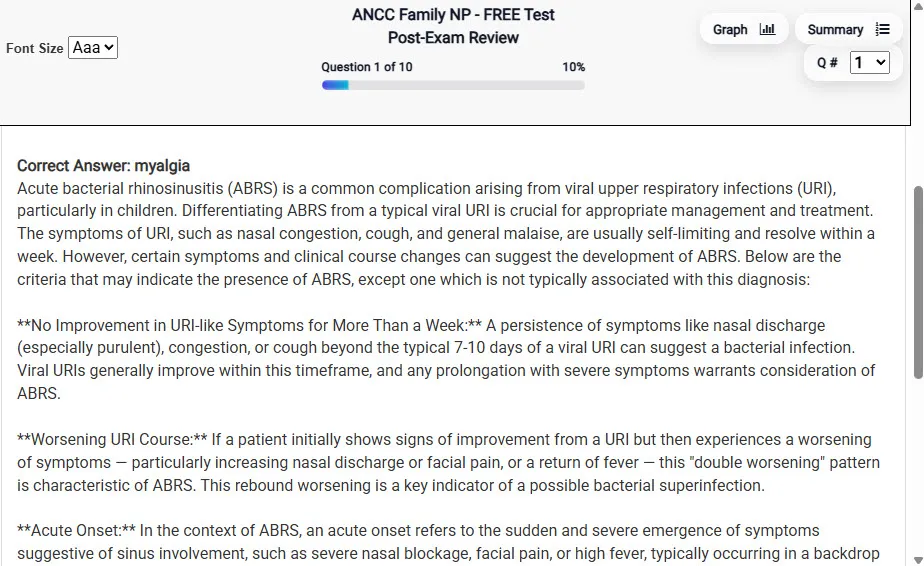
                           Detailed Explanation screen – 
                         Review mode showing chosen answer and rationale and references.
Detailed Explanation Review mode showing chosen answer and rationale and references.

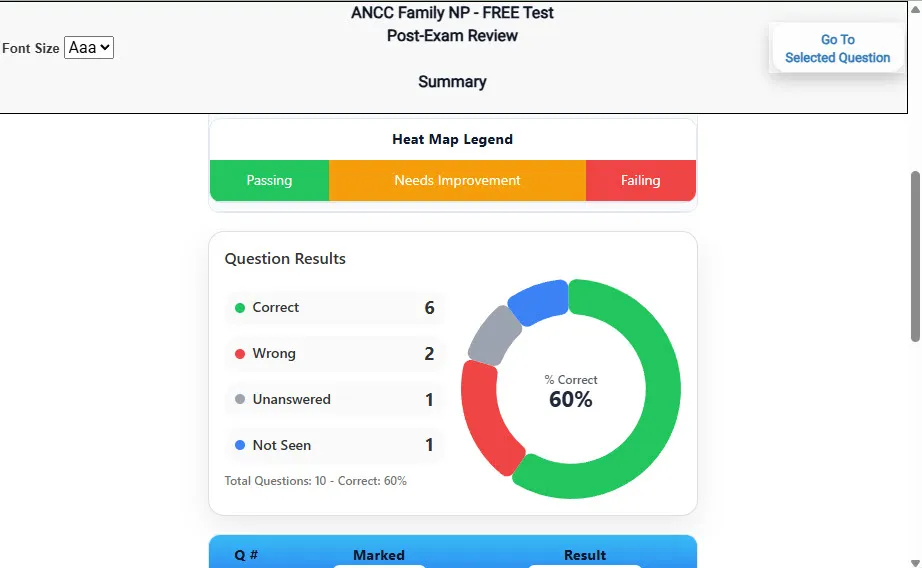
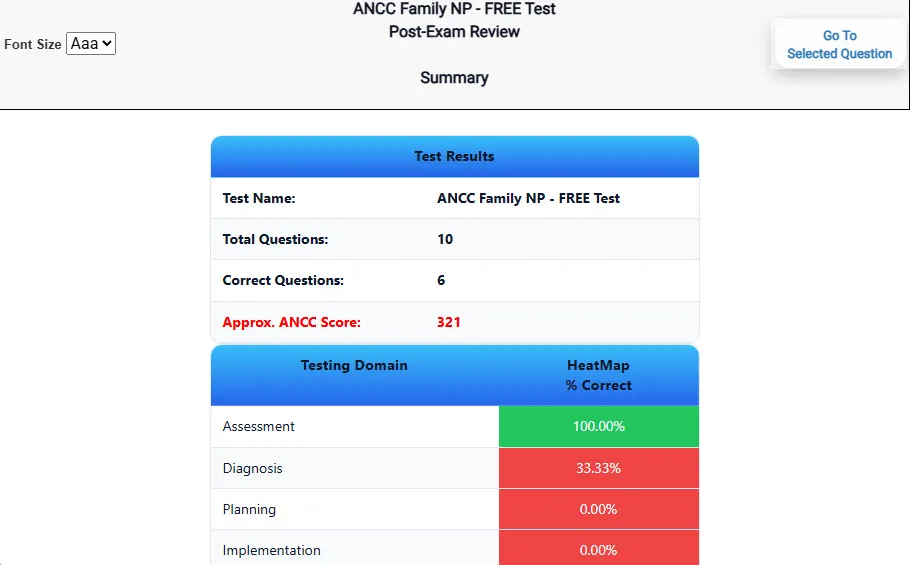
                           Review Summary 1 screen – 
                         Summary with counts for correct/wrong/unanswered and not seen items.
Review Summary 1 Summary with counts for correct/wrong/unanswered and not seen items.

                           Review Summary 2 screen – 
                         Advanced summary with category/domain breakdown and performance insights.
Review Summary 2 Advanced summary with category/domain breakdown and performance insights.

What Each Screen Shows

Answer Question Screen

  • Clean multiple-choice interface with progress bar.
  • Mark for review feature.
  • Matches real test pacing.

Detailed Explanation

  • Correct answer plus rationale.
  • Key concepts and guidelines highlighted.
  • Move between questions to fill knowledge gaps.

Review Summary 1

  • Overall results with total questions and scaled score.
  • Domain heatmap shows strengths and weaknesses.
  • Quick visual feedback on study priorities.

Review Summary 2

  • Chart of correct, wrong, unanswered, not seen.
  • Color-coded results for easy review.
  • Links back to missed items.

Top 10 Reasons to Use Exam Edge for your MTEL Reading Specialist Exam Prep

  1. Focused on the MTEL Reading Specialist Exam

    Our practice tests are built specifically for the MTEL Reading Specialist exam — every question mirrors the real topics, format, and difficulty so you're studying exactly what matters.

  2. Real Exam Simulation

    We match the per-question time limits and pressure of the actual MTEL exam, so test day feels familiar and stress-free.

  3. 20 Full Practice Tests & 2,000 Unique Questions

    You'll have more than enough material to master every MTEL Reading Specialist concept — no repeats, no fluff.

  4. Lower Cost Than a Retake

    Ordering 5 practice exams costs less than retaking the MTEL Reading Specialist exam after a failure. One low fee could save you both time and money.

  5. Flexible Testing

    Need to step away mid-exam? Pick up right where you left off — with your remaining time intact.

  6. Instant Scoring & Feedback

    See your raw score and an estimated MTEL Reading Specialist score immediately after finishing each practice test.

  7. Detailed Explanations for Every Question

    Review correct and incorrect answers with clear, step-by-step explanations so you truly understand each topic.

  8. Trusted & Accredited

    We're fully accredited by the Better Business Bureau and uphold the highest standards of trust and transparency.

  9. Web-Based & Always Available

    No software to install. Access your MTEL Reading Specialist practice exams 24/7 from any computer or mobile device.

  10. Expert Support When You Need It

    Need extra help? Our specialized tutors are highly qualified and ready to support your MTEL exam prep.


Pass the MTEL Reading Specialist Exam with Realistic Practice Tests from Exam Edge

Preparing for your upcoming MTEL Reading Specialist (08) Certification Exam can feel overwhelming — but the right practice makes all the difference. Exam Edge gives you the tools, structure, and confidence to pass on your first try. Our online practice exams are built to match the real MTEL Reading Specialist exam in content, format, and difficulty.

  • 📝 20 MTEL Reading Specialist Practice Tests: Access 20 full-length exams with 100 questions each, covering every major MTEL Reading Specialist topic in depth.
  • Instant Online Access: Start practicing right away — no software, no waiting.
  • 🧠 Step-by-Step Explanations: Understand the reasoning behind every correct answer so you can master MTEL Reading Specialist exam concepts.
  • 🔄 Retake Each Exam Up to 4 Times: Build knowledge through repetition and track your improvement over time.
  • 🌐 Web-Based & Available 24/7: Study anywhere, anytime, on any device.
  • 🧘 Boost Your Test-Day Confidence: Familiarity with the MTEL format reduces anxiety and helps you perform under pressure.

These MTEL Reading Specialist practice exams are designed to simulate the real testing experience by matching question types, timing, and difficulty level. This approach helps you get comfortable not just with the exam content, but also with the testing environment, so you walk into your exam day focused and confident.

Exam Edge MTEL Reviews


I wanted to thank ExamEdge for helping me pass this teacher test the  first time. I had a lot of material to absorb in a short space of time and so I purchased the 15 practice tests and by test 15 I was so much more confident due to getting consistent passing scores. Thank you again, in my ...
Read More
Paul, Quincy, MA

I would like to commend your site in assisting me in passing the high school math test MTEL. I used your tests for practice and review and passed the test the first time. I was a little worried going into the test because the online tests were at such a high level. I found that I was very well prepa ...
Read More
Julie, MA


MTEL Reading Specialist Aliases Test Name

Here is a list of alternative names used for this exam.

  • MTEL Reading Specialist
  • MTEL Reading Specialist test
  • MTEL Reading Specialist Certification Test
  • MTEL
  • MTEL 08
  • 08 test
  • MTEL Reading Specialist (08)
  • Reading Specialist certification