This is the content of the pop-over!

Lightning Deal Alert – 12% Off Ends at Midnight!

Strike while the savings are hot! Use promo code FlashSale at checkout for 12% off any Exam Edge test or bundle. Hurry—the clock is ticking!

JCAHPO COA (COA) Practice Tests & Test Prep by Exam Edge


JCAHPO Certified Ophthalmic Assistant  product image
(5.0)
Based on 34 Reviews

  • Real Exam Simulation: Timed questions and matching content build comfort for your JCAHPO COA test day.
  • Instant, 24/7 Access: Web-based JCAHPO Certified Ophthalmic Assistant practice exams with no software needed.
  • Clear Explanations: Step-by-step answers and explanations for your JCAHPO exam to strengthen understanding.
  • Boosted Confidence: Reduces anxiety and improves test-taking skills to ace your JCAHPO Certified Ophthalmic Assistant (COA).

Featured on

JCAHPO Certified Ophthalmic Assistant Online Practice Test Bundles

BEST VALUE
15 practice tests

$149.25

$599.25

SAVE $450

Only $9.95 per test!

  • 100% Pass Guarantee
  • 15 online practice tests
  • 100 questions per test
  • Bonus: 100 Flash Cards + Study Guide
  • Instant access
  • Detailed Explanations
  • Practice tests never expire
  • Timed, untimed, or study guide mode
MOST POPULAR
10 practice tests

$99.50

$399.50

SAVE $300

Only $9.95 per test!

  • 10 online practice tests
  • 100 questions per test
  • Bonus: 100 Flash Cards + Study Guide
  • Instant access
  • Detailed Explanations
  • Practice tests never expire
  • Timed, untimed, or study guide mode
5 practice tests

$69.75

$199.75

SAVE $130

Only $13.95 per test!

  • 5 online practice tests
  • 100 questions per test
  • Bonus: 100 Flash Cards
  • Instant access
  • Detailed Explanations
  • Practice tests never expire
  • Timed, untimed, or study guide mode
1 practice test

$39.95

  • 1 online practice test
  • 100 questions per test
  • Instant access
  • Detailed Explanations
  • Practice tests never expire
  • Timed, untimed, or study guide mode
MOST FLEXIBLE
Question Bank

As low as $59.95

500 Questions

Choose 1, 3, 6, or 12 months
A second login is required.

  • Exam Edge content in a powerful question bank
  • Customize Tests
  • Multiple Test & Flash Card Modes
  • Track performance over time
  • Instant access
  • Detailed Explanations
Quick Select
Tap to choose a bundle

** All Prices are in US Dollars (USD) **


JCAHPO COA (COA) Resources

Jump to the section you need most.

Understanding the exact breakdown of the JCAHPO Certified Ophthalmic Assistant test will help you know what to expect and how to most effectively prepare. The JCAHPO Certified Ophthalmic Assistant has multiple-choice questions . The exam will be broken down into the sections below:

JCAHPO Certified Ophthalmic Assistant Exam Blueprint
Domain Name % Number of
Questions
History Taking 8% 8
Pupillary Assessment 3% 3
Contact Lenses 2% 2
Equipment Maintenance And Repair 4% 4
Lensometry 3% 3
Keratometry 3% 3
Medical Ethics - Legal And Regulatory Issues 5% 5
Microbiology 2% 2
Pharmacology 8% 8
Ocular Motility 3% 3
Assisting In Surgical Procedures 7% 7
Ophthalmic Patient Services & Education 16% 16
Ophthalmic Imaging 3% 3
Refractometry 6% 6
Spectacle Skills 3% 3
Supplemental Skills 8% 8
Tonometry 4% 4
Visual Assessment 8% 8
Visual Fields 4% 4

JCAHPO Certified Ophthalmic Assistant Study Tips by Domain

  • Start with the chief complaint in the patient’s own words, then clarify onset, duration, laterality, and severity—red flag: sudden vision loss or a “curtain” over vision needs same-day escalation.
  • Use an OPQRST-style symptom history for pain, redness, photophobia, flashes/floaters, and discharge—common trap: documenting “floaters” without asking about new onset plus flashes (possible retinal tear).
  • Medication history must include eye drops, anticoagulants/antiplatelets, steroids, and OTC/herbals—priority rule: ask specifically about glaucoma drops and dosing because missed doses commonly mimic progression.
  • Allergy history should separate true allergy from side effects and include medication class and reaction—contraindication cue: a prior anaphylactic reaction to fluorescein or iodine-based prep requires immediate provider notification before procedures.
  • Past ocular history should cover surgeries/trauma, contact lens use, and prior diagnoses (glaucoma, AMD, diabetic retinopathy)—common trap: missing recent eye surgery when the patient presents with pain or decreased vision (endophthalmitis risk).
  • Systemic and family history should target diabetes, hypertension, autoimmune disease, thyroid disease, and family glaucoma/retinal detachment—red flag: jaw claudication, scalp tenderness, and new headache in older adults suggests GCA and needs urgent workup.
  • Always document pupils as PERRLA with size in mm (dark/light) and shape — red flag: anisocoria ≥1 mm that is greater in the dark suggests possible sympathetic pathway involvement and warrants urgent escalation.
  • Test direct and consensual light responses correctly by swinging the light between eyes — common trap: moving the light too slowly or not allowing 2–3 seconds per eye can mask a relative afferent pupillary defect (RAPD).
  • Perform the swinging-flashlight test to detect RAPD and grade it if present — priority rule: any new RAPD with decreased vision or new visual field defect is an urgent finding even if pupil sizes are equal.
  • Assess near response (accommodation) separately from light response — red flag: light-near dissociation (poor light response with preserved near constriction) should be reported because it can indicate neurologic or iris sphincter pathology.
  • Note pharmacologic and iatrogenic effects (e.g., mydriatics, miotics, recent dilation) before interpreting results — common trap: attributing a fixed dilated pupil to a third-nerve palsy when a patient received atropine or tropicamide.
  • Look for irregular pupils and iris findings (corectopia, synechiae) using penlight and slit lamp when available — contraindication cue: avoid prolonged bright light in suspected acute angle closure and escalate for severe eye pain with mid-dilated sluggish pupil.
  • Before inserting a lens, verify patient identity, correct lens (OD/OS, base curve, diameter, power), and expiration — wrong-eye placement is a common trap that mimics a sudden refractive shift.
  • Teach a “no pain, no lens” rule: pain, photophobia, or reduced vision after wear is a red flag for corneal involvement and warrants immediate lens removal and provider notification.
  • Emphasize hygiene priorities: wash/dry hands, rub/rinse when indicated, and never top off solution — water exposure (showering/swimming) is a key contraindication due to severe infection risk.
  • Check lens condition before insertion/removal: inside-out lens, edge nicks, deposits, or tears — a damaged lens is a threshold to discard rather than “try anyway.”
  • For soft lens removal, avoid pinching the cornea; slide lens to sclera then pinch lens tissue — a common trap is corneal abrasion from fingernails or dry-eye suction.
  • Document wear schedule, replacement cycle, and overnight use status at each visit — extended/overnight wear is a high-risk behavior that should trigger extra counseling and closer follow-up.
  • Before powering any device, perform a quick safety check (cords, plugs, frays, exposed wires) and tag “out of service” immediately if damage is seen—don’t “just test it once” as a common trap.
  • Clean optics and patient-contact surfaces per manufacturer guidance and clinic policy; avoid alcohol or ammonia on coated lenses/screens unless approved (red flag: haze/streaks that worsen after wiping suggests wrong cleaner).
  • Verify calibration/accuracy on a defined schedule and whenever readings look inconsistent (priority rule: trust the patient and repeat/compare with a backup method before documenting questionable values).
  • Document maintenance, calibration, and repairs in the equipment log with date, action, and initials; missing logs are a compliance risk and a frequent JCAHPO-style pitfall.
  • When troubleshooting, start with the simplest variables (power source, settings, alignment, consumables) before opening panels; contraindication: do not attempt internal repairs beyond scope—escalate to biomedical/vendor.
  • Handle and store instruments to prevent damage (use dust covers, proper cases, avoid heat/humidity); red flag: recurrent drift or frequent “needs recalibration” often points to poor storage/handling rather than the device itself.
  • Verify patient identifiers and the order (OD/OS) before neutralizing; red flag: the job uses prism or slab-off and you don’t note it up front.
  • When using a manual lensometer, focus the eyepiece on the reticle before measuring any lens; common trap: skipping this leads to consistent sphere/cylinder errors.
  • Record sphere, cylinder, axis, add, and prism with base direction in standard notation; priority rule: always verify prism with the prism compensator rather than estimating from ring displacement.
  • For progressive addition lenses, locate and mark the fitting cross and prism reference point before checking power; red flag: measuring power in the corridor yields a false add.
  • Confirm lens type and material (e.g., high-index, polycarbonate) and look for coatings; common trap: misidentifying plus/minus on an uncut lens if you don’t confirm which surface is convex.
  • Document and communicate out-of-tolerance findings clearly; threshold cue: any unexplained axis deviation, unexpected prism, or large power mismatch warrants recheck and escalation before dispensing.
  • Verify the keratometer is calibrated before patient use; red flag: repeated K-readings drifting >0.25 D suggests dirty optics or miscalibration rather than true corneal change.
  • Achieve proper alignment (mires centered, crosshairs sharp, even illumination); common trap: accepting a clear image with off-center mires, which falsely increases apparent astigmatism.
  • Record K values as K1/K2 with axes (e.g., 43.25 @ 180 / 44.50 @ 090) and specify minus-cylinder orientation; priority rule: always document the steep meridian and its axis to support contact lens selection.
  • Recognize limitations of standard keratometry (measures central anterior cornea only); red flag: irregular mires (scissoring, distortion) can indicate keratoconus or surface disease and should prompt topography/clinician notification.
  • Account for tear film quality and patient factors; common trap: measuring immediately after instilling drops or with significant dryness, which causes unstable mires and inconsistent Ks.
  • Use Ks to estimate corneal cylinder and guide base curve decisions, but don’t equate Ks with manifest refraction; contraindication cue: avoid pressing on the globe/eyelids during measurement because it can temporarily alter corneal curvature.
  • Differentiate normal ocular flora (e.g., coagulase-negative Staph) from likely pathogens; red flag: pain with photophobia and corneal infiltrate suggests infectious keratitis and needs urgent escalation.
  • Follow strict aseptic technique for cultures and specimen handling; common trap: using topical anesthetic or fluorescein before sampling can reduce culture yield.
  • Recognize key infectious patterns: bacterial conjunctivitis often has mucopurulent discharge, viral is watery with follicles, allergic is itching; priority rule: contact lens wearers with red, painful eye are treated as high-risk for Pseudomonas until proven otherwise.
  • Know basic microbial characteristics (Gram-positive vs Gram-negative, fungi, Acanthamoeba) and associated risks; red flag: ring infiltrate or severe pain out of proportion to findings suggests Acanthamoeba, especially with poor lens hygiene.
  • Understand transmission and isolation basics in the clinic; common trap: adenoviral conjunctivitis is highly contagious—disinfect surfaces and instruments and schedule to minimize spread.
  • Link antimicrobials to likely organisms and contraindications; priority rule: avoid topical steroids unless directed by the ophthalmologist because they can worsen herpetic or fungal keratitis.
  • Verify the “5 rights” (right patient, drug, dose, route, time) before any ophthalmic drop—red flag: same/similar drug names (e.g., timolol vs. Trusopt) or unlabeled bottles.
  • Know key contraindications for common drops: avoid phenylephrine in uncontrolled hypertension/arrhythmias and use caution with anticholinergics (e.g., tropicamide) in narrow angles—trap: dilating without confirming angle risk per clinic protocol.
  • Recognize systemic effects of topical meds due to nasolacrimal absorption: beta-blockers can cause bradycardia/bronchospasm, and alpha-agonists can cause fatigue/dry mouth—priority rule: perform punctal occlusion 1–2 minutes when instructed to reduce systemic exposure.
  • Differentiate anesthesia vs. antibiotics vs. steroids: topical anesthetics are for in-office use only—red flag: patient requesting tetracaine/proparacaine for home pain control (risk of corneal toxicity and delayed healing).
  • Watch for allergy/toxicity patterns: preservative sensitivity (BAK) can mimic worsening dry eye and medicamentosa can cause chronic conjunctival injection—trap: escalating therapy without considering drop-induced irritation.
  • Handle, store, and document drops correctly: check expiration, avoid tip contamination, and note time of instillation for tonometry/dilation timing—red flag: bottle tip touching lashes/ocular surface or missing lot/expiration in a surgical/prep area.
  • Start with versions and ductions using a clear fixation target and note any limitation, overaction, or pain; red flag: acute painful motility restriction suggests thyroid eye disease, orbital inflammation, or entrapment and needs urgent escalation.
  • Perform cover–uncover and alternating cover tests at distance and near to differentiate tropia vs phoria; common trap: forgetting to control accommodation (near target) can mimic or change the deviation.
  • Measure deviations with prism and document in prism diopters (base direction) at distance/near; priority rule: use the alternating cover test to neutralize a phoria and avoid underestimating the angle.
  • Assess comitancy in the 9 diagnostic positions of gaze and look for pattern deviations (A/V patterns); red flag: noncomitant deviations with diplopia raise concern for cranial nerve palsy and warrant prompt provider notification.
  • Check convergence and near point of convergence (NPC) with a small accommodative target; threshold cue: NPC markedly receded or symptomatic near work suggests convergence insufficiency and should be recorded with break/recovery.
  • Screen for nystagmus (direction, amplitude, frequency, null point) and note effect of fixation; red flag: new-onset adult nystagmus or gaze-evoked nystagmus with neurologic symptoms is an urgent finding.
  • Verify correct patient/eye/procedure with a formal time-out and mark the operative site; red flag: any mismatch between consent, schedule, and laterality requires stopping before prep/drape.
  • Maintain sterile field boundaries (sterile-to-sterile only, waist level rule) and treat any break as contamination; common trap: reaching over the sterile field or turning your back without recognizing you’ve contaminated a glove or instrument.
  • Anticipate instruments and supplies by procedure (e.g., cataract tray, viscoelastic, IOL accessories) and confirm IOL power/axis details before opening; priority rule: do not open implants until the surgeon confirms the final selection.
  • Support anesthesia and patient monitoring by promptly reporting pain, nausea, coughing, or movement; red flag: rising anxiety or sudden Valsalva increases surgical risk and should be communicated immediately.
  • Assist with prepping/draping and ocular surface management using ordered antisepsis and lubrication; contraindication: avoid iodine-based prep in known iodine sensitivity per facility protocol and notify the team for alternatives.
  • Post-op tasks include applying prescribed drops/ointment, shield placement, and reinforcing restrictions (no rubbing, avoid heavy lifting/straining); common trap: omitting a shield or unclear instructions leads to preventable complications and noncompliance.
  • Verify patient identity with two identifiers (e.g., name and DOB) before any drops, testing, or education—red flag: multiple patients in the same room or identical names increases misidentification risk.
  • Use teach-back for key instructions (drop technique, postop restrictions, contact precautions) and document the patient’s response—common trap: asking “Do you understand?” without confirming comprehension.
  • Screen for urgent symptoms during service interactions (sudden vision loss, severe pain, flashes/floaters with curtain, chemical exposure) and escalate immediately per clinic protocol—priority rule: treat these as same-day emergencies.
  • Apply infection control at every touchpoint (hand hygiene before/after contact, disinfect shared equipment, appropriate PPE when body fluids are possible)—red flag: reusing single-use items or skipping disinfection between patients.
  • Protect privacy and obtain appropriate consent for education and discussions—common trap: reviewing results or giving sensitive instructions within earshot of others without the patient’s permission.
  • Tailor education to the patient’s barriers (language, low vision, dexterity, health literacy) and arrange interpreter or accessible materials as needed—contraindication: using family members as interpreters for complex or sensitive medical information when a qualified interpreter is available.
  • Confirm patient identity, correct eye, and imaging order before capture; red flag: mismatched laterality (OD/OS) on images versus the chart can invalidate clinical comparisons.
  • For fundus photography, optimize focus/exposure and minimize artifacts (lashes, blink, small pupil); common trap: accepting a “pretty” image that misses the optic disc or macula needed for the clinical question.
  • For OCT, ensure proper centration, signal strength, and correct scan protocol; priority rule: repeat scans with motion/segmentation errors because they can falsely suggest edema or thinning.
  • For fluorescein/ICG angiography support, screen for dye allergy history and monitor for adverse reactions; red flag: hives, wheeze, or hypotension after injection requires immediate escalation per clinic protocol.
  • Document imaging details (device, settings, dilation status, image quality, patient cooperation) and label images accurately; common trap: failing to note undilated pupils or media opacity that explains reduced image quality.
  • Maintain infection control and equipment hygiene (chinrest/forehead rest, probes, contact surfaces) between patients; contraindication: reusing single-use tips/covers risks cross-contamination and violates standard precautions.
  • Verify calibration and “zero” on the phoropter/autorefractor before testing; a mismatch between your sphere power and lensometer-checked trial lenses is a red flag for calibration error.
  • Start with the patient’s current Rx (or autorefractor) to shorten time and improve reliability; a common trap is over-plussing a young patient because accommodation wasn’t controlled.
  • Refine sphere with the “maximum plus for best visual acuity” approach; if acuity improves with more minus only briefly, suspect accommodative spasm and slow down.
  • When refining cylinder, keep axis changes small (e.g., 5–10° steps) and recheck sphere after cyl adjustments; a frequent error is skipping the sphere check and leaving the patient over-minused.
  • Use proper fogging/occlusion to avoid convergence and accommodation effects; if the patient reports fluctuating clarity or inconsistent responses, that’s a cue to increase fog and repeat.
  • Always document BCVA/UCVA, final subjective refraction, and whether dilation or cycloplegia was used; JCAHPO-style scoring commonly penalizes missing notation that explains unexpectedly hyperopic results.
  • Verify the spectacle Rx before ordering or dispensing: OD/OS, sphere/cyl/axis, add, and prism must match the prescription exactly—red flag is axis written/transcribed incorrectly (e.g., 6° vs 60°).
  • Measure PD accurately (distance and near) and record monocular PDs when possible—common trap is using binocular PD on patients with significant asymmetry, causing unwanted induced prism.
  • When adjusting frames, align pantoscopic tilt and face-form before finalizing fit—priority rule is to ensure lenses are centered at the pupil in primary gaze before bending temples.
  • Inspect lenses for correct base curve, material/coatings, and optical center placement—red flag is AR-coated lenses with visible scratches or crazing, which should not be dispensed.
  • Use basic troubleshooting for patient complaints: blur, swim, or headaches often relate to incorrect height/OC, PD, or unwanted prism—common trap is blaming the Rx before checking fit and centration.
  • Educate on wear and care: progressive adaptation, cleaning with approved solutions, and safe storage—contraindication cue is to avoid alcohol/ammonia cleaners on certain coatings to prevent damage.
  • Recognize urgent triage findings in the clinic (chemical burn, sudden vision loss, new diplopia, eye pain with nausea) and escalate immediately—red flag: do not delay for routine testing when vision- or globe-threatening signs are present.
  • Perform safe patient transfers and positioning (wheelchair, slit lamp, imaging) using gait belts and clear instructions—common trap: moving a dizzy or post-dilation patient without standby support increases fall risk.
  • Use proper infection control and PPE for ocular procedures (hand hygiene, glove changes between eyes when contaminated, disinfect contact instruments)—priority rule: any instrument touching tears/ocular surface must be cleaned per manufacturer and clinic protocol before reuse.
  • Prepare and handle specimens (corneal cultures, conjunctival swabs) using correct media and timely transport—red flag: delaying or using the wrong transport medium can yield false-negative microbiology results.
  • Assist with minor office procedures (foreign body removal setup, punctal plug assistance, suture removal support) while maintaining sterile/clean field—common trap: breaking field integrity by reaching over sterile supplies or reusing single-use items.
  • Document accurately in the medical record (who, what, when, lot/expiration if applicable, patient tolerance) and follow JCAHPO-aligned scope and supervision—contraindication: never chart a procedure or medication you did not personally perform or witness.
  • Confirm contraindications before applanation (e.g., suspected open globe, recent corneal surgery/trauma)—red flag: severe pain, peaked pupil, or irregular globe contour means defer and notify the provider.
  • For Goldmann applanation, set the slit lamp properly (cobalt blue, correct prism orientation) and read at the end point where the inner mires just touch—common trap: pressing too hard or misaligned mires falsely elevates IOP.
  • Use topical anesthetic and fluorescein appropriately, and wait for effect—priority rule: excessive fluorescein creates thick mires and can overestimate IOP.
  • Account for corneal factors when results don’t fit the clinical picture—common cue: edema, scarring, or significant astigmatism (rotate prism to the steep axis or average two readings 90° apart) can skew measurements.
  • For noncontact or handheld methods, ensure proper calibration, patient fixation, and minimal lid pressure—red flag: squeezing lids or “holding the eye open” with finger pressure falsely elevates IOP.
  • Document method, eye, time, and any variables (contact lens removed, patient position, corneal abnormalities) and clean/disinfect tips per protocol—common trap: inadequate disinfection between patients is a JCAHPO safety/compliance issue.
  • Verify patient identity and the ordered test before starting; red flag: documenting acuity under the wrong name/eye can invalidate the visit and is a common JCAHPO audit issue.
  • Measure distance visual acuity monocularly with proper occlusion (no peeking, no pressure on the lid); trap: using an unclean occluder or allowing squinting can falsely improve acuity.
  • Record acuity exactly as tested (e.g., 20/40-2, 20/30+1) and note test conditions; priority rule: always document whether correction was used (sc/cc) or results are not interpretable.
  • If vision is reduced, proceed through pinhole and document response; red flag: improved acuity with pinhole suggests refractive error and should be communicated before escalating to urgent pathology assumptions.
  • For low vision, use standardized progression (count fingers, hand motion, light perception with projection) and specify distance; trap: writing “CF” without distance/location is incomplete and often rejected in chart review.
  • Standardize near vision testing (correct working distance, appropriate near card, add if prescribed) and control lighting; contraindication: don’t force prolonged near testing in severe photophobia/acute pain—stop and alert the clinician.
  • Before any field test, verify correct eye, proper near correction for the test distance, and accurate patient data entry—red flag: repeating artifacts from wrong Rx or wrong eye selection.
  • Coach fixation and response technique (press only when seen, don’t chase lights); common trap: anxiety-driven “trigger-happy” responses causing many false positives.
  • Watch reliability indices during automated perimetry (fixation losses, false positives, false negatives); priority rule: if indices are poor, the field is clinically unreliable and should be repeated.
  • Manage lid/ocular surface issues (ptosis, blepharitis, dry eye) that can mimic superior arcuate defects; cue: lift the lid or lubricate and retest before escalating as pathology.
  • Recognize classic patterns that must be escalated promptly (homonymous hemianopia, bitemporal hemianopia, central scotoma); red flag: defects respecting the vertical meridian suggest neurologic/chiasmal disease.
  • Confirm proper trial lens positioning to avoid rim artifact in high refractive errors; common trap: a poorly centered lens creating peripheral depression that looks like true field loss.


Built to Fit Into Your Busy Life

Everything you need to prepare with confidence—without wasting a minute.

Three Study Modes

Timed, No Time Limit, or Explanation mode.

Actionable Analytics

Heatmaps and scaled scores highlight weak areas.

High-Yield Rationales

Concise explanations emphasize key concepts.

Realistic Interface

Matches the feel of the actual exam environment.

Accessible by Design

Clean layout reduces cognitive load.

Anytime, Anywhere

Web-based access 24/7 on any device.
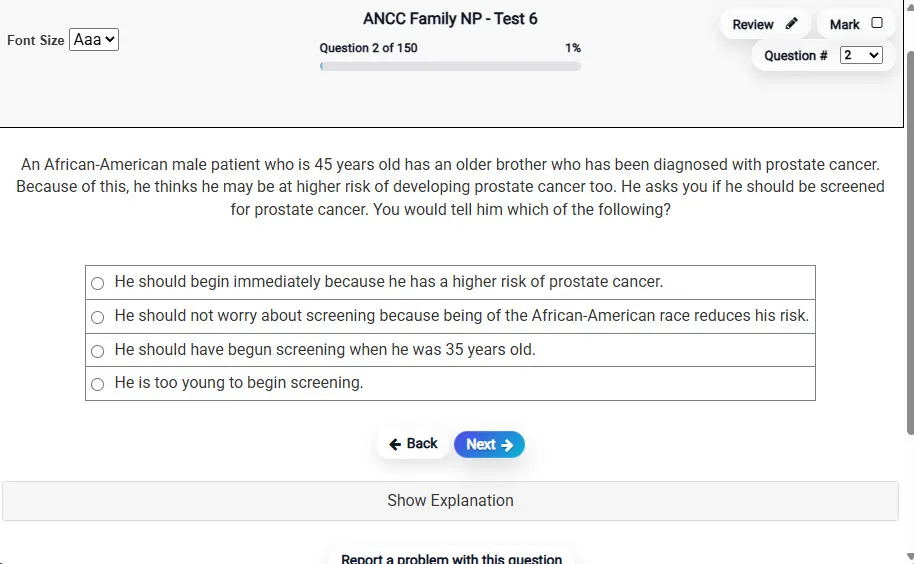
Answering a Question screen – Multiple-choice item view with navigation controls and progress tracker.
Answering a Question Multiple-choice item view with navigation controls and progress tracker.

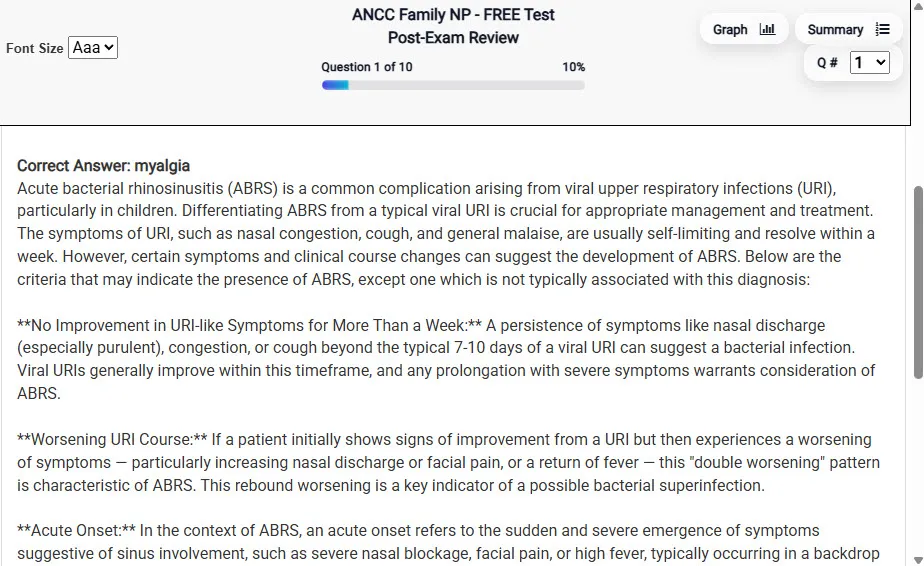
                           Detailed Explanation screen – 
                         Review mode showing chosen answer and rationale and references.
Detailed Explanation Review mode showing chosen answer and rationale and references.

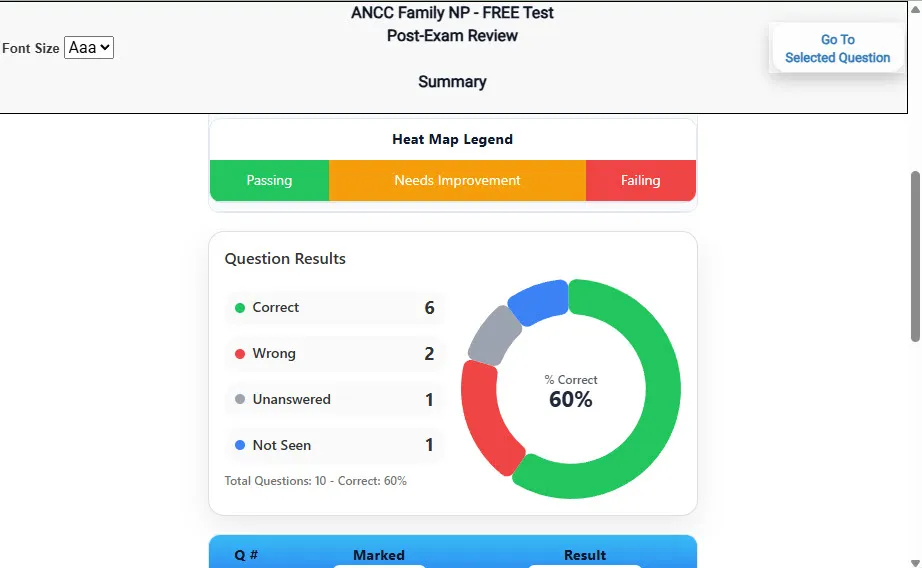
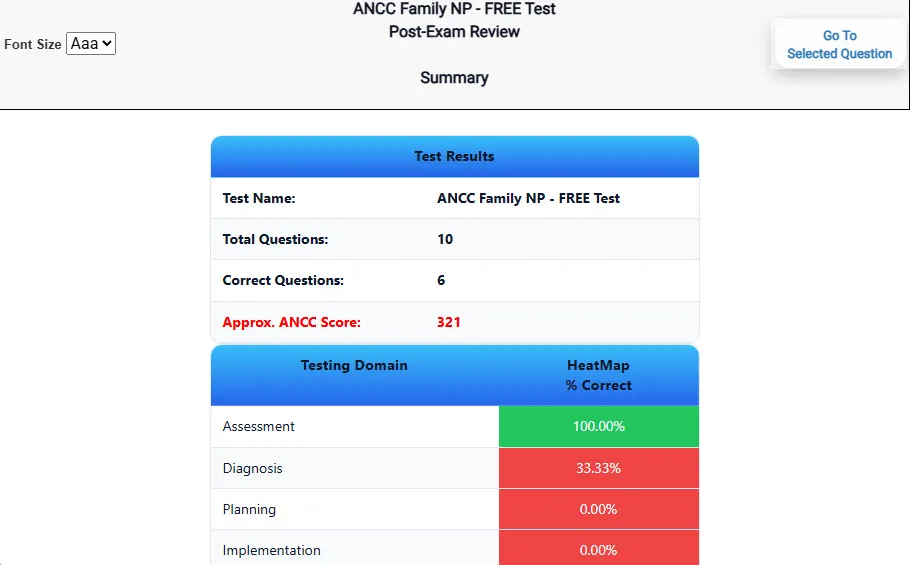
                           Review Summary 1 screen – 
                         Summary with counts for correct/wrong/unanswered and not seen items.
Review Summary 1 Summary with counts for correct/wrong/unanswered and not seen items.

                           Review Summary 2 screen – 
                         Advanced summary with category/domain breakdown and performance insights.
Review Summary 2 Advanced summary with category/domain breakdown and performance insights.

What Each Screen Shows

Answer Question Screen

  • Clean multiple-choice interface with progress bar.
  • Mark for review feature.
  • Matches real test pacing.

Detailed Explanation

  • Correct answer plus rationale.
  • Key concepts and guidelines highlighted.
  • Move between questions to fill knowledge gaps.

Review Summary 1

  • Overall results with total questions and scaled score.
  • Domain heatmap shows strengths and weaknesses.
  • Quick visual feedback on study priorities.

Review Summary 2

  • Chart of correct, wrong, unanswered, not seen.
  • Color-coded results for easy review.
  • Links back to missed items.

Top 10 Reasons to Use Exam Edge for your JCAHPO Certified Ophthalmic Assistant Exam Prep

  1. Focused on the JCAHPO Certified Ophthalmic Assistant Exam

    Our practice tests are built specifically for the JCAHPO COA exam — every question mirrors the real topics, format, and difficulty so you're studying exactly what matters.

  2. Real Exam Simulation

    We match the per-question time limits and pressure of the actual JCAHPO exam, so test day feels familiar and stress-free.

  3. 15 Full Practice Tests & 1,500 Unique Questions

    You'll have more than enough material to master every JCAHPO COA concept — no repeats, no fluff.

  4. Lower Cost Than a Retake

    Ordering 5 practice exams costs less than retaking the JCAHPO Certified Ophthalmic Assistant exam after a failure. One low fee could save you both time and money.

  5. Flexible Testing

    Need to step away mid-exam? Pick up right where you left off — with your remaining time intact.

  6. Instant Scoring & Feedback

    See your raw score and an estimated JCAHPO Certified Ophthalmic Assistant score immediately after finishing each practice test.

  7. Detailed Explanations for Every Question

    Review correct and incorrect answers with clear, step-by-step explanations so you truly understand each topic.

  8. Trusted & Accredited

    We're fully accredited by the Better Business Bureau and uphold the highest standards of trust and transparency.

  9. Web-Based & Always Available

    No software to install. Access your JCAHPO COA practice exams 24/7 from any computer or mobile device.

  10. Expert Support When You Need It

    Need extra help? Our specialized tutors are highly qualified and ready to support your JCAHPO exam prep.


Pass the JCAHPO Certified Ophthalmic Assistant Exam with Realistic Practice Tests from Exam Edge

Preparing for your upcoming JCAHPO Certified Ophthalmic Assistant (COA) Certification Exam can feel overwhelming — but the right practice makes all the difference. Exam Edge gives you the tools, structure, and confidence to pass on your first try. Our online practice exams are built to match the real JCAHPO COA exam in content, format, and difficulty.

  • 📝 15 JCAHPO Certified Ophthalmic Assistant Practice Tests: Access 15 full-length exams with 100 questions each, covering every major JCAHPO Certified Ophthalmic Assistant topic in depth.
  • Instant Online Access: Start practicing right away — no software, no waiting.
  • 🧠 Step-by-Step Explanations: Understand the reasoning behind every correct answer so you can master JCAHPO COA exam concepts.
  • 🔄 Retake Each Exam Up to 4 Times: Build knowledge through repetition and track your improvement over time.
  • 🌐 Web-Based & Available 24/7: Study anywhere, anytime, on any device.
  • 🧘 Boost Your Test-Day Confidence: Familiarity with the JCAHPO format reduces anxiety and helps you perform under pressure.

These JCAHPO Certified Ophthalmic Assistant practice exams are designed to simulate the real testing experience by matching question types, timing, and difficulty level. This approach helps you get comfortable not just with the exam content, but also with the testing environment, so you walk into your exam day focused and confident.


Exam Edge JCAHPO Reviews


Your prep tests helped me pass the COA test. Amazingly similar to the real thing. 

Jonathan , California

Hi, I am happy to say I passed my test for the first time after I studied and practiced for those tests. Now, I would like to continue to study and practice for the COT program. Thank you very much. Best regards.

Karolina , Sunnyvale, CA

Your tests helped me pass the COA exam. I bought the 15-test package and I would study based on those questions. To be honest, questions from this review are a little harder than the real COA exam. Thanks for these exam packages, well put together.

Steve, Philadelphia, PA

Thank you so much Exam Edge! I had been stressing over the notion of taking the Certified Ophthalmic Technician exam for months. A colleague recommended your services, and I could not be happier. I studied primarily using seven practice tests purchased from you, and today, I passed the C.O.T on my f ...
Read More
Andrew , NC


JCAHPO Certified Ophthalmic Assistant Aliases Test Name

Here is a list of alternative names used for this exam.

  • JCAHPO Certified Ophthalmic Assistant
  • JCAHPO Certified Ophthalmic Assistant test
  • JCAHPO Certified Ophthalmic Assistant Certification Test
  • JCAHPO COA test
  • JCAHPO
  • JCAHPO COA
  • COA test
  • JCAHPO Certified Ophthalmic Assistant (COA)
  • Certified Ophthalmic Assistant certification