This is the content of the pop-over!

CTCE Foundations of Reading (090) Practice Tests & Test Prep by Exam Edge


CTCE Foundations of Reading  product image
(4.7)
Based on 40 Reviews

  • Real Exam Simulation: Timed questions and matching content build comfort for your CTCE Foundations of Reading test day.
  • Instant, 24/7 Access: Web-based CTCE Foundations of Reading practice exams with no software needed.
  • Clear Explanations: Step-by-step answers and explanations for your CTCE exam to strengthen understanding.
  • Boosted Confidence: Reduces anxiety and improves test-taking skills to ace your CTCE Foundations of Reading (190).

Featured on

CTCE Foundations of Reading Online Practice Test Bundles

BEST VALUE
15 practice tests

$149.25

$599.25

SAVE $450

Only $9.95 per test!

  • 100% Pass Guarantee
  • 15 online practice tests
  • 100 questions + 2 essays per test
  • Bonus: 100 Flash Cards + Study Guide
  • Instant access
  • Detailed Explanations
  • Practice tests never expire
  • Timed, untimed, or study guide mode
MOST POPULAR
10 practice tests

$99.50

$399.50

SAVE $300

Only $9.95 per test!

  • 10 online practice tests
  • 100 questions + 2 essays per test
  • Bonus: 100 Flash Cards + Study Guide
  • Instant access
  • Detailed Explanations
  • Practice tests never expire
  • Timed, untimed, or study guide mode
5 practice tests

$69.75

$199.75

SAVE $130

Only $13.95 per test!

  • 5 online practice tests
  • 100 questions + 2 essays per test
  • Bonus: 100 Flash Cards
  • Instant access
  • Detailed Explanations
  • Practice tests never expire
  • Timed, untimed, or study guide mode
1 practice test

$39.95

  • 1 online practice test
  • 100 questions + 2 essays per test
  • Instant access
  • Detailed Explanations
  • Practice tests never expire
  • Timed, untimed, or study guide mode
Quick Select
Tap to choose a bundle

** All Prices are in US Dollars (USD) **


CTCE Foundations of Reading (190) Resources

Jump to the section you need most.

Understanding the exact breakdown of the CTCE Foundations of Reading test will help you know what to expect and how to most effectively prepare. The CTCE Foundations of Reading has 100 multiple-choice questions and 2 essay questions. The exam will be broken down into the sections below:

CTCE Foundations of Reading Exam Blueprint
Domain Name % Number of
Questions
Foundations of Reading Development 35% 35
Development of Reading Comprehension 27% 27
Reading Assessment and Instruction 18% 18
Integration of Knowledge and Understanding 10% 10
Reading Comprehension 10 10

CTCE Foundations of Reading Study Tips by Domain

  • Understand the five essential components (phonemic awareness, phonics, fluency, vocabulary, comprehension) and how weaknesses in early components often “mask” higher-level ability—red flag: strong listening comprehension with poor decoding.
  • Phonological vs. phonemic awareness: phonemic awareness is manipulation of individual phonemes (e.g., /m/ /a/ /t/)—common trap: treating rhyming or syllable clapping as sufficient for phoneme-level skill.
  • Apply alphabetic principle and letter-sound correspondences to decoding and encoding—priority rule: teach from continuous blending to automatic word recognition before expecting strong text-level fluency.
  • Use systematic, explicit phonics patterns (closed, vowel-consonant-e, r-controlled, vowel teams) with cumulative review—red flag: students guess from pictures or first letters instead of attending to all graphemes.
  • Build automaticity through accurate, repeated reading and appropriate text selection—threshold cue: if accuracy is low, reduce text difficulty before pushing rate.
  • Develop vocabulary via morphology (roots, prefixes, suffixes) and semantics (multiple meanings, synonyms/antonyms)—common trap: relying only on context clues when the word load or syntax is too complex.
  • Teach explicit comprehension monitoring (e.g., stop, ask “Does this make sense?”, reread, clarify) — red flag: students keep reading after a breakdown without self-correcting.
  • Build background knowledge and vocabulary before complex texts using brief, targeted previews — common trap: spending the whole pre-reading time on personal connections instead of content needed to understand the text.
  • Use question types intentionally (literal, inferential, evaluative) and require text evidence — priority rule: when answers can be given without the text, the task is not assessing comprehension.
  • Teach text structure and features (cause/effect, compare/contrast, problem/solution; headings, captions, graphs) — red flag: students can decode but cannot locate key information in expository text.
  • Model and scaffold summarizing (main idea + key details) with gradual release — common trap: students retell every detail or copy sentences rather than synthesizing.
  • Strengthen inferencing by prompting students to combine prior knowledge + clues from the text — contraindication: accepting opinions as inferences when they are not anchored to specific textual evidence.
  • Use screening, diagnostic, progress-monitoring, and outcome assessments for different decisions—don’t treat a universal screener as a diagnostic tool (common trap on CTCE-style items).
  • Interpret scores by checking reliability/validity and administration fidelity; a red flag is making high-stakes placement decisions from a single informal measure or one testing session.
  • When analyzing errors, link patterns to likely skill gaps (e.g., poor phoneme-grapheme mapping vs. weak vocabulary); priority rule: teach the prerequisite skill first rather than practicing the symptom.
  • Set measurable goals and adjust instruction based on trend data; threshold cue: if progress-monitoring data show a flat slope across several points, intensify (more time, smaller group, tighter alignment) rather than repeating the same lesson.
  • Differentiate instruction using evidence-based routines (explicit modeling, guided practice, cumulative review) and purposeful text selection; red flag is assigning “more reading” without scaffolds when decoding or language weaknesses are present.
  • Ensure assessment and instruction are equitable for multilingual learners and students with disabilities (accommodations vs. modifications); common trap is reducing text complexity or removing essential targets when an accommodation (e.g., extended time, read-aloud of directions) is what’s warranted.
  • Link phonological awareness, phonics, fluency, vocabulary, and comprehension in a clear cause-and-effect chain; red flag: planning isolated “skills days” with no transfer to connected text.
  • Match instruction to developmental progression (e.g., phonemic awareness → decoding/encoding → automatic word recognition) and document the rationale; common trap: pushing complex comprehension tasks when students cannot accurately decode grade-level words.
  • Use the Simple View of Reading (Decoding × Language Comprehension) to interpret patterns; priority rule: low outcomes require you to identify whether the primary constraint is decoding, language comprehension, or both.
  • Select evidence-based practices aligned to the deficit (explicit, systematic phonics for decoding; rich oral language and morphology for language comprehension); contraindication: relying on leveled texts alone to “fix” weak decoding.
  • Integrate writing and spelling to reinforce reading (sound–symbol mapping, morphology, sentence combining); common trap: treating spelling errors as careless rather than diagnostic of phonics or orthographic gaps.
  • Design instruction that is culturally and linguistically responsive without lowering language demands; red flag: simplifying vocabulary and syntax so much that students never practice grade-level academic language.
  • Teach students to identify text structures (e.g., compare/contrast, cause/effect, problem/solution) and use graphic organizers aligned to the structure—red flag: using the same organizer for every passage regardless of structure.
  • Model generating and answering questions at multiple levels (literal, inferential, evaluative) with evidence from the text—common trap: accepting opinions or background knowledge without requiring a cited detail.
  • Explicitly teach making inferences by linking clues in the text with what the reader knows and verifying against the passage—priority rule: an inference must be the “best fit” supported by multiple details, not a single vague hint.
  • Build students’ ability to summarize by focusing on central idea, key details, and eliminating minor/redundant information—red flag: retells that follow the page-by-page order but miss the main idea.
  • Teach monitoring comprehension strategies (clarify unknown words, reread, slow down, paraphrase, adjust predictions) and require a fix-up action when meaning breaks down—common trap: asking “Any questions?” instead of teaching what to do when confused.
  • Address literary elements (character, setting, plot, conflict, theme) and how author’s choices shape meaning—contraindication: treating theme as a single-word topic (e.g., “friendship”) rather than a statement about the topic.


Built to Fit Into Your Busy Life

Everything you need to prepare with confidence—without wasting a minute.

Three Study Modes

Timed, No Time Limit, or Explanation mode.

Actionable Analytics

Heatmaps and scaled scores highlight weak areas.

High-Yield Rationales

Concise explanations emphasize key concepts.

Realistic Interface

Matches the feel of the actual exam environment.

Accessible by Design

Clean layout reduces cognitive load.

Anytime, Anywhere

Web-based access 24/7 on any device.
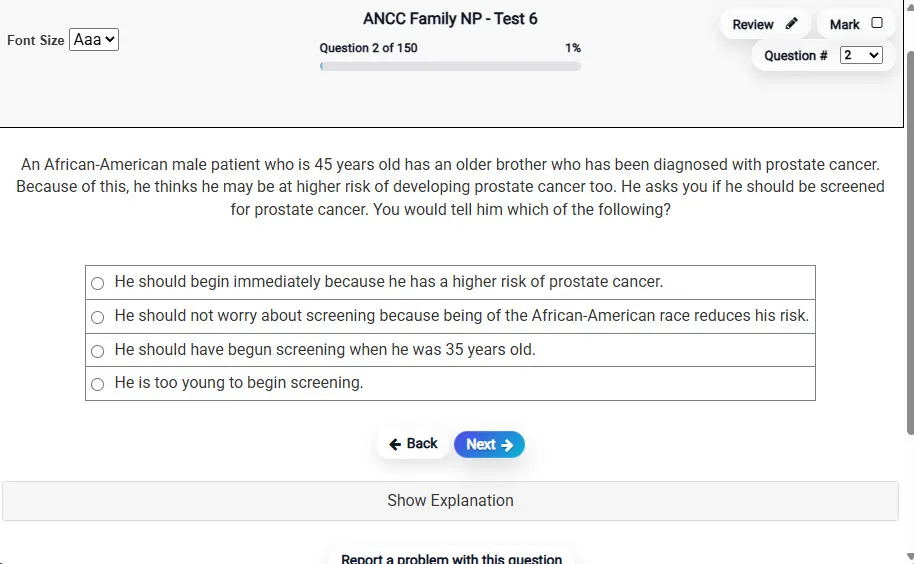
Answering a Question screen – Multiple-choice item view with navigation controls and progress tracker.
Answering a Question Multiple-choice item view with navigation controls and progress tracker.

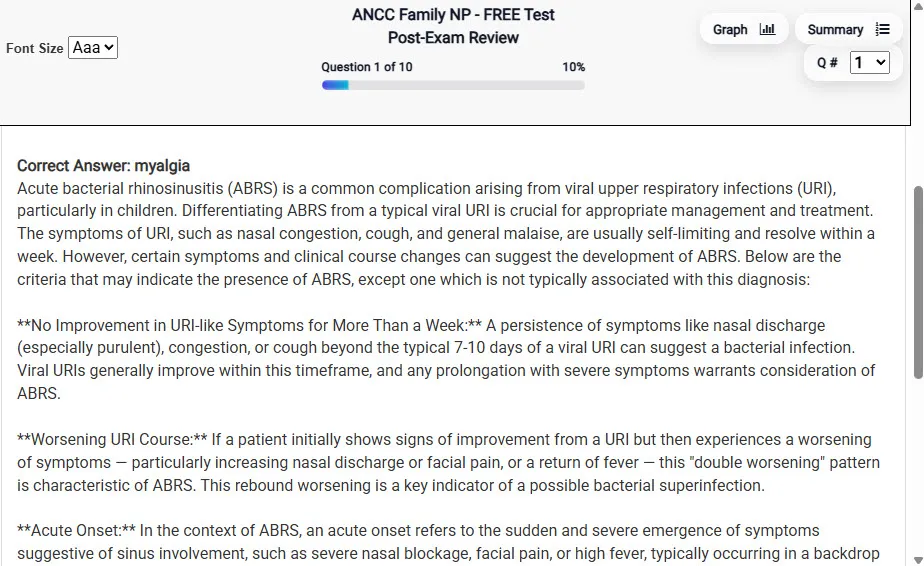
                           Detailed Explanation screen – 
                         Review mode showing chosen answer and rationale and references.
Detailed Explanation Review mode showing chosen answer and rationale and references.

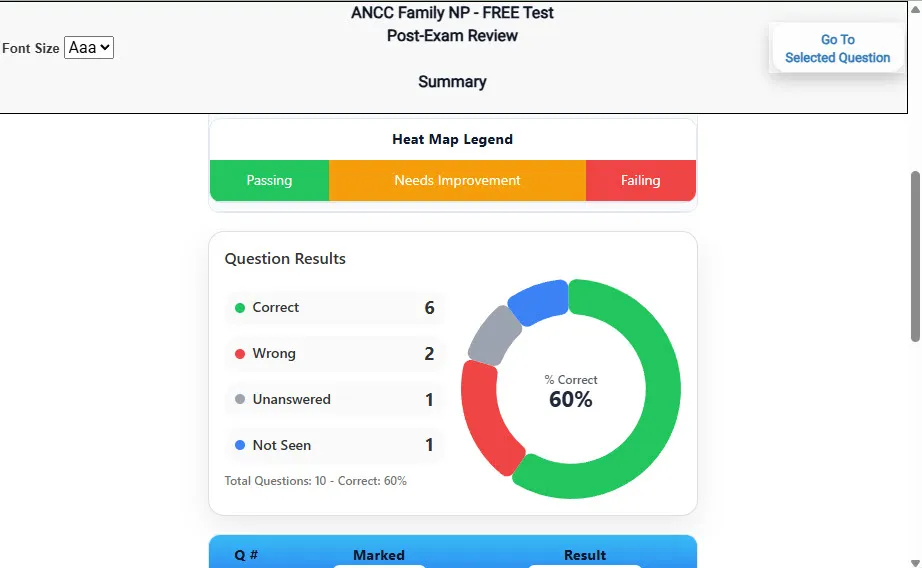
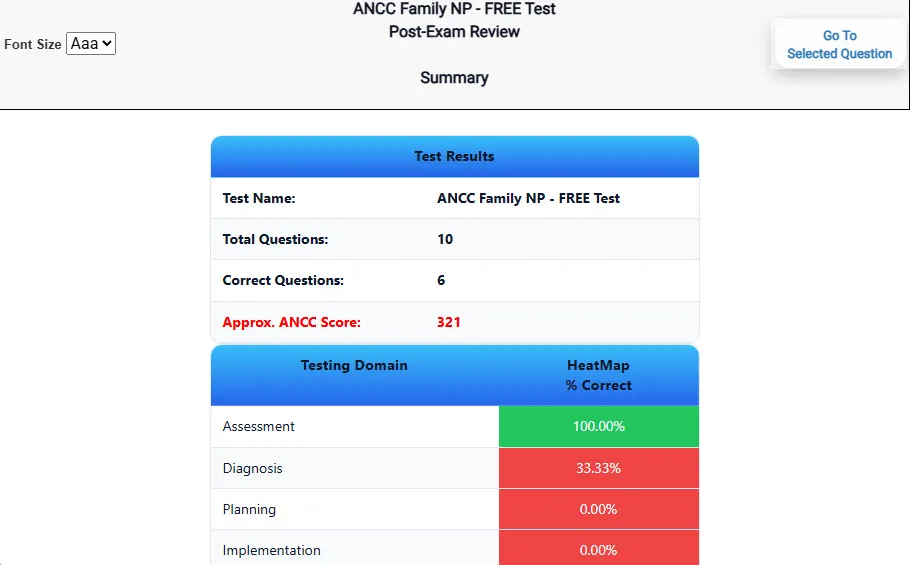
                           Review Summary 1 screen – 
                         Summary with counts for correct/wrong/unanswered and not seen items.
Review Summary 1 Summary with counts for correct/wrong/unanswered and not seen items.

                           Review Summary 2 screen – 
                         Advanced summary with category/domain breakdown and performance insights.
Review Summary 2 Advanced summary with category/domain breakdown and performance insights.

What Each Screen Shows

Answer Question Screen

  • Clean multiple-choice interface with progress bar.
  • Mark for review feature.
  • Matches real test pacing.

Detailed Explanation

  • Correct answer plus rationale.
  • Key concepts and guidelines highlighted.
  • Move between questions to fill knowledge gaps.

Review Summary 1

  • Overall results with total questions and scaled score.
  • Domain heatmap shows strengths and weaknesses.
  • Quick visual feedback on study priorities.

Review Summary 2

  • Chart of correct, wrong, unanswered, not seen.
  • Color-coded results for easy review.
  • Links back to missed items.

Top 10 Reasons to Use Exam Edge for your CTCE Foundations of Reading Exam Prep

  1. Focused on the CTCE Foundations of Reading Exam

    Our practice tests are built specifically for the CTCE Foundations of Reading exam — every question mirrors the real topics, format, and difficulty so you're studying exactly what matters.

  2. Real Exam Simulation

    We match the per-question time limits and pressure of the actual CTCE exam, so test day feels familiar and stress-free.

  3. 15 Full Practice Tests & 1,530 Unique Questions

    You'll have more than enough material to master every CTCE Foundations of Reading concept — no repeats, no fluff.

  4. Lower Cost Than a Retake

    Ordering 5 practice exams costs less than retaking the CTCE Foundations of Reading exam after a failure. One low fee could save you both time and money.

  5. Flexible Testing

    Need to step away mid-exam? Pick up right where you left off — with your remaining time intact.

  6. Instant Scoring & Feedback

    See your raw score and an estimated CTCE Foundations of Reading score immediately after finishing each practice test.

  7. Detailed Explanations for Every Question

    Review correct and incorrect answers with clear, step-by-step explanations so you truly understand each topic.

  8. Trusted & Accredited

    We're fully accredited by the Better Business Bureau and uphold the highest standards of trust and transparency.

  9. Web-Based & Always Available

    No software to install. Access your CTCE Foundations of Reading practice exams 24/7 from any computer or mobile device.

  10. Expert Support When You Need It

    Need extra help? Our specialized tutors are highly qualified and ready to support your CTCE exam prep.


Pass the CTCE Foundations of Reading Exam with Realistic Practice Tests from Exam Edge

Preparing for your upcoming CTCE Foundations of Reading (190) Certification Exam can feel overwhelming — but the right practice makes all the difference. Exam Edge gives you the tools, structure, and confidence to pass on your first try. Our online practice exams are built to match the real CTCE Foundations of Reading exam in content, format, and difficulty.

  • 📝 15 CTCE Foundations of Reading Practice Tests: Access 15 full-length exams with 102 questions each, covering every major CTCE Foundations of Reading topic in depth.
  • Instant Online Access: Start practicing right away — no software, no waiting.
  • 🧠 Step-by-Step Explanations: Understand the reasoning behind every correct answer so you can master CTCE Foundations of Reading exam concepts.
  • 🔄 Retake Each Exam Up to 4 Times: Build knowledge through repetition and track your improvement over time.
  • 🌐 Web-Based & Available 24/7: Study anywhere, anytime, on any device.
  • 🧘 Boost Your Test-Day Confidence: Familiarity with the CTCE format reduces anxiety and helps you perform under pressure.

These CTCE Foundations of Reading practice exams are designed to simulate the real testing experience by matching question types, timing, and difficulty level. This approach helps you get comfortable not just with the exam content, but also with the testing environment, so you walk into your exam day focused and confident.


Exam Edge CTCE Reviews


CTCE Foundations of Reading Aliases Test Name

Here is a list of alternative names used for this exam.

  • CTCE Foundations of Reading
  • CTCE Foundations of Reading test
  • CTCE Foundations of Reading Certification Test
  • CTCE
  • CTCE 190
  • 190 test
  • CTCE Foundations of Reading (190)
  • Foundations of Reading certification