This is the content of the pop-over!

Safety Net Family and Consumer Sciences CST (972) Practice Tests & Test Prep by Exam Edge


NYSTCE Safety Net Family and Consumer Sciences CST   product image
(4.6)
Based on 22 Reviews

  • Real Exam Simulation: Timed questions and matching content build comfort for your Safety Net Family and Consumer Sciences CST test day.
  • Instant, 24/7 Access: Web-based NYSTCE Safety Net Family and Consumer Sciences CST practice exams with no software needed.
  • Clear Explanations: Step-by-step answers and explanations for your NYSTCE exam to strengthen understanding.
  • Boosted Confidence: Reduces anxiety and improves test-taking skills to ace your NYSTCE Safety Net Family and Consumer Sciences CST (972).

Featured on

NYSTCE Safety Net Family and Consumer Sciences CST Online Practice Test Bundles

BEST VALUE
20 practice tests

$174.00

$799.00

SAVE $625

Only $8.70 per test!

  • 100% Pass Guarantee
  • 20 online practice tests
  • 90 questions per test
  • Bonus: 100 Flash Cards + Study Guide
  • Instant access
  • Detailed Explanations
  • Practice tests never expire
  • Timed, untimed, or study guide mode
MOST POPULAR
10 practice tests

$99.50

$399.50

SAVE $300

Only $9.95 per test!

  • 10 online practice tests
  • 90 questions per test
  • Bonus: 100 Flash Cards + Study Guide
  • Instant access
  • Detailed Explanations
  • Practice tests never expire
  • Timed, untimed, or study guide mode
5 practice tests

$69.75

$199.75

SAVE $130

Only $13.95 per test!

  • 5 online practice tests
  • 90 questions per test
  • Bonus: 100 Flash Cards
  • Instant access
  • Detailed Explanations
  • Practice tests never expire
  • Timed, untimed, or study guide mode
1 practice test

$39.95

  • 1 online practice test
  • 90 questions per test
  • Instant access
  • Detailed Explanations
  • Practice tests never expire
  • Timed, untimed, or study guide mode
Quick Select
Tap to choose a bundle

** All Prices are in US Dollars (USD) **


Safety Net Family and Consumer Sciences CST (972) Resources

Jump to the section you need most.

Understanding the exact breakdown of the NYSTCE Safety Net Family and Consumer Sciences CST test will help you know what to expect and how to most effectively prepare. The NYSTCE Safety Net Family and Consumer Sciences CST has multiple-choice questions . The exam will be broken down into the sections below:

NYSTCE Safety Net Family and Consumer Sciences CST Exam Blueprint
Domain Name
Individual and Family Health and Wellness  
Human Development and Parenting  
Interpersonal and Family Relationships  
Nutrition - Food Science Food Production  
Consumer Skills and Resource Management  
Workplace Skills and Careers  

NYSTCE Safety Net Family and Consumer Sciences CST Study Tips by Domain

  • Use a holistic wellness lens (physical, emotional, social, intellectual, environmental) and prioritize safety first—red flag: plans that ignore sleep, stress, or social supports while focusing only on diet/exercise.
  • Know major chronic disease risk factors and prevention (CVD, diabetes, obesity, hypertension) and emphasize evidence-based lifestyle changes—common trap: confusing correlation with causation when interpreting health claims or media reports.
  • Apply mental health literacy: recognize signs of anxiety, depression, and substance misuse and identify appropriate help-seeking pathways—priority rule: any mention of self-harm requires immediate referral to crisis supports and a trusted adult per school policy.
  • Understand communicable disease basics (transmission routes, hygiene, vaccination) and implement infection-control practices—threshold cue: symptoms like fever with rash or persistent vomiting warrant staying home and notifying the school nurse.
  • Demonstrate first aid and emergency response fundamentals (bleeding control, burns, choking, shock) while staying within training limits—contraindication: don’t move a person with suspected neck/spine injury unless there’s immediate danger.
  • Evaluate health services and consumer health decisions (labels, OTC medications, reliable sources, informed consent) with attention to privacy—red flag: advice based on testimonials or non-credentialed “experts” instead of reputable medical guidance.
  • Apply major developmental theories (e.g., Piaget, Erikson, Vygotsky) to age-appropriate expectations; red flag: confusing typical milestones with wide normal variation and labeling it as a delay.
  • Use NYS-mandated reporting and child protection concepts correctly; priority rule: if abuse/neglect is suspected, document factual observations and follow reporting protocol—don’t investigate or promise confidentiality.
  • Identify prenatal risk factors (teratogens, inadequate prenatal care, nutrition, stress) and protective factors; common trap: assuming “natural” substances (alcohol, vaping, certain supplements) are harmless in pregnancy.
  • Differentiate parenting styles (authoritative, authoritarian, permissive, uninvolved) and likely child outcomes; cue: authoritative combines warmth with consistent limits—avoid equating strictness alone with effective parenting.
  • Promote safe infant/child care practices (sleep, supervision, car seats, safe environment); threshold cue: infants should be placed on their backs on a firm, uncluttered sleep surface—no loose bedding or soft objects.
  • Support positive guidance/discipline strategies aligned to developmental level; contraindication: corporal punishment and shaming increase risk for behavioral and mental health problems—use clear rules, natural/logical consequences, and reinforcement.
  • Use clear “I” statements (e.g., “I feel… when… because…”) to reduce defensiveness; red flag: “you always/you never” escalates conflict and is a common communication trap.
  • Teach active listening as a check-for-understanding routine (paraphrase, ask clarifying questions, reflect feelings); priority rule: if emotions are high, pause and restate before problem-solving.
  • Differentiate assertive vs. passive/aggressive communication and set boundaries with specific, observable requests; red flag: boundary statements without a consequence or follow-through tend to fail.
  • Apply a structured conflict-resolution model (define problem, generate options, evaluate, agree, follow up); common trap: jumping straight to solutions without agreeing on the problem first.
  • Cover relationship health indicators (mutual respect, consent, equitable decision-making) and warning signs of abuse (isolation, coercive control, digital monitoring); priority rule: any threat of harm requires immediate referral to appropriate school protocols/resources.
  • Address family dynamics and roles across cultures and structures while avoiding stereotyping; red flag: assuming one “normal” family pattern can bias communication and undermine trust.
  • Apply the Dietary Guidelines and MyPlate to plan meals across the life span; red flag: confusing “serving size” with “portion size” when evaluating intake.
  • Use label literacy (ingredients, %DV, allergens, health claims) to compare foods; common trap: treating “natural” as a regulated nutrition claim while missing FDA-defined claims like “low sodium” and “good source.”
  • Prevent foodborne illness with time–temperature control and cross-contamination prevention; priority rule: keep hot foods ≥135°F, cold foods ≤41°F, and never leave TCS foods in the danger zone (41–135°F) for more than 2 hours (1 hour if >90°F).
  • Demonstrate safe minimum internal cooking temperatures and proper reheating; red flag: undercooking poultry—cook to 165°F (ground meats 160°F; whole cuts/seafood 145°F with rest time as applicable).
  • Explain food science principles (heat transfer, gelatinization, Maillard browning, emulsions, leavening, gluten development) in product outcomes; common trap: overmixing quick breads, which increases gluten and yields a tough crumb.
  • Plan and execute food production with standardized recipes, scaling, and yield; priority cue: control costs by tracking edible-portion (EP) vs. as-purchased (AP) amounts and using proper measuring to avoid waste and inconsistent results.
  • Apply decision-making models to consumer choices (identify need, compare options, evaluate outcomes) — red flag: impulse buys driven by advertising claims without checking total cost.
  • Compute and interpret “true cost” of credit (APR, finance charge, minimum payments) — common trap: focusing on monthly payment while ignoring interest paid over time.
  • Build a realistic budget using net income, fixed vs. variable expenses, and an emergency fund — priority rule: pay essentials first, then debt, then savings goals.
  • Use unit pricing, warranties, and return policies to evaluate purchases — red flag: extended warranties that duplicate manufacturer coverage or cost more than expected repair risk.
  • Compare housing options (rent vs. buy) using leases, security deposits, utilities, and maintenance responsibilities — common trap: missing fees/penalties in lease terms (late fees, subletting, early termination).
  • Demonstrate resource management in the home (time, energy, money, and materials) — priority rule: plan workflows to reduce waste (e.g., batch tasks, preventive maintenance) rather than reacting to crises.
  • Match career goals to education/training pathways (CTE program, apprenticeship, certification, degree) and use labor-market info (growth, wages, outlook) to justify choices—red flag: picking a career based only on interest without verifying realistic entry requirements.
  • Apply employability skills (attendance, punctuality, initiative, professionalism) and document them with specific examples—common trap: listing soft skills on a résumé with no measurable evidence (e.g., awards, leadership, outcomes).
  • Practice job-search documents (targeted résumé, cover letter, references) tailored to the posting—priority rule: mirror key job keywords honestly; red flag: copying generic templates that don’t align with required qualifications.
  • Use interview readiness strategies (STAR responses, appropriate attire, workplace etiquette) and plan follow-up communication—common trap: discussing salary/benefits too early or speaking negatively about prior employers.
  • Know core workplace rights and responsibilities (anti-discrimination, harassment prevention, confidentiality, safety reporting) and follow policies—red flag: ignoring documentation/reporting steps when a safety or harassment issue occurs.
  • Demonstrate personal finance and workplace budgeting basics (pay stubs, taxes, withholding, benefits, net vs. gross pay) to evaluate job offers—common trap: comparing offers using only hourly wage instead of total compensation and take-home pay.


Built to Fit Into Your Busy Life

Everything you need to prepare with confidence—without wasting a minute.

Three Study Modes

Timed, No Time Limit, or Explanation mode.

Actionable Analytics

Heatmaps and scaled scores highlight weak areas.

High-Yield Rationales

Concise explanations emphasize key concepts.

Realistic Interface

Matches the feel of the actual exam environment.

Accessible by Design

Clean layout reduces cognitive load.

Anytime, Anywhere

Web-based access 24/7 on any device.
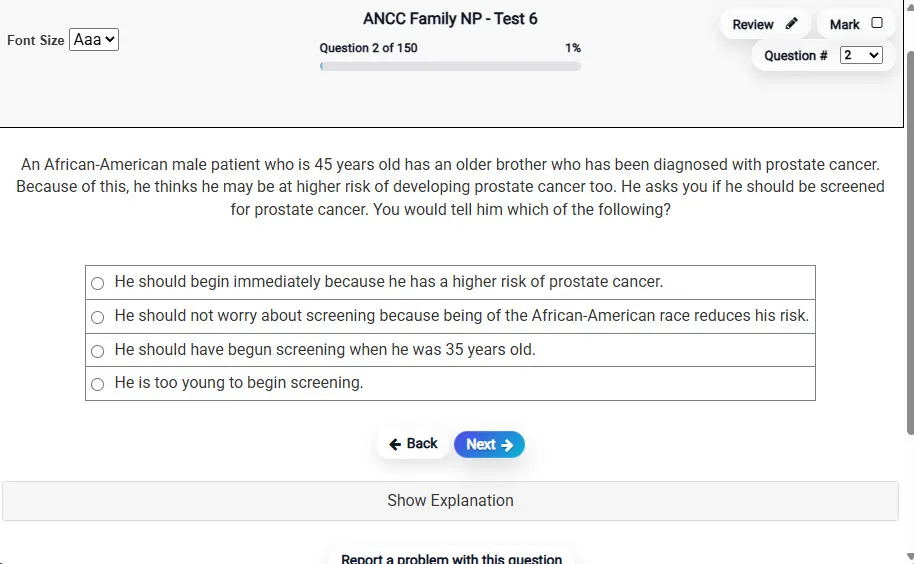
Answering a Question screen – Multiple-choice item view with navigation controls and progress tracker.
Answering a Question Multiple-choice item view with navigation controls and progress tracker.

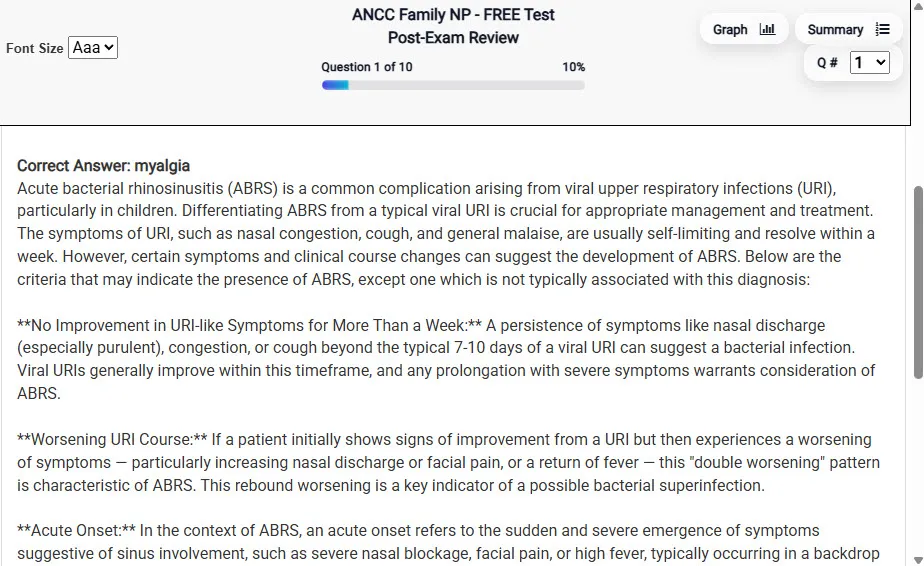
                           Detailed Explanation screen – 
                         Review mode showing chosen answer and rationale and references.
Detailed Explanation Review mode showing chosen answer and rationale and references.

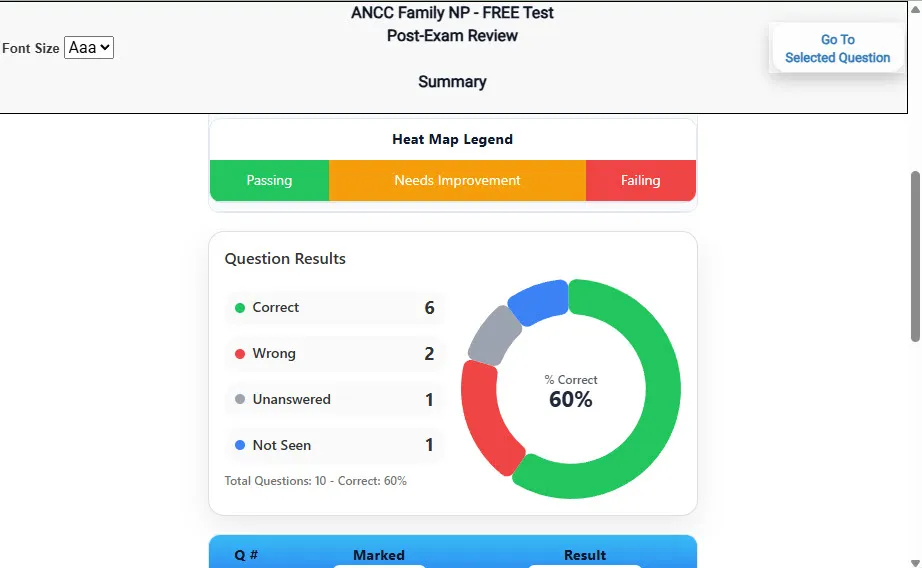
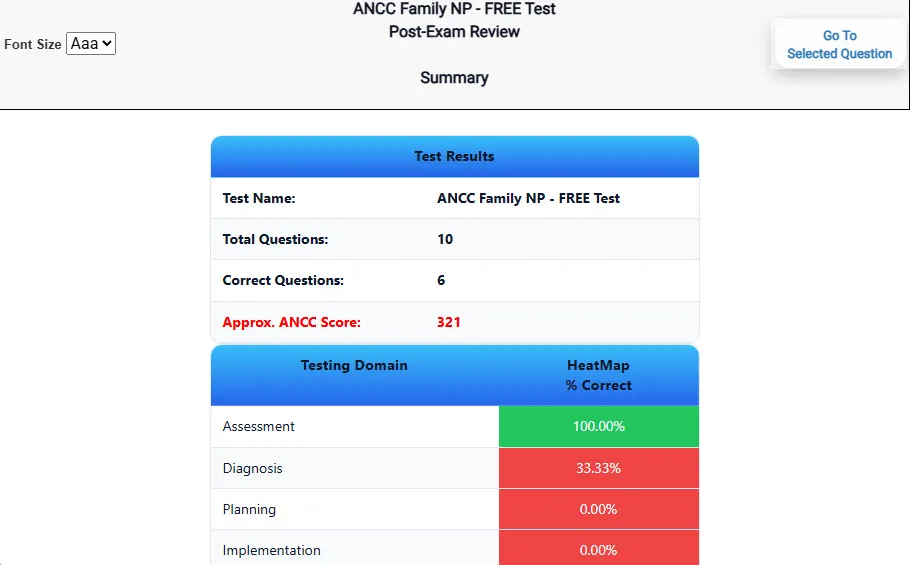
                           Review Summary 1 screen – 
                         Summary with counts for correct/wrong/unanswered and not seen items.
Review Summary 1 Summary with counts for correct/wrong/unanswered and not seen items.

                           Review Summary 2 screen – 
                         Advanced summary with category/domain breakdown and performance insights.
Review Summary 2 Advanced summary with category/domain breakdown and performance insights.

What Each Screen Shows

Answer Question Screen

  • Clean multiple-choice interface with progress bar.
  • Mark for review feature.
  • Matches real test pacing.

Detailed Explanation

  • Correct answer plus rationale.
  • Key concepts and guidelines highlighted.
  • Move between questions to fill knowledge gaps.

Review Summary 1

  • Overall results with total questions and scaled score.
  • Domain heatmap shows strengths and weaknesses.
  • Quick visual feedback on study priorities.

Review Summary 2

  • Chart of correct, wrong, unanswered, not seen.
  • Color-coded results for easy review.
  • Links back to missed items.

Top 10 Reasons to Use Exam Edge for your NYSTCE Safety Net Family and Consumer Sciences CST Exam Prep

  1. Focused on the NYSTCE Safety Net Family and Consumer Sciences CST Exam

    Our practice tests are built specifically for the Safety Net Family and Consumer Sciences CST exam — every question mirrors the real topics, format, and difficulty so you're studying exactly what matters.

  2. Real Exam Simulation

    We match the per-question time limits and pressure of the actual NYSTCE exam, so test day feels familiar and stress-free.

  3. 20 Full Practice Tests & 1,800 Unique Questions

    You'll have more than enough material to master every Safety Net Family and Consumer Sciences CST concept — no repeats, no fluff.

  4. Lower Cost Than a Retake

    Ordering 5 practice exams costs less than retaking the NYSTCE Safety Net Family and Consumer Sciences CST exam after a failure. One low fee could save you both time and money.

  5. Flexible Testing

    Need to step away mid-exam? Pick up right where you left off — with your remaining time intact.

  6. Instant Scoring & Feedback

    See your raw score and an estimated NYSTCE Safety Net Family and Consumer Sciences CST score immediately after finishing each practice test.

  7. Detailed Explanations for Every Question

    Review correct and incorrect answers with clear, step-by-step explanations so you truly understand each topic.

  8. Trusted & Accredited

    We're fully accredited by the Better Business Bureau and uphold the highest standards of trust and transparency.

  9. Web-Based & Always Available

    No software to install. Access your Safety Net Family and Consumer Sciences CST practice exams 24/7 from any computer or mobile device.

  10. Expert Support When You Need It

    Need extra help? Our specialized tutors are highly qualified and ready to support your NYSTCE exam prep.


Pass the NYSTCE Safety Net Family and Consumer Sciences CST Exam with Realistic Practice Tests from Exam Edge

Preparing for your upcoming NYSTCE Safety Net Family and Consumer Sciences CST (972) Certification Exam can feel overwhelming — but the right practice makes all the difference. Exam Edge gives you the tools, structure, and confidence to pass on your first try. Our online practice exams are built to match the real Safety Net Family and Consumer Sciences CST exam in content, format, and difficulty.

  • 📝 20 NYSTCE Safety Net Family and Consumer Sciences CST Practice Tests: Access 20 full-length exams with 90 questions each, covering every major NYSTCE Safety Net Family and Consumer Sciences CST topic in depth.
  • Instant Online Access: Start practicing right away — no software, no waiting.
  • 🧠 Step-by-Step Explanations: Understand the reasoning behind every correct answer so you can master Safety Net Family and Consumer Sciences CST exam concepts.
  • 🔄 Retake Each Exam Up to 4 Times: Build knowledge through repetition and track your improvement over time.
  • 🌐 Web-Based & Available 24/7: Study anywhere, anytime, on any device.
  • 🧘 Boost Your Test-Day Confidence: Familiarity with the NYSTCE format reduces anxiety and helps you perform under pressure.

These NYSTCE Safety Net Family and Consumer Sciences CST practice exams are designed to simulate the real testing experience by matching question types, timing, and difficulty level. This approach helps you get comfortable not just with the exam content, but also with the testing environment, so you walk into your exam day focused and confident.


Exam Edge NYSTCE Reviews


Not a user friendly experience

Amelia , Rochester, New York

Didn't really reflect the questions that were on the test for the most part. Also, they totally got the format of the constructed response question wrong, which never changes. Overall OK if you have nothing else, but definitely not worth the price they charge in my opinion.

Randy , Queens, New York

It was a good test run. Now I know what to expect and what I need to study.

Timothy , Eden, New York

The experience was very practical and I did well.

Trina , Silver Spring , MD

Very easy to navigate.

Collene , Silver Spring , MD

Exam Edge was terrific. Even better than I hoped. Just completing and reviewing the tests are a great learning experience. I can't wait to take the certification test. Tom S.

Thomas , Port Washington, NY


NYSTCE Safety Net Family and Consumer Sciences CST Aliases Test Name

Here is a list of alternative names used for this exam.

  • NYSTCE Safety Net Family and Consumer Sciences CST
  • NYSTCE Safety Net Family and Consumer Sciences CST test
  • NYSTCE Safety Net Family and Consumer Sciences CST Certification Test
  • Safety Net Family and Consumer Sciences CST test
  • NYSTCE
  • NYSTCE 972
  • 972 test
  • NYSTCE Safety Net Family and Consumer Sciences CST (972)
  • Safety Net Family and Consumer Sciences CST certification