This is the content of the pop-over!

Safety Net Deaf and Hard of Hearing CST (963) Practice Tests & Test Prep by Exam Edge


NYSTCE Safety Net Deaf and Hard of Hearing CST   product image
(4.8)
Based on 40 Reviews

  • Real Exam Simulation: Timed questions and matching content build comfort for your Safety Net Deaf and Hard of Hearing CST test day.
  • Instant, 24/7 Access: Web-based NYSTCE Safety Net Deaf and Hard of Hearing CST practice exams with no software needed.
  • Clear Explanations: Step-by-step answers and explanations for your NYSTCE exam to strengthen understanding.
  • Boosted Confidence: Reduces anxiety and improves test-taking skills to ace your NYSTCE Safety Net Deaf and Hard of Hearing CST (963).

Featured on

NYSTCE Safety Net Deaf and Hard of Hearing CST Online Practice Test Bundles

BEST VALUE
5 practice tests

$69.75

$199.75

SAVE $130

Only $13.95 per test!

  • 100% Pass Guarantee
  • 5 online practice tests
  • 90 questions per test
  • Bonus: 100 Flash Cards + Study Guide
  • Instant access
  • Detailed Explanations
  • Practice tests never expire
  • Timed, untimed, or study guide mode
1 practice test

$39.95

  • 1 online practice test
  • 90 questions per test
  • Instant access
  • Detailed Explanations
  • Practice tests never expire
  • Timed, untimed, or study guide mode
Quick Select
Tap to choose a bundle

** All Prices are in US Dollars (USD) **


Safety Net Deaf and Hard of Hearing CST (963) Resources

Jump to the section you need most.

Understanding the exact breakdown of the NYSTCE Safety Net Deaf and Hard of Hearing CST test will help you know what to expect and how to most effectively prepare. The NYSTCE Safety Net Deaf and Hard of Hearing CST has 90 multiple-choice questions and 1 essay questions. The exam will be broken down into the sections below:

NYSTCE Safety Net Deaf and Hard of Hearing CST Exam Blueprint
Domain Name % Number of
Questions
Understanding Students Who Are Deaf or Hard of Hearing 16% 16
Assessing Students and Developing Individualized Education Programs (IEPs) 26% 26
Promoting Student Development and Learning 32% 32
Working in the Professional Environment 16% 16

NYSTCE Safety Net Deaf and Hard of Hearing CST Study Tips by Domain

  • Differentiate degrees/configurations of hearing loss (conductive vs. sensorineural vs. mixed; unilateral vs. bilateral) and predict classroom impact; red flag: assuming “mild” loss means no language-access needs, especially in noise.
  • Connect etiology/timing (prelingual vs. postlingual; congenital vs. acquired) to language development and academic profiles; common trap: attributing literacy delays solely to “disability” rather than reduced early language exposure.
  • Compare communication approaches (ASL, listening and spoken language, total communication, bilingual-bicultural) and choose based on student/family goals and access; priority rule: select the mode that provides consistent, complete language access across the school day.
  • Explain how amplification and technology work (hearing aids, cochlear implants, bone-anchored devices, FM/DM, captions) and their limits; red flag: speaking louder instead of improving signal-to-noise ratio and checking device function.
  • Recognize co-occurring needs (e.g., vestibular issues, vision concerns, additional disabilities) and how they alter instruction and safety planning; common trap: overlooking fatigue and attention issues from sustained listening effort (listening “load”).
  • Apply Deaf culture and identity considerations to classroom interactions and family engagement; contraindication: treating ASL or Deaf cultural affiliation as a barrier rather than a strength that supports belonging and communication.
  • Use multiple data sources (audiology, speech-language, academic, classroom observations, family input) to determine present levels; red flag: relying on a single test score or informal impression to justify services.
  • Ensure assessments are accessible (qualified interpreter, appropriate accommodations, valid administration) and document them; common trap: giving a language-loaded test without noting how communication mode impacted validity.
  • Write PLAAFP statements that are measurable and linked to communication access (e.g., listening conditions, visual supports, device use); priority rule: describe how hearing status affects involvement/progress in the general curriculum.
  • Develop annual goals that are specific, observable, and include criteria, conditions, and timeframe; red flag: goals like “will improve communication” without baseline or mastery threshold.
  • Select services and supports tied directly to assessed needs (e.g., interpreting, CART, FM/DM, note-taking, preferential seating, itinerant teacher of the deaf); common trap: listing accommodations without stating when/where they are required (all instructional settings vs. specific classes).
  • Plan progress monitoring with clear schedules and responsible staff, and revise the IEP based on data; contraindication: waiting until annual review when data show the student is not making expected progress.
  • Plan instruction using accessible language supports (e.g., ASL/English bilingual strategies, visual scaffolds, captioned media) and verify access before teaching—red flag: assuming hearing aids/cochlear implants or seating alone ensures comprehension.
  • Teach explicit vocabulary and academic discourse (content terms, multiple-meaning words, morphology) with repeated, varied practice—common trap: relying on incidental learning from classroom talk that D/HH students may not fully access.
  • Implement a structured literacy approach when needed (phonological/phonemic awareness options, decoding, fluency, and comprehension strategies) and monitor progress frequently—priority rule: don’t equate speech clarity with reading proficiency.
  • Support social-emotional learning and identity development through peer interaction structures, self-advocacy instruction, and access to Deaf role models when appropriate—red flag: isolating the student via 1:1 adult support that reduces peer communication opportunities.
  • Use classroom communication management (turn-taking cues, one speaker at a time, visual attention-getters, clear sightlines, and noise control) to optimize comprehension—contraindication: giving directions while facing away, talking during transitions, or speaking while writing on the board.
  • Select and implement accommodations and assistive technology (FM/DM systems, captions, interpreters, notetaking supports) and troubleshoot daily—common trap: failing to check batteries, connections, and microphone placement before high-stakes instruction or assessments.
  • Maintain strict confidentiality under FERPA and IDEA; red flag: discussing a student’s hearing status, IEP, or interpreter services in hallways, emails, or social media.
  • Follow the IEP as the controlling document for services and accommodations; common trap: providing “helpful” supports (e.g., changing communication mode, modifying goals) without CSE documentation and parent notice/consent where required.
  • Use qualified personnel and defined roles (teacher of the deaf, educational interpreter, audiologist, SLP) and document collaboration; priority rule: never use untrained staff or peers as interpreters for instruction or sensitive conversations.
  • Ensure accessibility and effective communication across settings; red flag: assemblies, videos, emergency drills, or extracurriculars lacking captioning, interpreting, or visual alerts consistent with student needs.
  • Implement hearing technology protocols and safety checks (e.g., daily listening check for hearing aids/cochlear implant processors, FM/DM pairing, microphone etiquette); common trap: teaching without confirming devices are functioning and reporting issues promptly.
  • Practice ethical, culturally responsive communication with families and the Deaf community; contraindication: assuming all D/HH students prefer oralism, ASL, or a single identity label—confirm preferences and use appropriate communication access for meetings.


Built to Fit Into Your Busy Life

Everything you need to prepare with confidence—without wasting a minute.

Three Study Modes

Timed, No Time Limit, or Explanation mode.

Actionable Analytics

Heatmaps and scaled scores highlight weak areas.

High-Yield Rationales

Concise explanations emphasize key concepts.

Realistic Interface

Matches the feel of the actual exam environment.

Accessible by Design

Clean layout reduces cognitive load.

Anytime, Anywhere

Web-based access 24/7 on any device.
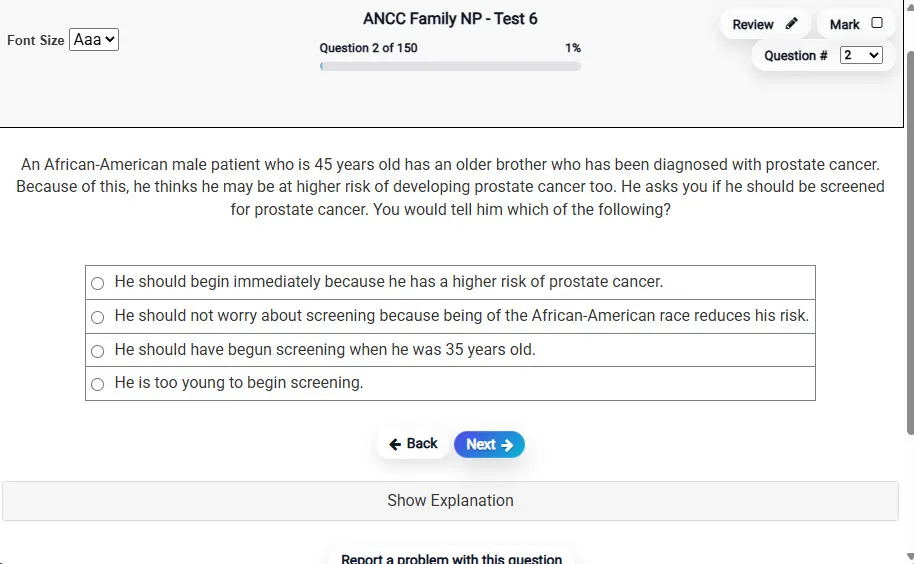
Answering a Question screen – Multiple-choice item view with navigation controls and progress tracker.
Answering a Question Multiple-choice item view with navigation controls and progress tracker.

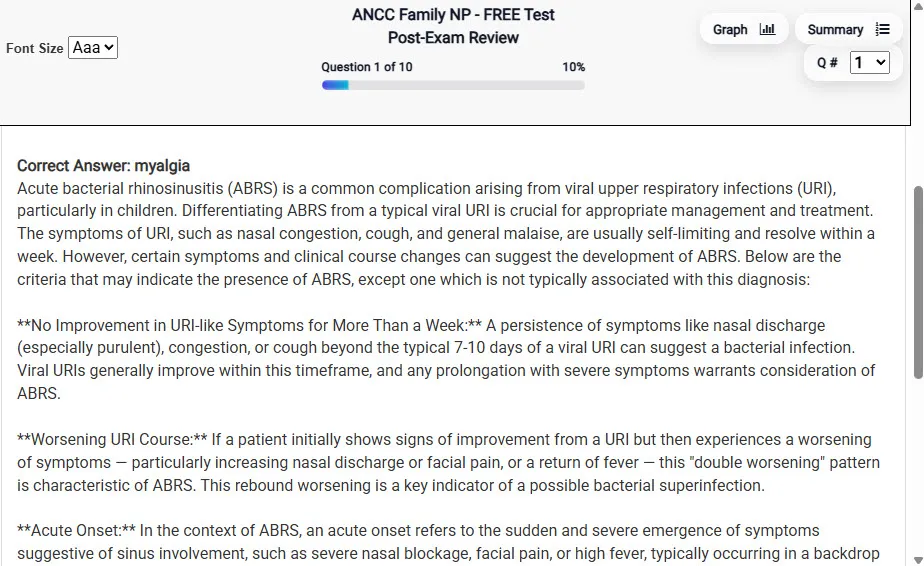
                           Detailed Explanation screen – 
                         Review mode showing chosen answer and rationale and references.
Detailed Explanation Review mode showing chosen answer and rationale and references.

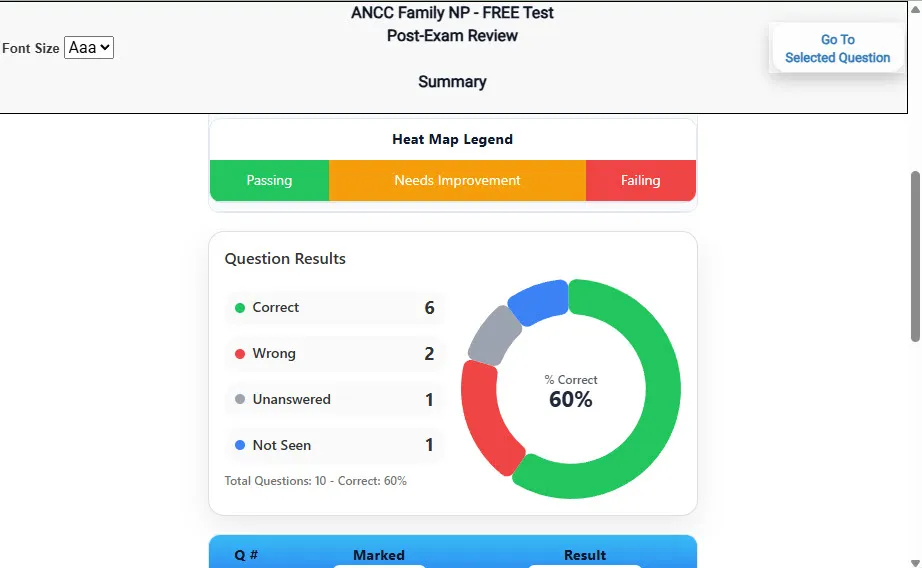
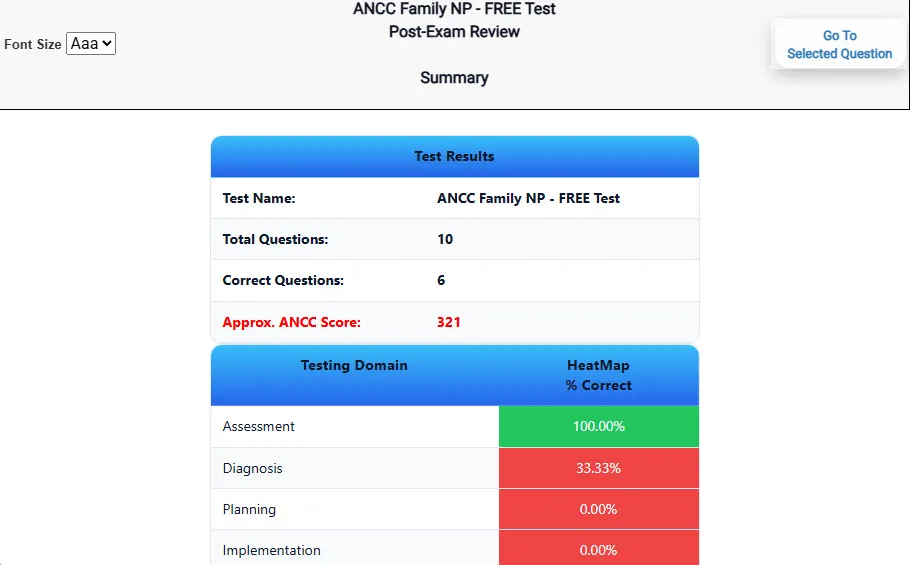
                           Review Summary 1 screen – 
                         Summary with counts for correct/wrong/unanswered and not seen items.
Review Summary 1 Summary with counts for correct/wrong/unanswered and not seen items.

                           Review Summary 2 screen – 
                         Advanced summary with category/domain breakdown and performance insights.
Review Summary 2 Advanced summary with category/domain breakdown and performance insights.

What Each Screen Shows

Answer Question Screen

  • Clean multiple-choice interface with progress bar.
  • Mark for review feature.
  • Matches real test pacing.

Detailed Explanation

  • Correct answer plus rationale.
  • Key concepts and guidelines highlighted.
  • Move between questions to fill knowledge gaps.

Review Summary 1

  • Overall results with total questions and scaled score.
  • Domain heatmap shows strengths and weaknesses.
  • Quick visual feedback on study priorities.

Review Summary 2

  • Chart of correct, wrong, unanswered, not seen.
  • Color-coded results for easy review.
  • Links back to missed items.

Top 10 Reasons to Use Exam Edge for your NYSTCE Safety Net Deaf and Hard of Hearing CST Exam Prep

  1. Focused on the NYSTCE Safety Net Deaf and Hard of Hearing CST Exam

    Our practice tests are built specifically for the Safety Net Deaf and Hard of Hearing CST exam — every question mirrors the real topics, format, and difficulty so you're studying exactly what matters.

  2. Real Exam Simulation

    We match the per-question time limits and pressure of the actual NYSTCE exam, so test day feels familiar and stress-free.

  3. 5 Full Practice Tests & 450 Unique Questions

    You'll have more than enough material to master every Safety Net Deaf and Hard of Hearing CST concept — no repeats, no fluff.

  4. Lower Cost Than a Retake

    Ordering 5 practice exams costs less than retaking the NYSTCE Safety Net Deaf and Hard of Hearing CST exam after a failure. One low fee could save you both time and money.

  5. Flexible Testing

    Need to step away mid-exam? Pick up right where you left off — with your remaining time intact.

  6. Instant Scoring & Feedback

    See your raw score and an estimated NYSTCE Safety Net Deaf and Hard of Hearing CST score immediately after finishing each practice test.

  7. Detailed Explanations for Every Question

    Review correct and incorrect answers with clear, step-by-step explanations so you truly understand each topic.

  8. Trusted & Accredited

    We're fully accredited by the Better Business Bureau and uphold the highest standards of trust and transparency.

  9. Web-Based & Always Available

    No software to install. Access your Safety Net Deaf and Hard of Hearing CST practice exams 24/7 from any computer or mobile device.

  10. Expert Support When You Need It

    Need extra help? Our specialized tutors are highly qualified and ready to support your NYSTCE exam prep.


Pass the NYSTCE Safety Net Deaf and Hard of Hearing CST Exam with Realistic Practice Tests from Exam Edge

Preparing for your upcoming NYSTCE Safety Net Deaf and Hard of Hearing CST (963) Certification Exam can feel overwhelming — but the right practice makes all the difference. Exam Edge gives you the tools, structure, and confidence to pass on your first try. Our online practice exams are built to match the real Safety Net Deaf and Hard of Hearing CST exam in content, format, and difficulty.

  • 📝 5 NYSTCE Safety Net Deaf and Hard of Hearing CST Practice Tests: Access 5 full-length exams with 90 questions each, covering every major NYSTCE Safety Net Deaf and Hard of Hearing CST topic in depth.
  • Instant Online Access: Start practicing right away — no software, no waiting.
  • 🧠 Step-by-Step Explanations: Understand the reasoning behind every correct answer so you can master Safety Net Deaf and Hard of Hearing CST exam concepts.
  • 🔄 Retake Each Exam Up to 4 Times: Build knowledge through repetition and track your improvement over time.
  • 🌐 Web-Based & Available 24/7: Study anywhere, anytime, on any device.
  • 🧘 Boost Your Test-Day Confidence: Familiarity with the NYSTCE format reduces anxiety and helps you perform under pressure.

These NYSTCE Safety Net Deaf and Hard of Hearing CST practice exams are designed to simulate the real testing experience by matching question types, timing, and difficulty level. This approach helps you get comfortable not just with the exam content, but also with the testing environment, so you walk into your exam day focused and confident.


Exam Edge NYSTCE Reviews


Not a user friendly experience

Amelia , Rochester, New York

Didn't really reflect the questions that were on the test for the most part. Also, they totally got the format of the constructed response question wrong, which never changes. Overall OK if you have nothing else, but definitely not worth the price they charge in my opinion.

Randy , Queens, New York

It was a good test run. Now I know what to expect and what I need to study.

Timothy , Eden, New York

The experience was very practical and I did well.

Trina , Silver Spring , MD

Very easy to navigate.

Collene , Silver Spring , MD

Exam Edge was terrific. Even better than I hoped. Just completing and reviewing the tests are a great learning experience. I can't wait to take the certification test. Tom S.

Thomas , Port Washington, NY


NYSTCE Safety Net Deaf and Hard of Hearing CST Aliases Test Name

Here is a list of alternative names used for this exam.

  • NYSTCE Safety Net Deaf and Hard of Hearing CST
  • NYSTCE Safety Net Deaf and Hard of Hearing CST test
  • NYSTCE Safety Net Deaf and Hard of Hearing CST Certification Test
  • Safety Net Deaf and Hard of Hearing CST test
  • NYSTCE
  • NYSTCE 963
  • 963 test
  • NYSTCE Safety Net Deaf and Hard of Hearing CST (963)
  • Safety Net Deaf and Hard of Hearing CST certification