This is the content of the pop-over!

Lightning Deal Alert – 12% Off Ends at Midnight!

Strike while the savings are hot! Use promo code FlashSale at checkout for 12% off any Exam Edge test or bundle. Hurry—the clock is ticking!

BCEN Certified Pediatric Emergency Nurse (CPEN) Practice Tests & Test Prep by Exam Edge


BCEN Certified Pediatric Emergency Nurse  product image
(4.9)
Based on 20 Reviews

  • Real Exam Simulation: Timed questions and matching content build comfort for your BCEN Certified Pediatric Emergency Nurse test day.
  • Instant, 24/7 Access: Web-based BCEN Certified Pediatric Emergency Nurse practice exams with no software needed.
  • Clear Explanations: Step-by-step answers and explanations for your BCEN exam to strengthen understanding.
  • Boosted Confidence: Reduces anxiety and improves test-taking skills to ace your BCEN Certified Pediatric Emergency Nurse (CPEN).

Featured on

BCEN Certified Pediatric Emergency Nurse Online Practice Test Bundles

BEST VALUE
5 practice tests

$69.75

$199.75

SAVE $130

Only $13.95 per test!

  • 100% Pass Guarantee
  • 5 online practice tests
  • 100 questions per test
  • Bonus: 100 Flash Cards + Study Guide
  • Instant access
  • Detailed Explanations
  • Practice tests never expire
  • Timed, untimed, or study guide mode
1 practice test

$39.95

  • 1 online practice test
  • 100 questions per test
  • Instant access
  • Detailed Explanations
  • Practice tests never expire
  • Timed, untimed, or study guide mode
Quick Select
Tap to choose a bundle

** All Prices are in US Dollars (USD) **


BCEN Certified Pediatric Emergency Nurse (CPEN) Resources

Jump to the section you need most.

Understanding the exact breakdown of the BCEN Certified Pediatric Emergency Nurse test will help you know what to expect and how to most effectively prepare. The BCEN Certified Pediatric Emergency Nurse has 175 multiple-choice questions . The exam will be broken down into the sections below:

BCEN Certified Pediatric Emergency Nurse Exam Blueprint
Domain Name % Number of
Questions
Triage Process 15% 26
Assessment 22% 39
Technical Skills 15% 26
Medical Conditions 17% 30
Surgical and Trauma Emergencies Procedural Sedation 17% 30
Special Considerations 14% 25

BCEN Certified Pediatric Emergency Nurse Study Tips by Domain

  • Use a structured pediatric triage approach (e.g., ESI with pediatric modifiers) and up-triage if appearance, work of breathing, or circulation is abnormal—do not let a “normal” vital sign set override a sick-looking child.
  • Assign immediate high acuity for airway compromise, apnea/gasping, central cyanosis, or shock signs (weak pulses, altered mental status, mottling)—red flag: hypotension is late in children and signals decompensation.
  • Recognize time-critical infectious presentations (sepsis, meningitis, toxic shock) and fast-track screening/lactate/antibiotics per protocol—common trap: attributing tachycardia and fever solely to anxiety without reassessment after antipyretic/fluids.
  • Prioritize triage for high-risk age groups and histories (neonate <28 days with fever, immunocompromised, complex congenital heart disease)—threshold cue: any fever in a neonate warrants high acuity and expedited evaluation.
  • In trauma triage, escalate for high-energy mechanisms, suspected non-accidental trauma, or head injury with vomiting/LOC—red flag: a normal initial neuro exam does not rule out evolving intracranial injury.
  • Manage waiting room safety with scheduled reassessments and clear return precautions—priority rule: any worsening pain, breathing effort, mental status change, or new rash/purpura triggers immediate re-triage.
  • Use a pediatric primary survey (ABCDE) with weight-based norms; red flag: bradycardia in infants is often hypoxia until proven otherwise.
  • Interpret vital signs by age and trend, not a single value; common trap: missing compensated shock when BP is normal but tachycardia, delayed cap refill, and cool extremities are present.
  • Assess airway and breathing with work of breathing (retractions, nasal flaring, grunting) and pulse ox; priority rule: treat increased work of breathing even if SpO2 is initially “okay.”
  • Evaluate circulation with mental status, skin signs, capillary refill, and urine output; threshold cue: oliguria <1 mL/kg/hr in children suggests poor perfusion/dehydration.
  • Perform neurologic assessment using AVPU/Glasgow Coma Scale and pupils; red flag: a sudden change in mental status is an emergency even without fever or trauma history.
  • Complete secondary survey with focused history (SAMPLE/OPQRST), pain scale appropriate to age, and a head-to-toe exam; common trap: relying on parent report alone without directly observing the child’s interaction and consolability.
  • Perform pediatric vascular access with size-appropriate equipment and limits—after two failed IV attempts, escalate to ultrasound-guided access or IO to avoid delay in resuscitation.
  • Use weight-based dosing via kg-only and a length-based tape when needed—red flag: estimating in pounds or using adult concentrations without double-checking can cause 10-fold medication errors.
  • Manage airway and ventilation skills (BVM, suction, adjuncts) with correct mask seal and rates—common trap: hyperventilation increases gastric insufflation and worsens hemodynamics in shock.
  • Apply pediatric monitoring correctly (ECG leads, SpO2, BP cuff sizing, capnography) and trust the patient over the monitor—red flag: a cuff that is too small falsely elevates BP and can mask hypotension trends.
  • Obtain and interpret point-of-care tests and specimens efficiently (glucose, blood gas, urine, cultures) before antibiotics when possible—priority rule: do not delay time-critical antibiotics or fluids for difficult draws.
  • Ensure safe immobilization and splinting with ongoing neurovascular checks—contraindication cue: avoid circumferential tight wraps; increasing pain, pallor, paresthesia, or cap refill > 2 seconds requires immediate loosening and reassessment.
  • Prioritize airway/breathing causes first in pediatric medical emergencies—worsening work of breathing, silent chest, or altered mental status are red flags for impending respiratory failure.
  • In shock, treat based on perfusion rather than blood pressure—a common trap is waiting for hypotension; delayed capillary refill, cool extremities, and weak pulses signal decompensation.
  • For fever/possible sepsis, escalate quickly when fever plus toxic appearance, petechiae/purpura, or lethargy is present—do not anchor on a “viral” label when perfusion or mental status is abnormal.
  • In diabetic emergencies, assume DKA when hyperglycemia with Kussmaul respirations, vomiting, or abdominal pain occurs—priority rule: start fluids and monitor potassium; avoid insulin bolus as a common pitfall.
  • For seizures, time the event and treat ongoing convulsions promptly—a red flag is persistent seizure activity ≥5 minutes or failure to return to baseline, prompting status epilepticus protocol.
  • In allergic reactions/asthma overlap, recognize that wheeze is not required for anaphylaxis—contraindication trap: delaying IM epinephrine when there are respiratory symptoms or hypotension.
  • Assume occult hemorrhage in blunt trauma even with normal vitals; a red flag is persistent tachycardia or delayed cap refill after a fluid bolus.
  • Stabilize C-spine and airway before imaging or procedures; common trap: removing immobilization because the child is “moving all extremities” despite mechanism of injury.
  • Prioritize rapid recognition of tension pneumothorax and tamponade; priority rule: treat based on clinical signs (e.g., unilateral absent breath sounds, hypotension) rather than waiting for CXR/FAST.
  • For burns, calculate fluids using TBSA and start early pain control; red flag: circumferential extremity or chest burns with escalating pain, paresthesia, or respiratory restriction suggesting compartment syndrome/escharotomy need.
  • Procedural sedation requires pre-sedation risk screen (ASA class, fasting, airway exam) and continuous ETCO2 monitoring; common trap: relying on pulse oximetry alone which lags in hypoventilation.
  • Know reversal and rescue pathways—have suction, BVM, and age-based dosing ready; contraindication cue: do not use flumazenil in suspected chronic benzodiazepine use or seizure risk due to precipitating seizures.
  • Use weight-based dosing in kg only and re-weigh when condition changes; red flag: receiving an estimated weight or pounds without conversion increases medication error risk.
  • Apply pediatric pain scales matched to developmental level (e.g., FLACC vs. self-report) and reassess after intervention; common trap: undertreating pain because vital signs look “stable.”
  • Prioritize safeguarding for suspected abuse/neglect with meticulous, objective documentation and mandated reporting; red flag: inconsistent history, delayed presentation, or injuries not matching developmental ability.
  • Recognize behavioral health emergencies with a safety-first approach (means restriction, continuous observation) and consider medical mimics; common trap: attributing agitation to “just anxiety” without checking glucose, tox, or head injury.
  • Plan care with family-centered communication and informed consent/assent as age-appropriate; priority rule: use a qualified interpreter rather than family members for critical discussions.
  • Anticipate escalation needs for complex/technology-dependent children (trach, VP shunt, congenital heart disease) and involve specialists early; red flag: shunt malfunction signs (vomiting, headache, lethargy) treated as simple gastroenteritis.


Built to Fit Into Your Busy Life

Everything you need to prepare with confidence—without wasting a minute.

Three Study Modes

Timed, No Time Limit, or Explanation mode.

Actionable Analytics

Heatmaps and scaled scores highlight weak areas.

High-Yield Rationales

Concise explanations emphasize key concepts.

Realistic Interface

Matches the feel of the actual exam environment.

Accessible by Design

Clean layout reduces cognitive load.

Anytime, Anywhere

Web-based access 24/7 on any device.
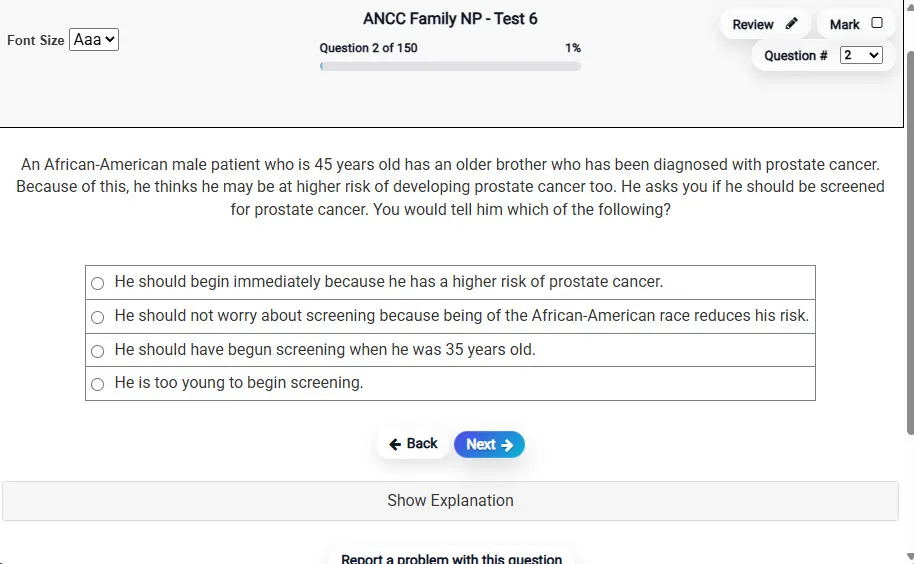
Answering a Question screen – Multiple-choice item view with navigation controls and progress tracker.
Answering a Question Multiple-choice item view with navigation controls and progress tracker.

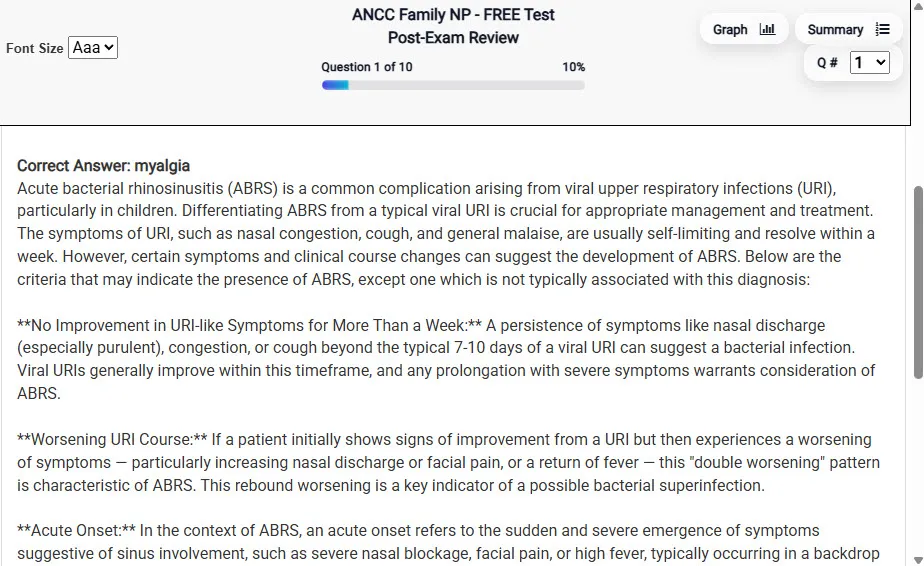
                           Detailed Explanation screen – 
                         Review mode showing chosen answer and rationale and references.
Detailed Explanation Review mode showing chosen answer and rationale and references.

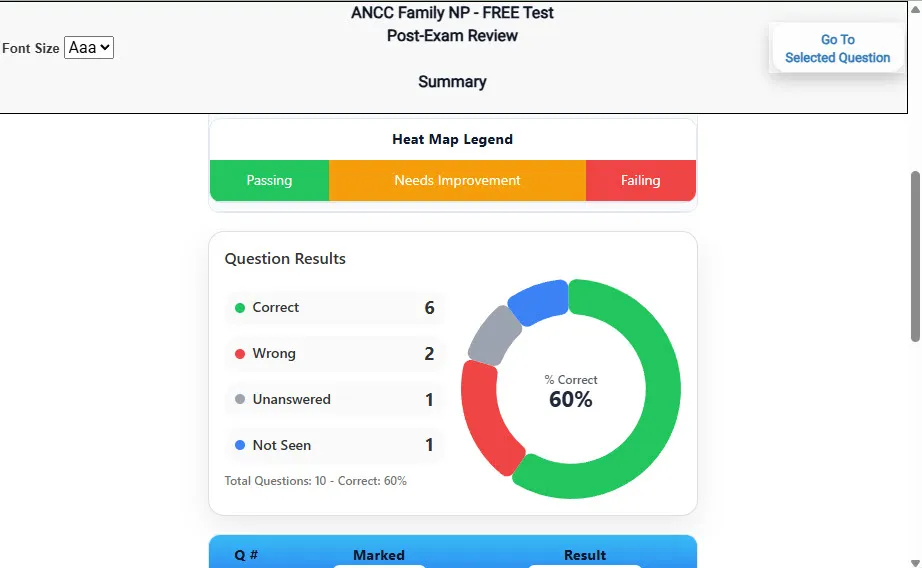
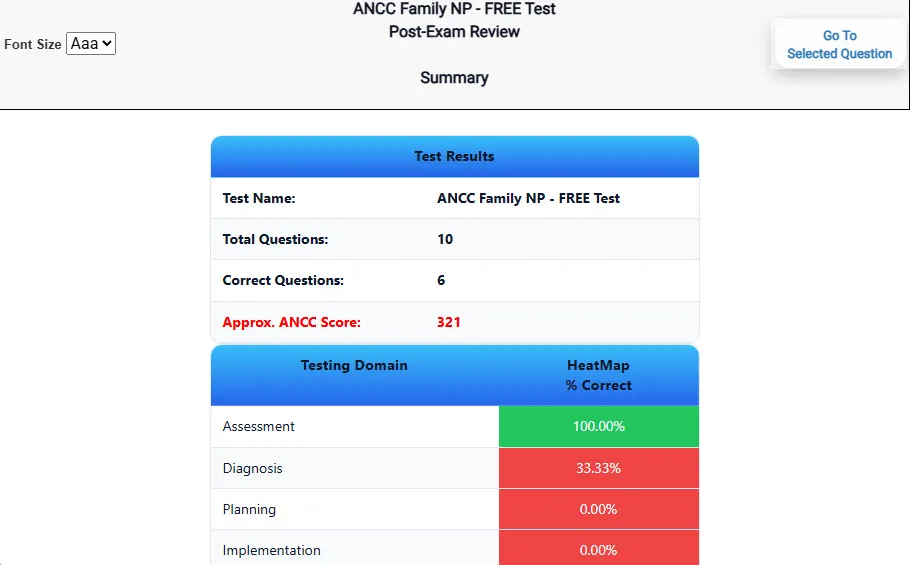
                           Review Summary 1 screen – 
                         Summary with counts for correct/wrong/unanswered and not seen items.
Review Summary 1 Summary with counts for correct/wrong/unanswered and not seen items.

                           Review Summary 2 screen – 
                         Advanced summary with category/domain breakdown and performance insights.
Review Summary 2 Advanced summary with category/domain breakdown and performance insights.

What Each Screen Shows

Answer Question Screen

  • Clean multiple-choice interface with progress bar.
  • Mark for review feature.
  • Matches real test pacing.

Detailed Explanation

  • Correct answer plus rationale.
  • Key concepts and guidelines highlighted.
  • Move between questions to fill knowledge gaps.

Review Summary 1

  • Overall results with total questions and scaled score.
  • Domain heatmap shows strengths and weaknesses.
  • Quick visual feedback on study priorities.

Review Summary 2

  • Chart of correct, wrong, unanswered, not seen.
  • Color-coded results for easy review.
  • Links back to missed items.

Top 10 Reasons to Use Exam Edge for your BCEN Certified Pediatric Emergency Nurse Exam Prep

  1. Focused on the BCEN Certified Pediatric Emergency Nurse Exam

    Our practice tests are built specifically for the BCEN Certified Pediatric Emergency Nurse exam — every question mirrors the real topics, format, and difficulty so you're studying exactly what matters.

  2. Real Exam Simulation

    We match the per-question time limits and pressure of the actual BCEN exam, so test day feels familiar and stress-free.

  3. 5 Full Practice Tests & 500 Unique Questions

    You'll have more than enough material to master every BCEN Certified Pediatric Emergency Nurse concept — no repeats, no fluff.

  4. Lower Cost Than a Retake

    Ordering 5 practice exams costs less than retaking the BCEN Certified Pediatric Emergency Nurse exam after a failure. One low fee could save you both time and money.

  5. Flexible Testing

    Need to step away mid-exam? Pick up right where you left off — with your remaining time intact.

  6. Instant Scoring & Feedback

    See your raw score and an estimated BCEN Certified Pediatric Emergency Nurse score immediately after finishing each practice test.

  7. Detailed Explanations for Every Question

    Review correct and incorrect answers with clear, step-by-step explanations so you truly understand each topic.

  8. Trusted & Accredited

    We're fully accredited by the Better Business Bureau and uphold the highest standards of trust and transparency.

  9. Web-Based & Always Available

    No software to install. Access your BCEN Certified Pediatric Emergency Nurse practice exams 24/7 from any computer or mobile device.

  10. Expert Support When You Need It

    Need extra help? Our specialized tutors are highly qualified and ready to support your BCEN exam prep.


Pass the BCEN Certified Pediatric Emergency Nurse Exam with Realistic Practice Tests from Exam Edge

Preparing for your upcoming BCEN Certified Pediatric Emergency Nurse (CPEN) Certification Exam can feel overwhelming — but the right practice makes all the difference. Exam Edge gives you the tools, structure, and confidence to pass on your first try. Our online practice exams are built to match the real BCEN Certified Pediatric Emergency Nurse exam in content, format, and difficulty.

  • 📝 5 BCEN Certified Pediatric Emergency Nurse Practice Tests: Access 5 full-length exams with 100 questions each, covering every major BCEN Certified Pediatric Emergency Nurse topic in depth.
  • Instant Online Access: Start practicing right away — no software, no waiting.
  • 🧠 Step-by-Step Explanations: Understand the reasoning behind every correct answer so you can master BCEN Certified Pediatric Emergency Nurse exam concepts.
  • 🔄 Retake Each Exam Up to 4 Times: Build knowledge through repetition and track your improvement over time.
  • 🌐 Web-Based & Available 24/7: Study anywhere, anytime, on any device.
  • 🧘 Boost Your Test-Day Confidence: Familiarity with the BCEN format reduces anxiety and helps you perform under pressure.

These BCEN Certified Pediatric Emergency Nurse practice exams are designed to simulate the real testing experience by matching question types, timing, and difficulty level. This approach helps you get comfortable not just with the exam content, but also with the testing environment, so you walk into your exam day focused and confident.


Exam Edge BCEN Reviews


The questions on this application aren't really what the CPEN covers. A lot of obscure stuff. Also, the questions are too easy (like I said, not CPEN-quality.) Skip this app.

Domonic , Vallejo , California


BCEN Certified Pediatric Emergency Nurse Aliases Test Name

Here is a list of alternative names used for this exam.

  • BCEN Certified Pediatric Emergency Nurse
  • BCEN Certified Pediatric Emergency Nurse test
  • BCEN Certified Pediatric Emergency Nurse Certification Test
  • BCEN
  • BCEN CPEN
  • CPEN test
  • BCEN Certified Pediatric Emergency Nurse (CPEN)
  • Certified Pediatric Emergency Nurse certification