This is the content of the pop-over!

Lightning Deal Alert – 12% Off Ends at Midnight!

Strike while the savings are hot! Use promo code FlashSale at checkout for 12% off any Exam Edge test or bundle. Hurry—the clock is ticking!

LCSW (LCSW) Practice Tests & Test Prep by Exam Edge


Licensed Clinical Social Worker   product image
(4.4)
Based on 25 Reviews

  • Real Exam Simulation: Timed questions and matching content build comfort for your LCSW test day.
  • Instant, 24/7 Access: Web-based Licensed Clinical Social Worker practice exams with no software needed.
  • Clear Explanations: Step-by-step answers and explanations for your LCSW exam to strengthen understanding.
  • Boosted Confidence: Reduces anxiety and improves test-taking skills to ace your Licensed Clinical Social Worker (LCSW).

Featured on

Licensed Clinical Social Worker Online Practice Test Bundles

BEST VALUE
15 practice tests

$149.25

$599.25

SAVE $450

Only $9.95 per test!

  • 100% Pass Guarantee
  • 15 online practice tests
  • 100 questions per test
  • Bonus: 100 Flash Cards + Study Guide
  • Instant access
  • Detailed Explanations
  • Practice tests never expire
  • Timed, untimed, or study guide mode
MOST POPULAR
10 practice tests

$99.50

$399.50

SAVE $300

Only $9.95 per test!

  • 10 online practice tests
  • 100 questions per test
  • Bonus: 100 Flash Cards + Study Guide
  • Instant access
  • Detailed Explanations
  • Practice tests never expire
  • Timed, untimed, or study guide mode
5 practice tests

$69.75

$199.75

SAVE $130

Only $13.95 per test!

  • 5 online practice tests
  • 100 questions per test
  • Bonus: 100 Flash Cards
  • Instant access
  • Detailed Explanations
  • Practice tests never expire
  • Timed, untimed, or study guide mode
1 practice test

$39.95

  • 1 online practice test
  • 100 questions per test
  • Instant access
  • Detailed Explanations
  • Practice tests never expire
  • Timed, untimed, or study guide mode
Quick Select
Tap to choose a bundle

** All Prices are in US Dollars (USD) **


LCSW (LCSW) Resources

Jump to the section you need most.

Understanding the exact breakdown of the Licensed Clinical Social Worker test will help you know what to expect and how to most effectively prepare. The Licensed Clinical Social Worker has multiple-choice questions . The exam will be broken down into the sections below:

Licensed Clinical Social Worker Exam Blueprint
Domain Name
Biopsychosocial Assessment  
Diagnostic Formulation  
Treatment Planning  
Resource Coordination  
Therapeutic Interventions  
Legal Mandates  
Ethical Standards for Professional Conduct  

Licensed Clinical Social Worker Study Tips by Domain

  • Start with safety screening every time (suicide, homicide, DV, abuse/neglect) and document level of risk and immediate actions—red flag: vague denial without details on intent, plan, means, and past attempts.
  • Clarify presenting problem, onset, duration, severity, and functional impact across home/work/school; common trap: collecting symptoms without tying them to impairment and context.
  • Gather mental status exam elements (appearance, behavior, speech, mood/affect, thought process/content, perception, cognition, insight/judgment) and note any acute changes—priority rule: new psychosis, delirium signs, or intoxication/withdrawal requires urgent medical evaluation.
  • Assess substance use with specifics (substance, amount, frequency, last use, withdrawal history, blackouts) and cross-check with meds and medical issues; red flag: mixing alcohol/benzos/opioids or history of withdrawal seizures.
  • Map strengths and supports (protective factors, coping skills, cultural/spiritual resources, social network) alongside stressors; common trap: writing a deficit-only assessment that misses protective factors relevant to risk and prognosis.
  • Screen for trauma history, adverse childhood experiences, and current triggers while pacing for stabilization—contraindication: pushing detailed trauma narration when the client is dissociating, highly dysregulated, or lacks coping supports.
  • Differentiate diagnosis vs. presenting problem vs. etiology—use observable criteria and duration/impairment, not assumptions about causes (red flag: labeling normal grief or situational stress as a disorder without required time frame).
  • Always rule out substance/medication-induced and medical causes before primary mental disorders (common trap: diagnosing anxiety/depression without asking about recent substance use, withdrawal, thyroid issues, or steroids).
  • Use differential diagnosis explicitly—compare overlapping syndromes and document why alternatives were excluded (priority rule: safety-related conditions like psychosis, mania, and delirium get assessed first).
  • Assess risk and specifiers that change urgency/level of care, including suicidality, homicidality, and self-neglect (red flag: missing command hallucinations or mixed features, which can rapidly elevate risk).
  • Incorporate culture, development, and context to avoid misdiagnosis (common trap: interpreting culturally normative beliefs/expressions or adolescent behavior as psychosis or personality pathology).
  • Document a coherent case formulation linking symptoms, triggers, protective factors, and maintaining factors to guide intervention (red flag: a diagnosis that doesn’t connect to functional impairment or treatment implications).
  • Translate assessment data into 2–4 measurable goals with behavioral targets and time frames; red flag: goals like “improve self-esteem” without objective indicators or review dates.
  • Prioritize safety and stabilization first (suicide, violence, abuse/neglect, severe withdrawal) before insight-oriented work; common trap: starting trauma processing while acute risk is unmanaged.
  • Align interventions with the client’s stage of change and readiness, documenting motivational strategies when ambivalence is present; red flag: prescribing action steps when the client is still in precontemplation.
  • Use shared decision-making and cultural/contextual fit to select evidence-informed approaches, documenting client preferences and barriers; common trap: defaulting to a favored modality despite poor fit or low access.
  • Specify frequency, duration, level of care, and coordination steps (medical, school, housing) with clear roles; red flag: no plan for follow-up after referrals or unclear responsibility for contact.
  • Build in monitoring and revision criteria (symptom scales, functional markers, attendance) and define what triggers a plan update; priority rule: revise when there’s no progress after a reasonable trial or when risk escalates.
  • Start with a warm handoff whenever possible (3-way call, shared appointment scheduling) because a simple referral list is a common trap that leads to no follow-through.
  • Verify eligibility and barriers early (insurance, transportation, language access, documentation requirements)—red flag: assuming a client can use a service without confirming criteria or waitlists.
  • Use the least restrictive, most integrated resource that meets the need; priority rule: match intensity (e.g., outpatient vs. IOP vs. inpatient) to risk and functional impairment, not convenience.
  • Obtain time-limited, written releases specifying who/what/why before coordinating with collateral providers; common trap: over-disclosing information “to be helpful” beyond the minimum necessary.
  • Coordinate across systems (medical, school, housing, justice) with clear role boundaries; red flag: becoming the primary service provider when the need is case management or specialty care.
  • Document contacts, referrals, client response, and outcomes with dates and next steps; priority rule: track whether the service was accessed and escalate to higher support if safety or basic needs remain unmet.
  • Use the least intensive, evidence-supported intervention that matches the client’s acuity and preferences; red flag: escalating technique intensity (e.g., trauma exposure) without stabilization or informed consent.
  • Maintain a clear therapeutic frame (roles, boundaries, session structure) and revisit it when dynamics shift; common trap: slipping into dual relationships or inconsistent availability that reinforces dependency.
  • Choose interventions congruent with culture, language, and developmental level, and explicitly check meaning and fit; red flag: attributing normal cultural practices to pathology or using unadapted measures/interventions.
  • For crisis work, prioritize safety planning, means restriction, and rapid linkage to higher level of care when indicated; priority rule: imminent risk overrides routine goals and requires immediate action and documentation.
  • In CBT/skills-based work, operationalize targets (thoughts, behaviors, triggers) and assign measurable practice between sessions; common trap: doing supportive talk therapy only while labeling it “CBT” without homework or monitoring.
  • Monitor response and alliance each session (symptoms, functioning, engagement) and modify the approach when there’s no improvement; red flag: continuing the same intervention for weeks despite deterioration or persistent nonresponse.
  • Apply client self-determination, but use a duty-to-protect/duty-to-warn override when there is imminent, serious risk to an identifiable person—red flag: documenting “client threatened someone” without noting your risk assessment and actions taken.
  • Maintain confidentiality with informed consent and clear limits; common trap: assuming a general ROI covers psychotherapy notes, SUD records, or interagency coordination without specifying scope, purpose, and expiration.
  • Avoid dual relationships and conflicts of interest; priority rule: when roles overlap (e.g., friend, supervisor, landlord), choose the least harmful alternative and document the rationale—red flag: accepting gifts or bartering when it could impair judgment or exploit a power differential.
  • Practice within competence and seek supervision/consultation when needed; common trap: continuing specialized treatment (e.g., complex trauma modalities) without training while telling yourself you can “learn as you go.”
  • Use accurate, respectful documentation and billing; red flag: upcoding, copying forward notes, or recording speculative diagnoses without supporting criteria and client-reported/observed evidence.
  • Manage professional boundaries and technology ethically; contraindication: using personal social media for client contact or “friending” clients—use secure channels, obtain telehealth-informed consent, and have a plan for privacy breaches.


Built to Fit Into Your Busy Life

Everything you need to prepare with confidence—without wasting a minute.

Three Study Modes

Timed, No Time Limit, or Explanation mode.

Actionable Analytics

Heatmaps and scaled scores highlight weak areas.

High-Yield Rationales

Concise explanations emphasize key concepts.

Realistic Interface

Matches the feel of the actual exam environment.

Accessible by Design

Clean layout reduces cognitive load.

Anytime, Anywhere

Web-based access 24/7 on any device.
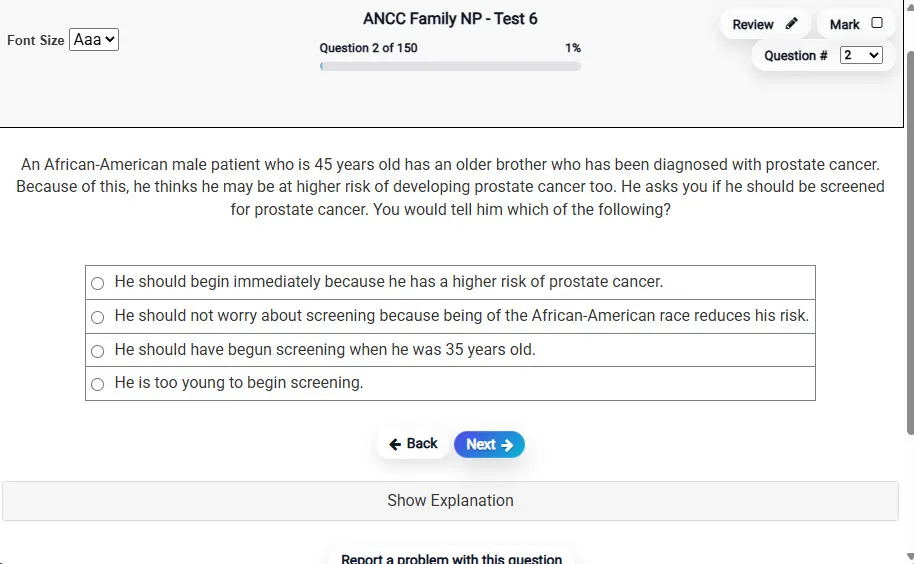
Answering a Question screen – Multiple-choice item view with navigation controls and progress tracker.
Answering a Question Multiple-choice item view with navigation controls and progress tracker.

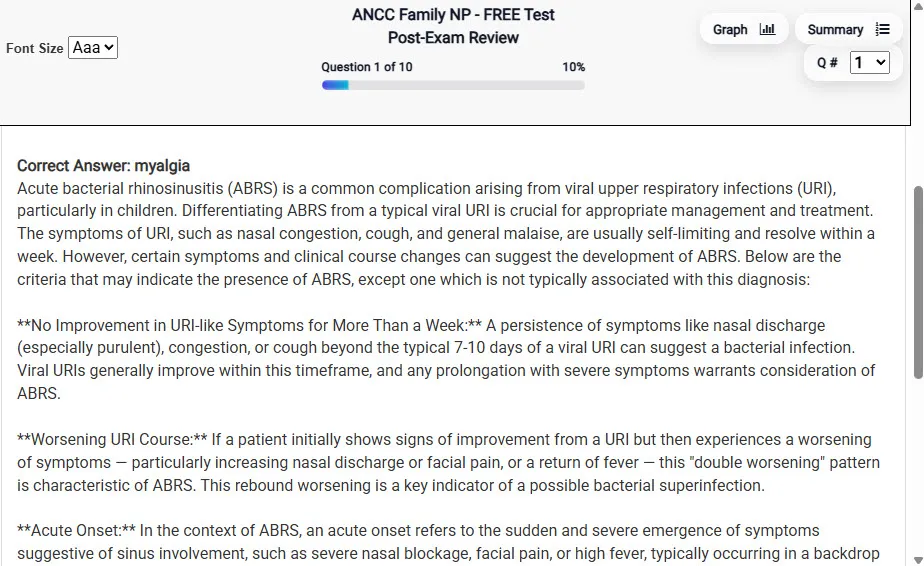
                           Detailed Explanation screen – 
                         Review mode showing chosen answer and rationale and references.
Detailed Explanation Review mode showing chosen answer and rationale and references.

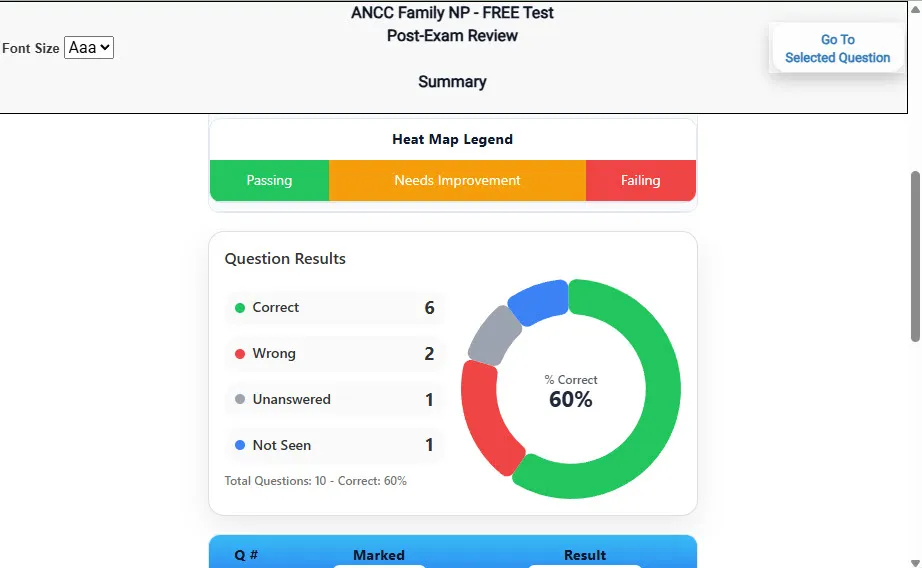
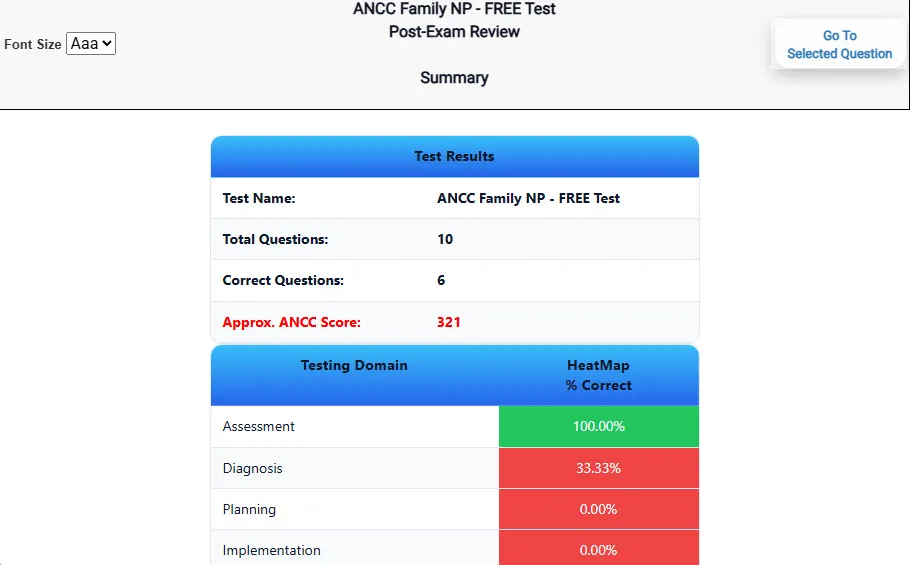
                           Review Summary 1 screen – 
                         Summary with counts for correct/wrong/unanswered and not seen items.
Review Summary 1 Summary with counts for correct/wrong/unanswered and not seen items.

                           Review Summary 2 screen – 
                         Advanced summary with category/domain breakdown and performance insights.
Review Summary 2 Advanced summary with category/domain breakdown and performance insights.

What Each Screen Shows

Answer Question Screen

  • Clean multiple-choice interface with progress bar.
  • Mark for review feature.
  • Matches real test pacing.

Detailed Explanation

  • Correct answer plus rationale.
  • Key concepts and guidelines highlighted.
  • Move between questions to fill knowledge gaps.

Review Summary 1

  • Overall results with total questions and scaled score.
  • Domain heatmap shows strengths and weaknesses.
  • Quick visual feedback on study priorities.

Review Summary 2

  • Chart of correct, wrong, unanswered, not seen.
  • Color-coded results for easy review.
  • Links back to missed items.

Top 10 Reasons to Use Exam Edge for your Licensed Clinical Social Worker Exam Prep

  1. Focused on the Licensed Clinical Social Worker Exam

    Our practice tests are built specifically for the LCSW exam — every question mirrors the real topics, format, and difficulty so you're studying exactly what matters.

  2. Real Exam Simulation

    We match the per-question time limits and pressure of the actual LCSW exam, so test day feels familiar and stress-free.

  3. 15 Full Practice Tests & 1,500 Unique Questions

    You'll have more than enough material to master every LCSW concept — no repeats, no fluff.

  4. Lower Cost Than a Retake

    Ordering 5 practice exams costs less than retaking the Licensed Clinical Social Worker exam after a failure. One low fee could save you both time and money.

  5. Flexible Testing

    Need to step away mid-exam? Pick up right where you left off — with your remaining time intact.

  6. Instant Scoring & Feedback

    See your raw score and an estimated Licensed Clinical Social Worker score immediately after finishing each practice test.

  7. Detailed Explanations for Every Question

    Review correct and incorrect answers with clear, step-by-step explanations so you truly understand each topic.

  8. Trusted & Accredited

    We're fully accredited by the Better Business Bureau and uphold the highest standards of trust and transparency.

  9. Web-Based & Always Available

    No software to install. Access your LCSW practice exams 24/7 from any computer or mobile device.

  10. Expert Support When You Need It

    Need extra help? Our specialized tutors are highly qualified and ready to support your LCSW exam prep.


Pass the Licensed Clinical Social Worker Exam with Realistic Practice Tests from Exam Edge

Preparing for your upcoming Licensed Clinical Social Worker (LCSW) Certification Exam can feel overwhelming — but the right practice makes all the difference. Exam Edge gives you the tools, structure, and confidence to pass on your first try. Our online practice exams are built to match the real LCSW exam in content, format, and difficulty.

  • 📝 15 Licensed Clinical Social Worker Practice Tests: Access 15 full-length exams with 100 questions each, covering every major Licensed Clinical Social Worker topic in depth.
  • Instant Online Access: Start practicing right away — no software, no waiting.
  • 🧠 Step-by-Step Explanations: Understand the reasoning behind every correct answer so you can master LCSW exam concepts.
  • 🔄 Retake Each Exam Up to 4 Times: Build knowledge through repetition and track your improvement over time.
  • 🌐 Web-Based & Available 24/7: Study anywhere, anytime, on any device.
  • 🧘 Boost Your Test-Day Confidence: Familiarity with the LCSW format reduces anxiety and helps you perform under pressure.

These Licensed Clinical Social Worker practice exams are designed to simulate the real testing experience by matching question types, timing, and difficulty level. This approach helps you get comfortable not just with the exam content, but also with the testing environment, so you walk into your exam day focused and confident.


Exam Edge ASWB Reviews


Licensed Clinical Social Worker Aliases Test Name

Here is a list of alternative names used for this exam.

  • Licensed Clinical Social Worker
  • Licensed Clinical Social Worker test
  • Licensed Clinical Social Worker Certification Test
  • LCSW test
  • ASWB
  • ASWB LCSW
  • LCSW test
  • Licensed Clinical Social Worker (LCSW)
  • Licensed Clinical Social Worker certification