This is the content of the pop-over!

Lightning Deal Alert – 12% Off Ends at Midnight!

Strike while the savings are hot! Use promo code FlashSale at checkout for 12% off any Exam Edge test or bundle. Hurry—the clock is ticking!

ANCC Acute Care NP (ACNP) Practice Tests & Test Prep by Exam Edge


ANCC Acute Care Nurse Practitioner  product image
(5.0)
Based on 17 Reviews

  • Real Exam Simulation: Timed questions and matching content build comfort for your ANCC Acute Care NP test day.
  • Instant, 24/7 Access: Web-based ANCC Acute Care Nurse Practitioner practice exams with no software needed.
  • Clear Explanations: Step-by-step answers and explanations for your ANCC exam to strengthen understanding.
  • Boosted Confidence: Reduces anxiety and improves test-taking skills to ace your ANCC Acute Care Nurse Practitioner (ACNP).

Featured on

ANCC Acute Care Nurse Practitioner Online Practice Test Bundles

BEST VALUE
15 practice tests

$149.25

$599.25

SAVE $450

Only $9.95 per test!

  • 100% Pass Guarantee
  • 15 online practice tests
  • 100 questions per test
  • Bonus: 100 Flash Cards + Study Guide
  • Instant access
  • Detailed Explanations
  • Practice tests never expire
  • Timed, untimed, or study guide mode
MOST POPULAR
10 practice tests

$99.50

$399.50

SAVE $300

Only $9.95 per test!

  • 10 online practice tests
  • 100 questions per test
  • Bonus: 100 Flash Cards + Study Guide
  • Instant access
  • Detailed Explanations
  • Practice tests never expire
  • Timed, untimed, or study guide mode
5 practice tests

$69.75

$199.75

SAVE $130

Only $13.95 per test!

  • 5 online practice tests
  • 100 questions per test
  • Bonus: 100 Flash Cards
  • Instant access
  • Detailed Explanations
  • Practice tests never expire
  • Timed, untimed, or study guide mode
1 practice test

$39.95

  • 1 online practice test
  • 100 questions per test
  • Instant access
  • Detailed Explanations
  • Practice tests never expire
  • Timed, untimed, or study guide mode
Quick Select
Tap to choose a bundle

** All Prices are in US Dollars (USD) **


ANCC Acute Care NP (ACNP) Resources

Jump to the section you need most.

Understanding the exact breakdown of the ANCC Acute Care Nurse Practitioner test will help you know what to expect and how to most effectively prepare. The ANCC Acute Care Nurse Practitioner has multiple-choice questions . The exam will be broken down into the sections below:

ANCC Acute Care Nurse Practitioner Exam Blueprint
Domain Name % Number of
Questions
Nurse Practitioner/Patient Relationship 14.30% 14
Assessment and Diagnosis 23.60% 24
Clinical Management 33.90% 34
Health Care Delivery 14.10% 14
Professional Responsibility 14.10% 14

ANCC Acute Care Nurse Practitioner Study Tips by Domain

  • Establish rapport quickly with critically ill patients/families by stating role, plan, and time frame; red flag: using jargon or speaking only to staff when the patient is awake and able to participate.
  • Use shared decision-making aligned with goals of care (e.g., comfort vs life-prolonging treatment) and document the discussion; common trap: equating “full code” with “do everything” without clarifying acceptable burdens and outcomes.
  • Assess decision-making capacity and identify the legally appropriate surrogate before obtaining informed consent; red flag: accepting consent from a family member without confirming hierarchy or documentation (POA/health care proxy).
  • Communicate time-sensitive changes using closed-loop techniques (read-backs, teach-back) during transitions; common trap: assuming understanding after delivering complex ICU discharge or medication instructions.
  • Maintain boundaries and manage conflict therapeutically (acknowledge emotion, set limits, offer options) while ensuring safety; red flag: escalating by arguing at the bedside rather than pausing and involving the team/security as needed.
  • Protect confidentiality in high-traffic acute care settings and verify identity before disclosure; common trap: discussing patient details in hallways/elevators or releasing information to callers without authentication.
  • Prioritize ABCs and hemodynamic stability first in any acute presentation; red flag: hypotension, altered mental status, or escalating oxygen needs means resuscitate while assessing (don’t wait for a complete history).
  • Use focused, time-sensitive history (OPQRST, allergies/meds, last oral intake, anticoagulants) aligned to the chief complaint; common trap: missing anticoagulant use when evaluating head injury, GI bleed, or new neurologic deficits.
  • Interpret vital signs as trends, not single points, and correlate with exam; red flag: new tachycardia + fever or hypothermia + hypotension suggests sepsis—initiate sepsis evaluation immediately.
  • Select diagnostics based on pretest probability and how results will change management; common trap: ordering broad panels without a differential, delaying key tests like ECG within 10 minutes for chest pain.
  • Differentiate life-threatening mimics during the physical exam (e.g., PE vs pneumonia, dissection vs MI, stroke vs hypoglycemia); priority rule: check bedside glucose early in any altered mental status or focal deficit.
  • Document a problem representation, prioritized differential, and rationale for ruling in/out conditions; red flag: failure to reassess after interventions or abnormal results (e.g., persistent hypoxia after bronchodilator) increases diagnostic error.
  • Stabilize first using ABCs and vital trends; red flag: any new hypotension, hypoxia, or altered mental status warrants immediate escalation and higher-acuity placement.
  • Choose diagnostics and therapies based on pretest probability and risk–benefit; common trap: ordering broad imaging/labs without a focused differential can delay time-sensitive treatment (e.g., sepsis, ACS, stroke).
  • Use weight- and organ-function–based dosing and reassess after each intervention; contraindication cue: avoid nephrotoxins or renally cleared meds without adjusting for AKI/low eGFR.
  • Prioritize evidence-based bundles and time thresholds; red flag: suspected sepsis requires prompt cultures/antibiotics and fluid resuscitation with frequent reassessment for perfusion and overload.
  • Prevent complications with prophylaxis and monitoring; common trap: missing VTE or stress-ulcer prophylaxis in high-risk ICU/immobile patients, or failing to reassess sedation/analgesia goals daily.
  • Plan transitions of care early with clear criteria and follow-up; priority rule: discharge/transfer requires medication reconciliation and explicit return precautions—especially after high-risk diagnoses or recent clinical instability.
  • Apply appropriate level-of-care placement (ICU vs step-down vs med-surg) using hemodynamic stability, oxygenation needs, and vasopressor/ventilator dependence; red flag: “borderline” patients with escalating O2 or rising lactate belong in higher acuity.
  • Use evidence-based protocols and bundles (e.g., sepsis 1-hour bundle, VTE prophylaxis, CLABSI/CAUTI prevention) and document time zero/critical timestamps; common trap: missing repeat lactate or cultures before antibiotics when feasible.
  • Coordinate safe transitions of care with standardized handoff (SBAR/I-PASS), med reconciliation, and clear follow-up plans; red flag: high-risk discharges without explicit return precautions and pending results management.
  • Prioritize resource stewardship (diagnostic imaging, antibiotics, labs) by matching testing to pretest probability and stopping when criteria are met; common trap: continuing broad-spectrum antibiotics past 48–72 hours despite negative cultures and clinical improvement.
  • Address interprofessional collaboration and consultation thresholds (e.g., emergent surgery for acute abdomen, cardiology for STEMI, nephrology for refractory hyperkalemia); priority rule: call early when deterioration is trending even if vitals are “normal.”
  • Ensure patient safety systems are applied (fall precautions, delirium prevention, restraints, informed consent, and escalation pathways/rapid response); red flag: new confusion or agitation in the ICU—treat as delirium until proven otherwise and reassess meds/lines.
  • Practice within your state APRN licensure, national certification, and facility privileging—red flag: accepting an assignment for a procedure or prescribing authority you are not credentialed to perform.
  • Apply evidence-based guidelines and document your clinical rationale when deviating—common trap: changing therapy without citing contraindications, patient factors, or risk/benefit reasoning.
  • Maintain patient safety through error prevention and reporting—priority rule: disclose and report medication/near-miss events per policy rather than “fixing it quietly.”
  • Protect confidentiality and comply with HIPAA/organizational privacy rules—red flag: discussing identifiable patient details in public areas or using personal devices/accounts for patient information.
  • Obtain and document informed consent/Refusal with capacity assessment—common trap: treating consent as a signature only without verifying understanding, alternatives, and voluntariness.
  • Recognize ethical and legal duties for high-risk situations (abuse/neglect, threats, impaired colleagues)—priority rule: follow mandated reporting and chain-of-command requirements even if the patient or staff request “no report.”


Built to Fit Into Your Busy Life

Everything you need to prepare with confidence—without wasting a minute.

Three Study Modes

Timed, No Time Limit, or Explanation mode.

Actionable Analytics

Heatmaps and scaled scores highlight weak areas.

High-Yield Rationales

Concise explanations emphasize key concepts.

Realistic Interface

Matches the feel of the actual exam environment.

Accessible by Design

Clean layout reduces cognitive load.

Anytime, Anywhere

Web-based access 24/7 on any device.
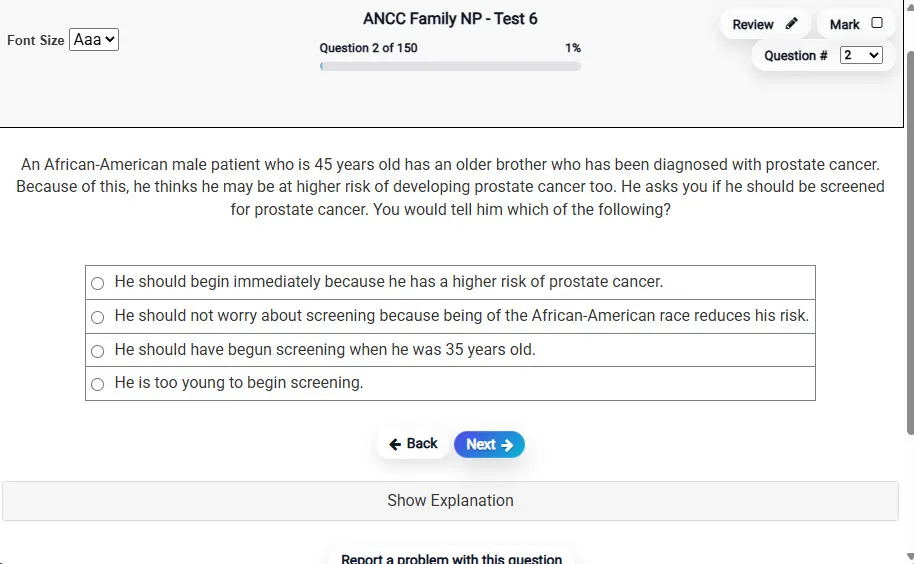
Answering a Question screen – Multiple-choice item view with navigation controls and progress tracker.
Answering a Question Multiple-choice item view with navigation controls and progress tracker.

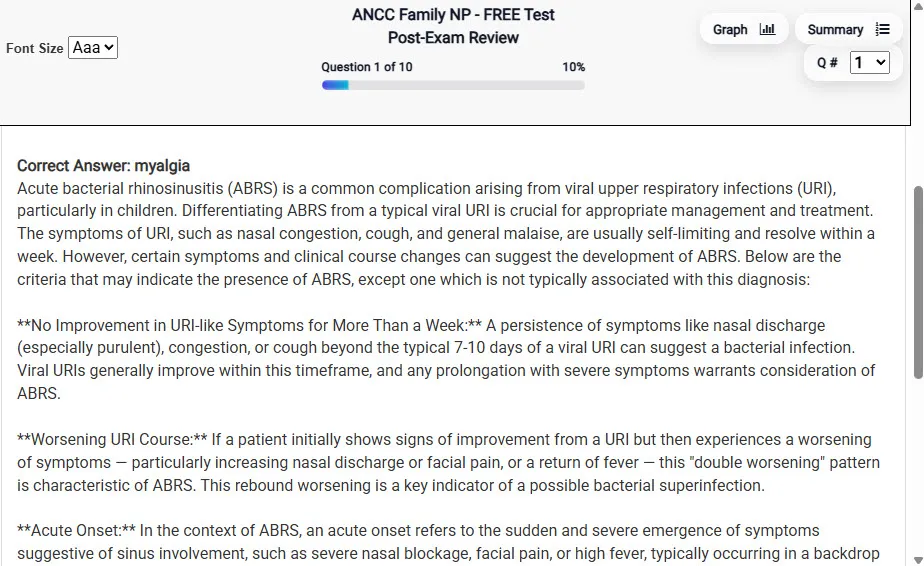
                           Detailed Explanation screen – 
                         Review mode showing chosen answer and rationale and references.
Detailed Explanation Review mode showing chosen answer and rationale and references.

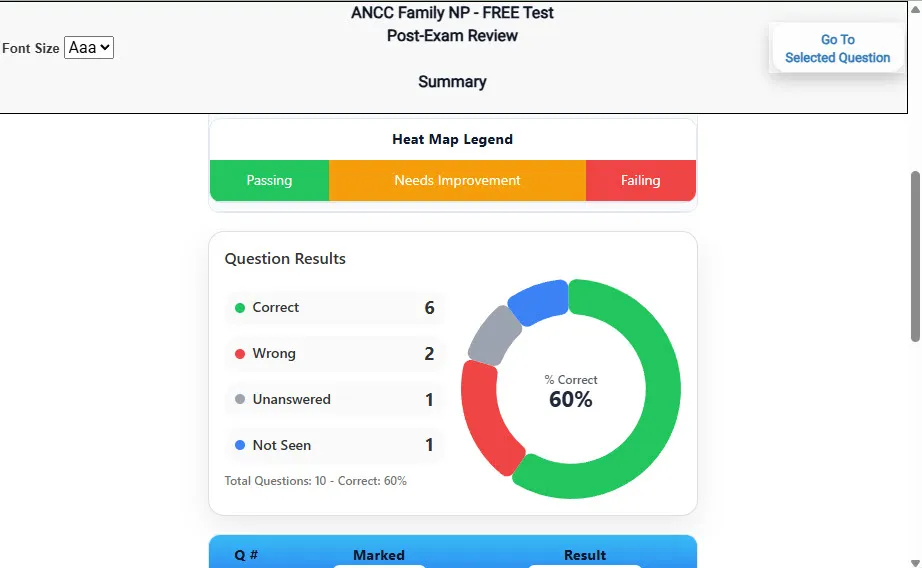
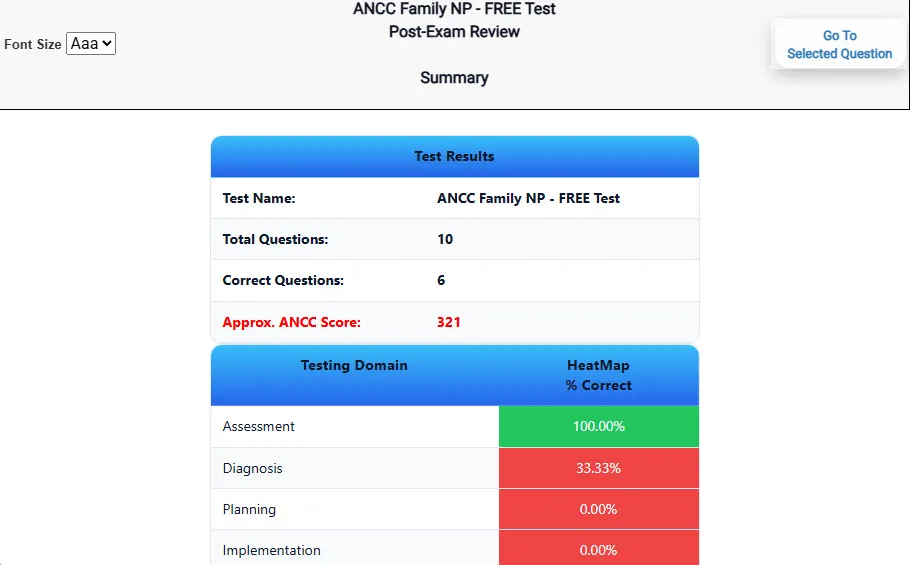
                           Review Summary 1 screen – 
                         Summary with counts for correct/wrong/unanswered and not seen items.
Review Summary 1 Summary with counts for correct/wrong/unanswered and not seen items.

                           Review Summary 2 screen – 
                         Advanced summary with category/domain breakdown and performance insights.
Review Summary 2 Advanced summary with category/domain breakdown and performance insights.

What Each Screen Shows

Answer Question Screen

  • Clean multiple-choice interface with progress bar.
  • Mark for review feature.
  • Matches real test pacing.

Detailed Explanation

  • Correct answer plus rationale.
  • Key concepts and guidelines highlighted.
  • Move between questions to fill knowledge gaps.

Review Summary 1

  • Overall results with total questions and scaled score.
  • Domain heatmap shows strengths and weaknesses.
  • Quick visual feedback on study priorities.

Review Summary 2

  • Chart of correct, wrong, unanswered, not seen.
  • Color-coded results for easy review.
  • Links back to missed items.

Top 10 Reasons to Use Exam Edge for your ANCC Acute Care Nurse Practitioner Exam Prep

  1. Focused on the ANCC Acute Care Nurse Practitioner Exam

    Our practice tests are built specifically for the ANCC Acute Care NP exam — every question mirrors the real topics, format, and difficulty so you're studying exactly what matters.

  2. Real Exam Simulation

    We match the per-question time limits and pressure of the actual ANCC exam, so test day feels familiar and stress-free.

  3. 15 Full Practice Tests & 1,500 Unique Questions

    You'll have more than enough material to master every ANCC Acute Care NP concept — no repeats, no fluff.

  4. Lower Cost Than a Retake

    Ordering 5 practice exams costs less than retaking the ANCC Acute Care Nurse Practitioner exam after a failure. One low fee could save you both time and money.

  5. Flexible Testing

    Need to step away mid-exam? Pick up right where you left off — with your remaining time intact.

  6. Instant Scoring & Feedback

    See your raw score and an estimated ANCC Acute Care Nurse Practitioner score immediately after finishing each practice test.

  7. Detailed Explanations for Every Question

    Review correct and incorrect answers with clear, step-by-step explanations so you truly understand each topic.

  8. Trusted & Accredited

    We're fully accredited by the Better Business Bureau and uphold the highest standards of trust and transparency.

  9. Web-Based & Always Available

    No software to install. Access your ANCC Acute Care NP practice exams 24/7 from any computer or mobile device.

  10. Expert Support When You Need It

    Need extra help? Our specialized tutors are highly qualified and ready to support your ANCC exam prep.


Pass the ANCC Acute Care Nurse Practitioner Exam with Realistic Practice Tests from Exam Edge

Preparing for your upcoming ANCC Acute Care Nurse Practitioner (ACNP) Certification Exam can feel overwhelming — but the right practice makes all the difference. Exam Edge gives you the tools, structure, and confidence to pass on your first try. Our online practice exams are built to match the real ANCC Acute Care NP exam in content, format, and difficulty.

  • 📝 15 ANCC Acute Care Nurse Practitioner Practice Tests: Access 15 full-length exams with 100 questions each, covering every major ANCC Acute Care Nurse Practitioner topic in depth.
  • Instant Online Access: Start practicing right away — no software, no waiting.
  • 🧠 Step-by-Step Explanations: Understand the reasoning behind every correct answer so you can master ANCC Acute Care NP exam concepts.
  • 🔄 Retake Each Exam Up to 4 Times: Build knowledge through repetition and track your improvement over time.
  • 🌐 Web-Based & Available 24/7: Study anywhere, anytime, on any device.
  • 🧘 Boost Your Test-Day Confidence: Familiarity with the ANCC format reduces anxiety and helps you perform under pressure.

These ANCC Acute Care Nurse Practitioner practice exams are designed to simulate the real testing experience by matching question types, timing, and difficulty level. This approach helps you get comfortable not just with the exam content, but also with the testing environment, so you walk into your exam day focused and confident.


Exam Edge ANCC Reviews


Awesome practice tests! I could not have passed my ANCC Family NP exam without them.

Maura , Sylvania, Ohio

I just received my Family Nurse Practitioner exam score and I passed with a 440! Your tests definitely made the difference for me! The questions on the real test were so similar that I felt very comfortable taking it. I will recommend your site to everyone I know that’s preparing for the ...
Read More
Wendy H., Pennsylvania

Every new graduate from an FNP program knows that your degree is relatively inactive until you pass the national certification exam. The stress is overwhelming, especially if you do not have the finances to take an expensive review course. Well, I am so glad I stumbled upon the Family NP prep websit ...
Read More
Jennifer , NC

Took the exam this morning and passed. The tools definitely helped prepare me, in fact, I would say I would have never passed without your practice exams. Your site should be used by anyone taking the Nurse Executive exam. Thank you.

Tisdale, Massachusetts

I purchased over 20 exams and truly am so thankful I did. My studying prior was patchy and frustrating. Through the exams I was able to review the content I incorrectly answered and am proud to say I passed on my first go round. Not an easy feat with a family and job! Thanks

Lissette, Virginia

I wanted to let you know that I passed my FNP exam with flying colors. The test questions on your site were exceptionally helpful in my review. Thank you very much

Theresa, Millstadt, Illinois


ANCC Acute Care Nurse Practitioner Aliases Test Name

Here is a list of alternative names used for this exam.

  • ANCC Acute Care Nurse Practitioner
  • ANCC Acute Care Nurse Practitioner test
  • ANCC Acute Care Nurse Practitioner Certification Test
  • ANCC Acute Care NP test
  • ANCC
  • ANCC ACNP
  • ACNP test
  • ANCC Acute Care Nurse Practitioner (ACNP)
  • Acute Care Nurse Practitioner certification
  • ANA Acute Care Nurse Practitioner
  • ANA Acute Care Nurse Practitioner certification
  • ANA ACNP