This is the content of the pop-over!

WEST-NES Art (503) Practice Tests & Test Prep by Exam Edge


WEST-NES Art product image
(5.0)
Based on 17 Reviews

  • Real Exam Simulation: Timed questions and matching content build comfort for your WEST-NES Art test day.
  • Instant, 24/7 Access: Web-based WEST-NES Art practice exams with no software needed.
  • Clear Explanations: Step-by-step answers and explanations for your WEST-NES exam to strengthen understanding.
  • Boosted Confidence: Reduces anxiety and improves test-taking skills to ace your WEST-NES Art (503).

Featured on

WEST-NES Art Online Practice Test Bundles

BEST VALUE
15 practice tests

$149.25

$599.25

SAVE $450

Only $9.95 per test!

  • 100% Pass Guarantee
  • 15 online practice tests
  • 150 questions per test
  • Bonus: 100 Flash Cards + Study Guide
  • Instant access
  • Detailed Explanations
  • Practice tests never expire
  • Timed, untimed, or study guide mode
MOST POPULAR
10 practice tests

$99.50

$399.50

SAVE $300

Only $9.95 per test!

  • 10 online practice tests
  • 150 questions per test
  • Bonus: 100 Flash Cards + Study Guide
  • Instant access
  • Detailed Explanations
  • Practice tests never expire
  • Timed, untimed, or study guide mode
5 practice tests

$69.75

$199.75

SAVE $130

Only $13.95 per test!

  • 5 online practice tests
  • 150 questions per test
  • Bonus: 100 Flash Cards
  • Instant access
  • Detailed Explanations
  • Practice tests never expire
  • Timed, untimed, or study guide mode
1 practice test

$39.95

  • 1 online practice test
  • 150 questions per test
  • Instant access
  • Detailed Explanations
  • Practice tests never expire
  • Timed, untimed, or study guide mode
Quick Select
Tap to choose a bundle

** All Prices are in US Dollars (USD) **


WEST-NES Art (503) Resources

Jump to the section you need most.

Understanding the exact breakdown of the WEST-NES Art test will help you know what to expect and how to most effectively prepare. The WEST-NES Art has 150 multiple-choice questions . The exam will be broken down into the sections below:

WEST-NES Art Exam Blueprint
Domain Name % Number of
Questions
Foundations of Art: Elements and Principles 11% 17
Art Media - Tools - Technologies - Techniques Processes 33% 50
Visual Arts in Historical and Cultural Contexts 33% 50
Aesthetics and Art Criticism 12% 18
Connecting the Visual Arts to Other Disciplines 11% 17

WEST-NES Art Study Tips by Domain

  • Know the elements (line, shape, form, space, value, color, texture) and be able to name the most dominant one in a work—common trap: describing subject matter instead of formal qualities.
  • Apply the principles (balance, emphasis, contrast, movement, rhythm, pattern, proportion/scale, unity/variety) to justify how a composition works—red flag: using “symmetry” as the only definition of balance.
  • Distinguish shape (2D) vs. form (3D) and positive vs. negative space; priority rule: explain how space is constructed (overlap, size shift, linear perspective, atmospheric perspective) rather than just saying “it has depth.”
  • For value, identify the value range and the role of light source/modeling—common trap: confusing “high contrast” with “high value” (high key vs. low key are about overall lightness).
  • For color, use hue/value/saturation and basic schemes (complementary, analogous, triadic, monochromatic)—red flag: calling any warm/cool contrast “complementary” without naming opposite hues on the color wheel.
  • For texture, separate actual (tactile) vs. implied (visual) texture and connect it to emphasis or unity—common trap: listing “texture” without citing the specific mark/edge/pattern that creates it.
  • Match medium to support and ground (e.g., acrylic/gouache on properly primed canvas; watercolor on sized paper); red flag: oil over acrylic is fine, but acrylic over oil will delaminate.
  • Apply safe studio practice with solvents, pigments, and dust—use ventilation and appropriate PPE; common trap: assuming “odorless” mineral spirits are non-toxic and skipping ventilation.
  • Control drawing/printmaking tools for intended line/value (HB–6B, charcoal, ink nibs, brayers, etching needles); cue: burnishing or over-erasing can “polish” paper and prevent even graphite/ink adhesion.
  • Use correct ceramic processes (wedging, scoring/slipping, drying, bisque, glaze firing) and know stages (greenware, leather-hard, bone-dry); red flag: glazing the foot or trapping moisture can cause cracking/explosions in the kiln.
  • Choose and handle photo/digital tools intentionally (lens focal length, depth of field, file types, resolution); priority rule: for print, work at ~300 ppi at final size—upscaling low-res images won’t restore detail.
  • Select appropriate adhesives/fasteners for 2D/3D work (PVA, epoxy, hot glue, archival tapes, mechanical joins); contraindication: rubber cement and non-archival tapes yellow and fail over time, especially in portfolio/museum contexts.
  • Anchor works to time/place by citing at least one concrete marker (patronage, materials, function, or site); red flag: vague labels like “Renaissance” without explaining why the work fits that context.
  • Distinguish stylistic features from cultural meaning (e.g., iconography, ritual use, propaganda); common trap: treating symbolism as universal rather than culture-specific.
  • Connect art to power structures (church/state, colonialism, class, gender) and explain the intended audience; priority rule: always ask “who commissioned/paid and for what purpose?”
  • Track cross-cultural exchange (trade routes, migration, conquest, diaspora) and identify what changed vs. what persisted; red flag: calling any influence “appropriation” without evidence of context, consent, or power imbalance.
  • Use historically accurate terminology (periodization, movement names, medium terms) and avoid presentism; common trap: applying modern values to past societies without acknowledging the historical frame.
  • Interpret modern and contemporary art within social movements and media contexts (industrialization, globalization, digital culture); threshold cue: tie at least one formal choice to a documented historical event/condition rather than personal opinion.
  • Use a clear critique sequence (describe → analyze → interpret → judge) and keep judgment criteria explicit; red flag: jumping to “I like it” without evidence from the work.
  • Differentiate aesthetic theories (e.g., formalism, expressionism, instrumentalism/contextualism) and match claims to the right lens; common trap: using artist intention as the only basis for meaning or value.
  • Ground interpretations in observable features (composition, scale, material, process marks) before assigning symbolism; red flag: over-reading iconography that isn’t supported by the image.
  • Evaluate art using defensible criteria (craftsmanship, coherence, originality, impact, cultural function) and note the standard you’re applying; priority rule: avoid universal claims when criteria are culturally situated.
  • Identify and name viewer bias (prior knowledge, ideology, taste, stereotypes) and explain how it shapes interpretation; common trap: treating a single perspective as objective truth.
  • Compare multiple critical viewpoints (artist, critic, audience, community) and reconcile conflicts with evidence; red flag: ignoring context that changes the work’s meaning (site, patronage, intended audience).
  • Use deliberate cross-curricular links (e.g., geometry for perspective, ratios for scale, physics for light/shadow) and state the learning target; red flag: “arts integration” that’s really just decorating a non-art project.
  • Connect visual arts to ELA by having students justify choices with evidence from their own work using critique vocabulary; common trap: writing about the artist’s biography without analyzing specific visual evidence.
  • Link to social studies by analyzing how images function as primary sources (propaganda, identity, power) and require sourcing/context; priority rule: distinguish description (what you see) from interpretation (what it means).
  • Integrate science/technology through materials inquiry (pigment mixing, archival properties, digital imaging) with constraints; contraindication: introducing solvents, aerosols, or dust-producing processes without safety protocols and ventilation.
  • Connect to performing arts (dance/theatre/music) via shared elements like rhythm, movement, and composition, then translate between modalities; red flag: focusing only on theme and ignoring formal structure.
  • Plan interdisciplinary assessments with both art and partner-discipline criteria (separate rubrics or clearly weighted strands); common trap: grading primarily for content accuracy in the other subject and under-assessing visual problem-solving.


Built to Fit Into Your Busy Life

Everything you need to prepare with confidence—without wasting a minute.

Three Study Modes

Timed, No Time Limit, or Explanation mode.

Actionable Analytics

Heatmaps and scaled scores highlight weak areas.

High-Yield Rationales

Concise explanations emphasize key concepts.

Realistic Interface

Matches the feel of the actual exam environment.

Accessible by Design

Clean layout reduces cognitive load.

Anytime, Anywhere

Web-based access 24/7 on any device.
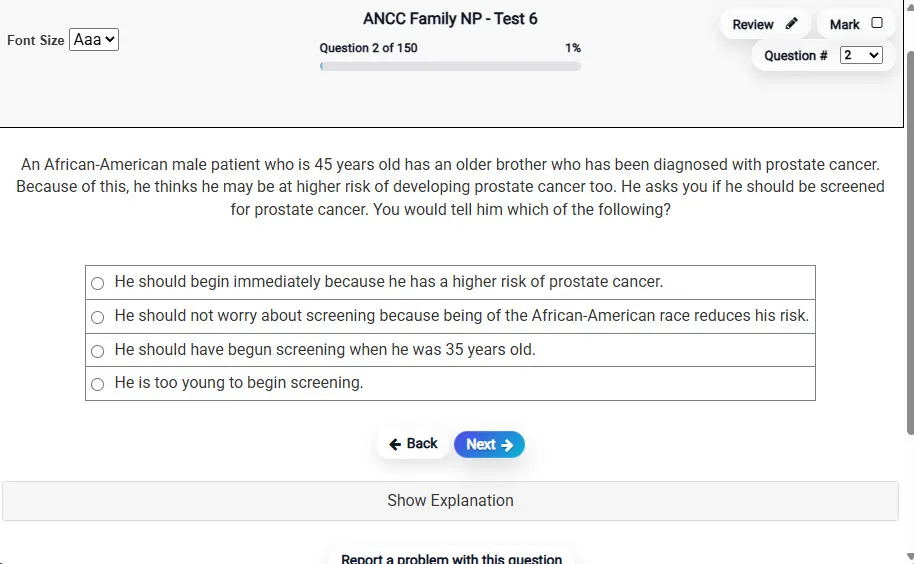
Answering a Question screen – Multiple-choice item view with navigation controls and progress tracker.
Answering a Question Multiple-choice item view with navigation controls and progress tracker.

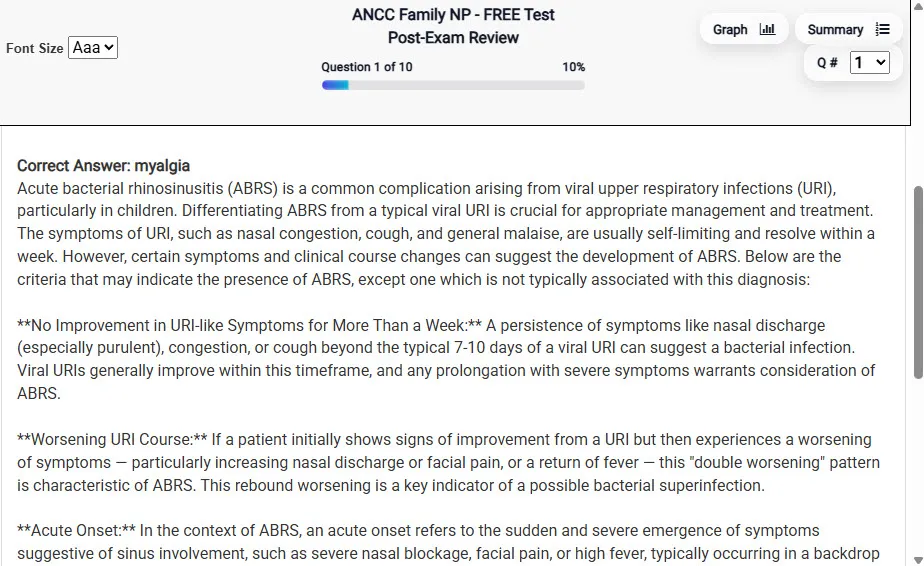
                           Detailed Explanation screen – 
                         Review mode showing chosen answer and rationale and references.
Detailed Explanation Review mode showing chosen answer and rationale and references.

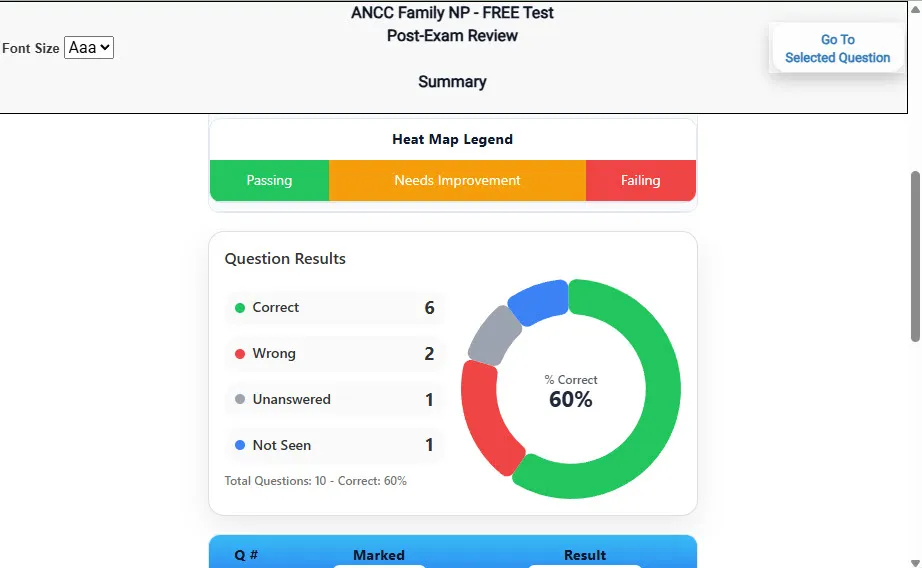
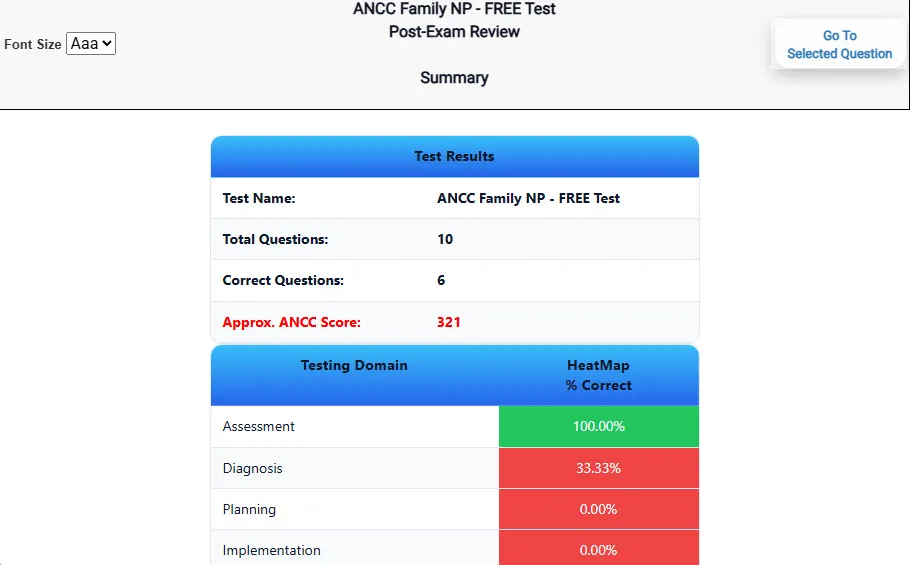
                           Review Summary 1 screen – 
                         Summary with counts for correct/wrong/unanswered and not seen items.
Review Summary 1 Summary with counts for correct/wrong/unanswered and not seen items.

                           Review Summary 2 screen – 
                         Advanced summary with category/domain breakdown and performance insights.
Review Summary 2 Advanced summary with category/domain breakdown and performance insights.

What Each Screen Shows

Answer Question Screen

  • Clean multiple-choice interface with progress bar.
  • Mark for review feature.
  • Matches real test pacing.

Detailed Explanation

  • Correct answer plus rationale.
  • Key concepts and guidelines highlighted.
  • Move between questions to fill knowledge gaps.

Review Summary 1

  • Overall results with total questions and scaled score.
  • Domain heatmap shows strengths and weaknesses.
  • Quick visual feedback on study priorities.

Review Summary 2

  • Chart of correct, wrong, unanswered, not seen.
  • Color-coded results for easy review.
  • Links back to missed items.

Top 10 Reasons to Use Exam Edge for your WEST-NES Art Exam Prep

  1. Focused on the WEST-NES Art Exam

    Our practice tests are built specifically for the WEST-NES Art exam — every question mirrors the real topics, format, and difficulty so you're studying exactly what matters.

  2. Real Exam Simulation

    We match the per-question time limits and pressure of the actual WEST-NES exam, so test day feels familiar and stress-free.

  3. 15 Full Practice Tests & 2,250 Unique Questions

    You'll have more than enough material to master every WEST-NES Art concept — no repeats, no fluff.

  4. Lower Cost Than a Retake

    Ordering 5 practice exams costs less than retaking the WEST-NES Art exam after a failure. One low fee could save you both time and money.

  5. Flexible Testing

    Need to step away mid-exam? Pick up right where you left off — with your remaining time intact.

  6. Instant Scoring & Feedback

    See your raw score and an estimated WEST-NES Art score immediately after finishing each practice test.

  7. Detailed Explanations for Every Question

    Review correct and incorrect answers with clear, step-by-step explanations so you truly understand each topic.

  8. Trusted & Accredited

    We're fully accredited by the Better Business Bureau and uphold the highest standards of trust and transparency.

  9. Web-Based & Always Available

    No software to install. Access your WEST-NES Art practice exams 24/7 from any computer or mobile device.

  10. Expert Support When You Need It

    Need extra help? Our specialized tutors are highly qualified and ready to support your WEST-NES exam prep.


Pass the WEST-NES Art Exam with Realistic Practice Tests from Exam Edge

Preparing for your upcoming WEST-NES Art (503) Certification Exam can feel overwhelming — but the right practice makes all the difference. Exam Edge gives you the tools, structure, and confidence to pass on your first try. Our online practice exams are built to match the real WEST-NES Art exam in content, format, and difficulty.

  • 📝 15 WEST-NES Art Practice Tests: Access 15 full-length exams with 150 questions each, covering every major WEST-NES Art topic in depth.
  • Instant Online Access: Start practicing right away — no software, no waiting.
  • 🧠 Step-by-Step Explanations: Understand the reasoning behind every correct answer so you can master WEST-NES Art exam concepts.
  • 🔄 Retake Each Exam Up to 4 Times: Build knowledge through repetition and track your improvement over time.
  • 🌐 Web-Based & Available 24/7: Study anywhere, anytime, on any device.
  • 🧘 Boost Your Test-Day Confidence: Familiarity with the WEST-NES format reduces anxiety and helps you perform under pressure.

These WEST-NES Art practice exams are designed to simulate the real testing experience by matching question types, timing, and difficulty level. This approach helps you get comfortable not just with the exam content, but also with the testing environment, so you walk into your exam day focused and confident.


Exam Edge WEST Reviews


I just received notice of passing the middle school math (012) test with a score of 292. My last 4 test scores on the WESTEmath site averaged 291. I'd say the practice tests mirror the actual test quite well and the practice test scores are a very good indicator of how well you'll do on the actual t ...
Read More
Phillip ,

Thank you for the opportunities to take several practice tests! This is really helpful to see which areas I need to study more, and where I have some of my greatest misconceptions. It is helping me to prepare for the real WEST-E test!

Tyler , Olympia, Washington

I just want to say thank you! I purchased several study guides & flash cards to prepare for my test. I was feeling frustrated by the amount of content. I decided to purchase your practice tests and I wish I hadn't wasted my money on the others. Your practice tests resemble the test and I fel ...
Read More
Heather, Spokane, WA

Just wanted to thank you for making the practice tests available. They made a huge difference. Took the 2 Elementary subtests this past Saturday and passed! These practice tests were by far the best tool to use to be prepared and feel confident going into the real testing situation. Thanks again. Ri ...
Read More
Sonja, Washington

Thank you so much!! Your practice exam in Bilingual Education was so helpful! I was able to pass with no problem at all! Javier Roman

JAVIER , seattle, Washington


WEST-NES Art Aliases Test Name

Here is a list of alternative names used for this exam.

  • WEST-NES Art
  • WEST-NES Art test
  • WEST-NES Art Certification Test
  • WEST
  • WEST 503
  • 503 test
  • WEST-NES Art (503)
  • -NES Art certification