This is the content of the pop-over!

TExMaT Master Science Teacher 8-12 (092) Practice Tests & Test Prep by Exam Edge


TExMaT Master Science Teacher 8-12  product image
(4.7)
Based on 37 Reviews

  • Real Exam Simulation: Timed questions and matching content build comfort for your TExMaT Master Science Teacher 8-12 test day.
  • Instant, 24/7 Access: Web-based TExMaT Master Science Teacher 8-12 practice exams with no software needed.
  • Clear Explanations: Step-by-step answers and explanations for your TExMaT exam to strengthen understanding.
  • Boosted Confidence: Reduces anxiety and improves test-taking skills to ace your TExMaT Master Science Teacher 8-12 (092).

Featured on

TExMaT Master Science Teacher 8-12 Online Practice Test Bundles

BEST VALUE
20 practice tests

$174.00

$799.00

SAVE $625

Only $8.70 per test!

  • 100% Pass Guarantee
  • 20 online practice tests
  • 95 questions per test
  • Bonus: 100 Flash Cards + Study Guide
  • Instant access
  • Detailed Explanations
  • Practice tests never expire
  • Timed, untimed, or study guide mode
MOST POPULAR
10 practice tests

$99.50

$399.50

SAVE $300

Only $9.95 per test!

  • 10 online practice tests
  • 95 questions per test
  • Bonus: 100 Flash Cards + Study Guide
  • Instant access
  • Detailed Explanations
  • Practice tests never expire
  • Timed, untimed, or study guide mode
5 practice tests

$69.75

$199.75

SAVE $130

Only $13.95 per test!

  • 5 online practice tests
  • 95 questions per test
  • Bonus: 100 Flash Cards
  • Instant access
  • Detailed Explanations
  • Practice tests never expire
  • Timed, untimed, or study guide mode
1 practice test

$39.95

  • 1 online practice test
  • 95 questions per test
  • Instant access
  • Detailed Explanations
  • Practice tests never expire
  • Timed, untimed, or study guide mode
Quick Select
Tap to choose a bundle

** All Prices are in US Dollars (USD) **


TExMaT Master Science Teacher 8-12 (092) Resources

Jump to the section you need most.

Understanding the exact breakdown of the TExMaT Master Science Teacher 8-12 test will help you know what to expect and how to most effectively prepare. The TExMaT Master Science Teacher 8-12 has 95 multiple-choice questions and 1 essay questions. The exam will be broken down into the sections below:

TExMaT Master Science Teacher 8-12 Exam Blueprint
Domain Name % Number of
Questions
Physical Science 18% 17
Life Science 18% 17
Earth and Space Science 18% 17
The History - Nature and Context of Science;
Scientific Inquiry; and Safety
18% 17
Alignment and Integration - Instruction and Assessment 14% 13
The Learning and Teaching Environment - Mentoring and Shared
Leadership
14% 13

TExMaT Master Science Teacher 8-12 Study Tips by Domain

  • Use conservation laws as the first check in mechanics problems—momentum is conserved only when external impulse is negligible (red flag: applying momentum conservation across a collision with a significant external force or long interaction time).
  • Distinguish heat from temperature and track energy with signs and units—use Q = mcΔT and latent heat when phase changes occur (common trap: changing temperature during a phase change or mixing J and cal without converting).
  • Apply Newton’s 2nd law with correct free-body diagrams, especially with friction and circular motion—centripetal acceleration requires a net inward force (red flag: adding a “centripetal force” as an extra force instead of identifying the real forces providing it).
  • In electricity, start with charge conservation and field/potential relationships—V is energy per charge and E points from high to low potential (common trap: mixing up series/parallel rules for R, V, and I or reversing field direction).
  • For waves and optics, use v = fλ and boundary behavior rules—frequency stays constant across media while speed and wavelength change (red flag: changing frequency at refraction or forgetting that reflection inverts only at a higher-impedance boundary in strings).
  • In chemistry/atomic-structure topics within physical science, treat the mole as a counting unit and balance equations before any stoichiometry—then use limiting reactant logic (common trap: using masses directly as ratios or claiming atoms are created/destroyed when balancing).
  • Track matter and energy through ecosystems using trophic levels and biomass/energy pyramids; red flag: claiming energy “recycles” rather than flows and is lost as heat at each transfer.
  • Link photosynthesis and cellular respiration across organisms (including plants respiring all the time); common trap: mixing up where ATP is made (mitochondria) versus where glucose is made (chloroplasts).
  • Apply genetics with correct probability (Punnett squares, pedigrees, Hardy–Weinberg assumptions); priority rule: verify allele frequencies sum to 1 and don’t assume H–W holds if selection, migration, mutation, drift, or nonrandom mating is present.
  • Differentiate mitosis, meiosis, and gene expression control (transcription/translation); red flag: confusing homologous chromosomes with sister chromatids or stating crossing over happens in mitosis.
  • Use evolution evidence (common ancestry, natural selection, speciation, phylogenies) with population-level reasoning; common trap: teleological language like “organisms evolve traits because they need them.”
  • Connect structure and function in physiology and homeostasis (feedback loops, transport, immunity, neural/endocrine); contraindication: mixing positive vs negative feedback—e.g., childbirth and blood clotting are classic positive feedback examples.
  • Use relative dating rules (superposition, cross-cutting, inclusions) to sequence events and then confirm with radiometric dating — red flag: assuming radiometric ages apply without checking closed-system conditions or contamination.
  • Interpret plate-tectonic evidence (GPS vectors, seafloor magnetic stripes, earthquake depth patterns) to identify boundary types — common trap: labeling a transform fault as convergent just because earthquakes are frequent.
  • Link rock cycle processes to specific tectonic settings (e.g., arc volcanism, regional metamorphism, basin sedimentation) — priority rule: justify with process + setting, not rock name alone.
  • Apply Earth-systems interactions (atmosphere–hydrosphere–geosphere–biosphere) to climate drivers like albedo, greenhouse gases, and ocean circulation — red flag: confusing weather variability with climate trends based on short time windows.
  • Use orbital mechanics and observational evidence (phases, seasons, eclipses, retrograde motion) to explain apparent sky motions — common trap: attributing seasons to Earth–Sun distance rather than axial tilt.
  • Analyze stars and galaxies using H–R diagrams, spectra, and redshift to infer temperature, composition, luminosity, and relative distance/age — threshold cue: if a spectrum shows Doppler shift, direction (toward/away) must match the stated motion.
  • Differentiate scientific laws, theories, hypotheses, and models, and defend that a theory does not “become” a law with more evidence—red flag: confusing tentative hypotheses with well-supported explanatory frameworks.
  • Connect major historical developments (e.g., heliocentrism, evolution, atomic theory) to shifts in evidence standards and technology—common trap: presenting science as a linear “facts-only” timeline rather than argument from evidence.
  • Apply core inquiry design: testable question, operational definitions, controls, replication, and appropriate sample size—priority rule: change one independent variable at a time unless using a clearly planned multivariable design.
  • Interpret and evaluate data using uncertainty, significant figures, error sources (systematic vs. random), and basic statistics—red flag: over-claiming causation from correlation or from results within measurement error.
  • Ensure ethical and safe investigations: SDS review, labeling, PPE selection, proper storage/segregation, and waste disposal—contraindication: mixing incompatible chemicals (e.g., acids with bleach/ammonia) or using open flames near flammables.
  • Demonstrate safety culture and compliance (training, emergency procedures, eyewash/shower use, incident reporting) and require student contracts/briefings—common trap: skipping a pre-lab risk assessment for “routine” labs.
  • Start with the TEKS and backward-design to measurable objectives, then align daily learning targets, activities, and assessments to the same verb/noun pair—red flag: an assessment that measures recall when the objective demands modeling or analysis.
  • Use a pre-assessment (diagnostic probe, quickwrite, or concept inventory) to identify misconceptions before instruction—common trap: treating low pretest scores as grading evidence rather than planning data.
  • Plan lessons that integrate science content with crosscutting concepts and scientific practices (e.g., modeling, argument from evidence) rather than as add-ons—priority rule: every activity must produce observable evidence of the intended practice.
  • Select assessment types intentionally (formative checks during learning; summative after instruction) and define criteria with a rubric or exemplar—red flag: “completion” grades that mask whether students met the performance level.
  • Differentiate through tiered tasks, scaffolds (sentence frames, data tables, partially completed models), and extension paths while keeping the same learning goal—common trap: lowering the cognitive demand instead of adjusting support.
  • Use assessment results to reteach with a targeted plan (small-group instruction, error analysis, alternate representations) and document progress—threshold cue: if <70% of students miss the same concept, adjust whole-class instruction before moving on.
  • Use a gradual release model when mentoring (co-plan → co-teach → observe → independent) and document evidence; red flag: offering “tips” without an agreed goal, timeline, and observable look-fors.
  • Set norms for instructional coaching that separate evaluation from support; common trap: writing feedback that reads like an appraisal (ratings, compliance language) instead of actionable next steps.
  • Align mentoring to campus/district goals and student data (e.g., TEKS-aligned formative results) and prioritize 1–2 high-leverage moves; priority rule: address classroom safety and student access issues before refining lesson polish.
  • Model professional learning communities (PLCs) that use a tight cycle—plan, implement, assess, respond—with shared artifacts; red flag: meetings focused on logistics rather than student work and next instructional actions.
  • Practice shared leadership by distributing roles (data lead, materials lead, lab safety lead) with clear deliverables; common trap: “volunteer” roles that lack accountability, resulting in uneven workload and follow-through.
  • Mentor for equity and ethical practice by checking for bias in grouping, questioning, and access to labs/technology; contraindication: allowing tracking or participation rules that systematically exclude English learners, students with disabilities, or economically disadvantaged students from rigorous tasks.


Built to Fit Into Your Busy Life

Everything you need to prepare with confidence—without wasting a minute.

Three Study Modes

Timed, No Time Limit, or Explanation mode.

Actionable Analytics

Heatmaps and scaled scores highlight weak areas.

High-Yield Rationales

Concise explanations emphasize key concepts.

Realistic Interface

Matches the feel of the actual exam environment.

Accessible by Design

Clean layout reduces cognitive load.

Anytime, Anywhere

Web-based access 24/7 on any device.
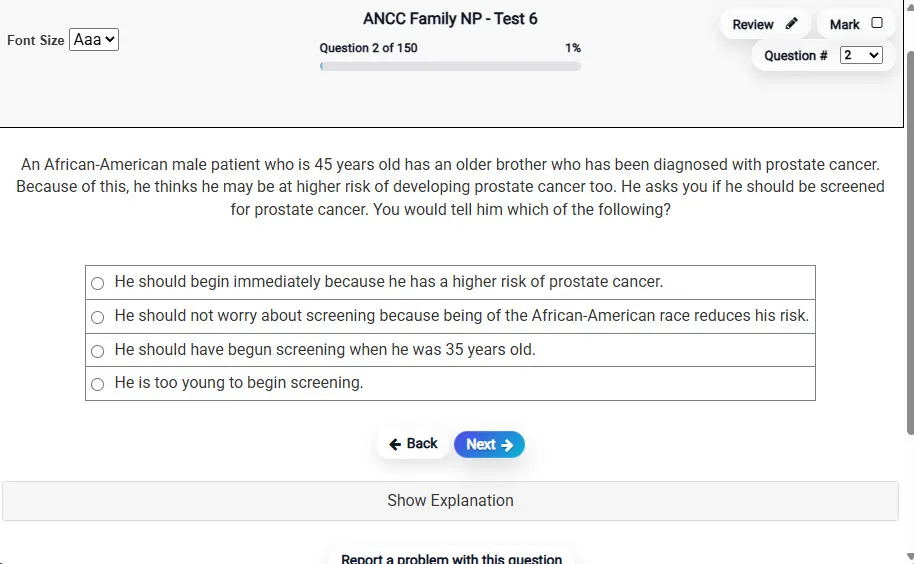
Answering a Question screen – Multiple-choice item view with navigation controls and progress tracker.
Answering a Question Multiple-choice item view with navigation controls and progress tracker.

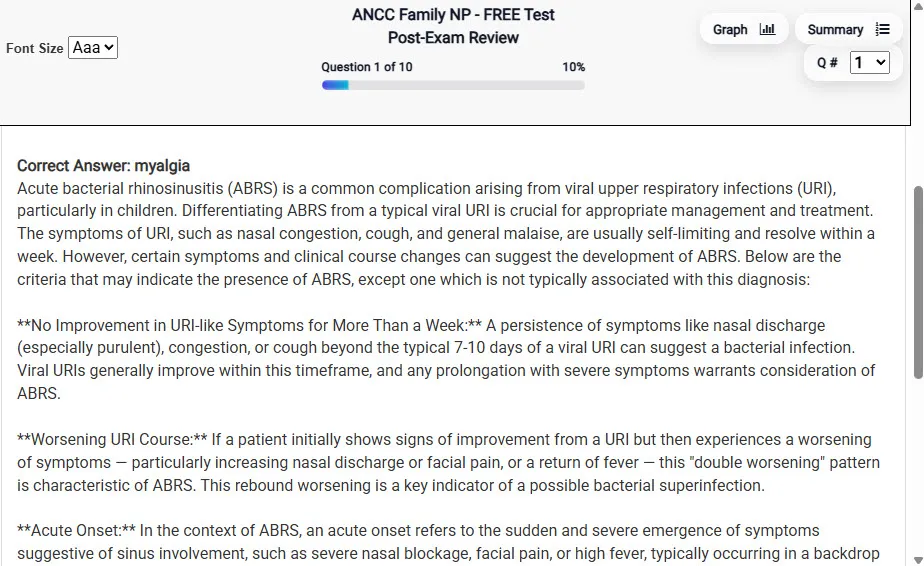
                           Detailed Explanation screen – 
                         Review mode showing chosen answer and rationale and references.
Detailed Explanation Review mode showing chosen answer and rationale and references.

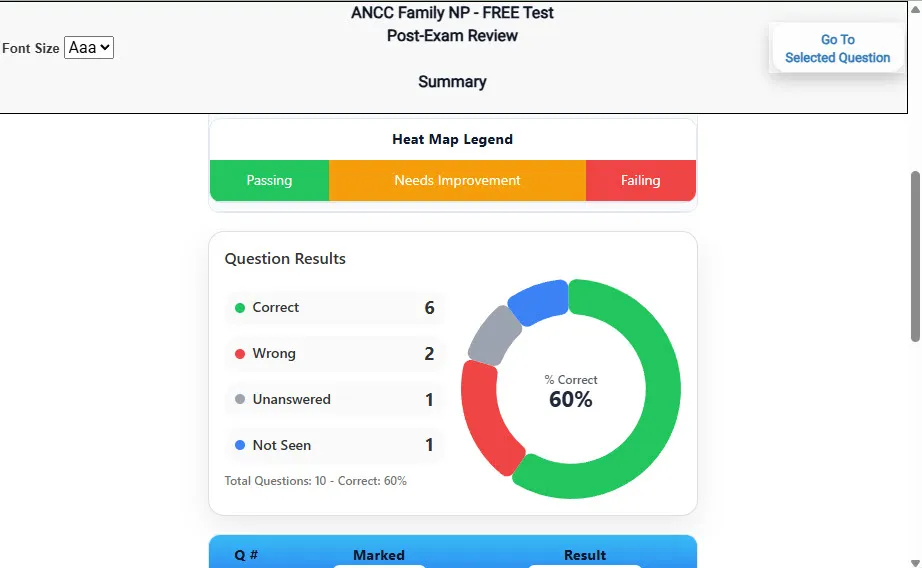
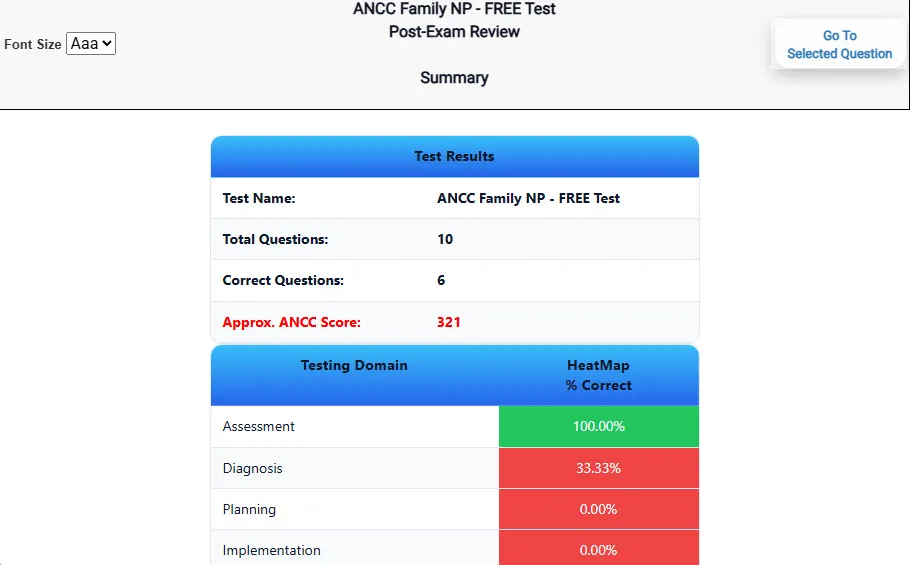
                           Review Summary 1 screen – 
                         Summary with counts for correct/wrong/unanswered and not seen items.
Review Summary 1 Summary with counts for correct/wrong/unanswered and not seen items.

                           Review Summary 2 screen – 
                         Advanced summary with category/domain breakdown and performance insights.
Review Summary 2 Advanced summary with category/domain breakdown and performance insights.

What Each Screen Shows

Answer Question Screen

  • Clean multiple-choice interface with progress bar.
  • Mark for review feature.
  • Matches real test pacing.

Detailed Explanation

  • Correct answer plus rationale.
  • Key concepts and guidelines highlighted.
  • Move between questions to fill knowledge gaps.

Review Summary 1

  • Overall results with total questions and scaled score.
  • Domain heatmap shows strengths and weaknesses.
  • Quick visual feedback on study priorities.

Review Summary 2

  • Chart of correct, wrong, unanswered, not seen.
  • Color-coded results for easy review.
  • Links back to missed items.

Top 10 Reasons to Use Exam Edge for your TExMaT Master Science Teacher 8-12 Exam Prep

  1. Focused on the TExMaT Master Science Teacher 8-12 Exam

    Our practice tests are built specifically for the TExMaT Master Science Teacher 8-12 exam — every question mirrors the real topics, format, and difficulty so you're studying exactly what matters.

  2. Real Exam Simulation

    We match the per-question time limits and pressure of the actual TExMaT exam, so test day feels familiar and stress-free.

  3. 20 Full Practice Tests & 1,900 Unique Questions

    You'll have more than enough material to master every TExMaT Master Science Teacher 8-12 concept — no repeats, no fluff.

  4. Lower Cost Than a Retake

    Ordering 5 practice exams costs less than retaking the TExMaT Master Science Teacher 8-12 exam after a failure. One low fee could save you both time and money.

  5. Flexible Testing

    Need to step away mid-exam? Pick up right where you left off — with your remaining time intact.

  6. Instant Scoring & Feedback

    See your raw score and an estimated TExMaT Master Science Teacher 8-12 score immediately after finishing each practice test.

  7. Detailed Explanations for Every Question

    Review correct and incorrect answers with clear, step-by-step explanations so you truly understand each topic.

  8. Trusted & Accredited

    We're fully accredited by the Better Business Bureau and uphold the highest standards of trust and transparency.

  9. Web-Based & Always Available

    No software to install. Access your TExMaT Master Science Teacher 8-12 practice exams 24/7 from any computer or mobile device.

  10. Expert Support When You Need It

    Need extra help? Our specialized tutors are highly qualified and ready to support your TExMaT exam prep.


Pass the TExMaT Master Science Teacher 8-12 Exam with Realistic Practice Tests from Exam Edge

Preparing for your upcoming TExMaT Master Science Teacher 8-12 (092) Certification Exam can feel overwhelming — but the right practice makes all the difference. Exam Edge gives you the tools, structure, and confidence to pass on your first try. Our online practice exams are built to match the real TExMaT Master Science Teacher 8-12 exam in content, format, and difficulty.

  • 📝 20 TExMaT Master Science Teacher 8-12 Practice Tests: Access 20 full-length exams with 95 questions each, covering every major TExMaT Master Science Teacher 8-12 topic in depth.
  • Instant Online Access: Start practicing right away — no software, no waiting.
  • 🧠 Step-by-Step Explanations: Understand the reasoning behind every correct answer so you can master TExMaT Master Science Teacher 8-12 exam concepts.
  • 🔄 Retake Each Exam Up to 4 Times: Build knowledge through repetition and track your improvement over time.
  • 🌐 Web-Based & Available 24/7: Study anywhere, anytime, on any device.
  • 🧘 Boost Your Test-Day Confidence: Familiarity with the TExMaT format reduces anxiety and helps you perform under pressure.

These TExMaT Master Science Teacher 8-12 practice exams are designed to simulate the real testing experience by matching question types, timing, and difficulty level. This approach helps you get comfortable not just with the exam content, but also with the testing environment, so you walk into your exam day focused and confident.


Exam Edge TEXES Reviews


Excellent experience!

Agnes , San Antonio, Texas

Pleased with using Exam Edge. I have learned many other terms and related information using Exam Edge. I started with one examination to ready myself for the state examination and ended up purchasing all 10. Exam Edge also gave me some additional information after purchasing 10 exams.

Barb N, TX

Just wanted to tell you how helpful your site and tests were. I have taught HS English for 16 years and challenged this test to make myself more marketable. I ended up buying three tests, studying all the answer reasons, and using the info to make notes to study. I passed on the first try. Actually, ...
Read More
Wendy, Texes

The practice tests allowed me to practice with questions that were of similar content and construction as the real test. I took several practice tests and was able to focus my studying on what I missed. I felt the rigor of the questions matched the real test as well. After taking the real test and r ...
Read More
Lucy, Texes

Exam edge really prepared me for my exam. I passed!!! Thank you so much!

Mary, Houston, TX

Great exam site that helped me pass my tests.

June , Murphy, Texas


TExMaT Master Science Teacher 8-12 Aliases Test Name

Here is a list of alternative names used for this exam.

  • TExMaT Master Science Teacher 8-12
  • TExMaT Master Science Teacher 8-12 test
  • TExMaT Master Science Teacher 8-12 Certification Test
  • TEXES
  • TEXES 092
  • 092 test
  • TExMaT Master Science Teacher 8-12 (092)
  • TExMaT Master Science Teacher 8-12 certification