This is the content of the pop-over!

TExES Social Studies 7-12 (232) Practice Tests & Test Prep by Exam Edge


TExES Social Studies 7-12  product image
(4.7)
Based on 17 Reviews

  • Real Exam Simulation: Timed questions and matching content build comfort for your TExES Social Studies 7-12 test day.
  • Instant, 24/7 Access: Web-based TExES Social Studies 7-12 practice exams with no software needed.
  • Clear Explanations: Step-by-step answers and explanations for your TExES exam to strengthen understanding.
  • Boosted Confidence: Reduces anxiety and improves test-taking skills to ace your TExES Social Studies 7-12 (232).

Featured on

TExES Social Studies 7-12 Online Practice Test Bundles

BEST VALUE
25 practice tests

$218.75

$998.75

SAVE $780

Only $8.75 per test!

  • 100% Pass Guarantee
  • 25 online practice tests
  • 140 questions per test
  • Bonus: 100 Flash Cards + Study Guide
  • Instant access
  • Detailed Explanations
  • Practice tests never expire
  • Timed, untimed, or study guide mode
MOST POPULAR
10 practice tests

$99.50

$399.50

SAVE $300

Only $9.95 per test!

  • 10 online practice tests
  • 140 questions per test
  • Bonus: 100 Flash Cards + Study Guide
  • Instant access
  • Detailed Explanations
  • Practice tests never expire
  • Timed, untimed, or study guide mode
5 practice tests

$69.75

$199.75

SAVE $130

Only $13.95 per test!

  • 5 online practice tests
  • 140 questions per test
  • Bonus: 100 Flash Cards
  • Instant access
  • Detailed Explanations
  • Practice tests never expire
  • Timed, untimed, or study guide mode
1 practice test

$39.95

  • 1 online practice test
  • 140 questions per test
  • Instant access
  • Detailed Explanations
  • Practice tests never expire
  • Timed, untimed, or study guide mode
Quick Select
Tap to choose a bundle

** All Prices are in US Dollars (USD) **


TExES Social Studies 7-12 (232) Resources

Jump to the section you need most.

Understanding the exact breakdown of the TExES Social Studies 7-12 test will help you know what to expect and how to most effectively prepare. The TExES Social Studies 7-12 has 140 multiple-choice questions . The exam will be broken down into the sections below:

TExES Social Studies 7-12 Exam Blueprint
Domain Name % Number of
Questions
World History 15% 24
U.S. History 20% 32
Geography - Culture the Behavioral and Social Sciences 13% 21
Government and Citizenship 13% 21
Economics and Science - Technology Society 13% 21
Social Studies Foundations - Skills - Research Instruction 13% 21

TExES Social Studies 7-12 Study Tips by Domain

  • Build timelines that connect turning points across regions (e.g., Columbian Exchange to Atlantic slavery to industrial capitalism); red flag: treating events as isolated “fact lists” instead of cause-and-effect chains.
  • Compare major belief systems (Hinduism, Buddhism, Judaism, Christianity, Islam) by core ideas, diffusion, and institutional impact; common trap: confusing doctrine with cultural practice or assuming one “uniform” form across time and place.
  • Analyze empires (classical to modern) through governance, military power, economy, and legitimacy; priority rule: always link expansion/decline to at least one internal factor and one external pressure.
  • Trace trade networks (Silk Roads, Indian Ocean, Trans-Saharan, Atlantic) and what moved (goods, people, pathogens, ideas); red flag: describing trade without specifying how it reshaped states, labor systems, or technology adoption.
  • Evaluate revolutions and reform movements (Atlantic revolutions, abolition, nationalism, decolonization) by stated ideals versus outcomes; common trap: assuming “rights language” automatically produced equal rights for all groups.
  • Interpret primary/secondary sources with sourcing and context (author, audience, purpose, historical situation); contraindication: quoting a document as “proof” without checking bias, missing voices, or corroboration.
  • Know major turning points chronologically (Revolution → Constitution → Civil War → industrialization → world wars → Cold War → post–Cold War); a common trap is mixing Reconstruction amendments with later civil rights legislation.
  • Connect political documents to principles (Declaration, Constitution, Federalist/Anti-Federalist, key Supreme Court cases); red flag: confusing enumerated powers with reserved powers under the 10th Amendment.
  • Track expansion and sectionalism (Louisiana Purchase, Manifest Destiny, Compromise era, Kansas–Nebraska, Dred Scott); priority rule: be able to explain how each event shifted the balance between free and slave states.
  • Reconstruction through Jim Crow and the modern Civil Rights Movement (13th–15th Amendments, Black Codes, Plessy, Brown, Civil Rights Act 1964, Voting Rights Act 1965); common trap: treating Brown as ending segregation immediately without noting resistance and enforcement.
  • Industrialization and reform (Gilded Age, labor, immigration, Populism, Progressivism, New Deal); red flag: assuming all reforms were federal—many began at state/local levels before national adoption.
  • U.S. foreign policy shifts (isolationism, imperialism, WWI/WWII, containment, Vietnam, détente, post-9/11); threshold cue: distinguish Truman Doctrine/Marshall Plan (aid/containment) from the later Nixon Doctrine (burden-sharing/withdrawal).
  • Use the five themes of geography (location, place, human–environment interaction, movement, region) to frame any prompt; red flag: answering with history-only facts and no spatial reasoning.
  • Interpret maps and spatial data (scale, projection, contour lines, climate graphs, population pyramids) and always cite what the graphic shows; common trap: confusing correlation on a choropleth with causation.
  • Explain how physical processes (plate tectonics, weathering, erosion, climate systems) shape landforms and human settlement; priority rule: connect the process to a real constraint or opportunity (water access, hazards, soils).
  • Analyze culture as learned, shared, and dynamic (language, religion, ethnicity, gender roles, diffusion, acculturation); red flag: stereotyping or treating culture as fixed rather than changing through contact.
  • Apply behavioral and social science concepts (push–pull migration, urbanization, demographic transition, social stratification) and distinguish levels of analysis; common trap: attributing group outcomes solely to individual choices.
  • Evaluate human impacts and sustainability (resource use, land-use change, pollution, natural hazards) using cost–benefit and externalities; threshold: identify who bears the costs vs. who gains when proposing a policy response.
  • Distinguish foundational principles (popular sovereignty, rule of law, limited government, separation of powers, checks and balances) and apply them to scenarios; red flag: confusing separation of powers (between branches) with federalism (between national and state governments).
  • Compare the U.S. constitutional system with unitary, federal, and confederal systems and link structure to policy outcomes; common trap: assuming federalism always means “states can ignore” federal law despite the Supremacy Clause.
  • Analyze civil liberties and civil rights under the Bill of Rights and 14th Amendment (due process, equal protection) using case-style fact patterns; priority rule: ask first whether government action is involved before applying constitutional protections.
  • Explain how elections and political participation work (primary vs general, Electoral College, redistricting, interest groups, parties, media) and evaluate impacts on representation; red flag: conflating voter turnout patterns with voting eligibility requirements.
  • Identify roles, powers, and limits of institutions (Congress, presidency, bureaucracy, judiciary) including oversight, impeachment, judicial review, and executive orders; common trap: treating executive orders as laws that can permanently bypass Congress.
  • Connect citizenship, civic responsibilities, and public policy processes (agenda setting to implementation) to real classroom/community examples; threshold: differentiate rights (protected claims) from responsibilities (civic duties) when analyzing civic dilemmas.
  • Apply scarcity, opportunity cost, and trade-offs to policy choices; red flag: confusing sunk costs with relevant marginal costs when evaluating “what to do next.”
  • Use supply-and-demand shifts (not movements) to explain price/output changes; common trap: saying “higher price causes higher demand” instead of describing a right/left shift in demand or supply.
  • Distinguish market structures (perfect competition, monopoly, oligopoly, monopolistic competition) by entry barriers and pricing power; cue: if one firm is a price maker with high barriers, you should analyze deadweight loss and regulation.
  • Connect innovation and technological change to productivity, specialization, and economic growth; priority rule: emphasize incentives (profits, patents, R&D) while noting the trade-off of externalities (pollution, privacy, displacement).
  • Explain how science and technology shape labor markets and standards of living (automation, human capital, diffusion); red flag: treating technology as uniformly job-destroying rather than shifting skills demand and wages.
  • Analyze government roles in the economy (taxation, spending, monetary/fiscal policy, regulation) in response to market failures; common trap: calling all government action “socialism” instead of identifying the specific tool and its intended effect.
  • Prioritize sourcing first: identify author, audience, purpose, and context before using a document as evidence—red flag when a claim relies on an unattributed image, meme, or single quote with no provenance.
  • Use corroboration as a rule: require at least two independent sources before accepting a factual claim—common trap is treating multiple reports that trace back to the same wire story as “multiple sources.”
  • Teach historical thinking with explicit evidence-conclusion links: students should cite specific text features (date, place, language, data) to justify inferences—red flag when responses are value judgments with no document-based support.
  • Plan instruction with aligned objectives, checks for understanding, and accommodations (IEP/504/ELPS) built in—priority rule is to assess the standard’s verb (analyze, compare, evaluate) rather than just recall.
  • Design research tasks that require a defensible question, a thesis, and correctly paraphrased evidence with citations—contraindication is copying “close paraphrases” that keep the source’s structure (plagiarism risk).
  • Use maps, charts, and quantitative data as texts: students should read titles, units, scales, and axes before interpreting trends—common trap is drawing causal conclusions from correlation or from truncated axes.


Built to Fit Into Your Busy Life

Everything you need to prepare with confidence—without wasting a minute.

Three Study Modes

Timed, No Time Limit, or Explanation mode.

Actionable Analytics

Heatmaps and scaled scores highlight weak areas.

High-Yield Rationales

Concise explanations emphasize key concepts.

Realistic Interface

Matches the feel of the actual exam environment.

Accessible by Design

Clean layout reduces cognitive load.

Anytime, Anywhere

Web-based access 24/7 on any device.
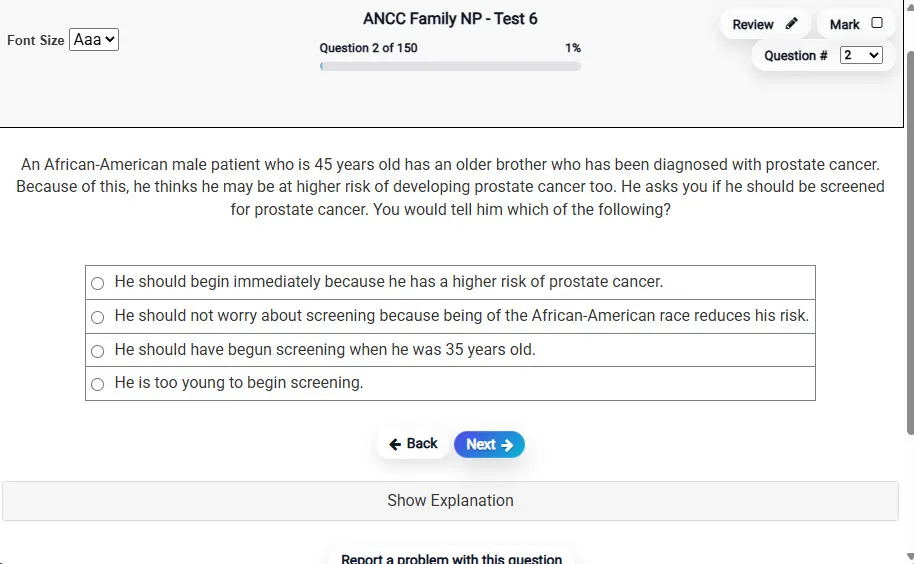
Answering a Question screen – Multiple-choice item view with navigation controls and progress tracker.
Answering a Question Multiple-choice item view with navigation controls and progress tracker.

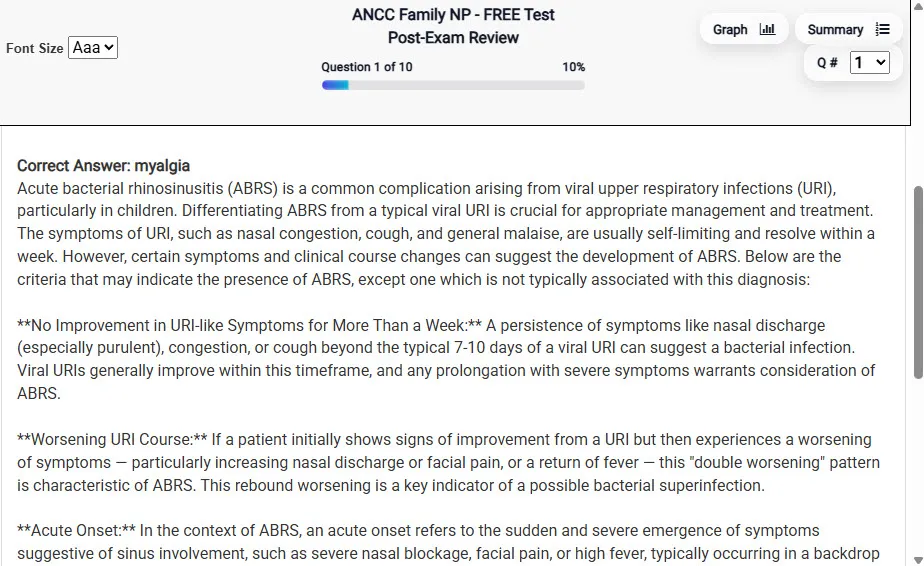
                           Detailed Explanation screen – 
                         Review mode showing chosen answer and rationale and references.
Detailed Explanation Review mode showing chosen answer and rationale and references.

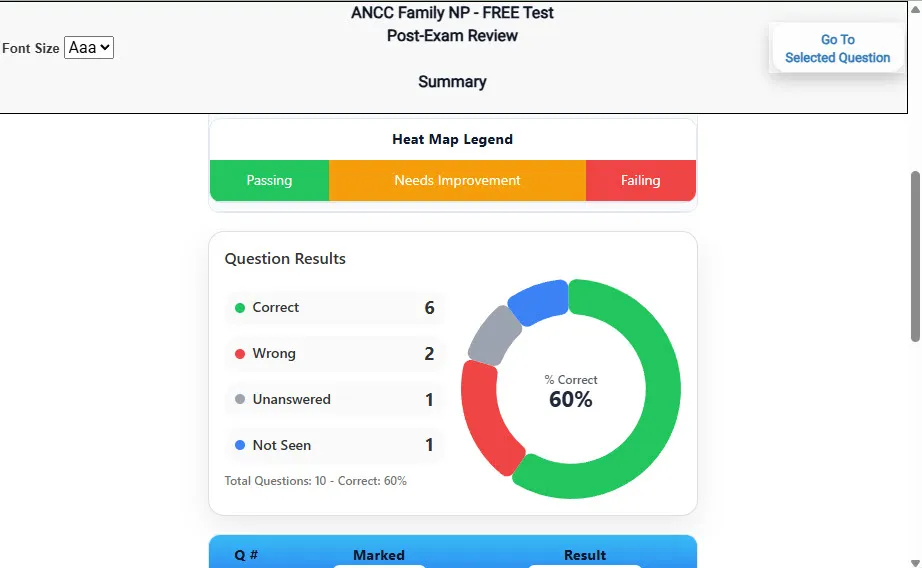
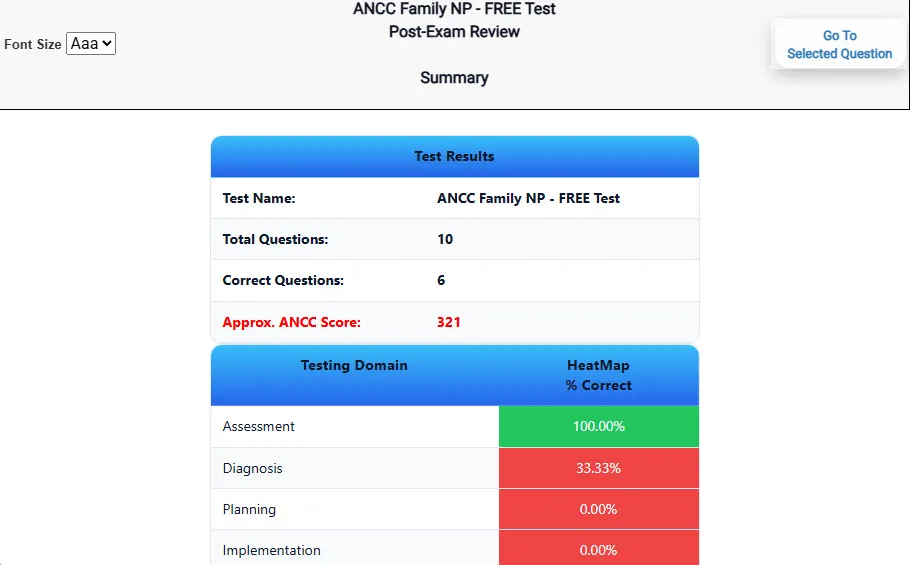
                           Review Summary 1 screen – 
                         Summary with counts for correct/wrong/unanswered and not seen items.
Review Summary 1 Summary with counts for correct/wrong/unanswered and not seen items.

                           Review Summary 2 screen – 
                         Advanced summary with category/domain breakdown and performance insights.
Review Summary 2 Advanced summary with category/domain breakdown and performance insights.

What Each Screen Shows

Answer Question Screen

  • Clean multiple-choice interface with progress bar.
  • Mark for review feature.
  • Matches real test pacing.

Detailed Explanation

  • Correct answer plus rationale.
  • Key concepts and guidelines highlighted.
  • Move between questions to fill knowledge gaps.

Review Summary 1

  • Overall results with total questions and scaled score.
  • Domain heatmap shows strengths and weaknesses.
  • Quick visual feedback on study priorities.

Review Summary 2

  • Chart of correct, wrong, unanswered, not seen.
  • Color-coded results for easy review.
  • Links back to missed items.

Top 10 Reasons to Use Exam Edge for your TExES Social Studies 7-12 Exam Prep

  1. Focused on the TExES Social Studies 7-12 Exam

    Our practice tests are built specifically for the TExES Social Studies 7-12 exam — every question mirrors the real topics, format, and difficulty so you're studying exactly what matters.

  2. Real Exam Simulation

    We match the per-question time limits and pressure of the actual TExES exam, so test day feels familiar and stress-free.

  3. 25 Full Practice Tests & 3,500 Unique Questions

    You'll have more than enough material to master every TExES Social Studies 7-12 concept — no repeats, no fluff.

  4. Lower Cost Than a Retake

    Ordering 5 practice exams costs less than retaking the TExES Social Studies 7-12 exam after a failure. One low fee could save you both time and money.

  5. Flexible Testing

    Need to step away mid-exam? Pick up right where you left off — with your remaining time intact.

  6. Instant Scoring & Feedback

    See your raw score and an estimated TExES Social Studies 7-12 score immediately after finishing each practice test.

  7. Detailed Explanations for Every Question

    Review correct and incorrect answers with clear, step-by-step explanations so you truly understand each topic.

  8. Trusted & Accredited

    We're fully accredited by the Better Business Bureau and uphold the highest standards of trust and transparency.

  9. Web-Based & Always Available

    No software to install. Access your TExES Social Studies 7-12 practice exams 24/7 from any computer or mobile device.

  10. Expert Support When You Need It

    Need extra help? Our specialized tutors are highly qualified and ready to support your TExES exam prep.


Pass the TExES Social Studies 7-12 Exam with Realistic Practice Tests from Exam Edge

Preparing for your upcoming TExES Social Studies 7-12 (232) Certification Exam can feel overwhelming — but the right practice makes all the difference. Exam Edge gives you the tools, structure, and confidence to pass on your first try. Our online practice exams are built to match the real TExES Social Studies 7-12 exam in content, format, and difficulty.

  • 📝 25 TExES Social Studies 7-12 Practice Tests: Access 25 full-length exams with 140 questions each, covering every major TExES Social Studies 7-12 topic in depth.
  • Instant Online Access: Start practicing right away — no software, no waiting.
  • 🧠 Step-by-Step Explanations: Understand the reasoning behind every correct answer so you can master TExES Social Studies 7-12 exam concepts.
  • 🔄 Retake Each Exam Up to 4 Times: Build knowledge through repetition and track your improvement over time.
  • 🌐 Web-Based & Available 24/7: Study anywhere, anytime, on any device.
  • 🧘 Boost Your Test-Day Confidence: Familiarity with the TExES format reduces anxiety and helps you perform under pressure.

These TExES Social Studies 7-12 practice exams are designed to simulate the real testing experience by matching question types, timing, and difficulty level. This approach helps you get comfortable not just with the exam content, but also with the testing environment, so you walk into your exam day focused and confident.


Exam Edge TEXES Reviews


Some of the questions did not go along with the grade levels of the exam. For example, the exams were supposed to be Social Studies 4-8, and multiple questions asked about grades specifically outside of that range. The questions were also very very detailed, to where none of the study material I h ...
Read More
Jennifer , DeKalb, Illinois

Exam edge helped me to review the material. However, I feel the focus of Exam Edge was the memorization of the Constitutional amendments, ancient civilizations, and geography, which was not on the test of the Social Studies 4-8 Exam.

Janie , Cedar Park, Texas

Your test prep exams prepared me for the actual exam. Before using your system, I took the Special Education Test and failed. With your help, I took the test again and passed!!!!!! Thanks for the guidance 

Ty, Freeport Texas

These tests prepared me so well for three different exams. I passed all three exams on my first attempt. Two of them with flying colors. I definitely recommend these study aids!

Vanessa , WESLACO, Texas

Great exam site that helped me pass my tests.

June , Murphy, Texas

I usually do not have trouble passing the Texes test, but I was very nervous about the principal's exam. I was very pleased with the testing materials I found on this site. The scoring made it very easy for me to ensure I was growing. I was able to see what I missed and learned new material. Also, b ...
Read More
Michelle , Texes


TExES Social Studies 7-12 Aliases Test Name

Here is a list of alternative names used for this exam.

  • TExES Social Studies 7-12
  • TExES Social Studies 7-12 test
  • TExES Social Studies 7-12 Certification Test
  • TEXES
  • TEXES 232
  • 232 test
  • TExES Social Studies 7-12 (232)
  • TExES Social Studies 7-12 certification