This is the content of the pop-over!

TExES English Lang Arts and Reading 7-12 (231) Practice Tests & Test Prep by Exam Edge


TExES English Language Arts and Reading 7-12  product image
(4.7)
Based on 17 Reviews

  • Real Exam Simulation: Timed questions and matching content build comfort for your TExES English Lang Arts and Reading 7-12 test day.
  • Instant, 24/7 Access: Web-based TExES English Language Arts and Reading 7-12 practice exams with no software needed.
  • Clear Explanations: Step-by-step answers and explanations for your TExES exam to strengthen understanding.
  • Boosted Confidence: Reduces anxiety and improves test-taking skills to ace your TExES English Language Arts and Reading 7-12 (331).

Featured on

TExES English Language Arts and Reading 7-12 Online Practice Test Bundles

BEST VALUE
15 practice tests

$149.25

$599.25

SAVE $450

Only $9.95 per test!

  • 100% Pass Guarantee
  • 15 online practice tests
  • 90 questions + 1 essay per test
  • Bonus: 100 Flash Cards + Study Guide
  • Instant access
  • Detailed Explanations
  • Practice tests never expire
  • Timed, untimed, or study guide mode
MOST POPULAR
10 practice tests

$99.50

$399.50

SAVE $300

Only $9.95 per test!

  • 10 online practice tests
  • 90 questions + 1 essay per test
  • Bonus: 100 Flash Cards + Study Guide
  • Instant access
  • Detailed Explanations
  • Practice tests never expire
  • Timed, untimed, or study guide mode
5 practice tests

$69.75

$199.75

SAVE $130

Only $13.95 per test!

  • 5 online practice tests
  • 90 questions + 1 essay per test
  • Bonus: 100 Flash Cards
  • Instant access
  • Detailed Explanations
  • Practice tests never expire
  • Timed, untimed, or study guide mode
1 practice test

$39.95

  • 1 online practice test
  • 90 questions + 1 essay per test
  • Instant access
  • Detailed Explanations
  • Practice tests never expire
  • Timed, untimed, or study guide mode
Quick Select
Tap to choose a bundle

** All Prices are in US Dollars (USD) **


TExES English Lang Arts and Reading 7-12 (331) Resources

Jump to the section you need most.

Understanding the exact breakdown of the TExES English Language Arts and Reading 7-12 test will help you know what to expect and how to most effectively prepare. The TExES English Language Arts and Reading 7-12 has 90 multiple-choice questions and 1 essay questions. The exam will be broken down into the sections below:

TExES English Language Arts and Reading 7-12 Exam Blueprint
Domain Name % Number of
Questions
Reading Instruction and Assessment 25% 23
Text Comprehension and Analysis 17% 15
Oral and Written Communication 25% 23
Educating All Learners and Professional Practice 13% 12
Constructed Response 20% 18

TExES English Language Arts and Reading 7-12 Study Tips by Domain

  • When selecting an intervention, match it to the primary deficit (e.g., decoding/fluency vs. vocabulary/comprehension); red flag: choosing a comprehension strategy when the student cannot accurately decode grade-level text.
  • Use assessment data to group students flexibly and change groups when progress-monitoring shows movement; common trap: keeping students in the same “low group” after they meet the benchmark.
  • Prioritize explicit, systematic instruction for foundational skills (phonological awareness, phonics, fluency) when errors are consistent and predictable; threshold cue: repeated miscues that preserve meaning are less urgent than miscues that change words and syntax.
  • When evaluating reading fluency, look beyond speed to accuracy and prosody; red flag: rewarding higher WPM when accuracy drops below an acceptable level for comprehension.
  • Teach academic vocabulary using multiple encounters in context and morphology (roots/affixes) rather than isolated lists; common trap: assuming students “know” a word after one definition or a single worksheet.
  • Choose assessments that align to the decision you need (screening, diagnostic, progress monitoring, outcome) and avoid over-testing; priority rule: use quick progress checks for weekly instructional adjustments, not long unit tests.
  • Use text evidence that is relevant and sufficient; red flag: quoting a line that sounds “right” but doesn’t actually support the claim.
  • Distinguish central idea/theme from a topic; priority rule: state the idea in a complete sentence that the whole text develops, not a single word or broad category.
  • Analyze author’s craft (diction, syntax, imagery, structure) by linking a specific technique to its effect on meaning or tone; common trap: naming a device without explaining what it does.
  • Track how a claim or plot develops across the text (beginning–middle–end) and note key turning points; threshold: you should be able to describe at least two moments where the direction or understanding changes.
  • Evaluate the reliability and perspective of a narrator/speaker or source; contraindication: treating first-person narration as automatically trustworthy without checking bias, gaps, or inconsistencies.
  • Compare texts by aligning the same element (theme, argument, characterization, or structure) across both; red flag: listing similarities/differences without citing paired evidence from each text.
  • Teach explicit grammar and usage in the context of authentic reading/writing; red flag: isolated worksheets with no transfer to students’ drafts or revisions.
  • Prioritize rhetorical purpose, audience, and tone when coaching speaking and writing; common trap: correcting every surface error before the student’s message and organization are clear.
  • Use a predictable writing process (plan–draft–revise–edit–publish) with checkpoints; threshold rule: no final-grade scoring until students have completed at least one substantive revision based on feedback.
  • Build academic discussion routines (questioning, turn-taking, citing evidence) and hold students to text-based claims; red flag: “opinions” accepted without a reference to a specific line, detail, or source.
  • Assess writing and speaking with aligned rubrics and anchor samples; priority rule: score ideas/organization/voice before conventions, and document the rubric evidence to justify the rating.
  • Teach research communication (summarizing, paraphrasing, quoting) with citation expectations; contraindication: allowing patchwriting—require students to annotate sources and show a draft where paraphrases differ substantially from the original.
  • Differentiate using current data (running records, exit tickets, writing samples) and adjust instruction within 1–2 lessons; red flag: grouping students by last grading period or labels instead of demonstrated needs.
  • Implement IEP/504/ELL accommodations exactly as written (e.g., extended time, read-aloud limits, word banks) and document delivery; common trap: treating accommodations as “optional” or changing them without the team/LPAC.
  • Provide language supports for English learners (sentence stems, visuals, modeled think-alouds) while maintaining grade-level TEKS targets; priority rule: do not “water down” the text—scaffold access, not expectations.
  • Use culturally responsive texts and discussion norms that ensure equitable talk time (e.g., structured turn-taking) and monitor participation; red flag: the same students dominate while others are silent or only called on for “easy” questions.
  • Maintain a safe, ethical literacy environment by protecting confidentiality and using unbiased assessment practices; contraindication: publicly posting reading levels or using penalizing grading for language acquisition features when not the skill assessed.
  • Collaborate with families, specialists, and colleagues using clear, strengths-based communication and actionable next steps; common trap: contacting home only for behavior or failing to follow required timelines for referrals and documentation.
  • Answer the prompt first with a defensible claim and a clear line of reasoning; red flag: summary-only responses with no arguable thesis earn limited credit even if accurate.
  • Select 2–4 precise pieces of textual evidence and explain how each supports your claim; common trap: “evidence dumping” (quotations with no analysis) reads like notes, not an argument.
  • Use accurate, consistent terminology (e.g., tone, structure, figurative language) tied to the task; priority rule: choose the most directly relevant feature rather than naming many devices without impact.
  • Organize into purposeful paragraphs with transitions that signal relationships (contrast, cause, development); threshold: if a reader can’t follow your logic without rereading, coherence is too weak.
  • Maintain formal, objective academic style and integrate quotes smoothly with correct attribution; contraindication: first-person opinion (“I feel”) or plot retelling in place of interpretation.
  • Revise quickly for clarity, grammar, and mechanics, prioritizing errors that obscure meaning; red flag: inconsistent verb tense or unclear pronoun references can make otherwise strong analysis hard to score.


Built to Fit Into Your Busy Life

Everything you need to prepare with confidence—without wasting a minute.

Three Study Modes

Timed, No Time Limit, or Explanation mode.

Actionable Analytics

Heatmaps and scaled scores highlight weak areas.

High-Yield Rationales

Concise explanations emphasize key concepts.

Realistic Interface

Matches the feel of the actual exam environment.

Accessible by Design

Clean layout reduces cognitive load.

Anytime, Anywhere

Web-based access 24/7 on any device.
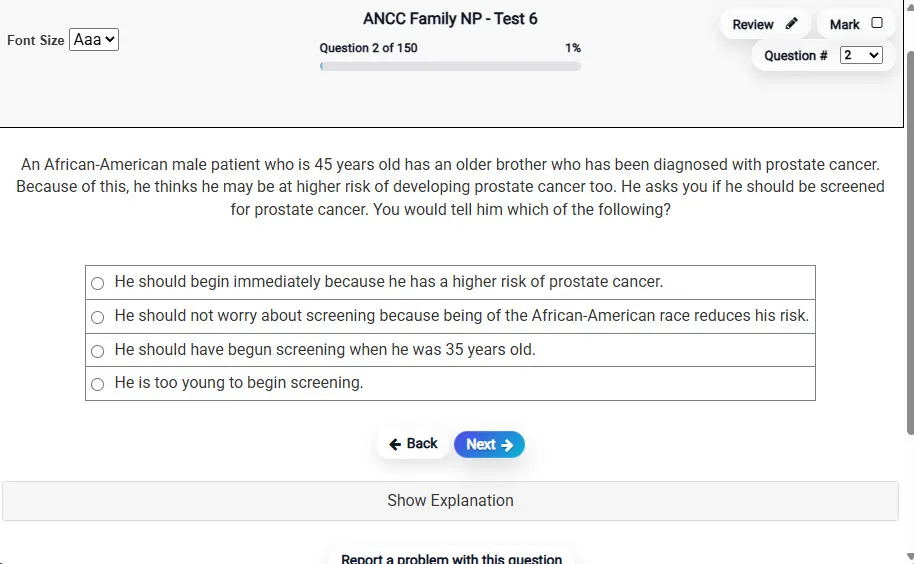
Answering a Question screen – Multiple-choice item view with navigation controls and progress tracker.
Answering a Question Multiple-choice item view with navigation controls and progress tracker.

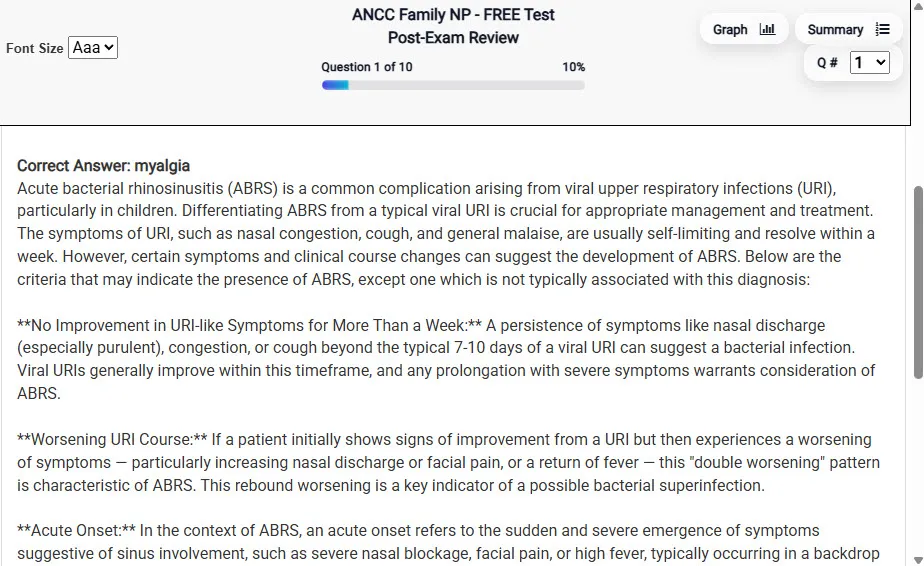
                           Detailed Explanation screen – 
                         Review mode showing chosen answer and rationale and references.
Detailed Explanation Review mode showing chosen answer and rationale and references.

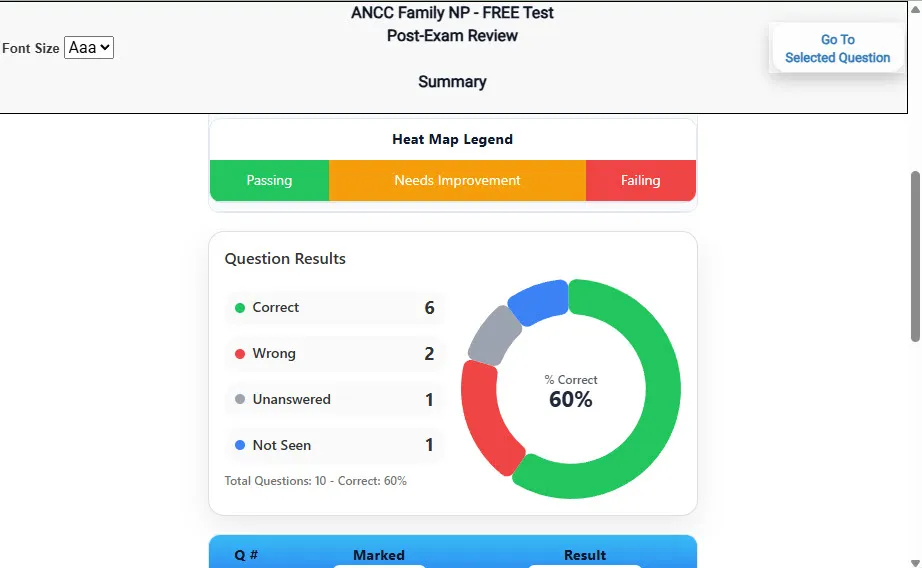
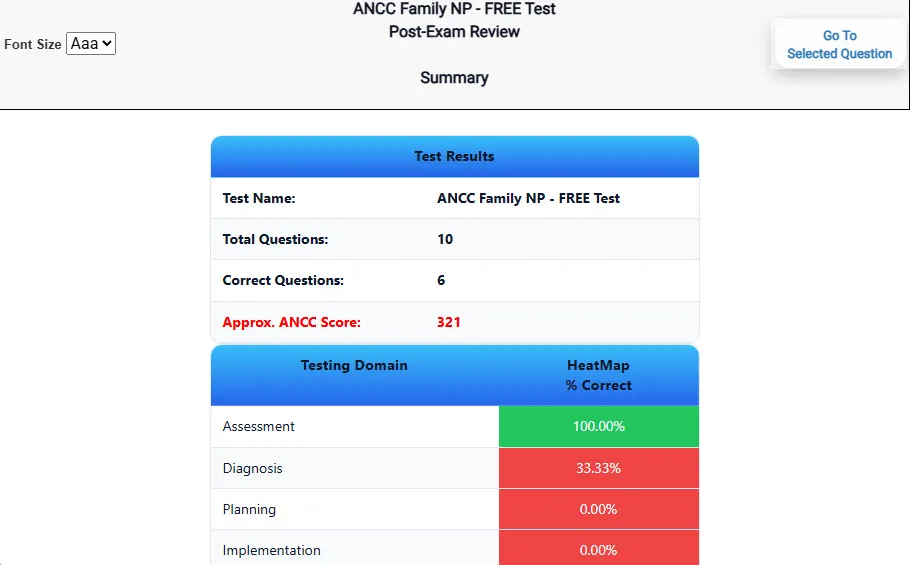
                           Review Summary 1 screen – 
                         Summary with counts for correct/wrong/unanswered and not seen items.
Review Summary 1 Summary with counts for correct/wrong/unanswered and not seen items.

                           Review Summary 2 screen – 
                         Advanced summary with category/domain breakdown and performance insights.
Review Summary 2 Advanced summary with category/domain breakdown and performance insights.

What Each Screen Shows

Answer Question Screen

  • Clean multiple-choice interface with progress bar.
  • Mark for review feature.
  • Matches real test pacing.

Detailed Explanation

  • Correct answer plus rationale.
  • Key concepts and guidelines highlighted.
  • Move between questions to fill knowledge gaps.

Review Summary 1

  • Overall results with total questions and scaled score.
  • Domain heatmap shows strengths and weaknesses.
  • Quick visual feedback on study priorities.

Review Summary 2

  • Chart of correct, wrong, unanswered, not seen.
  • Color-coded results for easy review.
  • Links back to missed items.

Top 10 Reasons to Use Exam Edge for your TExES English Language Arts and Reading 7-12 Exam Prep

  1. Focused on the TExES English Language Arts and Reading 7-12 Exam

    Our practice tests are built specifically for the TExES English Lang Arts and Reading 7-12 exam — every question mirrors the real topics, format, and difficulty so you're studying exactly what matters.

  2. Real Exam Simulation

    We match the per-question time limits and pressure of the actual TExES exam, so test day feels familiar and stress-free.

  3. 15 Full Practice Tests & 1,365 Unique Questions

    You'll have more than enough material to master every TExES English Lang Arts and Reading 7-12 concept — no repeats, no fluff.

  4. Lower Cost Than a Retake

    Ordering 5 practice exams costs less than retaking the TExES English Language Arts and Reading 7-12 exam after a failure. One low fee could save you both time and money.

  5. Flexible Testing

    Need to step away mid-exam? Pick up right where you left off — with your remaining time intact.

  6. Instant Scoring & Feedback

    See your raw score and an estimated TExES English Language Arts and Reading 7-12 score immediately after finishing each practice test.

  7. Detailed Explanations for Every Question

    Review correct and incorrect answers with clear, step-by-step explanations so you truly understand each topic.

  8. Trusted & Accredited

    We're fully accredited by the Better Business Bureau and uphold the highest standards of trust and transparency.

  9. Web-Based & Always Available

    No software to install. Access your TExES English Lang Arts and Reading 7-12 practice exams 24/7 from any computer or mobile device.

  10. Expert Support When You Need It

    Need extra help? Our specialized tutors are highly qualified and ready to support your TExES exam prep.


Pass the TExES English Language Arts and Reading 7-12 Exam with Realistic Practice Tests from Exam Edge

Preparing for your upcoming TExES English Language Arts and Reading 7-12 (331) Certification Exam can feel overwhelming — but the right practice makes all the difference. Exam Edge gives you the tools, structure, and confidence to pass on your first try. Our online practice exams are built to match the real TExES English Lang Arts and Reading 7-12 exam in content, format, and difficulty.

  • 📝 15 TExES English Language Arts and Reading 7-12 Practice Tests: Access 15 full-length exams with 91 questions each, covering every major TExES English Language Arts and Reading 7-12 topic in depth.
  • Instant Online Access: Start practicing right away — no software, no waiting.
  • 🧠 Step-by-Step Explanations: Understand the reasoning behind every correct answer so you can master TExES English Lang Arts and Reading 7-12 exam concepts.
  • 🔄 Retake Each Exam Up to 4 Times: Build knowledge through repetition and track your improvement over time.
  • 🌐 Web-Based & Available 24/7: Study anywhere, anytime, on any device.
  • 🧘 Boost Your Test-Day Confidence: Familiarity with the TExES format reduces anxiety and helps you perform under pressure.

These TExES English Language Arts and Reading 7-12 practice exams are designed to simulate the real testing experience by matching question types, timing, and difficulty level. This approach helps you get comfortable not just with the exam content, but also with the testing environment, so you walk into your exam day focused and confident.


Exam Edge TEXES Reviews


Hey Exam Edge, just a big thanks to you! Only having 48 hours to prepare I was totally freaking! I graduated from college in 1983 so I needed a basic refresher and you guys did just that. I passed with flying colors...

Susan, Texes

I had tried two other types of tests and would come within 15 points or so from passing using other software to study. I decided to try this site for a new exam I was preparing for. (BAM), I passed it on the first try and now can hold a probationary certificate in the State of Texas.

Patricia , San Antonio

I just want to take a second and thank Exam Edge for providing me with the content needed to pass a test! I took 3 of your practice tests, passed my Texes exam on my first try! You provided me with all the information needed to carry on my career! I've already referred other teachers! Thank you agai ...
Read More
Brett , Texas

I usually do not have trouble passing the Texes test, but I was very nervous about the principal's exam. I was very pleased with the testing materials I found on this site. The scoring made it very easy for me to ensure I was growing. I was able to see what I missed and learned new material. Also, b ...
Read More
Michelle , Texes

Great exam site that helped me pass my tests.

June , Murphy, Texas

Dear Exam Edge, I passed my exam on the first attempt with a score of 271/300 (exactly what the practice tests showed). Your practice tests were excellent and very representative of the exam. They helped my preparation and focus my study. Without question of all the test aids yours was head and shou ...
Read More
Donald , Beaumont Texas


TExES English Language Arts and Reading 7-12 Aliases Test Name

Here is a list of alternative names used for this exam.

  • TExES English Language Arts and Reading 7-12
  • TExES English Language Arts and Reading 7-12 test
  • TExES English Language Arts and Reading 7-12 Certification Test
  • TExES English Lang Arts and Reading 7-12 test
  • TEXES
  • TEXES 331
  • 331 test
  • TExES English Language Arts and Reading 7-12 (331)
  • TExES English Language Arts and Reading 7-12 certification