This is the content of the pop-over!

SANC Midwifery (SANC- Midwifery) Practice Tests & Test Prep by Exam Edge


SANC Midwifery  product image
(4.8)
Based on 22 Reviews

  • Real Exam Simulation: Timed questions and matching content build comfort for your SANC Midwifery test day.
  • Instant, 24/7 Access: Web-based SANC Midwifery practice exams with no software needed.
  • Clear Explanations: Step-by-step answers and explanations for your SANC exam to strengthen understanding.
  • Boosted Confidence: Reduces anxiety and improves test-taking skills to ace your SANC Midwifery (SANC- Midwifery).

Featured on

SANC Midwifery Online Practice Test Bundles

BEST VALUE
10 practice tests

$99.50

$399.50

SAVE $300

Only $9.95 per test!

  • 100% Pass Guarantee
  • 10 online practice tests
  • 100 questions per test
  • Bonus: 100 Flash Cards + Study Guide
  • Instant access
  • Detailed Explanations
  • Practice tests never expire
  • Timed, untimed, or study guide mode
5 practice tests

$69.75

$199.75

SAVE $130

Only $13.95 per test!

  • 5 online practice tests
  • 100 questions per test
  • Bonus: 100 Flash Cards + Study Guide
  • Instant access
  • Detailed Explanations
  • Practice tests never expire
  • Timed, untimed, or study guide mode
1 practice test

$39.95

  • 1 online practice test
  • 100 questions per test
  • Instant access
  • Detailed Explanations
  • Practice tests never expire
  • Timed, untimed, or study guide mode
Quick Select
Tap to choose a bundle

** All Prices are in US Dollars (USD) **


SANC Midwifery (SANC- Midwifery) Resources

Jump to the section you need most.

Understanding the exact breakdown of the SANC Midwifery test will help you know what to expect and how to most effectively prepare. The SANC Midwifery has multiple-choice questions . The exam will be broken down into the sections below:

SANC Midwifery Exam Blueprint
Domain Name
Physical Assessment and Diagnostic Evaluation  
Primary Care  
Gynecology  
Obstetrics  
Pharmacology  
Professional Issues  

SANC Midwifery Study Tips by Domain

  • Prioritise ABCDE in any unstable woman or neonate; red flag: airway compromise, SpO2 < 94% or systolic BP < 90 mmHg requires immediate escalation and resuscitation before further assessment.
  • Use systematic vital-sign trending and early warning approaches (e.g., repeated BP, pulse, RR, temperature, urine output); common trap: documenting a single “normal” reading and missing deterioration over time.
  • Assess bleeding objectively (pad counts, weighing, clots) and uterine tone; red flag: continued heavy bleeding with a “boggy” uterus suggests atony and must trigger rapid response.
  • Perform focused abdominal and pelvic assessment with consent, privacy and a chaperone where appropriate; common trap: omitting pain score, fundal height, or lochia description, which weakens clinical decision-making and handover.
  • Interpret basic diagnostics in context (urinalysis, Hb, glucose, pregnancy tests, fetal monitoring data); red flag: proteinuria with hypertension or symptoms (headache, visual changes, RUQ pain) warrants urgent evaluation for pre-eclampsia.
  • Document findings clearly with time stamps and communicate using SBAR; priority rule: any abnormal fetal heart rate pattern or reduced fetal movements must be escalated immediately rather than “watch and wait.”
  • Prioritise antenatal booking early and document baseline risks (BP, Hb, HIV/syphilis screening, blood group/Rh) — red flag: late booking or missing results can hide hypertensive disease and anaemia.
  • Do routine HIV care per local protocols: test with consent, initiate/confirm ART, and plan infant prophylaxis — common trap: failing to confirm results, link to care, or document counselling and partner notification options.
  • Screen for hypertensive disorders at every contact with accurate BP technique and urine protein where indicated — priority rule: severe headache, visual changes, RUQ/epigastric pain, or BP in severe range needs urgent referral/escalation.
  • Integrate TB and STI screening (symptoms, exposure, and targeted testing) — red flag: chronic cough, weight loss, night sweats, or genital ulcers/discharge in pregnancy/postpartum warrants same-day evaluation and infection-control precautions.
  • Provide immunisation and supplementation correctly (e.g., tetanus, iron/folate) — common trap: giving vaccines/supplements without checking contraindications, timing, adherence barriers, or documenting batch numbers and education.
  • Do postnatal and newborn primary care with clear safety-netting — red flags: postpartum heavy bleeding, fever, severe pain, low mood with self-harm thoughts, or newborn poor feeding/jaundice/lethargy require urgent assessment/referral.
  • Differentiate normal vs abnormal vaginal bleeding patterns (AUB, postcoital, postmenopausal) and treat postmenopausal bleeding as endometrial cancer until proven otherwise—red flag: any bleeding ≥12 months after amenorrhoea.
  • Apply STI syndromic management and partner treatment consistently; common trap: treating vaginal discharge without assessing pregnancy status, HIV risk, PID symptoms, and need for partner notification.
  • Screen for and act on cervical cancer risk (Pap/HPV per local protocol) with urgent referral when indicated; red flag: contact bleeding, foul discharge, or visible cervical lesion requires prompt evaluation, not repeat cytology alone.
  • Recognize and escalate pelvic inflammatory disease (PID) early; priority rule: pelvic pain plus cervical motion/uterine/adnexal tenderness warrants empiric treatment—don’t wait for lab confirmation if follow-up is uncertain.
  • Manage contraception and counseling safely (including postpartum and HIV considerations) and check contraindications before prescribing; common trap: initiating combined hormonal contraception in women with migraine with aura, uncontrolled hypertension, or early postpartum breastfeeding.
  • Identify gynecologic emergencies requiring immediate action; red flag: suspected ectopic pregnancy (amenorrhoea + pain/bleeding + dizziness/syncope) or ovarian torsion (sudden severe unilateral pain) demands urgent referral and stabilization.
  • Confirm gestational age accurately using last normal menstrual period and early ultrasound when available; red flag: uncertain dates with suspected growth restriction or post-dates requires prompt review and closer surveillance.
  • Screen every antenatal visit for pre-eclampsia (BP, symptoms, urine protein) and act on thresholds; priority rule: BP ≥140/90 with proteinuria or severe features is an obstetric emergency requiring urgent escalation.
  • Manage labour with a partograph and timely reassessment; common trap: ignoring slow progress—crossing the action line or persistent abnormal fetal heart rate warrants immediate intervention/escalation.
  • Prevent and treat postpartum haemorrhage with active management of the third stage and rapid response; red flag: ongoing bleeding with a boggy uterus suggests atony—start uterine massage and uterotonics while calling for help.
  • Recognize and respond to fetal compromise using systematic monitoring and intrauterine resuscitation; contraindication: do not delay definitive delivery when there is persistent bradycardia or recurrent late decelerations despite corrective measures.
  • Provide safe intrapartum and immediate postpartum care including infection prevention and Rh/TT updates per local policy; common trap: missing risk factors for sepsis (fever, foul liquor, prolonged rupture of membranes) which requires prompt antibiotics and escalation.
  • Confirm pregnancy status and gestational age before prescribing/dispensing—a key red flag is giving teratogenic medicines in the 1st trimester without documented risk–benefit and informed consent.
  • Check for allergy and prior anaphylaxis before any antibiotic or analgesic; a common trap is mislabeling intolerance as “allergy” and then selecting a less effective or higher-risk alternative.
  • Apply weight-based dosing and maximum daily limits (especially for paracetamol and local anesthetics); red flag: repeated PRN doses without totaling the 24-hour dose can cause toxicity.
  • Screen for drug–drug interactions with antiretrovirals, TB treatment, and anticonvulsants; priority rule: if the regimen is unknown, verify first rather than adding interacting uterotonics, antifungals, or antibiotics.
  • Use antibiotics only when indicated and complete correct duration; common trap: treating suspected infection without cultures/clear criteria, which increases resistance and can mask sepsis progression.
  • Follow SANC-safe medication administration practices—right patient, drug, dose, route, time, documentation; red flag: verbal orders and abbreviations (e.g., trailing zeros) increase medication error risk.
  • Practise within the SANC scope and your authorised competencies; red flag: performing procedures you are not trained/credentialed for is indefensible even if supervised informally.
  • Maintain accurate, contemporaneous documentation with date/time, signature and clear clinical rationale; common trap: late entries without identifying them as “late entry” and explaining the reason.
  • Obtain valid informed consent (or refusal) for examinations, procedures and referrals, using language the patient understands; red flag: relying on implied consent for intimate exams without explicit permission and a chaperone policy.
  • Protect confidentiality and patient records, sharing information only on a need-to-know/legal basis; common trap: discussing cases in public areas or posting de-identified details that are still re-identifiable.
  • Follow mandatory reporting and escalation pathways for abuse, neglect, unsafe care or serious adverse events; priority rule: escalate immediately if there is imminent risk to mother or fetus/newborn.
  • Use professional communication and respectful, non-discriminatory care aligned with patient rights; red flag: coercive language (e.g., threatening to withhold care) can invalidate consent and trigger disciplinary action.


Built to Fit Into Your Busy Life

Everything you need to prepare with confidence—without wasting a minute.

Three Study Modes

Timed, No Time Limit, or Explanation mode.

Actionable Analytics

Heatmaps and scaled scores highlight weak areas.

High-Yield Rationales

Concise explanations emphasize key concepts.

Realistic Interface

Matches the feel of the actual exam environment.

Accessible by Design

Clean layout reduces cognitive load.

Anytime, Anywhere

Web-based access 24/7 on any device.
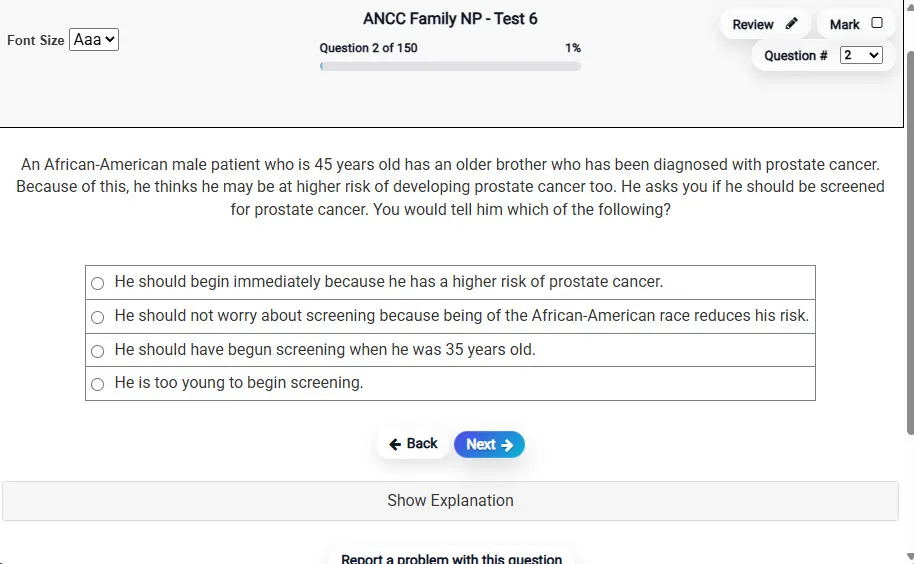
Answering a Question screen – Multiple-choice item view with navigation controls and progress tracker.
Answering a Question Multiple-choice item view with navigation controls and progress tracker.

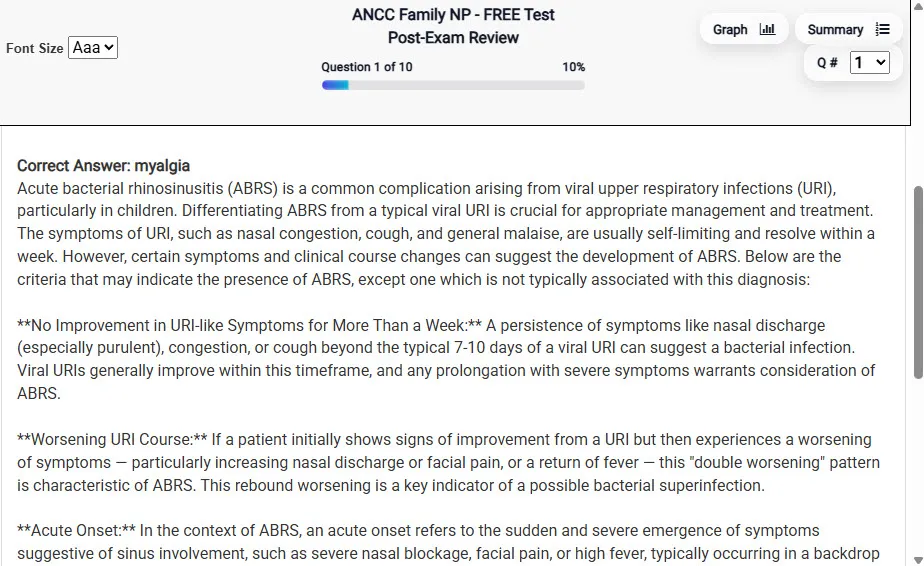
                           Detailed Explanation screen – 
                         Review mode showing chosen answer and rationale and references.
Detailed Explanation Review mode showing chosen answer and rationale and references.

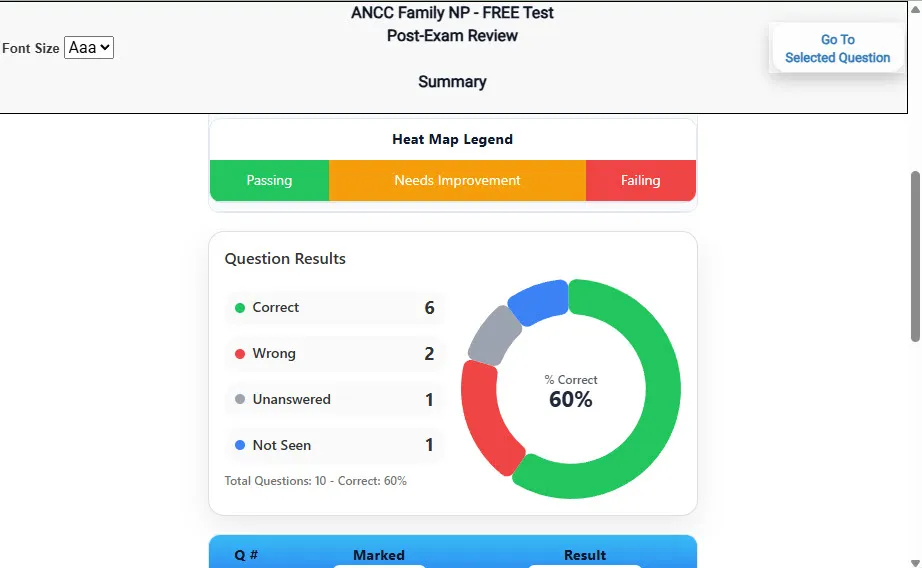
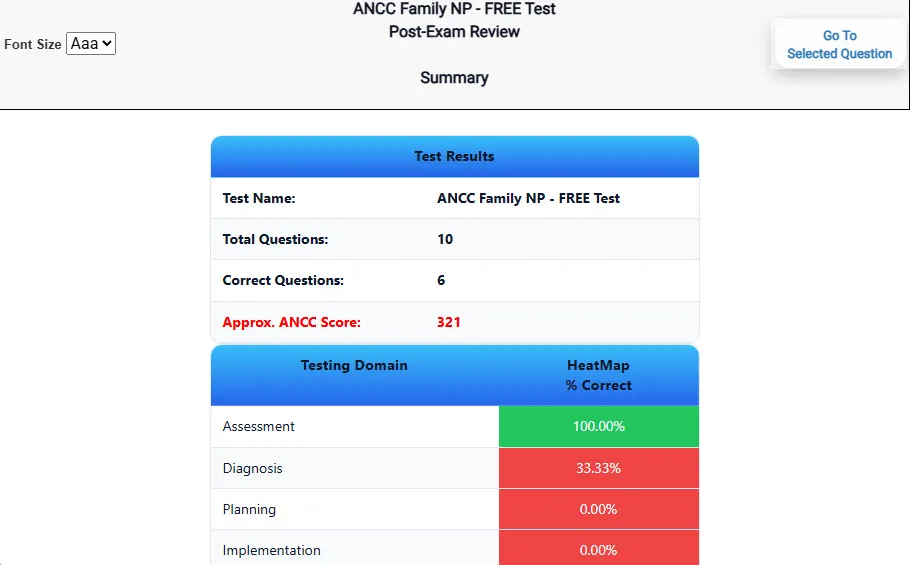
                           Review Summary 1 screen – 
                         Summary with counts for correct/wrong/unanswered and not seen items.
Review Summary 1 Summary with counts for correct/wrong/unanswered and not seen items.

                           Review Summary 2 screen – 
                         Advanced summary with category/domain breakdown and performance insights.
Review Summary 2 Advanced summary with category/domain breakdown and performance insights.

What Each Screen Shows

Answer Question Screen

  • Clean multiple-choice interface with progress bar.
  • Mark for review feature.
  • Matches real test pacing.

Detailed Explanation

  • Correct answer plus rationale.
  • Key concepts and guidelines highlighted.
  • Move between questions to fill knowledge gaps.

Review Summary 1

  • Overall results with total questions and scaled score.
  • Domain heatmap shows strengths and weaknesses.
  • Quick visual feedback on study priorities.

Review Summary 2

  • Chart of correct, wrong, unanswered, not seen.
  • Color-coded results for easy review.
  • Links back to missed items.

Top 10 Reasons to Use Exam Edge for your SANC Midwifery Exam Prep

  1. Focused on the SANC Midwifery Exam

    Our practice tests are built specifically for the SANC Midwifery exam — every question mirrors the real topics, format, and difficulty so you're studying exactly what matters.

  2. Real Exam Simulation

    We match the per-question time limits and pressure of the actual SANC exam, so test day feels familiar and stress-free.

  3. 10 Full Practice Tests & 1,000 Unique Questions

    You'll have more than enough material to master every SANC Midwifery concept — no repeats, no fluff.

  4. Lower Cost Than a Retake

    Ordering 5 practice exams costs less than retaking the SANC Midwifery exam after a failure. One low fee could save you both time and money.

  5. Flexible Testing

    Need to step away mid-exam? Pick up right where you left off — with your remaining time intact.

  6. Instant Scoring & Feedback

    See your raw score and an estimated SANC Midwifery score immediately after finishing each practice test.

  7. Detailed Explanations for Every Question

    Review correct and incorrect answers with clear, step-by-step explanations so you truly understand each topic.

  8. Trusted & Accredited

    We're fully accredited by the Better Business Bureau and uphold the highest standards of trust and transparency.

  9. Web-Based & Always Available

    No software to install. Access your SANC Midwifery practice exams 24/7 from any computer or mobile device.

  10. Expert Support When You Need It

    Need extra help? Our specialized tutors are highly qualified and ready to support your SANC exam prep.


Pass the SANC Midwifery Exam with Realistic Practice Tests from Exam Edge

Preparing for your upcoming SANC Midwifery (SANC- Midwifery) Certification Exam can feel overwhelming — but the right practice makes all the difference. Exam Edge gives you the tools, structure, and confidence to pass on your first try. Our online practice exams are built to match the real SANC Midwifery exam in content, format, and difficulty.

  • 📝 10 SANC Midwifery Practice Tests: Access 10 full-length exams with 100 questions each, covering every major SANC Midwifery topic in depth.
  • Instant Online Access: Start practicing right away — no software, no waiting.
  • 🧠 Step-by-Step Explanations: Understand the reasoning behind every correct answer so you can master SANC Midwifery exam concepts.
  • 🔄 Retake Each Exam Up to 4 Times: Build knowledge through repetition and track your improvement over time.
  • 🌐 Web-Based & Available 24/7: Study anywhere, anytime, on any device.
  • 🧘 Boost Your Test-Day Confidence: Familiarity with the SANC format reduces anxiety and helps you perform under pressure.

These SANC Midwifery practice exams are designed to simulate the real testing experience by matching question types, timing, and difficulty level. This approach helps you get comfortable not just with the exam content, but also with the testing environment, so you walk into your exam day focused and confident.


Exam Edge SANC Reviews


SANC Midwifery Aliases Test Name

Here is a list of alternative names used for this exam.

  • SANC Midwifery
  • SANC Midwifery test
  • SANC Midwifery Certification Test
  • SANC
  • SANC SANC- Midwifery
  • SANC- Midwifery test
  • SANC Midwifery (SANC- Midwifery)
  • Midwifery certification