This is the content of the pop-over!

Lightning Deal Alert – 12% Off Ends at Midnight!

Strike while the savings are hot! Use promo code FlashSale at checkout for 12% off any Exam Edge test or bundle. Hurry—the clock is ticking!

PTCB (PTCB) Practice Tests & Test Prep by Exam Edge


Pharmacy Technician Certification Board  product image
(4.8)
Based on 17 Reviews

  • Real Exam Simulation: Timed questions and matching content build comfort for your PTCB test day.
  • Instant, 24/7 Access: Web-based Pharmacy Technician Certification Board practice exams with no software needed.
  • Clear Explanations: Step-by-step answers and explanations for your Pharmacy exam to strengthen understanding.
  • Boosted Confidence: Reduces anxiety and improves test-taking skills to ace your Pharmacy Technician Certification Board (PTCB).

Featured on

Pharmacy Technician Certification Board Online Practice Test Bundles

BEST VALUE
25 practice tests

$218.75

$998.75

SAVE $780

Only $8.75 per test!

  • 100% Pass Guarantee
  • 25 online practice tests
  • 90 questions per test
  • Bonus: 100 Flash Cards + Study Guide
  • Instant access
  • Detailed Explanations
  • Practice tests never expire
  • Timed, untimed, or study guide mode
MOST POPULAR
10 practice tests

$99.50

$399.50

SAVE $300

Only $9.95 per test!

  • 10 online practice tests
  • 90 questions per test
  • Bonus: 100 Flash Cards + Study Guide
  • Instant access
  • Detailed Explanations
  • Practice tests never expire
  • Timed, untimed, or study guide mode
5 practice tests

$69.75

$199.75

SAVE $130

Only $13.95 per test!

  • 5 online practice tests
  • 90 questions per test
  • Bonus: 100 Flash Cards
  • Instant access
  • Detailed Explanations
  • Practice tests never expire
  • Timed, untimed, or study guide mode
1 practice test

$39.95

  • 1 online practice test
  • 90 questions per test
  • Instant access
  • Detailed Explanations
  • Practice tests never expire
  • Timed, untimed, or study guide mode
MOST FLEXIBLE
Question Bank

As low as $59.95

450 Questions

Choose 1, 3, 6, or 12 months
A second login is required.

  • Exam Edge content in a powerful question bank
  • Customize Tests
  • Multiple Test & Flash Card Modes
  • Track performance over time
  • Instant access
  • Detailed Explanations
Quick Select
Tap to choose a bundle

** All Prices are in US Dollars (USD) **


PTCB (PTCB) Resources

Jump to the section you need most.

Understanding the exact breakdown of the Pharmacy Technician Certification Board test will help you know what to expect and how to most effectively prepare. The Pharmacy Technician Certification Board has multiple-choice questions . The exam will be broken down into the sections below:

Pharmacy Technician Certification Board Exam Blueprint
Domain Name % Number of
Questions
Pharmacology for Technicians 13.75% 12
Pharmacy Law and Regulations 12.50% 11
Sterile and Non-Sterile Compounding 8.75% 8
Medication Safety 12.50% 11
Pharmacy Quality Assurance 7.50% 7
Medication Order Entry and Fill Process 17.50% 16
Pharmacy Inventory Management 8.75% 8
Pharmacy Billing and Reimbursement 8.75% 8
Pharmacy Information System Usage and Application 10.0% 9

Pharmacy Technician Certification Board Study Tips by Domain

  • Verify look-alike/sound-alike drugs (e.g., hydrALAZINE vs hydrOXYzine) against indication, dose, and route before processing—LASA mix-ups are a high-priority PTCB safety trap.
  • Know core suffix/prefix patterns to identify drug classes quickly (e.g., -pril ACE inhibitors, -olol beta blockers, -prazole PPIs)—red flag if the class doesn’t match the patient’s condition or expected monitoring.
  • Recognize high-alert medications (insulin, opioids, anticoagulants, concentrated electrolytes) and apply extra verification steps—never assume a “usual dose” without checking strength, units, and directions.
  • Differentiate brand vs generic and combination products (e.g., hydrocodone/APAP, amoxicillin/clavulanate)—common trap is duplicating therapy when a patient is already on a component drug.
  • Screen for major interaction patterns that require pharmacist intervention (e.g., warfarin + TMP-SMX, nitrates + PDE5 inhibitors, CNS depressant stacking)—if you see a contraindicated combo, stop and escalate.
  • Use key patient factors when interpreting orders—renal/hepatic impairment, age extremes, and pregnancy/lactation often change drug choice or dosing; red flag any order that lacks clear pediatric weight-based dosing when expected.
  • Verify prescriber authority and DEA/NPI where applicable; red flag: controlled substance prescriptions from out-of-state or mismatched identifiers require pharmacist review before processing.
  • Apply controlled substance rules (Schedules II–V) precisely; common trap: treating Schedule II the same as III–V for refills—CII refills are prohibited and most changes require a new prescription or strict exception handling by the pharmacist.
  • Know who can take and document verbal orders; priority rule: technicians generally may not accept new verbal prescriptions (especially for controls) unless permitted by state law and workplace policy—escalate immediately.
  • Protect patient privacy under HIPAA; red flag: discussing PHI in public areas, leaving labels/printouts visible, or sharing info with family without documented permission.
  • Follow dispensing and labeling requirements (patient name, drug, directions, prescriber, pharmacy info, beyond-use/expiration as applicable); common trap: omitting auxiliary warnings or using outdated label directions from an old profile entry.
  • Adhere to recordkeeping and retention rules (prescriptions, controlled substance logs, transfers, recalls); red flag: missing required documentation (e.g., transfer details or DEA Form 222/CSOS records) can trigger audit findings.
  • Apply USP chapters correctly: USP <797> for sterile and USP <795> for non-sterile; red flag—treating sterile CSPs like non-sterile preparations (or vice versa) leads to wrong beyond-use dating and controls.
  • Verify calculations and concentrations before mixing (e.g., % w/w vs % w/v, ratio strength, mEq/mmol conversions); common trap—moving a decimal when scaling a formula or confusing mg/mL with mg/5 mL.
  • Use proper aseptic technique and garbing in the PEC and do not block first air; priority rule—if you touch a critical site or compromise sterility, you must discard and start over.
  • Assign and document beyond-use dates (BUDs) based on guidelines and storage (room temp, refrigerated, frozen) and label accordingly; red flag—using the manufacturer’s expiration date instead of the compounded BUD.
  • Choose compatible ingredients, containers, and bases (e.g., levigation for powders, geometric dilution, appropriate ointment/cream base); common trap—skipping compatibility checks leading to precipitation, separation, or unstable suspensions.
  • Perform required checks and documentation: ingredient lot numbers, measurements, final volume/weight, independent verification, and cleaning/disinfection logs; red flag—missing compounding records or failing to label auxiliary warnings (e.g., “For external use only”).
  • Apply the “five rights” plus patient identifiers (e.g., name + DOB) before dispensing; red flag: relying on room number or “I’m here for my meds” instead of two identifiers.
  • Use barcode scanning and independent double-checks for high-alert meds (insulin, anticoagulants, opioids); common trap: overriding alerts or skipping scans to “save time.”
  • Prevent LASA errors by separating storage, using tall-man lettering, and verifying indication when names look alike; red flag: selecting from a drop-down list without confirming strength and dosage form.
  • Watch for allergy and interaction alerts and clarify discrepancies promptly; priority rule: stop and ask when a documented allergy conflicts with the ordered medication class (e.g., penicillin allergy with amoxicillin).
  • Manage look-alike packaging and concentration mix-ups by reading the label three times (stock bottle, during prep, before final check); common trap: confusing mg vs mcg or immediate-release vs extended-release.
  • Report and document medication errors and near misses per policy to support system fixes; red flag: “fixing it quietly” instead of completing an incident/variance report when a wrong drug/strength was caught.
  • Follow written SOPs for each workflow step (data entry, fill, check, dispense) and document exceptions; red flag: workarounds or “skip-the-check” behavior during peak volume.
  • Use a defined error-reporting and near-miss system with nonpunitive reporting; common trap: only reporting errors that reached the patient instead of capturing near misses for trend analysis.
  • Perform routine audits (e.g., prescription images vs. labels, controlled substance counts, refrigerator logs) on a set schedule; priority rule: if it isn’t documented, it didn’t happen.
  • Apply continuous quality improvement (CQI) tools to identify root causes (look-alike/sound-alike, confusing sig codes, interface issues) and implement corrective actions; red flag: repeating the same error type without a process change.
  • Maintain equipment and environmental quality controls (calibration, cleaning logs, temperature/humidity monitoring) with documented corrective actions; threshold cue: out-of-range temps require quarantine and pharmacist direction before use/dispense.
  • Ensure patient-facing quality checks (counseling offers per policy, correct patient identifiers, proper auxiliary labels) are consistently completed; common trap: relying on memory instead of using the final verification checklist.
  • Verify every element of the prescription order (patient identifiers, drug, strength, dosage form, route, directions, quantity, refills, prescriber) before entry—red flag: look-alike patient names or missing DOB/address.
  • Use standardized sig codes and calculate day supply accurately (e.g., insulin, inhalers, eye drops)—common trap: confusing dose per administration with dose per day and under/overstating day supply.
  • Run drug utilization review checks during entry (allergies, interactions, duplication, dose limits) and escalate per workflow—priority rule: do not bypass a high-severity alert without pharmacist review.
  • During product selection, match NDC to the intended product and confirm brand/generic substitution rules in the system—red flag: different strength or dosage form with similar packaging.
  • For counting and labeling, use correct measurement devices and apply auxiliary labels as required—common trap: omitting “shake well,” “take with food,” or storage instructions when the system prompts are ignored.
  • Perform final technical checks before pharmacist verification (right drug, strength, quantity, label, patient, and documentation)—threshold: any discrepancy between stock bottle, label, and order requires an immediate stop and recheck.
  • Verify inventory by NDC and dosage form/strength—a common trap is stocking a look-alike package with a different NDC, which can break bar-code scanning and lead to a wrong drug/strength fill.
  • Use FEFO (first-expire, first-out) and check expiry on receipt; red flag: short-dated product delivered without pharmacy approval or policy-required minimum shelf-life.
  • Separate and document handling for controlled substances (e.g., perpetual inventory where required by policy); priority rule: investigate any count discrepancy immediately and do not “adjust to match” without pharmacist/manager direction.
  • Track and document temperature-sensitive items (refrigerated, frozen, room temperature) with logs; contraindication: accept shipments with warm/cold packs missing or temperature indicators out of range.
  • Manage recalls, quarantines, and returns promptly; red flag: recalled lots left on active shelves because staff searched by name only instead of matching lot number/expiration.
  • Set and maintain par levels and reorder points to prevent stockouts and overstocks; common trap: ignoring pending patient refills/backorders, causing partial fills and delayed therapy.
  • Differentiate payer types and billing formats: Medicaid/Medicare, commercial, Workers’ Comp, and cash—red flag if you submit a claim without the correct BIN/PCN/Group/Member ID from the patient’s card.
  • Interpret adjudication responses (paid, rejected, reversed) and act on common reject codes—common trap is refilling without resolving “refill too soon,” “prior authorization required,” or “NDC not covered” rejections.
  • Know when DAW/product selection codes and brand/generic rules affect reimbursement—priority rule: only use DAW codes when truly required (e.g., prescriber or patient request) because incorrect DAW can trigger audits or reduced payment.
  • Handle coordination of benefits (COB) correctly for primary vs secondary insurance—red flag if you bill secondary without an EOB/primary paid response or you reverse the wrong payer claim.
  • Apply days’ supply and quantity calculations accurately (especially insulin, inhalers, eye drops, and topical meds)—common trap is mismatched days’ supply causing “exceeds plan limitations” rejects or DIR/audit recoupments.
  • Protect compliance in billing documentation: match NPI/NCPDP, prescriber info, and patient demographics to the prescription record—red flag if you “override” eligibility or signature requirements without documented justification.
  • Verify you are in the correct patient profile before processing anything; red flag: similar names/duplicate profiles—confirm two identifiers and merge per policy if appropriate.
  • Use standardized sig codes and directions carefully; common trap: selecting the wrong route or frequency from drop-down menus—always re-read the expanded plain-language directions.
  • Document and honor allergy, condition, and interaction alerts appropriately; priority rule: never override a high-severity alert without pharmacist review and proper documentation.
  • Manage refill requests and prescriber communications within the system workflow; red flag: processing a refill when “no refills” or expired prescription status is indicated—route to pharmacist.
  • Handle controlled-substance fields and audit trails accurately; common trap: editing a controlled Rx after entry without required notes—systems often log changes and discrepancies trigger audits.
  • Protect PHI when using the system; contraindication: leaving screens unlocked or printing labels/reports unattended—log off/lock and use secure printers and proper disposal.


Built to Fit Into Your Busy Life

Everything you need to prepare with confidence—without wasting a minute.

Three Study Modes

Timed, No Time Limit, or Explanation mode.

Actionable Analytics

Heatmaps and scaled scores highlight weak areas.

High-Yield Rationales

Concise explanations emphasize key concepts.

Realistic Interface

Matches the feel of the actual exam environment.

Accessible by Design

Clean layout reduces cognitive load.

Anytime, Anywhere

Web-based access 24/7 on any device.
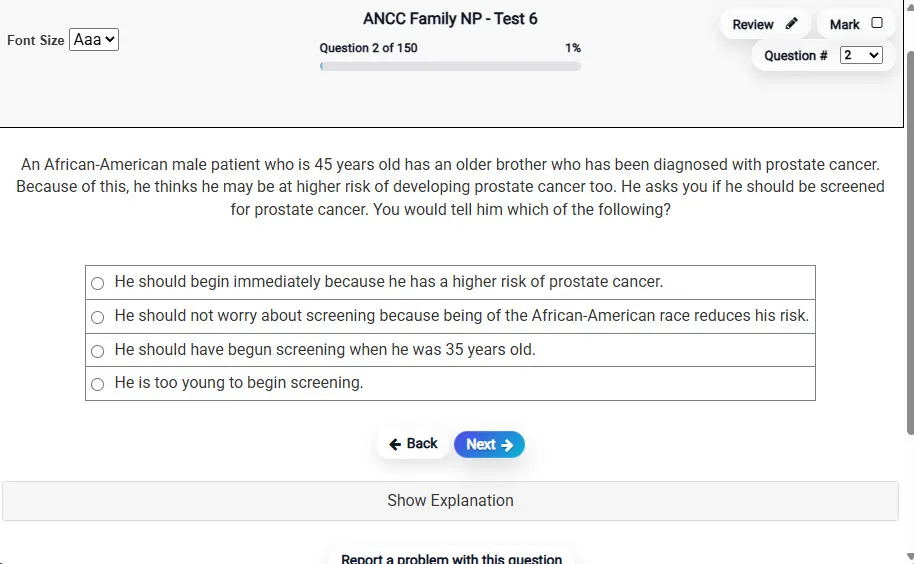
Answering a Question screen – Multiple-choice item view with navigation controls and progress tracker.
Answering a Question Multiple-choice item view with navigation controls and progress tracker.

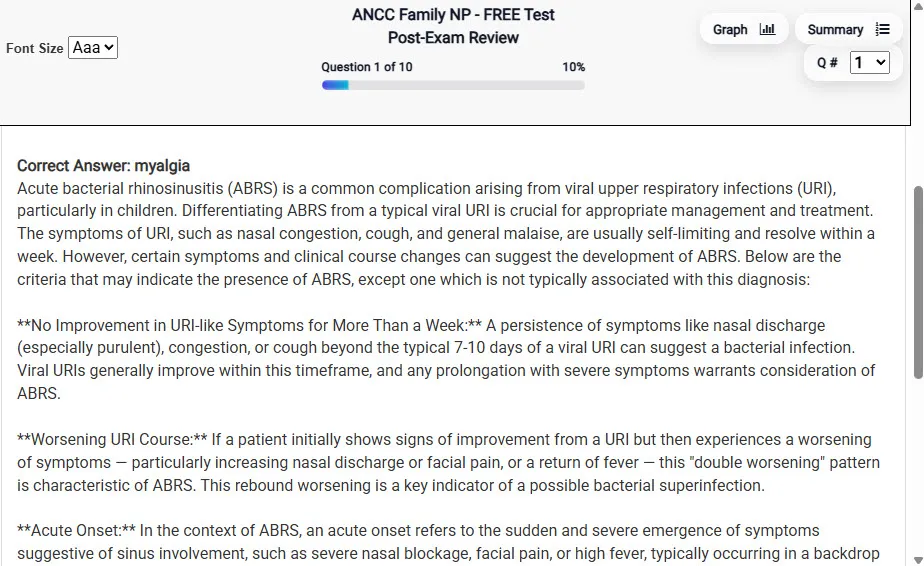
                           Detailed Explanation screen – 
                         Review mode showing chosen answer and rationale and references.
Detailed Explanation Review mode showing chosen answer and rationale and references.

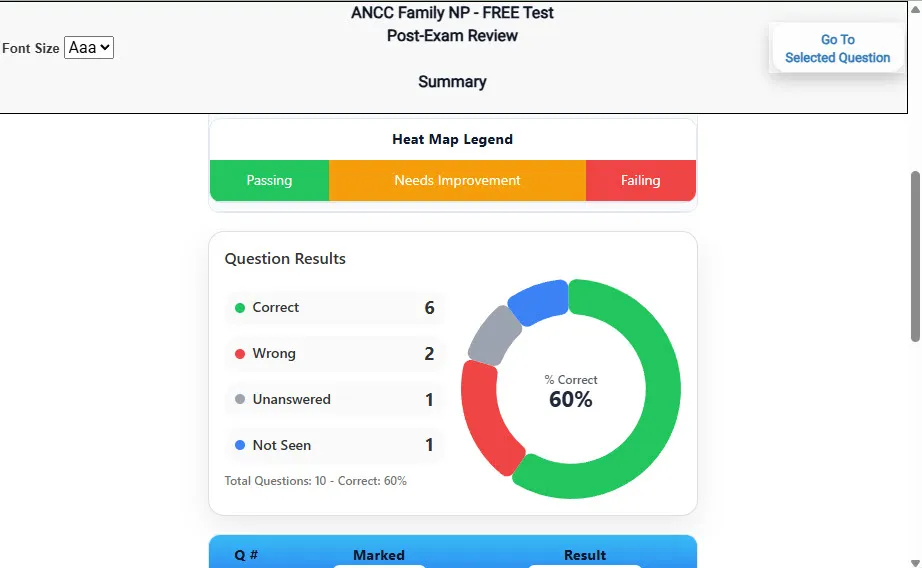
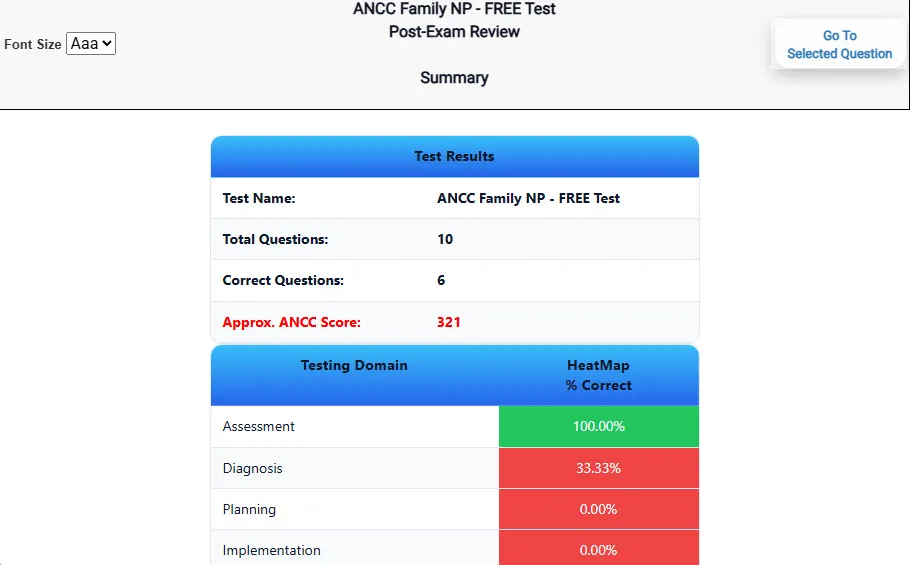
                           Review Summary 1 screen – 
                         Summary with counts for correct/wrong/unanswered and not seen items.
Review Summary 1 Summary with counts for correct/wrong/unanswered and not seen items.

                           Review Summary 2 screen – 
                         Advanced summary with category/domain breakdown and performance insights.
Review Summary 2 Advanced summary with category/domain breakdown and performance insights.

What Each Screen Shows

Answer Question Screen

  • Clean multiple-choice interface with progress bar.
  • Mark for review feature.
  • Matches real test pacing.

Detailed Explanation

  • Correct answer plus rationale.
  • Key concepts and guidelines highlighted.
  • Move between questions to fill knowledge gaps.

Review Summary 1

  • Overall results with total questions and scaled score.
  • Domain heatmap shows strengths and weaknesses.
  • Quick visual feedback on study priorities.

Review Summary 2

  • Chart of correct, wrong, unanswered, not seen.
  • Color-coded results for easy review.
  • Links back to missed items.

Top 10 Reasons to Use Exam Edge for your Pharmacy Technician Certification Board Exam Prep

  1. Focused on the Pharmacy Technician Certification Board Exam

    Our practice tests are built specifically for the PTCB exam — every question mirrors the real topics, format, and difficulty so you're studying exactly what matters.

  2. Real Exam Simulation

    We match the per-question time limits and pressure of the actual Pharmacy exam, so test day feels familiar and stress-free.

  3. 25 Full Practice Tests & 2,250 Unique Questions

    You'll have more than enough material to master every PTCB concept — no repeats, no fluff.

  4. Lower Cost Than a Retake

    Ordering 5 practice exams costs less than retaking the Pharmacy Technician Certification Board exam after a failure. One low fee could save you both time and money.

  5. Flexible Testing

    Need to step away mid-exam? Pick up right where you left off — with your remaining time intact.

  6. Instant Scoring & Feedback

    See your raw score and an estimated Pharmacy Technician Certification Board score immediately after finishing each practice test.

  7. Detailed Explanations for Every Question

    Review correct and incorrect answers with clear, step-by-step explanations so you truly understand each topic.

  8. Trusted & Accredited

    We're fully accredited by the Better Business Bureau and uphold the highest standards of trust and transparency.

  9. Web-Based & Always Available

    No software to install. Access your PTCB practice exams 24/7 from any computer or mobile device.

  10. Expert Support When You Need It

    Need extra help? Our specialized tutors are highly qualified and ready to support your Pharmacy exam prep.


Pass the Pharmacy Technician Certification Board Exam with Realistic Practice Tests from Exam Edge

Preparing for your upcoming Pharmacy Technician Certification Board (PTCB) Certification Exam can feel overwhelming — but the right practice makes all the difference. Exam Edge gives you the tools, structure, and confidence to pass on your first try. Our online practice exams are built to match the real PTCB exam in content, format, and difficulty.

  • 📝 25 Pharmacy Technician Certification Board Practice Tests: Access 25 full-length exams with 90 questions each, covering every major Pharmacy Technician Certification Board topic in depth.
  • Instant Online Access: Start practicing right away — no software, no waiting.
  • 🧠 Step-by-Step Explanations: Understand the reasoning behind every correct answer so you can master PTCB exam concepts.
  • 🔄 Retake Each Exam Up to 4 Times: Build knowledge through repetition and track your improvement over time.
  • 🌐 Web-Based & Available 24/7: Study anywhere, anytime, on any device.
  • 🧘 Boost Your Test-Day Confidence: Familiarity with the Pharmacy format reduces anxiety and helps you perform under pressure.

These Pharmacy Technician Certification Board practice exams are designed to simulate the real testing experience by matching question types, timing, and difficulty level. This approach helps you get comfortable not just with the exam content, but also with the testing environment, so you walk into your exam day focused and confident.


Exam Edge PTCB Reviews


Thanks, I passed the PTCB exam on my first attempt. It is a great collection of questions with good explanations. I could not have passed without it.

shailaja , Maryland

I just passed my PTCB exam on the first try. Your 10 test package was the best way for me to study. Thanks very much

Joe, Florida


Pharmacy Technician Certification Board Aliases Test Name

Here is a list of alternative names used for this exam.

  • Pharmacy Technician Certification Board
  • Pharmacy Technician Certification Board test
  • Pharmacy Technician Certification Board Certification Test
  • PTCB test
  • PTCB
  • PTCB PTCB
  • PTCB test
  • Pharmacy Technician Certification Board (PTCB)
  • Pharmacy Technician Certification Board certification