This is the content of the pop-over!

PECT PreK-4 ( PreK-4) Practice Tests & Test Prep by Exam Edge


PECT PreK-4  product image
(5.0)
Based on 37 Reviews

  • Real Exam Simulation: Timed questions and matching content build comfort for your PECT PreK-4 test day.
  • Instant, 24/7 Access: Web-based PECT PreK-4 practice exams with no software needed.
  • Clear Explanations: Step-by-step answers and explanations for your PECT exam to strengthen understanding.
  • Boosted Confidence: Reduces anxiety and improves test-taking skills to ace your PECT PreK-4 ( PreK-4).

Featured on

PECT PreK-4 Online Practice Test Bundles

BEST VALUE
15 practice tests

$149.25

$599.25

SAVE $450

Only $9.95 per test!

  • 100% Pass Guarantee
  • 15 online practice tests
  • 126 questions per test
  • Bonus: 100 Flash Cards + Study Guide
  • Instant access
  • Detailed Explanations
  • Practice tests never expire
  • Timed, untimed, or study guide mode
MOST POPULAR
10 practice tests

$99.50

$399.50

SAVE $300

Only $9.95 per test!

  • 10 online practice tests
  • 126 questions per test
  • Bonus: 100 Flash Cards + Study Guide
  • Instant access
  • Detailed Explanations
  • Practice tests never expire
  • Timed, untimed, or study guide mode
5 practice tests

$69.75

$199.75

SAVE $130

Only $13.95 per test!

  • 5 online practice tests
  • 126 questions per test
  • Bonus: 100 Flash Cards
  • Instant access
  • Detailed Explanations
  • Practice tests never expire
  • Timed, untimed, or study guide mode
1 practice test

$39.95

  • 1 online practice test
  • 126 questions per test
  • Instant access
  • Detailed Explanations
  • Practice tests never expire
  • Timed, untimed, or study guide mode
Quick Select
Tap to choose a bundle

** All Prices are in US Dollars (USD) **


PECT PreK-4 ( PreK-4) Resources

Jump to the section you need most.

Understanding the exact breakdown of the PECT PreK-4 test will help you know what to expect and how to most effectively prepare. The PECT PreK-4 has multiple-choice questions . The exam will be broken down into the sections below:

PECT PreK-4 Exam Blueprint
Domain Name % Number of
Questions
Module 1 (Test Code 8006)  
     Child Development - Learning Assessment 60% 25
     Collaboration and Professionalism 40% 17
Module 2 (Test Code 8007)  
     Language and Literacy Development 66% 28
     Social Studies - Arts Humanities 34% 14
Module 3 (Test Code 8008)  
     Mathematics - Science Health 100% 42

PECT PreK-4 Study Tips by Domain

  • Know what Module 1 covers (early childhood development, learning, and assessment) and don’t mix in content-heavy literacy/math objectives that are emphasized elsewhere—common trap is answering with a subject-specific strategy instead of a developmental/assessment rationale.
  • Use developmentally appropriate practice: play-based, hands-on, and language-rich routines are preferred in PreK–K, and a red flag is recommending long whole-group seatwork or abstract worksheets for 3–5 year olds.
  • Apply typical development sequences (physical, cognitive, social-emotional) but avoid rigid age cutoffs—PECT often rewards recognizing variability and using observation to confirm concerns before labeling a delay.
  • Assessment emphasis: prioritize formative assessment (anecdotal records, checklists, work samples, running records of behavior) and a common trap is treating a single test score as definitive for high-stakes decisions.
  • When interpreting assessment, match tool to purpose and setting—red flag is using an instrument outside its intended age range or language context (e.g., assessing ELLs without considering language proficiency and accommodations).
  • Link assessment to action: identify next instructional steps and progress-monitoring plans, and a priority rule is to use multiple data points over time before recommending referral, retention, or major placement changes.
  • Link milestones to observation—use play-based notes and work samples to judge growth across domains; red flag: deciding a child is “behind” from a single snapshot or informal comparison to peers.
  • Plan developmentally appropriate practice (DAP) by matching task demands to attention, language, and motor skills; common trap: using worksheet-heavy or long whole-group lessons with PreK–K students.
  • Use multiple sources of assessment (anecdotal records, checklists, rubrics, interviews) and look for patterns over time; priority rule: adjust instruction only after confirming a trend across settings and days.
  • Differentiate between screening, diagnostic, and progress monitoring measures; red flag: treating a screening score as a diagnosis or as the sole basis for special education referral.
  • Apply culturally and linguistically responsive assessment—consider home language, context, and unfamiliar test formats; contraindication: penalizing a child for limited English proficiency when assessing content understanding.
  • Use data to drive instruction with specific next steps (small-group targeting, scaffolds, extensions) and document response; common trap: collecting assessment data without changing grouping, materials, or supports.
  • Follow legal/ethical mandates for confidentiality (FERPA/IDEA) and share only need-to-know information within the educational team—red flag: discussing a child’s disability or family situation in hallways, emails, or with volunteers.
  • Use a structured problem-solving process with families and specialists (define concern, collect data, implement plan, review) and document decisions—common trap: recommending retention or referral based on opinion rather than evidence.
  • Collaborate on IEP/IFSP implementation by knowing your service minutes, accommodations, and progress-monitoring duties—priority rule: if you’re unsure, consult the case manager before changing supports or schedules.
  • Communicate with families in culturally and linguistically responsive ways (interpreters, plain language, strengths-first messaging)—red flag: using a child as an interpreter or sending jargon-heavy evaluation results without explanation.
  • Maintain professional boundaries and mandated reporting responsibilities—threshold cue: when there is reasonable suspicion of abuse/neglect, report per policy immediately rather than “waiting for proof” or handling it privately.
  • Use valid, unbiased assessment information collaboratively to guide instruction and referrals—common trap: treating a single screening score as a diagnosis or ignoring multilingual development when interpreting results.
  • Know the structure and logistics of Module 2 (Test Code 8007)—arrival time, ID requirements, and on-screen tools; red flag: losing time because you don’t practice the platform and tutorial ahead of test day.
  • Expect to demonstrate targeted pedagogy for PreK–4 with scenario-based items; common trap: choosing an answer that sounds developmentally advanced (e.g., lengthy seatwork) rather than age-appropriate, play-based practice.
  • Use assessment literacy in vignettes (screening vs. diagnostic vs. formative vs. summative) and match the right next step; priority rule: after a screening concern, document and initiate a tiered support/referral process rather than “wait and see.”
  • Apply Pennsylvania-style compliance thinking around safety and mandated reporting; contraindication: addressing suspected abuse/neglect by contacting the family first instead of following reporting procedures immediately.
  • Demonstrate collaboration with families and specialists using clear roles and confidentiality; common trap: oversharing student information with volunteers or other parents instead of limiting to legitimate educational interest.
  • When asked for instructional decisions, choose options that include explicit objective, evidence of learning, and differentiation; threshold cue: if the plan lacks a way to monitor progress for struggling learners/ELLs, it is usually not the best answer.
  • Know the strands of reading (phonological awareness, phonics, fluency, vocabulary, comprehension) and use data to target instruction—red flag: treating “phonics worksheets” as sufficient without phonemic-awareness practice in PreK/K.
  • Select developmentally appropriate emergent-literacy routines (print concepts, shared reading, interactive read-alouds)—common trap: expecting independent decoding before students reliably track print left-to-right and match voice-to-print.
  • Plan explicit vocabulary and oral-language instruction (tiered vocabulary, morphology, academic talk) with multiple exposures—priority rule: preteach key words before a complex text, not after.
  • Support English learners using comprehensible input (visuals, gestures, sentence frames) while continuing grade-level content—red flag: delaying literacy instruction until students are “fluent” in English.
  • Teach writing as a process across modes (drawing/labeling, dictation, invented spelling, conventional writing) with authentic purposes—common trap: overcorrecting early spelling so heavily that it suppresses composing and risk-taking.
  • Use screening and progress monitoring to identify reading difficulties early (e.g., phonemic awareness/letter-sound gaps) and deliver targeted interventions—contraindication: relying on a single high-stakes measure instead of patterns across multiple samples.
  • Plan instruction around PA early-learning standards for social studies and the arts, and verify alignment before teaching—red flag: lessons with fun activities but no explicit standards-based objective.
  • Teach geography with concrete tools (maps, globes, positional language, simple symbols) and frequent practice—common trap: expecting young children to interpret scale, latitude/longitude, or complex map keys.
  • Build civics and community concepts through classroom routines (rules, roles, fairness, voting) and real-life examples—priority rule: emphasize citizenship behaviors over memorizing government structures.
  • Use primary sources and timelines in developmentally appropriate ways (photos, artifacts, then/now comparisons)—red flag: abstract chronology tasks without visual supports or personal connections.
  • Teach arts (music, visual art, drama, dance) with process-focused objectives and vocabulary—common trap: grading solely on the “product” rather than effort, technique, and reflection.
  • Integrate humanities and culture respectfully using multiple perspectives and family/community input—contraindication: stereotyped materials or “holiday-only” culture units without yearlong representation.
  • Know which constructed-response prompts live in Module 3 (Test Code 8008) and answer in the format requested (e.g., numbered parts, age/grade specified)—common trap: giving a good strategy for the wrong grade band.
  • When asked for instructional planning, include an objective aligned to standards plus a clear way to monitor progress—red flag: describing activities without stating what evidence would show learning.
  • Use PA-typical special education and 504 language carefully (present levels, accommodations/modifications, least restrictive environment)—common trap: confusing accommodations (access) with modifications (changing expectations).
  • For ELL scenarios, pair content goals with language objectives and specify scaffolds (visuals, sentence frames, modeling)—priority rule: supports must maintain grade-level rigor, not replace it.
  • In assessment items, match tool to purpose (screening vs. diagnostic vs. progress monitoring vs. summative)—contraindication: using a single observation as “proof” without multiple data points.
  • In family/community collaboration and ethics scenarios, protect confidentiality and document communications appropriately—red flag: sharing student information with non-need-to-know staff or discussing a child publicly.
  • In early math, emphasize one-to-one correspondence and cardinality (the last number said tells “how many”); red flag: counting correctly but not answering “how many” without recounting.
  • Prioritize conceptual understanding before algorithms for addition/subtraction (compose/decompose within 10 using objects, fingers, drawings); common trap: pushing worksheets/rote facts that bypass concrete-to-representational-to-abstract progression.
  • Use measurement and data as real routines (compare length/weight, sort/classify, make simple graphs) and state the unit/attribute; red flag: mixing attributes (e.g., sorting by color then claiming it’s by size).
  • For science, anchor instruction in observable phenomena and inquiry (predict, test, record, explain) with age-appropriate tools; priority rule: students should describe evidence before stating conclusions.
  • Teach health and safety with explicit procedures (handwashing steps, safe tool use, emergency routines) and supervised practice; contraindication: assuming young children generalize safety rules without rehearsal and visual cues.
  • Integrate STEM with literacy and play while maintaining accuracy (use correct vocabulary like “observe”, “compare”, “estimate”); common trap: turning investigations into crafts where the “right answer” is teacher-made rather than student-derived from data.


Built to Fit Into Your Busy Life

Everything you need to prepare with confidence—without wasting a minute.

Three Study Modes

Timed, No Time Limit, or Explanation mode.

Actionable Analytics

Heatmaps and scaled scores highlight weak areas.

High-Yield Rationales

Concise explanations emphasize key concepts.

Realistic Interface

Matches the feel of the actual exam environment.

Accessible by Design

Clean layout reduces cognitive load.

Anytime, Anywhere

Web-based access 24/7 on any device.
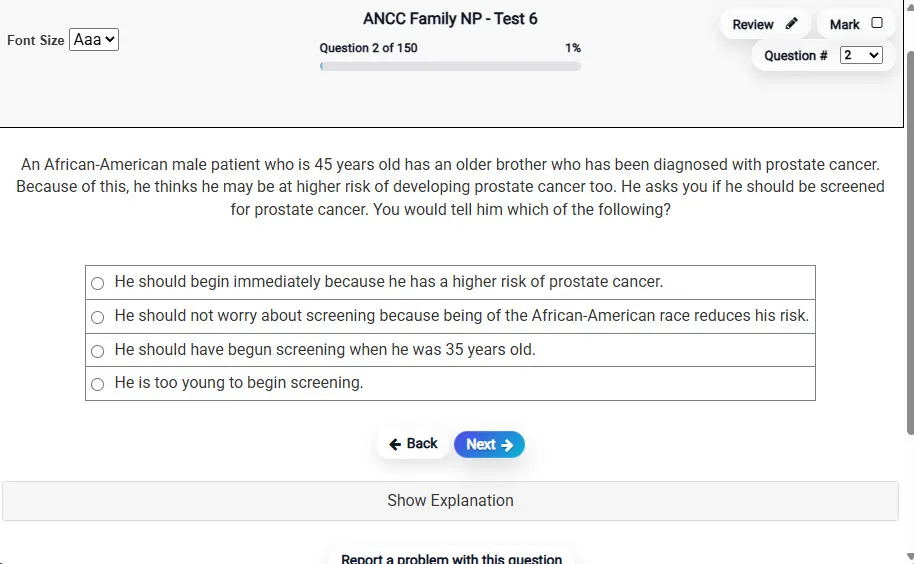
Answering a Question screen – Multiple-choice item view with navigation controls and progress tracker.
Answering a Question Multiple-choice item view with navigation controls and progress tracker.

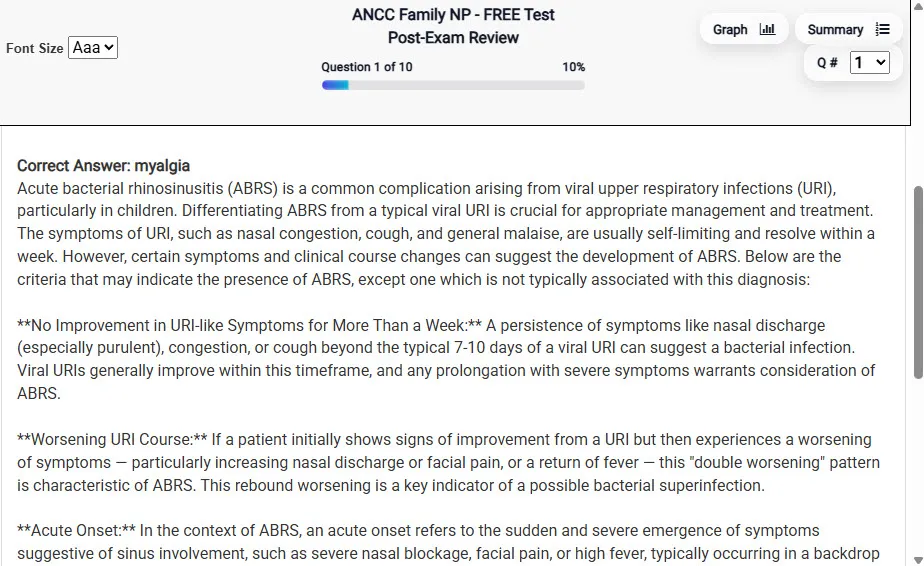
                           Detailed Explanation screen – 
                         Review mode showing chosen answer and rationale and references.
Detailed Explanation Review mode showing chosen answer and rationale and references.

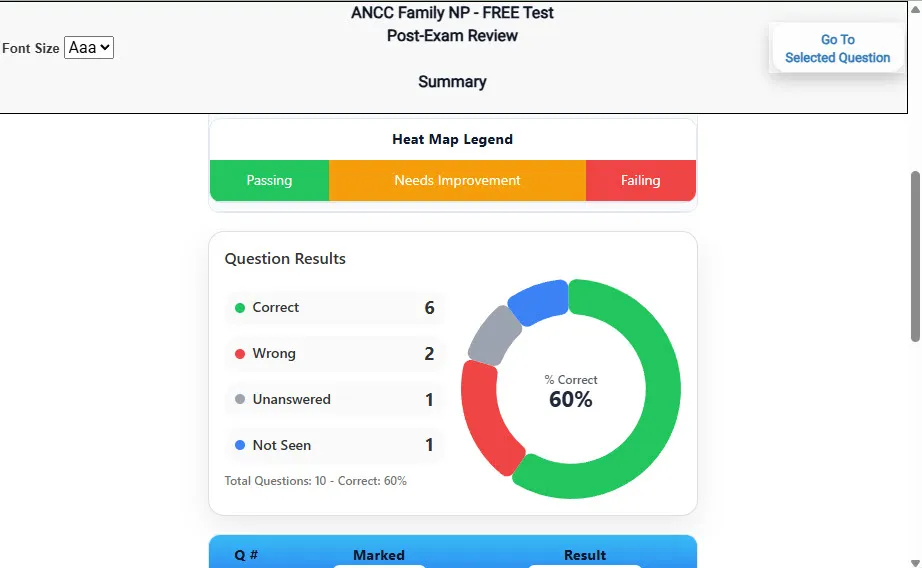
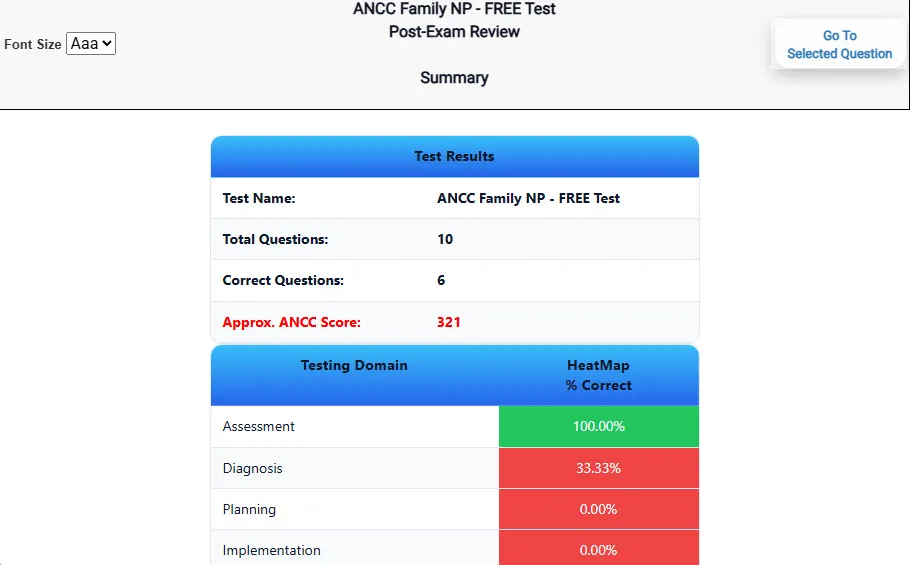
                           Review Summary 1 screen – 
                         Summary with counts for correct/wrong/unanswered and not seen items.
Review Summary 1 Summary with counts for correct/wrong/unanswered and not seen items.

                           Review Summary 2 screen – 
                         Advanced summary with category/domain breakdown and performance insights.
Review Summary 2 Advanced summary with category/domain breakdown and performance insights.

What Each Screen Shows

Answer Question Screen

  • Clean multiple-choice interface with progress bar.
  • Mark for review feature.
  • Matches real test pacing.

Detailed Explanation

  • Correct answer plus rationale.
  • Key concepts and guidelines highlighted.
  • Move between questions to fill knowledge gaps.

Review Summary 1

  • Overall results with total questions and scaled score.
  • Domain heatmap shows strengths and weaknesses.
  • Quick visual feedback on study priorities.

Review Summary 2

  • Chart of correct, wrong, unanswered, not seen.
  • Color-coded results for easy review.
  • Links back to missed items.

Top 10 Reasons to Use Exam Edge for your PECT PreK-4 Exam Prep

  1. Focused on the PECT PreK-4 Exam

    Our practice tests are built specifically for the PECT PreK-4 exam — every question mirrors the real topics, format, and difficulty so you're studying exactly what matters.

  2. Real Exam Simulation

    We match the per-question time limits and pressure of the actual PECT exam, so test day feels familiar and stress-free.

  3. 15 Full Practice Tests & 1,890 Unique Questions

    You'll have more than enough material to master every PECT PreK-4 concept — no repeats, no fluff.

  4. Lower Cost Than a Retake

    Ordering 5 practice exams costs less than retaking the PECT PreK-4 exam after a failure. One low fee could save you both time and money.

  5. Flexible Testing

    Need to step away mid-exam? Pick up right where you left off — with your remaining time intact.

  6. Instant Scoring & Feedback

    See your raw score and an estimated PECT PreK-4 score immediately after finishing each practice test.

  7. Detailed Explanations for Every Question

    Review correct and incorrect answers with clear, step-by-step explanations so you truly understand each topic.

  8. Trusted & Accredited

    We're fully accredited by the Better Business Bureau and uphold the highest standards of trust and transparency.

  9. Web-Based & Always Available

    No software to install. Access your PECT PreK-4 practice exams 24/7 from any computer or mobile device.

  10. Expert Support When You Need It

    Need extra help? Our specialized tutors are highly qualified and ready to support your PECT exam prep.


Pass the PECT PreK-4 Exam with Realistic Practice Tests from Exam Edge

Preparing for your upcoming PECT PreK-4 ( PreK-4) Certification Exam can feel overwhelming — but the right practice makes all the difference. Exam Edge gives you the tools, structure, and confidence to pass on your first try. Our online practice exams are built to match the real PECT PreK-4 exam in content, format, and difficulty.

  • 📝 15 PECT PreK-4 Practice Tests: Access 15 full-length exams with 126 questions each, covering every major PECT PreK-4 topic in depth.
  • Instant Online Access: Start practicing right away — no software, no waiting.
  • 🧠 Step-by-Step Explanations: Understand the reasoning behind every correct answer so you can master PECT PreK-4 exam concepts.
  • 🔄 Retake Each Exam Up to 4 Times: Build knowledge through repetition and track your improvement over time.
  • 🌐 Web-Based & Available 24/7: Study anywhere, anytime, on any device.
  • 🧘 Boost Your Test-Day Confidence: Familiarity with the PECT format reduces anxiety and helps you perform under pressure.

These PECT PreK-4 practice exams are designed to simulate the real testing experience by matching question types, timing, and difficulty level. This approach helps you get comfortable not just with the exam content, but also with the testing environment, so you walk into your exam day focused and confident.


Exam Edge PECT Reviews


These practice tests have proven to be very beneficial. Not only are the tests helpful; the explanations are excellent and, to top it off, the customer service is wonderful!

Kara , Sharpsville, PA

I passed the PECT PREK-4 module 1 on the first try. I commend these sample tests for getting me prepared. They are great not only for practice but for content I didn't have with any other study guide. Highly recommended!

Christine , Wilkes Barre


PECT PreK-4 Aliases Test Name

Here is a list of alternative names used for this exam.

  • PECT PreK-4
  • PECT PreK-4 test
  • PECT PreK-4 Certification Test
  • PECT
  • PECT PreK-4
  • PreK-4 test
  • PECT PreK-4 ( PreK-4)
  • PreK-4 certification