This is the content of the pop-over!

PCAT Biology ( Biology) Practice Tests & Test Prep by Exam Edge


Pharmacy College Admission Test -  Biology  product image
(5.0)
Based on 29 Reviews

  • Real Exam Simulation: Timed questions and matching content build comfort for your PCAT Biology test day.
  • Instant, 24/7 Access: Web-based Pharmacy College Admission Test - Biology practice exams with no software needed.
  • Clear Explanations: Step-by-step answers and explanations for your PCAT exam to strengthen understanding.
  • Boosted Confidence: Reduces anxiety and improves test-taking skills to ace your Pharmacy College Admission Test - Biology ( Biology).

Featured on

Pharmacy College Admission Test - Biology Online Practice Test Bundles

BEST VALUE
20 practice tests

$174.00

$799.00

SAVE $625

Only $8.70 per test!

  • 100% Pass Guarantee
  • 20 online practice tests
  • 48 questions per test
  • Bonus: 100 Flash Cards + Study Guide
  • Instant access
  • Detailed Explanations
  • Practice tests never expire
  • Timed, untimed, or study guide mode
MOST POPULAR
10 practice tests

$99.50

$399.50

SAVE $300

Only $9.95 per test!

  • 10 online practice tests
  • 48 questions per test
  • Bonus: 100 Flash Cards + Study Guide
  • Instant access
  • Detailed Explanations
  • Practice tests never expire
  • Timed, untimed, or study guide mode
5 practice tests

$69.75

$199.75

SAVE $130

Only $13.95 per test!

  • 5 online practice tests
  • 48 questions per test
  • Bonus: 100 Flash Cards
  • Instant access
  • Detailed Explanations
  • Practice tests never expire
  • Timed, untimed, or study guide mode
1 practice test

$39.95

  • 1 online practice test
  • 48 questions per test
  • Instant access
  • Detailed Explanations
  • Practice tests never expire
  • Timed, untimed, or study guide mode
Quick Select
Tap to choose a bundle

** All Prices are in US Dollars (USD) **


PCAT Biology ( Biology) Resources

Jump to the section you need most.

Understanding the exact breakdown of the Pharmacy College Admission Test - Biology test will help you know what to expect and how to most effectively prepare. The Pharmacy College Admission Test - Biology has multiple-choice questions . The exam will be broken down into the sections below:

Pharmacy College Admission Test - Biology Exam Blueprint
Domain Name % Number of
Questions
General Biology 50% 24
Microbiology 20% 10
Human Anatomy and Physiology 30% 14

Pharmacy College Admission Test - Biology Study Tips by Domain

  • Cell structure & function: distinguish prokaryotes vs eukaryotes and membrane transport types; red flag—mixing up facilitated diffusion (no ATP) with active transport (ATP/gradient).
  • Biomolecules & enzymes: know monomers/polymers and factors affecting enzyme activity; common trap—confusing competitive inhibition (Km ↑, Vmax same) with noncompetitive inhibition (Vmax ↓).
  • Cellular respiration & photosynthesis: track where steps occur and what is produced/consumed; priority rule—NADH/FADH2 feed the ETC, and oxygen is the final electron acceptor.
  • Genetics: apply Mendelian patterns, linkage, and Hardy–Weinberg; red flag—forgetting that HW requires no selection, mutation, migration, drift, and random mating.
  • Molecular biology: DNA replication, transcription/translation, and gene regulation; common trap—reading mRNA codons 3’→5’ instead of 5’→3’ when translating.
  • Evolution & ecology basics: natural selection, population growth, and energy flow; threshold cue—only ~10% of energy transfers to the next trophic level, so biomass pyramids typically narrow upward.
  • Differentiate major microbial groups and structures (Gram+ vs Gram− cell walls, spores, capsules) and link to function; red flag: assuming Gram stain is determined by capsule presence rather than peptidoglycan thickness.
  • Know growth requirements and control (oxygen classes, temperature ranges, sterilization vs disinfection vs antisepsis); common trap: confusing autoclaving (sterilizes) with boiling (may not kill endospores).
  • Understand genetics and gene transfer (mutation, transformation, transduction, conjugation, plasmids); priority rule: R-plasmid spread via conjugation can rapidly change susceptibility patterns.
  • Master metabolism basics (fermentation vs aerobic respiration, electron transport, ATP yield) and how tests infer pathways; red flag: interpreting “no gas” in a fermentation tube as “no fermentation” when acid may still be produced.
  • Cover virology essentials (viral structure, replication cycles, lytic vs lysogenic) and key differences from bacteria; contraindication cue: antibiotics do not target viral replication machinery.
  • Grasp host defenses and pathogenesis (innate vs adaptive immunity, inflammation, virulence factors, toxins) with a focus on mechanisms; common trap: mixing up exotoxins (often proteins, can be toxoids) with endotoxin (LPS, heat-stable, not converted to toxoid).
  • Master homeostatic control loops (negative vs positive feedback) and identify stimulus–receptor–control center–effector sequences; red flag: confusing positive feedback (e.g., labor, clotting) as the default regulatory mechanism.
  • Know membrane transport and epithelial movement (diffusion, osmosis, facilitated diffusion, primary/secondary active transport, filtration); common trap: mixing up cotransport (symport/antiport) directionality with concentration gradients.
  • Prioritize cardiovascular and respiratory coupling (cardiac output = HR × SV, Fick principle, O2–Hb dissociation curve); practical cue: right shift (exercise, fever, acidosis, CO2) means decreased affinity—more unloading to tissues.
  • Understand renal physiology (GFR determinants, reabsorption vs secretion, countercurrent multiplication, RAAS, ADH); threshold cue: glucose appears in urine once transport maximum is exceeded (renal threshold), not simply when blood glucose is “high.”
  • Cover neurophysiology basics (resting potential, action potentials, synaptic transmission, autonomic divisions); contraindication cue: blocking Na+ channels prevents action potential propagation—don’t attribute the effect to K+ channel blockade.
  • Integrate endocrine and metabolism (peptide vs steroid hormone signaling, second messengers, receptor location, thyroid vs adrenal axes); common trap: assuming steroid hormones act via membrane receptors—priority rule is intracellular receptors with gene transcription effects.


Built to Fit Into Your Busy Life

Everything you need to prepare with confidence—without wasting a minute.

Three Study Modes

Timed, No Time Limit, or Explanation mode.

Actionable Analytics

Heatmaps and scaled scores highlight weak areas.

High-Yield Rationales

Concise explanations emphasize key concepts.

Realistic Interface

Matches the feel of the actual exam environment.

Accessible by Design

Clean layout reduces cognitive load.

Anytime, Anywhere

Web-based access 24/7 on any device.
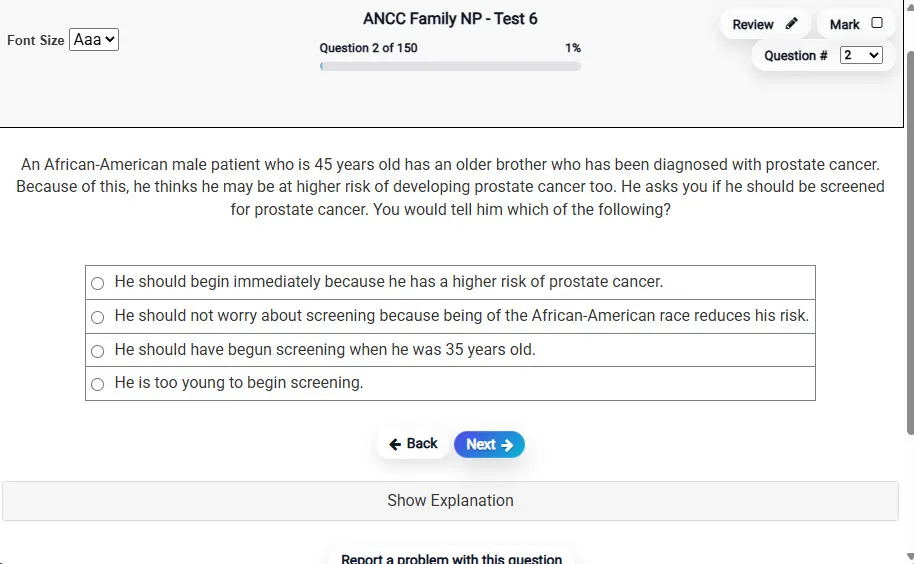
Answering a Question screen – Multiple-choice item view with navigation controls and progress tracker.
Answering a Question Multiple-choice item view with navigation controls and progress tracker.

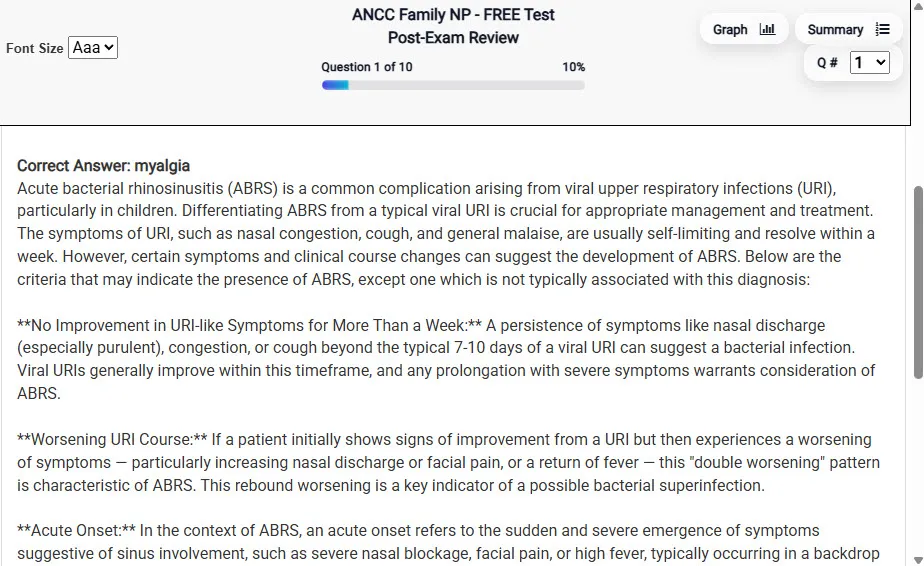
                           Detailed Explanation screen – 
                         Review mode showing chosen answer and rationale and references.
Detailed Explanation Review mode showing chosen answer and rationale and references.

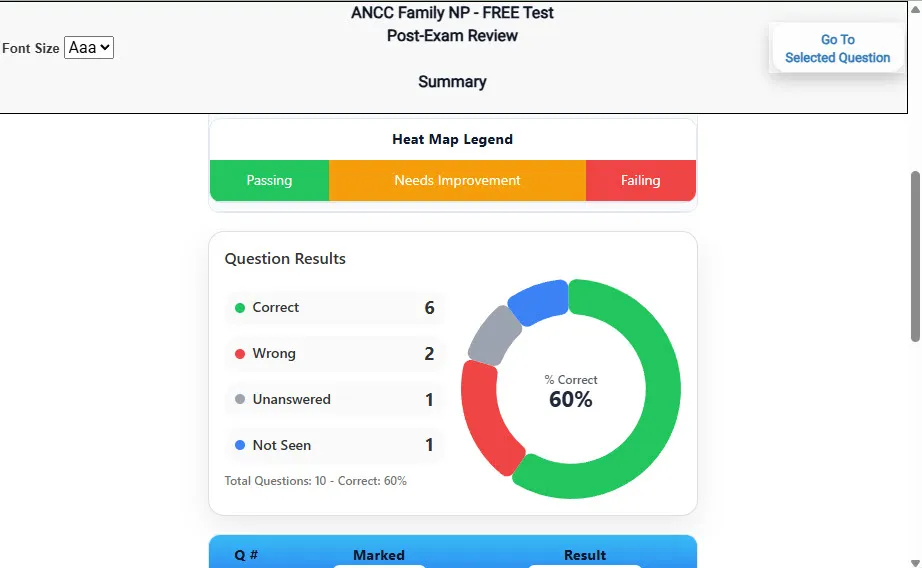
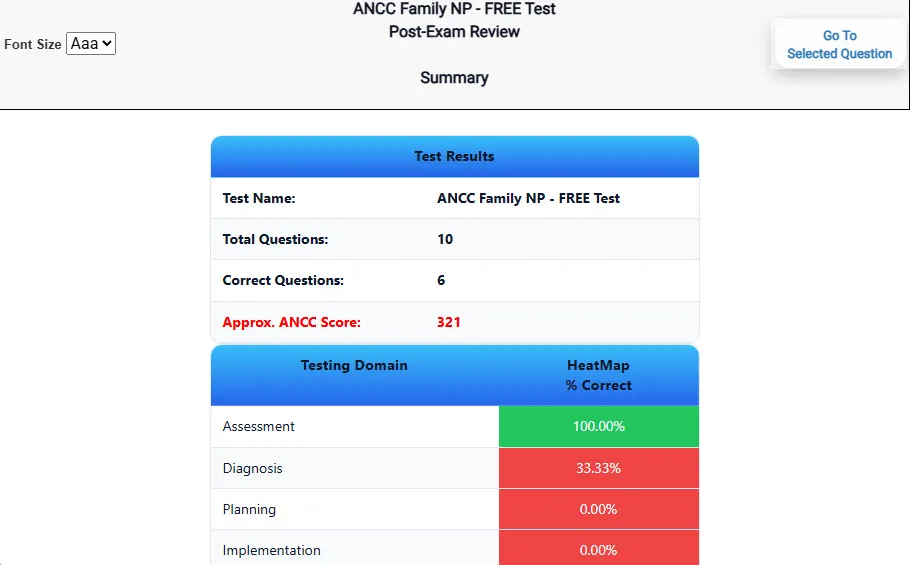
                           Review Summary 1 screen – 
                         Summary with counts for correct/wrong/unanswered and not seen items.
Review Summary 1 Summary with counts for correct/wrong/unanswered and not seen items.

                           Review Summary 2 screen – 
                         Advanced summary with category/domain breakdown and performance insights.
Review Summary 2 Advanced summary with category/domain breakdown and performance insights.

What Each Screen Shows

Answer Question Screen

  • Clean multiple-choice interface with progress bar.
  • Mark for review feature.
  • Matches real test pacing.

Detailed Explanation

  • Correct answer plus rationale.
  • Key concepts and guidelines highlighted.
  • Move between questions to fill knowledge gaps.

Review Summary 1

  • Overall results with total questions and scaled score.
  • Domain heatmap shows strengths and weaknesses.
  • Quick visual feedback on study priorities.

Review Summary 2

  • Chart of correct, wrong, unanswered, not seen.
  • Color-coded results for easy review.
  • Links back to missed items.

Top 10 Reasons to Use Exam Edge for your Pharmacy College Admission Test - Biology Exam Prep

  1. Focused on the Pharmacy College Admission Test - Biology Exam

    Our practice tests are built specifically for the PCAT Biology exam — every question mirrors the real topics, format, and difficulty so you're studying exactly what matters.

  2. Real Exam Simulation

    We match the per-question time limits and pressure of the actual PCAT exam, so test day feels familiar and stress-free.

  3. 20 Full Practice Tests & 960 Unique Questions

    You'll have more than enough material to master every PCAT Biology concept — no repeats, no fluff.

  4. Lower Cost Than a Retake

    Ordering 5 practice exams costs less than retaking the Pharmacy College Admission Test - Biology exam after a failure. One low fee could save you both time and money.

  5. Flexible Testing

    Need to step away mid-exam? Pick up right where you left off — with your remaining time intact.

  6. Instant Scoring & Feedback

    See your raw score and an estimated Pharmacy College Admission Test - Biology score immediately after finishing each practice test.

  7. Detailed Explanations for Every Question

    Review correct and incorrect answers with clear, step-by-step explanations so you truly understand each topic.

  8. Trusted & Accredited

    We're fully accredited by the Better Business Bureau and uphold the highest standards of trust and transparency.

  9. Web-Based & Always Available

    No software to install. Access your PCAT Biology practice exams 24/7 from any computer or mobile device.

  10. Expert Support When You Need It

    Need extra help? Our specialized tutors are highly qualified and ready to support your PCAT exam prep.


Pass the Pharmacy College Admission Test - Biology Exam with Realistic Practice Tests from Exam Edge

Preparing for your upcoming Pharmacy College Admission Test - Biology ( Biology) Certification Exam can feel overwhelming — but the right practice makes all the difference. Exam Edge gives you the tools, structure, and confidence to pass on your first try. Our online practice exams are built to match the real PCAT Biology exam in content, format, and difficulty.

  • 📝 20 Pharmacy College Admission Test - Biology Practice Tests: Access 20 full-length exams with 48 questions each, covering every major Pharmacy College Admission Test - Biology topic in depth.
  • Instant Online Access: Start practicing right away — no software, no waiting.
  • 🧠 Step-by-Step Explanations: Understand the reasoning behind every correct answer so you can master PCAT Biology exam concepts.
  • 🔄 Retake Each Exam Up to 4 Times: Build knowledge through repetition and track your improvement over time.
  • 🌐 Web-Based & Available 24/7: Study anywhere, anytime, on any device.
  • 🧘 Boost Your Test-Day Confidence: Familiarity with the PCAT format reduces anxiety and helps you perform under pressure.

These Pharmacy College Admission Test - Biology practice exams are designed to simulate the real testing experience by matching question types, timing, and difficulty level. This approach helps you get comfortable not just with the exam content, but also with the testing environment, so you walk into your exam day focused and confident.


Exam Edge PCAT Reviews


Pharmacy College Admission Test - Biology Aliases Test Name

Here is a list of alternative names used for this exam.

  • Pharmacy College Admission Test - Biology
  • Pharmacy College Admission Test - Biology test
  • Pharmacy College Admission Test - Biology Certification Test
  • PCAT Biology test
  • PCAT
  • PCAT Biology
  • Biology test
  • Pharmacy College Admission Test - Biology ( Biology)
  • Pharmacy College Admission Test - Biology certification