This is the content of the pop-over!

TX PACT LOTE Spanish (713) Practice Tests & Test Prep by Exam Edge


TX PACT LOTE Spanish Childhood-Grade 12  product image
(4.6)
Based on 25 Reviews

  • Real Exam Simulation: Timed questions and matching content build comfort for your TX PACT LOTE Spanish test day.
  • Instant, 24/7 Access: Web-based TX PACT LOTE Spanish Childhood-Grade 12 practice exams with no software needed.
  • Clear Explanations: Step-by-step answers and explanations for your TX PACT exam to strengthen understanding.
  • Boosted Confidence: Reduces anxiety and improves test-taking skills to ace your TX PACT LOTE Spanish Childhood-Grade 12 (713).

Featured on

TX PACT LOTE Spanish Childhood-Grade 12 Online Practice Test Bundles

BEST VALUE
5 practice tests

$69.75

$199.75

SAVE $130

Only $13.95 per test!

  • 100% Pass Guarantee
  • 5 online practice tests
  • 110 questions per test
  • Bonus: 100 Flash Cards + Study Guide
  • Instant access
  • Detailed Explanations
  • Practice tests never expire
  • Timed, untimed, or study guide mode
1 practice test

$39.95

  • 1 online practice test
  • 110 questions per test
  • Instant access
  • Detailed Explanations
  • Practice tests never expire
  • Timed, untimed, or study guide mode
Quick Select
Tap to choose a bundle

** All Prices are in US Dollars (USD) **


TX PACT LOTE Spanish (713) Resources

Jump to the section you need most.

Understanding the exact breakdown of the TX PACT LOTE Spanish Childhood-Grade 12 test will help you know what to expect and how to most effectively prepare. The TX PACT LOTE Spanish Childhood-Grade 12 has 100 multiple-choice questions and 1 essay questions. The exam will be broken down into the sections below:

TX PACT LOTE Spanish Childhood-Grade 12 Exam Blueprint
Domain Name % Number of
Questions
Interpretive Listening 15% 27
Interpretive Reading 15% 27
Language Structures 13% 23
Cultural Understanding 13% 23

TX PACT LOTE Spanish Childhood-Grade 12 Study Tips by Domain

  • Focus first on the speaker’s purpose (requesting, persuading, narrating, explaining) before details; red flag: choosing an answer that repeats a familiar word but doesn’t match the overall intent.
  • Use context to resolve multiple-meaning words (e.g., “banco,” “cola,” “taza”) and ignore literal traps; priority rule: pick the meaning that fits the situation and relationships described.
  • Track time markers and sequence cues (“antes,” “después,” “mientras,” “aún,” “ya,” “hace,” “desde”) to avoid timeline errors; common trap: mixing up “por” vs. “para” signals in reasons vs. goals.
  • Listen for negation and contrast (“no,” “nunca,” “sin,” “sino,” “aunque,” “sin embargo”) because they flip the message; threshold: if you miss one negation, re-check the entire conclusion.
  • Infer attitude from tone and stance markers (“claro,” “igual,” “ni modo,” “qué va,” “o sea”) rather than content alone; contraindication: don’t assume sarcasm—confirm with a mismatch between words and tone.
  • When details are dense, anchor on who-did-what-to-whom and key nouns, then verify with pronouns (“le/les,” “se,” “lo/la”); common trap: confusing the indirect object (recipient) with the direct object (thing/person acted on).
  • Start by identifying the author’s purpose (informar, persuadir, narrar) and adjust your inference level; red flag: choosing an answer that’s too “big” when the passage is narrowly informational.
  • Use context clues to infer meaning of unfamiliar words (synonyms, examples, contrast markers like “sin embargo”); trap: translating word-for-word and missing the sentence’s overall function.
  • Track referents for pronouns and demonstratives (él/ella/lo/la/esto/eso) by matching number and gender; red flag: selecting an antecedent that appears closest but doesn’t agree.
  • Pay attention to connectors (por lo tanto, además, aunque, a pesar de) to follow logic and tone; priority rule: if a connector signals contrast, the main point often shifts after it.
  • Differentiate main idea vs. supporting details by checking which statement is supported across multiple sentences; trap: picking a vivid example as the central theme.
  • For inference questions, require a text-based anchor (a line or detail that must be true if the inference is true); threshold: if you can’t point to evidence, it’s likely an overreach.
  • Know when accents are mandatory: interrogatives/exclamatives (qué, cómo, cuál, cuánto, cuándo, dónde) always carry a tilde in direct and indirect questions—red flag if you see “como” in a question.
  • Choose preterite vs imperfect by checking for a “boundary”: completed event/sequence = preterite, ongoing/background/habit = imperfect—common trap is using preterite for age/time descriptions (era, tenía, hacía).
  • Apply ser vs estar with a testable cue: if you can replace with “location/condition” use estar; if it’s identity/essential characteristic/time/date use ser—red flag is “es casado” (should be está casado).
  • Use por vs para with a purpose/deadline threshold: para = destination/goal/deadline/recipient, por = cause/exchange/duration/movement through—common trap is “por + infinitive” when expressing purpose (para estudiar).
  • Place object pronouns by the “two-slot” rule: before a conjugated verb or attached to an infinitive/gerund/affirmative command, and the order is me/te/se/nos/os + lo/la/los/las—contraindication is starting a sentence with “lo” without a clear antecedent.
  • Trigger the subjunctive with WEIRDO cues (wishes, emotion, impersonal doubt/possibility, recommendations, doubt/denial, ojalá) and switch only when there are two different subjects—priority rule: “cuando + future meaning” takes subjunctive (cuando llegue), not indicative.
  • Know core cultural products, practices, and perspectives across the Spanish-speaking world; red flag: treating “Hispanic culture” as one uniform set of customs instead of region- and community-specific variation.
  • Distinguish formal vs informal interaction norms (tú/usted, greetings, personal space, gestures) and apply them to a scenario; common trap: assuming U.S. classroom politeness rules map directly to every Spanish-speaking context.
  • Connect historical and contemporary influences (Indigenous, African, European, migration) to language and identity; priority rule: if a question asks “why,” answer with perspective/values, not just a description of a practice.
  • Use appropriate cultural references in everyday contexts (food, school, family roles, celebrations, media) without stereotypes; red flag: explanations that rely on overgeneralizations like “all families are…” or “they always…”
  • Recognize pragmatic meaning in culturally loaded language (forms of address, nicknames, diminutives, indirectness, humor, taboo topics); contraindication: translating idioms or humor literally when the task requires intended meaning.
  • Compare cultures using evidence and neutral language; threshold: include at least one concrete example to support a comparison, and avoid value judgments (e.g., “better,” “strange”) that signal bias.


Built to Fit Into Your Busy Life

Everything you need to prepare with confidence—without wasting a minute.

Three Study Modes

Timed, No Time Limit, or Explanation mode.

Actionable Analytics

Heatmaps and scaled scores highlight weak areas.

High-Yield Rationales

Concise explanations emphasize key concepts.

Realistic Interface

Matches the feel of the actual exam environment.

Accessible by Design

Clean layout reduces cognitive load.

Anytime, Anywhere

Web-based access 24/7 on any device.
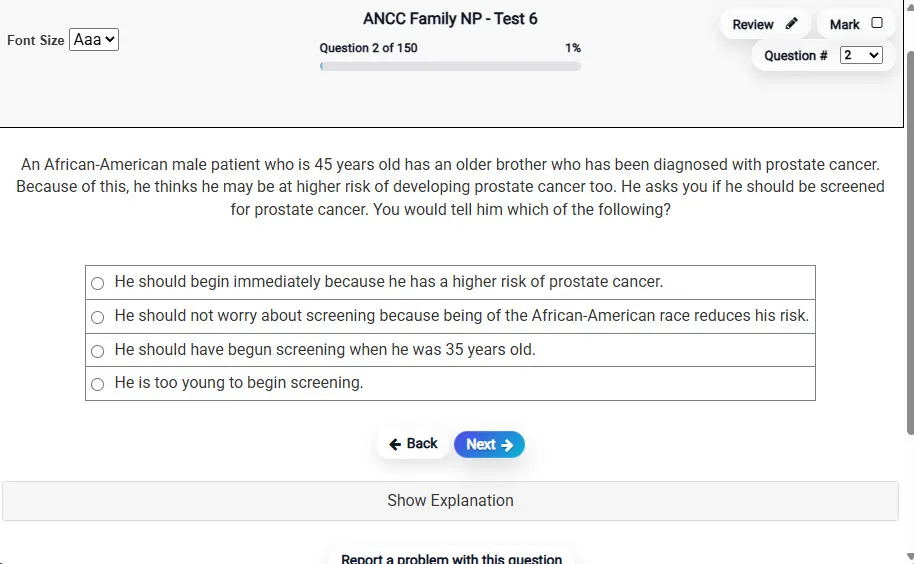
Answering a Question screen – Multiple-choice item view with navigation controls and progress tracker.
Answering a Question Multiple-choice item view with navigation controls and progress tracker.

                           Detailed Explanation screen – 
                         Review mode showing chosen answer and rationale and references.
Detailed Explanation Review mode showing chosen answer and rationale and references.

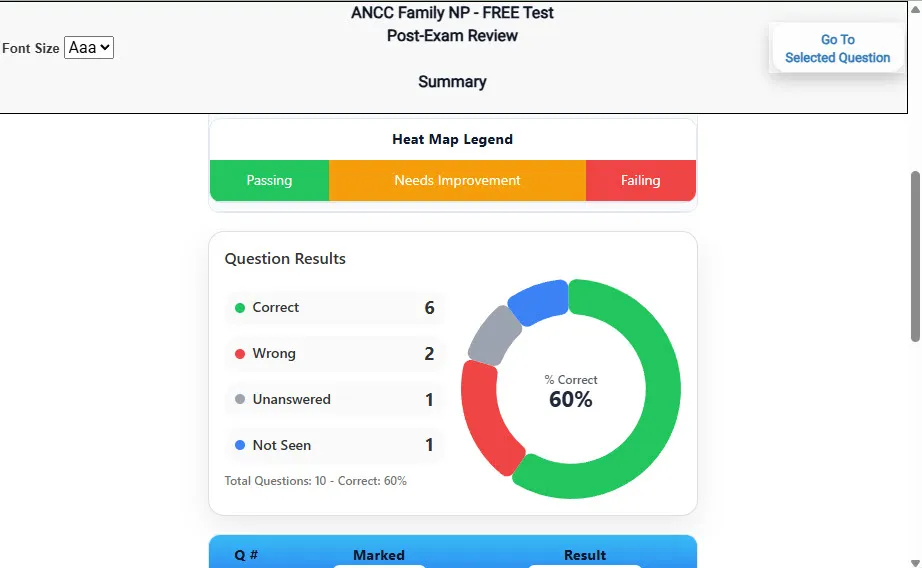
                           Review Summary 1 screen – 
                         Summary with counts for correct/wrong/unanswered and not seen items.
Review Summary 1 Summary with counts for correct/wrong/unanswered and not seen items.

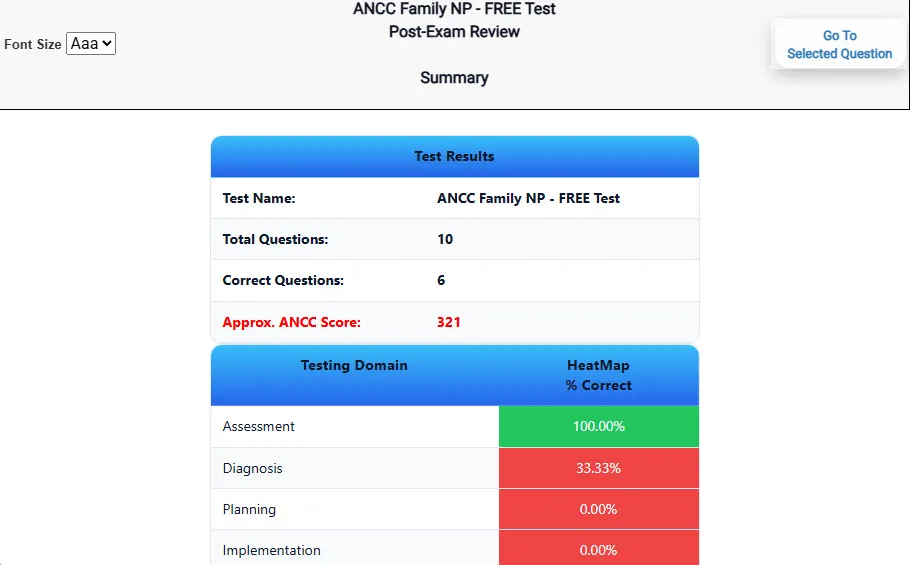
                           Review Summary 2 screen – 
                         Advanced summary with category/domain breakdown and performance insights.
Review Summary 2 Advanced summary with category/domain breakdown and performance insights.

What Each Screen Shows

Answer Question Screen

  • Clean multiple-choice interface with progress bar.
  • Mark for review feature.
  • Matches real test pacing.

Detailed Explanation

  • Correct answer plus rationale.
  • Key concepts and guidelines highlighted.
  • Move between questions to fill knowledge gaps.

Review Summary 1

  • Overall results with total questions and scaled score.
  • Domain heatmap shows strengths and weaknesses.
  • Quick visual feedback on study priorities.

Review Summary 2

  • Chart of correct, wrong, unanswered, not seen.
  • Color-coded results for easy review.
  • Links back to missed items.

Top 10 Reasons to Use Exam Edge for your TX PACT LOTE Spanish Childhood-Grade 12 Exam Prep

  1. Focused on the TX PACT LOTE Spanish Childhood-Grade 12 Exam

    Our practice tests are built specifically for the TX PACT LOTE Spanish exam — every question mirrors the real topics, format, and difficulty so you're studying exactly what matters.

  2. Real Exam Simulation

    We match the per-question time limits and pressure of the actual TX PACT exam, so test day feels familiar and stress-free.

  3. 5 Full Practice Tests & 550 Unique Questions

    You'll have more than enough material to master every TX PACT LOTE Spanish concept — no repeats, no fluff.

  4. Lower Cost Than a Retake

    Ordering 5 practice exams costs less than retaking the TX PACT LOTE Spanish Childhood-Grade 12 exam after a failure. One low fee could save you both time and money.

  5. Flexible Testing

    Need to step away mid-exam? Pick up right where you left off — with your remaining time intact.

  6. Instant Scoring & Feedback

    See your raw score and an estimated TX PACT LOTE Spanish Childhood-Grade 12 score immediately after finishing each practice test.

  7. Detailed Explanations for Every Question

    Review correct and incorrect answers with clear, step-by-step explanations so you truly understand each topic.

  8. Trusted & Accredited

    We're fully accredited by the Better Business Bureau and uphold the highest standards of trust and transparency.

  9. Web-Based & Always Available

    No software to install. Access your TX PACT LOTE Spanish practice exams 24/7 from any computer or mobile device.

  10. Expert Support When You Need It

    Need extra help? Our specialized tutors are highly qualified and ready to support your TX PACT exam prep.


Pass the TX PACT LOTE Spanish Childhood-Grade 12 Exam with Realistic Practice Tests from Exam Edge

Preparing for your upcoming TX PACT LOTE Spanish Childhood-Grade 12 (713) Certification Exam can feel overwhelming — but the right practice makes all the difference. Exam Edge gives you the tools, structure, and confidence to pass on your first try. Our online practice exams are built to match the real TX PACT LOTE Spanish exam in content, format, and difficulty.

  • 📝 5 TX PACT LOTE Spanish Childhood-Grade 12 Practice Tests: Access 5 full-length exams with 110 questions each, covering every major TX PACT LOTE Spanish Childhood-Grade 12 topic in depth.
  • Instant Online Access: Start practicing right away — no software, no waiting.
  • 🧠 Step-by-Step Explanations: Understand the reasoning behind every correct answer so you can master TX PACT LOTE Spanish exam concepts.
  • 🔄 Retake Each Exam Up to 4 Times: Build knowledge through repetition and track your improvement over time.
  • 🌐 Web-Based & Available 24/7: Study anywhere, anytime, on any device.
  • 🧘 Boost Your Test-Day Confidence: Familiarity with the TX PACT format reduces anxiety and helps you perform under pressure.

These TX PACT LOTE Spanish Childhood-Grade 12 practice exams are designed to simulate the real testing experience by matching question types, timing, and difficulty level. This approach helps you get comfortable not just with the exam content, but also with the testing environment, so you walk into your exam day focused and confident.

Exam Edge TEXES Reviews


Very good! Shows a reality of the test

Ivelisse , KATY, Texas

Very good study resource.

Angie , Grapevine , Texas

Purchased the bundle of 5 practice tests for speech 7-12. Passed the state exam on the first try! Very happy with exam edge and the information it provided!

Juan G, Eagle Pass, TX

Exam Edge was exactly what I needed to pass my Technology 171 TEXES exam. The questions prepared me for the real test. I highly recommend their study guide.

Crystalyn , Texes

I am a teacher in Texas who recently passed my Technology Education 6-12 exam. I took five of the practice exams with Examedge, which prepared me well. In fact, on the last practice test I finished, I scored a 265, and on the actual exam, I scored a 262; that’s within one question, extremely a ...
Read More
Adam G, Texas

I originally purchased flashcards for the exam I was studying for. I feel that if I didn't have this resource, I would not have passed. I will say that at times, some questions were not fully developed and it was aggravating. Comparing this to TEA, please note that they only give multiple choice que ...
Read More
Yvette , Hutto, TX


TX PACT LOTE Spanish Childhood-Grade 12 Aliases Test Name

Here is a list of alternative names used for this exam.

  • TX PACT LOTE Spanish Childhood-Grade 12
  • TX PACT LOTE Spanish Childhood-Grade 12 test
  • TX PACT LOTE Spanish Childhood-Grade 12 Certification Test
  • TX PACT LOTE Spanish test
  • TEXES
  • TEXES 713
  • 713 test
  • TX PACT LOTE Spanish Childhood-Grade 12 (713)
  • TX PACT LOTE Spanish Childhood-Grade 12 certification