This is the content of the pop-over!

ORELA Biology (305) Practice Tests & Test Prep by Exam Edge


ORELA Biology   product image
(5.0)
Based on 25 Reviews

  • Real Exam Simulation: Timed questions and matching content build comfort for your ORELA Biology test day.
  • Instant, 24/7 Access: Web-based ORELA Biology practice exams with no software needed.
  • Clear Explanations: Step-by-step answers and explanations for your ORELA exam to strengthen understanding.
  • Boosted Confidence: Reduces anxiety and improves test-taking skills to ace your ORELA Biology (305).

Featured on

ORELA Biology Online Practice Test Bundles

BEST VALUE
20 practice tests

$174.00

$799.00

SAVE $625

Only $8.70 per test!

  • 100% Pass Guarantee
  • 20 online practice tests
  • 100 questions per test
  • Bonus: 100 Flash Cards + Study Guide
  • Instant access
  • Detailed Explanations
  • Practice tests never expire
  • Timed, untimed, or study guide mode
MOST POPULAR
10 practice tests

$99.50

$399.50

SAVE $300

Only $9.95 per test!

  • 10 online practice tests
  • 100 questions per test
  • Bonus: 100 Flash Cards + Study Guide
  • Instant access
  • Detailed Explanations
  • Practice tests never expire
  • Timed, untimed, or study guide mode
5 practice tests

$69.75

$199.75

SAVE $130

Only $13.95 per test!

  • 5 online practice tests
  • 100 questions per test
  • Bonus: 100 Flash Cards
  • Instant access
  • Detailed Explanations
  • Practice tests never expire
  • Timed, untimed, or study guide mode
1 practice test

$39.95

  • 1 online practice test
  • 100 questions per test
  • Instant access
  • Detailed Explanations
  • Practice tests never expire
  • Timed, untimed, or study guide mode
Quick Select
Tap to choose a bundle

** All Prices are in US Dollars (USD) **


ORELA Biology (305) Resources

Jump to the section you need most.

Understanding the exact breakdown of the ORELA Biology test will help you know what to expect and how to most effectively prepare. The ORELA Biology has multiple-choice questions . The exam will be broken down into the sections below:

ORELA Biology Exam Blueprint
Domain Name % Number of
Questions
Nature of Science 20% 20
Biochemistry and Cell Biology 13% 13
Genetics and Evolution 27% 27
Biological Unity and Diversity 20% 20
Ecology and Environment 20% 20

ORELA Biology Study Tips by Domain

  • Distinguish hypotheses, theories, and laws—a common trap is claiming a theory “becomes” a law; in ORELA-style items, the cue is that theories explain mechanisms while laws describe patterns.
  • Identify appropriate controls, constants, and variables—red flag: changing more than one independent variable at a time makes causal claims invalid even if results look consistent.
  • Use proper interpretation of data and uncertainty—priority rule: correlation does not imply causation, especially when a lurking variable (e.g., temperature, sampling bias) could explain the trend.
  • Evaluate experimental design and sampling—common trap: small, nonrandom, or convenience samples limit generalizability; look for replication and randomization as cues of stronger inference.
  • Apply scientific reasoning to evaluate claims and sources—red flag: conclusions based on anecdote or authority rather than peer-reviewed evidence, reproducible methods, and transparent data.
  • Recognize ethical and safety standards in biology investigations—contraindication cue: procedures involving vertebrates, pathogens, or hazardous chemicals require oversight (e.g., IACUC/IRB, biosafety) and proper PPE rather than “classroom shortcuts.”
  • Relate macromolecule structure to function (e.g., enzymes, membranes) and use directionality rules (5’→3’ nucleic acids; N–>C proteins); red flag: reversing strand or peptide orientation in diagrams.
  • Predict how pH, temperature, substrate concentration, and inhibitors change enzyme rate; priority rule: competitive inhibition increases apparent Km but does not change Vmax, while noncompetitive decreases Vmax.
  • Track energy flow using ATP/ADP, redox (NADH/FADH2), and chemiosmosis; common trap: claiming oxygen “provides” energy rather than serving as the terminal electron acceptor in aerobic respiration.
  • Compare cellular respiration and photosynthesis by location and outputs (cytosol vs mitochondria; thylakoid vs stroma); practical cue: oxidative phosphorylation occurs on the inner mitochondrial membrane, not in the matrix.
  • Explain membrane transport (diffusion, osmosis, active transport, endo/exocytosis) using gradients and protein roles; red flag: stating active transport can occur without ATP or an ion gradient.
  • Connect organelles and the cell cycle to function (ER/Golgi trafficking, mitochondria/chloroplasts, checkpoints); priority cue: mitotic spindle errors and checkpoint failure increase nondisjunction risk.
  • Apply Mendelian rules (segregation, independent assortment) to predict offspring ratios; red flag: linkage reduces recombination, so don’t force a 9:3:3:1 when genes are close on the same chromosome.
  • Interpret pedigrees to distinguish autosomal vs. sex-linked vs. mitochondrial inheritance; common trap: assuming a trait is X-linked when father-to-son transmission is present (that rules out X-linkage).
  • Use Hardy–Weinberg (p + q = 1; p2 + 2pq + q2 = 1) to calculate allele/genotype frequencies; priority rule: verify assumptions (no selection, mutation, migration, drift, nonrandom mating) before concluding equilibrium.
  • Read and construct phylogenetic trees/cladograms using shared derived characters (synapomorphies); red flag: nodes represent common ancestors, so don’t interpret the tips as a linear “progression” or as ancestor-descendant among extant species.
  • Differentiate mechanisms of evolution (natural selection, genetic drift, gene flow, mutation) in scenarios; threshold cue: small populations are especially prone to drift/bottleneck effects, so large frequency shifts can occur without selection.
  • Connect molecular genetics to evolution (DNA mutation types, gene duplication, regulatory changes) and their phenotypic effects; common trap: treat all mutations as harmful—many are neutral, and selection acts on phenotype, not directly on “need.”
  • Compare major taxonomic groups using diagnostic traits (e.g., cell wall composition, membrane-bound organelles, tissue types)—red flag: mixing up fungi (chitin walls) with plants (cellulose walls) or bacteria (peptidoglycan).
  • Distinguish protists by nutrition and motility (cilia, flagella, pseudopodia) and recognize that many are polyphyletic—common trap: treating “protists” as a single coherent clade in classification questions.
  • Relate form to function in plants (xylem vs. phloem, stomata/guard cells, roots vs. stems) with attention to transport direction—priority rule: xylem primarily moves water/minerals upward, while phloem can move sugars source-to-sink in multiple directions.
  • Connect animal body plans to physiology (symmetry, segmentation, coelom type, protostome vs. deuterostome development)—red flag: reversing blastopore fate (protostomes → mouth first; deuterostomes → anus first).
  • Identify key features of major organ systems across vertebrates (circulatory, respiratory, excretory, nervous, endocrine) and how they scale with metabolism—common trap: confusing the role of gills vs. lungs in gas exchange surfaces and ventilation mechanisms.
  • Interpret cladograms/phylogenies using shared derived characters (synapomorphies) rather than overall similarity—priority rule: the most recent common ancestor defines relatedness, so “more traits in common” is not a reliable shortcut.
  • Track energy flow with trophic efficiency (often ~10%) and remember energy decreases while certain toxins can biomagnify—red flag: claiming energy “cycles” like matter does.
  • Use limiting factors and carrying capacity (K) to predict population change; common trap: mixing exponential growth assumptions into density-dependent situations where K constrains growth.
  • Apply biogeochemical cycles (carbon, nitrogen, phosphorus, water) to real outcomes; priority rule: nitrogen fixation enables entry into food webs, while eutrophication risk spikes with excess N/P inputs.
  • Distinguish community interactions (predation, competition, mutualism, parasitism) and keystone effects; red flag: assuming all species have equal impact—keystone removal can trigger trophic cascades.
  • Interpret succession and disturbance (primary vs. secondary) using evidence like soil presence and pioneer species; common trap: calling post-fire regrowth “primary succession” when soil remains.
  • Evaluate human impacts and conservation tools (habitat fragmentation, invasive species, climate change, pollution) with metrics like biodiversity and edge effects; red flag: ignoring small-population risks (genetic drift/inbreeding) when habitat is fragmented.


Built to Fit Into Your Busy Life

Everything you need to prepare with confidence—without wasting a minute.

Three Study Modes

Timed, No Time Limit, or Explanation mode.

Actionable Analytics

Heatmaps and scaled scores highlight weak areas.

High-Yield Rationales

Concise explanations emphasize key concepts.

Realistic Interface

Matches the feel of the actual exam environment.

Accessible by Design

Clean layout reduces cognitive load.

Anytime, Anywhere

Web-based access 24/7 on any device.
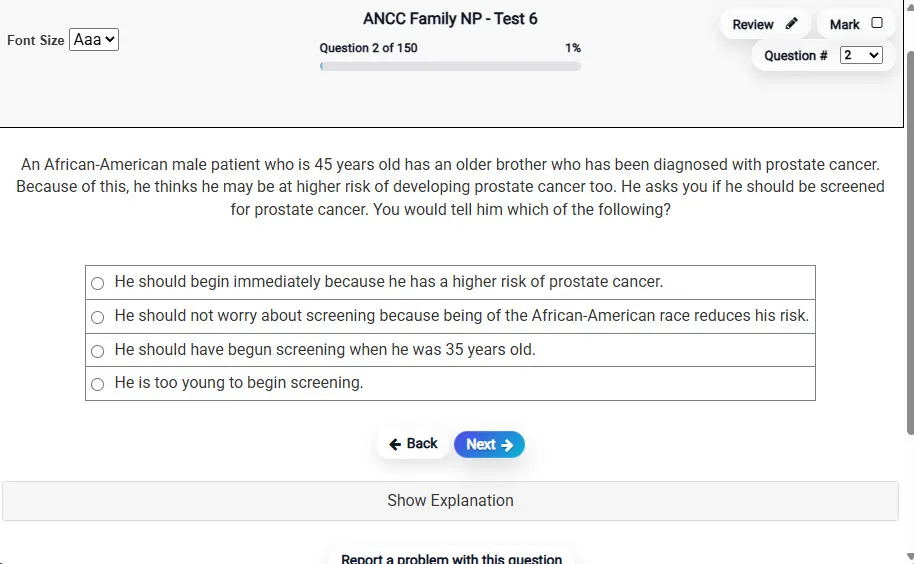
Answering a Question screen – Multiple-choice item view with navigation controls and progress tracker.
Answering a Question Multiple-choice item view with navigation controls and progress tracker.

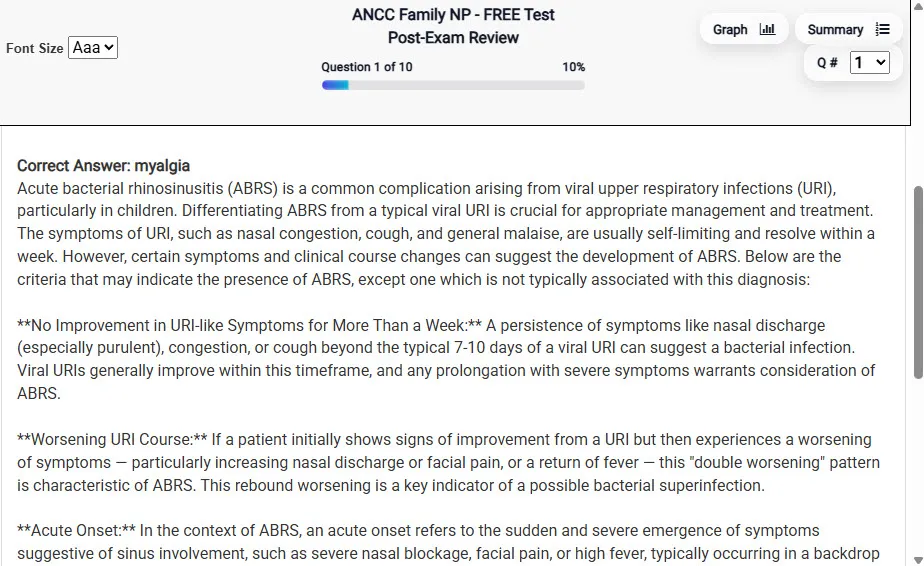
                           Detailed Explanation screen – 
                         Review mode showing chosen answer and rationale and references.
Detailed Explanation Review mode showing chosen answer and rationale and references.

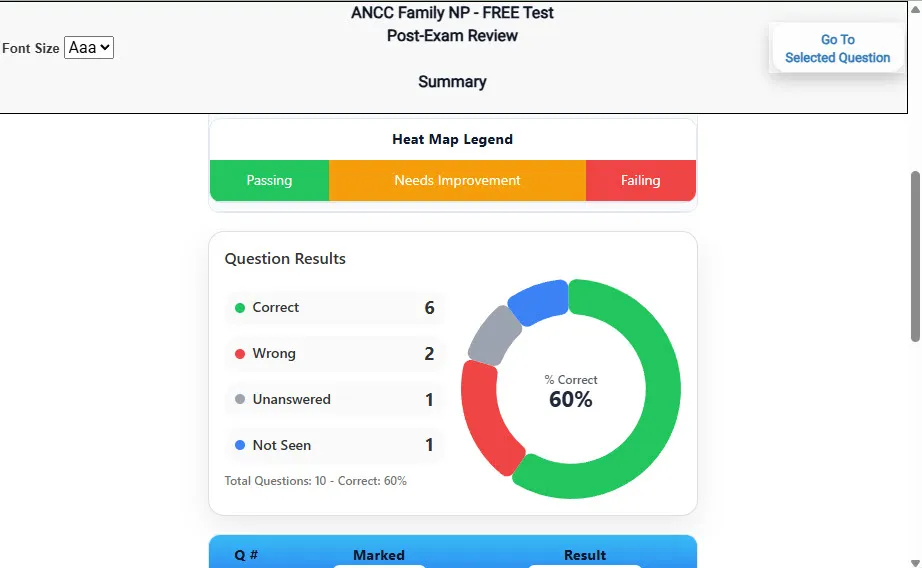
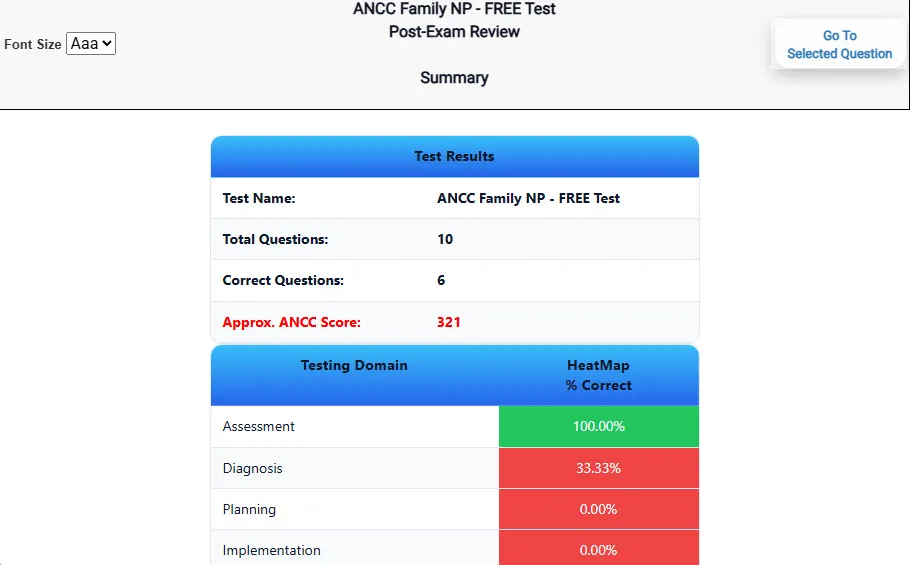
                           Review Summary 1 screen – 
                         Summary with counts for correct/wrong/unanswered and not seen items.
Review Summary 1 Summary with counts for correct/wrong/unanswered and not seen items.

                           Review Summary 2 screen – 
                         Advanced summary with category/domain breakdown and performance insights.
Review Summary 2 Advanced summary with category/domain breakdown and performance insights.

What Each Screen Shows

Answer Question Screen

  • Clean multiple-choice interface with progress bar.
  • Mark for review feature.
  • Matches real test pacing.

Detailed Explanation

  • Correct answer plus rationale.
  • Key concepts and guidelines highlighted.
  • Move between questions to fill knowledge gaps.

Review Summary 1

  • Overall results with total questions and scaled score.
  • Domain heatmap shows strengths and weaknesses.
  • Quick visual feedback on study priorities.

Review Summary 2

  • Chart of correct, wrong, unanswered, not seen.
  • Color-coded results for easy review.
  • Links back to missed items.

Top 10 Reasons to Use Exam Edge for your ORELA Biology Exam Prep

  1. Focused on the ORELA Biology Exam

    Our practice tests are built specifically for the ORELA Biology exam — every question mirrors the real topics, format, and difficulty so you're studying exactly what matters.

  2. Real Exam Simulation

    We match the per-question time limits and pressure of the actual ORELA exam, so test day feels familiar and stress-free.

  3. 20 Full Practice Tests & 2,000 Unique Questions

    You'll have more than enough material to master every ORELA Biology concept — no repeats, no fluff.

  4. Lower Cost Than a Retake

    Ordering 5 practice exams costs less than retaking the ORELA Biology exam after a failure. One low fee could save you both time and money.

  5. Flexible Testing

    Need to step away mid-exam? Pick up right where you left off — with your remaining time intact.

  6. Instant Scoring & Feedback

    See your raw score and an estimated ORELA Biology score immediately after finishing each practice test.

  7. Detailed Explanations for Every Question

    Review correct and incorrect answers with clear, step-by-step explanations so you truly understand each topic.

  8. Trusted & Accredited

    We're fully accredited by the Better Business Bureau and uphold the highest standards of trust and transparency.

  9. Web-Based & Always Available

    No software to install. Access your ORELA Biology practice exams 24/7 from any computer or mobile device.

  10. Expert Support When You Need It

    Need extra help? Our specialized tutors are highly qualified and ready to support your ORELA exam prep.


Pass the ORELA Biology Exam with Realistic Practice Tests from Exam Edge

Preparing for your upcoming ORELA Biology (305) Certification Exam can feel overwhelming — but the right practice makes all the difference. Exam Edge gives you the tools, structure, and confidence to pass on your first try. Our online practice exams are built to match the real ORELA Biology exam in content, format, and difficulty.

  • 📝 20 ORELA Biology Practice Tests: Access 20 full-length exams with 100 questions each, covering every major ORELA Biology topic in depth.
  • Instant Online Access: Start practicing right away — no software, no waiting.
  • 🧠 Step-by-Step Explanations: Understand the reasoning behind every correct answer so you can master ORELA Biology exam concepts.
  • 🔄 Retake Each Exam Up to 4 Times: Build knowledge through repetition and track your improvement over time.
  • 🌐 Web-Based & Available 24/7: Study anywhere, anytime, on any device.
  • 🧘 Boost Your Test-Day Confidence: Familiarity with the ORELA format reduces anxiety and helps you perform under pressure.

These ORELA Biology practice exams are designed to simulate the real testing experience by matching question types, timing, and difficulty level. This approach helps you get comfortable not just with the exam content, but also with the testing environment, so you walk into your exam day focused and confident.


Exam Edge ORELA Reviews


ORELA Biology Aliases Test Name

Here is a list of alternative names used for this exam.

  • ORELA Biology
  • ORELA Biology test
  • ORELA Biology Certification Test
  • ORELA
  • ORELA 305
  • 305 test
  • ORELA Biology (305)
  • Biology certification