This is the content of the pop-over!

ORELA Art (503) Practice Tests & Test Prep by Exam Edge


ORELA Art  product image
(5.0)
Based on 25 Reviews

  • Real Exam Simulation: Timed questions and matching content build comfort for your ORELA Art test day.
  • Instant, 24/7 Access: Web-based ORELA Art practice exams with no software needed.
  • Clear Explanations: Step-by-step answers and explanations for your ORELA exam to strengthen understanding.
  • Boosted Confidence: Reduces anxiety and improves test-taking skills to ace your ORELA Art (503).

Featured on

ORELA Art Online Practice Test Bundles

BEST VALUE
20 practice tests

$174.00

$799.00

SAVE $625

Only $8.70 per test!

  • 100% Pass Guarantee
  • 20 online practice tests
  • 125 questions per test
  • Bonus: 100 Flash Cards + Study Guide
  • Instant access
  • Detailed Explanations
  • Practice tests never expire
  • Timed, untimed, or study guide mode
MOST POPULAR
10 practice tests

$99.50

$399.50

SAVE $300

Only $9.95 per test!

  • 10 online practice tests
  • 125 questions per test
  • Bonus: 100 Flash Cards + Study Guide
  • Instant access
  • Detailed Explanations
  • Practice tests never expire
  • Timed, untimed, or study guide mode
5 practice tests

$69.75

$199.75

SAVE $130

Only $13.95 per test!

  • 5 online practice tests
  • 125 questions per test
  • Bonus: 100 Flash Cards
  • Instant access
  • Detailed Explanations
  • Practice tests never expire
  • Timed, untimed, or study guide mode
1 practice test

$39.95

  • 1 online practice test
  • 125 questions per test
  • Instant access
  • Detailed Explanations
  • Practice tests never expire
  • Timed, untimed, or study guide mode
Quick Select
Tap to choose a bundle

** All Prices are in US Dollars (USD) **


ORELA Art (503) Resources

Jump to the section you need most.

Understanding the exact breakdown of the ORELA Art test will help you know what to expect and how to most effectively prepare. The ORELA Art has 150 multiple-choice questions . The exam will be broken down into the sections below:

ORELA Art Exam Blueprint
Domain Name % Number of
Questions
Foundations of Art: Elements and Principles 11% 17
Art Media - Tools - Technologies - Techniques Processes 33% 50
Visual Arts in Historical and Cultural Contexts 33% 50
Aesthetics and Art Criticism 12% 18
Connecting the Visual Arts to Other Disciplines 11% 17

ORELA Art Study Tips by Domain

  • Differentiate the elements of art (line, shape, form, space, texture, value, color) and describe how a change in one element shifts the whole composition—red flag: treating “shape” and “form” or “value” and “color” as interchangeable.
  • Apply principles of design (balance, contrast, emphasis, movement, pattern/rhythm, proportion/scale, unity/variety) to analyze why a work feels stable or tense—common trap: calling a perfectly symmetrical layout the only kind of balance.
  • Use color theory accurately (hue, value, intensity/saturation; complementary, analogous, triadic; warm vs. cool) and predict visual effects—priority rule: value contrast typically reads more strongly than hue contrast in grayscale reproduction.
  • Explain how space is created on a 2D surface (overlap, size change, placement, atmospheric perspective, linear perspective) and identify common perspective errors—red flag: converging parallel lines to multiple vanishing points without intent.
  • Connect texture, mark-making, and pattern to focal point and movement—common trap: adding even, repeated detail everywhere, which flattens hierarchy and weakens emphasis.
  • Evaluate composition using figure-ground, positive/negative space, and gestalt cues (closure, continuation) to describe readability—red flag: ambiguous figure-ground that unintentionally obscures the subject.
  • Match medium to surface and goal (e.g., watercolor needs absorbent paper; acrylic accepts most grounds) — red flag: using oil paint on paper or unprimed canvas causes deterioration and adhesion failure.
  • Follow safe studio protocols for solvents, pigments, and dust — common trap: assuming “odorless” mineral spirits or spray fixatives are nonhazardous; prioritize ventilation, PPE, and proper disposal.
  • Demonstrate correct tool handling and maintenance (brush loading/cleaning, knife use, printmaking brayer pressure) — priority rule: clean with the right agent (water vs. solvent) immediately to prevent permanent tool damage.
  • Control process variables to achieve predictable results (kiln schedules, glaze thickness, firing atmosphere, photo exposure time) — threshold cue: small changes in temperature/time can cause glaze defects, underfiring, or overexposure.
  • Use appropriate joining and construction methods (armatures, adhesives, fasteners, clay scoring/slip) — red flag: “gluing” unfired clay or skipping score-and-slip leads to cracks and structural failure.
  • Integrate digital tools and output workflows (raster vs. vector, resolution, color modes) — common trap: designing in RGB for print; convert/manage to CMYK and verify DPI to avoid muddy color and pixelation.
  • Place works in time and place using key visual evidence (materials, function, iconography) rather than style-label guessing; red flag: mixing similar-looking Greek kouroi with Egyptian conventions without checking stance, proportion, and purpose.
  • Link form to cultural purpose (ritual, propaganda, devotion, commerce) and patronage; common trap: treating art as purely “self-expression” when it was made for civic, religious, or court systems.
  • Know hallmark movements and what changed (e.g., Renaissance linear perspective, Baroque drama, Impressionist light, Modernist abstraction) and be able to cite a specific formal cue; red flag: defining movements only by dates without a visual identifier.
  • Compare global traditions on their own terms (e.g., Islamic aniconism and geometry, African masquerade performance context, East Asian ink painting and calligraphy); contraindication: judging non-Western art by Western naturalism standards.
  • Recognize how technology and trade reshape art (oil paint, printmaking, photography, digital media) and who gains access; common trap: ignoring reproducibility and circulation when explaining cultural impact (e.g., prints as mass distribution).
  • Use accurate, respectful terminology for cultural context (tribe/nation names, sacred vs. secular, original site) and apply ethics of display/appropriation; priority rule: if a work is sacred or site-specific, note context loss as a key interpretive limitation.
  • Differentiate major aesthetic theories (e.g., formalism, expressionism, imitation/mimesis, instrumentalism) and match each to likely claims about “what makes art art”; red flag: answering with personal preference instead of a theory-based rationale.
  • Apply a structured critique sequence (describe → analyze → interpret → evaluate) and keep evidence tied to observable features; common trap: jumping to interpretation before accurately describing subject matter, medium, and composition.
  • Use appropriate vocabulary to justify judgments (e.g., balance, emphasis, contrast, unity, scale, rhythm) and connect terms to specific visual evidence; priority rule: every evaluative statement should cite at least one concrete formal cue.
  • Distinguish interpretation from evaluation and acknowledge multiple plausible meanings when evidence supports them; red flag: treating symbolism as certain when the work’s context or imagery is ambiguous.
  • Recognize how context (artist intent, audience, function, patronage, site, cultural values) can shape meaning without reducing the work to biography; common trap: assuming intent is knowable or definitive without documentation.
  • Identify ethical and critical considerations (appropriation, representation, bias, cultural sensitivity) when discussing artworks and classroom critiques; threshold: critique the work’s choices and effects—not the student/artist as a person.
  • Connect artworks to humanities themes (e.g., identity, power, place) by pairing a specific piece with a primary-source text; red flag: “theme” answers that don’t cite at least one concrete visual detail.
  • Use math and science links to strengthen making and critique (scale, ratio, symmetry, optics, color/light); common trap: mixing additive (light) vs. subtractive (pigment) color models.
  • Integrate language arts through visual literacy (description → analysis → interpretation → judgment) and evidence-based writing; priority rule: every claim must be backed by an observed element or principle.
  • Connect to social studies by situating art within civic, economic, and geographic factors (patronage, propaganda, migration); red flag: presentism—judging historical works only by current values without context.
  • Link to performing arts via shared concepts (rhythm, tempo, harmony, improvisation, narrative) and cross-modal translation activities; common trap: using vague “it feels musical” language instead of specifying visual rhythms or patterns.
  • Address health/PE and wellness through ergonomics, safety, and studio routines (posture, ventilation, hearing/eye protection when needed); contraindication: using materials or processes without considering student allergies, asthma triggers, or required PPE.


Built to Fit Into Your Busy Life

Everything you need to prepare with confidence—without wasting a minute.

Three Study Modes

Timed, No Time Limit, or Explanation mode.

Actionable Analytics

Heatmaps and scaled scores highlight weak areas.

High-Yield Rationales

Concise explanations emphasize key concepts.

Realistic Interface

Matches the feel of the actual exam environment.

Accessible by Design

Clean layout reduces cognitive load.

Anytime, Anywhere

Web-based access 24/7 on any device.
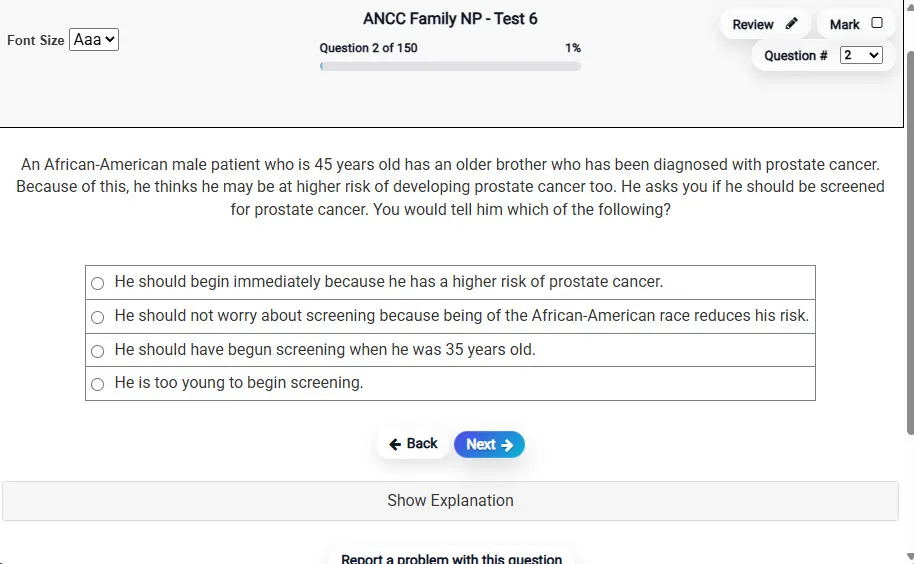
Answering a Question screen – Multiple-choice item view with navigation controls and progress tracker.
Answering a Question Multiple-choice item view with navigation controls and progress tracker.

                           Detailed Explanation screen – 
                         Review mode showing chosen answer and rationale and references.
Detailed Explanation Review mode showing chosen answer and rationale and references.

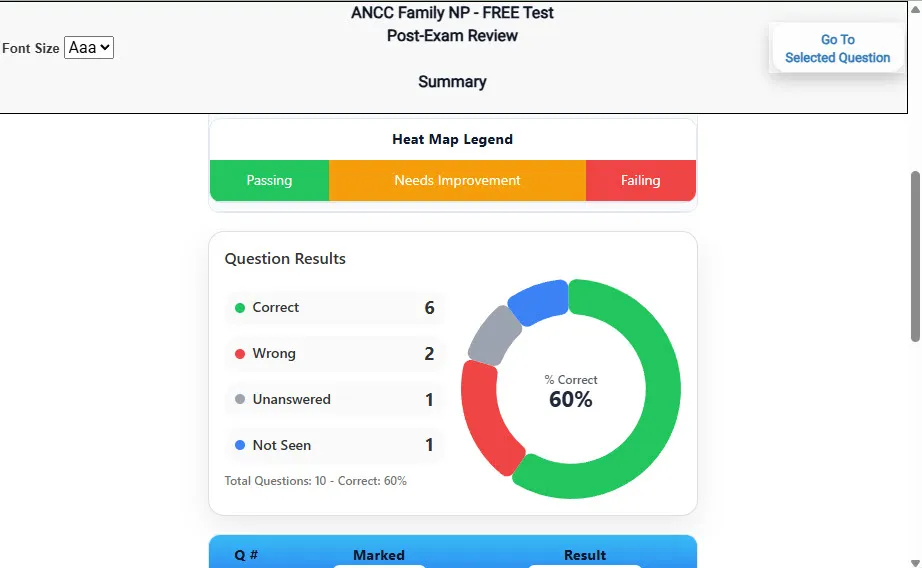
                           Review Summary 1 screen – 
                         Summary with counts for correct/wrong/unanswered and not seen items.
Review Summary 1 Summary with counts for correct/wrong/unanswered and not seen items.

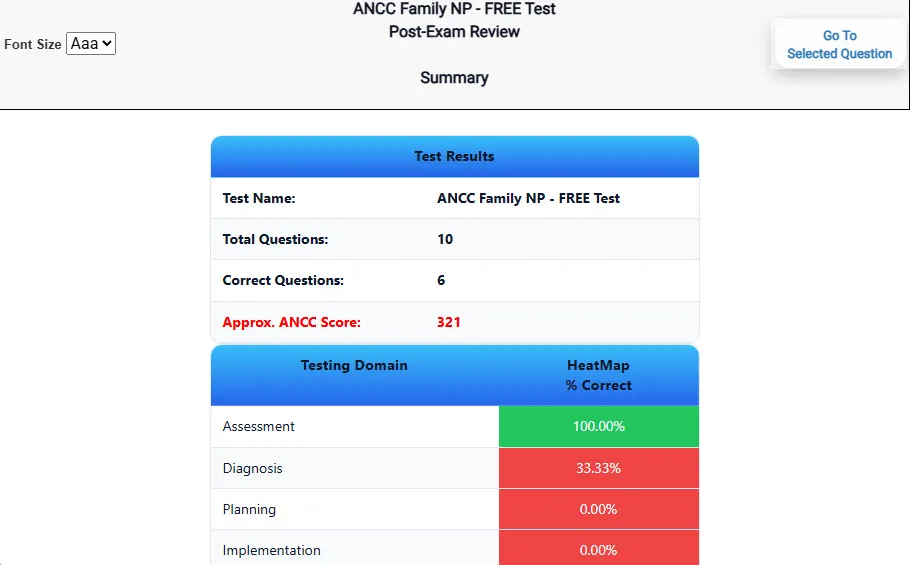
                           Review Summary 2 screen – 
                         Advanced summary with category/domain breakdown and performance insights.
Review Summary 2 Advanced summary with category/domain breakdown and performance insights.

What Each Screen Shows

Answer Question Screen

  • Clean multiple-choice interface with progress bar.
  • Mark for review feature.
  • Matches real test pacing.

Detailed Explanation

  • Correct answer plus rationale.
  • Key concepts and guidelines highlighted.
  • Move between questions to fill knowledge gaps.

Review Summary 1

  • Overall results with total questions and scaled score.
  • Domain heatmap shows strengths and weaknesses.
  • Quick visual feedback on study priorities.

Review Summary 2

  • Chart of correct, wrong, unanswered, not seen.
  • Color-coded results for easy review.
  • Links back to missed items.

Top 10 Reasons to Use Exam Edge for your ORELA Art Exam Prep

  1. Focused on the ORELA Art Exam

    Our practice tests are built specifically for the ORELA Art exam — every question mirrors the real topics, format, and difficulty so you're studying exactly what matters.

  2. Real Exam Simulation

    We match the per-question time limits and pressure of the actual ORELA exam, so test day feels familiar and stress-free.

  3. 20 Full Practice Tests & 2,500 Unique Questions

    You'll have more than enough material to master every ORELA Art concept — no repeats, no fluff.

  4. Lower Cost Than a Retake

    Ordering 5 practice exams costs less than retaking the ORELA Art exam after a failure. One low fee could save you both time and money.

  5. Flexible Testing

    Need to step away mid-exam? Pick up right where you left off — with your remaining time intact.

  6. Instant Scoring & Feedback

    See your raw score and an estimated ORELA Art score immediately after finishing each practice test.

  7. Detailed Explanations for Every Question

    Review correct and incorrect answers with clear, step-by-step explanations so you truly understand each topic.

  8. Trusted & Accredited

    We're fully accredited by the Better Business Bureau and uphold the highest standards of trust and transparency.

  9. Web-Based & Always Available

    No software to install. Access your ORELA Art practice exams 24/7 from any computer or mobile device.

  10. Expert Support When You Need It

    Need extra help? Our specialized tutors are highly qualified and ready to support your ORELA exam prep.


Pass the ORELA Art Exam with Realistic Practice Tests from Exam Edge

Preparing for your upcoming ORELA Art (503) Certification Exam can feel overwhelming — but the right practice makes all the difference. Exam Edge gives you the tools, structure, and confidence to pass on your first try. Our online practice exams are built to match the real ORELA Art exam in content, format, and difficulty.

  • 📝 20 ORELA Art Practice Tests: Access 20 full-length exams with 125 questions each, covering every major ORELA Art topic in depth.
  • Instant Online Access: Start practicing right away — no software, no waiting.
  • 🧠 Step-by-Step Explanations: Understand the reasoning behind every correct answer so you can master ORELA Art exam concepts.
  • 🔄 Retake Each Exam Up to 4 Times: Build knowledge through repetition and track your improvement over time.
  • 🌐 Web-Based & Available 24/7: Study anywhere, anytime, on any device.
  • 🧘 Boost Your Test-Day Confidence: Familiarity with the ORELA format reduces anxiety and helps you perform under pressure.

These ORELA Art practice exams are designed to simulate the real testing experience by matching question types, timing, and difficulty level. This approach helps you get comfortable not just with the exam content, but also with the testing environment, so you walk into your exam day focused and confident.


Exam Edge ORELA Reviews


ORELA Art Aliases Test Name

Here is a list of alternative names used for this exam.

  • ORELA Art
  • ORELA Art test
  • ORELA Art Certification Test
  • ORELA
  • ORELA 503
  • 503 test
  • ORELA Art (503)
  • Art certification