This is the content of the pop-over!

ONCC Oncology Certified Nurse (OCN) (OCN) Practice Tests & Test Prep by Exam Edge


ONCC Oncology Certified Nurse (OCN)   product image
(5.0)
Based on 40 Reviews

  • Real Exam Simulation: Timed questions and matching content build comfort for your ONCC Oncology Certified Nurse (OCN) test day.
  • Instant, 24/7 Access: Web-based ONCC Oncology Certified Nurse (OCN) practice exams with no software needed.
  • Clear Explanations: Step-by-step answers and explanations for your ONCC exam to strengthen understanding.
  • Boosted Confidence: Reduces anxiety and improves test-taking skills to ace your ONCC Oncology Certified Nurse (OCN) (OCN).

Featured on

ONCC Oncology Certified Nurse (OCN) Online Practice Test Bundles

BEST VALUE
10 practice tests

$99.50

$399.50

SAVE $300

Only $9.95 per test!

  • 100% Pass Guarantee
  • 10 online practice tests
  • 100 questions per test
  • Bonus: 100 Flash Cards + Study Guide
  • Instant access
  • Detailed Explanations
  • Practice tests never expire
  • Timed, untimed, or study guide mode
5 practice tests

$69.75

$199.75

SAVE $130

Only $13.95 per test!

  • 5 online practice tests
  • 100 questions per test
  • Bonus: 100 Flash Cards + Study Guide
  • Instant access
  • Detailed Explanations
  • Practice tests never expire
  • Timed, untimed, or study guide mode
1 practice test

$39.95

  • 1 online practice test
  • 100 questions per test
  • Instant access
  • Detailed Explanations
  • Practice tests never expire
  • Timed, untimed, or study guide mode
Quick Select
Tap to choose a bundle

** All Prices are in US Dollars (USD) **


ONCC Oncology Certified Nurse (OCN) (OCN) Resources

Jump to the section you need most.

Understanding the exact breakdown of the ONCC Oncology Certified Nurse (OCN) test will help you know what to expect and how to most effectively prepare. The ONCC Oncology Certified Nurse (OCN) has multiple-choice questions . The exam will be broken down into the sections below:

ONCC Oncology Certified Nurse (OCN) Exam Blueprint
Domain Name % Number of
Questions
Care Continuum 19% 23
Treatment Modalities 19% 23
Symptom Management and Palliative Care 23% 28
Oncologic Emergencies 12% 14
Psychosocial Dimensions of Care 10% 12

ONCC Oncology Certified Nurse (OCN) Study Tips by Domain

  • Clarify where the patient is on the cancer care continuum (screening → diagnosis/staging → treatment → survivorship or end-of-life) because goals and teaching change by phase—red flag: giving survivorship-focused guidance during active induction or consolidation therapy.
  • Prioritize safe transitions of care with medication reconciliation, line/device instructions, follow-up appointments, and clear symptom parameters—common trap: discharging without explicit neutropenic fever instructions (e.g., report temperature ≥ 38.0°C/100.4°F).
  • Use standardized screening at key touchpoints (distress, pain, nutrition risk, fall risk, cognitive/functional status) and trigger referrals promptly—priority rule: abnormal screens should generate same-visit action, not “watch and wait.”
  • Ensure informed consent and patient education are appropriate to health literacy and include risks, benefits, alternatives, and when to call—red flag: relying on a signed form when the patient cannot teach-back the plan.
  • Coordinate multidisciplinary care (oncology, surgery, radiation, pharmacy, social work, rehab, palliative care) with documented roles and handoffs—common trap: assuming another service is managing anticoagulation, steroids, or antiemetics without explicit documentation.
  • Support survivorship planning with surveillance, late-effects monitoring (e.g., cardiotoxicity, neuropathy, secondary malignancy), health promotion, and work/financial navigation—red flag: no written survivorship care plan or unclear responsibility for follow-up testing.
  • Verify chemotherapy orders against protocol and patient-specific factors (BSA, renal/hepatic function, lifetime anthracycline dose) — red flag: dose >10% variance or missing cumulative dose history.
  • For vesicant IV therapy, require blood return and assess the site frequently; common trap: continuing an infusion when the patient reports burning or swelling (treat as extravasation until proven otherwise).
  • With immunotherapy (e.g., checkpoint inhibitors), screen for immune-related adverse events and hold drug for suspected moderate-to-severe toxicity; red flag: new diarrhea, cough/SOB, jaundice, severe fatigue, or headache/vision changes suggesting endocrinopathy.
  • For oral antineoplastics, confirm adherence plan, safe handling, and drug/food interactions; common trap: patients doubling doses after a missed dose or taking St. John’s wort/grapefruit that alters metabolism.
  • Radiation therapy teaching should emphasize skin care and fatigue management; red flag: applying lotions/deodorant/heat/ice to the treatment field without RT team approval, increasing skin injury risk.
  • Bone marrow/hematopoietic stem cell transplant care requires strict infection and GVHD surveillance; priority rule: report fever (often ≥38°C/100.4°F) or new rash/diarrhea promptly as possible sepsis or acute GVHD.
  • Differentiate acute pain crisis from baseline cancer pain and titrate opioids accordingly; red flag: escalating pain with new neurologic deficits suggests spinal cord compression, not “opioid tolerance.”
  • Prevent and treat opioid-induced constipation with scheduled stimulant laxative ± stool softener; common trap: using docusate alone or waiting for constipation to occur.
  • Manage chemotherapy-induced nausea/vomiting using emetogenic-risk prophylaxis (e.g., 5-HT3 antagonist ± NK1 antagonist ± dexamethasone); priority rule: rescue meds don’t replace missed scheduled prophylaxis.
  • Assess dyspnea with both objective findings and patient report and treat with opioids, fan, positioning, and oxygen only if hypoxemic; red flag: sudden dyspnea with pleuritic pain may indicate PE and needs urgent evaluation.
  • Address delirium by identifying reversible causes (infection, meds, metabolic issues) and using nonpharmacologic measures first; common trap: giving benzodiazepines for non-withdrawal delirium, which can worsen confusion.
  • Implement palliative goals-of-care conversations early and document code status, advance directives, and symptom priorities; red flag: assuming DNR means “no treatment” rather than “no CPR/intubation” unless specified.
  • Suspect tumor lysis syndrome within 12–72 hours of starting cytotoxic therapy in high-burden hematologic malignancies; red flag labs are rising K+, PO4−, uric acid with falling Ca2+ and worsening creatinine.
  • Spinal cord compression is an oncologic emergency—new back pain with weakness, sensory changes, or bowel/bladder dysfunction requires immediate steroids and urgent MRI; common trap: attributing symptoms to neuropathy or arthritis and delaying imaging.
  • For febrile neutropenia (single oral temp ≥38.3°C or ≥38.0°C for ≥1 hour with ANC <500), give broad-spectrum antipseudomonal antibiotics ASAP (goal ≤60 minutes); red flag: hypotension or altered mental status suggests sepsis.
  • Hypercalcemia of malignancy presents with dehydration, constipation, confusion, and shortened QT—priority is aggressive IV fluids then antiresorptive therapy; contraindication cue: use caution with bisphosphonates in severe renal impairment.
  • Superior vena cava syndrome (facial/neck swelling, dyspnea, venous distention) warrants urgent evaluation and airway vigilance; common trap: placing an upper-extremity central line on the affected side and worsening obstruction.
  • Disseminated intravascular coagulation can occur with acute leukemia or advanced solid tumors—monitor for simultaneous bleeding and thrombosis with falling platelets and fibrinogen and rising D-dimer; priority rule: treat the underlying cause and avoid prophylactic anticoagulation when active bleeding is present.
  • Screen for distress at key transition points (new diagnosis, recurrence, end of treatment) and treat a high score or safety concern as a priority referral trigger—don’t wait for the patient to “bring it up.”
  • Assess suicide risk directly when depression, hopelessness, uncontrolled pain, or substance misuse is present; red flag: a plan, intent, or means requires immediate safety actions and escalation.
  • Use trauma-informed, culturally humble communication (ask permission, use teach-back, offer interpreter); common trap: using family as interpreters can breach confidentiality and distort informed consent.
  • Identify caregiver strain early (sleep deprivation, financial toxicity, role overload) and refer to social work/resources; red flag: caregiver burnout can lead to missed meds/appointments and unsafe home care.
  • Evaluate cognitive changes, delirium, and chemo-brain versus depression/anxiety; priority rule: acute confusion or fluctuating attention is delirium until proven otherwise and warrants urgent medical evaluation.
  • Support spiritual/existential needs with open-ended questions and chaplain referral when requested; contraindication: avoid imposing personal beliefs or offering false reassurance (e.g., “Everything will be fine”).


Built to Fit Into Your Busy Life

Everything you need to prepare with confidence—without wasting a minute.

Three Study Modes

Timed, No Time Limit, or Explanation mode.

Actionable Analytics

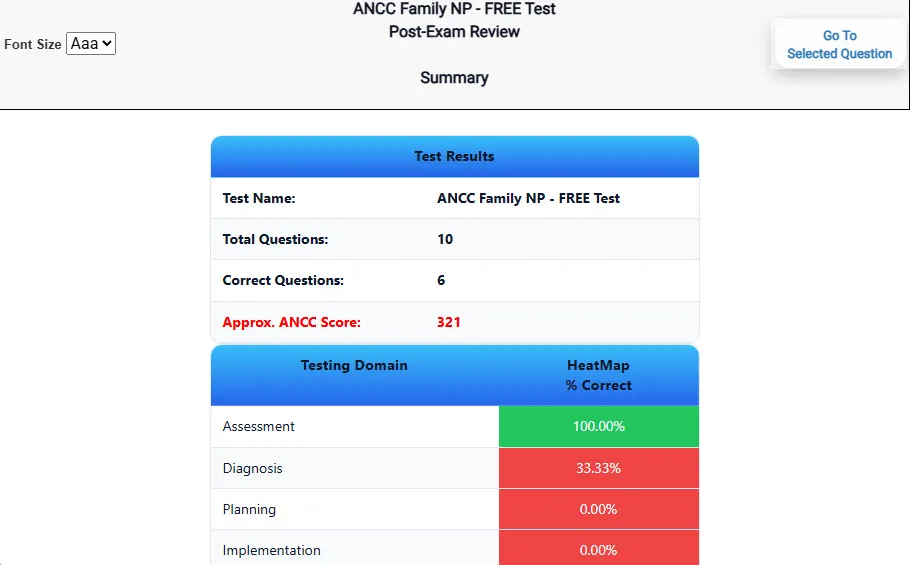
Heatmaps and scaled scores highlight weak areas.

High-Yield Rationales

Concise explanations emphasize key concepts.

Realistic Interface

Matches the feel of the actual exam environment.

Accessible by Design

Clean layout reduces cognitive load.

Anytime, Anywhere

Web-based access 24/7 on any device.
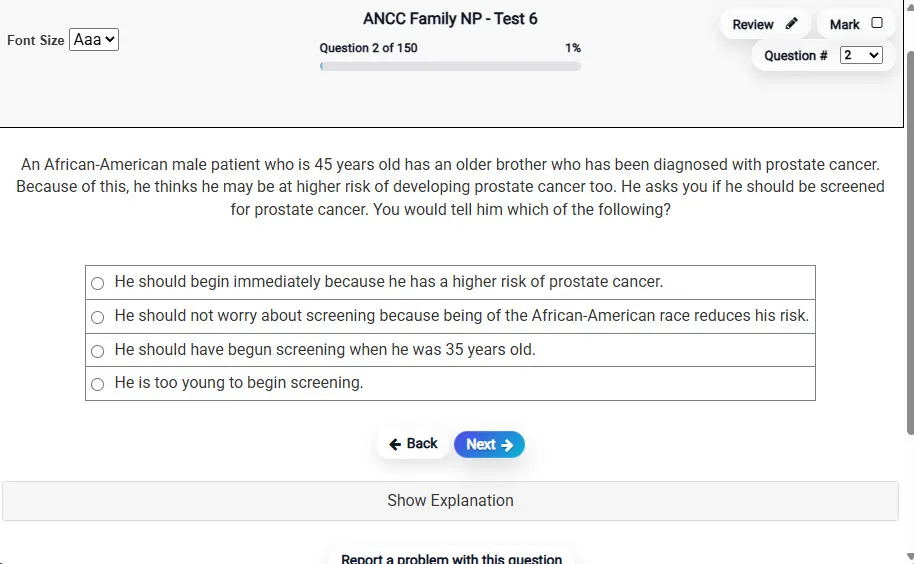
Answering a Question screen – Multiple-choice item view with navigation controls and progress tracker.
Answering a Question Multiple-choice item view with navigation controls and progress tracker.

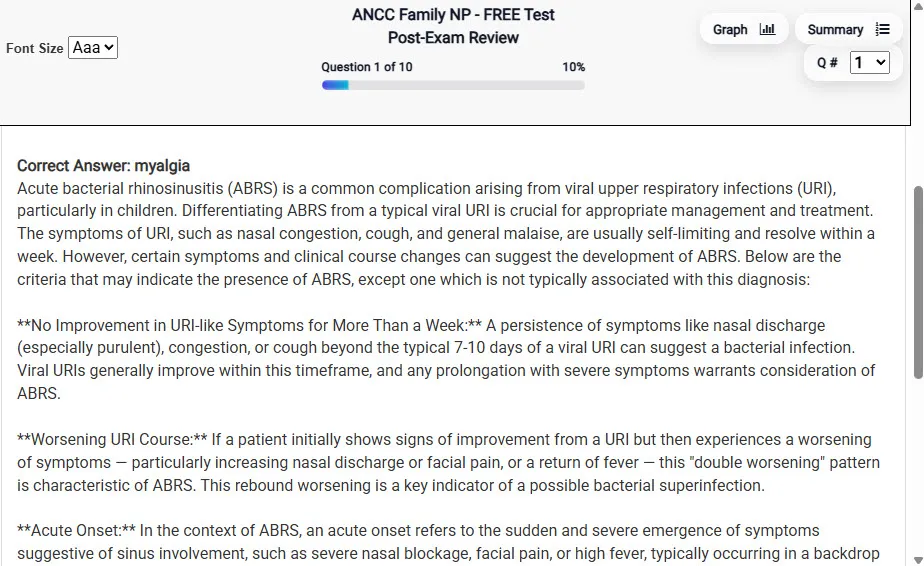
                           Detailed Explanation screen – 
                         Review mode showing chosen answer and rationale and references.
Detailed Explanation Review mode showing chosen answer and rationale and references.

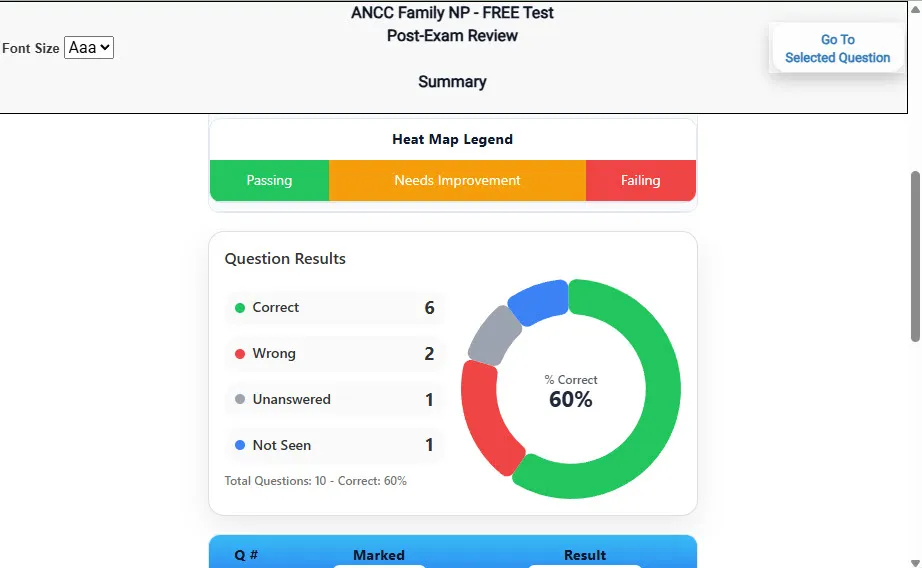
                           Review Summary 1 screen – 
                         Summary with counts for correct/wrong/unanswered and not seen items.
Review Summary 1 Summary with counts for correct/wrong/unanswered and not seen items.

                           Review Summary 2 screen – 
                         Advanced summary with category/domain breakdown and performance insights.
Review Summary 2 Advanced summary with category/domain breakdown and performance insights.

What Each Screen Shows

Answer Question Screen

  • Clean multiple-choice interface with progress bar.
  • Mark for review feature.
  • Matches real test pacing.

Detailed Explanation

  • Correct answer plus rationale.
  • Key concepts and guidelines highlighted.
  • Move between questions to fill knowledge gaps.

Review Summary 1

  • Overall results with total questions and scaled score.
  • Domain heatmap shows strengths and weaknesses.
  • Quick visual feedback on study priorities.

Review Summary 2

  • Chart of correct, wrong, unanswered, not seen.
  • Color-coded results for easy review.
  • Links back to missed items.

Top 10 Reasons to Use Exam Edge for your ONCC Oncology Certified Nurse (OCN) Exam Prep

  1. Focused on the ONCC Oncology Certified Nurse (OCN) Exam

    Our practice tests are built specifically for the ONCC Oncology Certified Nurse (OCN) exam — every question mirrors the real topics, format, and difficulty so you're studying exactly what matters.

  2. Real Exam Simulation

    We match the per-question time limits and pressure of the actual ONCC exam, so test day feels familiar and stress-free.

  3. 10 Full Practice Tests & 1,000 Unique Questions

    You'll have more than enough material to master every ONCC Oncology Certified Nurse (OCN) concept — no repeats, no fluff.

  4. Lower Cost Than a Retake

    Ordering 5 practice exams costs less than retaking the ONCC Oncology Certified Nurse (OCN) exam after a failure. One low fee could save you both time and money.

  5. Flexible Testing

    Need to step away mid-exam? Pick up right where you left off — with your remaining time intact.

  6. Instant Scoring & Feedback

    See your raw score and an estimated ONCC Oncology Certified Nurse (OCN) score immediately after finishing each practice test.

  7. Detailed Explanations for Every Question

    Review correct and incorrect answers with clear, step-by-step explanations so you truly understand each topic.

  8. Trusted & Accredited

    We're fully accredited by the Better Business Bureau and uphold the highest standards of trust and transparency.

  9. Web-Based & Always Available

    No software to install. Access your ONCC Oncology Certified Nurse (OCN) practice exams 24/7 from any computer or mobile device.

  10. Expert Support When You Need It

    Need extra help? Our specialized tutors are highly qualified and ready to support your ONCC exam prep.


Pass the ONCC Oncology Certified Nurse (OCN) Exam with Realistic Practice Tests from Exam Edge

Preparing for your upcoming ONCC Oncology Certified Nurse (OCN) (OCN) Certification Exam can feel overwhelming — but the right practice makes all the difference. Exam Edge gives you the tools, structure, and confidence to pass on your first try. Our online practice exams are built to match the real ONCC Oncology Certified Nurse (OCN) exam in content, format, and difficulty.

  • 📝 10 ONCC Oncology Certified Nurse (OCN) Practice Tests: Access 10 full-length exams with 100 questions each, covering every major ONCC Oncology Certified Nurse (OCN) topic in depth.
  • Instant Online Access: Start practicing right away — no software, no waiting.
  • 🧠 Step-by-Step Explanations: Understand the reasoning behind every correct answer so you can master ONCC Oncology Certified Nurse (OCN) exam concepts.
  • 🔄 Retake Each Exam Up to 4 Times: Build knowledge through repetition and track your improvement over time.
  • 🌐 Web-Based & Available 24/7: Study anywhere, anytime, on any device.
  • 🧘 Boost Your Test-Day Confidence: Familiarity with the ONCC format reduces anxiety and helps you perform under pressure.

These ONCC Oncology Certified Nurse (OCN) practice exams are designed to simulate the real testing experience by matching question types, timing, and difficulty level. This approach helps you get comfortable not just with the exam content, but also with the testing environment, so you walk into your exam day focused and confident.


Exam Edge ONCC Reviews


I have taken the CBCN exam twice before and I failed. I purchased your test 2 and I reviewed it over and over again. I'm not a good test taker but your test taught me how to eliminate wrong answers and choose the correct one. Yesterday, I took the CBCN test and I passed!!!! I'm so very happy and doi ...
Read More
Evelyn C. , Harbor City CA


ONCC Oncology Certified Nurse (OCN) Aliases Test Name

Here is a list of alternative names used for this exam.

  • ONCC Oncology Certified Nurse (OCN)
  • ONCC Oncology Certified Nurse (OCN) test
  • ONCC Oncology Certified Nurse (OCN) Certification Test
  • ONCC
  • ONCC OCN
  • OCN test
  • ONCC Oncology Certified Nurse (OCN) (OCN)
  • Oncology Certified Nurse (OCN) certification