This is the content of the pop-over!

ONCC CBCN (CBCN) Practice Tests & Test Prep by Exam Edge


ONCC Certified Breast Care Nurse   product image
(5.0)
Based on 28 Reviews

  • Real Exam Simulation: Timed questions and matching content build comfort for your ONCC CBCN test day.
  • Instant, 24/7 Access: Web-based ONCC Certified Breast Care Nurse practice exams with no software needed.
  • Clear Explanations: Step-by-step answers and explanations for your ONCC exam to strengthen understanding.
  • Boosted Confidence: Reduces anxiety and improves test-taking skills to ace your ONCC Certified Breast Care Nurse (CBCN).

Featured on

ONCC Certified Breast Care Nurse Online Practice Test Bundles

BEST VALUE
5 practice tests

$69.75

$199.75

SAVE $130

Only $13.95 per test!

  • 100% Pass Guarantee
  • 5 online practice tests
  • 100 questions per test
  • Bonus: 100 Flash Cards + Study Guide
  • Instant access
  • Detailed Explanations
  • Practice tests never expire
  • Timed, untimed, or study guide mode
1 practice test

$39.95

  • 1 online practice test
  • 100 questions per test
  • Instant access
  • Detailed Explanations
  • Practice tests never expire
  • Timed, untimed, or study guide mode
Quick Select
Tap to choose a bundle

** All Prices are in US Dollars (USD) **


ONCC CBCN (CBCN) Resources

Jump to the section you need most.

Understanding the exact breakdown of the ONCC Certified Breast Care Nurse test will help you know what to expect and how to most effectively prepare. The ONCC Certified Breast Care Nurse has multiple-choice questions . The exam will be broken down into the sections below:

ONCC Certified Breast Care Nurse Exam Blueprint
Domain Name % Number of
Questions
Coordination of Care 26% 26
Diagnosis and Staging 17% 17
Treatment Modalities: Local and Systemic 18% 18
Nursing Practice 28% 28
Psychosocial and Spiritual 11% 11

ONCC Certified Breast Care Nurse Study Tips by Domain

  • Coordinate timely transitions across the breast cancer continuum (screening → biopsy → staging → treatment → survivorship) and verify appointments are sequenced correctly; red flag: treatment planning occurring before complete receptor (ER/PR/HER2) results are finalized.
  • Perform medication reconciliation at every handoff (surgery, infusion, radiation, primary care) and proactively address interactions; common trap: missing anticoagulants, endocrine therapy holds, or supplement use that increases bleeding risk perioperatively.
  • Ensure required baseline and ongoing monitoring is ordered and reviewed before coordinating therapy; priority rule: confirm pregnancy status when indicated and obtain/verify cardiac assessment for potentially cardiotoxic regimens before first dose.
  • Facilitate symptom triage pathways and escalation for urgent complications; red flag: fever during systemic therapy treated as routine—teach that possible neutropenic fever requires immediate evaluation.
  • Coordinate access to supportive services (genetics, fertility, lymphedema, nutrition, rehabilitation, wound/ostomy, financial navigation) with documented referrals; common trap: delaying genetic counseling/testing until after definitive surgery when results could alter surgical planning.
  • Standardize patient education and survivorship planning across settings with teach-back and clear responsibility assignments; red flag: no written plan for follow-up imaging, endocrine adherence monitoring, and management of late effects after completion of active therapy.
  • Prioritize “triple assessment” for breast symptoms—history/clinical exam + imaging + tissue diagnosis; red flag: do not proceed to definitive surgery or systemic therapy without pathologic confirmation when feasible.
  • Match initial imaging to presentation: diagnostic mammography + targeted ultrasound for a palpable finding, and use breast MRI for problem-solving/high-risk or extent-of-disease mapping; common trap: ordering screening mammography for a symptomatic patient.
  • Confirm receptor status on the primary tumor (ER/PR, HER2, and grade/biomarkers as indicated) because it drives staging and treatment; priority rule: verify HER2 method/result (IHC vs ISH) before labeling a tumor HER2-positive or -negative.
  • Use AJCC TNM with both anatomic and prognostic staging concepts (tumor size/skin or chest wall involvement, nodal burden, metastasis plus biomarkers); red flag: inflammatory breast cancer signs (diffuse erythema/peau d’orange) should be staged as T4d regardless of mass size.
  • Assess axilla strategically: clinical exam + ultrasound-guided needle biopsy of suspicious nodes and plan sentinel node biopsy for clinically node-negative disease; common trap: assuming a negative physical exam means N0 without imaging/pathologic evaluation when nodes are abnormal on imaging.
  • Stage for distant disease based on symptoms and risk (e.g., bone pain, abnormal LFTs, advanced stage) rather than routine imaging in low-risk early disease; ONCC-style trap: unnecessary PET/CT in asymptomatic stage I patients increases false positives and delays care.
  • Confirm biomarker-driven systemic options early (ER/PR, HER2, germline BRCA/PALB2) because they change neoadjuvant/adjuvant plans; red flag: starting chemotherapy before receptor status is resulted or updated on recurrence.
  • For HER2+ disease, prioritize anti-HER2 therapy with baseline and serial LVEF monitoring; contraindication cue: new dyspnea/edema or ≥10% LVEF drop should trigger prompt cardiotoxicity evaluation and regimen review.
  • With endocrine therapy, match agent to menopausal status and bone risk (tamoxifen vs aromatase inhibitor ± ovarian suppression); red flag: unilateral leg swelling/SOB (VTE) on tamoxifen or rapid bone loss/fracture risk on AI without calcium/vitamin D and DEXA follow-up.
  • Radiation planning requires laterality and organ-at-risk awareness; priority rule: left-sided irradiation warrants heart-sparing strategies (e.g., deep inspiration breath-hold) and new skin breakdown or moist desquamation needs timely wound/skin care escalation.
  • Post-op local therapy surveillance includes drains, seroma, infection, and lymphedema prevention; common trap: constricting BP cuffs/venipuncture on an at-risk arm when alternatives exist and early swelling/heaviness should prompt prompt referral to certified lymphedema therapy.
  • For cytotoxic and targeted therapies, anticipate high-yield toxicities and teach action thresholds; red flag: fever ≥38.0°C (100.4°F) during neutropenia, persistent diarrhea on HER2/PI3K agents, or hand-foot syndrome on capecitabine requires rapid triage and dose/supportive-care adjustment.
  • Perform focused breast assessment (inspection, palpation, skin/nipple changes, lymph nodes) and document laterality, quadrant/clock-face location, and size; red flag: new unilateral bloody nipple discharge or peau d’orange warrants urgent escalation.
  • Educate on screening and diagnostic follow-up (mammogram, ultrasound, MRI, biopsy) using patient-specific risk; common trap: reassuring after a “normal” screen despite persistent palpable mass—ensure timely diagnostic workup.
  • Anticipate and manage post-procedure and post-op issues (biopsy care, lumpectomy/mastectomy drains, wound care); priority rule: fever, expanding hematoma, sudden increased drainage, or foul odor requires same-day provider notification.
  • Prevent and manage lymphedema after sentinel node biopsy or axillary dissection with baseline measurements, skin care, gradual exercise, and early referral; red flag: sudden arm swelling, erythema, warmth, or pain—rule out cellulitis or DVT.
  • Address symptom management and safety with therapies (pain, fatigue, nausea, neuropathy, hot flashes) and medication adherence; contraindication cue: avoid venipuncture, BP cuffs, and injections in an at-risk arm when feasible per institutional policy.
  • Promote survivorship health maintenance (bone health with aromatase inhibitors, cardiac monitoring with anthracyclines/HER2 therapy, contraception/teratogenicity counseling) and coordinate evidence-based referrals; common trap: missing baseline DEXA or LVEF prior to therapy start.
  • Screen every visit for distress, anxiety/depression, and practical needs using a validated tool (e.g., Distress Thermometer) — red flag: suicidal ideation or inability to perform ADLs requires same-day safety assessment and urgent referral.
  • Assess body image and sexual health impacts (mastectomy, alopecia, premature menopause, vaginal dryness) and normalize discussion — common trap: waiting for the patient to ask, which can miss treatable dyspareunia and relationship strain.
  • Identify high-risk psychosocial situations (young age, metastatic disease, limited support, prior trauma, financial toxicity) and proactively involve social work/psych-onc — priority rule: escalating symptoms despite reassurance warrants referral, not repeated “coping” advice.
  • Support decision-making with values clarification and teach-back for complex choices (reconstruction, fertility preservation, clinical trials) — red flag: decisional conflict or misinformation from nonmedical sources suggests need for structured counseling.
  • Provide culturally responsive spiritual assessment (beliefs, meaning, rituals, community supports) and offer chaplaincy when desired — common trap: assuming spirituality equals religion or avoiding the topic after a terminal prognosis.
  • Address caregiver burden and family dynamics (children, partner, elder care) with concrete resources — red flag: caregiver burnout, unsafe home situation, or intimate partner violence requires immediate safety planning and mandated reporting per policy.


Built to Fit Into Your Busy Life

Everything you need to prepare with confidence—without wasting a minute.

Three Study Modes

Timed, No Time Limit, or Explanation mode.

Actionable Analytics

Heatmaps and scaled scores highlight weak areas.

High-Yield Rationales

Concise explanations emphasize key concepts.

Realistic Interface

Matches the feel of the actual exam environment.

Accessible by Design

Clean layout reduces cognitive load.

Anytime, Anywhere

Web-based access 24/7 on any device.
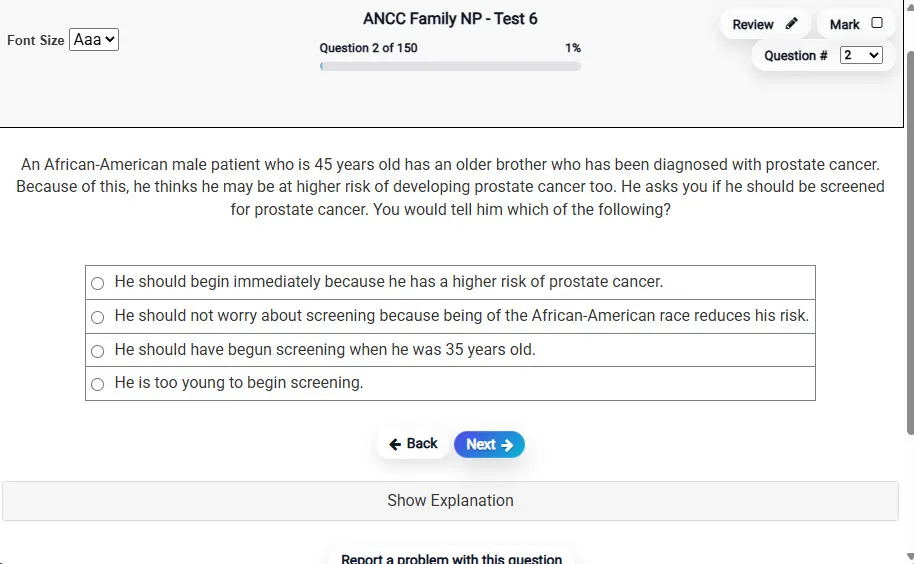
Answering a Question screen – Multiple-choice item view with navigation controls and progress tracker.
Answering a Question Multiple-choice item view with navigation controls and progress tracker.

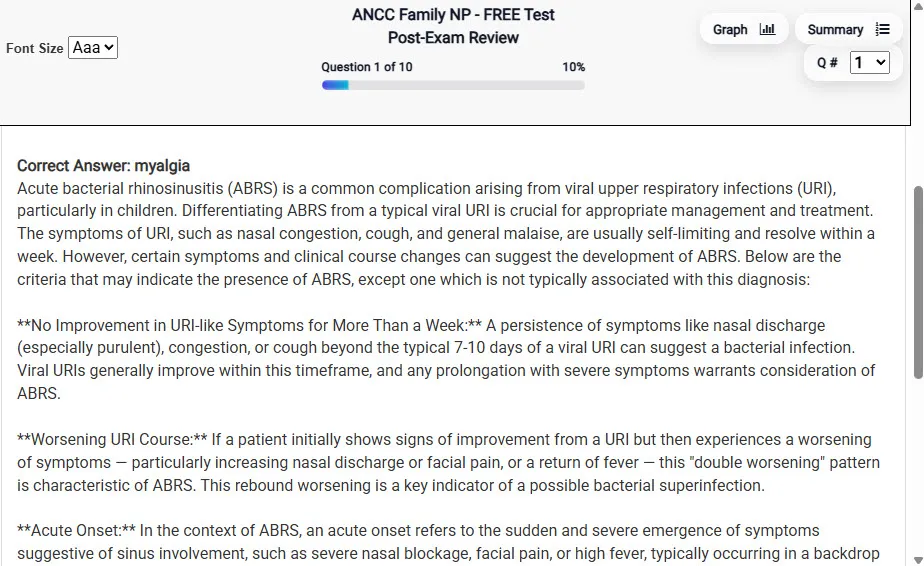
                           Detailed Explanation screen – 
                         Review mode showing chosen answer and rationale and references.
Detailed Explanation Review mode showing chosen answer and rationale and references.

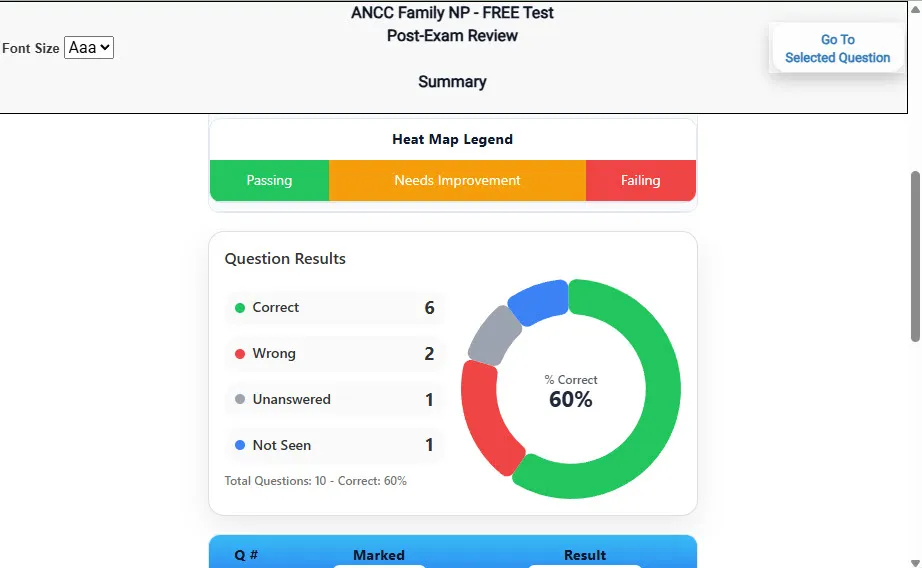
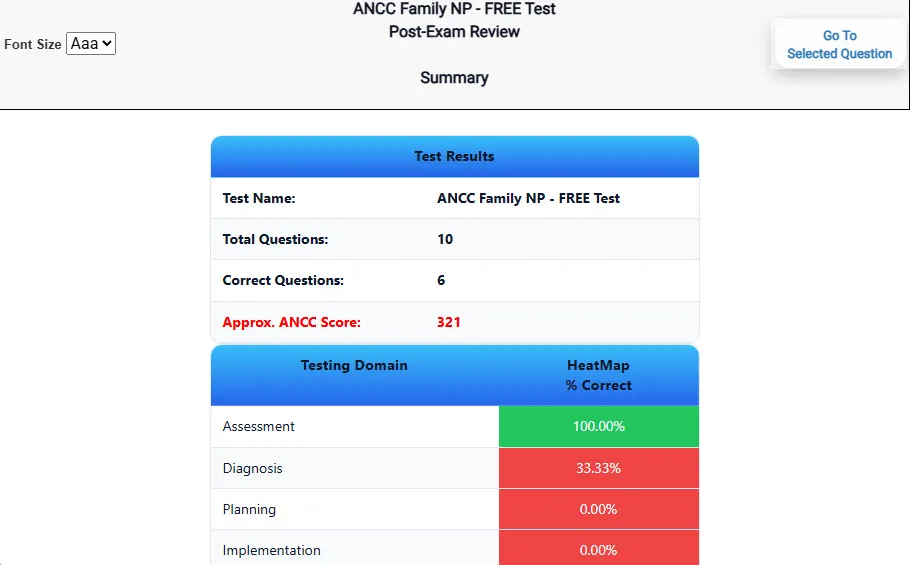
                           Review Summary 1 screen – 
                         Summary with counts for correct/wrong/unanswered and not seen items.
Review Summary 1 Summary with counts for correct/wrong/unanswered and not seen items.

                           Review Summary 2 screen – 
                         Advanced summary with category/domain breakdown and performance insights.
Review Summary 2 Advanced summary with category/domain breakdown and performance insights.

What Each Screen Shows

Answer Question Screen

  • Clean multiple-choice interface with progress bar.
  • Mark for review feature.
  • Matches real test pacing.

Detailed Explanation

  • Correct answer plus rationale.
  • Key concepts and guidelines highlighted.
  • Move between questions to fill knowledge gaps.

Review Summary 1

  • Overall results with total questions and scaled score.
  • Domain heatmap shows strengths and weaknesses.
  • Quick visual feedback on study priorities.

Review Summary 2

  • Chart of correct, wrong, unanswered, not seen.
  • Color-coded results for easy review.
  • Links back to missed items.

Top 10 Reasons to Use Exam Edge for your ONCC Certified Breast Care Nurse Exam Prep

  1. Focused on the ONCC Certified Breast Care Nurse Exam

    Our practice tests are built specifically for the ONCC CBCN exam — every question mirrors the real topics, format, and difficulty so you're studying exactly what matters.

  2. Real Exam Simulation

    We match the per-question time limits and pressure of the actual ONCC exam, so test day feels familiar and stress-free.

  3. 5 Full Practice Tests & 500 Unique Questions

    You'll have more than enough material to master every ONCC CBCN concept — no repeats, no fluff.

  4. Lower Cost Than a Retake

    Ordering 5 practice exams costs less than retaking the ONCC Certified Breast Care Nurse exam after a failure. One low fee could save you both time and money.

  5. Flexible Testing

    Need to step away mid-exam? Pick up right where you left off — with your remaining time intact.

  6. Instant Scoring & Feedback

    See your raw score and an estimated ONCC Certified Breast Care Nurse score immediately after finishing each practice test.

  7. Detailed Explanations for Every Question

    Review correct and incorrect answers with clear, step-by-step explanations so you truly understand each topic.

  8. Trusted & Accredited

    We're fully accredited by the Better Business Bureau and uphold the highest standards of trust and transparency.

  9. Web-Based & Always Available

    No software to install. Access your ONCC CBCN practice exams 24/7 from any computer or mobile device.

  10. Expert Support When You Need It

    Need extra help? Our specialized tutors are highly qualified and ready to support your ONCC exam prep.


Pass the ONCC Certified Breast Care Nurse Exam with Realistic Practice Tests from Exam Edge

Preparing for your upcoming ONCC Certified Breast Care Nurse (CBCN) Certification Exam can feel overwhelming — but the right practice makes all the difference. Exam Edge gives you the tools, structure, and confidence to pass on your first try. Our online practice exams are built to match the real ONCC CBCN exam in content, format, and difficulty.

  • 📝 5 ONCC Certified Breast Care Nurse Practice Tests: Access 5 full-length exams with 100 questions each, covering every major ONCC Certified Breast Care Nurse topic in depth.
  • Instant Online Access: Start practicing right away — no software, no waiting.
  • 🧠 Step-by-Step Explanations: Understand the reasoning behind every correct answer so you can master ONCC CBCN exam concepts.
  • 🔄 Retake Each Exam Up to 4 Times: Build knowledge through repetition and track your improvement over time.
  • 🌐 Web-Based & Available 24/7: Study anywhere, anytime, on any device.
  • 🧘 Boost Your Test-Day Confidence: Familiarity with the ONCC format reduces anxiety and helps you perform under pressure.

These ONCC Certified Breast Care Nurse practice exams are designed to simulate the real testing experience by matching question types, timing, and difficulty level. This approach helps you get comfortable not just with the exam content, but also with the testing environment, so you walk into your exam day focused and confident.


Exam Edge ONCC Reviews


I have taken the CBCN exam twice before and I failed. I purchased your test 2 and I reviewed it over and over again. I'm not a good test taker but your test taught me how to eliminate wrong answers and choose the correct one. Yesterday, I took the CBCN test and I passed!!!! I'm so very happy and doi ...
Read More
Evelyn C. , Harbor City CA


ONCC Certified Breast Care Nurse Aliases Test Name

Here is a list of alternative names used for this exam.

  • ONCC Certified Breast Care Nurse
  • ONCC Certified Breast Care Nurse test
  • ONCC Certified Breast Care Nurse Certification Test
  • ONCC CBCN test
  • ONCC
  • ONCC CBCN
  • CBCN test
  • ONCC Certified Breast Care Nurse (CBCN)
  • Certified Breast Care Nurse certification