This is the content of the pop-over!

Lightning Deal Alert – 12% Off Ends at Midnight!

Strike while the savings are hot! Use promo code FlashSale at checkout for 12% off any Exam Edge test or bundle. Hurry—the clock is ticking!

ONCC AOCNP (AOCNP) Practice Tests & Test Prep by Exam Edge


ONCC Advanced Oncology Certified Nurse Practitioner (AOCNP)  product image
(5.0)
Based on 25 Reviews

  • Real Exam Simulation: Timed questions and matching content build comfort for your ONCC AOCNP test day.
  • Instant, 24/7 Access: Web-based ONCC Advanced Oncology Certified Nurse Practitioner (AOCNP) practice exams with no software needed.
  • Clear Explanations: Step-by-step answers and explanations for your ONCC exam to strengthen understanding.
  • Boosted Confidence: Reduces anxiety and improves test-taking skills to ace your ONCC Advanced Oncology Certified Nurse Practitioner (AOCNP) (AOCNP).

Featured on

ONCC Advanced Oncology Certified Nurse Practitioner (AOCNP) Online Practice Test Bundles

BEST VALUE
5 practice tests

$69.75

$199.75

SAVE $130

Only $13.95 per test!

  • 100% Pass Guarantee
  • 5 online practice tests
  • 100 questions per test
  • Bonus: 100 Flash Cards + Study Guide
  • Instant access
  • Detailed Explanations
  • Practice tests never expire
  • Timed, untimed, or study guide mode
1 practice test

$39.95

  • 1 online practice test
  • 100 questions per test
  • Instant access
  • Detailed Explanations
  • Practice tests never expire
  • Timed, untimed, or study guide mode
Quick Select
Tap to choose a bundle

** All Prices are in US Dollars (USD) **


ONCC AOCNP (AOCNP) Resources

Jump to the section you need most.

Understanding the exact breakdown of the ONCC Advanced Oncology Certified Nurse Practitioner (AOCNP) test will help you know what to expect and how to most effectively prepare. The ONCC Advanced Oncology Certified Nurse Practitioner (AOCNP) has multiple-choice questions . The exam will be broken down into the sections below:

ONCC Advanced Oncology Certified Nurse Practitioner (AOCNP) Exam Blueprint
Domain Name % Number of
Questions
Cancer Continuum 35% 35
Cancer Treatment and Supportive Care 45% 45
Oncologic Emergencies 10% 10
Psychosocial Issues 5% 5
Professional Practice and Roles of the APRN 5% 5

ONCC Advanced Oncology Certified Nurse Practitioner (AOCNP) Study Tips by Domain

  • For risk assessment, treat early-onset cancer in a first-degree relative (often <50) as a red flag that triggers genetics referral rather than “routine screening.”
  • When evaluating symptoms, persistent unexplained weight loss, night sweats, or progressive fatigue is a priority cue to expedite diagnostic workup instead of repeating “watchful waiting.”
  • Before ordering tumor markers, use the rule that markers are rarely diagnostic alone; a common trap is using PSA/CA-125/CEA to “screen” average-risk patients.
  • In staging, confirm whether imaging is needed before biopsy or surgery; a contraindication is delaying definitive biopsy for low-yield tests when tissue diagnosis will change management.
  • During survivorship planning, treat any new focal bone pain, neurologic deficit, or cough lasting >3 weeks as a recurrence red flag requiring prompt evaluation.
  • For end-of-life transitions, use the threshold of declining performance status and escalating symptom burden to trigger goals-of-care discussions early (trap: waiting until the last hospitalization).
  • Before chemotherapy, verify baseline organ function and cumulative dose limits; a priority rule is to hold or modify therapy when ANC/platelets or creatinine clearance fall below protocol thresholds.
  • With immunotherapy, new diarrhea, cough, or fatigue is a red flag for immune-related adverse events; a common trap is treating with antibiotics only and delaying steroids/workup.
  • For antiemetics, treat high-emetogenic regimens with scheduled triple therapy (5-HT3 + dexamethasone + NK1); a common trap is PRN-only dosing leading to breakthrough nausea.
  • In cancer pain, escalating opioid needs with new localized pain is a red flag for pathologic fracture or progression; priority cue is to reassess etiology rather than simply increasing the dose.
  • For neutropenia prophylaxis, use the threshold of FN risk (e.g., ≥20% per regimen or significant patient risk factors) to justify G-CSF; contraindication is routine use when risk is low.
  • When managing oral agents, missed doses and drug–drug interactions are common traps; a practical cue is to reconcile OTC/herbals (e.g., St. John’s wort) before starting therapy.
  • Febrile neutropenia is time-critical: fever with ANC <500 is a red flag requiring broad-spectrum antibiotics within 60 minutes (trap: waiting for cultures/imaging first).
  • Suspect spinal cord compression with new back pain plus weakness, sensory change, or bladder/bowel dysfunction; priority rule is immediate steroids and urgent MRI rather than outpatient referral.
  • Tumor lysis syndrome risk is high with bulky, chemosensitive disease; threshold cues include rising uric acid/phosphate or creatinine—start aggressive hydration and prophylaxis early (trap: reacting after AKI).
  • Hypercalcemia of malignancy red flags include confusion, constipation, and dehydration; priority is IV fluids first, with antiresorptives next (contraindication: relying on diuretics before rehydration).
  • Superior vena cava syndrome presents with facial/neck swelling and dyspnea; a practical cue is to avoid placing upper-extremity PICCs and expedite imaging/oncology intervention.
  • Malignant pericardial effusion/tamponade clues include hypotension, tachycardia, and dyspnea with elevated JVP; priority rule is emergent echocardiography and drainage, not additional opioids alone.
  • Screen routinely for depression/anxiety; a red flag is passive or active suicidal ideation, which requires same-day safety assessment rather than “follow-up next visit.”
  • Assess distress and coping at key transitions (diagnosis, progression, survivorship); a common trap is assuming “doing fine” without a validated distress tool or direct questions.
  • For cognitive changes (“chemo brain”), new focal deficits or rapid decline is a red flag that triggers neurologic evaluation rather than reassurance alone.
  • Address caregiver burden; a practical threshold is caregiver sleep disruption, missed work, or medication errors—prioritize respite resources before adherence deteriorates.
  • Discuss sexuality and fertility early; a contraindication is starting gonadotoxic therapy without documenting counseling or referral when preservation is time-sensitive.
  • Evaluate social determinants (transport, food, housing); a priority cue is repeated missed appointments, which should trigger navigation/social work rather than labeling as “noncompliance.”
  • Practice within scope and institutional policy; a red flag is prescribing/ordering outside collaborative agreements or state regulations—verify before acting.
  • Use evidence-based guidelines but document rationale when deviating; a common trap is copying prior plans without confirming current performance status and goals of care.
  • Ensure safe transitions of care; a priority rule is medication reconciliation at every handoff, especially oral oncolytics and anticoagulants, to prevent duplication or omission.
  • Informed consent is ongoing; a contraindication is initiating high-risk therapy without confirming patient understanding of major toxicities and alternatives in their preferred language.
  • Report and learn from adverse events; a practical cue is near-miss chemotherapy dosing discrepancies—escalate through safety channels rather than “fixing quietly.”
  • Maintain professional resilience; a red flag is persistent compassion fatigue or impaired functioning—priority is to seek support/supervision before patient care quality declines.


Built to Fit Into Your Busy Life

Everything you need to prepare with confidence—without wasting a minute.

Three Study Modes

Timed, No Time Limit, or Explanation mode.

Actionable Analytics

Heatmaps and scaled scores highlight weak areas.

High-Yield Rationales

Concise explanations emphasize key concepts.

Realistic Interface

Matches the feel of the actual exam environment.

Accessible by Design

Clean layout reduces cognitive load.

Anytime, Anywhere

Web-based access 24/7 on any device.
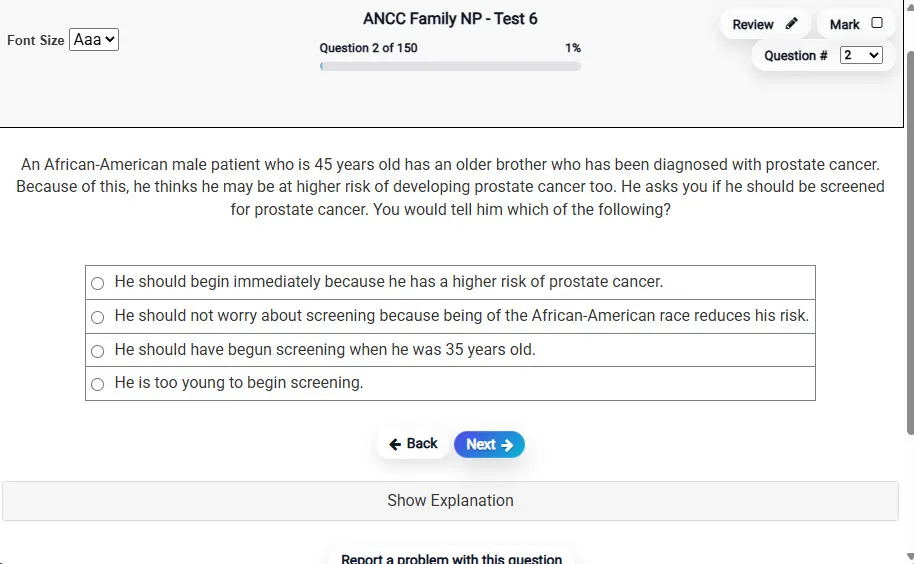
Answering a Question screen – Multiple-choice item view with navigation controls and progress tracker.
Answering a Question Multiple-choice item view with navigation controls and progress tracker.

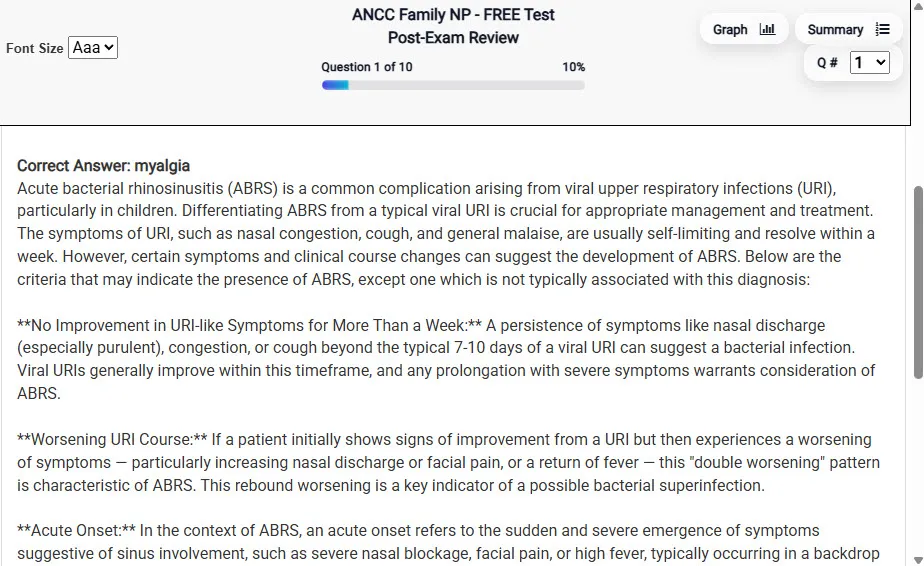
                           Detailed Explanation screen – 
                         Review mode showing chosen answer and rationale and references.
Detailed Explanation Review mode showing chosen answer and rationale and references.

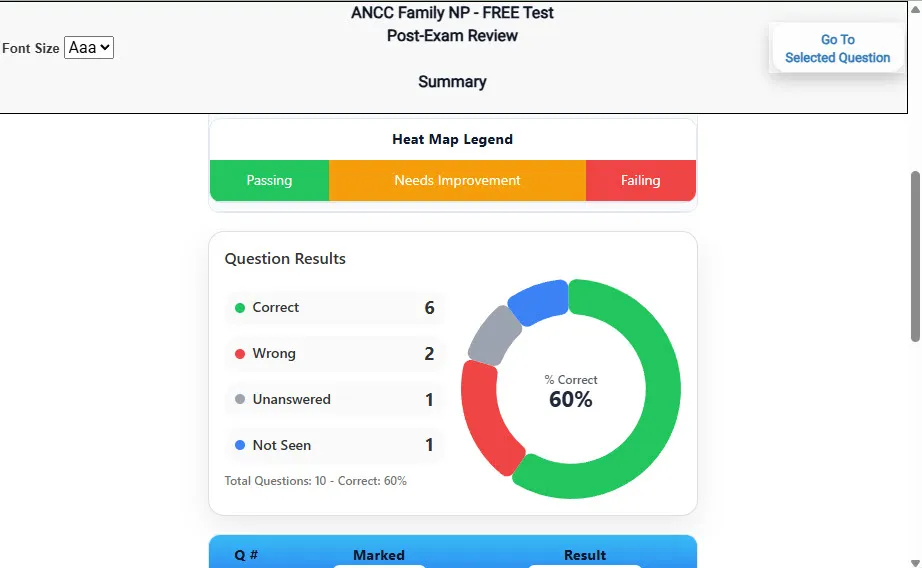
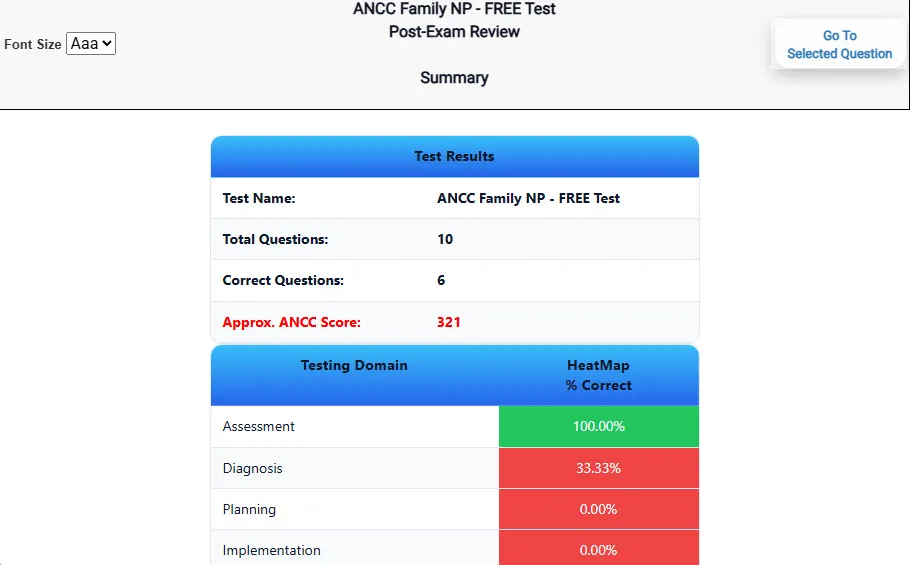
                           Review Summary 1 screen – 
                         Summary with counts for correct/wrong/unanswered and not seen items.
Review Summary 1 Summary with counts for correct/wrong/unanswered and not seen items.

                           Review Summary 2 screen – 
                         Advanced summary with category/domain breakdown and performance insights.
Review Summary 2 Advanced summary with category/domain breakdown and performance insights.

What Each Screen Shows

Answer Question Screen

  • Clean multiple-choice interface with progress bar.
  • Mark for review feature.
  • Matches real test pacing.

Detailed Explanation

  • Correct answer plus rationale.
  • Key concepts and guidelines highlighted.
  • Move between questions to fill knowledge gaps.

Review Summary 1

  • Overall results with total questions and scaled score.
  • Domain heatmap shows strengths and weaknesses.
  • Quick visual feedback on study priorities.

Review Summary 2

  • Chart of correct, wrong, unanswered, not seen.
  • Color-coded results for easy review.
  • Links back to missed items.

Top 10 Reasons to Use Exam Edge for your ONCC Advanced Oncology Certified Nurse Practitioner (AOCNP) Exam Prep

  1. Focused on the ONCC Advanced Oncology Certified Nurse Practitioner (AOCNP) Exam

    Our practice tests are built specifically for the ONCC AOCNP exam — every question mirrors the real topics, format, and difficulty so you're studying exactly what matters.

  2. Real Exam Simulation

    We match the per-question time limits and pressure of the actual ONCC exam, so test day feels familiar and stress-free.

  3. 5 Full Practice Tests & 500 Unique Questions

    You'll have more than enough material to master every ONCC AOCNP concept — no repeats, no fluff.

  4. Lower Cost Than a Retake

    Ordering 5 practice exams costs less than retaking the ONCC Advanced Oncology Certified Nurse Practitioner (AOCNP) exam after a failure. One low fee could save you both time and money.

  5. Flexible Testing

    Need to step away mid-exam? Pick up right where you left off — with your remaining time intact.

  6. Instant Scoring & Feedback

    See your raw score and an estimated ONCC Advanced Oncology Certified Nurse Practitioner (AOCNP) score immediately after finishing each practice test.

  7. Detailed Explanations for Every Question

    Review correct and incorrect answers with clear, step-by-step explanations so you truly understand each topic.

  8. Trusted & Accredited

    We're fully accredited by the Better Business Bureau and uphold the highest standards of trust and transparency.

  9. Web-Based & Always Available

    No software to install. Access your ONCC AOCNP practice exams 24/7 from any computer or mobile device.

  10. Expert Support When You Need It

    Need extra help? Our specialized tutors are highly qualified and ready to support your ONCC exam prep.


Pass the ONCC Advanced Oncology Certified Nurse Practitioner (AOCNP) Exam with Realistic Practice Tests from Exam Edge

Preparing for your upcoming ONCC Advanced Oncology Certified Nurse Practitioner (AOCNP) (AOCNP) Certification Exam can feel overwhelming — but the right practice makes all the difference. Exam Edge gives you the tools, structure, and confidence to pass on your first try. Our online practice exams are built to match the real ONCC AOCNP exam in content, format, and difficulty.

  • 📝 5 ONCC Advanced Oncology Certified Nurse Practitioner (AOCNP) Practice Tests: Access 5 full-length exams with 100 questions each, covering every major ONCC Advanced Oncology Certified Nurse Practitioner (AOCNP) topic in depth.
  • Instant Online Access: Start practicing right away — no software, no waiting.
  • 🧠 Step-by-Step Explanations: Understand the reasoning behind every correct answer so you can master ONCC AOCNP exam concepts.
  • 🔄 Retake Each Exam Up to 4 Times: Build knowledge through repetition and track your improvement over time.
  • 🌐 Web-Based & Available 24/7: Study anywhere, anytime, on any device.
  • 🧘 Boost Your Test-Day Confidence: Familiarity with the ONCC format reduces anxiety and helps you perform under pressure.

These ONCC Advanced Oncology Certified Nurse Practitioner (AOCNP) practice exams are designed to simulate the real testing experience by matching question types, timing, and difficulty level. This approach helps you get comfortable not just with the exam content, but also with the testing environment, so you walk into your exam day focused and confident.


Exam Edge ONCC Reviews


I have taken the CBCN exam twice before and I failed. I purchased your test 2 and I reviewed it over and over again. I'm not a good test taker but your test taught me how to eliminate wrong answers and choose the correct one. Yesterday, I took the CBCN test and I passed!!!! I'm so very happy and doi ...
Read More
Evelyn C. , Harbor City CA


ONCC Advanced Oncology Certified Nurse Practitioner (AOCNP) Aliases Test Name

Here is a list of alternative names used for this exam.

  • ONCC Advanced Oncology Certified Nurse Practitioner (AOCNP)
  • ONCC Advanced Oncology Certified Nurse Practitioner (AOCNP) test
  • ONCC Advanced Oncology Certified Nurse Practitioner (AOCNP) Certification Test
  • ONCC AOCNP test
  • ONCC
  • ONCC AOCNP
  • AOCNP test
  • ONCC Advanced Oncology Certified Nurse Practitioner (AOCNP) (AOCNP)
  • Advanced Oncology Certified Nurse Practitioner (AOCNP) certification