This is the content of the pop-over!

OAE Technology Education (046/47) Practice Tests & Test Prep by Exam Edge


OAE Technology Education   product image
(5.0)
Based on 25 Reviews

  • Real Exam Simulation: Timed questions and matching content build comfort for your OAE Technology Education test day.
  • Instant, 24/7 Access: Web-based OAE Technology Education practice exams with no software needed.
  • Clear Explanations: Step-by-step answers and explanations for your OAE exam to strengthen understanding.
  • Boosted Confidence: Reduces anxiety and improves test-taking skills to ace your OAE Technology Education (046/47).

Featured on

OAE Technology Education Online Practice Test Bundles

BEST VALUE
10 practice tests

$99.50

$399.50

SAVE $300

Only $9.95 per test!

  • 100% Pass Guarantee
  • 10 online practice tests
  • 120 questions per test
  • Bonus: 100 Flash Cards + Study Guide
  • Instant access
  • Detailed Explanations
  • Practice tests never expire
  • Timed, untimed, or study guide mode
5 practice tests

$69.75

$199.75

SAVE $130

Only $13.95 per test!

  • 5 online practice tests
  • 120 questions per test
  • Bonus: 100 Flash Cards + Study Guide
  • Instant access
  • Detailed Explanations
  • Practice tests never expire
  • Timed, untimed, or study guide mode
1 practice test

$39.95

  • 1 online practice test
  • 120 questions per test
  • Instant access
  • Detailed Explanations
  • Practice tests never expire
  • Timed, untimed, or study guide mode
Quick Select
Tap to choose a bundle

** All Prices are in US Dollars (USD) **


OAE Technology Education (046/47) Resources

Jump to the section you need most.

Understanding the exact breakdown of the OAE Technology Education test will help you know what to expect and how to most effectively prepare. The OAE Technology Education has 120 multiple-choice questions . The exam will be broken down into the sections below:

OAE Technology Education Exam Blueprint
Domain Name % Number of
Questions
Subtest I  
     Nature of Technology 100% 60
Subtest II  
     The Designed World: Power - Energy Transportation 33% 20
     The Designed World: Information and Communication 33% 20
     The Designed World: Manufacturing and Construction 34% 20

OAE Technology Education Study Tips by Domain

  • Know how “technology” differs from science (human-made systems to solve problems) and be ready to classify examples—red flag: calling a natural process (e.g., erosion) a technology.
  • Apply the engineering design process (define criteria/constraints, brainstorm, prototype, test, iterate) and justify trade-offs—common trap: choosing a solution that meets criteria but violates a stated constraint (cost, safety, time).
  • Interpret simple technical drawings and measurement conventions (scale, dimensioning, tolerances, units) and check for reasonableness—priority rule: always verify units and scale before calculating.
  • Use basic electricity/electronics fundamentals (series vs. parallel behavior, Ohm’s law relationships) to predict outcomes—red flag: assuming current stays the same in a parallel circuit branch without considering resistance.
  • Analyze materials and processes at a high level (properties, selection rationale, and impacts) aligned to a design need—common trap: picking a material for strength while ignoring corrosion/heat or required manufacturing method.
  • Address safety, ethics, and legal responsibilities in labs/shops (PPE, machine guarding, supervision, and appropriate tool use)—contraindication: operating equipment with missing guards or bypassed safety interlocks.
  • Distinguish technology from science: technology applies knowledge to solve human problems under constraints; red flag—answer choices that treat technology as only “computers” or only “applied science.”
  • Use a design process (define problem, criteria/constraints, generate ideas, prototype, test, iterate, communicate) and prioritize criteria vs. constraints; common trap—skipping evaluation/iteration after testing.
  • Analyze systems with inputs, processes, outputs, and feedback/control; cue—if a scenario mentions sensors or user data, it’s likely feedback controlling system behavior.
  • Apply trade-off thinking (cost, safety, performance, sustainability, ethics) and document decisions; red flag—solutions that optimize one factor while violating a stated constraint (e.g., budget or safety code).
  • Evaluate impacts of technology on society and the environment (intended vs. unintended consequences, equity, privacy, risk); priority rule—OAE-style items often expect you to choose the option that reduces harm while meeting requirements.
  • Interpret and communicate technical information using appropriate representations (sketches, diagrams, models, specs) with correct units/tolerances; common trap—mixing units or ignoring tolerance/precision stated in the problem.
  • Be ready to interpret blueprints/schematics and technical drawings across contexts; red flag: mixing up symbol conventions (e.g., electrical vs. fluid power) or ignoring title block scale and revisions.
  • Apply core safety and lab-management practices (PPE, machine guarding, lockout/tagout, ventilation) to student activities; common trap: treating safety as “rules only” instead of hazard analysis and supervision ratios.
  • Use the engineering design process to justify decisions with criteria/constraints and evidence; priority rule: document iterations and testing data because “best idea” without measured results is weak.
  • Analyze systems with inputs–process–outputs, feedback, and control (including automation/robotics basics); red flag: overlooking failure modes (sensor error, tolerance stack-up) that change system behavior.
  • Evaluate materials, tools, and processes for manufacturing/construction choices; common trap: selecting materials by cost alone while missing properties like tensile strength, thermal expansion, corrosion, and joinery compatibility.
  • Address technology impacts, ethics, and sustainability in instructional decisions; threshold cue: when student data is collected (accounts, devices, cloud tools), privacy/acceptable-use compliance and equity of access become non-negotiable.
  • Differentiate energy forms and conversions (chemical, electrical, mechanical, thermal) and track where losses occur—red flag: claiming a system can be 100% efficient or ignoring waste heat.
  • Apply basic electrical power relationships (P = VI, V = IR) and interpret series vs. parallel effects on current and voltage—common trap: mixing up where voltage drops occur or assuming current is the same in parallel branches.
  • Compare power generation methods (fossil, nuclear, hydro, wind, solar) using trade-offs in efficiency, reliability, cost, and environmental impact—priority rule: always connect a technology choice to a stated constraint (e.g., load demand, emissions limits, site conditions).
  • Explain energy transmission and distribution basics (transformers, high-voltage lines, grid load balancing) and why voltage is stepped up for long-distance transfer—red flag: stating transformers work on DC without special electronics.
  • Analyze transportation systems in terms of energy source, propulsion, and infrastructure (ICE, hybrid, EV, rail, aviation) and relate them to efficiency and emissions—common trap: treating “range” or “fuel economy” as independent of payload, speed, and duty cycle.
  • Integrate safety and compliance practices for power and transportation labs (lockout/tagout, grounding, proper PPE, ventilation for combustion) —contraindication: bypassing interlocks or operating high-current circuits without overcurrent protection.
  • Differentiate data, information, and knowledge in a communication system; red flag: treating “more data” as automatically improving decision-making without considering relevance and accuracy.
  • Explain analog vs. digital signals, sampling, and quantization; common trap: ignoring the Nyquist rule and assuming a low sample rate won’t cause aliasing.
  • Compare network types and topologies (LAN/WAN, star/bus/ring/mesh) and their trade-offs; priority rule: identify single points of failure and plan redundancy in critical nodes.
  • Identify core networking hardware and roles (router, switch, modem, access point, firewall); red flag: confusing a switch with a router and misplacing where NAT or routing decisions occur.
  • Apply basic cybersecurity principles (CIA triad, authentication vs. authorization, encryption, backups); contraindication: storing sensitive student or client data unencrypted or without a recovery plan.
  • Use a structured troubleshooting process for information/communication systems; common trap: changing multiple variables at once instead of isolating the fault and documenting the fix.
  • Match manufacturing processes to material behavior (e.g., casting vs. machining vs. additive) — red flag: choosing a process that ignores tolerance, surface finish, or production volume requirements.
  • Use accurate measurement and quality control tools (calipers, micrometers, gauges, SPC concepts) — common trap: mixing up precision vs. accuracy or skipping calibration/zeroing before measuring.
  • Select appropriate joining methods (welding, fastening, adhesives) based on load, environment, and serviceability — priority rule: if disassembly/maintenance is required, avoid permanent joining unless explicitly justified.
  • Interpret construction drawings and specifications (orthographic views, sections, symbols, dimensioning) — red flag: building from a sketch without checking scale, tolerances, or code-required notes.
  • Apply construction systems knowledge (foundations, framing, roofing, envelope, MEP coordination) — common trap: overlooking moisture control/air sealing details that drive durability and indoor air quality.
  • Embed safety and compliance in shop and jobsite practices (PPE, guarding, lockout/tagout, ventilation, material handling) — contraindication: operating tools or welding/cutting without verifying guards, fume control, and fire watch requirements.


Built to Fit Into Your Busy Life

Everything you need to prepare with confidence—without wasting a minute.

Three Study Modes

Timed, No Time Limit, or Explanation mode.

Actionable Analytics

Heatmaps and scaled scores highlight weak areas.

High-Yield Rationales

Concise explanations emphasize key concepts.

Realistic Interface

Matches the feel of the actual exam environment.

Accessible by Design

Clean layout reduces cognitive load.

Anytime, Anywhere

Web-based access 24/7 on any device.
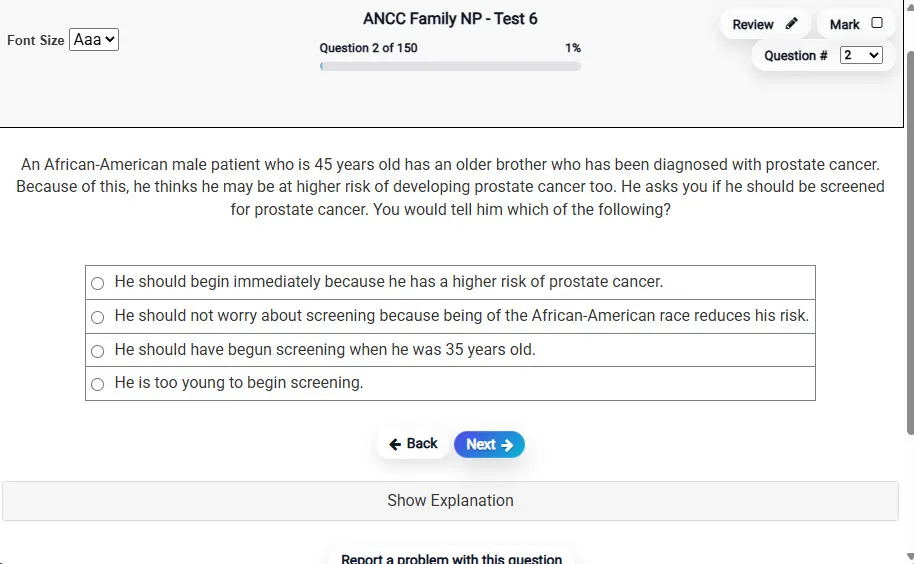
Answering a Question screen – Multiple-choice item view with navigation controls and progress tracker.
Answering a Question Multiple-choice item view with navigation controls and progress tracker.

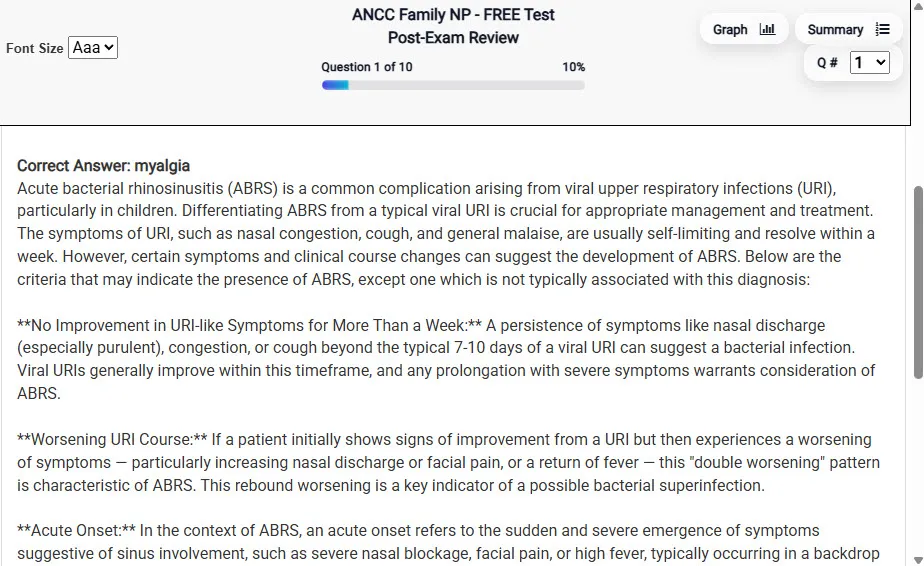
                           Detailed Explanation screen – 
                         Review mode showing chosen answer and rationale and references.
Detailed Explanation Review mode showing chosen answer and rationale and references.

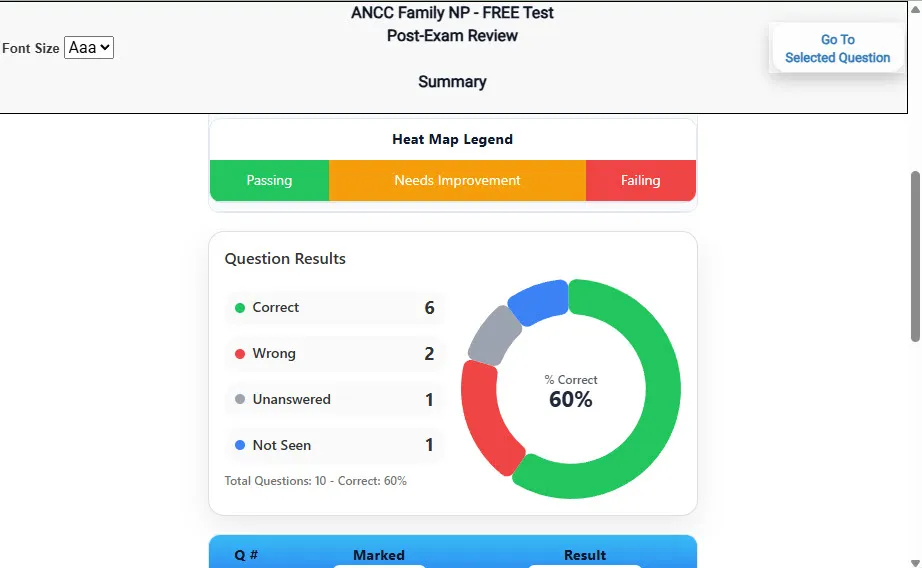
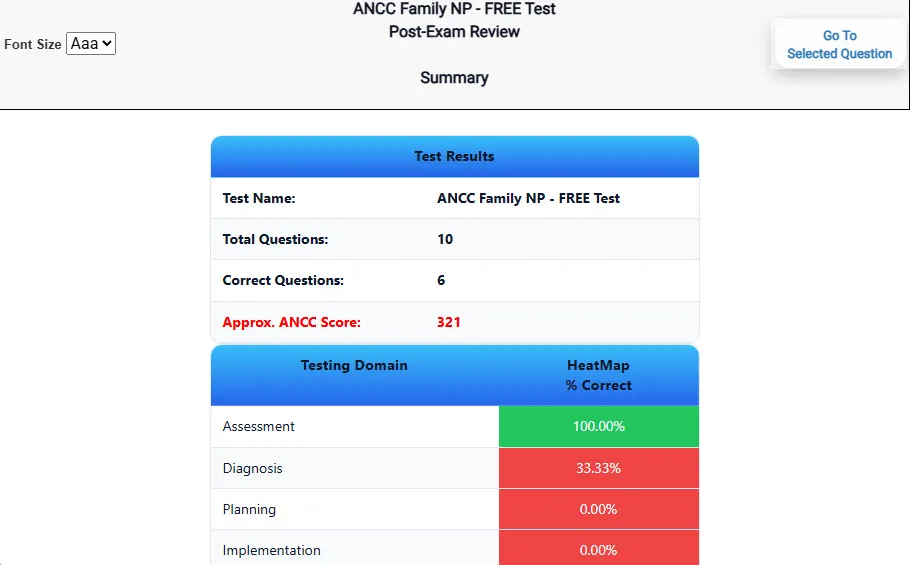
                           Review Summary 1 screen – 
                         Summary with counts for correct/wrong/unanswered and not seen items.
Review Summary 1 Summary with counts for correct/wrong/unanswered and not seen items.

                           Review Summary 2 screen – 
                         Advanced summary with category/domain breakdown and performance insights.
Review Summary 2 Advanced summary with category/domain breakdown and performance insights.

What Each Screen Shows

Answer Question Screen

  • Clean multiple-choice interface with progress bar.
  • Mark for review feature.
  • Matches real test pacing.

Detailed Explanation

  • Correct answer plus rationale.
  • Key concepts and guidelines highlighted.
  • Move between questions to fill knowledge gaps.

Review Summary 1

  • Overall results with total questions and scaled score.
  • Domain heatmap shows strengths and weaknesses.
  • Quick visual feedback on study priorities.

Review Summary 2

  • Chart of correct, wrong, unanswered, not seen.
  • Color-coded results for easy review.
  • Links back to missed items.

Top 10 Reasons to Use Exam Edge for your OAE Technology Education Exam Prep

  1. Focused on the OAE Technology Education Exam

    Our practice tests are built specifically for the OAE Technology Education exam — every question mirrors the real topics, format, and difficulty so you're studying exactly what matters.

  2. Real Exam Simulation

    We match the per-question time limits and pressure of the actual OAE exam, so test day feels familiar and stress-free.

  3. 10 Full Practice Tests & 1,200 Unique Questions

    You'll have more than enough material to master every OAE Technology Education concept — no repeats, no fluff.

  4. Lower Cost Than a Retake

    Ordering 5 practice exams costs less than retaking the OAE Technology Education exam after a failure. One low fee could save you both time and money.

  5. Flexible Testing

    Need to step away mid-exam? Pick up right where you left off — with your remaining time intact.

  6. Instant Scoring & Feedback

    See your raw score and an estimated OAE Technology Education score immediately after finishing each practice test.

  7. Detailed Explanations for Every Question

    Review correct and incorrect answers with clear, step-by-step explanations so you truly understand each topic.

  8. Trusted & Accredited

    We're fully accredited by the Better Business Bureau and uphold the highest standards of trust and transparency.

  9. Web-Based & Always Available

    No software to install. Access your OAE Technology Education practice exams 24/7 from any computer or mobile device.

  10. Expert Support When You Need It

    Need extra help? Our specialized tutors are highly qualified and ready to support your OAE exam prep.


Pass the OAE Technology Education Exam with Realistic Practice Tests from Exam Edge

Preparing for your upcoming OAE Technology Education (046/47) Certification Exam can feel overwhelming — but the right practice makes all the difference. Exam Edge gives you the tools, structure, and confidence to pass on your first try. Our online practice exams are built to match the real OAE Technology Education exam in content, format, and difficulty.

  • 📝 10 OAE Technology Education Practice Tests: Access 10 full-length exams with 120 questions each, covering every major OAE Technology Education topic in depth.
  • Instant Online Access: Start practicing right away — no software, no waiting.
  • 🧠 Step-by-Step Explanations: Understand the reasoning behind every correct answer so you can master OAE Technology Education exam concepts.
  • 🔄 Retake Each Exam Up to 4 Times: Build knowledge through repetition and track your improvement over time.
  • 🌐 Web-Based & Available 24/7: Study anywhere, anytime, on any device.
  • 🧘 Boost Your Test-Day Confidence: Familiarity with the OAE format reduces anxiety and helps you perform under pressure.

These OAE Technology Education practice exams are designed to simulate the real testing experience by matching question types, timing, and difficulty level. This approach helps you get comfortable not just with the exam content, but also with the testing environment, so you walk into your exam day focused and confident.


Exam Edge OAE Reviews


Today, I took my test and passed with confidence. I took it the first time and failed, but after purchasing this study guide, I was provided with resources that allowed me to take the test and get through it without being nervous. A lot of the questions that were provided in this study guide were si ...
Read More
Stephanie , Ohio

Studied a practice test everyday, and passed my test!

Gracyn, Clinton, Ohio

Great program to study from. Audio and images REALLY boosted my understanding of subjects.

Cherish , NEWARK, OH


OAE Technology Education Aliases Test Name

Here is a list of alternative names used for this exam.

  • OAE Technology Education
  • OAE Technology Education test
  • OAE Technology Education Certification Test
  • OAE
  • OAE 046/47
  • 046/47 test
  • OAE Technology Education (046/47)
  • Technology Education certification