This is the content of the pop-over!

OAE Reading (038/039) Practice Tests & Test Prep by Exam Edge


OAE Reading (Subtests I & II)  product image
(5.0)
Based on 40 Reviews

  • Real Exam Simulation: Timed questions and matching content build comfort for your OAE Reading test day.
  • Instant, 24/7 Access: Web-based OAE Reading (Subtests I & II) practice exams with no software needed.
  • Clear Explanations: Step-by-step answers and explanations for your OAE exam to strengthen understanding.
  • Boosted Confidence: Reduces anxiety and improves test-taking skills to ace your OAE Reading (Subtests I & II) (038/039).

Featured on

OAE Reading (Subtests I & II) Online Practice Test Bundles

BEST VALUE
15 practice tests

$149.25

$599.25

SAVE $450

Only $9.95 per test!

  • 100% Pass Guarantee
  • 15 online practice tests
  • 98 questions + 2 essays per test
  • Bonus: 100 Flash Cards + Study Guide
  • Instant access
  • Detailed Explanations
  • Practice tests never expire
  • Timed, untimed, or study guide mode
MOST POPULAR
10 practice tests

$99.50

$399.50

SAVE $300

Only $9.95 per test!

  • 10 online practice tests
  • 98 questions + 2 essays per test
  • Bonus: 100 Flash Cards + Study Guide
  • Instant access
  • Detailed Explanations
  • Practice tests never expire
  • Timed, untimed, or study guide mode
5 practice tests

$69.75

$199.75

SAVE $130

Only $13.95 per test!

  • 5 online practice tests
  • 98 questions + 2 essays per test
  • Bonus: 100 Flash Cards
  • Instant access
  • Detailed Explanations
  • Practice tests never expire
  • Timed, untimed, or study guide mode
1 practice test

$39.95

  • 1 online practice test
  • 98 questions + 2 essays per test
  • Instant access
  • Detailed Explanations
  • Practice tests never expire
  • Timed, untimed, or study guide mode
Quick Select
Tap to choose a bundle

** All Prices are in US Dollars (USD) **


OAE Reading (038/039) Resources

Jump to the section you need most.

Understanding the exact breakdown of the OAE Reading (Subtests I & II) test will help you know what to expect and how to most effectively prepare. The OAE Reading (Subtests I & II) has 120 multiple-choice questions and 4 essay questions. The exam will be broken down into the sections below:

OAE Reading (Subtests I & II) Exam Blueprint
Domain Name % Number of
Questions
Field 038: Reading Subtest I  
     Reading Assessment 34% 20
     Foundations of Reading Development 32% 19
     Reading Development 34% 20
Field 039: Reading Subtest II  
     Comprehension 34% 20
     Reading and Literature 24% 14
     Reading Across the Curriculum 42% 25

OAE Reading (Subtests I & II) Study Tips by Domain

  • Know the subtest focus: foundational concepts that support instruction and assessment of reading in P–12; red flag—answering with literature-analysis strategies when the question is really about skills/structures of reading.
  • Apply scientifically based reading research (e.g., phonological awareness → phonics → fluency → vocabulary → comprehension) and pick the earliest missing link; common trap—jumping to comprehension interventions when decoding is weak.
  • Use phonological/phonemic awareness precision (segment, blend, delete, substitute) and attend to task difficulty; priority rule—manipulation tasks are harder than blending and often explain errors.
  • Demonstrate phonics/word analysis knowledge (grapheme–phoneme correspondences, syllable types, morphology) and select instruction that matches the pattern; red flag—choosing a sight-word strategy for a systematic decoding deficit.
  • Interpret informal assessment data (running records, error analysis, phonics inventories, fluency timings) to choose next instruction; common trap—using a single score without checking accuracy vs. rate vs. comprehension.
  • Align instruction for diverse learners (ELLs, dyslexia risk, struggling readers) with explicit, systematic, cumulative teaching; contraindication—relying on three-cueing/context-guessing when the item signals decoding/orthographic mapping.
  • Use multiple measures (screeners, diagnostic assessments, progress monitoring, outcome tests) and match purpose to tool—red flag: treating one benchmark score as a full diagnosis.
  • Interpret data with basic technical quality in mind (validity, reliability, standard error of measurement)—common trap: over-interpreting small score changes that fall within the SEM.
  • Apply decision rules consistently (cut scores, percentile ranks, performance levels) and document them—priority rule: don’t adjust cut scores ad hoc to “fit” a student you know.
  • Analyze error patterns (miscues, phonics/decoding errors, fluency breakdowns, comprehension question types) to target instruction—red flag: reteaching everything when errors cluster in one subskill (e.g., vowel teams).
  • Progress-monitor at an appropriate frequency and change instruction when the trend line misses the goal line—common trap: waiting until the end-of-term test to respond to inadequate growth.
  • Ensure fair assessment practices (accommodations vs. modifications, language/cultural considerations) and preserve construct validity—contraindication: providing an accommodation that changes what the test is measuring (e.g., reading aloud a reading comprehension test when decoding is part of the construct).
  • Use the “simple view of reading” as a priority rule: weak comprehension can come from decoding deficits, language-comprehension deficits, or both—don’t assume fluency alone fixes meaning-making.
  • Track phonological awareness development from larger to smaller units (word → syllable → onset-rime → phoneme); red flag: students who can rhyme but cannot blend/segment phonemes need explicit phoneme-level work.
  • Phonics instruction should be systematic and cumulative (sound–symbol correspondences, blending, and spelling patterns); common trap: teaching letter names as a substitute for teaching phoneme-grapheme mappings.
  • Separate fluency components—accuracy, rate, and prosody—and use accuracy as a threshold; red flag: pushing speed when accuracy is low can entrench miscues and reduce comprehension.
  • Build vocabulary through both breadth and depth (multiple meanings, morphology, and word relationships); priority cue: teach high-utility academic/morphological elements (e.g., prefixes/suffixes) rather than isolated low-frequency words.
  • Support comprehension development with oral language foundations (syntax, discourse, background knowledge, and strategies); contraindication: heavy strategy instruction without knowledge-building often yields “strategy use” but no measurable comprehension gains.
  • Sequence reading growth realistically (emergent → early → transitional → fluent) and expect decoding to lead comprehension in many learners; red flag: assuming strong oral vocabulary automatically means accurate word reading.
  • Prioritize explicit, systematic phonics when students struggle with word recognition; common trap: assigning more independent reading time instead of targeted decoding instruction for persistent errors.
  • Build automaticity through repeated reading and guided practice, but monitor accuracy first; threshold cue: if oral reading accuracy is below ~95% on grade-level text, shift to easier text and skill work rather than speed drills.
  • Strengthen vocabulary and morphology (roots, prefixes, suffixes) as texts become more complex; red flag: teaching long word lists without multiple exposures, student-friendly definitions, and meaningful use.
  • Develop comprehension strategies (predict, question, summarize, infer) alongside knowledge building; priority rule: address background knowledge gaps before blaming a student’s “strategy use” for poor understanding.
  • Differentiate for English learners, students with dyslexia risk, and varied dialects by separating language proficiency from decoding skill; common trap: treating accent or dialect features as reading errors during oral reading analysis.
  • Expect applied analysis of readers, texts, and tasks using evidence from a passage or vignette; common trap: answering from personal preference instead of what the data/text explicitly supports.
  • Use assessment results (e.g., running records, miscues, comprehension checks) to choose targeted next steps; red flag: selecting an intervention that doesn’t match the identified need (skill vs. strategy vs. knowledge).
  • Match comprehension instruction to text structure and purpose (narrative vs. informational, compare/contrast, cause/effect); priority rule: teach the structure before expecting students to summarize or infer effectively.
  • Plan vocabulary instruction with tiered focus and context/morphology support; common trap: relying on dictionary definitions alone rather than using context clues plus meaningful student use.
  • Address fluency (accuracy, rate, prosody) as a bridge to comprehension, especially with grade-level texts; red flag: pushing speed drills when accuracy or phrasing is the real constraint.
  • Integrate reading and writing to deepen understanding (evidence-based responses, text-dependent questions); contraindication: prompts that allow opinions without requiring specific textual evidence.
  • Distinguish literal, inferential, and evaluative comprehension; a common trap is answering an inference question with a quoted fact that doesn’t address the implied meaning.
  • Use text structure (cause/effect, compare/contrast, problem/solution, sequence) to locate main idea and key details; red flag: selecting a “topic” statement instead of a main idea that includes what the author says about the topic.
  • Interpret author’s purpose, tone, and point of view using specific language cues; priority rule: justify choices with evidence from diction and details, not personal agreement.
  • Teach comprehension monitoring (predict, clarify, question, summarize) and fix-up strategies; contraindication: telling students to “read it again” without a targeted strategy (e.g., reread a paragraph to resolve a pronoun reference).
  • Integrate vocabulary-in-context and figurative language into meaning-making; common trap: choosing a dictionary definition when context signals a figurative or domain-specific meaning.
  • Support comprehension for diverse learners (ELLs, students with decoding limits) with scaffolds like previewing, chunking, and graphic organizers; red flag: lowering text complexity without maintaining the same comprehension objective.
  • Distinguish literary elements (plot, conflict, setting, characterization) from author’s craft (diction, imagery, syntax) and cite text evidence; red flag: answering with theme-only generalities without a specific passage detail.
  • Analyze how point of view and narration shape meaning (e.g., unreliable narrator, limited vs. omniscient); common trap: treating first-person as automatically reliable or equating author with narrator.
  • Interpret theme and central ideas by tracking how they develop across the whole text; priority rule: choose the theme statement best supported by multiple moments, not a single striking quote.
  • Evaluate figurative language and symbolism in context (metaphor, irony, allusion) and explain its effect on tone and meaning; red flag: defining a device correctly but not linking it to what it changes in the passage.
  • Compare texts/genres (fiction, drama, poetry, literary nonfiction) using structure and conventions; common trap: using plot similarities alone instead of focusing on how form (e.g., stanza, stage directions) drives interpretation.
  • Support responses with accurate, relevant evidence and avoid over-quoting; threshold cue: one well-chosen paraphrase or brief quote tied to analysis is stronger than multiple quotations without explanation.
  • Match text complexity to purpose and students’ reading levels using multiple measures (quantitative + qualitative + task); red flag: relying only on Lexile/grade band and ignoring knowledge demands.
  • Teach discipline-specific text structures (e.g., lab report, historical argument, math word problem) and the strategies that fit them; common trap: using the same generic “main idea” approach for every subject.
  • Preteach and reinforce academic + domain vocabulary through morphology and context, not isolated memorization; priority rule: focus on high-utility Tier 2 terms plus essential Tier 3 terms for the unit.
  • Use guided reading of informational and technical texts with purposeful annotation and evidence tracking; red flag: students highlighting everything without a specific question or claim to answer.
  • Integrate writing-to-read routines (summaries, claims with evidence, explanations) aligned to content objectives; common trap: asking for personal responses when the task requires text-based analysis.
  • Support comprehension for diverse learners (ELLs, students with disabilities) via scaffolds that fade (sentence frames, graphic organizers, chunking) while maintaining rigor; contraindication: reducing the task to copying or over-simplified text that removes key concepts.


Built to Fit Into Your Busy Life

Everything you need to prepare with confidence—without wasting a minute.

Three Study Modes

Timed, No Time Limit, or Explanation mode.

Actionable Analytics

Heatmaps and scaled scores highlight weak areas.

High-Yield Rationales

Concise explanations emphasize key concepts.

Realistic Interface

Matches the feel of the actual exam environment.

Accessible by Design

Clean layout reduces cognitive load.

Anytime, Anywhere

Web-based access 24/7 on any device.
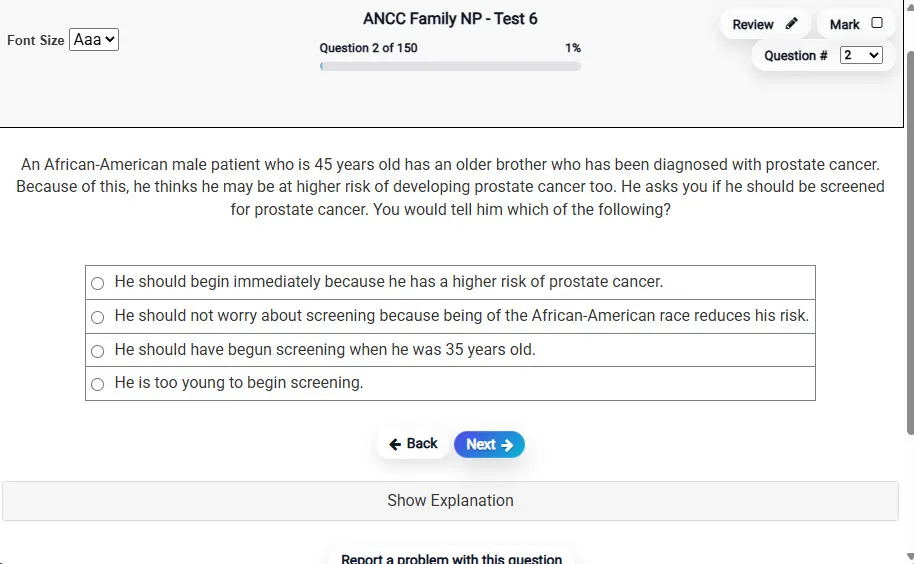
Answering a Question screen – Multiple-choice item view with navigation controls and progress tracker.
Answering a Question Multiple-choice item view with navigation controls and progress tracker.

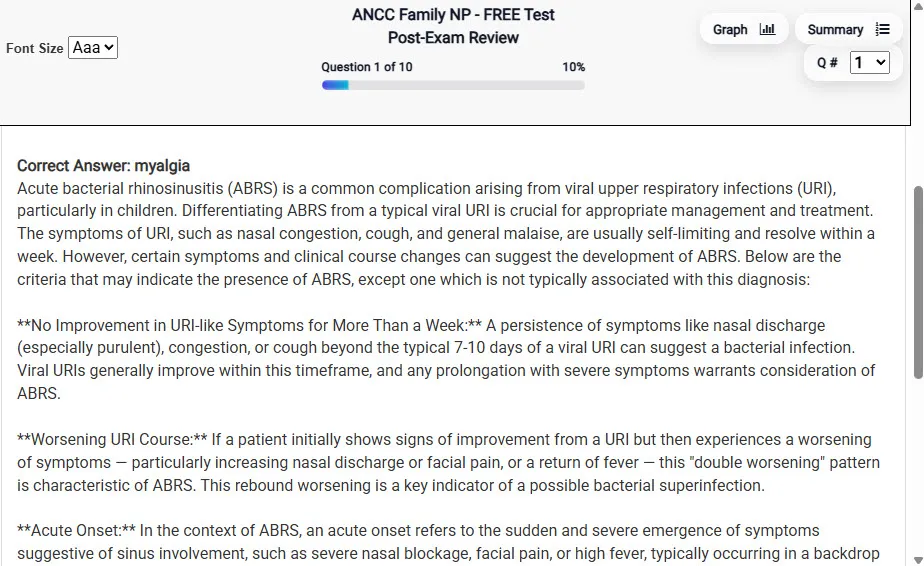
                           Detailed Explanation screen – 
                         Review mode showing chosen answer and rationale and references.
Detailed Explanation Review mode showing chosen answer and rationale and references.

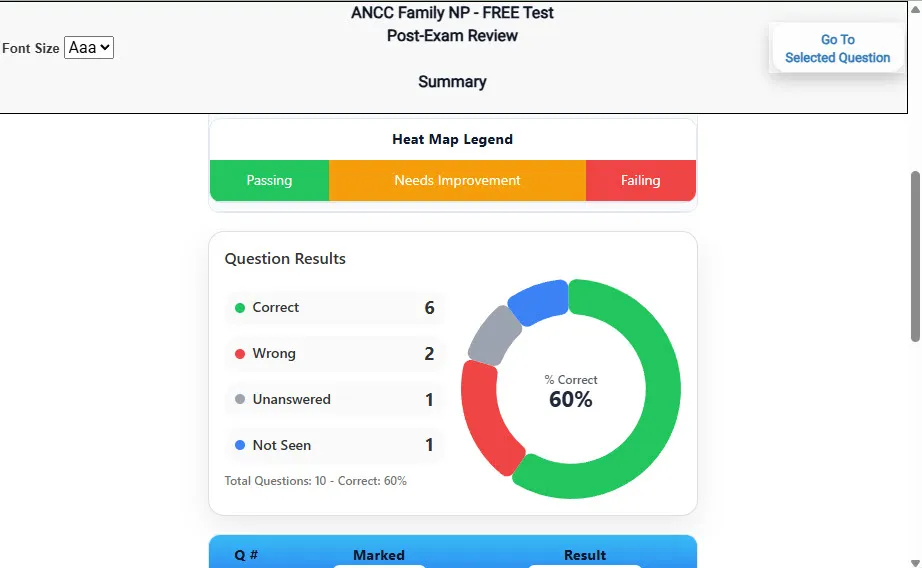
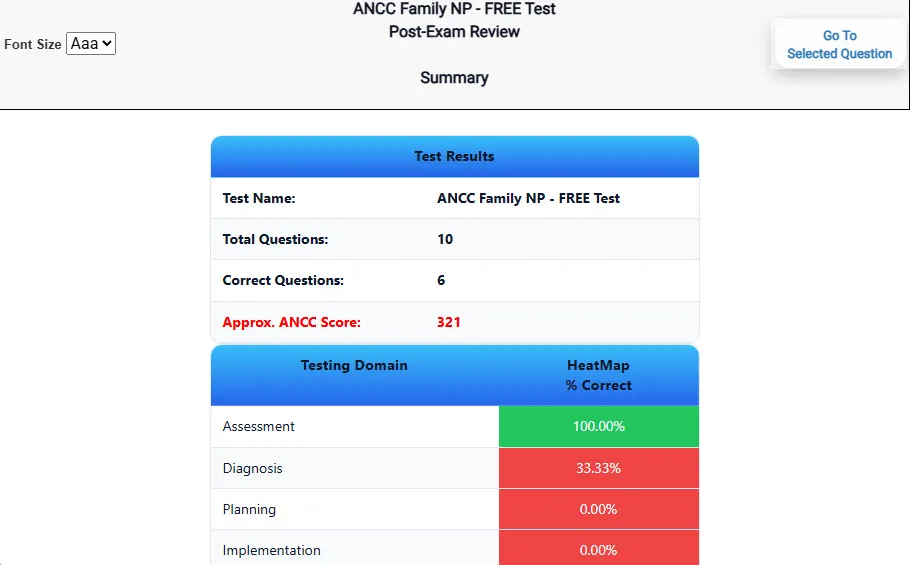
                           Review Summary 1 screen – 
                         Summary with counts for correct/wrong/unanswered and not seen items.
Review Summary 1 Summary with counts for correct/wrong/unanswered and not seen items.

                           Review Summary 2 screen – 
                         Advanced summary with category/domain breakdown and performance insights.
Review Summary 2 Advanced summary with category/domain breakdown and performance insights.

What Each Screen Shows

Answer Question Screen

  • Clean multiple-choice interface with progress bar.
  • Mark for review feature.
  • Matches real test pacing.

Detailed Explanation

  • Correct answer plus rationale.
  • Key concepts and guidelines highlighted.
  • Move between questions to fill knowledge gaps.

Review Summary 1

  • Overall results with total questions and scaled score.
  • Domain heatmap shows strengths and weaknesses.
  • Quick visual feedback on study priorities.

Review Summary 2

  • Chart of correct, wrong, unanswered, not seen.
  • Color-coded results for easy review.
  • Links back to missed items.

Top 10 Reasons to Use Exam Edge for your OAE Reading (Subtests I & II) Exam Prep

  1. Focused on the OAE Reading (Subtests I & II) Exam

    Our practice tests are built specifically for the OAE Reading exam — every question mirrors the real topics, format, and difficulty so you're studying exactly what matters.

  2. Real Exam Simulation

    We match the per-question time limits and pressure of the actual OAE exam, so test day feels familiar and stress-free.

  3. 15 Full Practice Tests & 1,500 Unique Questions

    You'll have more than enough material to master every OAE Reading concept — no repeats, no fluff.

  4. Lower Cost Than a Retake

    Ordering 5 practice exams costs less than retaking the OAE Reading (Subtests I & II) exam after a failure. One low fee could save you both time and money.

  5. Flexible Testing

    Need to step away mid-exam? Pick up right where you left off — with your remaining time intact.

  6. Instant Scoring & Feedback

    See your raw score and an estimated OAE Reading (Subtests I & II) score immediately after finishing each practice test.

  7. Detailed Explanations for Every Question

    Review correct and incorrect answers with clear, step-by-step explanations so you truly understand each topic.

  8. Trusted & Accredited

    We're fully accredited by the Better Business Bureau and uphold the highest standards of trust and transparency.

  9. Web-Based & Always Available

    No software to install. Access your OAE Reading practice exams 24/7 from any computer or mobile device.

  10. Expert Support When You Need It

    Need extra help? Our specialized tutors are highly qualified and ready to support your OAE exam prep.


Pass the OAE Reading (Subtests I & II) Exam with Realistic Practice Tests from Exam Edge

Preparing for your upcoming OAE Reading (Subtests I & II) (038/039) Certification Exam can feel overwhelming — but the right practice makes all the difference. Exam Edge gives you the tools, structure, and confidence to pass on your first try. Our online practice exams are built to match the real OAE Reading exam in content, format, and difficulty.

  • 📝 15 OAE Reading (Subtests I & II) Practice Tests: Access 15 full-length exams with 100 questions each, covering every major OAE Reading (Subtests I & II) topic in depth.
  • Instant Online Access: Start practicing right away — no software, no waiting.
  • 🧠 Step-by-Step Explanations: Understand the reasoning behind every correct answer so you can master OAE Reading exam concepts.
  • 🔄 Retake Each Exam Up to 4 Times: Build knowledge through repetition and track your improvement over time.
  • 🌐 Web-Based & Available 24/7: Study anywhere, anytime, on any device.
  • 🧘 Boost Your Test-Day Confidence: Familiarity with the OAE format reduces anxiety and helps you perform under pressure.

These OAE Reading (Subtests I & II) practice exams are designed to simulate the real testing experience by matching question types, timing, and difficulty level. This approach helps you get comfortable not just with the exam content, but also with the testing environment, so you walk into your exam day focused and confident.


Exam Edge OAE Reviews


Today, I took my test and passed with confidence. I took it the first time and failed, but after purchasing this study guide, I was provided with resources that allowed me to take the test and get through it without being nervous. A lot of the questions that were provided in this study guide were si ...
Read More
Stephanie , Ohio

Studied a practice test everyday, and passed my test!

Gracyn, Clinton, Ohio

Great program to study from. Audio and images REALLY boosted my understanding of subjects.

Cherish , NEWARK, OH


OAE Reading (Subtests I & II) Aliases Test Name

Here is a list of alternative names used for this exam.

  • OAE Reading (Subtests I & II)
  • OAE Reading (Subtests I & II) test
  • OAE Reading (Subtests I & II) Certification Test
  • OAE Reading test
  • OAE
  • OAE 038/039
  • 038/039 test
  • OAE Reading (Subtests I & II) (038/039)
  • Reading (Subtests I & II) certification