This is the content of the pop-over!

NREMT First Responder / EMR (EMR) Practice Tests & Test Prep by Exam Edge


NREMT First Responder / EMR  product image
(4.4)
Based on 25 Reviews

  • Real Exam Simulation: Timed questions and matching content build comfort for your NREMT First Responder / EMR test day.
  • Instant, 24/7 Access: Web-based NREMT First Responder / EMR practice exams with no software needed.
  • Clear Explanations: Step-by-step answers and explanations for your NREMT exam to strengthen understanding.
  • Boosted Confidence: Reduces anxiety and improves test-taking skills to ace your NREMT First Responder / EMR (EMR).

Featured on

NREMT First Responder / EMR Online Practice Test Bundles

BEST VALUE
20 practice tests

$174.00

$799.00

SAVE $625

Only $8.70 per test!

  • 100% Pass Guarantee
  • 20 online practice tests
  • 100 questions per test
  • Bonus: 100 Flash Cards + Study Guide
  • Instant access
  • Detailed Explanations
  • Practice tests never expire
  • Timed, untimed, or study guide mode
MOST POPULAR
10 practice tests

$99.50

$399.50

SAVE $300

Only $9.95 per test!

  • 10 online practice tests
  • 100 questions per test
  • Bonus: 100 Flash Cards + Study Guide
  • Instant access
  • Detailed Explanations
  • Practice tests never expire
  • Timed, untimed, or study guide mode
5 practice tests

$69.75

$199.75

SAVE $130

Only $13.95 per test!

  • 5 online practice tests
  • 100 questions per test
  • Bonus: 100 Flash Cards
  • Instant access
  • Detailed Explanations
  • Practice tests never expire
  • Timed, untimed, or study guide mode
1 practice test

$39.95

  • 1 online practice test
  • 100 questions per test
  • Instant access
  • Detailed Explanations
  • Practice tests never expire
  • Timed, untimed, or study guide mode
Quick Select
Tap to choose a bundle

** All Prices are in US Dollars (USD) **


NREMT First Responder / EMR (EMR) Resources

Jump to the section you need most.

Understanding the exact breakdown of the NREMT First Responder / EMR test will help you know what to expect and how to most effectively prepare. The NREMT First Responder / EMR has multiple-choice questions . The exam will be broken down into the sections below:

NREMT First Responder / EMR Exam Blueprint
Domain Name % Number of
Questions
Airway - Respiration & Ventilation 17-21% 19
Cardiology & Resuscitation 16-20% 18
Trauma 19-23% 21
Medical/Obstetrics/Gyn 27-31% 30
EMS Ops 11-15% 12

NREMT First Responder / EMR Study Tips by Domain

  • Use a quick airway check (talking, chest rise, gurgling/stridor) and treat immediately if absent/ineffective—red flag: altered mental status with snoring implies tongue obstruction until proven otherwise.
  • Open the airway with head-tilt/chin-lift unless trauma is suspected; for possible spinal injury use jaw-thrust first—common trap: stopping airway maneuvers because the patient “resists” when hypoxic.
  • Suction early and often; limit each suction pass to ≤15 seconds in adults (≤10 seconds in children, ≤5 seconds in infants) and preoxygenate if possible—red flag: worsening bradycardia during suctioning suggests hypoxia/vagal response.
  • Choose adjuncts correctly: OPA only if no gag reflex; NPA if gag intact but avoid with suspected basilar skull fracture (CSF leak, raccoon eyes)—common trap: forcing an OPA in a semiconscious patient.
  • Provide oxygen based on condition: use high-flow O2 for respiratory distress, shock, major trauma, or CO exposure—priority rule: treat hypoxia first rather than “titrating” oxygen in critical illness.
  • Ventilate with BVM for apnea or inadequate breathing (poor tidal volume, severe fatigue); ensure tight seal and visible chest rise—common trap: overventilating, which increases gastric inflation and reduces venous return.
  • Start with high-quality CPR: rate 100–120/min, depth about 2 in (5 cm) for adults, full recoil, and minimize pauses—red flag is interruptions >10 seconds for pulse checks or airway attempts.
  • Use an AED as soon as available and follow prompts; common trap is stopping compressions while the AED is being powered on or pads are being placed.
  • Provide ventilations without hyperventilating: with a BVM give 1 breath every 5–6 seconds in adults (every 3–5 seconds in children/infants) with visible chest rise—red flag is excessive rate/volume causing decreased perfusion.
  • Recognize when to begin CPR: if unresponsive, not breathing normally (only gasping), and no definite pulse within 10 seconds—common trap is delaying CPR because agonal respirations look like breathing.
  • For suspected ACS, prioritize rapid assessment, rest, and timely transport; contraindication cue for assisting with nitroglycerin is systolic BP <100 mmHg (or per protocol) or recent PDE-5 inhibitor use.
  • For symptomatic bradycardia or unstable tachycardia, treat as an emergency and expedite transport; red flag is altered mental status, hypotension, signs of shock, ischemic chest discomfort, or acute heart failure.
  • Control life-threatening bleeding first using direct pressure and a hemostatic dressing, then apply a tourniquet 2–3 inches above the wound (not over a joint) and note the application time—red flag: removing or loosening a tourniquet once applied.
  • Manage shock early with high-flow oxygen as indicated, rapid hemorrhage control, and keeping the patient warm—common trap: waiting for hypotension, since early shock may present with tachycardia, cool clammy skin, and altered mentation.
  • Spinal motion restriction is selective: use it for high-risk mechanisms with neurologic deficits, midline spinal tenderness, or altered mental status—priority rule: don’t delay airway/bleeding control to apply a collar or long board.
  • For suspected tension pneumothorax, recognize severe dyspnea, absent/unequal breath sounds, worsening hypoxia, and signs of shock—red flag: positive-pressure ventilation can rapidly worsen it, so expedite ALS and rapid transport.
  • For open chest wounds, apply an occlusive dressing taped on three sides to create a flutter valve—common trap: fully sealing all four sides, which can precipitate tension pneumothorax if air cannot escape.
  • Suspect traumatic brain injury when there is declining mental status, unequal pupils, vomiting, or seizure activity; maintain oxygenation and avoid hypotension—red flag: hyperventilating routinely, which is only considered for impending herniation under protocol/medical direction.
  • Rapidly identify time-sensitive medical complaints (e.g., stroke, ACS, anaphylaxis, hypoglycemia) and prioritize ABCs over history—red flag: altered mental status is hypoxia or hypoglycemia until proven otherwise.
  • Manage diabetic emergencies by checking glucose early when available and treating per protocol; common trap: giving oral glucose to a patient who can’t swallow or protect their airway.
  • For respiratory medical causes (asthma/COPD, anaphylaxis), position, provide oxygen/ventilatory support, and assist with prescribed meds per local scope; contraindication cue: do not delay ventilation while searching for an inhaler or auto-injector.
  • In seizure care, protect from injury, time the event, and reassess airway/breathing immediately after; red flag: ongoing seizure activity or repeated seizures without recovery warrants rapid transport and continuous airway readiness.
  • Obstetric care: assess for imminent delivery and prepare for clean, warm neonatal care; red flag: heavy vaginal bleeding, severe abdominal pain, or syncope suggests ectopic/placental complications—treat for shock and transport emergently.
  • During childbirth, support the head and guide the body without pulling; common trap: if the cord is around the neck, gently slip it over the head or clamp/cut only if it can’t be reduced, then proceed to rapid delivery and newborn warming.
  • Scene size-up first: BSI/PPE, scene safety, number of patients, and mechanism/nature of illness; red flag—if you can’t make the scene safe, stage and request law enforcement/fire.
  • Call for resources early using clear radio reports (location, incident type, patient count, hazards, need for ALS); common trap—waiting to request additional units until after patient contact.
  • Follow incident command and span-of-control on multi-patient scenes; priority rule—establish command and triage before treatment when patients exceed resources.
  • Safe lifting/moving: use enough personnel, proper body mechanics, and secure the patient to the device; red flag—moving a patient without c-spine precautions when mechanism suggests spinal injury.
  • Ambulance operations: wear seatbelts whenever the vehicle is moving and secure all equipment; common trap—unrestrained providers or loose gear becoming projectiles in sudden stops.
  • Documentation and consent: document refusals with capacity assessment, risks explained, and signatures/witnesses; red flag—leaving a minor without a guardian decision-maker unless emergent (implied consent).


Built to Fit Into Your Busy Life

Everything you need to prepare with confidence—without wasting a minute.

Three Study Modes

Timed, No Time Limit, or Explanation mode.

Actionable Analytics

Heatmaps and scaled scores highlight weak areas.

High-Yield Rationales

Concise explanations emphasize key concepts.

Realistic Interface

Matches the feel of the actual exam environment.

Accessible by Design

Clean layout reduces cognitive load.

Anytime, Anywhere

Web-based access 24/7 on any device.
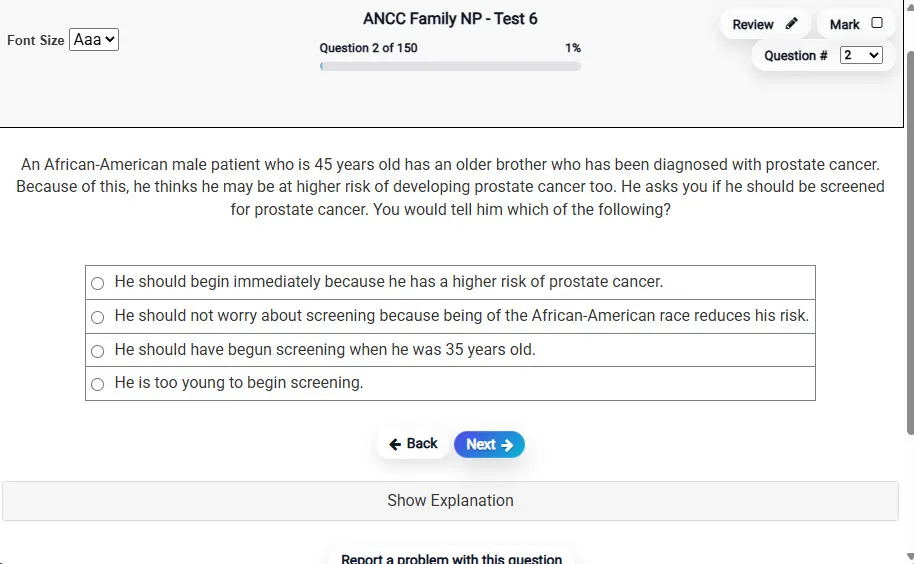
Answering a Question screen – Multiple-choice item view with navigation controls and progress tracker.
Answering a Question Multiple-choice item view with navigation controls and progress tracker.

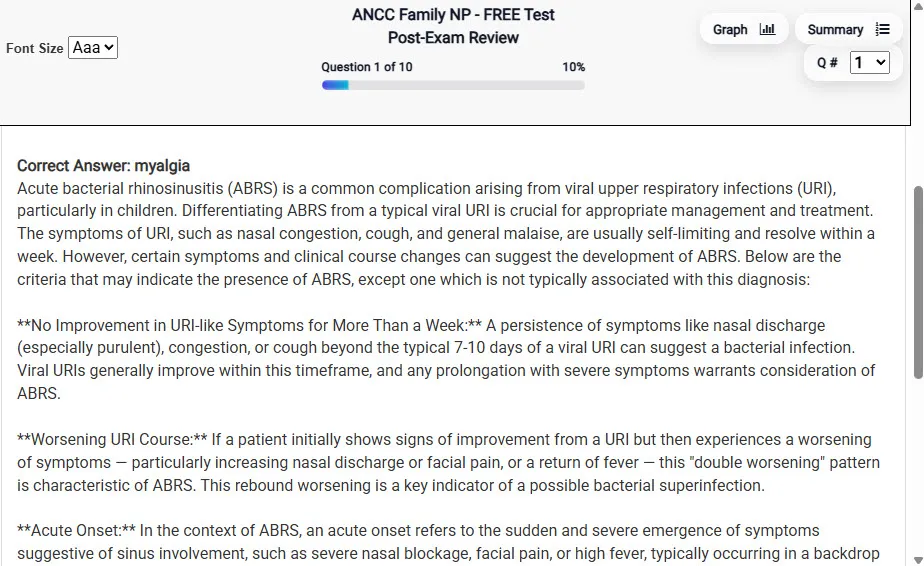
                           Detailed Explanation screen – 
                         Review mode showing chosen answer and rationale and references.
Detailed Explanation Review mode showing chosen answer and rationale and references.

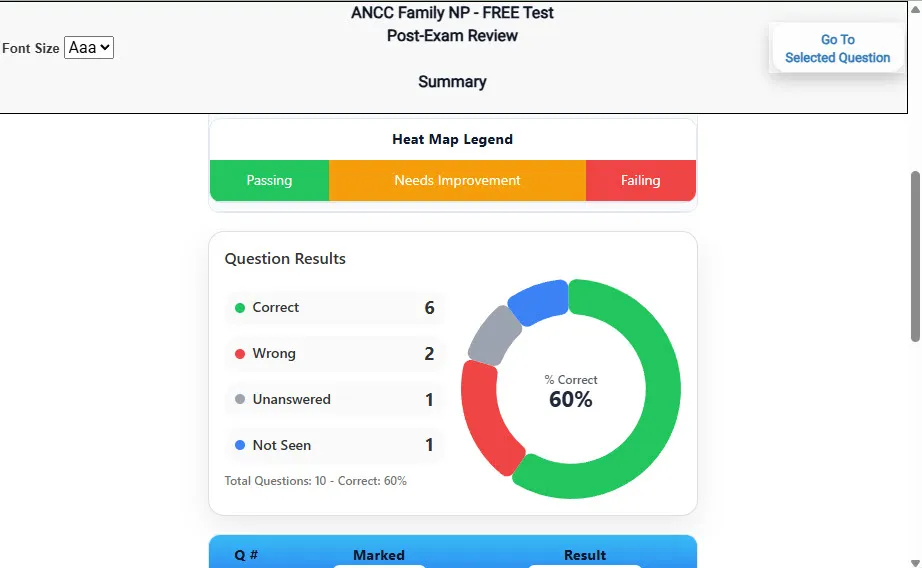
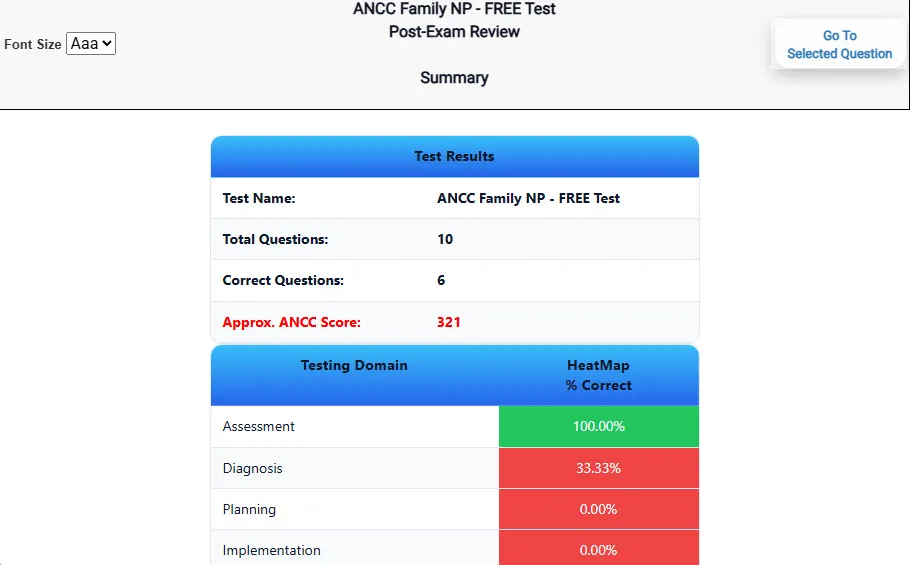
                           Review Summary 1 screen – 
                         Summary with counts for correct/wrong/unanswered and not seen items.
Review Summary 1 Summary with counts for correct/wrong/unanswered and not seen items.

                           Review Summary 2 screen – 
                         Advanced summary with category/domain breakdown and performance insights.
Review Summary 2 Advanced summary with category/domain breakdown and performance insights.

What Each Screen Shows

Answer Question Screen

  • Clean multiple-choice interface with progress bar.
  • Mark for review feature.
  • Matches real test pacing.

Detailed Explanation

  • Correct answer plus rationale.
  • Key concepts and guidelines highlighted.
  • Move between questions to fill knowledge gaps.

Review Summary 1

  • Overall results with total questions and scaled score.
  • Domain heatmap shows strengths and weaknesses.
  • Quick visual feedback on study priorities.

Review Summary 2

  • Chart of correct, wrong, unanswered, not seen.
  • Color-coded results for easy review.
  • Links back to missed items.

Top 10 Reasons to Use Exam Edge for your NREMT First Responder / EMR Exam Prep

  1. Focused on the NREMT First Responder / EMR Exam

    Our practice tests are built specifically for the NREMT First Responder / EMR exam — every question mirrors the real topics, format, and difficulty so you're studying exactly what matters.

  2. Real Exam Simulation

    We match the per-question time limits and pressure of the actual NREMT exam, so test day feels familiar and stress-free.

  3. 20 Full Practice Tests & 2,000 Unique Questions

    You'll have more than enough material to master every NREMT First Responder / EMR concept — no repeats, no fluff.

  4. Lower Cost Than a Retake

    Ordering 5 practice exams costs less than retaking the NREMT First Responder / EMR exam after a failure. One low fee could save you both time and money.

  5. Flexible Testing

    Need to step away mid-exam? Pick up right where you left off — with your remaining time intact.

  6. Instant Scoring & Feedback

    See your raw score and an estimated NREMT First Responder / EMR score immediately after finishing each practice test.

  7. Detailed Explanations for Every Question

    Review correct and incorrect answers with clear, step-by-step explanations so you truly understand each topic.

  8. Trusted & Accredited

    We're fully accredited by the Better Business Bureau and uphold the highest standards of trust and transparency.

  9. Web-Based & Always Available

    No software to install. Access your NREMT First Responder / EMR practice exams 24/7 from any computer or mobile device.

  10. Expert Support When You Need It

    Need extra help? Our specialized tutors are highly qualified and ready to support your NREMT exam prep.


Pass the NREMT First Responder / EMR Exam with Realistic Practice Tests from Exam Edge

Preparing for your upcoming NREMT First Responder / EMR (EMR) Certification Exam can feel overwhelming — but the right practice makes all the difference. Exam Edge gives you the tools, structure, and confidence to pass on your first try. Our online practice exams are built to match the real NREMT First Responder / EMR exam in content, format, and difficulty.

  • 📝 20 NREMT First Responder / EMR Practice Tests: Access 20 full-length exams with 100 questions each, covering every major NREMT First Responder / EMR topic in depth.
  • Instant Online Access: Start practicing right away — no software, no waiting.
  • 🧠 Step-by-Step Explanations: Understand the reasoning behind every correct answer so you can master NREMT First Responder / EMR exam concepts.
  • 🔄 Retake Each Exam Up to 4 Times: Build knowledge through repetition and track your improvement over time.
  • 🌐 Web-Based & Available 24/7: Study anywhere, anytime, on any device.
  • 🧘 Boost Your Test-Day Confidence: Familiarity with the NREMT format reduces anxiety and helps you perform under pressure.

These NREMT First Responder / EMR practice exams are designed to simulate the real testing experience by matching question types, timing, and difficulty level. This approach helps you get comfortable not just with the exam content, but also with the testing environment, so you walk into your exam day focused and confident.


Exam Edge NREMT Reviews


I wanted to say Thank You! I would not have passed my NREMT exam without your practice tests. They showed me my weaknesses and helped my confidence, so I went into the test relaxed and ready.

James, Hartford, Connecticut

Thank you for creating these exams, they allowed me to find my weaknesses and correct them before taking the actual exam.

Michael , Lagunitas, California


NREMT First Responder / EMR Aliases Test Name

Here is a list of alternative names used for this exam.

  • NREMT First Responder / EMR
  • NREMT First Responder / EMR test
  • NREMT First Responder / EMR Certification Test
  • NREMT
  • NREMT EMR
  • EMR test
  • NREMT First Responder / EMR (EMR)
  • First Responder / EMR certification