This is the content of the pop-over!

Lightning Deal Alert – 12% Off Ends at Midnight!

Strike while the savings are hot! Use promo code FlashSale at checkout for 12% off any Exam Edge test or bundle. Hurry—the clock is ticking!

NC State Foundations of Reading (90) Practice Tests & Test Prep by Exam Edge


NC State Foundations of Reading  product image
(4.8)
Based on 28 Reviews

  • Real Exam Simulation: Timed questions and matching content build comfort for your NC State Foundations of Reading test day.
  • Instant, 24/7 Access: Web-based NC State Foundations of Reading practice exams with no software needed.
  • Clear Explanations: Step-by-step answers and explanations for your NC exam to strengthen understanding.
  • Boosted Confidence: Reduces anxiety and improves test-taking skills to ace your NC State Foundations of Reading (190).

Featured on

NC State Foundations of Reading Online Practice Test Bundles

BEST VALUE
10 practice tests

$99.50

$399.50

SAVE $300

Only $9.95 per test!

  • 100% Pass Guarantee
  • 10 online practice tests
  • 100 questions + 2 essays per test
  • Bonus: 100 Flash Cards + Study Guide
  • Instant access
  • Detailed Explanations
  • Practice tests never expire
  • Timed, untimed, or study guide mode
5 practice tests

$69.75

$199.75

SAVE $130

Only $13.95 per test!

  • 5 online practice tests
  • 100 questions + 2 essays per test
  • Bonus: 100 Flash Cards + Study Guide
  • Instant access
  • Detailed Explanations
  • Practice tests never expire
  • Timed, untimed, or study guide mode
1 practice test

$39.95

  • 1 online practice test
  • 100 questions + 2 essays per test
  • Instant access
  • Detailed Explanations
  • Practice tests never expire
  • Timed, untimed, or study guide mode
Quick Select
Tap to choose a bundle

** All Prices are in US Dollars (USD) **


NC State Foundations of Reading (190) Resources

Jump to the section you need most.

Understanding the exact breakdown of the NC State Foundations of Reading test will help you know what to expect and how to most effectively prepare. The NC State Foundations of Reading has 100 multiple-choice questions and 2 essay questions. The exam will be broken down into the sections below:

NC State Foundations of Reading Exam Blueprint
Domain Name % Number of
Questions
Foundations of Reading Development 35% 35
Development of Reading Comprehension 27% 27
Reading Assessment and Instruction 18% 18
Integration of Knowledge and Understanding 20% 20

NC State Foundations of Reading Study Tips by Domain

  • Track typical literacy milestones (phonological awareness → phonemic awareness → phonics/decoding → fluency) and intervene early; red flag: a student who cannot isolate/blend phonemes is not ready for complex phonics patterns.
  • Teach the alphabetic principle explicitly (grapheme–phoneme correspondences) with cumulative review; common trap: relying on picture/context cues to “guess” words instead of sounding out.
  • Build accurate decoding through systematic phonics (including digraphs, blends, common vowel patterns, and inflectional endings); priority rule: ensure mastery of short vowels before expecting success with multisyllabic decoding.
  • Develop word recognition via orthographic mapping (linking phonemes to spellings through repeated accurate decoding); red flag: repeated exposure alone won’t fix weak mapping if the student is reading words inaccurately.
  • Support vocabulary growth using morphology (roots, prefixes, suffixes) and semantics; common trap: teaching isolated word lists without revisiting words in varied, meaningful contexts.
  • Connect oral language (syntax, semantics, background knowledge) to reading by leveraging discussion and structured language routines; contraindication: skipping oral language support for English learners or students with language delays can stall reading development even with strong phonics.
  • Teach comprehension as an active meaning-making process—before/during/after reading routines should explicitly model predicting, questioning, clarifying, and summarizing; red flag: asking only literal recall questions and calling it “comprehension.”
  • Build vocabulary and academic language to support comprehension by teaching word meanings in context and morphology (prefixes/roots/suffixes); common trap: relying on dictionary look-ups without repeated, meaningful use.
  • Strengthen background knowledge and schema with brief, targeted previews and concept building before complex text; priority rule: if students lack topic knowledge, comprehension breaks down even when decoding is adequate.
  • Support understanding of text structures (narrative elements; informational patterns like cause-effect, compare-contrast) using graphic organizers; red flag: students can read fluently but cannot retell or identify main idea because structure was never taught.
  • Teach students to monitor comprehension and use fix-up strategies (reread, slow down, look back, use context, ask for clarification); threshold cue: if errors persist after rereading, add teacher-guided think-aloud and chunking.
  • Develop inferencing and integration across sentences/paragraphs by grounding answers in textual evidence; common trap: accepting unsupported opinions—require “Where in the text?” for every claim.
  • Use multiple assessment types—screeners, progress monitoring, diagnostics, and outcome measures—and match each to its purpose; red flag: using a diagnostic when a quick screener is needed (or vice versa) delays intervention.
  • Follow a data cycle: administer, score accurately, analyze error patterns, teach targeted skills, then reassess on a set schedule; common trap: reteaching the whole program instead of the specific skill the data indicate.
  • Interpret oral reading data (accuracy, rate, prosody) alongside comprehension to pinpoint the breakdown; priority rule: if accuracy is low, address decoding first before intensive comprehension strategy work.
  • Design explicit, systematic instruction with modeling, guided practice, corrective feedback, and cumulative review; red flag: students can answer in isolation but fail in connected text—add immediate transfer practice in decodable/controlled passages.
  • Differentiate by need using flexible grouping and tiered supports while keeping grade-level goals in view; common trap: static groups that never change despite progress-monitoring results.
  • Ensure assessment is fair and accessible (language, cultural background, and disability considerations) and document accommodations correctly; contraindication: an accommodation that changes the construct being measured (e.g., reading aloud a decoding test) invalidates results.
  • Distinguish phonological awareness (sound manipulation) from phonics (sound–symbol mapping); red flag: choosing a letter-based task (e.g., “circle the /m/”) when the target is phoneme blending without print.
  • Use knowledge of English orthography to explain spelling patterns (e.g., vowel teams, r-controlled vowels, syllable types); common trap: treating irregular words as “not decodable” instead of identifying the regular and irregular parts.
  • Apply morphology (roots, prefixes, suffixes) to support decoding and meaning, especially multisyllabic words; priority rule: teach students to chunk by meaningful parts before guessing from context.
  • Connect fluency components (accuracy, rate, prosody) to comprehension outcomes; red flag: increasing speed goals when errors remain high or phrasing is choppy.
  • Select or evaluate instructional practices based on evidence and alignment to the specific skill deficit; common trap: assigning leveled reading as the primary fix for weak decoding rather than explicit word-reading instruction.
  • Integrate vocabulary, background knowledge, and text structure to support comprehension across genres; priority rule: if students can decode but can’t explain the text, shift to language comprehension (academic vocabulary, syntax, cohesion) instead of more phonics.


Built to Fit Into Your Busy Life

Everything you need to prepare with confidence—without wasting a minute.

Three Study Modes

Timed, No Time Limit, or Explanation mode.

Actionable Analytics

Heatmaps and scaled scores highlight weak areas.

High-Yield Rationales

Concise explanations emphasize key concepts.

Realistic Interface

Matches the feel of the actual exam environment.

Accessible by Design

Clean layout reduces cognitive load.

Anytime, Anywhere

Web-based access 24/7 on any device.
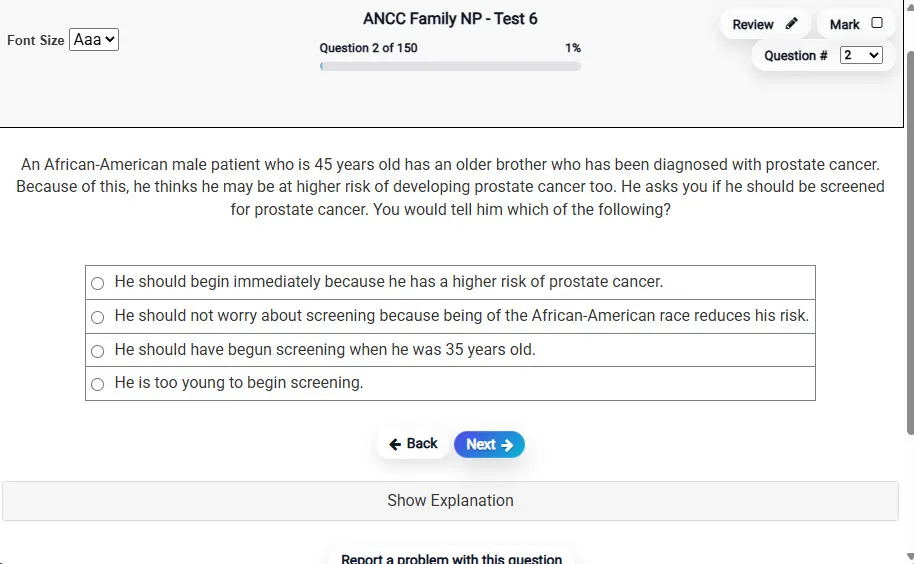
Answering a Question screen – Multiple-choice item view with navigation controls and progress tracker.
Answering a Question Multiple-choice item view with navigation controls and progress tracker.

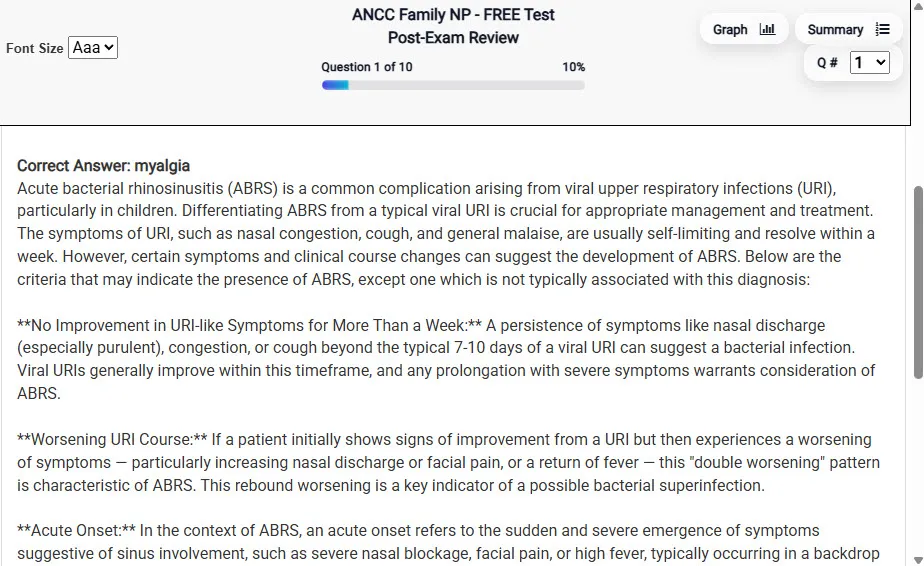
                           Detailed Explanation screen – 
                         Review mode showing chosen answer and rationale and references.
Detailed Explanation Review mode showing chosen answer and rationale and references.

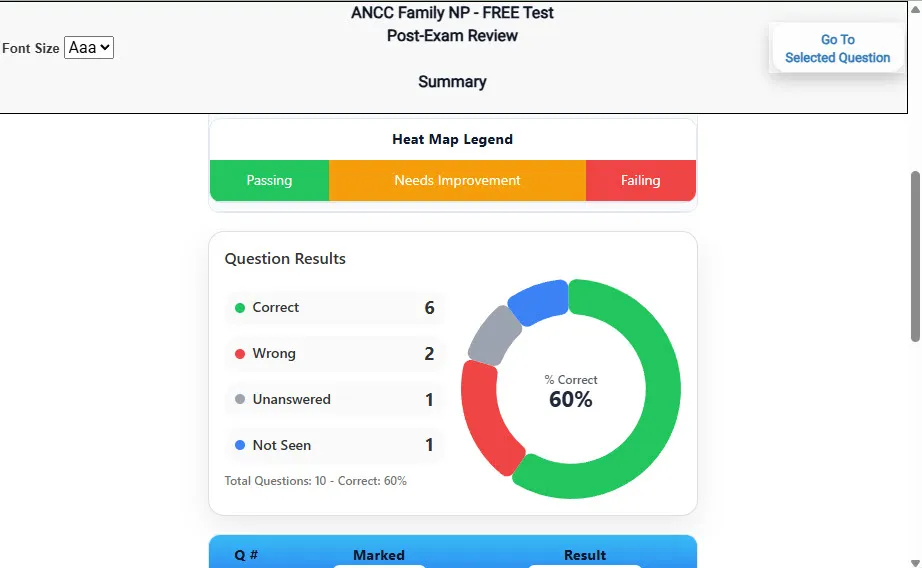
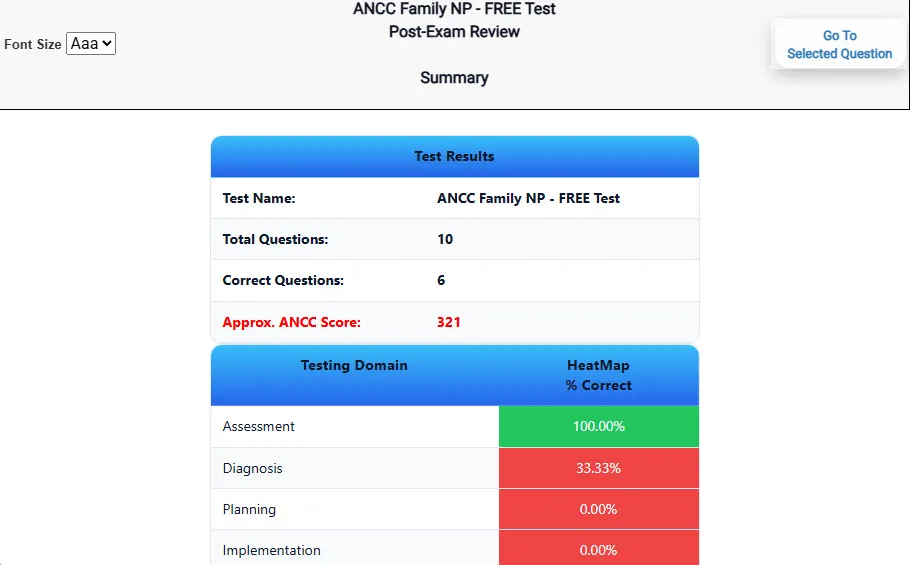
                           Review Summary 1 screen – 
                         Summary with counts for correct/wrong/unanswered and not seen items.
Review Summary 1 Summary with counts for correct/wrong/unanswered and not seen items.

                           Review Summary 2 screen – 
                         Advanced summary with category/domain breakdown and performance insights.
Review Summary 2 Advanced summary with category/domain breakdown and performance insights.

What Each Screen Shows

Answer Question Screen

  • Clean multiple-choice interface with progress bar.
  • Mark for review feature.
  • Matches real test pacing.

Detailed Explanation

  • Correct answer plus rationale.
  • Key concepts and guidelines highlighted.
  • Move between questions to fill knowledge gaps.

Review Summary 1

  • Overall results with total questions and scaled score.
  • Domain heatmap shows strengths and weaknesses.
  • Quick visual feedback on study priorities.

Review Summary 2

  • Chart of correct, wrong, unanswered, not seen.
  • Color-coded results for easy review.
  • Links back to missed items.

Top 10 Reasons to Use Exam Edge for your NC State Foundations of Reading Exam Prep

  1. Focused on the NC State Foundations of Reading Exam

    Our practice tests are built specifically for the NC State Foundations of Reading exam — every question mirrors the real topics, format, and difficulty so you're studying exactly what matters.

  2. Real Exam Simulation

    We match the per-question time limits and pressure of the actual NC exam, so test day feels familiar and stress-free.

  3. 10 Full Practice Tests & 1,020 Unique Questions

    You'll have more than enough material to master every NC State Foundations of Reading concept — no repeats, no fluff.

  4. Lower Cost Than a Retake

    Ordering 5 practice exams costs less than retaking the NC State Foundations of Reading exam after a failure. One low fee could save you both time and money.

  5. Flexible Testing

    Need to step away mid-exam? Pick up right where you left off — with your remaining time intact.

  6. Instant Scoring & Feedback

    See your raw score and an estimated NC State Foundations of Reading score immediately after finishing each practice test.

  7. Detailed Explanations for Every Question

    Review correct and incorrect answers with clear, step-by-step explanations so you truly understand each topic.

  8. Trusted & Accredited

    We're fully accredited by the Better Business Bureau and uphold the highest standards of trust and transparency.

  9. Web-Based & Always Available

    No software to install. Access your NC State Foundations of Reading practice exams 24/7 from any computer or mobile device.

  10. Expert Support When You Need It

    Need extra help? Our specialized tutors are highly qualified and ready to support your NC exam prep.


Pass the NC State Foundations of Reading Exam with Realistic Practice Tests from Exam Edge

Preparing for your upcoming NC State Foundations of Reading (190) Certification Exam can feel overwhelming — but the right practice makes all the difference. Exam Edge gives you the tools, structure, and confidence to pass on your first try. Our online practice exams are built to match the real NC State Foundations of Reading exam in content, format, and difficulty.

  • 📝 10 NC State Foundations of Reading Practice Tests: Access 10 full-length exams with 102 questions each, covering every major NC State Foundations of Reading topic in depth.
  • Instant Online Access: Start practicing right away — no software, no waiting.
  • 🧠 Step-by-Step Explanations: Understand the reasoning behind every correct answer so you can master NC State Foundations of Reading exam concepts.
  • 🔄 Retake Each Exam Up to 4 Times: Build knowledge through repetition and track your improvement over time.
  • 🌐 Web-Based & Available 24/7: Study anywhere, anytime, on any device.
  • 🧘 Boost Your Test-Day Confidence: Familiarity with the NC format reduces anxiety and helps you perform under pressure.

These NC State Foundations of Reading practice exams are designed to simulate the real testing experience by matching question types, timing, and difficulty level. This approach helps you get comfortable not just with the exam content, but also with the testing environment, so you walk into your exam day focused and confident.


Exam Edge NCSTATE Reviews


NC State Foundations of Reading Aliases Test Name

Here is a list of alternative names used for this exam.

  • NC State Foundations of Reading
  • NC State Foundations of Reading test
  • NC State Foundations of Reading Certification Test
  • NCSTATE
  • NCSTATE 190
  • 190 test
  • NC State Foundations of Reading (190)
  • NC State Foundations of Reading certification