This is the content of the pop-over!

NNAAP Nurse Aide Practice Tests & Test Prep by Exam Edge


NNAAP National Nurse Aide Assessment Program (NNAAP)  product image
(4.6)
Based on 17 Reviews

  • Real Exam Simulation: Timed questions and matching content build comfort for your NNAAP Nurse Aide test day.
  • Instant, 24/7 Access: Web-based NNAAP National Nurse Aide Assessment Program (NNAAP) practice exams with no software needed.
  • Clear Explanations: Step-by-step answers and explanations for your NNAAP exam to strengthen understanding.
  • Boosted Confidence: Reduces anxiety and improves test-taking skills to ace your NNAAP National Nurse Aide Assessment Program (NNAAP) .

Featured on

NNAAP National Nurse Aide Assessment Program (NNAAP) Online Practice Test Bundles

BEST VALUE
20 practice tests

$174.00

$799.00

SAVE $625

Only $8.70 per test!

  • 100% Pass Guarantee
  • 20 online practice tests
  • 70 questions per test
  • Bonus: 100 Flash Cards + Study Guide
  • Instant access
  • Detailed Explanations
  • Practice tests never expire
  • Timed, untimed, or study guide mode
MOST POPULAR
10 practice tests

$99.50

$399.50

SAVE $300

Only $9.95 per test!

  • 10 online practice tests
  • 70 questions per test
  • Bonus: 100 Flash Cards + Study Guide
  • Instant access
  • Detailed Explanations
  • Practice tests never expire
  • Timed, untimed, or study guide mode
5 practice tests

$69.75

$199.75

SAVE $130

Only $13.95 per test!

  • 5 online practice tests
  • 70 questions per test
  • Bonus: 100 Flash Cards
  • Instant access
  • Detailed Explanations
  • Practice tests never expire
  • Timed, untimed, or study guide mode
1 practice test

$39.95

  • 1 online practice test
  • 70 questions per test
  • Instant access
  • Detailed Explanations
  • Practice tests never expire
  • Timed, untimed, or study guide mode
Quick Select
Tap to choose a bundle

** All Prices are in US Dollars (USD) **


NNAAP Nurse Aide () Resources

Jump to the section you need most.

Understanding the exact breakdown of the NNAAP National Nurse Aide Assessment Program (NNAAP) test will help you know what to expect and how to most effectively prepare. The NNAAP National Nurse Aide Assessment Program (NNAAP) has 70 multiple-choice questions . The exam will be broken down into the sections below:

NNAAP National Nurse Aide Assessment Program (NNAAP) Exam Blueprint
Domain Name % Number of
Questions
Physical Care Skills - Activities of Daily Living 14% 10
Physical Care Skills - Basic Nursing Skills 39% 27
Physical Care Skills - Restorative Skills 7% 5
Psychosocial Care Skills - Emotional and Mental Health Needs 11% 8
Psychosocial Care Skills - Spiritual and Cultural Needs 2% 1
Role of the NA - Communication 8% 6
Role of the NA - Client Rights 7% 5
Role of the NA - Legal and Ethical Behavior 3% 2
Role of the NA - Member of the Health Care Team 9% 6

NNAAP National Nurse Aide Assessment Program (NNAAP) Study Tips by Domain

  • Bathing and perineal care: wash from clean to dirty (front to back for females) and change water as it cools or becomes soapy—red flag is reusing the same washcloth area after peri-care.
  • Dressing and grooming: dress the weak/affected side first and undress it last—common trap is pulling on a weak arm or catching an IV line in clothing.
  • Feeding: verify diet and swallowing precautions, position upright (about 90°), and offer small bites with slow pace—stop and report coughing, wet voice, or pocketing food (aspiration risk).
  • Toileting: provide privacy, hand hygiene, and a call light; for bedpan/urinal place within reach and ensure safe positioning—priority rule is do not leave a high fall-risk client unattended in the bathroom.
  • Ambulation and transfers for ADLs: use a gait belt when appropriate and lock bed/wheelchair brakes before standing—contraindication cue is never use the client’s arms or an IV pole to lift.
  • Personal care devices: ensure dentures, hearing aids, and glasses are labeled and stored properly (e.g., dentures in water)—common trap is wrapping dentures in tissue, which often leads to accidental disposal.
  • Hand hygiene is non-negotiable: wash/sanitize before and after every resident contact and after glove removal; red flag—touching bedrails or your phone then providing care without cleaning hands.
  • Vital signs must be measured and reported accurately: know facility parameters and report immediately if outside ordered limits (e.g., SpO2 below ordered threshold, SBP very low/high, RR <12 or >20, or temp ≥100.4°F/38°C); common trap—rounding or guessing when a reading seems “off.”
  • Prevent falls during transfers: use a gait belt if indicated, ensure non-skid footwear, lock wheels, and keep the bed in the lowest position; priority rule—if the resident starts to fall, guide them down and protect the head—do not try to catch them.
  • Safe positioning and skin protection: turn/reposition at least q2h if dependent and use pillows to offload bony prominences; red flag—new non-blanchable redness over sacrum/heels must be reported promptly.
  • Oxygen safety basics: treat oxygen as a medication and follow the ordered flow rate only; contraindication—no smoking/open flames and avoid petroleum-based products near oxygen.
  • Basic elimination care and intake/output: measure and document output accurately (mL) and report signs of UTI/dehydration (burning, foul/cloudy urine, low output, dark urine); common trap—forgetting to record continence episodes or discarding urine before measurement when I&O is ordered.
  • Promote independence by letting the client do as much as possible (even if it takes longer) and assist only as needed—common trap: doing the task for them to save time.
  • Use proper body alignment and reposition at least every 2 hours for bedbound clients; red flag: leaving a client in one position when skin is fragile or bony prominences are under pressure.
  • Apply and remove TED hose/elastic stockings as ordered, smoothing wrinkles and ensuring correct size; contraindication cue: do not apply if the client has signs of impaired circulation (cold, pale, numb extremity) and report immediately.
  • Use assistive devices (gait belt, walker, cane) correctly—walker first, then weak leg, then strong leg; priority rule: stop the transfer if the client becomes dizzy or starts to fall and lower them safely to the floor.
  • Perform range-of-motion exercises only within normal limits and support the joint above and below; red flag: pain, resistance, or spastic movement—stop and report rather than forcing the motion.
  • Encourage deep breathing, coughing, and use of incentive spirometry if assigned, with upright positioning for best lung expansion; common trap: skipping respiratory exercises because the client says they are “too tired” (document and report refusal).
  • Use therapeutic communication (open-ended questions, reflection, silence) and avoid “why” questions or false reassurance—common trap: saying “I know how you feel” instead of validating the resident’s feelings.
  • Promote autonomy by offering real choices (clothing, activity, timing) within the care plan—red flag: taking over tasks the resident can do safely, which can increase frustration or withdrawal.
  • Watch for and promptly report acute mental-status changes (new confusion, agitation, lethargy), which may signal delirium rather than dementia—priority rule: sudden change is urgent and should be reported immediately.
  • Support residents with depression/anxiety using routine, simple steps, and encouragement without pressuring—red flag: statements about hopelessness, self-harm, or giving away belongings require immediate reporting per facility policy.
  • Reduce behavioral triggers by approaching calmly, explaining each step, and respecting personal space—common trap: correcting, arguing, or rushing a resident with dementia, which often escalates agitation.
  • Maintain privacy and dignity during emotional episodes (crying, anger) while ensuring safety—priority rule: if the resident becomes a danger to self/others, get help right away rather than managing alone.
  • Ask the resident how they prefer to address spiritual needs (e.g., prayer time, clergy visits, sacred objects) and document/report preferences; red flag: assuming a religion based on name, appearance, or holidays.
  • Support cultural practices in daily care (bathing, grooming, clothing, modesty) as long as they are safe and within the care plan; common trap: treating a preference as “noncompliance” instead of adapting the routine.
  • Use respectful communication with interpreters or approved translation tools when language barriers exist; priority rule: do not use another resident or a minor as an interpreter for consent or sensitive topics.
  • Provide privacy for spiritual practices and protect religious items from loss or damage; red flag: moving or discarding items (e.g., beads, charms, symbols) without permission.
  • Honor culturally based dietary practices and meal timing within facility policy and the care plan; contraindication: never offer restricted foods/fluids when a diet order or swallowing precautions apply—report the conflict to the nurse.
  • Recognize signs of cultural or spiritual distress (withdrawal, refusal of care, statements of guilt or hopelessness) and report promptly; common trap: debating beliefs or trying to “fix” the resident rather than listening and escalating concerns.
  • Use clear, simple, respectful language and verify understanding with teach-back; red flag: answering for the client or using “elderspeak” (baby talk) can be viewed as disrespectful.
  • Practice active listening (eye contact, open posture, minimal interruptions) and report significant statements verbatim when safety is involved; common trap: paraphrasing threats, abuse disclosures, or pain complaints.
  • Maintain confidentiality during all communication (hallways, elevators, social media); priority rule: discuss client information only with staff involved in care and only in private settings.
  • Use proper identification and explain procedures before touching the client; contraindication: proceeding when a client refuses or says “stop”—pause and notify the nurse.
  • Adapt communication for sensory or cognitive impairment (hearing aids/glasses on, face the client, one-step directions); red flag: shouting or arguing with a confused client instead of redirecting.
  • Follow the chain of command and communicate changes immediately using objective facts (what you see/hear/measure); common trap: delaying reports of acute changes like shortness of breath, chest pain, new confusion, or a fall.
  • Protect privacy and confidentiality at all times—close curtains/doors, cover the client during care, and share information only with staff who need to know (red flag: discussing a client in hallways/elevators).
  • Obtain consent before any care and honor the right to refuse—stop the task if the client says “no” and report to the nurse rather than persuading or forcing (common trap: continuing care because it’s “on the assignment sheet”).
  • Promote dignity and respect by using the client’s preferred name/pronouns and avoiding infantilizing language (red flag: calling adults “honey” or “sweetie” against their wishes).
  • Prevent abuse, neglect, and misappropriation—do not borrow/take money or valuables, and report any bruises, threats, rough handling, or missing items immediately per facility policy (priority rule: report suspected abuse right away, not after the shift).
  • Support the right to participate in care and make choices—offer options for bathing time, clothing, and routine when safe (common trap: choosing for the client because it’s faster).
  • Respect the right to a safe environment and timely response—keep call light within reach, follow fall precautions, and never use restraints or side rails as a “shortcut” without proper authorization and care plan direction (red flag: tying, tucking, or positioning that restricts movement).
  • Know your scope as an NA and follow the chain of command (nurse → charge nurse → supervisor); red flag: accepting a task you haven’t been trained to do (e.g., sterile procedures, medication administration) even if asked by a coworker.
  • Report promptly using objective facts (time, vital signs, behaviors) and use a structured format like SBAR if your facility does; common trap: giving opinions (“she’s confused”) instead of specific observations (“disoriented to time, tried to climb out of bed at 0200”).
  • Document only what you did and what you observed, and do it per facility policy; red flag: charting for someone else or charting before care is completed (“pre-charting”).
  • Prioritize safety communication during handoff and rounds—falls risk, skin issues, intake/output, pain, and changes from baseline; priority rule: report sudden change (new chest pain, new shortness of breath, acute confusion, uncontrolled bleeding) immediately, not at end of shift.
  • Support interdisciplinary goals (PT/OT, speech, dietary, social work) by carrying out assigned care plan steps; contraindication cue: don’t ambulate or transfer a client when ordered “bedrest” or when you lack the required assistance/equipment (e.g., 2-person assist, mechanical lift).
  • Maintain professional teamwork boundaries—respect roles, avoid gossip, and keep client information need-to-know; common trap: discussing a client in public areas or sharing details with staff not involved in the client’s care.


Built to Fit Into Your Busy Life

Everything you need to prepare with confidence—without wasting a minute.

Three Study Modes

Timed, No Time Limit, or Explanation mode.

Actionable Analytics

Heatmaps and scaled scores highlight weak areas.

High-Yield Rationales

Concise explanations emphasize key concepts.

Realistic Interface

Matches the feel of the actual exam environment.

Accessible by Design

Clean layout reduces cognitive load.

Anytime, Anywhere

Web-based access 24/7 on any device.
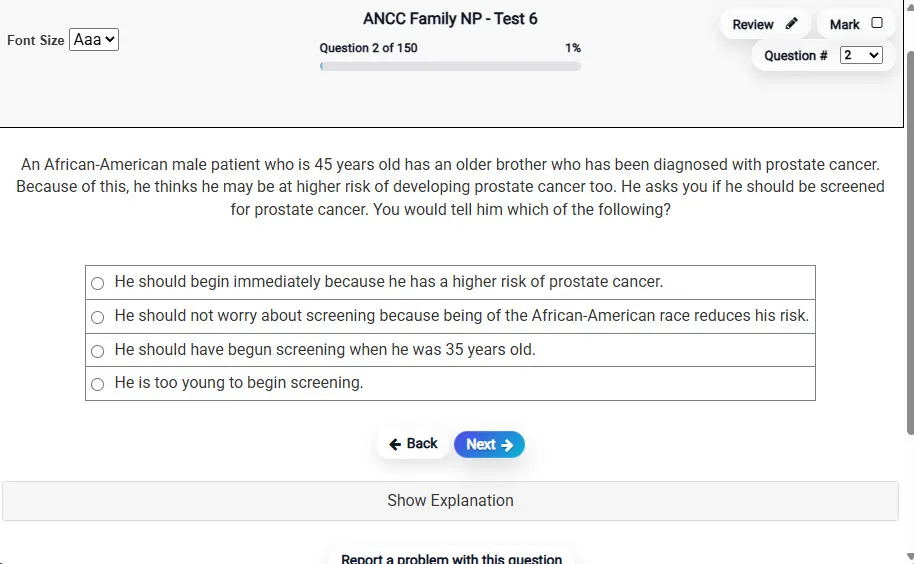
Answering a Question screen – Multiple-choice item view with navigation controls and progress tracker.
Answering a Question Multiple-choice item view with navigation controls and progress tracker.

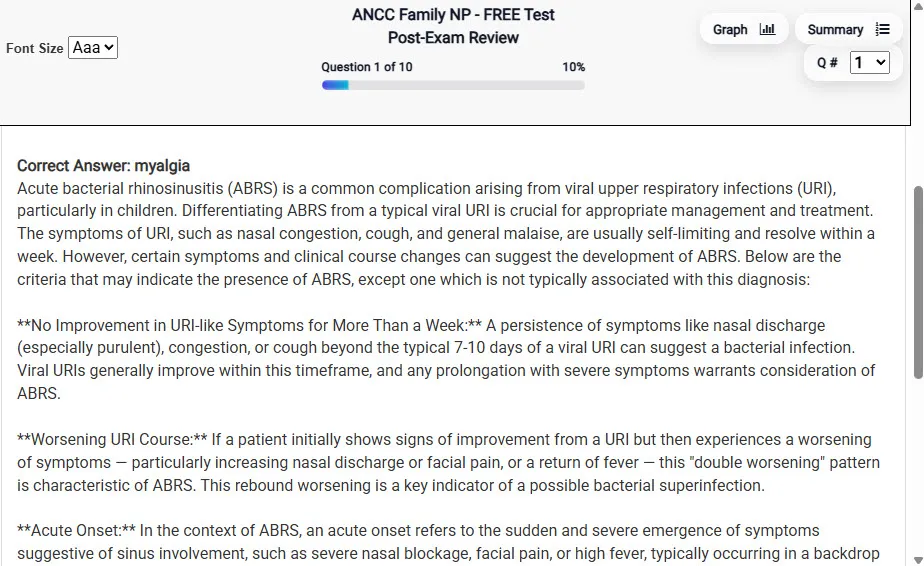
                           Detailed Explanation screen – 
                         Review mode showing chosen answer and rationale and references.
Detailed Explanation Review mode showing chosen answer and rationale and references.

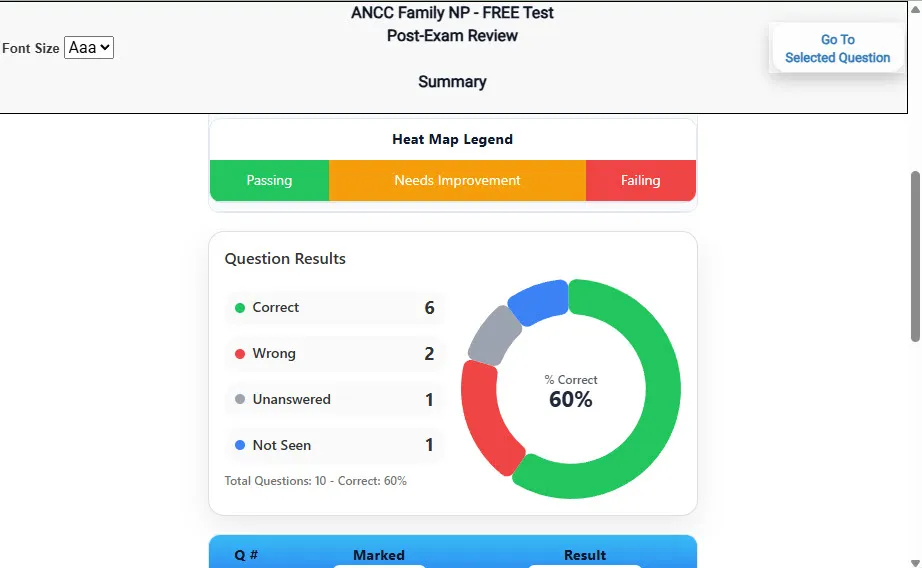
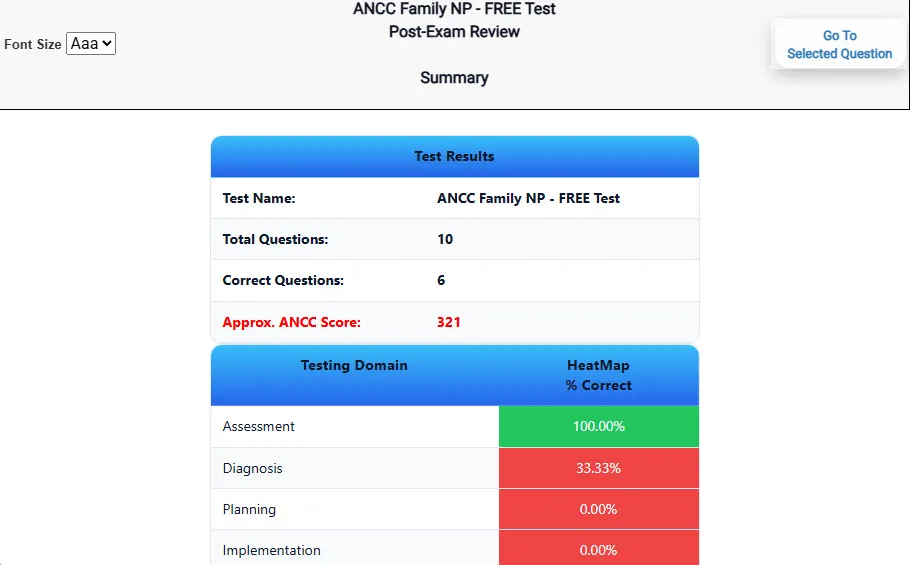
                           Review Summary 1 screen – 
                         Summary with counts for correct/wrong/unanswered and not seen items.
Review Summary 1 Summary with counts for correct/wrong/unanswered and not seen items.

                           Review Summary 2 screen – 
                         Advanced summary with category/domain breakdown and performance insights.
Review Summary 2 Advanced summary with category/domain breakdown and performance insights.

What Each Screen Shows

Answer Question Screen

  • Clean multiple-choice interface with progress bar.
  • Mark for review feature.
  • Matches real test pacing.

Detailed Explanation

  • Correct answer plus rationale.
  • Key concepts and guidelines highlighted.
  • Move between questions to fill knowledge gaps.

Review Summary 1

  • Overall results with total questions and scaled score.
  • Domain heatmap shows strengths and weaknesses.
  • Quick visual feedback on study priorities.

Review Summary 2

  • Chart of correct, wrong, unanswered, not seen.
  • Color-coded results for easy review.
  • Links back to missed items.

Top 10 Reasons to Use Exam Edge for your NNAAP National Nurse Aide Assessment Program (NNAAP) Exam Prep

  1. Focused on the NNAAP National Nurse Aide Assessment Program (NNAAP) Exam

    Our practice tests are built specifically for the NNAAP Nurse Aide exam — every question mirrors the real topics, format, and difficulty so you're studying exactly what matters.

  2. Real Exam Simulation

    We match the per-question time limits and pressure of the actual NNAAP exam, so test day feels familiar and stress-free.

  3. 20 Full Practice Tests & 1,400 Unique Questions

    You'll have more than enough material to master every NNAAP Nurse Aide concept — no repeats, no fluff.

  4. Lower Cost Than a Retake

    Ordering 5 practice exams costs less than retaking the NNAAP National Nurse Aide Assessment Program (NNAAP) exam after a failure. One low fee could save you both time and money.

  5. Flexible Testing

    Need to step away mid-exam? Pick up right where you left off — with your remaining time intact.

  6. Instant Scoring & Feedback

    See your raw score and an estimated NNAAP National Nurse Aide Assessment Program (NNAAP) score immediately after finishing each practice test.

  7. Detailed Explanations for Every Question

    Review correct and incorrect answers with clear, step-by-step explanations so you truly understand each topic.

  8. Trusted & Accredited

    We're fully accredited by the Better Business Bureau and uphold the highest standards of trust and transparency.

  9. Web-Based & Always Available

    No software to install. Access your NNAAP Nurse Aide practice exams 24/7 from any computer or mobile device.

  10. Expert Support When You Need It

    Need extra help? Our specialized tutors are highly qualified and ready to support your NNAAP exam prep.


Pass the NNAAP National Nurse Aide Assessment Program (NNAAP) Exam with Realistic Practice Tests from Exam Edge

Preparing for your upcoming NNAAP National Nurse Aide Assessment Program (NNAAP) () Certification Exam can feel overwhelming — but the right practice makes all the difference. Exam Edge gives you the tools, structure, and confidence to pass on your first try. Our online practice exams are built to match the real NNAAP Nurse Aide exam in content, format, and difficulty.

  • 📝 20 NNAAP National Nurse Aide Assessment Program (NNAAP) Practice Tests: Access 20 full-length exams with 70 questions each, covering every major NNAAP National Nurse Aide Assessment Program (NNAAP) topic in depth.
  • Instant Online Access: Start practicing right away — no software, no waiting.
  • 🧠 Step-by-Step Explanations: Understand the reasoning behind every correct answer so you can master NNAAP Nurse Aide exam concepts.
  • 🔄 Retake Each Exam Up to 4 Times: Build knowledge through repetition and track your improvement over time.
  • 🌐 Web-Based & Available 24/7: Study anywhere, anytime, on any device.
  • 🧘 Boost Your Test-Day Confidence: Familiarity with the NNAAP format reduces anxiety and helps you perform under pressure.

These NNAAP National Nurse Aide Assessment Program (NNAAP) practice exams are designed to simulate the real testing experience by matching question types, timing, and difficulty level. This approach helps you get comfortable not just with the exam content, but also with the testing environment, so you walk into your exam day focused and confident.


Exam Edge NCSBN Reviews


I recently had to test out of my school with an 850 on the Hesi PN, so I purchased the exams from you guys, about 5 to 7 exams, and passed the exit HesiPn with a 988! First time around! Then I purchased the NclexPN exam tests from you guys and I passed my NCLEX first time around! These tests really ...
Read More
Welsh, NC

Great experience to follow a path for success .

E. , Souderton, Pennsylvania

Thank you so much for this website!!! Not enough nursing students know about Exam Edge!! We're all studying the wrong material .. When I found this site and started studying I just knew that I had finally found what I need to pass my boards !!! I purchased the 30 practice test and I studied and ...
Read More
LaDonna , Michigan

I can't believe this website doesn't have a high following status. I bought 40 practice questions, did 20 practice questions, and took my Hesi exit. I scored 1070. I completed all 40 practice exams and passed my boards for the first time. Exam Edge introduced me to a bunch of topics and boosted my c ...
Read More
Juliet M., Tarpon Springs, Florida


NNAAP National Nurse Aide Assessment Program (NNAAP) Aliases Test Name

Here is a list of alternative names used for this exam.

  • NNAAP National Nurse Aide Assessment Program (NNAAP)
  • NNAAP National Nurse Aide Assessment Program (NNAAP) test
  • NNAAP National Nurse Aide Assessment Program (NNAAP) Certification Test
  • NNAAP Nurse Aide test
  • NCSBN
  • NCSBN
  • test
  • NNAAP National Nurse Aide Assessment Program (NNAAP) ()
  • NNAAP National Nurse Aide Assessment Program (NNAAP) certification