This is the content of the pop-over!

Lightning Deal Alert – 12% Off Ends at Midnight!

Strike while the savings are hot! Use promo code FlashSale at checkout for 12% off any Exam Edge test or bundle. Hurry—the clock is ticking!

NCLEX PN Practice Tests & Test Prep by Exam Edge


NCLEX Practical Nurse product image
(5.0)
Based on 17 Reviews

  • Real Exam Simulation: Timed questions and matching content build comfort for your NCLEX PN test day.
  • Instant, 24/7 Access: Web-based NCLEX Practical Nurse practice exams with no software needed.
  • Clear Explanations: Step-by-step answers and explanations for your NCLEX exam to strengthen understanding.
  • Boosted Confidence: Reduces anxiety and improves test-taking skills to ace your NCLEX Practical Nurse .

Featured on

NCLEX Practical Nurse Online Practice Test Bundles

BEST VALUE
40 practice tests

$283.00

$1,598.00

SAVE $1315

Only $7.08 per test!

  • 100% Pass Guarantee
  • 40 online practice tests
  • 100 questions per test
  • Bonus: 100 Flash Cards + Study Guide
  • Instant access
  • Detailed Explanations
  • Practice tests never expire
  • Timed, untimed, or study guide mode
MOST POPULAR
20 practice tests

$174.00

$799.00

SAVE $625

Only $8.70 per test!

  • 20 online practice tests
  • 100 questions per test
  • Bonus: 100 Flash Cards + Study Guide
  • Instant access
  • Detailed Explanations
  • Practice tests never expire
  • Timed, untimed, or study guide mode
10 practice tests

$99.50

$399.50

SAVE $300

Only $9.95 per test!

  • 10 online practice tests
  • 100 questions per test
  • Bonus: 100 Flash Cards
  • Instant access
  • Detailed Explanations
  • Practice tests never expire
  • Timed, untimed, or study guide mode
5 practice tests

$69.75

$199.75

SAVE $130

Only $13.95 per test!

  • 5 online practice tests
  • 100 questions per test
  • Instant access
  • Detailed Explanations
  • Practice tests never expire
  • Timed, untimed, or study guide mode
1 practice test

$39.95

  • 1 online practice test
  • 100 questions per test
  • Instant access
  • Detailed Explanations
  • Practice tests never expire
  • Timed, untimed, or study guide mode
Quick Select
Tap to choose a bundle

** All Prices are in US Dollars (USD) **


NCLEX PN () Resources

Jump to the section you need most.

Understanding the exact breakdown of the NCLEX Practical Nurse test will help you know what to expect and how to most effectively prepare. The NCLEX Practical Nurse has multiple-choice questions . The exam will be broken down into the sections below:

NCLEX Practical Nurse Exam Blueprint
Domain Name % Number of
Questions
Safe Effective Care Environment  
     Coordinated Care 18-24% 24
     Safety and Infection Control 10-16% 13
Health Promotion and Maintenance 6-12% 8
Psychosocial Integrity 9-15% 12
Physiological Integrity  
     Basic Care and Comfort 7-13% 9
     Pharmacological Therapies 10-16% 13
     Reduction of Risk Potential 09-15% 12
     Physiological Adaptation 7-13% 9

NCLEX Practical Nurse Study Tips by Domain

  • Prioritize using ABCs and acute change first; red flag: new-onset chest pain, stridor, SpO2 drop, or sudden confusion requires immediate assessment and escalation before routine tasks.
  • Delegate by matching task complexity to staff scope; common trap: assigning initial assessments, teaching, or clinical judgment (e.g., triage, unstable patient changes) to UAP.
  • Use SBAR and read-back for critical values and verbal orders; priority rule: clarify incomplete/unsafe orders before administering and document notification and provider response.
  • Apply informed consent rules: the provider explains the procedure, risks, benefits, and alternatives; red flag: sedated, confused, or coerced patient consent is invalid—pause and notify.
  • Protect confidentiality per minimum-necessary access; common trap: discussing patient details in hallways/elevators or leaving charts/screens visible to visitors.
  • Follow legal/ethical reporting and documentation standards; red flag: late entries or altered documentation can imply falsification—chart timely, objective facts and report abuse/neglect per policy.
  • Prioritize and organize care using ABCs and Maslow—address airway/breathing problems before comfort needs; red flag: delaying rapid response activation while “calling the provider first” for acute deterioration.
  • Use SBAR for handoffs and critical communications; common trap: giving a long narrative without the most recent vital signs, mental status change, or pertinent labs.
  • Delegate based on patient stability and task complexity—unstable patients, initial teaching, and nursing judgments stay with the nurse; red flag: delegating assessment, triage, or evaluation to unlicensed assistive personnel.
  • Coordinate transitions of care (admit/transfer/discharge) by reconciling meds, follow-up, and equipment needs; priority rule: clarify discrepancies before the patient leaves to prevent readmission.
  • Advocate for informed consent and patient rights by verifying understanding and voluntariness; contraindication: witnessing a consent when the patient is sedated, confused, or unable to explain the procedure in their own words.
  • Collaborate and escalate appropriately with the interprofessional team (RT, PT/OT, social work, case management); red flag: ignoring family/caregiver limitations that make the discharge plan unsafe.
  • Hand hygiene is required before and after every patient contact and after removing gloves; red flag: wearing gloves does not replace handwashing when moving between “dirty” and “clean” tasks.
  • Use PPE based on transmission type (contact, droplet, airborne) and remove in the correct order to prevent self-contamination; common trap: touching the front of the gown or mask during doffing.
  • Implement fall precautions for at-risk patients (e.g., bed low, call light, nonskid footwear, hourly rounding); priority rule: a new fall risk factor (sedation, orthostasis, confusion) requires immediate plan update.
  • Prevent pressure injuries with turning/repositioning, offloading, and moisture control; red flag: persistent nonblanchable erythema is an early warning that requires prompt intervention and documentation.
  • Maintain safe oxygen use and fire prevention (no smoking, secure cylinders, avoid petroleum products); contraindication: do not apply oil-based lotions near oxygen delivery equipment.
  • Use clean vs. sterile technique appropriately (e.g., sterile for invasive procedures and open wounds); common trap: contaminating a sterile field by reaching over it or turning your back — treat it as contaminated and restart.
  • Prioritize age-appropriate screening and immunizations, verifying contraindications (e.g., avoid live vaccines in pregnancy or severe immunocompromise) — red flag: patient reports anaphylaxis to a prior vaccine dose.
  • Use teach-back for health education (diet, exercise, meds, follow-up) — common trap: asking “Do you understand?” instead of confirming the patient can restate key steps.
  • For prenatal care, escalate immediately for warning signs (vaginal bleeding, severe headache/vision changes, RUQ pain, decreased fetal movement) — priority rule: treat possible preeclampsia or abruption as emergent.
  • Support normal growth and development milestones and safety anticipatory guidance — red flag: missed milestones or loss of previously acquired skills warrants prompt referral.
  • Promote nutrition and lifestyle change using specific, measurable goals — common trap: giving vague advice rather than setting a concrete target (e.g., sodium limit, activity minutes per week) and follow-up plan.
  • Address sexual and reproductive health with confidential, nonjudgmental counseling — priority rule: screen for STIs and intimate partner violence when there are recurrent infections, unexplained injuries, or controlling partner behavior.
  • Perform a focused psychosocial assessment each shift (mood, affect, sleep, appetite, support system, coping) and document patient statements verbatim; red flag: suicidal ideation with plan, means, and intent requires immediate safety actions and escalation.
  • Use therapeutic communication (open-ended questions, reflection, silence) and avoid “why” questions or false reassurance; common trap: giving advice (“You should…”) instead of helping the patient identify options.
  • Set and maintain professional boundaries with clear limits and consistent expectations; red flag: staff-splitting, gift-giving, or requests for personal contact should be addressed and reported per policy.
  • Prioritize safety for patients with agitation, delirium, psychosis, or intoxication using the least restrictive measures first; contraindication: placing yourself between the patient and the exit or attempting to physically restrain without assistance.
  • Support grief and loss with presence and normalization while assessing for complicated grief or depression; red flag: persistent functional decline, hopelessness, or self-harm statements warrants prompt referral and provider notification.
  • Teach and reinforce coping strategies and community resources tailored to health literacy and culture; priority rule: if a patient cannot “teach-back” key instructions, re-educate and involve support persons before discharge.
  • Prioritize ABCs first (airway, breathing, circulation) and escalate any SpO2 < 90%, new stridor, or sudden chest pain — don’t delay for routine vitals.
  • Watch for early shock cues (cool clammy skin, tachycardia, narrowed pulse pressure, urine output < 30 mL/hr) — a common trap is waiting for hypotension.
  • Prevent aspiration: keep HOB 30–45° for tube feeds and stop feeds for new coughing/wet voice or residuals per facility policy — red flag is decreased LOC or absent gag.
  • Act on bleeding risk: hold pressure to sites and notify provider for bright red bleeding, new hematemesis/melena, or rapid bruising — priority rule is assess circulation before documenting.
  • Manage fluids/electrolytes with trend cues: report K+ < 3.5 or > 5.0 mEq/L, Na+ < 130, or new confusion/arrhythmias — contraindication is giving potassium IV push.
  • Post-op and acute pain care: use objective respiratory checks before opioids and hold/notify for RR < 12 or excessive sedation — common trap is treating pain without reassessing vitals and LOC.
  • Prioritize comfort measures that also protect skin integrity—turn at least q2h for immobile clients and offload heels; red flag: nonblanchable erythema signals early pressure injury and needs immediate intervention.
  • Use safe feeding practices to reduce aspiration—upright positioning (high Fowler’s) and small bites/sips; common trap: giving thin liquids to a client with dysphagia without a swallow screen or thickener order.
  • Maintain bowel comfort with routine, fluids/fiber if not contraindicated, and timely toileting; red flag: no flatus with abdominal distention or severe pain after surgery suggests possible ileus/obstruction and requires prompt reporting.
  • Support urinary comfort and dignity—assist to void, provide privacy, and avoid unnecessary catheters; common trap: assuming older adults’ confusion is “normal aging” when acute urinary retention or UTI may be present.
  • Promote rest and sleep by clustering care and reducing nighttime stimuli; priority rule: address uncontrolled pain before sedating measures, and report new-onset agitation/restlessness as a potential hypoxia cue.
  • Assist with hygiene and mobility while preventing injury—use gait belt and non-skid footwear; red flag: dizziness on standing (possible orthostatic hypotension) means sit, reassess vitals, and do not ambulate alone.
  • Verify the “rights” of medication administration and compare the MAR to the provider order — red flag: any discrepancy (dose/route/time) requires clarification before giving.
  • Calculate doses carefully (especially weight-based and pediatric) and recheck conversions — common trap: moving a decimal (e.g., mg vs mcg) leading to a 10x error.
  • Assess for allergies and cross-sensitivities (e.g., penicillin/cephalosporins) before first dose — priority rule: hold and notify the provider if history suggests anaphylaxis risk.
  • Monitor for therapeutic effect and adverse reactions after administration — red flag: new rash, wheeze, angioedema, or hypotension indicates possible anaphylaxis and needs immediate action.
  • Use safe administration practices for high-alert meds (insulin, opioids, anticoagulants) — common trap: giving PRN opioids without reassessing sedation/respiratory rate (hold if RR is dangerously low per facility policy).
  • Teach and verify understanding about timing, food interactions, and missed-dose instructions — red flag: patients planning to crush enteric-coated/extended-release tablets should be stopped due to overdose/toxicity risk.
  • Monitor for early deterioration with focused assessments (LOC, SpO2, urine output, skin color)—a sudden new confusion or oliguria (<30 mL/hr) is a red flag needing prompt escalation.
  • Apply bleeding precautions when risk is present (post-op, anticoagulants, thrombocytopenia)—new petechiae, coffee-ground emesis, or a saturated dressing are priority findings, not “expected.”
  • Prevent aspiration by verifying swallowing safety and positioning (HOB ≥30–45° with feeds, check tube placement per policy)—coughing/wet voice after liquids is a common trap to ignore.
  • Identify and respond to fluid/electrolyte imbalances—irregular pulse, muscle cramps, or ECG changes are red flags; hold potassium if urine output is low or renal function is impaired.
  • Recognize infection risk trends by tracking VS and labs—new fever, rising WBC, or tachycardia with hypotension can signal sepsis; don’t delay cultures and provider notification when deterioration is rapid.
  • Reduce iatrogenic injury by double-checking high-risk procedures (blood products, IV therapy, restraints)—stop a transfusion immediately for back pain, chills, hives, or dyspnea and keep the line open with normal saline.
  • Recognize early decompensation in oxygenation/perfusion (restlessness, new confusion, tachycardia) and intervene before hypotension occurs; red flag: SpO2 dropping despite O2 or increasing work of breathing.
  • For shock/sepsis, prioritize ABCs and rapid fluids/oxygen per orders with close VS and urine output trending; common trap: focusing on fever control while MAP and mentation worsen.
  • Respond to acute neuro changes with immediate neuro checks and escalation; red flag: sudden unilateral weakness, new slurred speech, or decreasing LOC — treat as time-sensitive.
  • Manage fluid/electrolyte imbalance by matching symptoms to likely shifts (K+, Na+, Ca2+) and monitoring ECG when potassium is abnormal; contraindication: giving K+ IV push.
  • For endocrine crises (hypo/hyperglycemia, DKA/HHS), validate glucose and assess airway/LOC before giving food or insulin; common trap: administering insulin without checking potassium in DKA.
  • During acute bleeding or postoperative complications, assess for tachycardia, cool clammy skin, decreasing Hgb/Hct, and increasing drainage; priority rule: rapidly reinforce (don’t remove) saturated dressings and notify the provider.


Built to Fit Into Your Busy Life

Everything you need to prepare with confidence—without wasting a minute.

Three Study Modes

Timed, No Time Limit, or Explanation mode.

Actionable Analytics

Heatmaps and scaled scores highlight weak areas.

High-Yield Rationales

Concise explanations emphasize key concepts.

Realistic Interface

Matches the feel of the actual exam environment.

Accessible by Design

Clean layout reduces cognitive load.

Anytime, Anywhere

Web-based access 24/7 on any device.
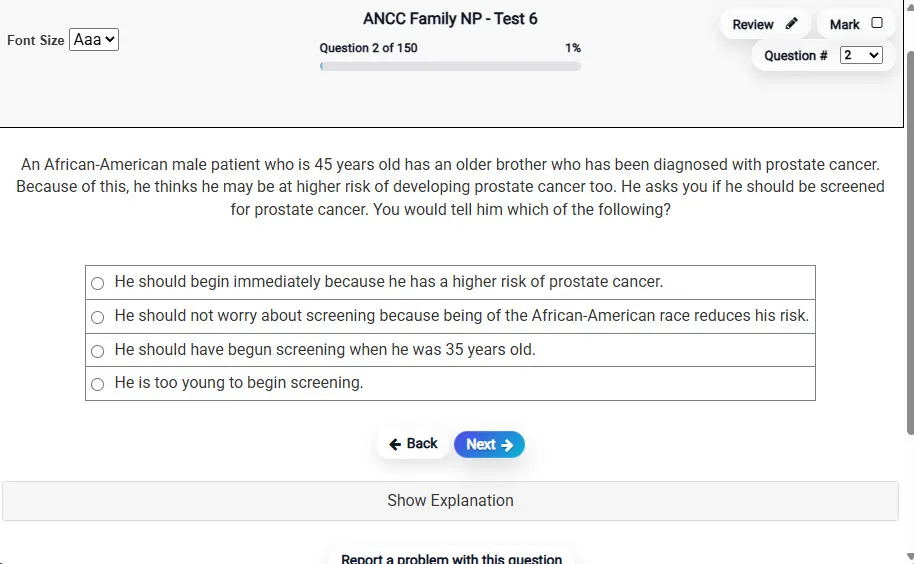
Answering a Question screen – Multiple-choice item view with navigation controls and progress tracker.
Answering a Question Multiple-choice item view with navigation controls and progress tracker.

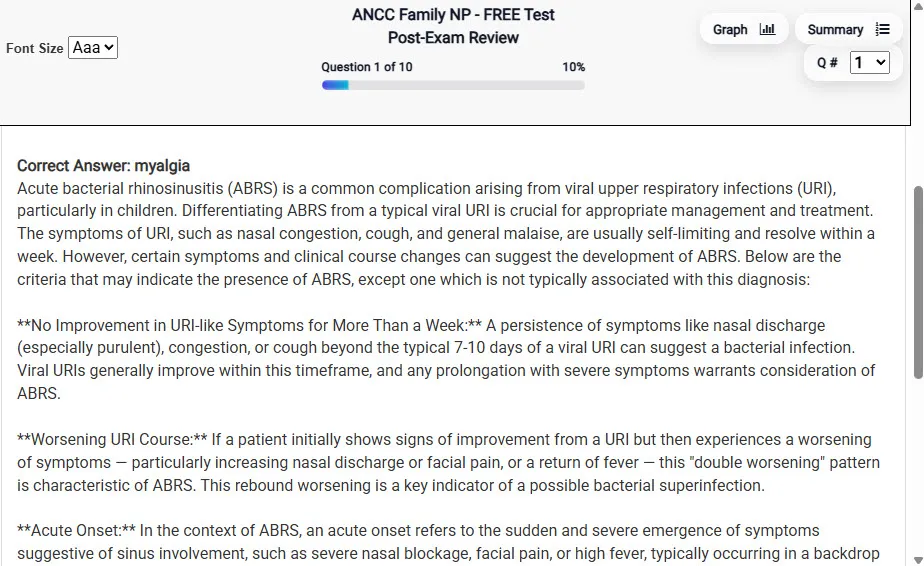
                           Detailed Explanation screen – 
                         Review mode showing chosen answer and rationale and references.
Detailed Explanation Review mode showing chosen answer and rationale and references.

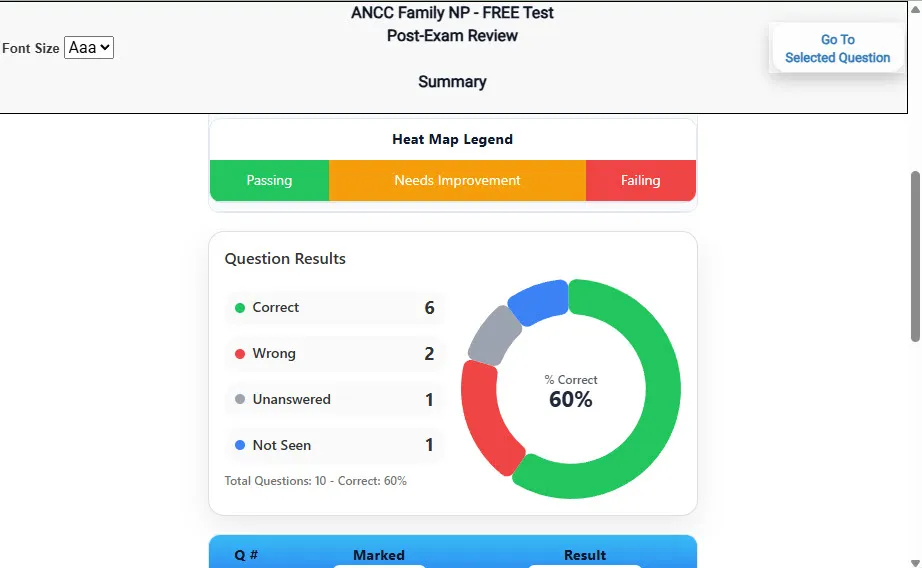
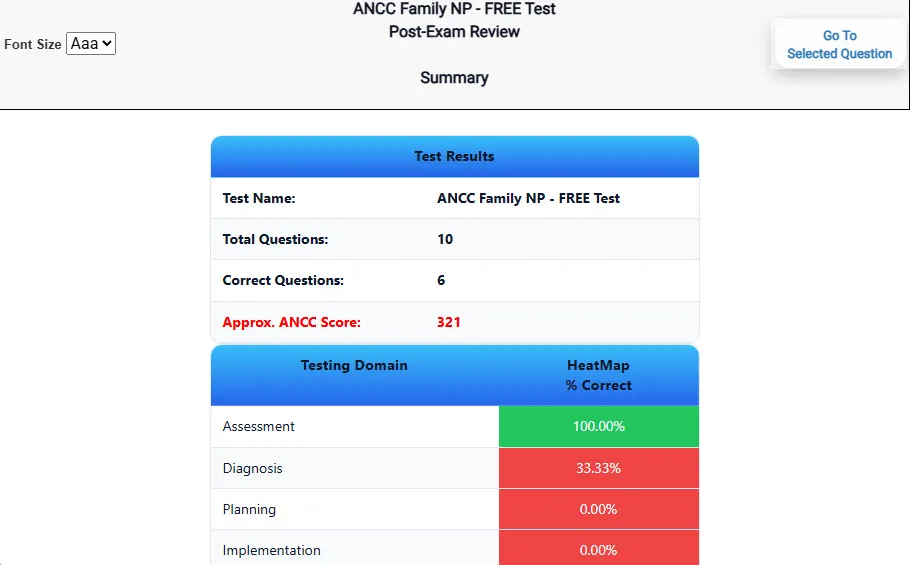
                           Review Summary 1 screen – 
                         Summary with counts for correct/wrong/unanswered and not seen items.
Review Summary 1 Summary with counts for correct/wrong/unanswered and not seen items.

                           Review Summary 2 screen – 
                         Advanced summary with category/domain breakdown and performance insights.
Review Summary 2 Advanced summary with category/domain breakdown and performance insights.

What Each Screen Shows

Answer Question Screen

  • Clean multiple-choice interface with progress bar.
  • Mark for review feature.
  • Matches real test pacing.

Detailed Explanation

  • Correct answer plus rationale.
  • Key concepts and guidelines highlighted.
  • Move between questions to fill knowledge gaps.

Review Summary 1

  • Overall results with total questions and scaled score.
  • Domain heatmap shows strengths and weaknesses.
  • Quick visual feedback on study priorities.

Review Summary 2

  • Chart of correct, wrong, unanswered, not seen.
  • Color-coded results for easy review.
  • Links back to missed items.

Top 10 Reasons to Use Exam Edge for your NCLEX Practical Nurse Exam Prep

  1. Focused on the NCLEX Practical Nurse Exam

    Our practice tests are built specifically for the NCLEX PN exam — every question mirrors the real topics, format, and difficulty so you're studying exactly what matters.

  2. Real Exam Simulation

    We match the per-question time limits and pressure of the actual NCLEX exam, so test day feels familiar and stress-free.

  3. 40 Full Practice Tests & 4,000 Unique Questions

    You'll have more than enough material to master every NCLEX PN concept — no repeats, no fluff.

  4. Lower Cost Than a Retake

    Ordering 5 practice exams costs less than retaking the NCLEX Practical Nurse exam after a failure. One low fee could save you both time and money.

  5. Flexible Testing

    Need to step away mid-exam? Pick up right where you left off — with your remaining time intact.

  6. Instant Scoring & Feedback

    See your raw score and an estimated NCLEX Practical Nurse score immediately after finishing each practice test.

  7. Detailed Explanations for Every Question

    Review correct and incorrect answers with clear, step-by-step explanations so you truly understand each topic.

  8. Trusted & Accredited

    We're fully accredited by the Better Business Bureau and uphold the highest standards of trust and transparency.

  9. Web-Based & Always Available

    No software to install. Access your NCLEX PN practice exams 24/7 from any computer or mobile device.

  10. Expert Support When You Need It

    Need extra help? Our specialized tutors are highly qualified and ready to support your NCLEX exam prep.


Pass the NCLEX Practical Nurse Exam with Realistic Practice Tests from Exam Edge

Preparing for your upcoming NCLEX Practical Nurse () Certification Exam can feel overwhelming — but the right practice makes all the difference. Exam Edge gives you the tools, structure, and confidence to pass on your first try. Our online practice exams are built to match the real NCLEX PN exam in content, format, and difficulty.

  • 📝 40 NCLEX Practical Nurse Practice Tests: Access 40 full-length exams with 100 questions each, covering every major NCLEX Practical Nurse topic in depth.
  • Instant Online Access: Start practicing right away — no software, no waiting.
  • 🧠 Step-by-Step Explanations: Understand the reasoning behind every correct answer so you can master NCLEX PN exam concepts.
  • 🔄 Retake Each Exam Up to 4 Times: Build knowledge through repetition and track your improvement over time.
  • 🌐 Web-Based & Available 24/7: Study anywhere, anytime, on any device.
  • 🧘 Boost Your Test-Day Confidence: Familiarity with the NCLEX format reduces anxiety and helps you perform under pressure.

These NCLEX Practical Nurse practice exams are designed to simulate the real testing experience by matching question types, timing, and difficulty level. This approach helps you get comfortable not just with the exam content, but also with the testing environment, so you walk into your exam day focused and confident.

Exam Edge NCSBN Reviews


Thank you so much for this website!!! Not enough nursing students know about Exam Edge!! We're all studying the wrong material .. When I found this site and started studying I just knew that I had finally found what I need to pass my boards !!! I purchased the 30 practice test and I studied and ...
Read More
LaDonna , Michigan

I recently had to test out of my school with an 850 on the Hesi PN, so I purchased the exams from you guys, about 5 to 7 exams, and passed the exit HesiPn with a 988! First time around! Then I purchased the NclexPN exam tests from you guys and I passed my NCLEX first time around! These tests really ...
Read More
Welsh, NC

Great experience to follow a path for success .

E. , Souderton, Pennsylvania

I can't believe this website doesn't have a high following status. I bought 40 practice questions, did 20 practice questions, and took my Hesi exit. I scored 1070. I completed all 40 practice exams and passed my boards for the first time. Exam Edge introduced me to a bunch of topics and boosted my c ...
Read More
Juliet M., Tarpon Springs, Florida


NCLEX Practical Nurse Aliases Test Name

Here is a list of alternative names used for this exam.

  • NCLEX Practical Nurse
  • NCLEX Practical Nurse test
  • NCLEX Practical Nurse Certification Test
  • NCLEX PN test
  • NCSBN
  • NCSBN
  • test
  • NCLEX Practical Nurse ()
  • NCLEX Practical Nurse certification