This is the content of the pop-over!

Lightning Deal Alert – 12% Off Ends at Midnight!

Strike while the savings are hot! Use promo code FlashSale at checkout for 12% off any Exam Edge test or bundle. Hurry—the clock is ticking!

LVN - NCLEX-PN Practice Tests & Test Prep by Exam Edge


Licensed Vocational Nurses   product image
(5.0)
Based on 28 Reviews

  • Real Exam Simulation: Timed questions and matching content build comfort for your LVN - NCLEX-PN test day.
  • Instant, 24/7 Access: Web-based Licensed Vocational Nurses practice exams with no software needed.
  • Clear Explanations: Step-by-step answers and explanations for your Licensed exam to strengthen understanding.
  • Boosted Confidence: Reduces anxiety and improves test-taking skills to ace your Licensed Vocational Nurses .

Featured on

Licensed Vocational Nurses Online Practice Test Bundles

BEST VALUE
35 practice tests

$248.25

$1,398.25

SAVE $1150

Only $7.09 per test!

  • 100% Pass Guarantee
  • 35 online practice tests
  • 100 questions per test
  • Bonus: 100 Flash Cards + Study Guide
  • Instant access
  • Detailed Explanations
  • Practice tests never expire
  • Timed, untimed, or study guide mode
MOST POPULAR
15 practice tests

$149.25

$599.25

SAVE $450

Only $9.95 per test!

  • 15 online practice tests
  • 100 questions per test
  • Bonus: 100 Flash Cards + Study Guide
  • Instant access
  • Detailed Explanations
  • Practice tests never expire
  • Timed, untimed, or study guide mode
5 practice tests

$69.75

$199.75

SAVE $130

Only $13.95 per test!

  • 5 online practice tests
  • 100 questions per test
  • Bonus: 100 Flash Cards
  • Instant access
  • Detailed Explanations
  • Practice tests never expire
  • Timed, untimed, or study guide mode
1 practice test

$39.95

  • 1 online practice test
  • 100 questions per test
  • Instant access
  • Detailed Explanations
  • Practice tests never expire
  • Timed, untimed, or study guide mode
Quick Select
Tap to choose a bundle

** All Prices are in US Dollars (USD) **


LVN - NCLEX-PN () Resources

Jump to the section you need most.

Understanding the exact breakdown of the Licensed Vocational Nurses test will help you know what to expect and how to most effectively prepare. The Licensed Vocational Nurses has multiple-choice questions . The exam will be broken down into the sections below:

Licensed Vocational Nurses Exam Blueprint
Domain Name % Number of
Questions
Safe Effective Care Environment
- Coordinated Care
12-18% 16
     - Safety and Infection Control 8-14% 11
Health Promotion and Maintenance 7-13% 9
Physiological Integrity
- Basic Care and Comfort
11-17% 15
     - Pharmacological Therapies 9-15% 12
     - Reduction of Risk Potential 10-16% 13
     - Physiological Adaptation 11-17% 15
Psychosocial Integrity 7-13% 9

Licensed Vocational Nurses Study Tips by Domain

  • Prioritize care using ABCs, then safety, then acute pain—don’t let a stable chronic issue outrank a new airway/breathing concern (common trap on NCLEX-style items).
  • Clarify and implement provider orders using read-back for verbal/telephone orders; red flag: any order that is unclear, appears unsafe, or conflicts with policy requires verification before action.
  • Coordinate handoffs with a structured format (e.g., SBAR) and include allergies, code status, lines/drains/airway, and last meds; trap: incomplete handoff leading to duplicate dosing or missed time-sensitive therapies.
  • Delegate based on right task, circumstances, person, direction/communication, and supervision; contraindication: do not delegate initial assessments, teaching, or evaluation of unstable patients.
  • Manage transitions of care with medication reconciliation and follow-up appointments; red flag: discrepancies between home meds and discharge orders (especially anticoagulants, insulin, opioids).
  • Use chain of command when patient safety is at risk; priority rule: escalate promptly if a provider does not respond to a critical change (e.g., abnormal vitals, altered LOC) rather than waiting.
  • Use standard precautions for all patients; red flag: skipping hand hygiene before donning gloves is a frequent NCSBN-style “always wrong” option.
  • Implement transmission-based precautions correctly (contact/droplet/airborne); common trap: entering an airborne isolation room without fit-tested N95 (or leaving the door open).
  • Prevent device-associated infections by maintaining aseptic technique and minimizing invasiveness; priority rule: remove or replace unnecessary lines/catheters promptly when indicated.
  • Follow safe injection practices and sharps handling; red flag: recapping needles or carrying uncapped sharps—use immediate disposal in a puncture-resistant container.
  • Apply fall, seizure, and aspiration precautions based on risk; common trap: choosing physical restraints first instead of least-restrictive measures and frequent rounding.
  • Use correct cleaning/disinfection/sterilization levels for equipment; red flag: using low-level disinfectant on critical items (e.g., anything entering sterile tissue or the bloodstream requires sterilization).
  • Use age-appropriate screening and immunization schedules (e.g., pregnancy, pediatrics, older adult) and verify contraindications—red flag: administering live vaccines to an immunocompromised patient or during pregnancy.
  • Prioritize prenatal care milestones (nutrition, folic acid/iron, warning signs, follow-up) and escalate urgent symptoms—red flag: vaginal bleeding, severe headache/visual changes, or decreased fetal movement.
  • Promote growth and development by matching teaching to developmental stage and safety needs—common trap: expecting toddlers to share/cooperate like school-age children, leading to unrealistic parent guidance.
  • Teach disease prevention with specific, measurable behaviors (diet, activity, sleep, tobacco/alcohol cessation) and assess readiness to change—priority rule: focus first on one high-impact change the patient agrees to implement.
  • Support sexual and reproductive health (STI prevention, contraception adherence, consent, confidentiality within legal limits) and screen for intimate partner violence—red flag: inconsistent history or partner controlling answers.
  • Educate on self-care for chronic health maintenance (e.g., diabetes foot care, BP monitoring, medication routine) and set follow-up triggers—threshold: instruct to report sustained BP ≥ 180/120, glucose < 70, or signs of infection at wounds.
  • Prioritize comfort measures (repositioning q2hr, pressure-relieving surfaces, heel offloading) to prevent skin breakdown; red flag: nonblanchable erythema requires immediate offloading and reassessment.
  • Implement safe hygiene and bathing with temperature checks and skin inspection; common trap: skipping water-temp testing increases burn risk in patients with neuropathy or impaired sensation.
  • Support nutrition and hydration (I&O, daily weights, assist with feeding, aspiration precautions); priority rule: hold oral intake and request swallow screening if coughing/wet voice occurs with meals.
  • Maintain elimination patterns with timely toileting, perineal care, and bowel regimen adherence; red flag: new urinary retention, suprapubic distention, or no urine output warrants prompt provider notification.
  • Promote mobility and activity tolerance using gait belts, ROM exercises, and assistive devices; common trap: ambulating a post-op or sedated patient without assessing orthostatic BP increases fall risk.
  • Use nonpharmacologic pain relief (positioning, heat/cold as ordered, relaxation) and reassess pain after interventions; contraindication cue: avoid heat over areas of decreased sensation or suspected bleeding/inflammation unless specifically ordered.
  • Verify the “6 rights” (patient, drug, dose, route, time, documentation) and allergies before administration; red flag: a new order that conflicts with a documented allergy or prior adverse reaction.
  • Calculate doses carefully (mg/kg, unit conversions) and independently double-check high-alert meds per policy; common trap: confusing mg vs mcg or mL concentration (e.g., 250 mg/5 mL).
  • Prioritize monitoring for expected and serious adverse effects and hold the dose/notify the provider for defined parameters; red flag: opioid sedation or RR < 12/min before giving another dose.
  • Assess IV compatibility, dilution, and infusion rate before hanging or piggybacking medications; common trap: Y-site incompatibility or running potassium too fast (must be diluted and pump-controlled).
  • Teach and verify patient understanding of purpose, schedule, and key side effects/when to seek care; priority rule: emphasize anticoagulant bleeding precautions (easy bruising, black stools) before discharge.
  • Document administration and patient response promptly and report medication errors immediately per facility policy; red flag: charting a dose as given when it was delayed, refused, or vomited.
  • Trend vital signs and labs to catch complications early; red flag: a new O2 saturation drop, acute confusion, or rapidly rising pain is treated as deterioration until proven otherwise.
  • Prevent iatrogenic harm by verifying patient, drug, dose, route, time, and indication before giving high-alert meds; common trap: holding a medication without clarifying parameters (e.g., BP/HR cutoffs) and documenting the rationale.
  • Use focused assessment after procedures/lines/tubes (IV, urinary catheter, NG, drains) and escalate abnormal findings; priority cue: sudden swelling, coolness, or pain at an IV site suggests infiltration/extravasation and requires immediate action.
  • Implement aspiration and fall-risk precautions based on real-time status changes; red flag: new sedation, dizziness, or orthostatic hypotension means assist with ambulation and re-evaluate medication effects.
  • Recognize and act on early sepsis or shock indicators; threshold cue: fever or hypothermia plus tachycardia, tachypnea, or hypotension warrants prompt provider notification and facility protocol activation.
  • Monitor for bleeding and thromboembolism in at-risk patients (post-op, anticoagulants, immobility); common trap: missing subtle signs like increasing calf warmth/tenderness or black/tarry stools and delaying escalation.
  • Prioritize ABCs first in acute change: airway, breathing, circulation, then neuro status; red flag — new confusion, SpO2 drop, or systolic BP < 90 requires immediate action and escalation.
  • Recognize shock patterns (hypovolemic, cardiogenic, septic) and anticipate interventions (IV access, fluids vs. pressors); common trap — delaying reassessment after a bolus or titration.
  • Monitor for respiratory decompensation (increased work of breathing, silent chest, stridor) and intervene early (positioning, oxygen per order, notify provider/rapid response); red flag — sudden inability to speak full sentences.
  • Identify electrolyte/acid–base shifts affecting heart and neuro function (e.g., hyperkalemia, hypocalcemia, metabolic acidosis); priority rule — any dysrhythmia or peaked T waves is urgent.
  • Post-op and acute illness adaptation: assess for hemorrhage, DVT/PE, and atelectasis; common trap — attributing tachycardia and restlessness to pain without checking bleeding or oxygenation.
  • Manage endocrine emergencies and medication effects on physiology (hypoglycemia, DKA, adrenal crisis); red flag — diaphoresis with altered LOC treat as hypoglycemia until proven otherwise.
  • Prioritize therapeutic communication techniques (open-ended questions, reflection, and silence) and avoid the trap of “why” questions, which can feel accusatory and shut down disclosure.
  • Know mandatory reporting triggers (suspected child/elder abuse, neglect, or exploitation) and treat inconsistent injury stories or delayed care as a red flag requiring escalation per policy.
  • Use suicide and self-harm precautions when risk is present; a common trap is accepting a “no” without assessing plan, means, and intent and ensuring environmental safety.
  • Manage aggression and agitation with least-restrictive interventions first; a key cue is that restraints/seclusion require a time-limited order, ongoing monitoring, and documentation of alternatives tried.
  • Support grief, loss, and coping with culturally sensitive care; a red flag is complicated grief indicators (persistent functional impairment, hopelessness, or substance misuse) needing referral.
  • Maintain professional boundaries and confidentiality (HIPAA) while coordinating care; a common trap is discussing patient details in public areas or sharing information without a need-to-know.


Built to Fit Into Your Busy Life

Everything you need to prepare with confidence—without wasting a minute.

Three Study Modes

Timed, No Time Limit, or Explanation mode.

Actionable Analytics

Heatmaps and scaled scores highlight weak areas.

High-Yield Rationales

Concise explanations emphasize key concepts.

Realistic Interface

Matches the feel of the actual exam environment.

Accessible by Design

Clean layout reduces cognitive load.

Anytime, Anywhere

Web-based access 24/7 on any device.
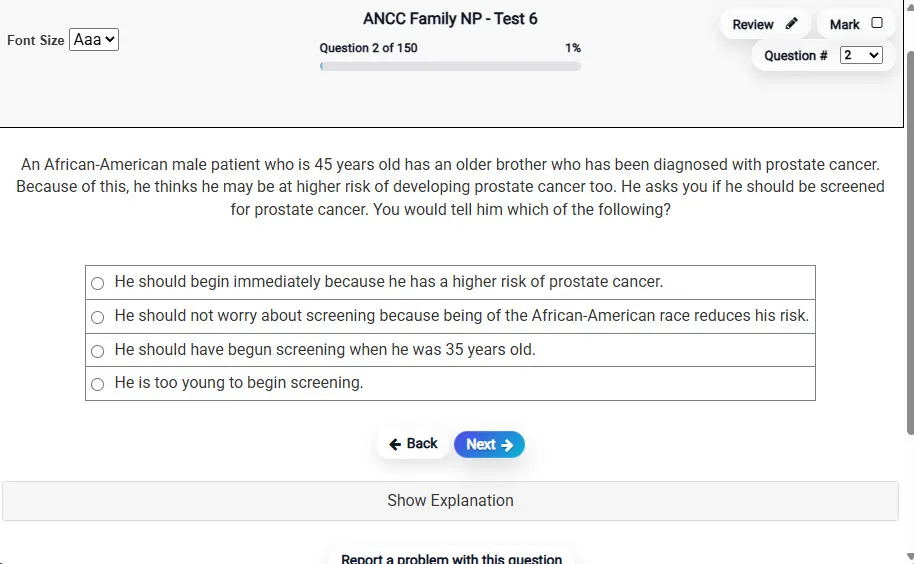
Answering a Question screen – Multiple-choice item view with navigation controls and progress tracker.
Answering a Question Multiple-choice item view with navigation controls and progress tracker.

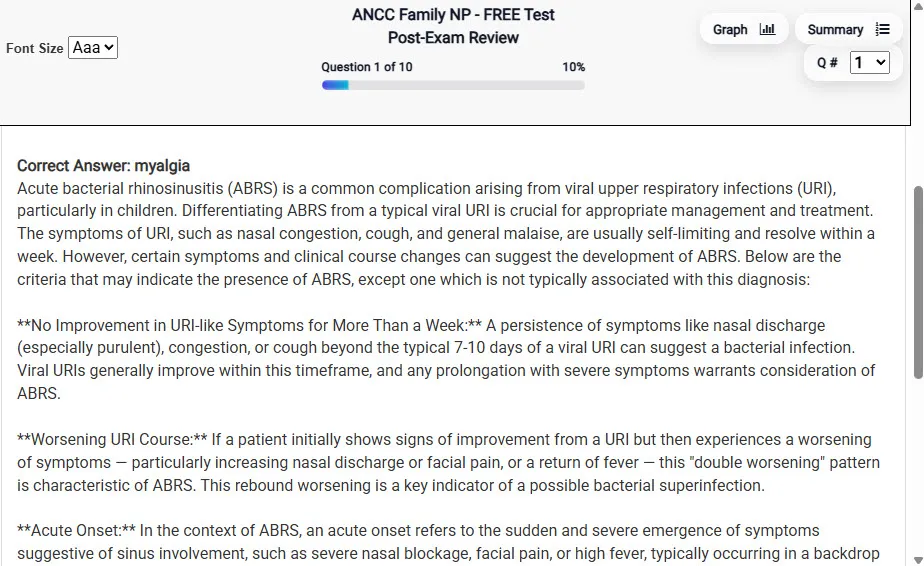
                           Detailed Explanation screen – 
                         Review mode showing chosen answer and rationale and references.
Detailed Explanation Review mode showing chosen answer and rationale and references.

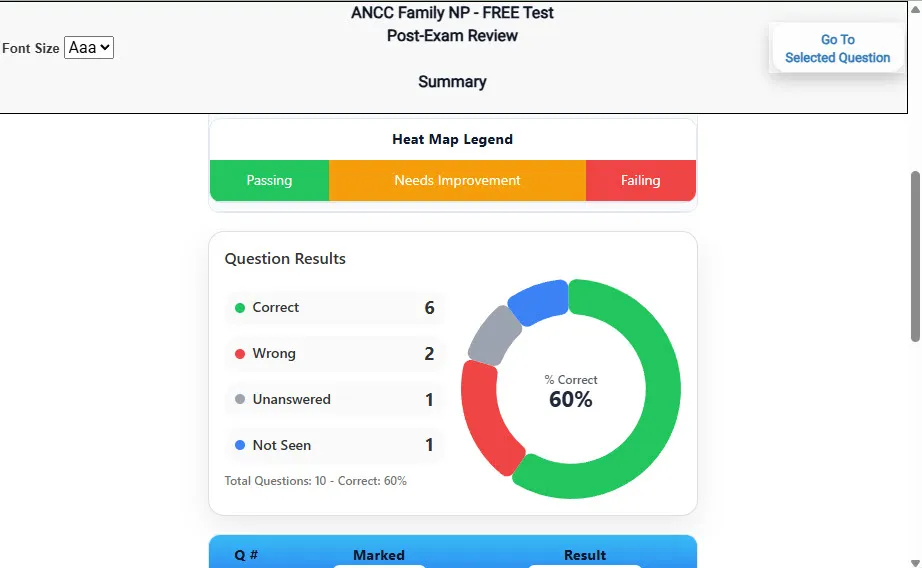
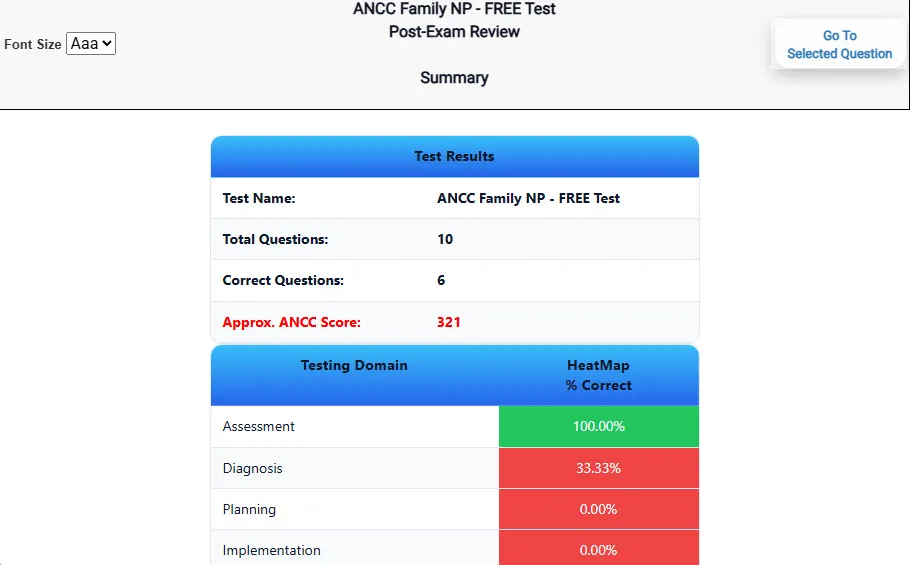
                           Review Summary 1 screen – 
                         Summary with counts for correct/wrong/unanswered and not seen items.
Review Summary 1 Summary with counts for correct/wrong/unanswered and not seen items.

                           Review Summary 2 screen – 
                         Advanced summary with category/domain breakdown and performance insights.
Review Summary 2 Advanced summary with category/domain breakdown and performance insights.

What Each Screen Shows

Answer Question Screen

  • Clean multiple-choice interface with progress bar.
  • Mark for review feature.
  • Matches real test pacing.

Detailed Explanation

  • Correct answer plus rationale.
  • Key concepts and guidelines highlighted.
  • Move between questions to fill knowledge gaps.

Review Summary 1

  • Overall results with total questions and scaled score.
  • Domain heatmap shows strengths and weaknesses.
  • Quick visual feedback on study priorities.

Review Summary 2

  • Chart of correct, wrong, unanswered, not seen.
  • Color-coded results for easy review.
  • Links back to missed items.

Top 10 Reasons to Use Exam Edge for your Licensed Vocational Nurses Exam Prep

  1. Focused on the Licensed Vocational Nurses Exam

    Our practice tests are built specifically for the LVN - NCLEX-PN exam — every question mirrors the real topics, format, and difficulty so you're studying exactly what matters.

  2. Real Exam Simulation

    We match the per-question time limits and pressure of the actual Licensed exam, so test day feels familiar and stress-free.

  3. 35 Full Practice Tests & 3,500 Unique Questions

    You'll have more than enough material to master every LVN - NCLEX-PN concept — no repeats, no fluff.

  4. Lower Cost Than a Retake

    Ordering 5 practice exams costs less than retaking the Licensed Vocational Nurses exam after a failure. One low fee could save you both time and money.

  5. Flexible Testing

    Need to step away mid-exam? Pick up right where you left off — with your remaining time intact.

  6. Instant Scoring & Feedback

    See your raw score and an estimated Licensed Vocational Nurses score immediately after finishing each practice test.

  7. Detailed Explanations for Every Question

    Review correct and incorrect answers with clear, step-by-step explanations so you truly understand each topic.

  8. Trusted & Accredited

    We're fully accredited by the Better Business Bureau and uphold the highest standards of trust and transparency.

  9. Web-Based & Always Available

    No software to install. Access your LVN - NCLEX-PN practice exams 24/7 from any computer or mobile device.

  10. Expert Support When You Need It

    Need extra help? Our specialized tutors are highly qualified and ready to support your Licensed exam prep.


Pass the Licensed Vocational Nurses Exam with Realistic Practice Tests from Exam Edge

Preparing for your upcoming Licensed Vocational Nurses () Certification Exam can feel overwhelming — but the right practice makes all the difference. Exam Edge gives you the tools, structure, and confidence to pass on your first try. Our online practice exams are built to match the real LVN - NCLEX-PN exam in content, format, and difficulty.

  • 📝 35 Licensed Vocational Nurses Practice Tests: Access 35 full-length exams with 100 questions each, covering every major Licensed Vocational Nurses topic in depth.
  • Instant Online Access: Start practicing right away — no software, no waiting.
  • 🧠 Step-by-Step Explanations: Understand the reasoning behind every correct answer so you can master LVN - NCLEX-PN exam concepts.
  • 🔄 Retake Each Exam Up to 4 Times: Build knowledge through repetition and track your improvement over time.
  • 🌐 Web-Based & Available 24/7: Study anywhere, anytime, on any device.
  • 🧘 Boost Your Test-Day Confidence: Familiarity with the Licensed format reduces anxiety and helps you perform under pressure.

These Licensed Vocational Nurses practice exams are designed to simulate the real testing experience by matching question types, timing, and difficulty level. This approach helps you get comfortable not just with the exam content, but also with the testing environment, so you walk into your exam day focused and confident.

Exam Edge NCSBN Reviews


I recently had to test out of my school with an 850 on the Hesi PN, so I purchased the exams from you guys, about 5 to 7 exams, and passed the exit HesiPn with a 988! First time around! Then I purchased the NclexPN exam tests from you guys and I passed my NCLEX first time around! These tests really ...
Read More
Welsh, NC

Thank you so much for this website!!! Not enough nursing students know about Exam Edge!! We're all studying the wrong material .. When I found this site and started studying I just knew that I had finally found what I need to pass my boards !!! I purchased the 30 practice test and I studied and ...
Read More
LaDonna , Michigan

Great experience to follow a path for success .

E. , Souderton, Pennsylvania

I can't believe this website doesn't have a high following status. I bought 40 practice questions, did 20 practice questions, and took my Hesi exit. I scored 1070. I completed all 40 practice exams and passed my boards for the first time. Exam Edge introduced me to a bunch of topics and boosted my c ...
Read More
Juliet M., Tarpon Springs, Florida


Licensed Vocational Nurses Aliases Test Name

Here is a list of alternative names used for this exam.

  • Licensed Vocational Nurses
  • Licensed Vocational Nurses test
  • Licensed Vocational Nurses Certification Test
  • LVN - NCLEX-PN test
  • NCSBN
  • NCSBN
  • test
  • Licensed Vocational Nurses ()
  • Licensed Vocational Nurses certification