This is the content of the pop-over!

NCC Low Risk Neonatal Nursing (RNC-LRN) Practice Tests & Test Prep by Exam Edge


NCC Low Risk Neonatal Nursing  product image
(4.6)
Based on 40 Reviews

  • Real Exam Simulation: Timed questions and matching content build comfort for your NCC Low Risk Neonatal Nursing test day.
  • Instant, 24/7 Access: Web-based NCC Low Risk Neonatal Nursing practice exams with no software needed.
  • Clear Explanations: Step-by-step answers and explanations for your NCC exam to strengthen understanding.
  • Boosted Confidence: Reduces anxiety and improves test-taking skills to ace your NCC Low Risk Neonatal Nursing (RNC-LRN).

Featured on

NCC Low Risk Neonatal Nursing Online Practice Test Bundles

BEST VALUE
10 practice tests

$99.50

$399.50

SAVE $300

Only $9.95 per test!

  • 100% Pass Guarantee
  • 10 online practice tests
  • 100 questions per test
  • Bonus: 100 Flash Cards + Study Guide
  • Instant access
  • Detailed Explanations
  • Practice tests never expire
  • Timed, untimed, or study guide mode
5 practice tests

$69.75

$199.75

SAVE $130

Only $13.95 per test!

  • 5 online practice tests
  • 100 questions per test
  • Bonus: 100 Flash Cards + Study Guide
  • Instant access
  • Detailed Explanations
  • Practice tests never expire
  • Timed, untimed, or study guide mode
1 practice test

$39.95

  • 1 online practice test
  • 100 questions per test
  • Instant access
  • Detailed Explanations
  • Practice tests never expire
  • Timed, untimed, or study guide mode
Quick Select
Tap to choose a bundle

** All Prices are in US Dollars (USD) **


NCC Low Risk Neonatal Nursing (RNC-LRN) Resources

Jump to the section you need most.

Understanding the exact breakdown of the NCC Low Risk Neonatal Nursing test will help you know what to expect and how to most effectively prepare. The NCC Low Risk Neonatal Nursing has multiple-choice questions . The exam will be broken down into the sections below:

NCC Low Risk Neonatal Nursing Exam Blueprint
Domain Name % Number of
Questions
Mother/Fetus 15% 15
Newborn 59.5% 60
General Management 15% 15
Family Integration 8% 8
Professional Issues 2.5% 3

NCC Low Risk Neonatal Nursing Study Tips by Domain

  • Screen maternal vital signs for early deterioration—new headache/visual changes, RUQ/epigastric pain, or BP ≥160/110 is a priority red flag for severe features and requires immediate escalation.
  • Assess labor progress using objective criteria—don’t call “arrest” in active labor until at least 6 cm with ruptured membranes and adequate contractions; a common trap is premature diagnosis leading to unnecessary intervention.
  • Interpret fetal heart rate patterns with maternal context—recurrent late decelerations or minimal variability after maternal hypotension are red flags; priority first steps include left lateral positioning and IV fluid bolus before assuming fetal compromise.
  • Monitor infection risk—maternal fever ≥38.0°C (100.4°F) with uterine tenderness or foul fluid is a red flag for intraamniotic infection; a common trap is attributing fever only to epidural without reassessment.
  • Manage common maternal complications with safety thresholds—postpartum bleeding soaking ≥1 pad/hour or a boggy uterus is a red flag; priority rule is fundal massage and uterotonic per protocol while checking for retained tissue or laceration.
  • Provide medication and breastfeeding guidance with contraindication awareness—avoid NSAIDs or methylergonovine when hypertensive disorders are present; a common trap is routine postpartum pain orders without considering preeclampsia risk.
  • Immediately after birth, prioritize thermoregulation (dry, skin-to-skin, hat, warm blankets) and aim for axillary 36.5–37.5°C; red flag: persistent temp <36.5°C despite interventions suggests cold stress/hypoglycemia risk.
  • Assess the transition with APGAR at 1 and 5 minutes and ongoing respiratory status; red flag: grunting, nasal flaring, retractions, or persistent central cyanosis beyond the first minutes warrants escalation.
  • Support feeding within the first hour and monitor intake/output expectations; common trap: dismissing ineffective latch or sleepy feeds—watch for <6 wet diapers/day by day 4 or signs of dehydration.
  • Monitor glucose per facility/NCC priorities for at-risk newborns (SGA/LGA, late preterm, IDM, symptomatic); threshold cue: treat or escalate for symptomatic hypoglycemia or persistent low values after feeding per protocol.
  • Screen for hyperbilirubinemia using age-in-hours risk assessment and ensure follow-up after early discharge; red flag: jaundice in the first 24 hours or rapidly rising bilirubin requires prompt evaluation.
  • Provide routine prophylaxis and safety care (vitamin K, erythromycin, Hep B as indicated, safe sleep) and verify ID/security processes; common trap: unsafe sleep teaching gaps—reinforce supine, firm surface, no loose bedding.
  • Prioritize care using ABCs and thermoregulation first; a key red flag is a temperature <36.5°C (97.7°F) or ≥38.0°C (100.4°F) that persists after environmental adjustment.
  • Maintain neutral thermal environment (dry, warm, hat, skin-to-skin when stable); common trap: delaying warming while completing routine tasks (weights, baths, photos).
  • Use infection-prevention basics consistently (hand hygiene, equipment cleaning, cord care per policy); red flag: any maternal fever/chorioamnionitis history or newborn lethargy/poor feeding—escalate assessment rather than assuming “normal transition.”
  • Ensure safe medication and prophylaxis administration (vitamin K, erythromycin if ordered/policy) with weight-based calculations; common trap: misreading mg vs mL or failing to verify concentration before dosing.
  • Support feeding management with measurable intake cues (effective latch, audible swallows, appropriate output); priority rule: fewer wet diapers than expected for day of life or >7% weight loss early warrants focused evaluation and provider notification per protocol.
  • Apply safe sleep and discharge readiness checks (back to sleep, firm surface, no loose bedding; car seat use); contraindication: discharging without confirming stable vitals, thermoregulation, and feeding adequacy—these are NCC-style “must meet” criteria.
  • Promote early, frequent skin-to-skin and initiate breastfeeding within the first hour when stable; red flag: separate mother and newborn for routine care (e.g., weighing, bathing) without a clinical indication.
  • Use teach-back for feeding cues, latch, output expectations, and warning signs; common trap: giving education once at discharge without confirming caregiver understanding or literacy/language needs.
  • Assess parent-infant bonding and attachment behaviors (eye contact, holding, response to cues) each shift; red flag: flat affect, avoidance, or statements suggesting rejection/anger toward the infant.
  • Screen for postpartum mood disorders and connect to resources per facility protocol; priority rule: any suicidal ideation, psychosis symptoms, or intent to harm self/infant requires immediate escalation.
  • Support safe sleep teaching consistently (alone, on back, in a crib/bassinet) and document caregiver return-demonstration; common trap: tolerating pillows, blankets, or bed-sharing because the family says “we always do it.”
  • Facilitate family-centered care with inclusion of support persons while protecting privacy and consent; red flag: sharing maternal/newborn information with family members without explicit permission.
  • Practice within RN scope and facility policy for low-risk newborns; red flag: independently diagnosing or prescribing treatments beyond standing orders.
  • Use standardized patient identification and medication safety steps (two identifiers, weight-based dosing); common trap: mixing up mother/baby bands or documenting on the wrong chart.
  • Follow informed consent and refusal processes for newborn procedures and prophylaxis; red flag: performing vitamin K/eye prophylaxis/circumcision without documented consent per policy.
  • Prioritize accurate, timely documentation of assessments, interventions, and teaching; common trap: charting “WNL” without specific findings or omitting reassessment after an intervention.
  • Escalate care using chain-of-command and SBAR when changes exceed “low-risk” parameters; priority rule: abnormal vitals, poor feeding, lethargy, or respiratory distress require prompt provider notification.
  • Maintain confidentiality and professional boundaries while supporting families; red flag: discussing patient details in public areas or posting any patient-related content on social media.


Built to Fit Into Your Busy Life

Everything you need to prepare with confidence—without wasting a minute.

Three Study Modes

Timed, No Time Limit, or Explanation mode.

Actionable Analytics

Heatmaps and scaled scores highlight weak areas.

High-Yield Rationales

Concise explanations emphasize key concepts.

Realistic Interface

Matches the feel of the actual exam environment.

Accessible by Design

Clean layout reduces cognitive load.

Anytime, Anywhere

Web-based access 24/7 on any device.
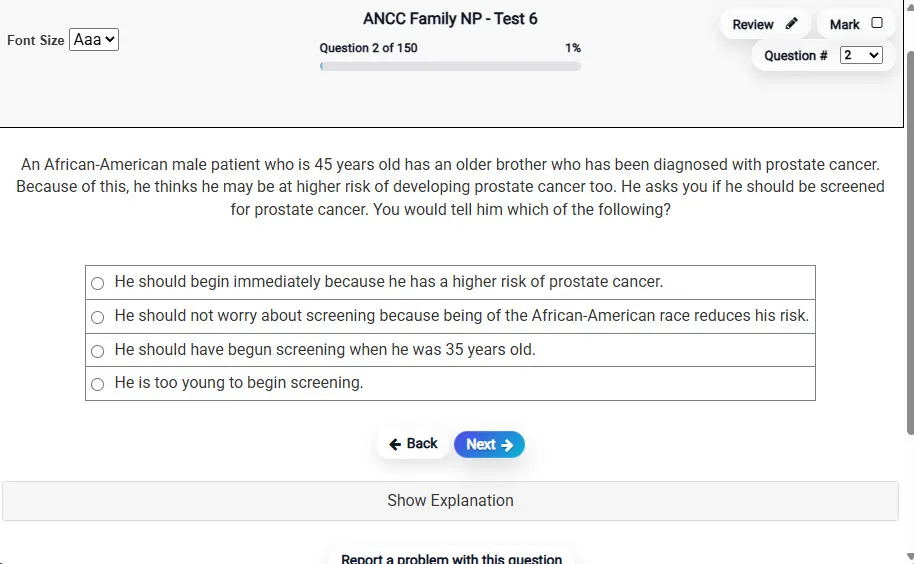
Answering a Question screen – Multiple-choice item view with navigation controls and progress tracker.
Answering a Question Multiple-choice item view with navigation controls and progress tracker.

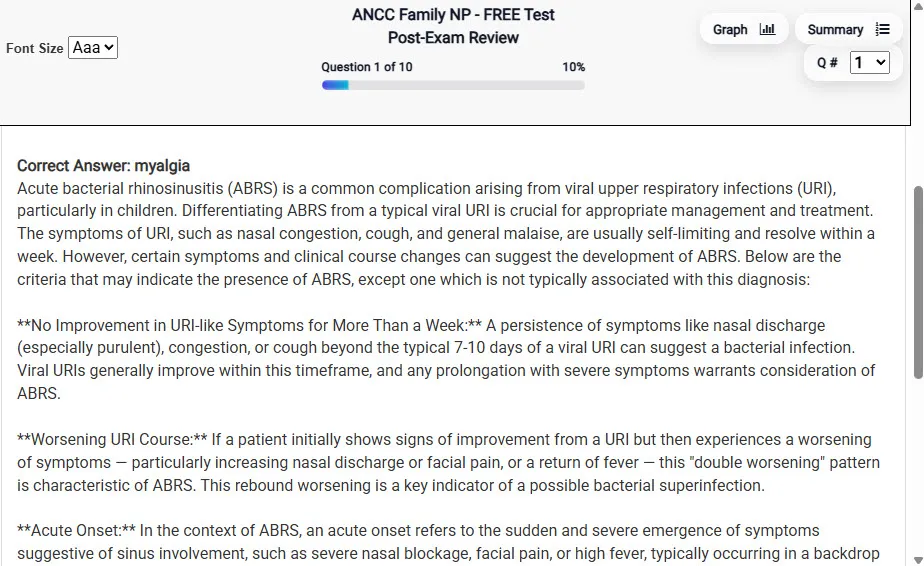
                           Detailed Explanation screen – 
                         Review mode showing chosen answer and rationale and references.
Detailed Explanation Review mode showing chosen answer and rationale and references.

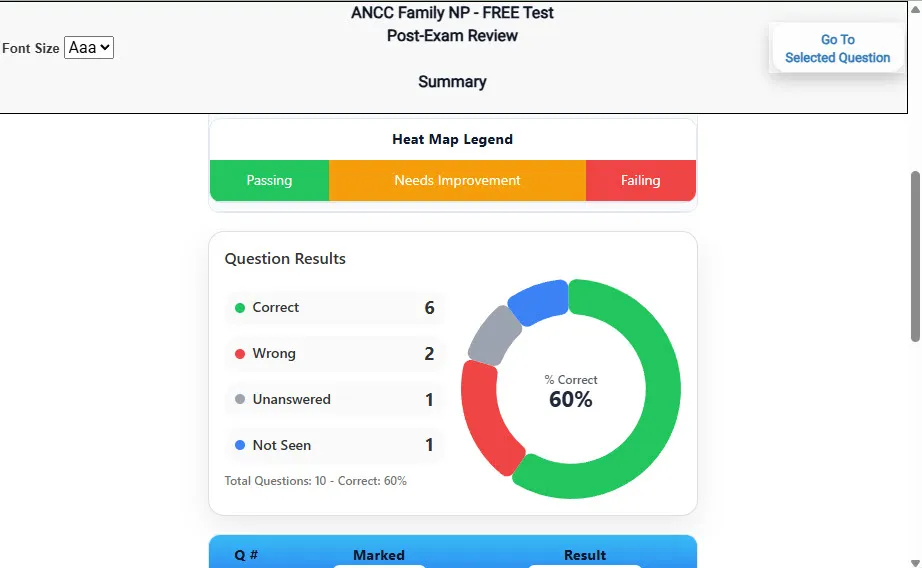
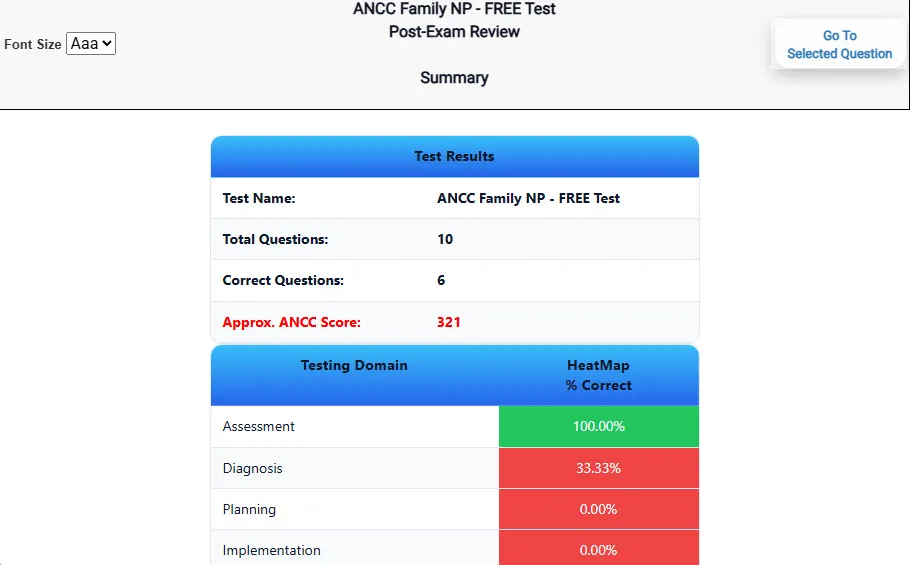
                           Review Summary 1 screen – 
                         Summary with counts for correct/wrong/unanswered and not seen items.
Review Summary 1 Summary with counts for correct/wrong/unanswered and not seen items.

                           Review Summary 2 screen – 
                         Advanced summary with category/domain breakdown and performance insights.
Review Summary 2 Advanced summary with category/domain breakdown and performance insights.

What Each Screen Shows

Answer Question Screen

  • Clean multiple-choice interface with progress bar.
  • Mark for review feature.
  • Matches real test pacing.

Detailed Explanation

  • Correct answer plus rationale.
  • Key concepts and guidelines highlighted.
  • Move between questions to fill knowledge gaps.

Review Summary 1

  • Overall results with total questions and scaled score.
  • Domain heatmap shows strengths and weaknesses.
  • Quick visual feedback on study priorities.

Review Summary 2

  • Chart of correct, wrong, unanswered, not seen.
  • Color-coded results for easy review.
  • Links back to missed items.

Top 10 Reasons to Use Exam Edge for your NCC Low Risk Neonatal Nursing Exam Prep

  1. Focused on the NCC Low Risk Neonatal Nursing Exam

    Our practice tests are built specifically for the NCC Low Risk Neonatal Nursing exam — every question mirrors the real topics, format, and difficulty so you're studying exactly what matters.

  2. Real Exam Simulation

    We match the per-question time limits and pressure of the actual NCC exam, so test day feels familiar and stress-free.

  3. 10 Full Practice Tests & 1,000 Unique Questions

    You'll have more than enough material to master every NCC Low Risk Neonatal Nursing concept — no repeats, no fluff.

  4. Lower Cost Than a Retake

    Ordering 5 practice exams costs less than retaking the NCC Low Risk Neonatal Nursing exam after a failure. One low fee could save you both time and money.

  5. Flexible Testing

    Need to step away mid-exam? Pick up right where you left off — with your remaining time intact.

  6. Instant Scoring & Feedback

    See your raw score and an estimated NCC Low Risk Neonatal Nursing score immediately after finishing each practice test.

  7. Detailed Explanations for Every Question

    Review correct and incorrect answers with clear, step-by-step explanations so you truly understand each topic.

  8. Trusted & Accredited

    We're fully accredited by the Better Business Bureau and uphold the highest standards of trust and transparency.

  9. Web-Based & Always Available

    No software to install. Access your NCC Low Risk Neonatal Nursing practice exams 24/7 from any computer or mobile device.

  10. Expert Support When You Need It

    Need extra help? Our specialized tutors are highly qualified and ready to support your NCC exam prep.


Pass the NCC Low Risk Neonatal Nursing Exam with Realistic Practice Tests from Exam Edge

Preparing for your upcoming NCC Low Risk Neonatal Nursing (RNC-LRN) Certification Exam can feel overwhelming — but the right practice makes all the difference. Exam Edge gives you the tools, structure, and confidence to pass on your first try. Our online practice exams are built to match the real NCC Low Risk Neonatal Nursing exam in content, format, and difficulty.

  • 📝 10 NCC Low Risk Neonatal Nursing Practice Tests: Access 10 full-length exams with 100 questions each, covering every major NCC Low Risk Neonatal Nursing topic in depth.
  • Instant Online Access: Start practicing right away — no software, no waiting.
  • 🧠 Step-by-Step Explanations: Understand the reasoning behind every correct answer so you can master NCC Low Risk Neonatal Nursing exam concepts.
  • 🔄 Retake Each Exam Up to 4 Times: Build knowledge through repetition and track your improvement over time.
  • 🌐 Web-Based & Available 24/7: Study anywhere, anytime, on any device.
  • 🧘 Boost Your Test-Day Confidence: Familiarity with the NCC format reduces anxiety and helps you perform under pressure.

These NCC Low Risk Neonatal Nursing practice exams are designed to simulate the real testing experience by matching question types, timing, and difficulty level. This approach helps you get comfortable not just with the exam content, but also with the testing environment, so you walk into your exam day focused and confident.


Exam Edge NCC Reviews


Lots of repeat questions. Questions were too simple. Did not prepare me for my certification exam.

Rebecca , Charleston, South Carolina

Inpatient OB. I passed!

Melinda , Yukon, Oklahoma

Would have been nice to get quicker response regarding the fact I still had a couple of tests left instead of needing to buy more!

Stephanie , Wolcottville, Indiana


NCC Low Risk Neonatal Nursing Aliases Test Name

Here is a list of alternative names used for this exam.

  • NCC Low Risk Neonatal Nursing
  • NCC Low Risk Neonatal Nursing test
  • NCC Low Risk Neonatal Nursing Certification Test
  • NCC
  • NCC RNC-LRN
  • RNC-LRN test
  • NCC Low Risk Neonatal Nursing (RNC-LRN)
  • Low Risk Neonatal Nursing certification