This is the content of the pop-over!

Lightning Deal Alert – 12% Off Ends at Midnight!

Strike while the savings are hot! Use promo code FlashSale at checkout for 12% off any Exam Edge test or bundle. Hurry—the clock is ticking!

NASM CGPT (NASM-CGPT) Practice Tests & Test Prep by Exam Edge


NASM Certified Group Personal Trainer   product image
(4.9)
Based on 20 Reviews

  • Real Exam Simulation: Timed questions and matching content build comfort for your NASM CGPT test day.
  • Instant, 24/7 Access: Web-based NASM Certified Group Personal Trainer practice exams with no software needed.
  • Clear Explanations: Step-by-step answers and explanations for your NASM exam to strengthen understanding.
  • Boosted Confidence: Reduces anxiety and improves test-taking skills to ace your NASM Certified Group Personal Trainer (NASM-CGPT).

Featured on

NASM Certified Group Personal Trainer Online Practice Test Bundles

BEST VALUE
5 practice tests

$69.75

$199.75

SAVE $130

Only $13.95 per test!

  • 100% Pass Guarantee
  • 5 online practice tests
  • 100 questions per test
  • Bonus: 100 Flash Cards + Study Guide
  • Instant access
  • Detailed Explanations
  • Practice tests never expire
  • Timed, untimed, or study guide mode
1 practice test

$39.95

  • 1 online practice test
  • 100 questions per test
  • Instant access
  • Detailed Explanations
  • Practice tests never expire
  • Timed, untimed, or study guide mode
Quick Select
Tap to choose a bundle

** All Prices are in US Dollars (USD) **


NASM CGPT (NASM-CGPT) Resources

Jump to the section you need most.

Understanding the exact breakdown of the NASM Certified Group Personal Trainer test will help you know what to expect and how to most effectively prepare. The NASM Certified Group Personal Trainer has 120 multiple-choice questions . The exam will be broken down into the sections below:

NASM Certified Group Personal Trainer Exam Blueprint
Domain Name % Number of
Questions
Basic and Applied Sciences 15% 17
Assessment 15% 17
Exercise Technique and Training Instruction 20% 23
Program Design 25% 29
Considerations in Nutrition 12% 14
Client Relations & Behavioral Coaching 10% 11
Professional Development - Practice & Responsibility 8% 9

NASM Certified Group Personal Trainer Study Tips by Domain

  • Apply NASM’s kinetic chain concepts (muscle origin/insertion, fiber direction, line of pull) to cue technique; red flag: coaching a “feel it here” sensation without checking joint position often reinforces compensation.
  • Use basic biomechanics (torque, lever length, center of mass) to regress or progress exercises; common trap: increasing load when the real limiter is leverage (e.g., long moment arm driving low-back extension).
  • Match energy system demands to work:rest ratios (ATP-PC for short power, glycolytic for 30–120s, oxidative for sustained); priority rule: if the goal is power, don’t program fatigue-dominant intervals that slow velocity.
  • Understand neuromuscular control and motor learning (stability before strength, speed last); red flag: adding unstable surfaces for novices when the task already shows valgus collapse or poor trunk control.
  • Know basic physiology responses (heart rate, blood pressure, ventilation) and safe monitoring; contraindication cue: stop exercise with chest pain, dizziness, or unusual shortness of breath and follow emergency action procedures.
  • Use joint structure and arthrokinematics basics to protect common sites (shoulder, knee, spine); common trap: chasing range of motion past control—avoid end-range loading when the client can’t maintain alignment or breathing.
  • Begin every intake with PAR-Q+ and key health-history questions; red flag: chest pain, unexplained dizziness, or uncontrolled hypertension warrants medical clearance before exercise.
  • Collect baseline vitals (resting HR, BP, body weight) and compare to safe screening cutoffs; common trap: skipping BP or using the wrong cuff size, which can falsely elevate readings.
  • Use the NASM movement assessment flow (Overhead Squat Assessment, Single-Leg Squat, Pushing/Pulling) to identify likely overactive/underactive patterns; priority rule: correct movement quality before increasing load or complexity.
  • During the Overhead Squat Assessment, watch for feet turning out, knees valgus, arms falling forward, or excessive forward lean; red flag: pain (not just “tightness”) means stop and refer as appropriate.
  • Apply objective performance tests that match the client’s goal (e.g., 1-RM estimation, muscular endurance, cardiorespiratory tests) but use contraindication rules; common trap: using maximal testing with novice clients or those with risk factors.
  • Reassess at planned intervals (e.g., every 4–6 weeks) using the same protocols and conditions; red flag: changing test order or warm-up makes results non-comparable and can mask true progress.
  • Use the NASM OPT™ cueing order: set-up and alignment first, then tempo/control, then breathing—red flag: coaching load or intensity before fixing compensations increases injury risk.
  • Coach stabilization by maintaining neutral spine and controlled joint motion; common trap: allowing lumbar extension during overhead or hip-hinge patterns when fatigue sets in.
  • Apply regressions/progressions logically (range of motion, base of support, external load, speed); priority rule: if form breaks, regress before adding reps or weight.
  • Teach proper breathing—exhale on exertion and avoid prolonged Valsalva for general populations; contraindication cue: clients with hypertension should not hold breath during heavy lifts.
  • Spotting and equipment safety are non-negotiable: communicate hand placement, liftoff, and re-rack cues before the set; red flag: spotting without a clear “take it” signal can cause sudden load shifts.
  • Use concise, actionable coaching (external cues like “push the floor away”) and confirm understanding with teach-back; common trap: over-coaching with too many cues at once leads to worse technique.
  • Build programs using NASM’s OPT™ sequence (Stabilization Endurance → Strength Endurance → Hypertrophy → Max Strength → Power); red flag: progressing intensity before movement quality and stability are demonstrably solid.
  • Apply the acute variable continuum by phase (e.g., Stabilization: higher reps/lower load/slow tempo; Max Strength: low reps/high load/long rest); common trap: keeping the same rep range and rest across all phases and expecting different outcomes.
  • Start each session with corrective and activation work based on assessment findings, then progress to core/balance/plyometric/SAQ/resistance as appropriate; priority rule: address compensations first or they tend to reappear under fatigue and load.
  • Use a structured warm-up (self-myofascial release, static stretching for overactive tissues, dynamic movement prep) and a cool-down that targets identified overactivity; red flag: skipping flexibility work when assessments show chronic ROM limits or postural distortion patterns.
  • Plan progression using volume and intensity manipulation (sets, reps, tempo, rest) and periodic deloads; threshold cue: increase total load or complexity only when the client can maintain form for all reps with a stable lumbo-pelvic-hip complex.
  • Integrate cardiorespiratory training with clear method selection (steady-state, interval, or stage) and intensity monitoring (talk test, RPE, heart rate); common trap: programming high-intensity intervals for deconditioned clients without adequate base endurance or recovery capacity.
  • Use MyPlate-style balance (protein, high-fiber carbs, healthy fats) to support training; red flag: recommending specific calorie targets or “meal plans” can cross the NASM scope into nutrition prescription.
  • Time nutrients around sessions—carbs pre-workout for performance and protein post-workout for recovery; common trap: skipping carbs entirely and then misattributing fatigue to “low motivation.”
  • Prioritize hydration with a simple check (pale-yellow urine and minimal body-mass loss during sessions); red flag: cramps, dizziness, or >2% acute weight loss suggests inadequate fluids/electrolytes and warrants adjustment/referral if persistent.
  • Recommend protein spread across meals to improve satiety and muscle protein synthesis; contraindication cue: clients with kidney disease or other medical conditions should be referred to an RD/MD before increasing protein substantially.
  • Use energy balance as the guiding rule—fat loss requires a consistent calorie deficit, muscle gain requires a surplus with adequate protein; common trap: expecting “spot reduction” from targeted exercises or supplements.
  • Discuss supplements conservatively (food first, third-party tested products); red flag: stimulant-heavy “fat burners,” proprietary blends, or medical claims—advise stopping use and refer to a qualified healthcare professional.
  • Set expectations up front using a brief intake plus PAR-Q+—if a client reports chest pain, unexplained dizziness, or uncontrolled hypertension, stop and refer out before coaching or testing.
  • Use motivational interviewing (OARS) to draw out change talk; a red flag is slipping into the “righting reflex” (arguing, lecturing, or persuading), which typically increases resistance.
  • Write SMART goals tied to behaviors (e.g., sessions attended, steps/day) rather than only outcomes; a common trap is setting weight-loss targets without a measurable weekly process goal.
  • Strengthen adherence with autonomy-supportive language (“you could” vs. “you should”) and offer 2–3 choices; a red flag is clients consistently saying “I have to” or “I should,” signaling low autonomy.
  • Manage group dynamics by cueing inclusively and scaling options (regressions/progressions) so everyone can succeed; priority rule: safety overrides intensity—stop the drill if form breakdown becomes widespread.
  • Maintain professional boundaries and scope of practice—do not diagnose, prescribe diets, or treat mental health conditions; contraindication cue: disclosures of disordered eating, self-harm, or severe anxiety require referral to qualified healthcare professionals.
  • Know your scope of practice: teach exercise and provide general healthy-eating education, but do not diagnose, prescribe diets/supplements, or treat conditions—red flag is a client asking for a “meal plan” for diabetes or an injury rehab protocol.
  • Use informed consent and written intake/waivers before participation; common trap is skipping signatures for “free intro” sessions, which still carry liability.
  • Follow NASM professional conduct: maintain boundaries, avoid dual relationships, and document incidents objectively—red flag is private messaging that becomes personal or suggestive.
  • Manage risk in group settings by screening and triaging: keep a clear emergency action plan and know when to stop exercise (e.g., chest pain, dizziness, severe shortness of breath)—priority rule is “safety over session flow.”
  • Protect privacy and data: store health history and assessments securely and share only with permission—common trap is discussing a client’s medical details within earshot of the class.
  • Carry appropriate insurance and use clear policies (cancellation, refunds, late arrivals) applied consistently—red flag is “exceptions for friends” that create uneven enforcement and disputes.


Built to Fit Into Your Busy Life

Everything you need to prepare with confidence—without wasting a minute.

Three Study Modes

Timed, No Time Limit, or Explanation mode.

Actionable Analytics

Heatmaps and scaled scores highlight weak areas.

High-Yield Rationales

Concise explanations emphasize key concepts.

Realistic Interface

Matches the feel of the actual exam environment.

Accessible by Design

Clean layout reduces cognitive load.

Anytime, Anywhere

Web-based access 24/7 on any device.
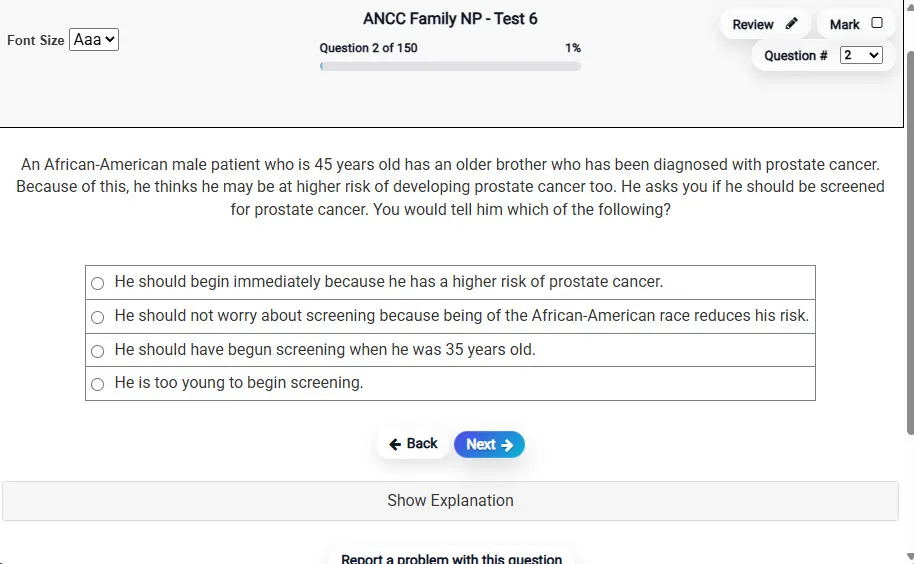
Answering a Question screen – Multiple-choice item view with navigation controls and progress tracker.
Answering a Question Multiple-choice item view with navigation controls and progress tracker.

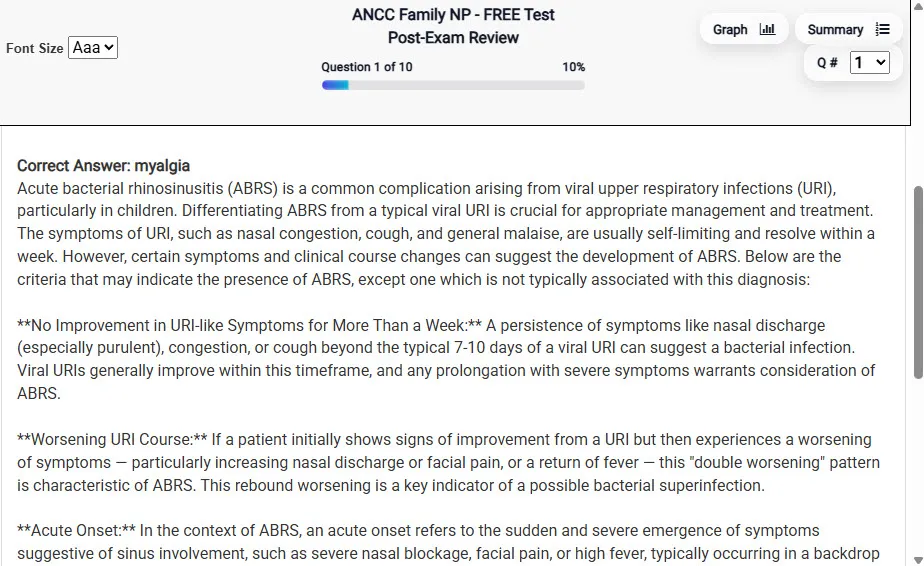
                           Detailed Explanation screen – 
                         Review mode showing chosen answer and rationale and references.
Detailed Explanation Review mode showing chosen answer and rationale and references.

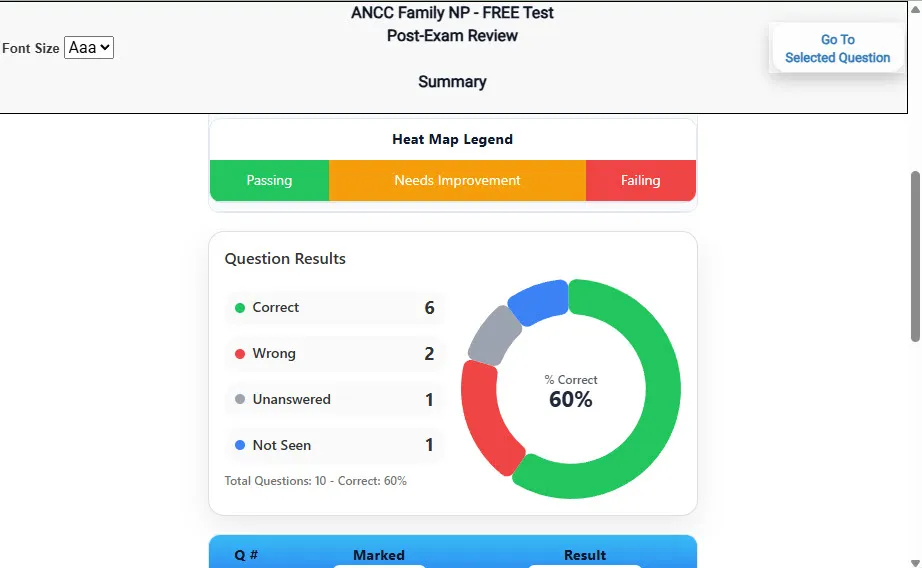
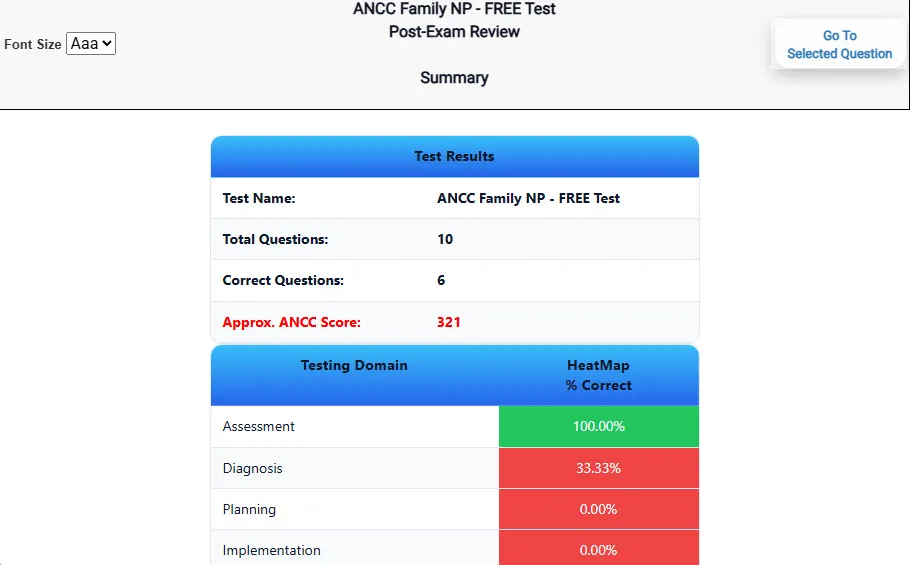
                           Review Summary 1 screen – 
                         Summary with counts for correct/wrong/unanswered and not seen items.
Review Summary 1 Summary with counts for correct/wrong/unanswered and not seen items.

                           Review Summary 2 screen – 
                         Advanced summary with category/domain breakdown and performance insights.
Review Summary 2 Advanced summary with category/domain breakdown and performance insights.

What Each Screen Shows

Answer Question Screen

  • Clean multiple-choice interface with progress bar.
  • Mark for review feature.
  • Matches real test pacing.

Detailed Explanation

  • Correct answer plus rationale.
  • Key concepts and guidelines highlighted.
  • Move between questions to fill knowledge gaps.

Review Summary 1

  • Overall results with total questions and scaled score.
  • Domain heatmap shows strengths and weaknesses.
  • Quick visual feedback on study priorities.

Review Summary 2

  • Chart of correct, wrong, unanswered, not seen.
  • Color-coded results for easy review.
  • Links back to missed items.

Top 10 Reasons to Use Exam Edge for your NASM Certified Group Personal Trainer Exam Prep

  1. Focused on the NASM Certified Group Personal Trainer Exam

    Our practice tests are built specifically for the NASM CGPT exam — every question mirrors the real topics, format, and difficulty so you're studying exactly what matters.

  2. Real Exam Simulation

    We match the per-question time limits and pressure of the actual NASM exam, so test day feels familiar and stress-free.

  3. 5 Full Practice Tests & 500 Unique Questions

    You'll have more than enough material to master every NASM CGPT concept — no repeats, no fluff.

  4. Lower Cost Than a Retake

    Ordering 5 practice exams costs less than retaking the NASM Certified Group Personal Trainer exam after a failure. One low fee could save you both time and money.

  5. Flexible Testing

    Need to step away mid-exam? Pick up right where you left off — with your remaining time intact.

  6. Instant Scoring & Feedback

    See your raw score and an estimated NASM Certified Group Personal Trainer score immediately after finishing each practice test.

  7. Detailed Explanations for Every Question

    Review correct and incorrect answers with clear, step-by-step explanations so you truly understand each topic.

  8. Trusted & Accredited

    We're fully accredited by the Better Business Bureau and uphold the highest standards of trust and transparency.

  9. Web-Based & Always Available

    No software to install. Access your NASM CGPT practice exams 24/7 from any computer or mobile device.

  10. Expert Support When You Need It

    Need extra help? Our specialized tutors are highly qualified and ready to support your NASM exam prep.


Pass the NASM Certified Group Personal Trainer Exam with Realistic Practice Tests from Exam Edge

Preparing for your upcoming NASM Certified Group Personal Trainer (NASM-CGPT) Certification Exam can feel overwhelming — but the right practice makes all the difference. Exam Edge gives you the tools, structure, and confidence to pass on your first try. Our online practice exams are built to match the real NASM CGPT exam in content, format, and difficulty.

  • 📝 5 NASM Certified Group Personal Trainer Practice Tests: Access 5 full-length exams with 100 questions each, covering every major NASM Certified Group Personal Trainer topic in depth.
  • Instant Online Access: Start practicing right away — no software, no waiting.
  • 🧠 Step-by-Step Explanations: Understand the reasoning behind every correct answer so you can master NASM CGPT exam concepts.
  • 🔄 Retake Each Exam Up to 4 Times: Build knowledge through repetition and track your improvement over time.
  • 🌐 Web-Based & Available 24/7: Study anywhere, anytime, on any device.
  • 🧘 Boost Your Test-Day Confidence: Familiarity with the NASM format reduces anxiety and helps you perform under pressure.

These NASM Certified Group Personal Trainer practice exams are designed to simulate the real testing experience by matching question types, timing, and difficulty level. This approach helps you get comfortable not just with the exam content, but also with the testing environment, so you walk into your exam day focused and confident.


Exam Edge NASM Reviews


NASM Certified Group Personal Trainer Aliases Test Name

Here is a list of alternative names used for this exam.

  • NASM Certified Group Personal Trainer
  • NASM Certified Group Personal Trainer test
  • NASM Certified Group Personal Trainer Certification Test
  • NASM CGPT test
  • NASM
  • NASM NASM-CGPT
  • NASM-CGPT test
  • NASM Certified Group Personal Trainer (NASM-CGPT)
  • Certified Group Personal Trainer certification