
MTTC Reading Specialist (092) Practice Tests & Test Prep by Exam Edge
MTTC Reading Specialist Product Infomation
Get Instant Online Access Now!
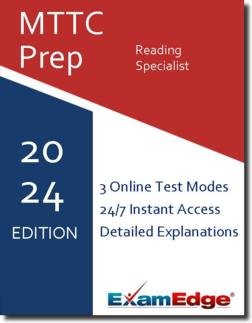
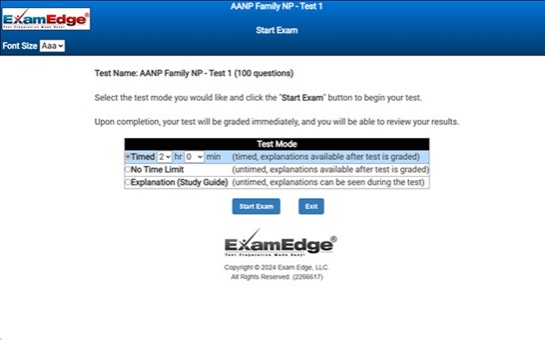
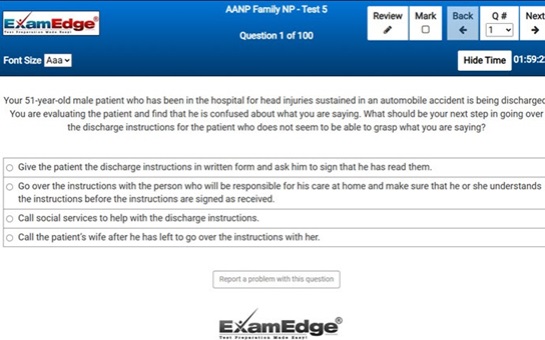
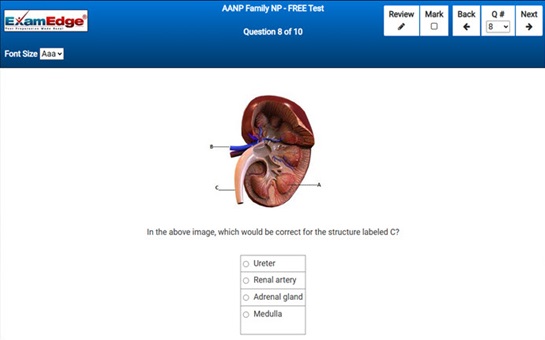
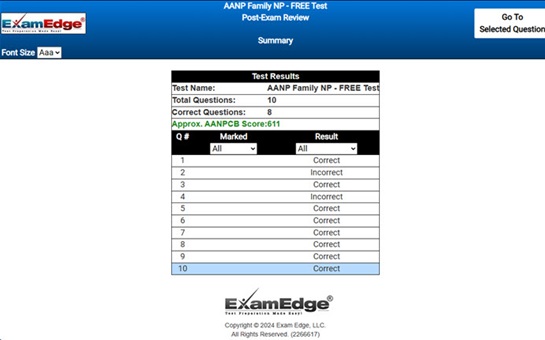
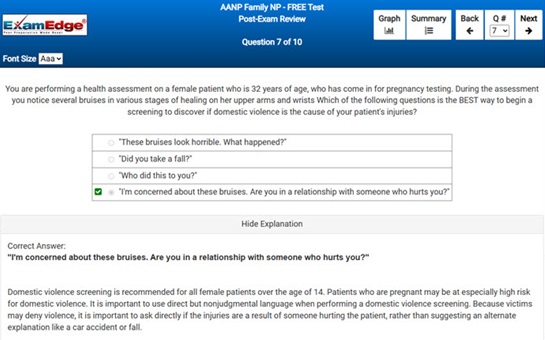
Are you ready for advancement? The MTTC Reading Specialist exam, administered by one of the most respected qualifying organizations in the field, is a pivotal opportunity to demonstrate your knowledge and skills. Set yourself up for exam success with practice tests from Exam Edge.
Our MTTC Reading Specialist practice tests are designed to help you master both the subject matter and the art of test-taking. Created to mimic the length, difficulty, and feel of the real exam, our tests feature:
- Instant access to your online practice tests
- Unlimited Test Access - available 24/7
- Timed, untimed, and "study guide" modes
- Detailed explanations for each question
- 20 online practice exams with 100 unique questions per exam
- 2,000 unique questions, if you purchase all 20 exams
Start your exam prep today with an Exam Edge MTTC Reading Specialist practice test!
Select Your Test Bundle
Excellent

"My favorite thing about ExamEdge's online practice test is that they mimicked the actual exam. I walked into the exam feeling confident I knew the material and walked out knowing my time studying with Exam Edge was well worth the effort."
MTTC Reading Specialist (092) Shortcuts

General Exam Info

Exam Topics

Features

Study Plan Tips

Test Reviews

Why Exam Edge?

FAQ

Take a FREE Test
Pass Your MTTC Reading Specialist Certification Exam with Exam Edge
Are you nervous about your upcoming MTTC Reading Specialist certification exam? Look no further, Exam Edge is here to help you achieve your goal! Our world-class online practice certification tests are designed to provide you with the knowledge and confidence you need to pass your MTTC Reading Specialist exam on your first try!Key Facts on Exam Edge's online practice tests for your MTTC Reading Specialist Exam.
- 20 Online Practice Exams: With Exam Edge, you'll have access to 20 practice tests available, each with 100 questions, to help you thoroughly prepare for your MTTC Reading Specialist (092) exam.
- Instant Access: Get started right away with instant access to your online practice exams. No waiting or software installation required!
- Detailed Explanations: Each question is accompanied by a detailed explanation, so you'll fully understand the reasoning behind the correct answer and improve your knowledge.
- Take Each Exam 4 Times: You can take each of our practice exams up to 4 times, giving you plenty of opportunities to review and master the material.
- Web-Based: Our practice tests are available 24/7 at your convenience, and because they are web-based, there is no software to install.
- Psychological advantage: Exam Edge practice tests will allow you to walk into your test day with confidence.
Exam Edge practice tests are a valuable tool for helping you prepare for the Michigan Test for Teacher Certs (092) certification exam. The practice tests provide a realistic simulation of the actual exam, allowing you to become familiar with the format, style, and types of questions you will encounter on the actual test. Certification exams don't just measure what you know -- they are also a test of how well you perform under pressure. The right type of test preparation helps you familiarize yourself not only with the material you're being tested on, but also the format of the test, so you feel less anxiety on test day.
MTTC Reading Specialist (092) Exam Prep
Our comprehensive MTTC Reading Specialist practice tests are designed to mimic the actual exam. You will gain an understanding of the types of questions and information you will encounter when you take your Michigan Test for Teacher Certs Certification Exam. Our MTTC Reading Specialist Practice Tests allow you to review your answers and identify areas of improvement so you will be fully prepared for the upcoming exam and walk out of the test feeling confident in your results.
How to Prepare for the MTTC Reading Specialist Exam
So, you've decided to pursue your MTTC Reading Specialist certification. Not sure what comes next? Follow these steps to register for the exam, craft an effective study plan, and go into test day feeling confident.
Step 1: Check Eligibility and Apply for MTTC Reading Specialist
Start by researching the testing agency or credentialing organization and the different exams they offer for your field. Before you register for your exam, make sure that the MTTC Reading Specialist exam is the right match for your education, experience, and career goals.
Then, check whether you meet the requirements for taking the MTTC Reading Specialist exam. You can find eligibility information on the Michigan Test for Teacher Certs website: Michigan Test for Teacher Certs (MTTC). Once you have determined that you meet the qualifications or have completed the appropriate prerequisites, you can register with the organization and apply to take the MTTC Reading Specialist exam.
Step 2: Schedule the MTTC Reading Specialist
Once you have registered, you are ready to schedule your exam! The MTTC Reading Specialist exam is offered at various times throughout the year and at various locations across the United States. You can use the Michigan Test for Teacher Certs website to find a testing center near you and choose a date and time that suits your availability.
When you schedule your MTTC Reading Specialist exam, consider how much time you want to study and prepare. Choose a test date that gives you plenty of time to create a study plan, thoroughly review the material, and take several practice tests so that you can go into test day feeling confident and ready. Be sure to schedule your exam well in advance to secure your preferred date and time.
Step 3: Study and Practice for the MTTC Reading Specialist
After you schedule your test day, dive into your MTTC Reading Specialist study plan! Before you crack open a book or start reviewing exam flashcards, take a timed practice test to get a raw baseline of your readiness. As you continue your exam prep, take regular practice tests to track your progress.
Exam Edge practice tests for the MTTC Reading Specialist exam offer test-takers key benefits, like helping you identify areas where you need further study and practice. These insights into your test performance will empower you to focus your test prep efforts and prioritize the content areas or skills. This can help you use your study time more effectively and make the most of your efforts before you take the actual exam
Practice tests can also help you to develop your test-taking skills. When you take frequent practice exams, you become more familiar with the format of the MTTC Reading Specialist exam and learn how to pace yourself throughout it. You will also learn how to approach different types of questions and how to eliminate incorrect answers.
Ultimately, Exam Edge practice tests can help you build your confidence and reduce test-taking anxiety as you become a more comfortable and strategic test-taker. Incorporate MTTC Reading Specialist practice exams into your study plan to set yourself up for success on test day
Check out our resources to learn more about MTTC Reading Specialist test prep and practice tests.
Step 4: Take the MTTC Reading Specialist
On the day of the exam, arrive at the test center early to allow plenty of time to check in and get settled at your testing station. You will need to bring at least one valid, government-issued ID with you. Check on the Michigan Test for Teacher Certs (MTTC) website for other requirements, like:
- Additional forms of identification
- Required materials or supplies
- Other recommended or permitted items, such as water or snacks
- Prohibited items
Once you are settled in your seat or at your testing station, take a moment to center yourself and visualize how to ace the MTTC Reading Specialist exam. Your diligent studying and use of practice tests have prepared you to tackle the exam with confidence. Trust yourself and your exam prep, pace yourself as you have practiced, and have fun showing off what you know!
MTTC Reading Specialist Exam Prep
Practice tests are a valuable tool for helping you prepare for the MTTC Reading Specialist exam. At Exam Edge, we focus on making our clients' career dreams come true by offering world-class practice tests designed to cover the same topics and content areas tested on the actual MTTC Reading Specialist. Our practice tests provide a realistic simulation of the actual exam, allowing you to become familiar with the format, style, and types of questions you will encounter on the actual test.
Location Information and Website
For more information on scheduling the Michigan Test for Teacher Certs exam, visit our Michigan Test for Teacher Certs (MTTC) information page.
MTTC Reading Specialist Aliases Test Name
Here is a list of alternative names used for this exam.
- MTTC Reading Specialist
- MTTC Reading Specialist test
- MTTC Reading Specialist Certification Test
- MTTC
- MTTC 092
- 092 test
- MTTC Reading Specialist (092)
- Reading Specialist certification