This is the content of the pop-over!

Lightning Deal Alert – 12% Off Ends at Midnight!

Strike while the savings are hot! Use promo code FlashSale at checkout for 12% off any Exam Edge test or bundle. Hurry—the clock is ticking!

MSNCB CMSRN (CMSRN) Practice Tests & Test Prep by Exam Edge


MSNCB Certified Medical Surgical Registered Nurse   product image
(5.0)
Based on 25 Reviews

  • Real Exam Simulation: Timed questions and matching content build comfort for your MSNCB CMSRN test day.
  • Instant, 24/7 Access: Web-based MSNCB Certified Medical Surgical Registered Nurse practice exams with no software needed.
  • Clear Explanations: Step-by-step answers and explanations for your exam to strengthen understanding.
  • Boosted Confidence: Reduces anxiety and improves test-taking skills to ace your MSNCB Certified Medical Surgical Registered Nurse (CMSRN).

Featured on

MSNCB Certified Medical Surgical Registered Nurse Online Practice Test Bundles

BEST VALUE
25 practice tests

$218.75

$998.75

SAVE $780

Only $8.75 per test!

  • 100% Pass Guarantee
  • 25 online practice tests
  • 100 questions per test
  • Bonus: 100 Flash Cards + Study Guide
  • Instant access
  • Detailed Explanations
  • Practice tests never expire
  • Timed, untimed, or study guide mode
MOST POPULAR
10 practice tests

$99.50

$399.50

SAVE $300

Only $9.95 per test!

  • 10 online practice tests
  • 100 questions per test
  • Bonus: 100 Flash Cards + Study Guide
  • Instant access
  • Detailed Explanations
  • Practice tests never expire
  • Timed, untimed, or study guide mode
5 practice tests

$69.75

$199.75

SAVE $130

Only $13.95 per test!

  • 5 online practice tests
  • 100 questions per test
  • Bonus: 100 Flash Cards
  • Instant access
  • Detailed Explanations
  • Practice tests never expire
  • Timed, untimed, or study guide mode
1 practice test

$39.95

  • 1 online practice test
  • 100 questions per test
  • Instant access
  • Detailed Explanations
  • Practice tests never expire
  • Timed, untimed, or study guide mode
Quick Select
Tap to choose a bundle

** All Prices are in US Dollars (USD) **


MSNCB CMSRN (CMSRN) Resources

Jump to the section you need most.

Understanding the exact breakdown of the MSNCB Certified Medical Surgical Registered Nurse test will help you know what to expect and how to most effectively prepare. The MSNCB Certified Medical Surgical Registered Nurse has 150 multiple-choice questions . The exam will be broken down into the sections below:

MSNCB Certified Medical Surgical Registered Nurse Exam Blueprint
Domain Name
Gastrointestinal  
Pulmonary  
Cardiovascular  
Diabetes / Other Endocrine  
GU / Renal / Reproductive  
Musculoskeletal / Neuro  
Hematological / Immuno / Integumentary  

MSNCB Certified Medical Surgical Registered Nurse Study Tips by Domain

  • Prioritize acute abdomen red flags—rigid board-like abdomen, rebound tenderness, hypotension, or free air on imaging—as potential perforation requiring NPO status and rapid surgical notification.
  • Upper GI bleed: suspect brisk hemorrhage with melena, hematemesis, orthostasis, or rising BUN/Cr ratio; a common trap is delaying large-bore IV access and type & screen while waiting for endoscopy.
  • Lower GI bleed: bright red blood with hemodynamic changes warrants rapid volume assessment; red flag is ongoing bleeding plus tachycardia despite fluids, prompting escalation and possible massive transfusion protocol.
  • Pancreatitis care: aggressive isotonic fluids and pain control are priorities; contraindication is advancing oral intake before pain improves and inflammatory markers trend down, which can worsen symptoms.
  • Hepatic failure/encephalopathy: monitor for asterixis and altered mental status; priority rule is to give lactulose to achieve 2–3 soft stools/day and avoid sedatives that can mask neurologic decline.
  • Post-op GI complications: watch for ileus (no flatus, distention, absent bowel sounds) versus obstruction (colicky pain, high-pitched sounds, vomiting); common trap is treating persistent tachycardia and fever as “normal post-op” instead of assessing for leak or sepsis.
  • Escalate early for impending respiratory failure: increasing work of breathing, altered mentation, or SpO2 < 90% despite oxygen is a red flag for rapid response and possible ventilatory support.
  • For COPD exacerbation, avoid chasing “normal” saturations—common trap is over-oxygenation; target SpO2 ~88–92% unless otherwise ordered and watch for CO2 retention (somnolence, rising PaCO2).
  • Suspected pulmonary embolism: sudden dyspnea/pleuritic chest pain with tachycardia or new hypoxia is a priority rule to treat as PE until ruled out; red flag is hypotension or syncope suggesting massive PE.
  • Asthma flare management cue: if the patient needs a short-acting bronchodilator more than every 4 hours or has a silent chest, that’s a red flag for severe obstruction and imminent fatigue; reassess after each treatment rather than waiting for “scheduled” times.
  • Pneumonia/sepsis linkage: fever with tachypnea and lactate elevation or MAP < 65 is a priority rule to initiate sepsis protocol; common trap is delaying cultures/antibiotics while waiting for imaging confirmation.
  • Chest tube troubleshooting: continuous bubbling in the water-seal chamber is a red flag for an air leak; priority rule is to keep the system below chest level and avoid clamping unless specifically ordered for a brief, diagnostic purpose.
  • Prioritize rapid recognition of acute coronary syndrome (ACS)—new chest pressure with diaphoresis, nausea, or atypical symptoms in women/older adults is a red flag even with a “normal” initial ECG.
  • For suspected stroke/TIA, treat “last known well” time as a hard threshold and activate stroke pathway immediately; common trap: delaying neuro checks while waiting for imaging or labs.
  • In heart failure, trend daily weights and urine output and titrate diuretics to relieve congestion; red flag: rising creatinine with persistent edema suggests under-diuresis rather than “renal failure only.”
  • For dysrhythmias, assess stability first (BP, mentation, chest pain) before focusing on the rhythm strip; priority rule: unstable tachycardia/bradycardia requires immediate intervention over diagnostic workup.
  • Anticoagulation safety is a high-yield compliance point—verify indication, renal function, and interactions; red flag: black/tarry stools, new bruising, or sudden headache may indicate major bleeding.
  • Watch for cardiogenic shock and tamponade in post-MI or post-procedure patients; red flags include hypotension with cool clammy skin or Beck’s triad signs, and the trap is attributing hypotension solely to “pain meds” or dehydration.
  • Prioritize ABCs in acute endocrine crises: treat severe hypoglycemia first (give 15 g fast carb if awake; IV dextrose or IM glucagon if altered) — red flag is neuro change or seizure.
  • DKA vs. HHS: both need aggressive isotonic fluids first, but DKA usually has ketones/anions gap acidosis while HHS has very high glucose/osmolality — common trap is starting insulin before correcting hypokalemia (hold insulin if K<3.3 mEq/L).
  • Insulin safety: rapid-acting is for meals/corrections, basal prevents ketosis — priority rule is never omit basal insulin in type 1 diabetes even if NPO (coordinate dextrose/IVF instead).
  • Sick-day management: check glucose and ketones more often, continue basal insulin, and hydrate — red flag is persistent vomiting, moderate/large ketones, or rising glucose despite corrections (needs urgent evaluation).
  • Thyroid emergencies: myxedema coma (hypothermia, bradycardia, hypotension) vs. thyroid storm (hyperthermia, tachyarrhythmia, delirium) — common trap is missing medication nonadherence or recent iodine/amiodarone exposure as a trigger.
  • Adrenal disorders: adrenal crisis presents with refractory hypotension, hyponatremia, hyperkalemia, and hypoglycemia — priority is give IV hydrocortisone and isotonic fluids promptly (don’t wait for confirmatory labs).
  • For acute kidney injury, trend urine output and creatinine together; a red flag is oliguria (<0.5 mL/kg/hr for 6 hours) or rapidly rising K+ requiring urgent escalation.
  • With catheter-associated UTI prevention, prioritize aseptic insertion, closed system, and daily necessity review; common trap is routine catheter irrigation or unnecessary urine cultures in asymptomatic patients.
  • In suspected urinary retention, confirm with bladder scan and avoid repeated blind straight-caths; red flag is new retention with back pain/saddle anesthesia suggesting cauda equina and needing emergent evaluation.
  • For obstructive uropathy (e.g., stones/BPH), treat pain and monitor for post-obstructive diuresis; priority rule is to watch for hypotension/electrolyte loss when high-volume diuresis occurs after relief.
  • In CKD care, dose-adjust renally cleared meds and avoid nephrotoxins; contraindication cue is NSAID use or IV contrast without risk mitigation in patients with low eGFR.
  • For reproductive emergencies, act fast on ectopic pregnancy or testicular torsion; red flag is severe unilateral pelvic pain with syncope (possible rupture) or acute scrotal pain with high-riding testis (time-sensitive salvage).
  • Suspect spinal cord compression with new bilateral weakness, saddle anesthesia, or bowel/bladder dysfunction—priority is immobilize, maintain MAP per protocol, and expedite MRI/neurosurgical consult.
  • Acute stroke screen: sudden facial droop/arm drift/speech change is a time-critical red flag—do not delay CT for labs and verify last-known-well before tPA/thrombectomy pathways.
  • Increased intracranial pressure clues (declining LOC, vomiting, Cushing response) require head midline, HOB ~30°, and avoidance of hip flexion—common trap is excessive suctioning or clustering care that spikes ICP.
  • Neuro checks after spine or joint surgery must include distal pulses, motor/sensation, and pain with passive stretch—severe escalating pain is a compartment syndrome red flag requiring urgent action.
  • Prevent and detect postoperative delirium and opioid-induced neuro/respiratory depression—priority rule is reassess sedation and respiratory rate before re-dosing, especially in older adults or OSA.
  • Anticoagulated patients with headache, new focal deficit, or back pain after neuraxial procedures are high risk for intracranial or spinal hematoma—do not give further anticoagulants until evaluated.
  • For suspected transfusion reaction (fever, back pain, dyspnea, hypotension) — stop the transfusion, keep the IV open with normal saline, and notify the provider/blood bank; red flag: do not just slow the rate.
  • Neutropenia precautions when ANC < 500/mm3 — strict hand hygiene, avoid fresh flowers/raw foods, and screen visitors; common trap: giving rectal meds/temps (mucosal injury/infection risk).
  • Heparin safety — monitor for bleeding and check platelets for HIT (typically a > 50% drop, often days 5–10); priority rule: if HIT suspected, stop all heparin products and avoid platelet transfusion unless life-threatening bleeding.
  • Immune-mediated anaphylaxis after meds/contrast/latex — airway first, then IM epinephrine; contraindication cue: avoid beta-blocker masking of symptoms and have glucagon available if refractory in beta-blocked patients.
  • Pressure injury prevention — offload heels, reposition at least q2h, and manage moisture; common trap: massaging bony prominences or using donut cushions (can worsen tissue ischemia).
  • Burns/major skin loss — fluid resuscitation and thermal management are early priorities; red flag: circumferential extremity burns with pain/paresthesia/pallor require urgent neurovascular checks and possible escharotomy.


Built to Fit Into Your Busy Life

Everything you need to prepare with confidence—without wasting a minute.

Three Study Modes

Timed, No Time Limit, or Explanation mode.

Actionable Analytics

Heatmaps and scaled scores highlight weak areas.

High-Yield Rationales

Concise explanations emphasize key concepts.

Realistic Interface

Matches the feel of the actual exam environment.

Accessible by Design

Clean layout reduces cognitive load.

Anytime, Anywhere

Web-based access 24/7 on any device.
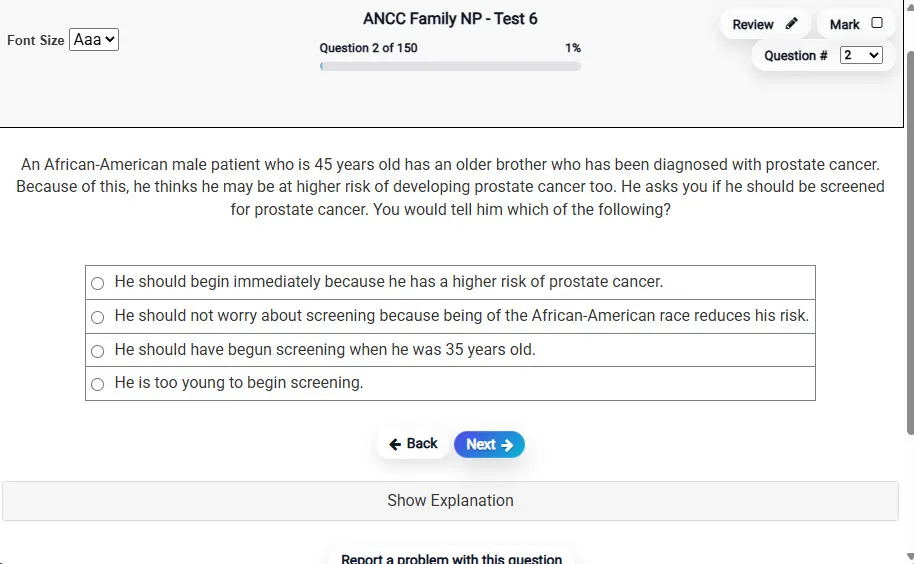
Answering a Question screen – Multiple-choice item view with navigation controls and progress tracker.
Answering a Question Multiple-choice item view with navigation controls and progress tracker.

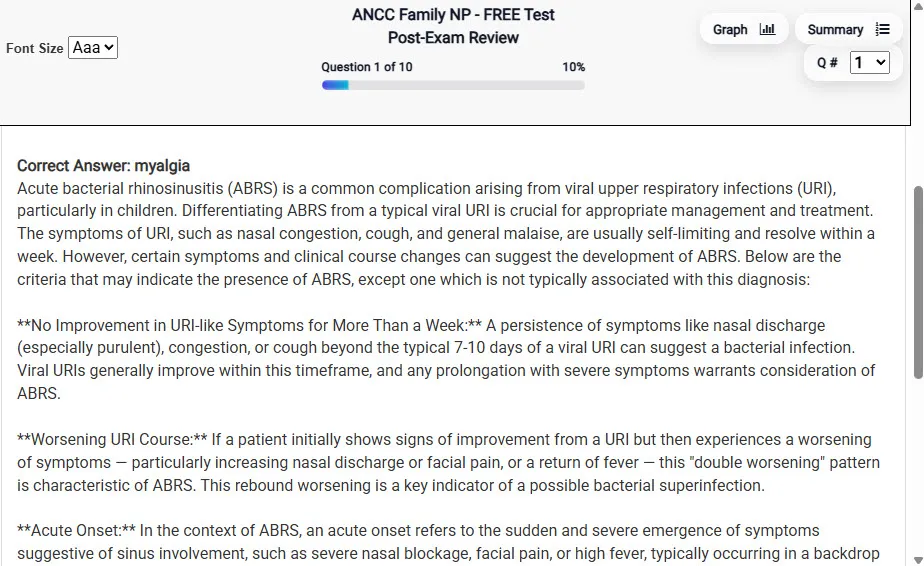
                           Detailed Explanation screen – 
                         Review mode showing chosen answer and rationale and references.
Detailed Explanation Review mode showing chosen answer and rationale and references.

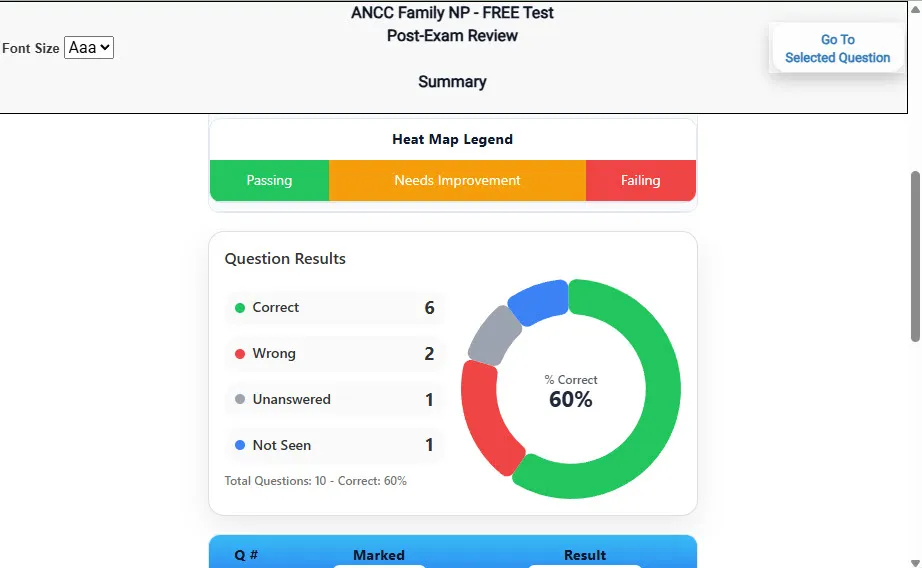
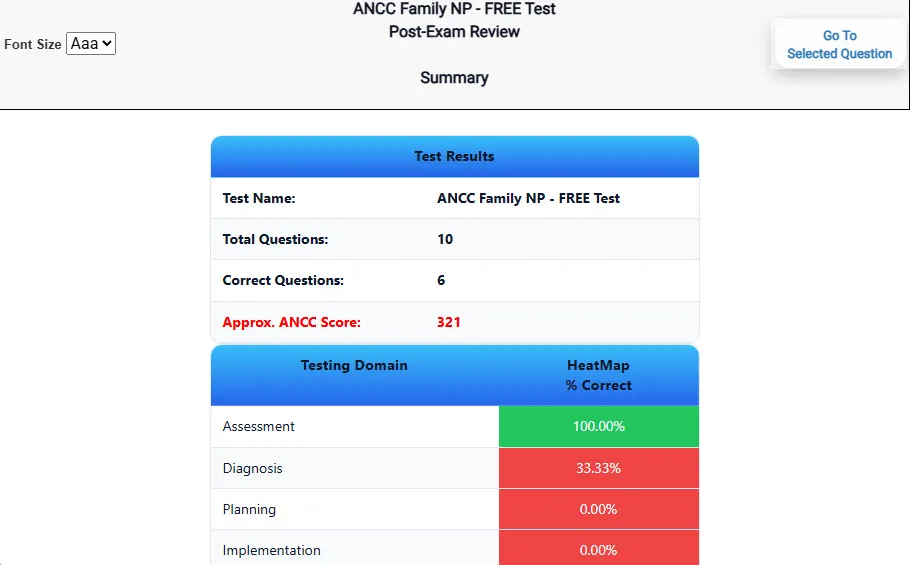
                           Review Summary 1 screen – 
                         Summary with counts for correct/wrong/unanswered and not seen items.
Review Summary 1 Summary with counts for correct/wrong/unanswered and not seen items.

                           Review Summary 2 screen – 
                         Advanced summary with category/domain breakdown and performance insights.
Review Summary 2 Advanced summary with category/domain breakdown and performance insights.

What Each Screen Shows

Answer Question Screen

  • Clean multiple-choice interface with progress bar.
  • Mark for review feature.
  • Matches real test pacing.

Detailed Explanation

  • Correct answer plus rationale.
  • Key concepts and guidelines highlighted.
  • Move between questions to fill knowledge gaps.

Review Summary 1

  • Overall results with total questions and scaled score.
  • Domain heatmap shows strengths and weaknesses.
  • Quick visual feedback on study priorities.

Review Summary 2

  • Chart of correct, wrong, unanswered, not seen.
  • Color-coded results for easy review.
  • Links back to missed items.

Top 10 Reasons to Use Exam Edge for your MSNCB Certified Medical Surgical Registered Nurse Exam Prep

  1. Focused on the MSNCB Certified Medical Surgical Registered Nurse Exam

    Our practice tests are built specifically for the MSNCB CMSRN exam — every question mirrors the real topics, format, and difficulty so you're studying exactly what matters.

  2. Real Exam Simulation

    We match the per-question time limits and pressure of the actual exam, so test day feels familiar and stress-free.

  3. 25 Full Practice Tests & 2,500 Unique Questions

    You'll have more than enough material to master every MSNCB CMSRN concept — no repeats, no fluff.

  4. Lower Cost Than a Retake

    Ordering 5 practice exams costs less than retaking the MSNCB Certified Medical Surgical Registered Nurse exam after a failure. One low fee could save you both time and money.

  5. Flexible Testing

    Need to step away mid-exam? Pick up right where you left off — with your remaining time intact.

  6. Instant Scoring & Feedback

    See your raw score and an estimated MSNCB Certified Medical Surgical Registered Nurse score immediately after finishing each practice test.

  7. Detailed Explanations for Every Question

    Review correct and incorrect answers with clear, step-by-step explanations so you truly understand each topic.

  8. Trusted & Accredited

    We're fully accredited by the Better Business Bureau and uphold the highest standards of trust and transparency.

  9. Web-Based & Always Available

    No software to install. Access your MSNCB CMSRN practice exams 24/7 from any computer or mobile device.

  10. Expert Support When You Need It

    Need extra help? Our specialized tutors are highly qualified and ready to support your exam prep.


Pass the MSNCB Certified Medical Surgical Registered Nurse Exam with Realistic Practice Tests from Exam Edge

Preparing for your upcoming MSNCB Certified Medical Surgical Registered Nurse (CMSRN) Certification Exam can feel overwhelming — but the right practice makes all the difference. Exam Edge gives you the tools, structure, and confidence to pass on your first try. Our online practice exams are built to match the real MSNCB CMSRN exam in content, format, and difficulty.

  • 📝 25 MSNCB Certified Medical Surgical Registered Nurse Practice Tests: Access 25 full-length exams with 100 questions each, covering every major MSNCB Certified Medical Surgical Registered Nurse topic in depth.
  • Instant Online Access: Start practicing right away — no software, no waiting.
  • 🧠 Step-by-Step Explanations: Understand the reasoning behind every correct answer so you can master MSNCB CMSRN exam concepts.
  • 🔄 Retake Each Exam Up to 4 Times: Build knowledge through repetition and track your improvement over time.
  • 🌐 Web-Based & Available 24/7: Study anywhere, anytime, on any device.
  • 🧘 Boost Your Test-Day Confidence: Familiarity with the format reduces anxiety and helps you perform under pressure.

These MSNCB Certified Medical Surgical Registered Nurse practice exams are designed to simulate the real testing experience by matching question types, timing, and difficulty level. This approach helps you get comfortable not just with the exam content, but also with the testing environment, so you walk into your exam day focused and confident.


Exam Edge MSNCB Reviews


Current and up to date topics, with challenging questions

Henry, Pearland, Texas


MSNCB Certified Medical Surgical Registered Nurse Aliases Test Name

Here is a list of alternative names used for this exam.

  • MSNCB Certified Medical Surgical Registered Nurse
  • MSNCB Certified Medical Surgical Registered Nurse test
  • MSNCB Certified Medical Surgical Registered Nurse Certification Test
  • MSNCB CMSRN test
  • MSNCB
  • MSNCB CMSRN
  • CMSRN test
  • MSNCB Certified Medical Surgical Registered Nurse (CMSRN)
  • Certified Medical Surgical Registered Nurse certification