This is the content of the pop-over!

Lightning Deal Alert – 12% Off Ends at Midnight!

Strike while the savings are hot! Use promo code FlashSale at checkout for 12% off any Exam Edge test or bundle. Hurry—the clock is ticking!

MOH Nursing and Midwifery (MOH Midwifery) Practice Tests & Test Prep by Exam Edge


MOH Nursing and Midwifery  product image
(4.8)
Based on 17 Reviews

  • Real Exam Simulation: Timed questions and matching content build comfort for your MOH Nursing and Midwifery test day.
  • Instant, 24/7 Access: Web-based MOH Nursing and Midwifery practice exams with no software needed.
  • Clear Explanations: Step-by-step answers and explanations for your MOH exam to strengthen understanding.
  • Boosted Confidence: Reduces anxiety and improves test-taking skills to ace your MOH Nursing and Midwifery (MOH Midwifery).

Featured on

MOH Nursing and Midwifery Online Practice Test Bundles

BEST VALUE
10 practice tests

$99.50

$399.50

SAVE $300

Only $9.95 per test!

  • 100% Pass Guarantee
  • 10 online practice tests
  • 100 questions per test
  • Bonus: 100 Flash Cards + Study Guide
  • Instant access
  • Detailed Explanations
  • Practice tests never expire
  • Timed, untimed, or study guide mode
5 practice tests

$69.75

$199.75

SAVE $130

Only $13.95 per test!

  • 5 online practice tests
  • 100 questions per test
  • Bonus: 100 Flash Cards + Study Guide
  • Instant access
  • Detailed Explanations
  • Practice tests never expire
  • Timed, untimed, or study guide mode
1 practice test

$39.95

  • 1 online practice test
  • 100 questions per test
  • Instant access
  • Detailed Explanations
  • Practice tests never expire
  • Timed, untimed, or study guide mode
Quick Select
Tap to choose a bundle

** All Prices are in US Dollars (USD) **


MOH Nursing and Midwifery (MOH Midwifery) Resources

Jump to the section you need most.

Understanding the exact breakdown of the MOH Nursing and Midwifery test will help you know what to expect and how to most effectively prepare. The MOH Nursing and Midwifery has multiple-choice questions . The exam will be broken down into the sections below:

MOH Nursing and Midwifery Exam Blueprint
Domain Name
Physical Assessment and Diagnostic Evaluation  
Primary Care  
Gynecology  
Obstetrics  
Pharmacology  
Professional Issues  

MOH Nursing and Midwifery Study Tips by Domain

  • Use an ABCDE primary survey for any unstable patient and do not delay oxygen, IV access, or monitoring for a full history—red flag: altered mental status, hypotension, or SpO2 < 90% requires immediate escalation.
  • Document vital signs with a clear response plan (recheck interval and intervention) and never chart a “normal” set without acknowledging abnormal trends—trap: missing sepsis early warning when tachycardia and fever persist after antipyretics.
  • For pain assessment, record location, radiation, severity, and associated symptoms and match to time-critical differentials—red flag: chest pain with diaphoresis or dyspnea should trigger ECG within 10 minutes and troponin pathway.
  • Apply infection-control assessment at triage (travel, exposure, symptoms) and isolate promptly—priority rule: suspected airborne disease requires N95 and negative-pressure precautions before room entry, not after exam.
  • Interpret common diagnostics with clinical context and repeat when results conflict with presentation—trap: treating a single low fingerstick glucose without confirming in a symptomatic patient or after poor sampling technique.
  • Complete medication and allergy verification as part of assessment before administering or ordering tests with contrast—contraindication cue: history of severe contrast reaction or renal impairment warrants alternative imaging or prophylaxis per facility policy.
  • Apply MOH primary care triage: treat as urgent if red flags are present (e.g., chest pain, dyspnea, stroke symptoms, sepsis signs, acute abdomen) and arrange immediate ED transfer—don’t “observe” unstable vitals.
  • Prioritize chronic disease control (DM/HTN/asthma) with targets and follow-up intervals; a common trap is renewing meds without checking BP, HbA1c, renal function, or inhaler technique.
  • Use structured screening in eligible patients (e.g., BP routinely, diabetes risk, obesity) and document counseling; red flag is missed secondary causes or end-organ symptoms (vision changes, chest pain, neuro deficits) requiring escalation.
  • Antimicrobial stewardship in primary care: avoid antibiotics for likely viral URTI and use narrow-spectrum when indicated; red flag is persistent fever, immunocompromised status, or severe localized pain suggesting complicated infection.
  • Immunization checks at every visit (adult and pediatric) and verify contraindications; common trap is giving live vaccines in pregnancy or significant immunosuppression without specialist input.
  • Patient safety and continuity: reconcile medications (including OTC/herbals), allergies, and pregnancy status before prescribing; red flag is polypharmacy with dizziness/falls or renal impairment—adjust doses and coordinate referral.
  • Abnormal uterine bleeding: always rule out pregnancy first (urine/serum β-hCG) before assuming hormonal causes—red flag if heavy bleeding with dizziness or syncope suggests hemodynamic compromise.
  • Cervical cancer screening and HPV: do not perform Pap in active heavy bleeding or acute cervicitis—common trap is treating postcoital bleeding as “infection” without visualizing the cervix and arranging appropriate screening/referral.
  • Pelvic inflammatory disease (PID): treat empirically if pelvic pain plus cervical motion/uterine/adnexal tenderness—priority rule is to cover gonorrhea/chlamydia and counsel partner treatment to prevent reinfection.
  • Vaginal discharge syndromes: differentiate BV, candidiasis, and trichomoniasis clinically and with bedside tests when available—red flag is foul discharge with pelvic pain/fever suggesting ascending infection.
  • Ectopic pregnancy risk in gyne settings: severe unilateral pelvic pain, shoulder tip pain, or spotting with positive pregnancy test is a contraindication to “watchful waiting”—urgent evaluation is required.
  • Contraception counseling: screen for contraindications (e.g., migraine with aura, uncontrolled hypertension, smoking age ≥35 for combined methods)—common trap is omitting VTE risk assessment before prescribing estrogen-containing contraception.
  • Screen every pregnant patient for high-risk conditions early (HTN, diabetes, anemia, previous C-section)—red flag: BP ≥140/90 after 20 weeks suggests preeclampsia until proven otherwise.
  • Manage obstetric hemorrhage as an emergency with rapid ABCs, uterine massage, uterotonics, and massive transfusion readiness—common trap: delaying escalation when blood loss appears “normal” but vitals show shock.
  • Interpret fetal heart rate systematically (baseline, variability, accelerations, decelerations) and act on Category III immediately—priority rule: persistent late decelerations with absent variability require intrauterine resuscitation and urgent delivery preparation.
  • Apply labor progress expectations and intervene appropriately—threshold cue: no cervical change for ≥4 hours with adequate contractions (or ≥6 hours with inadequate) is arrest and warrants senior review for augmentation vs operative delivery.
  • Prevent and treat infection in pregnancy and labor with timely antibiotics and sepsis screening—red flag: maternal fever with fetal tachycardia suggests chorioamnionitis and requires antibiotics plus delivery planning.
  • Prioritize safe medication and immunization use in pregnancy/postpartum—contraindication cue: avoid teratogens (e.g., isotretinoin, ACE inhibitors) and give anti-D immunoglobulin to Rh-negative mothers after sensitizing events and at 28 weeks per protocol.
  • Apply medication “rights” with MOH documentation rigor—verify patient ID with two identifiers and allergies before giving any dose; red flag: administering a drug with an unverified allergy status.
  • Use weight-based dosing carefully (mg/kg) and recheck calculations for pediatrics and heparin/insulin infusions; common trap: confusing mg with mL or using the wrong concentration (e.g., 100 units/mL vs 5000 units/mL).
  • Monitor high-alert meds (insulin, anticoagulants, opioids, KCl concentrate) with independent double-checks and close vital signs; red flag: IV potassium given undiluted or as a rapid IV push.
  • Screen renal/hepatic function (eGFR/creatinine, LFTs) before dosing nephrotoxic/hepatotoxic agents; priority rule: hold or clarify orders when creatinine rises or urine output drops (<0.5 mL/kg/hr) on aminoglycosides/vancomycin.
  • Prevent look-alike/sound-alike errors by confirming the generic name and indication at the point of dispensing/administration; common trap: mixing up ceftriaxone vs cefotaxime or dopamine vs dobutamine in emergencies.
  • Recognize and act on adverse reactions promptly—anaphylaxis requires immediate airway support and IM epinephrine, not antihistamines alone; red flag: wheeze, hypotension, or facial/tongue swelling after a new medication.
  • Follow MOH policy and scope of practice—do not perform tasks requiring specific credentialing (e.g., independent medication prescribing) without authorization; red flag: “I was told to do it” is not a valid defense.
  • Maintain patient confidentiality and information security—share only on a need-to-know basis and use approved systems; common trap: discussing cases in public areas or via personal messaging apps.
  • Use accurate, timely documentation in the patient record—chart assessments, interventions, and patient responses with date/time; red flag: late entries without clearly labeling them as such.
  • Apply patient safety standards—verify patient identity with two identifiers and use medication “rights”; priority rule: stop and clarify any unclear order or look-alike/sound-alike medication before administration.
  • Respect informed consent and patient rights—ensure the patient understands the procedure, risks, and alternatives and document consent; contraindication: proceeding when the patient lacks capacity without a legally appropriate surrogate process.
  • Escalate and report incidents through MOH channels—near-misses, medication errors, and abuse/neglect concerns must be reported promptly; common trap: trying to “fix it quietly” instead of initiating formal reporting and follow-up.


Built to Fit Into Your Busy Life

Everything you need to prepare with confidence—without wasting a minute.

Three Study Modes

Timed, No Time Limit, or Explanation mode.

Actionable Analytics

Heatmaps and scaled scores highlight weak areas.

High-Yield Rationales

Concise explanations emphasize key concepts.

Realistic Interface

Matches the feel of the actual exam environment.

Accessible by Design

Clean layout reduces cognitive load.

Anytime, Anywhere

Web-based access 24/7 on any device.
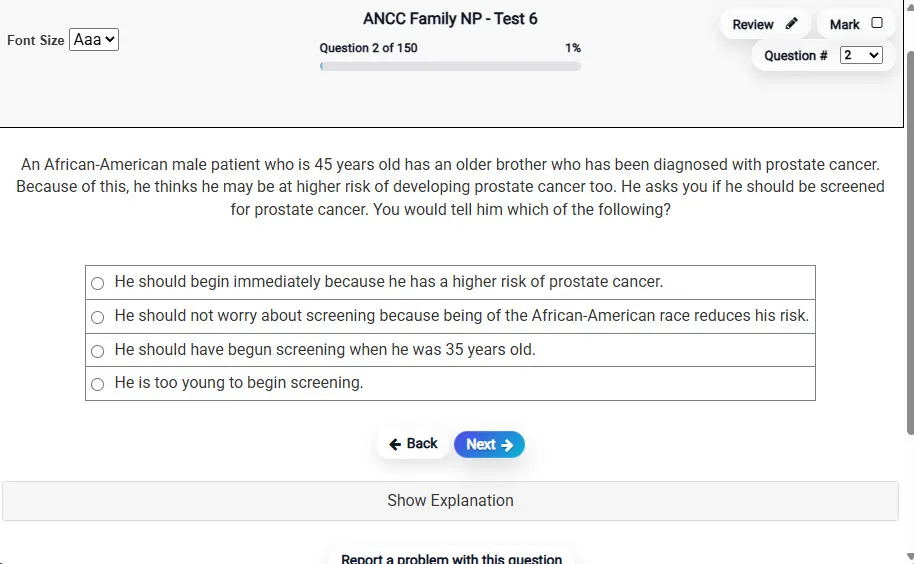
Answering a Question screen – Multiple-choice item view with navigation controls and progress tracker.
Answering a Question Multiple-choice item view with navigation controls and progress tracker.

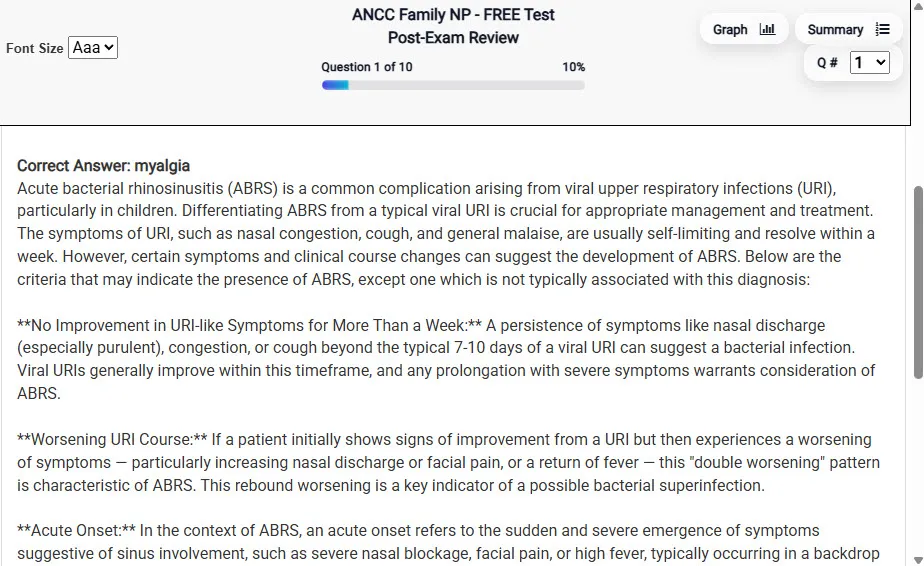
                           Detailed Explanation screen – 
                         Review mode showing chosen answer and rationale and references.
Detailed Explanation Review mode showing chosen answer and rationale and references.

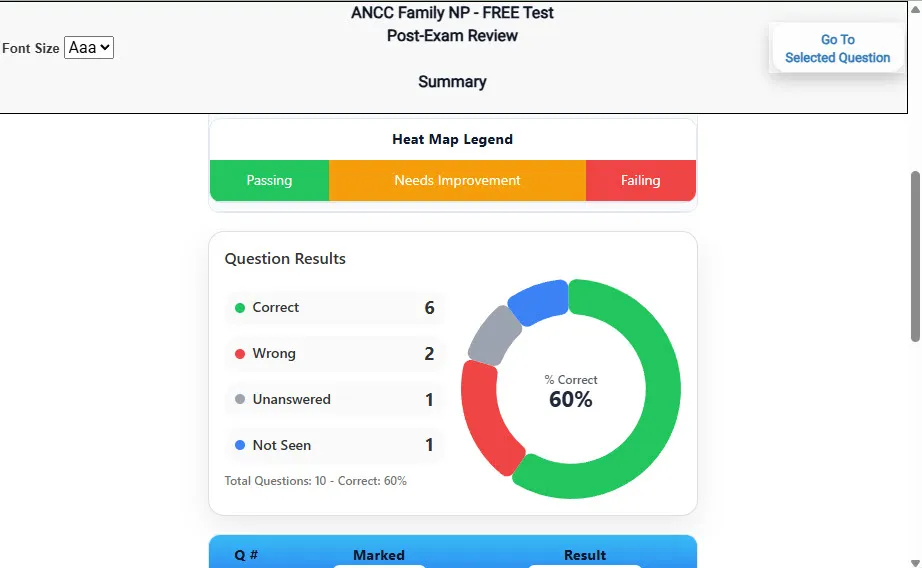
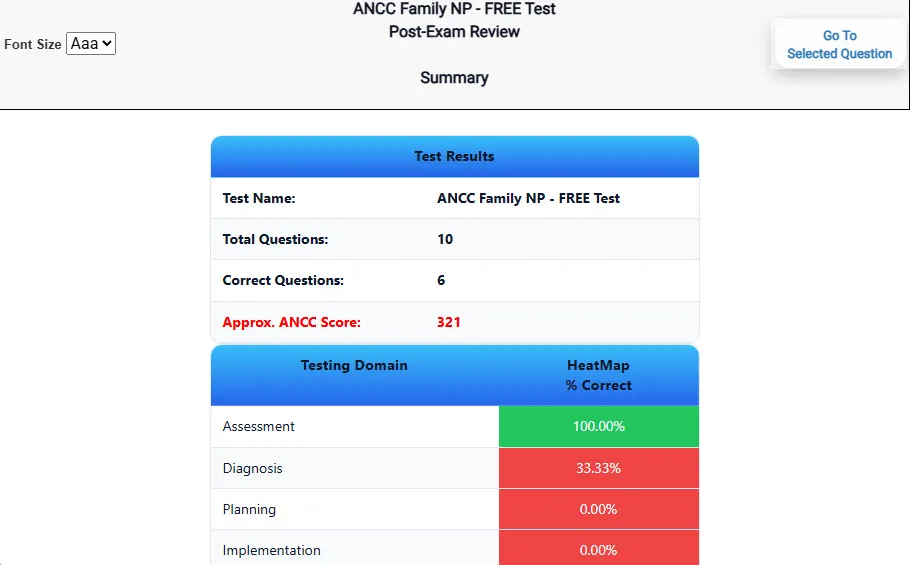
                           Review Summary 1 screen – 
                         Summary with counts for correct/wrong/unanswered and not seen items.
Review Summary 1 Summary with counts for correct/wrong/unanswered and not seen items.

                           Review Summary 2 screen – 
                         Advanced summary with category/domain breakdown and performance insights.
Review Summary 2 Advanced summary with category/domain breakdown and performance insights.

What Each Screen Shows

Answer Question Screen

  • Clean multiple-choice interface with progress bar.
  • Mark for review feature.
  • Matches real test pacing.

Detailed Explanation

  • Correct answer plus rationale.
  • Key concepts and guidelines highlighted.
  • Move between questions to fill knowledge gaps.

Review Summary 1

  • Overall results with total questions and scaled score.
  • Domain heatmap shows strengths and weaknesses.
  • Quick visual feedback on study priorities.

Review Summary 2

  • Chart of correct, wrong, unanswered, not seen.
  • Color-coded results for easy review.
  • Links back to missed items.

Top 10 Reasons to Use Exam Edge for your MOH Nursing and Midwifery Exam Prep

  1. Focused on the MOH Nursing and Midwifery Exam

    Our practice tests are built specifically for the MOH Nursing and Midwifery exam — every question mirrors the real topics, format, and difficulty so you're studying exactly what matters.

  2. Real Exam Simulation

    We match the per-question time limits and pressure of the actual MOH exam, so test day feels familiar and stress-free.

  3. 10 Full Practice Tests & 1,000 Unique Questions

    You'll have more than enough material to master every MOH Nursing and Midwifery concept — no repeats, no fluff.

  4. Lower Cost Than a Retake

    Ordering 5 practice exams costs less than retaking the MOH Nursing and Midwifery exam after a failure. One low fee could save you both time and money.

  5. Flexible Testing

    Need to step away mid-exam? Pick up right where you left off — with your remaining time intact.

  6. Instant Scoring & Feedback

    See your raw score and an estimated MOH Nursing and Midwifery score immediately after finishing each practice test.

  7. Detailed Explanations for Every Question

    Review correct and incorrect answers with clear, step-by-step explanations so you truly understand each topic.

  8. Trusted & Accredited

    We're fully accredited by the Better Business Bureau and uphold the highest standards of trust and transparency.

  9. Web-Based & Always Available

    No software to install. Access your MOH Nursing and Midwifery practice exams 24/7 from any computer or mobile device.

  10. Expert Support When You Need It

    Need extra help? Our specialized tutors are highly qualified and ready to support your MOH exam prep.


Pass the MOH Nursing and Midwifery Exam with Realistic Practice Tests from Exam Edge

Preparing for your upcoming MOH Nursing and Midwifery (MOH Midwifery) Certification Exam can feel overwhelming — but the right practice makes all the difference. Exam Edge gives you the tools, structure, and confidence to pass on your first try. Our online practice exams are built to match the real MOH Nursing and Midwifery exam in content, format, and difficulty.

  • 📝 10 MOH Nursing and Midwifery Practice Tests: Access 10 full-length exams with 100 questions each, covering every major MOH Nursing and Midwifery topic in depth.
  • Instant Online Access: Start practicing right away — no software, no waiting.
  • 🧠 Step-by-Step Explanations: Understand the reasoning behind every correct answer so you can master MOH Nursing and Midwifery exam concepts.
  • 🔄 Retake Each Exam Up to 4 Times: Build knowledge through repetition and track your improvement over time.
  • 🌐 Web-Based & Available 24/7: Study anywhere, anytime, on any device.
  • 🧘 Boost Your Test-Day Confidence: Familiarity with the MOH format reduces anxiety and helps you perform under pressure.

These MOH Nursing and Midwifery practice exams are designed to simulate the real testing experience by matching question types, timing, and difficulty level. This approach helps you get comfortable not just with the exam content, but also with the testing environment, so you walk into your exam day focused and confident.


Exam Edge MOH Saudi Arabia Reviews


Very Helpful..Exam Edge Thank you so much for such amazing tests. Very creative tests & almost covered every single Topic. Thank you so Much Exam Edge....!!

Harshal , Silver Spring , MD


MOH Nursing and Midwifery Aliases Test Name

Here is a list of alternative names used for this exam.

  • MOH Nursing and Midwifery
  • MOH Nursing and Midwifery test
  • MOH Nursing and Midwifery Certification Test
  • MOH Saudi Arabia
  • MOH Saudi Arabia MOH Midwifery
  • MOH Midwifery test
  • MOH Nursing and Midwifery (MOH Midwifery)
  • MOH Nursing and Midwifery certification