This is the content of the pop-over!

Lightning Deal Alert – 12% Off Ends at Midnight!

Strike while the savings are hot! Use promo code FlashSale at checkout for 12% off any Exam Edge test or bundle. Hurry—the clock is ticking!

ISCD CCD (CCD) Practice Tests & Test Prep by Exam Edge


ISCD Certified Clinical Densitometrist  product image
(4.8)
Based on 40 Reviews

  • Real Exam Simulation: Timed questions and matching content build comfort for your ISCD CCD test day.
  • Instant, 24/7 Access: Web-based ISCD Certified Clinical Densitometrist practice exams with no software needed.
  • Clear Explanations: Step-by-step answers and explanations for your ISCD exam to strengthen understanding.
  • Boosted Confidence: Reduces anxiety and improves test-taking skills to ace your ISCD Certified Clinical Densitometrist (CCD).

Featured on

ISCD Certified Clinical Densitometrist Online Practice Test Bundles

BEST VALUE
10 practice tests

$99.50

$399.50

SAVE $300

Only $9.95 per test!

  • 100% Pass Guarantee
  • 10 online practice tests
  • 100 questions per test
  • Bonus: 100 Flash Cards + Study Guide
  • Instant access
  • Detailed Explanations
  • Practice tests never expire
  • Timed, untimed, or study guide mode
5 practice tests

$69.75

$199.75

SAVE $130

Only $13.95 per test!

  • 5 online practice tests
  • 100 questions per test
  • Bonus: 100 Flash Cards + Study Guide
  • Instant access
  • Detailed Explanations
  • Practice tests never expire
  • Timed, untimed, or study guide mode
1 practice test

$39.95

  • 1 online practice test
  • 100 questions per test
  • Instant access
  • Detailed Explanations
  • Practice tests never expire
  • Timed, untimed, or study guide mode
Quick Select
Tap to choose a bundle

** All Prices are in US Dollars (USD) **


ISCD CCD (CCD) Resources

Jump to the section you need most.

Understanding the exact breakdown of the ISCD Certified Clinical Densitometrist test will help you know what to expect and how to most effectively prepare. The ISCD Certified Clinical Densitometrist has 100 multiple-choice questions . The exam will be broken down into the sections below:

ISCD Certified Clinical Densitometrist Exam Blueprint
Domain Name % Number of
Questions
Overview of Low Bone Mass and Osteoporosis 15% 15
Imaging Technology in Bone Health 23% 23
Clinical Application of Bone Densitometry 32% 32
Prevention and Risk Assessment 16% 16
Treatment of Low Bone Mass and Osteoporosis 14% 14

ISCD Certified Clinical Densitometrist Study Tips by Domain

  • Differentiate osteoporosis (T-score ≤ −2.5 at femoral neck/total hip/lumbar spine) from osteopenia (T-score −1.0 to −2.4) and normal (≥ −1.0); red flag: do not use Z-scores to diagnose osteoporosis in postmenopausal women or men ≥50.
  • Use Z-scores for premenopausal women, men <50, and children; threshold cue: a Z-score ≤ −2.0 is “below the expected range for age” and should trigger evaluation for secondary causes.
  • Recognize primary vs secondary osteoporosis; common ISCD trap: labeling “osteoporosis” from a low BMD alone in a young adult without considering secondary etiologies (e.g., glucocorticoids, hyperparathyroidism, malabsorption).
  • Understand fracture definitions and types (fragility/low-trauma vs high-energy); priority rule: a low-trauma hip or vertebral fracture generally indicates osteoporosis regardless of BMD result.
  • Know key pathophysiology terms—bone remodeling imbalance, peak bone mass, and age-related cortical vs trabecular loss; red flag: accelerated early postmenopausal trabecular loss increases vertebral fracture risk even when hip T-score is not yet osteoporotic.
  • Identify who needs evaluation based on epidemiology and risk factors (age, prior fracture, family history, low BMI, smoking, alcohol, certain meds); practical cue: long-term systemic glucocorticoids (e.g., ≥3 months) should prompt early assessment rather than waiting for age-based screening.
  • Verify DXA system calibration and stability with daily phantom QC; red flag: a sudden phantom BMD shift beyond facility limits suggests instrument drift and invalidates trending until resolved.
  • Optimize positioning and ROI placement (spine, hip, forearm) consistently across visits; common trap: rotated hip or spine scoliosis/degenerative change falsely elevates BMD and can mask true loss.
  • Apply correct scan mode and body-size settings to avoid artifacts; priority rule: use the lowest dose/appropriate mode that achieves adequate precision, and flag unusually noisy images as non-diagnostic.
  • Recognize and document artifacts (contrast, hardware, vertebral fractures, aortic calcification); contraindication cue: recent barium/iodinated contrast can contaminate DXA regions and may require rescheduling or alternative site selection.
  • Use VFA/vertebral imaging appropriately when height loss, kyphosis, or prior fracture is suspected; red flag: relying on BMD alone without assessing silent vertebral fractures can underestimate fracture risk.
  • Interpret follow-up change using facility-specific precision and LSC; common trap: calling “improvement” or “loss” when the absolute change does not exceed the calculated LSC for that site and device.
  • Use DXA for diagnosis at lumbar spine and hip, and add 33% (one-third) radius only when hip/spine cannot be measured or interpreted (or in hyperparathyroidism)—red flag: using Ward’s area or total body for diagnostic T-scores.
  • Apply the correct score: T-score for postmenopausal women and men ≥50; Z-score for premenopausal women and men <50—common trap: calling osteoporosis in younger patients based on T-score instead of reporting “below expected range for age” when Z ≤ -2.0.
  • For serial monitoring, insist on the same device, site(s), and positioning, and require change ≥ LSC to call it real—red flag: interpreting small BMD differences without site-specific precision and calculated LSC.
  • Evaluate images for artifacts before trusting numbers—priority rule: degenerative changes, aortic calcification, vertebral fractures, hardware, or contrast can falsely elevate spine BMD; exclude affected vertebrae and document why.
  • Confirm lumbar spine validity by checking for outliers—contraindication cue: if adjacent vertebrae differ by >1.0 T-score or a vertebra is clearly abnormal, exclude it and base the result on remaining evaluable levels.
  • Communicate results in ISCD-consistent language—common trap: mixing diagnosis and fracture risk; clearly state skeletal sites used, WHO category (when appropriate), and whether the change exceeds LSC, not merely “improved/worsened.”
  • Perform fracture risk assessment using clinical risk factors plus BMD when available, and document prior fragility fracture after age 50 as a high-priority risk marker—don’t dismiss a low-trauma vertebral, hip, humerus, pelvis, or wrist fracture as “just a fall.”
  • Identify secondary causes (e.g., glucocorticoids, aromatase inhibitors, androgen deprivation therapy, hyperparathyroidism, malabsorption) and prompt appropriate lab/clinical evaluation—red flag: unexplained low BMD or fracture at a younger age without obvious risk factors.
  • Use age-, sex-, and menopausal-status-appropriate interpretation to guide prevention counseling—common trap: using T-scores to label osteoporosis in premenopausal women, men <50, or children instead of focusing on Z-scores and clinical context.
  • Integrate fall-risk screening (prior falls, gait/balance issues, sedating medications, vision problems) into prevention plans—priority rule: a history of falls can outweigh modest BMD deficits in predicting near-term fracture risk.
  • Address modifiable lifestyle risks (adequate calcium/vitamin D intake, weight-bearing/resistance exercise, smoking cessation, limiting excess alcohol) with measurable targets—red flag: rapid weight loss, low BMI, or restrictive diets that increase fracture risk despite “normal” BMD.
  • Plan appropriate screening intervals and indications for vertebral fracture assessment/imaging based on risk profile—common trap: repeating DXA too soon (often <2 years) when results are unlikely to exceed least significant change and alter management.
  • Initiate pharmacologic therapy for osteoporosis defined by T-score ≤ −2.5 at femoral neck/total hip/lumbar spine or by a low-trauma hip/vertebral fracture regardless of BMD—red flag: treating based on a T-score from a non-diagnostic site (e.g., forearm) without proper indication.
  • Use FRAX appropriately to guide treatment in low bone mass (osteopenia) when country-specific thresholds are met—common trap: entering T-scores or using FRAX in patients already on osteoporosis therapy, which invalidates risk estimates.
  • Choose antiresorptive vs anabolic/dual-acting therapy based on fracture risk severity—priority rule: very high risk (e.g., recent fracture, multiple fractures, very low T-score) often warrants starting with an anabolic agent before transitioning to an antiresorptive.
  • Ensure calcium and vitamin D adequacy and correct secondary contributors before or alongside drug therapy—contraindication cue: do not give IV bisphosphonates or denosumab in uncontrolled hypocalcemia.
  • Monitor treatment with serial DXA using least significant change (LSC) and consistent site/machine—red flag: declaring treatment failure from a small BMD change that does not exceed the facility’s LSC or from switching scanners without cross-calibration.
  • Plan safe discontinuation/transition strategies—common trap: stopping denosumab without follow-on antiresorptive therapy, which increases risk of rapid bone loss and rebound vertebral fractures.


Built to Fit Into Your Busy Life

Everything you need to prepare with confidence—without wasting a minute.

Three Study Modes

Timed, No Time Limit, or Explanation mode.

Actionable Analytics

Heatmaps and scaled scores highlight weak areas.

High-Yield Rationales

Concise explanations emphasize key concepts.

Realistic Interface

Matches the feel of the actual exam environment.

Accessible by Design

Clean layout reduces cognitive load.

Anytime, Anywhere

Web-based access 24/7 on any device.
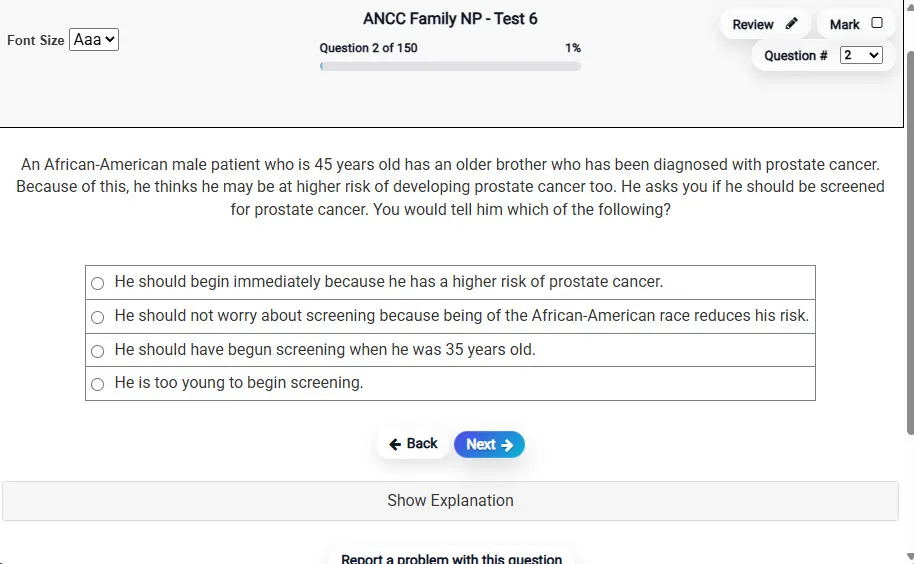
Answering a Question screen – Multiple-choice item view with navigation controls and progress tracker.
Answering a Question Multiple-choice item view with navigation controls and progress tracker.

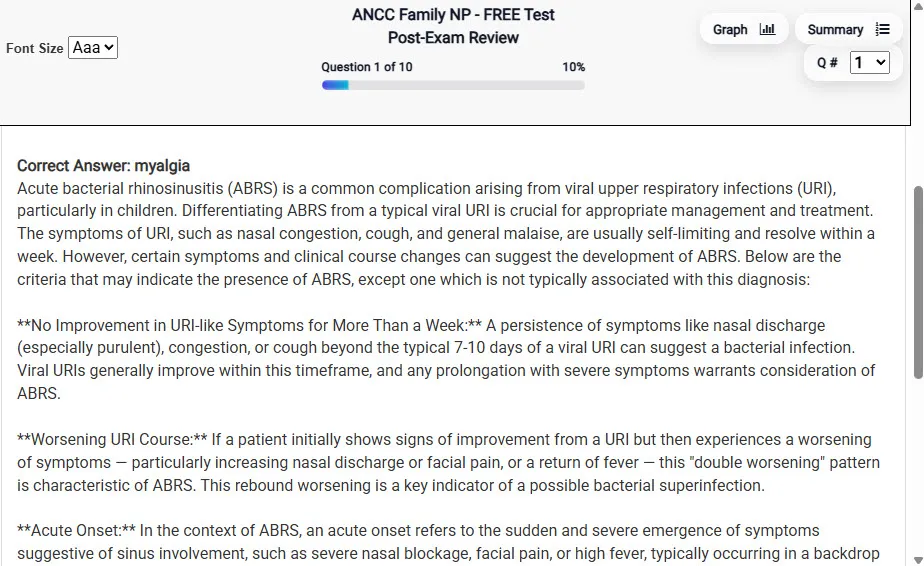
                           Detailed Explanation screen – 
                         Review mode showing chosen answer and rationale and references.
Detailed Explanation Review mode showing chosen answer and rationale and references.

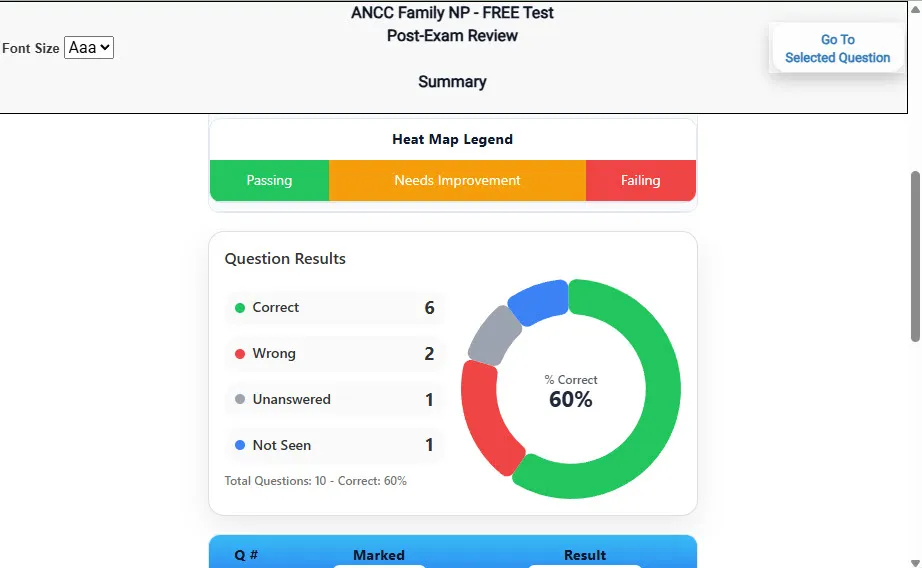
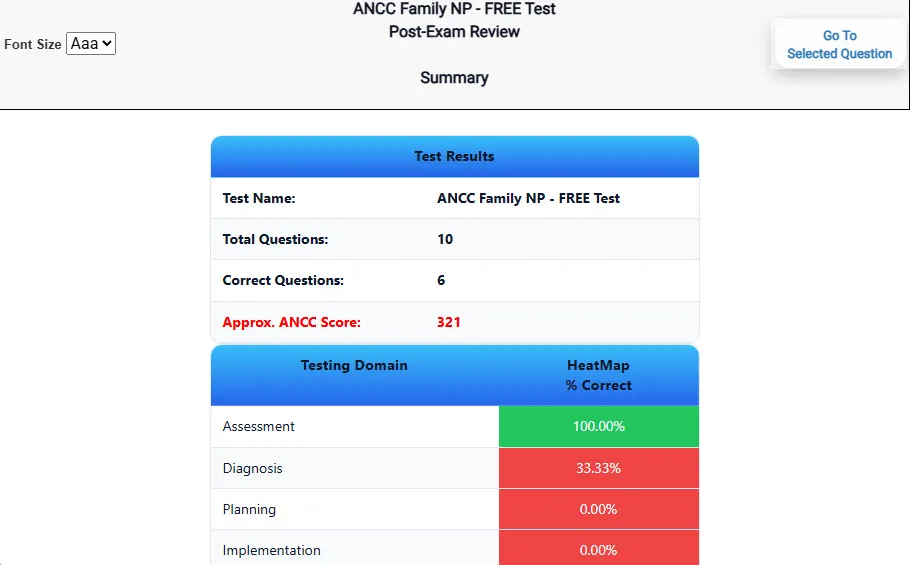
                           Review Summary 1 screen – 
                         Summary with counts for correct/wrong/unanswered and not seen items.
Review Summary 1 Summary with counts for correct/wrong/unanswered and not seen items.

                           Review Summary 2 screen – 
                         Advanced summary with category/domain breakdown and performance insights.
Review Summary 2 Advanced summary with category/domain breakdown and performance insights.

What Each Screen Shows

Answer Question Screen

  • Clean multiple-choice interface with progress bar.
  • Mark for review feature.
  • Matches real test pacing.

Detailed Explanation

  • Correct answer plus rationale.
  • Key concepts and guidelines highlighted.
  • Move between questions to fill knowledge gaps.

Review Summary 1

  • Overall results with total questions and scaled score.
  • Domain heatmap shows strengths and weaknesses.
  • Quick visual feedback on study priorities.

Review Summary 2

  • Chart of correct, wrong, unanswered, not seen.
  • Color-coded results for easy review.
  • Links back to missed items.

Top 10 Reasons to Use Exam Edge for your ISCD Certified Clinical Densitometrist Exam Prep

  1. Focused on the ISCD Certified Clinical Densitometrist Exam

    Our practice tests are built specifically for the ISCD CCD exam — every question mirrors the real topics, format, and difficulty so you're studying exactly what matters.

  2. Real Exam Simulation

    We match the per-question time limits and pressure of the actual ISCD exam, so test day feels familiar and stress-free.

  3. 10 Full Practice Tests & 1,000 Unique Questions

    You'll have more than enough material to master every ISCD CCD concept — no repeats, no fluff.

  4. Lower Cost Than a Retake

    Ordering 5 practice exams costs less than retaking the ISCD Certified Clinical Densitometrist exam after a failure. One low fee could save you both time and money.

  5. Flexible Testing

    Need to step away mid-exam? Pick up right where you left off — with your remaining time intact.

  6. Instant Scoring & Feedback

    See your raw score and an estimated ISCD Certified Clinical Densitometrist score immediately after finishing each practice test.

  7. Detailed Explanations for Every Question

    Review correct and incorrect answers with clear, step-by-step explanations so you truly understand each topic.

  8. Trusted & Accredited

    We're fully accredited by the Better Business Bureau and uphold the highest standards of trust and transparency.

  9. Web-Based & Always Available

    No software to install. Access your ISCD CCD practice exams 24/7 from any computer or mobile device.

  10. Expert Support When You Need It

    Need extra help? Our specialized tutors are highly qualified and ready to support your ISCD exam prep.


Pass the ISCD Certified Clinical Densitometrist Exam with Realistic Practice Tests from Exam Edge

Preparing for your upcoming ISCD Certified Clinical Densitometrist (CCD) Certification Exam can feel overwhelming — but the right practice makes all the difference. Exam Edge gives you the tools, structure, and confidence to pass on your first try. Our online practice exams are built to match the real ISCD CCD exam in content, format, and difficulty.

  • 📝 10 ISCD Certified Clinical Densitometrist Practice Tests: Access 10 full-length exams with 100 questions each, covering every major ISCD Certified Clinical Densitometrist topic in depth.
  • Instant Online Access: Start practicing right away — no software, no waiting.
  • 🧠 Step-by-Step Explanations: Understand the reasoning behind every correct answer so you can master ISCD CCD exam concepts.
  • 🔄 Retake Each Exam Up to 4 Times: Build knowledge through repetition and track your improvement over time.
  • 🌐 Web-Based & Available 24/7: Study anywhere, anytime, on any device.
  • 🧘 Boost Your Test-Day Confidence: Familiarity with the ISCD format reduces anxiety and helps you perform under pressure.

These ISCD Certified Clinical Densitometrist practice exams are designed to simulate the real testing experience by matching question types, timing, and difficulty level. This approach helps you get comfortable not just with the exam content, but also with the testing environment, so you walk into your exam day focused and confident.


Exam Edge ISCD Reviews


Your CCD review questions helped prepare me for success!! I passed my CCD exam on the first try!! Your exam questions really got me ready for what to expect on the exam. I amazingly found you guys on the Internet by browsing with generic terms like "how to pass the CCD exam". Thanks for your awesome ...
Read More
Lorena, Huntington Beach, California


ISCD Certified Clinical Densitometrist Aliases Test Name

Here is a list of alternative names used for this exam.

  • ISCD Certified Clinical Densitometrist
  • ISCD Certified Clinical Densitometrist test
  • ISCD Certified Clinical Densitometrist Certification Test
  • ISCD CCD test
  • ISCD
  • ISCD CCD
  • CCD test
  • ISCD Certified Clinical Densitometrist (CCD)
  • Certified Clinical Densitometrist certification