This is the content of the pop-over!

HESI EMT-B (HESI-EMT-B) Practice Tests & Test Prep by Exam Edge


HESI EMT-Basic Exit  product image
(4.6)
Based on 34 Reviews

  • Real Exam Simulation: Timed questions and matching content build comfort for your HESI EMT-B test day.
  • Instant, 24/7 Access: Web-based HESI EMT-Basic Exit practice exams with no software needed.
  • Clear Explanations: Step-by-step answers and explanations for your HESI exam to strengthen understanding.
  • Boosted Confidence: Reduces anxiety and improves test-taking skills to ace your HESI EMT-Basic Exit (HESI-EMT-B).

Featured on

HESI EMT-Basic Exit Online Practice Test Bundles

BEST VALUE
15 practice tests

$149.25

$599.25

SAVE $450

Only $9.95 per test!

  • 100% Pass Guarantee
  • 15 online practice tests
  • 90 questions per test
  • Bonus: 100 Flash Cards + Study Guide
  • Instant access
  • Detailed Explanations
  • Practice tests never expire
  • Timed, untimed, or study guide mode
MOST POPULAR
10 practice tests

$99.50

$399.50

SAVE $300

Only $9.95 per test!

  • 10 online practice tests
  • 90 questions per test
  • Bonus: 100 Flash Cards + Study Guide
  • Instant access
  • Detailed Explanations
  • Practice tests never expire
  • Timed, untimed, or study guide mode
5 practice tests

$69.75

$199.75

SAVE $130

Only $13.95 per test!

  • 5 online practice tests
  • 90 questions per test
  • Bonus: 100 Flash Cards
  • Instant access
  • Detailed Explanations
  • Practice tests never expire
  • Timed, untimed, or study guide mode
1 practice test

$39.95

  • 1 online practice test
  • 90 questions per test
  • Instant access
  • Detailed Explanations
  • Practice tests never expire
  • Timed, untimed, or study guide mode
Quick Select
Tap to choose a bundle

** All Prices are in US Dollars (USD) **


HESI EMT-B (HESI-EMT-B) Resources

Jump to the section you need most.

Understanding the exact breakdown of the HESI EMT-Basic Exit test will help you know what to expect and how to most effectively prepare. The HESI EMT-Basic Exit has multiple-choice questions . The exam will be broken down into the sections below:

HESI EMT-Basic Exit Exam Blueprint
Domain Name % Number of
Questions
Airway - Respiration & Ventilation 17-21% 17
Cardiology & Resuscitation 16-20% 16
Trauma 19-23% 19
Medical/Obstetrics/Gyn 27-31% 27
EMS Ops 11-15% 11

HESI EMT-Basic Exit Study Tips by Domain

  • Prioritize airway before anything else: if the patient can’t maintain or protect it (gurgling, snoring, absent gag, inability to speak), open/suction/adjunct immediately—don’t delay for vitals or history.
  • Choose the right adjunct: use an OPA only in an unresponsive patient with no gag reflex; a common trap is placing an OPA in a semi-conscious patient, which can trigger vomiting and aspiration.
  • Apply oxygen based on need, not habit: SpO2 < 94%, increased work of breathing, or shock warrants supplemental O2; red flag—cyanosis is late, so don’t wait to see it.
  • Ventilate when there’s inadequate breathing, not just low SpO2: slow/irregular respirations, poor chest rise, or altered mental status requires BVM support at the correct rate (adult 10–12/min; child/infant 12–20/min) with visible chest rise.
  • Use proper suction technique to avoid hypoxia: limit suction to 15 seconds (adult), 10 seconds (child), 5 seconds (infant) and preoxygenate as able; red flag—prolonged suctioning can worsen bradycardia in pediatrics.
  • Recognize and treat obstructed airway promptly: in severe choking (inability to speak/cough), perform abdominal thrusts (or chest thrusts in late pregnancy/infant); common trap—blind finger sweeps can push the object deeper and injure tissue.
  • Start CPR immediately for unresponsive, apneic (or only gasping) patients with no definite pulse within 10 seconds—common trap: wasting time hunting for a pulse or checking multiple sites.
  • For adult CPR, emphasize high-quality compressions (100–120/min, 2–2.4 in depth, full recoil, minimal pauses)—red flag: pauses >10 seconds for airway, rhythm, or moving the patient.
  • Use the AED as soon as available; if shock advised, clear the patient and resume CPR immediately after the shock—priority rule: do not pause to recheck pulse or rhythm until the next analysis cycle.
  • Ventilate with BVM at 1 breath every 6 seconds (10/min) once an advanced airway is in place (or during CPR in many exam scenarios)—common trap: hyperventilation causing decreased venous return and worsened outcomes.
  • Treat symptomatic bradycardia and hypotension as an unstable patient problem—red flag: altered mental status, chest pain, or signs of shock mean rapid transport with ongoing airway/oxygenation and early ALS intercept.
  • For suspected ACS, give aspirin if no allergy/active bleeding and assist with prescribed nitroglycerin only if SBP is adequate and no PDE-5 inhibitor use—contraindication cue: ED drugs (e.g., sildenafil within 24 hours) or hypotension make nitro unsafe.
  • Control life-threatening hemorrhage first—apply direct pressure, then a tourniquet for uncontrolled extremity bleeding and note the application time (red flag: continued soaking through dressings).
  • Suspect shock with tachycardia, cool clammy skin, altered mentation, or delayed cap refill; treat with high-flow oxygen as indicated, keep warm, and transport early (common trap: waiting for hypotension before acting).
  • Spinal motion restriction is for high-risk findings (midline tenderness, neuro deficits, high-energy mechanism, altered mental status); avoid routine long-board use and prioritize airway/ventilation (red flag: pain or neuro changes after movement).
  • Chest trauma priorities: seal open chest wounds with an occlusive dressing taped on three sides and reassess for tension pneumothorax (common trap: fully taping all four sides and worsening air trapping).
  • Head injury care: maintain airway and oxygenation, minimize scene time, and monitor for rising ICP (unequal pupils, vomiting, deteriorating GCS)—do not hyperventilate unless signs of herniation (contraindication: routine hyperventilation).
  • Splint fractures in position found if distal pulse/skin color/sensation are present; if absent, gently realign once and reassess CMS (priority rule: document pre- and post-splint circulation, motor, sensation).
  • Check blood glucose early in any altered mental status; red flag: treat suspected hypoglycemia immediately per protocol rather than waiting for transport.
  • Suspected stroke: use a stroke screen and note last known well; common trap: giving oral intake or delaying transport for prolonged on-scene assessments.
  • Respiratory emergencies (asthma/COPD): prioritize oxygenation/ventilation and assist with the patient’s prescribed inhaler if allowed; red flag: silent chest, fatigue, or declining mental status — ventilate.
  • Diabetic emergencies: differentiate hypoglycemia vs. hyperglycemia by presentation and history; contraindication: do not give oral glucose unless the patient can swallow and follow commands.
  • Obstetrics: imminent delivery cues include crowning or urge to push; priority rule: prepare for delivery and neonatal care, and do not attempt to delay delivery once crowning occurs.
  • Vaginal bleeding in pregnancy or postpartum: treat for shock and rapid transport; red flag: heavy bleeding with dizziness/syncope — avoid vaginal packing and focus on oxygen, warming, and perfusion.
  • Scene size-up first: BSI/PPE, number of patients, MOI/NOI, and request additional resources early—common trap is entering before hazards (traffic, weapons, chemicals) are controlled.
  • Standard precautions always; upgrade to N95/eye protection for suspected airborne or aerosol-generating situations—red flag is coughing patient with fever where you delay masking until inside the ambulance.
  • Safe ambulance operations: seatbelts for all, secure equipment/airway adjuncts, and minimize lights-and-siren responses—priority rule is no patient care justifies an unrestrained provider in a moving unit.
  • Communications: give a concise radio report (age/sex, chief complaint, vitals, interventions, ETA) and clarify orders with read-back—common trap is omitting trends (e.g., BP dropping) or medication times.
  • Documentation: chart objectively with times (dispatch, arrival, interventions, reassessments) and include refusals with capacity, risks explained, and signatures—red flag is a refusal without vitals and mental status documented.
  • Incident management: use START/triage tags in MCI (ambulatory = minor) and follow ICS roles—common trap is transporting the first patient you see instead of triaging all patients before committing resources.


Built to Fit Into Your Busy Life

Everything you need to prepare with confidence—without wasting a minute.

Three Study Modes

Timed, No Time Limit, or Explanation mode.

Actionable Analytics

Heatmaps and scaled scores highlight weak areas.

High-Yield Rationales

Concise explanations emphasize key concepts.

Realistic Interface

Matches the feel of the actual exam environment.

Accessible by Design

Clean layout reduces cognitive load.

Anytime, Anywhere

Web-based access 24/7 on any device.
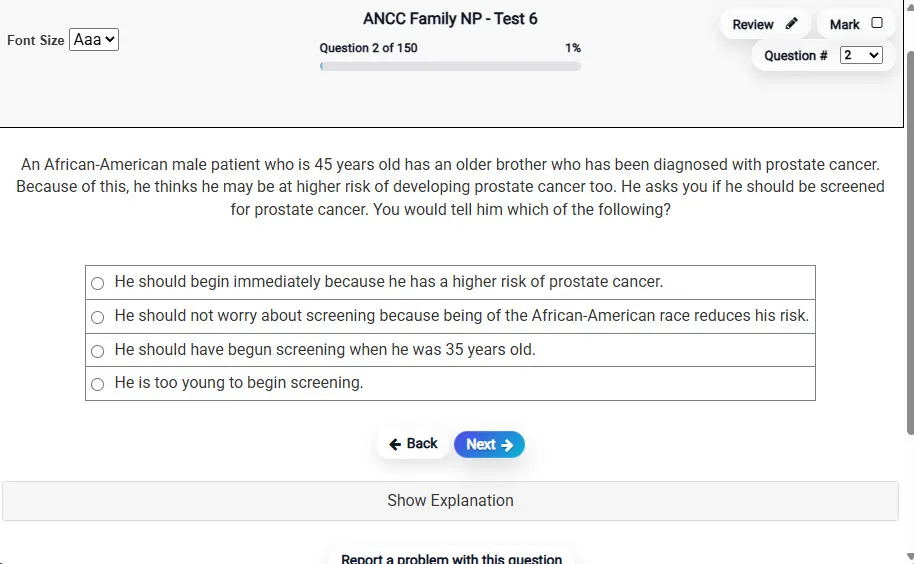
Answering a Question screen – Multiple-choice item view with navigation controls and progress tracker.
Answering a Question Multiple-choice item view with navigation controls and progress tracker.

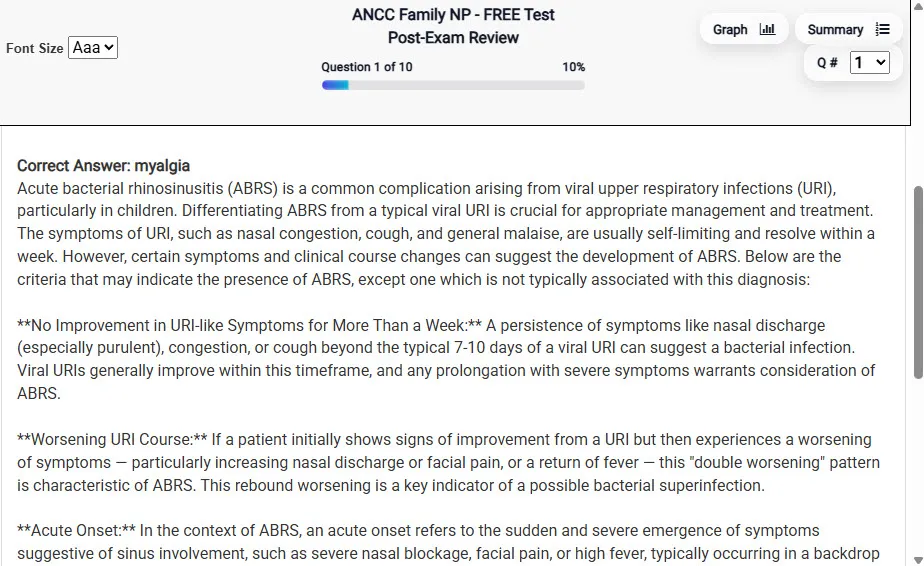
                           Detailed Explanation screen – 
                         Review mode showing chosen answer and rationale and references.
Detailed Explanation Review mode showing chosen answer and rationale and references.

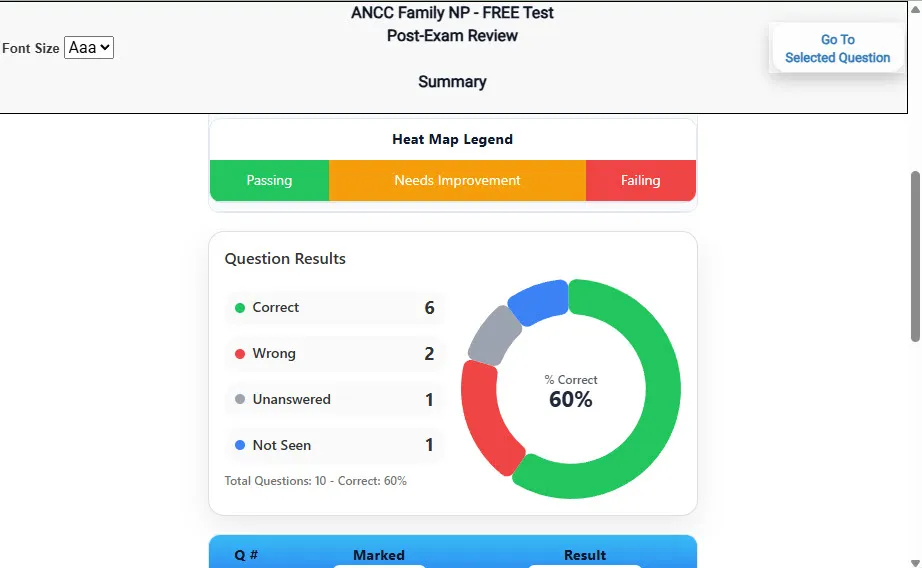
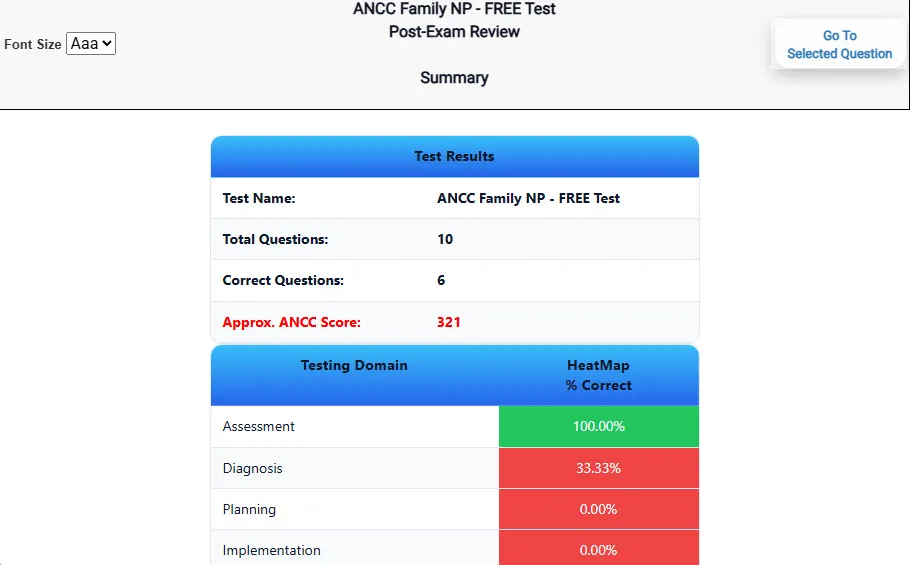
                           Review Summary 1 screen – 
                         Summary with counts for correct/wrong/unanswered and not seen items.
Review Summary 1 Summary with counts for correct/wrong/unanswered and not seen items.

                           Review Summary 2 screen – 
                         Advanced summary with category/domain breakdown and performance insights.
Review Summary 2 Advanced summary with category/domain breakdown and performance insights.

What Each Screen Shows

Answer Question Screen

  • Clean multiple-choice interface with progress bar.
  • Mark for review feature.
  • Matches real test pacing.

Detailed Explanation

  • Correct answer plus rationale.
  • Key concepts and guidelines highlighted.
  • Move between questions to fill knowledge gaps.

Review Summary 1

  • Overall results with total questions and scaled score.
  • Domain heatmap shows strengths and weaknesses.
  • Quick visual feedback on study priorities.

Review Summary 2

  • Chart of correct, wrong, unanswered, not seen.
  • Color-coded results for easy review.
  • Links back to missed items.

Top 10 Reasons to Use Exam Edge for your HESI EMT-Basic Exit Exam Prep

  1. Focused on the HESI EMT-Basic Exit Exam

    Our practice tests are built specifically for the HESI EMT-B exam — every question mirrors the real topics, format, and difficulty so you're studying exactly what matters.

  2. Real Exam Simulation

    We match the per-question time limits and pressure of the actual HESI exam, so test day feels familiar and stress-free.

  3. 15 Full Practice Tests & 1,350 Unique Questions

    You'll have more than enough material to master every HESI EMT-B concept — no repeats, no fluff.

  4. Lower Cost Than a Retake

    Ordering 5 practice exams costs less than retaking the HESI EMT-Basic Exit exam after a failure. One low fee could save you both time and money.

  5. Flexible Testing

    Need to step away mid-exam? Pick up right where you left off — with your remaining time intact.

  6. Instant Scoring & Feedback

    See your raw score and an estimated HESI EMT-Basic Exit score immediately after finishing each practice test.

  7. Detailed Explanations for Every Question

    Review correct and incorrect answers with clear, step-by-step explanations so you truly understand each topic.

  8. Trusted & Accredited

    We're fully accredited by the Better Business Bureau and uphold the highest standards of trust and transparency.

  9. Web-Based & Always Available

    No software to install. Access your HESI EMT-B practice exams 24/7 from any computer or mobile device.

  10. Expert Support When You Need It

    Need extra help? Our specialized tutors are highly qualified and ready to support your HESI exam prep.


Pass the HESI EMT-Basic Exit Exam with Realistic Practice Tests from Exam Edge

Preparing for your upcoming HESI EMT-Basic Exit (HESI-EMT-B) Certification Exam can feel overwhelming — but the right practice makes all the difference. Exam Edge gives you the tools, structure, and confidence to pass on your first try. Our online practice exams are built to match the real HESI EMT-B exam in content, format, and difficulty.

  • 📝 15 HESI EMT-Basic Exit Practice Tests: Access 15 full-length exams with 90 questions each, covering every major HESI EMT-Basic Exit topic in depth.
  • Instant Online Access: Start practicing right away — no software, no waiting.
  • 🧠 Step-by-Step Explanations: Understand the reasoning behind every correct answer so you can master HESI EMT-B exam concepts.
  • 🔄 Retake Each Exam Up to 4 Times: Build knowledge through repetition and track your improvement over time.
  • 🌐 Web-Based & Available 24/7: Study anywhere, anytime, on any device.
  • 🧘 Boost Your Test-Day Confidence: Familiarity with the HESI format reduces anxiety and helps you perform under pressure.

These HESI EMT-Basic Exit practice exams are designed to simulate the real testing experience by matching question types, timing, and difficulty level. This approach helps you get comfortable not just with the exam content, but also with the testing environment, so you walk into your exam day focused and confident.


Exam Edge HESI Reviews


I just took my Hesi exit PN today and got a Hesi score of 1205 and a conversion score of 99.99%. Thanks for the help. Doing all those tests helped so much. Not because I saw the same questions but because I learned so much from the answer reasoning section. Hope to fly through my boards in a couple ...
Read More
Sharon, Texas

I recently had to test out of my school with an 850 on the Hesi PN, so I purchased the exams from you guys, about 5 to 7 exams, and passed the exit HesiPn with a 988! First time around! Then I purchased the NclexPN exam tests from you guys and I passed my nclex the first time around! These tests rea ...
Read More
Welsh, NC

I want to thank you. The tests are really helpful. I took them three times and after using your exams, I finally passed. The tests helped me especially in the math section, in which I got a 90.

DIANA , Texas

I can't believe this website doesn't have a high following status. I bought 40 practice questions, and I did 20 practice questions and took my Hesi exit. I scored 1070. I completed all 40 practice exams and passed my boards for the first time. Exam Edge introduced me to a bunch of topics and boosted ...
Read More
Juliet M., Tarpon Springs, Florida


HESI EMT-Basic Exit Aliases Test Name

Here is a list of alternative names used for this exam.

  • HESI EMT-Basic Exit
  • HESI EMT-Basic Exit test
  • HESI EMT-Basic Exit Certification Test
  • HESI EMT-B test
  • HESI
  • HESI HESI-EMT-B
  • HESI-EMT-B test
  • HESI EMT-Basic Exit (HESI-EMT-B)
  • EMT-Basic Exit certification