This is the content of the pop-over!

Lightning Deal Alert – 12% Off Ends at Midnight!

Strike while the savings are hot! Use promo code FlashSale at checkout for 12% off any Exam Edge test or bundle. Hurry—the clock is ticking!

HESI Dental Assisting (HESI-DA) Practice Tests & Test Prep by Exam Edge


HESI Dental Assisting Exit   product image
(4.5)
Based on 32 Reviews

  • Real Exam Simulation: Timed questions and matching content build comfort for your HESI Dental Assisting test day.
  • Instant, 24/7 Access: Web-based HESI Dental Assisting Exit practice exams with no software needed.
  • Clear Explanations: Step-by-step answers and explanations for your HESI exam to strengthen understanding.
  • Boosted Confidence: Reduces anxiety and improves test-taking skills to ace your HESI Dental Assisting Exit (HESI-DA).

Featured on

HESI Dental Assisting Exit Online Practice Test Bundles

BEST VALUE
30 practice tests

$238.50

$1,198.50

SAVE $960

Only $7.95 per test!

  • 100% Pass Guarantee
  • 30 online practice tests
  • 100 questions per test
  • Bonus: 100 Flash Cards + Study Guide
  • Instant access
  • Detailed Explanations
  • Practice tests never expire
  • Timed, untimed, or study guide mode
MOST POPULAR
15 practice tests

$149.25

$599.25

SAVE $450

Only $9.95 per test!

  • 15 online practice tests
  • 100 questions per test
  • Bonus: 100 Flash Cards + Study Guide
  • Instant access
  • Detailed Explanations
  • Practice tests never expire
  • Timed, untimed, or study guide mode
5 practice tests

$69.75

$199.75

SAVE $130

Only $13.95 per test!

  • 5 online practice tests
  • 100 questions per test
  • Bonus: 100 Flash Cards
  • Instant access
  • Detailed Explanations
  • Practice tests never expire
  • Timed, untimed, or study guide mode
1 practice test

$39.95

  • 1 online practice test
  • 100 questions per test
  • Instant access
  • Detailed Explanations
  • Practice tests never expire
  • Timed, untimed, or study guide mode
Quick Select
Tap to choose a bundle

** All Prices are in US Dollars (USD) **


HESI Dental Assisting (HESI-DA) Resources

Jump to the section you need most.

Understanding the exact breakdown of the HESI Dental Assisting Exit test will help you know what to expect and how to most effectively prepare. The HESI Dental Assisting Exit has multiple-choice questions . The exam will be broken down into the sections below:

HESI Dental Assisting Exit Exam Blueprint
Domain Name % Number of
Questions
GC  
     Collection and recording of clinical data 10% 3
     Chairside dental procedures 45% 15
     Chairside dental materials (preparation - manipulation - application) 11% 4
     Lab materials and procedures 4% 1
     Patient education and oral health management 10% 3
     Prevention and management of emergencies 14% 5
     Office management procedures 6% 2
RHS  
     Expose and evaluate (intraoral - extraoral) 37% 12
     Process 16% 5
     Mount/label 11% 4
     Radiation safety-patient 24% 8
     Radiation safety-operator 12% 4
ICE  
     Patient and dental healthcare worker education 10% 3
     Prevent cross-contamination and disease transmission 20% 7
     Maintain aseptic conditions 10% 3
     Perform sterilization procedures 15% 5
     Environmental asepsis 15% 5
     Occupational safety 30% 10

HESI Dental Assisting Exit Study Tips by Domain

  • Use GCC (“Good–Correct–Complete”) to triage multiple-choice items—eliminate answers that are technically true but incomplete for the stem’s scope (common trap).
  • Prioritize patient safety first (airway/breathing/circulation, allergy, infection control) when options compete; if one choice prevents harm immediately, it usually outranks efficiency or convenience (priority rule).
  • Watch for absolute contraindications embedded in the stem (e.g., latex allergy, anticoagulants, pregnancy radiation precautions); selecting a contraindicated action is a classic HESI red flag.
  • Choose the most conservative, standard-of-care step when data are limited—don’t assume missing findings; if the question doesn’t state it, you can’t use it (common trap).
  • When two answers seem right, pick the one that addresses the question’s key word (FIRST/NEXT/IMMEDIATE/PRIORITY); ignoring the timing cue is a frequent error.
  • For documentation/communication items, select charting that is objective and specific (what was seen/done, patient quotes in “”); subjective conclusions without evidence are incorrect (red flag).
  • Verify patient identifiers and review/update the health history at every visit; red flag: undocumented allergies/medications before anesthesia or prescribing is a common HESI test trap.
  • Record vital signs using correct technique and units (BP, pulse, respirations, temperature); priority rule: recheck and report abnormal values (e.g., markedly elevated BP) before initiating elective care.
  • Chart existing restorations, caries, and missing teeth with standard symbols and consistent tooth numbering; common trap: mixing Universal and FDI notation within the same record.
  • Document periodontal data accurately (probing depths, bleeding, recession, mobility, furcation); red flag: “rounded” numbers or missing site entries can invalidate comparisons over time.
  • Record pain assessment with location, duration, triggers, and a numeric scale; priority rule: note onset and provoking factors before treatment because “pain improved” without baseline is non-defensible.
  • Maintain legal-quality notes that are timely, objective, and signed/dated; contraindication: never erase or backdate—correct errors with a single line and initial per policy.
  • Use correct transfer and grasp: pass sharp instruments with the working end down and never over the patient’s face—red flag for sharps injury and break in asepsis.
  • For rubber dam placement, confirm latex allergy and punch holes to match tooth spacing—common trap is tearing the dam or causing tissue trauma from misaligned holes.
  • When assisting with local anesthesia, aspirate protocol is critical and observe for immediate toxicity signs—priority rule is stop the procedure and activate emergency response if symptoms escalate.
  • During restorative procedures, maintain a dry field with high-volume evacuation and retraction—red flag is contamination of etch/bond surfaces leading to restoration failure.
  • For extraction assistance, have suction, gauze, and hemostatic aids ready and watch for uncontrolled bleeding—threshold cue is persistent bleeding beyond expected clotting requiring provider escalation.
  • In endodontic assistance, verify working-length radiographs and keep irrigants controlled—common trap is sodium hypochlorite extrusion, signaled by sudden pain/swelling and requiring immediate clinician notification.
  • Alginate—add powder to water (not water to powder) and use room-temp water; red flag: warm water shortens working time and can cause a rushed, inaccurate impression.
  • Resin composite—avoid contamination and cure in increments (about 2 mm) to reduce shrinkage; trap: thick bulk fills can leave an uncured center and lead to postoperative sensitivity.
  • Glass ionomer/RMGI—condition per directions and protect from moisture during initial set; priority rule: early saliva contamination weakens the material and increases marginal breakdown.
  • ZOE materials—mix to the prescribed base/accelerator ratio; contraindication cue: avoid under resin restorations because eugenol can inhibit polymerization and compromise the bond.
  • Impression materials/stone—disinfect impressions as directed, rinse, then pour promptly (especially alginate); red flag: delayed pouring causes syneresis/imbibition and distorted casts.
  • Cements (temporary vs permanent)—use minimal mix to fully seat restorations and remove excess at the right stage; trap: too much cement or premature cleanup can prevent complete seating or pull margins open.
  • For alginate impressions, use cool water and the manufacturer’s powder-to-water ratio to control setting time; red flag: under- or over-watering causes weak, grainy, or distorted impressions.
  • Pour alginate impressions promptly (ideally within 10–15 minutes) and store briefly in a sealed bag with a damp towel if delayed; common trap: soaking or leaving exposed to air causes dimensional change (imbibition/syneresis).
  • When mixing gypsum products, add powder to water and vacuum/spatulate to reduce bubbles; red flag: adding water to powder increases porosity and weakens the cast.
  • Separate and trim casts only after a complete set, and preserve key landmarks (vestibules, hamular notches, retromolar pads); common trap: trimming too aggressively removes diagnostic anatomy needed for appliances.
  • For acrylic provisional/appliance fabrication, manage the exothermic reaction and monomer fumes; contraindication cue: avoid direct contact with soft tissue during peak heat to prevent burns/chemical irritation.
  • Label all lab cases and items immediately with patient identifiers and date, and disinfect impressions/casts per office protocol before sending to the lab; red flag: skipping disinfection or unclear labeling leads to cross-contamination or remakes.
  • Teach brushing with a soft brush at a 45° angle to the gingival margin and daily interdental cleaning; red flag: vigorous horizontal scrubbing that worsens abrasion and recession.
  • For caries risk, emphasize fluoride toothpaste (don’t rinse vigorously after brushing) and limit frequency of fermentable carbs; common trap: patients think “sugar-free” snacks are always noncariogenic if eaten all day.
  • For periodontal health, explain plaque biofilm and the need for consistent home care plus recall intervals; priority rule: uncontrolled diabetes and tobacco use significantly increase periodontal breakdown risk.
  • Address xerostomia by encouraging water, saliva substitutes, and xylitol gum/candy if appropriate; red flag: alcohol-containing mouthrinses can worsen dryness and irritation.
  • Provide post-op instructions tailored to procedures (e.g., no smoking or straws after extractions); contraindication cue: advise patients to call immediately for persistent bleeding that doesn’t slow with firm gauze pressure.
  • Screen education for oral cancer warning signs (nonhealing ulcer >2 weeks, unexplained lump, persistent hoarseness) and reinforce routine exams; common trap: patients dismiss painless lesions as “not serious.”
  • Know the BLS sequence and call for help early—if a patient is unresponsive and not breathing normally, activate EMS, start high-quality CPR, and attach an AED as soon as it arrives (common trap: delaying AED use while continuing assessment).
  • Syncope is most common in the dental chair—manage with supine positioning and legs elevated, maintain airway, and give oxygen as ordered; red flag: persistent hypotension or no rapid recovery suggests a more serious cause.
  • Recognize anaphylaxis quickly—wheezing, facial/tongue swelling, hives, or hypotension after exposure requires immediate epinephrine per office protocol and EMS activation (contraindication cue: do not substitute antihistamines for epinephrine in airway compromise).
  • For chest pain suggestive of MI, stop treatment, position for comfort, administer oxygen per protocol, and activate EMS; practical cue: if prescribed nitroglycerin is taken, recheck BP before repeat dosing to avoid profound hypotension.
  • Seizure management is protective—remove instruments, do not restrain or place anything in the mouth, maintain airway, and time the event (red flag: seizure >5 minutes or repeated seizures warrants EMS and possible status epilepticus management).
  • Hypoglycemia can mimic anxiety or intoxication—if patient is conscious give fast-acting oral glucose; if unconscious, do not give anything by mouth and follow emergency drug kit protocol with EMS activation (common trap: overlooking diabetes history when the patient becomes diaphoretic and confused).
  • Protect PHI at every step (scheduling, billing, email/text reminders)—red flag: leaving charts or the day sheet visible at the front desk where other patients can read names/appointments.
  • Verify patient identity and insurance eligibility before treatment begins—common trap: assuming coverage is active and discovering after the visit that the plan requires preauthorization for major services.
  • Document financial arrangements and obtain signatures before initiating costly treatment—priority rule: get a written treatment plan/estimate and payment option agreement to prevent disputes.
  • Use correct CDT codes and accurate clinical documentation to support claims—red flag: upcoding or submitting a procedure without documentation (e.g., missing periodontal charting for periodontal therapy).
  • Handle accounts receivable systematically—common trap: delaying follow-up; set a consistent cycle (e.g., contact at 30/60/90 days) and document every communication attempt.
  • Maintain controlled inventory with reorder points and expiration checks—red flag: stocking without date rotation leading to expired anesthetic/cements being used or wasted.
  • Recognize that an RHS (Radiographic Health & Safety) focus is ALARA—if you can reduce time, increase distance, and improve shielding, you should (common trap: retakes due to poor positioning instead of correcting technique first).
  • Before exposure, verify the correct patient and correct image order/site; misidentification is a critical red flag that triggers repeat exposure and documentation issues.
  • Select exposure settings appropriate to receptor/sensor and patient size; overexposure is a common trap with digital systems because images can look acceptable while dose is unnecessarily high.
  • Use proper receptor placement/holding devices rather than fingers; “holding the film/sensor” is a contraindicated red flag due to unnecessary exposure to patient and operator.
  • Evaluate images for diagnostic acceptability (coverage, density, contrast, sharpness) before dismissing the patient; a priority rule is to correct the cause of error to avoid multiple retakes.
  • Follow infection control with radiography barriers and handling (dirty-to-clean workflow); a common trap is contaminating the tubehead/control panel or keyboard with gloved hands, requiring immediate disinfection.
  • Confirm exposure settings and image receptor placement before activating the unit; red flag: “retake because it’s too light/dark” usually means kVp/mA/time or sensor position was wrong, not just “bad luck.”
  • Use the paralleling technique whenever possible to reduce distortion; common trap: bisecting-angle errors create foreshortening/elongation that can mimic pathology or hide caries.
  • Evaluate images systematically for coverage, density/contrast, sharpness, and geometry; priority rule: if the area of interest (apex/CEJ/interproximal contacts) isn’t captured, the radiograph isn’t diagnostic even if it “looks clear.”
  • Correct cone cuts and overlap by aligning PID to the receptor and adjusting horizontal angulation; red flag: overlapped contacts in bitewings compromise caries detection and typically require retake.
  • For extraoral imaging, verify patient positioning (midsagittal plane, Frankfort plane, tongue to palate when indicated); common trap: a slumped posture or chin too high/low causes airway shadowing or condyle/apex cutoff.
  • Recognize and troubleshoot common artifacts (motion blur, receptor bending, processing/sensor errors); contraindication cue: if the patient can’t tolerate intraoral placement (severe gagging/trauma), shift to appropriate extraoral alternatives per office protocol.
  • Follow the manufacturer’s IFU for every step (time, temp, dilution, agitation)—common trap: assuming all brands/processors use the same settings.
  • Verify critical parameters and document them (e.g., cycle time/temperature, concentration, expiration)—red flag: missing log entries can invalidate the process even if it “looked fine.”
  • Use the correct sequence (pre-clean → rinse → dry → process → cool/inspect)—priority rule: moisture or soil left behind can cause process failure.
  • Check indicators and acceptance criteria every run—contraindication: do not use items if indicator/color change is incomplete or out of range.
  • Prevent mix-ups by labeling and segregating in-process vs. finished items—common trap: placing unprocessed items on a “clean” side during workflow bottlenecks.
  • Perform a final quality check before release (integrity, completeness, function)—red flag: damaged packaging, tears, or compromised seals require reprocessing.
  • Mount radiographs in anatomic position as if facing the patient—patient’s right appears on your left; red flag: reversed orientation can mimic pathology or hide caries.
  • Use a consistent mounting sequence (e.g., maxillary right to left, then mandibular left to right) and verify midline before sealing; common trap: mixing arches leads to charting errors.
  • Label mounts with patient identifiers (name/ID) and date before filing or sending; priority rule: unlabeled images are treated as unusable for documentation and can fail exam scenarios.
  • Indicate projection type and orientation markers as needed (PA, BW, occlusal; R/L) and confirm with tooth anatomy; red flag: relying only on stickers without anatomy check risks mislabeling.
  • Mount films/sensors without bending or creasing and avoid covering diagnostic areas with tape or staples; contraindication: any obstruction over interproximal contacts can invalidate caries evaluation.
  • Maintain asepsis while mounting—handle contaminated packets with barriers and perform hand hygiene before touching mounts; common trap: mounting with dirty gloves cross-contaminates charts and storage.
  • Verify patient identity and pregnancy status before exposing; red flag: taking radiographs on a possibly pregnant patient without documenting risk/benefit and provider approval.
  • Use ALARA with the fastest receptor available and correct exposure settings; common trap: repeating films due to poor positioning instead of adjusting technique first.
  • Apply thyroid collar and lead apron unless they interfere with the exam (e.g., some panoramic views); priority rule: thyroid shielding is especially critical for children.
  • Collimate and aim to limit the beam to the area of interest; red flag: cone-cut errors that prompt retakes and unnecessarily increase patient dose.
  • Stabilize receptors with holders rather than fingers; contraindication: never have the patient (or assistant) hold the receptor during exposure.
  • Screen for patients with limited tolerance (gag reflex, special needs) and plan fewer, essential images first; common trap: attempting a full series without breaks leading to motion blur and retakes.
  • Wear a personal dosimeter (e.g., badge/ring) on the torso outside the lead apron at collar level; red flag: leaving it in the operatory or wearing someone else’s badge invalidates monitoring.
  • Use the distance-and-barrier rule: stand at least 6 ft (2 m) away and 90–135° to the primary beam or behind a protective barrier; trap: holding the receptor or tubehead during exposure.
  • Never place any part of your body in the primary beam; priority rule: use receptor holders/positioning devices instead of fingers to stabilize films/sensors.
  • Minimize retakes by verifying patient positioning, receptor placement, and exposure settings before activating the switch; red flag: repeated errors from not aligning PID/aiming ring properly.
  • Check equipment safety basics routinely—collimation, PID stability, and exposure switch function; red flag: a frayed cord, drifting tubehead, or sticky exposure button means remove from service and report.
  • Follow ALARA for staff: avoid unnecessary exposures, use correct technique charts, and keep doors closed during exposure; trap: remaining in the room without barrier protection for “quick” single shots.
  • Use ICE to drive the differential: I (ischemic/infectious), C (compressive), E (extraspinal); red flag is a new neurologic deficit or bladder/bowel change—treat as emergent, not routine referral.
  • Infection clues: fever, IV drug use, immunosuppression, recent dental infection/procedure, or severe night pain; common trap is dismissing “flu-like” symptoms with back/neck pain as musculoskeletal.
  • Cancer/serious systemic disease clues: unexplained weight loss, history of malignancy, age >50 with new persistent pain, or pain unrelieved by rest; priority rule is expedited imaging/medical evaluation rather than repeated conservative care.
  • Vascular/ischemic patterns: sudden severe pain, pulse deficits, syncope, or chest/jaw/arm pain; red flag is diaphoresis with atypical jaw/neck pain—activate EMS.
  • Compressive emergencies: rapidly progressive weakness, saddle anesthesia, or escalating numbness/tingling; contraindication is delaying care for “watchful waiting” when symptoms are evolving over hours to days.
  • Extraspinal sources: kidney stone (colicky flank pain), GI (abdominal pain), or pregnancy-related concerns; common trap is anchoring on a dental/orthopedic cause without checking vitals and basic systemic review.
  • Use plain-language teach-back for post-op and home-care instructions (e.g., brushing/flossing technique, diet, meds); red flag: patient can’t repeat key steps → re-teach before discharge.
  • Educate on medication safety (analgesics/antibiotics) with dose timing and maximum daily limits; common trap: duplicate acetaminophen from combo products → confirm total mg/day.
  • Train staff on standard precautions and when to escalate to transmission-based precautions; priority rule: assume all blood/saliva is potentially infectious, even without known history.
  • Provide clear guidance on needlestick/sharps exposure response; red flag: “squeezing” the wound or delaying reporting — instead wash, report immediately, and follow post-exposure protocol.
  • Reinforce ergonomic and injury-prevention habits (neutral posture, proper instrument transfer, safe lifting of equipment); common trap: repetitive wrist flexion and sustained pinch grip → microbreaks and instrument selection matter.
  • Educate on recognizing and responding to clinical emergencies (syncope, hypoglycemia, allergic reaction); priority rule: stop treatment, assess ABCs, and activate emergency plan early rather than “wait and see.”
  • Assume all blood and saliva are potentially infectious (standard precautions) and change gloves between patients and whenever torn/contaminated—red flag: touching charts, phones, or drawer handles with gloved hands.
  • Use hand hygiene before donning gloves and immediately after glove removal; common trap: skipping hand hygiene because gloves were worn.
  • Separate clean and contaminated zones and use barriers (handles, switches, light cords) for hard-to-disinfect surfaces—priority rule: remove/replace barriers between patients.
  • Handle sharps using one-handed scoop or a recapping device; contraindication: two-handed needle recapping due to high needlestick risk.
  • Clean then disinfect clinical contact surfaces with an EPA-registered hospital disinfectant using proper contact time—red flag: wiping dry before the label’s wet time is met.
  • Transport contaminated instruments in a closed, puncture-resistant container and keep sterilized packs intact/dry—red flag: torn, wet, or unsealed packaging (treat as nonsterile).
  • Set up a sterile field with sterile drapes and only sterile items inside; red flag: reaching over the field or turning your back breaks sterility.
  • Keep sterile-to-sterile contact only (sterile touches sterile); common trap: allowing a sterile instrument to touch the patient bib, assistant’s gown, or operatory light handle.
  • Maintain clean-to-dirty workflow (from sterile tray to mouth to designated contaminated area); priority rule: never place used instruments back on the sterile setup.
  • Use barriers and proper handling for touch surfaces (light handles, switches, chair controls); red flag: adjusting equipment with contaminated gloves without barriers or intermediate disinfection.
  • Prevent aerosol contamination during procedures by using HVE and minimizing splatter; common trap: leaving instrument cassettes or tray uncovered within the splash zone.
  • Manage sharps aseptically by passing in a safe zone and keeping needle recapping one-handed or with a device; contraindication: two-handed recapping or reaching across the patient with an uncapped needle.
  • Follow the sterilization cycle order every time: clean/debride → rinse → dry → package → sterilize → store; red flag—skipping drying or packaging wet instruments can cause sterilization failure and torn pouches.
  • Use appropriate packaging (pouches/wraps/cassettes) and load to allow steam/chemical penetration; common trap—overloading the chamber or stacking pouches flush blocks circulation and yields “sterile on the outside, not inside.”
  • Verify sterilization with mechanical (time/temperature/pressure printout or gauges), chemical indicators (external tape plus internal integrator), and biologic monitoring (spore test); priority rule—failed spore test means quarantine the load since the last negative and follow office policy for recall.
  • Know device-specific parameters (e.g., steam autoclave vs. dry heat vs. chemical vapor) and don’t mix incompatible items; contraindication—heat-sensitive plastics or items with adhesives may warp or fail if placed in steam/dry heat.
  • Maintain and document routine sterilizer maintenance (cleaning, gasket checks, water quality, periodic calibration) because HESI-style questions often test documentation as compliance; red flag—wet packs or frequent indicator failures suggest maintenance or loading errors.
  • Store sterile packs correctly (clean, dry, closed cabinets; date/lot and initials if required) and use event-related sterility principles; common trap—reusing torn, punctured, or wet packaging even if the indicator shows “processed.”
  • Disinfect clinical contact surfaces with an EPA-registered hospital disinfectant (intermediate-level for blood) using the label’s wet contact time; red flag: wiping dry early makes it ineffective.
  • Use barriers (e.g., plastic wraps, bags, sleeves) on hard-to-clean items like light handles and chair controls; trap: disinfecting over a torn or loose barrier instead of replacing it.
  • Clean first, then disinfect—visible bioburden blocks disinfectants; priority rule: if you can see debris, you must remove it before the disinfectant step.
  • Maintain clean-to-dirty workflow during operatory turnover (set up sterile/clean items last, handle contaminated items first); red flag: carrying contaminated instruments across clean zones.
  • Manage regulated medical waste and sharps at point of use in labeled, closable containers; contraindication: recapping needles by hand—use a one-handed scoop or safety device.
  • Ensure operatory waterlines and suction lines are maintained per office protocol and manufacturer directions; common trap: assuming clear water means safe water—biofilm can still be present.
  • Choose PPE to match the task: safety eyewear with side shields for any procedure with splatter/debris is a priority rule; red flag if protective eyewear isn’t offered to the patient.
  • Prevent needlesticks by using the one-handed scoop or a recapping device; common trap is two-handed recapping or leaving sharps on the bracket tray.
  • Handle chemicals per SDS: label secondary containers and never mix disinfectants (e.g., bleach with ammonia) because of toxic fumes; red flag is missing/expired SDS access in the clinic.
  • Ergonomics protects the assistant: keep neutral wrist posture, elbows near the body, and use loupes/light to avoid forward head posture; common trap is sustained static posture without micro-breaks.
  • Waste management: place sharps immediately into a puncture-resistant, closable container and don’t overfill past the marked line; red flag is sharps container above 3/4 full.
  • Exposure response is time-sensitive: wash/flush immediately and report per clinic protocol for baseline testing; common trap is delaying documentation or assuming a “small” exposure doesn’t count.


Built to Fit Into Your Busy Life

Everything you need to prepare with confidence—without wasting a minute.

Three Study Modes

Timed, No Time Limit, or Explanation mode.

Actionable Analytics

Heatmaps and scaled scores highlight weak areas.

High-Yield Rationales

Concise explanations emphasize key concepts.

Realistic Interface

Matches the feel of the actual exam environment.

Accessible by Design

Clean layout reduces cognitive load.

Anytime, Anywhere

Web-based access 24/7 on any device.
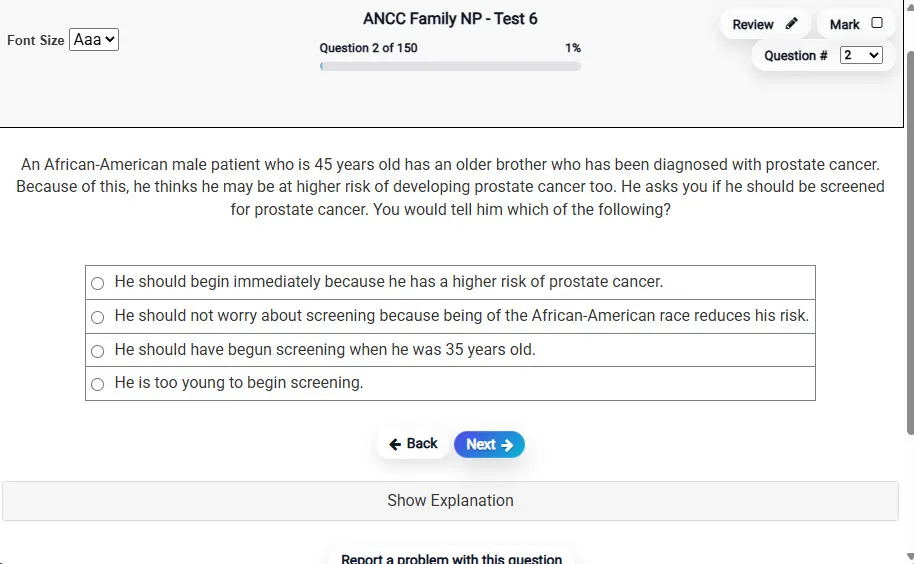
Answering a Question screen – Multiple-choice item view with navigation controls and progress tracker.
Answering a Question Multiple-choice item view with navigation controls and progress tracker.

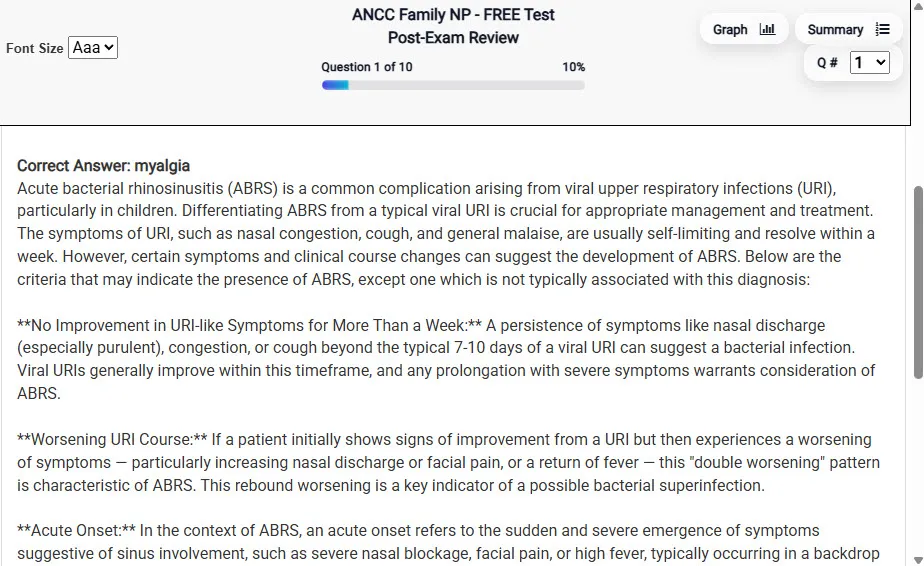
                           Detailed Explanation screen – 
                         Review mode showing chosen answer and rationale and references.
Detailed Explanation Review mode showing chosen answer and rationale and references.

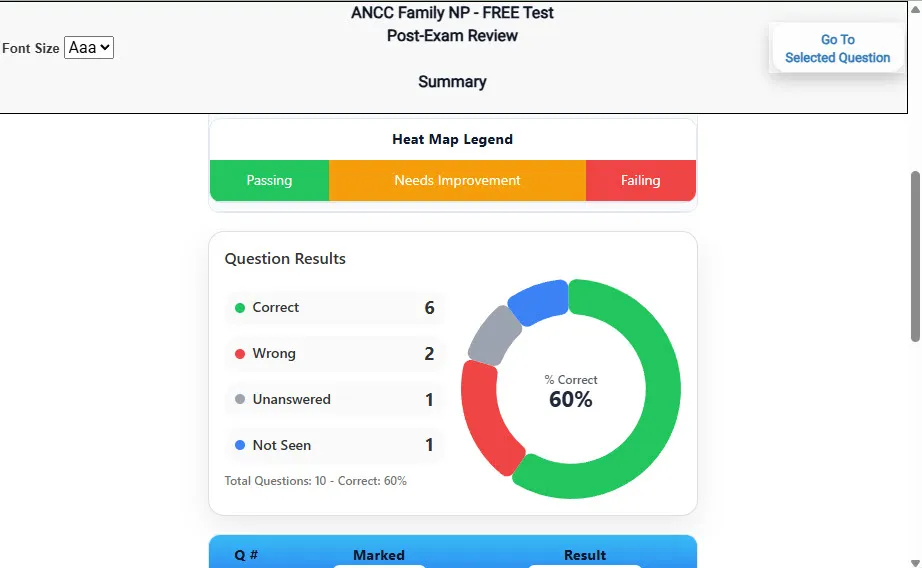
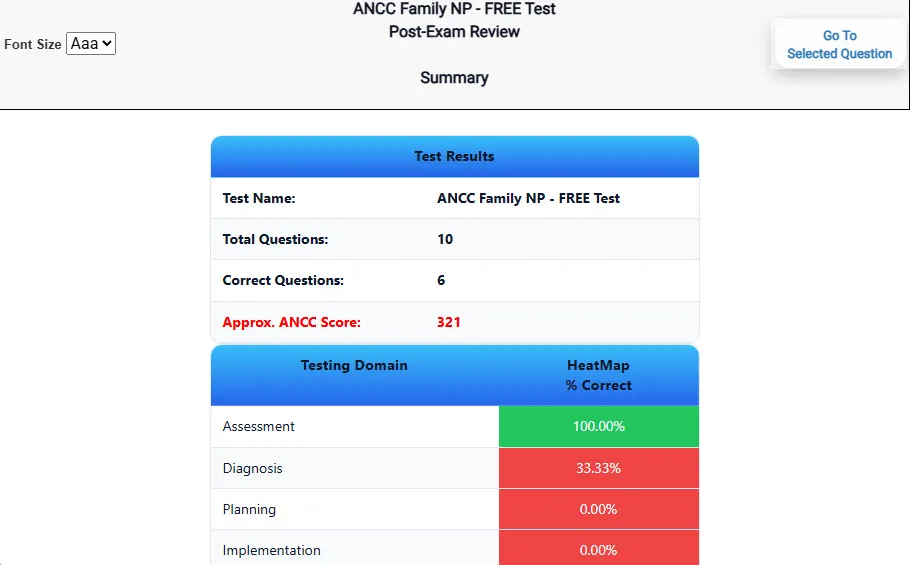
                           Review Summary 1 screen – 
                         Summary with counts for correct/wrong/unanswered and not seen items.
Review Summary 1 Summary with counts for correct/wrong/unanswered and not seen items.

                           Review Summary 2 screen – 
                         Advanced summary with category/domain breakdown and performance insights.
Review Summary 2 Advanced summary with category/domain breakdown and performance insights.

What Each Screen Shows

Answer Question Screen

  • Clean multiple-choice interface with progress bar.
  • Mark for review feature.
  • Matches real test pacing.

Detailed Explanation

  • Correct answer plus rationale.
  • Key concepts and guidelines highlighted.
  • Move between questions to fill knowledge gaps.

Review Summary 1

  • Overall results with total questions and scaled score.
  • Domain heatmap shows strengths and weaknesses.
  • Quick visual feedback on study priorities.

Review Summary 2

  • Chart of correct, wrong, unanswered, not seen.
  • Color-coded results for easy review.
  • Links back to missed items.

Top 10 Reasons to Use Exam Edge for your HESI Dental Assisting Exit Exam Prep

  1. Focused on the HESI Dental Assisting Exit Exam

    Our practice tests are built specifically for the HESI Dental Assisting exam — every question mirrors the real topics, format, and difficulty so you're studying exactly what matters.

  2. Real Exam Simulation

    We match the per-question time limits and pressure of the actual HESI exam, so test day feels familiar and stress-free.

  3. 30 Full Practice Tests & 3,000 Unique Questions

    You'll have more than enough material to master every HESI Dental Assisting concept — no repeats, no fluff.

  4. Lower Cost Than a Retake

    Ordering 5 practice exams costs less than retaking the HESI Dental Assisting Exit exam after a failure. One low fee could save you both time and money.

  5. Flexible Testing

    Need to step away mid-exam? Pick up right where you left off — with your remaining time intact.

  6. Instant Scoring & Feedback

    See your raw score and an estimated HESI Dental Assisting Exit score immediately after finishing each practice test.

  7. Detailed Explanations for Every Question

    Review correct and incorrect answers with clear, step-by-step explanations so you truly understand each topic.

  8. Trusted & Accredited

    We're fully accredited by the Better Business Bureau and uphold the highest standards of trust and transparency.

  9. Web-Based & Always Available

    No software to install. Access your HESI Dental Assisting practice exams 24/7 from any computer or mobile device.

  10. Expert Support When You Need It

    Need extra help? Our specialized tutors are highly qualified and ready to support your HESI exam prep.


Pass the HESI Dental Assisting Exit Exam with Realistic Practice Tests from Exam Edge

Preparing for your upcoming HESI Dental Assisting Exit (HESI-DA) Certification Exam can feel overwhelming — but the right practice makes all the difference. Exam Edge gives you the tools, structure, and confidence to pass on your first try. Our online practice exams are built to match the real HESI Dental Assisting exam in content, format, and difficulty.

  • 📝 30 HESI Dental Assisting Exit Practice Tests: Access 30 full-length exams with 100 questions each, covering every major HESI Dental Assisting Exit topic in depth.
  • Instant Online Access: Start practicing right away — no software, no waiting.
  • 🧠 Step-by-Step Explanations: Understand the reasoning behind every correct answer so you can master HESI Dental Assisting exam concepts.
  • 🔄 Retake Each Exam Up to 4 Times: Build knowledge through repetition and track your improvement over time.
  • 🌐 Web-Based & Available 24/7: Study anywhere, anytime, on any device.
  • 🧘 Boost Your Test-Day Confidence: Familiarity with the HESI format reduces anxiety and helps you perform under pressure.

These HESI Dental Assisting Exit practice exams are designed to simulate the real testing experience by matching question types, timing, and difficulty level. This approach helps you get comfortable not just with the exam content, but also with the testing environment, so you walk into your exam day focused and confident.


Exam Edge HESI Reviews


I want to thank you. The tests are really helpful. I took them three times and after using your exams, I finally passed. The tests helped me especially in the math section, in which I got a 90.

DIANA , Texas

I can't believe this website doesn't have a high following status. I bought 40 practice questions, and I did 20 practice questions and took my Hesi exit. I scored 1070. I completed all 40 practice exams and passed my boards for the first time. Exam Edge introduced me to a bunch of topics and boosted ...
Read More
Juliet M., Tarpon Springs, Florida

I just took my Hesi exit PN today and got a Hesi score of 1205 and a conversion score of 99.99%. Thanks for the help. Doing all those tests helped so much. Not because I saw the same questions but because I learned so much from the answer reasoning section. Hope to fly through my boards in a couple ...
Read More
Sharon, Texas

I recently had to test out of my school with an 850 on the Hesi PN, so I purchased the exams from you guys, about 5 to 7 exams, and passed the exit HesiPn with a 988! First time around! Then I purchased the NclexPN exam tests from you guys and I passed my nclex the first time around! These tests rea ...
Read More
Welsh, NC


HESI Dental Assisting Exit Aliases Test Name

Here is a list of alternative names used for this exam.

  • HESI Dental Assisting Exit
  • HESI Dental Assisting Exit test
  • HESI Dental Assisting Exit Certification Test
  • HESI Dental Assisting test
  • HESI
  • HESI HESI-DA
  • HESI-DA test
  • HESI Dental Assisting Exit (HESI-DA)
  • Dental Assisting Exit certification