This is the content of the pop-over!

FTCE Pre-K / Primary - Subtest 1 Dev Knowledge (531) Practice Tests & Test Prep by Exam Edge


FTCE Prekindergarten Primary PK-3 -  Subtest 1 Developmental Knowledge  product image
(4.6)
Based on 20 Reviews

  • Real Exam Simulation: Timed questions and matching content build comfort for your FTCE Pre-K / Primary - Subtest 1 Dev Knowledge test day.
  • Instant, 24/7 Access: Web-based FTCE Prekindergarten Primary PK-3 - Subtest 1 Developmental Knowledge practice exams with no software needed.
  • Clear Explanations: Step-by-step answers and explanations for your FTCE exam to strengthen understanding.
  • Boosted Confidence: Reduces anxiety and improves test-taking skills to ace your FTCE Prekindergarten Primary PK-3 - Subtest 1 Developmental Knowledge (531).

Featured on

FTCE Prekindergarten Primary PK-3 - Subtest 1 Developmental Knowledge Online Practice Test Bundles

BEST VALUE
15 practice tests

$149.25

$599.25

SAVE $450

Only $9.95 per test!

  • 100% Pass Guarantee
  • 15 online practice tests
  • 55 questions per test
  • Bonus: 100 Flash Cards + Study Guide
  • Instant access
  • Detailed Explanations
  • Practice tests never expire
  • Timed, untimed, or study guide mode
MOST POPULAR
10 practice tests

$99.50

$399.50

SAVE $300

Only $9.95 per test!

  • 10 online practice tests
  • 55 questions per test
  • Bonus: 100 Flash Cards + Study Guide
  • Instant access
  • Detailed Explanations
  • Practice tests never expire
  • Timed, untimed, or study guide mode
5 practice tests

$69.75

$199.75

SAVE $130

Only $13.95 per test!

  • 5 online practice tests
  • 55 questions per test
  • Bonus: 100 Flash Cards
  • Instant access
  • Detailed Explanations
  • Practice tests never expire
  • Timed, untimed, or study guide mode
1 practice test

$39.95

  • 1 online practice test
  • 55 questions per test
  • Instant access
  • Detailed Explanations
  • Practice tests never expire
  • Timed, untimed, or study guide mode
Quick Select
Tap to choose a bundle

** All Prices are in US Dollars (USD) **


FTCE Pre-K / Primary - Subtest 1 Dev Knowledge (531) Resources

Jump to the section you need most.

Understanding the exact breakdown of the FTCE Prekindergarten Primary PK-3 - Subtest 1 Developmental Knowledge test will help you know what to expect and how to most effectively prepare. The FTCE Prekindergarten Primary PK-3 - Subtest 1 Developmental Knowledge has 55 multiple-choice questions . The exam will be broken down into the sections below:

FTCE Prekindergarten Primary PK-3 - Subtest 1 Developmental Knowledge Exam Blueprint
Domain Name % Number of
Questions
Knowledge of child growth and development 14% 8
Knowledge of foundations of early childhood (PreK–3) education 5% 3
Knowledge of developmentally appropriate practices 20% 12
Knowledge of developmentally appropriate curricula 12% 7
Knowledge of developmentally appropriate intervention strategies and resources available to meet the needs of all students 15% 9
Knowledge of diagnosis - assessment evaluation 14% 8
Knowledge of child guidance and classroom behavioral management 13% 8

FTCE Prekindergarten Primary PK-3 - Subtest 1 Developmental Knowledge Study Tips by Domain

  • Use stage expectations to interpret behavior: by ages 4–5, parallel play should be shifting toward cooperative play; red flag if a 5-year-old persistently cannot engage with peers across settings.
  • Separate growth from development: growth is physical change (height/weight), development is skill change; common trap is assuming a small child is “less mature” cognitively without evidence.
  • Track motor milestones pragmatically: fine-motor control typically supports drawing simple shapes and using scissors in early primary; red flag if poor grip/endurance consistently blocks classroom tasks despite instruction.
  • Apply language-development norms: receptive language usually outpaces expressive, and typical speech is largely intelligible by kindergarten; priority rule—refer concerns when unintelligibility persists or regression occurs.
  • Recognize cognitive-development patterns: preoperational learners think concretely and may show centration and magical thinking; common trap is over-relying on abstract explanations instead of hands-on examples.
  • Consider social-emotional development and temperament: self-regulation increases with supportive routines and co-regulation; red flag when behavior is extreme, persistent, and impairs functioning across home/school contexts.
  • Know the major theorists (e.g., Piaget, Vygotsky, Erikson, Bronfenbrenner) and match each to classroom implications; common trap: confusing maturation-focused views with social-constructivist “learning with scaffolds” approaches.
  • Understand Florida’s emphasis on developmentally appropriate practice (DAP) for ages PreK–3; red flag: worksheets, long whole-group seatwork, or academic pacing that ignores attention span and play-based learning needs.
  • Recognize the teacher’s legal/ethical duties (confidentiality, mandated reporting, professional conduct) in early childhood settings; priority rule: any reasonable suspicion of abuse/neglect requires immediate reporting per policy—do not investigate first.
  • Identify family–school partnership principles (two-way communication, cultural responsiveness, shared decision-making); common trap: treating families as “clients” rather than collaborators, especially when language or culture differs.
  • Know the purposes of early childhood education (whole-child outcomes: social-emotional, language, cognitive, physical) and how play supports standards; red flag: equating rigor only with early formal academics instead of intentional, integrated learning.
  • Understand inclusion and equity foundations (access for students with disabilities, English learners, and diverse backgrounds); contraindication: delaying supports until a child “catches up” rather than providing early, least-restrictive, classroom-based accommodations.
  • Match expectations to developmental ranges (e.g., sustained attention is brief for many young children)—red flag: requiring long whole-group seatwork as a primary mode of instruction.
  • Use play-based, hands-on learning with choice and movement—common trap: substituting worksheets for manipulatives and centers to “prove” rigor.
  • Differentiate by adjusting process and supports (scaffolds, visuals, modeling) while keeping the same learning goal—priority rule: don’t lower the objective when you can change the pathway.
  • Embed language and literacy across the day (interactive read-alouds, dialogic talk, print-rich labels)—red flag: overemphasis on isolated drills without meaningful context.
  • Build routines that promote self-regulation (predictable schedules, clear transitions, jobs)—common trap: punishing developmental behaviors (e.g., fidgeting) instead of teaching replacement skills.
  • Partner with families and respect cultural/linguistic backgrounds in materials and communication—red flag: assuming a child’s home language or culture is a “problem” rather than an asset.
  • Align curriculum to developmental domains (physical, cognitive, language, social-emotional) with integrated themes; red flag: isolated worksheets that target a single skill without play-based application.
  • Plan learning goals within a child’s zone of proximal development using scaffolds (modeling, prompts, peer support); common trap: expecting whole-group mastery of the same objective at the same pace.
  • Use a balance of child-initiated and teacher-guided activities across centers; priority rule: schedule must protect uninterrupted choice time (e.g., 30–45 minutes) to support deep engagement.
  • Embed early literacy and numeracy in meaningful contexts (read-alouds, labels, counting in routines); red flag: drill-and-kill phonics or math tasks divorced from oral language and play.
  • Differentiate materials and tasks for diverse learners (ELLs, students with IEPs/504s, advanced learners) while keeping the same essential objective; common trap: lowering rigor instead of adjusting supports and access.
  • Select culturally responsive texts, materials, and examples that reflect children’s lives and communities; red flag: curriculum that stereotypes or uses “holiday-only” cultural representation.
  • Use an MTSS/RTI approach: start with Tier 1 supports for all, add Tier 2 targeted small-group interventions, and move to Tier 3 intensive individualized plans based on data; red flag — skipping tiers or changing interventions without progress-monitoring evidence.
  • For IEP/504 implementation, provide accommodations/modifications exactly as written (e.g., preferential seating, extended time, alternate response modes); common trap — treating accommodations as optional or reducing expectations instead of changing access.
  • Apply evidence-based behavior supports (teach expectations, reinforce, consistent consequences) and conduct an FBA when behavior is persistent or severe; red flag — using punishment-only plans without identifying the function of the behavior.
  • Differentiate for multilingual learners with comprehensible input, visuals, gestures, and native-language supports when available; common trap — confusing second-language acquisition needs with a disability and delaying appropriate language supports.
  • Select assistive technology and accessibility tools (AAC, adapted writing tools, visual schedules, sensory supports) to increase independence and participation; contraindication — removing supports too soon or using them only during testing instead of daily instruction.
  • Coordinate resources and referrals (school psychologist, SLP/OT/PT, ESE staffing, counselor, community services) and document parent communication; priority rule — follow mandated timelines and obtain required consent before formal evaluation or releasing student information.
  • Differentiate screening, diagnostic assessment, formative assessment, and summative evaluation—red flag: treating a universal screener result as a diagnosis.
  • Use multiple measures across settings (work samples, observation, checklists, family input) before making high-stakes decisions—common trap: relying on one test score or one-day performance.
  • Prioritize developmentally appropriate assessment methods (play-based observation, anecdotal records) and minimize disruption—cue: if the tool requires long sitting/reading demands for PK–K, validity is likely compromised.
  • Ensure assessments are linguistically and culturally responsive (home language considerations, bias review, appropriate accommodations)—red flag: scoring English learners against English-only norms without documented supports.
  • Collect objective, specific data (what the child did/said, frequency/duration) and avoid labels in notes—common trap: writing “defiant” instead of observable behaviors and triggers.
  • Use assessment results to drive instruction and intervention with clear next steps (SMART goals, progress monitoring schedule)—priority rule: no intervention plan is complete without a baseline and a defined review date.
  • Use prevention first—establish clear, positively stated rules and predictable routines; red flag: vague directions like “be good” that aren’t observable or teachable.
  • Apply behavior supports consistently across settings (whole group, centers, transitions); common trap: changing expectations mid-activity, which increases off-task behavior during transitions.
  • Reinforce desired behavior immediately and specifically (e.g., behavior-specific praise); priority rule: aim for more positive than corrective interactions to reduce escalation.
  • Address misbehavior with developmentally appropriate consequences tied to the behavior (reteach, practice, restore); contraindication: punitive measures that shame (public reprimands) often worsen behavior in PK–3.
  • Use de-escalation strategies (calm voice, proximity, choices) before removal from instruction; red flag: power struggles—if a child is dysregulated, delay reasoning and focus on safety and regulation.
  • Document patterns with ABC data (Antecedent–Behavior–Consequence) to guide interventions and family communication; common trap: assuming willful noncompliance when behavior may signal unmet sensory, language, or attention needs.


Built to Fit Into Your Busy Life

Everything you need to prepare with confidence—without wasting a minute.

Three Study Modes

Timed, No Time Limit, or Explanation mode.

Actionable Analytics

Heatmaps and scaled scores highlight weak areas.

High-Yield Rationales

Concise explanations emphasize key concepts.

Realistic Interface

Matches the feel of the actual exam environment.

Accessible by Design

Clean layout reduces cognitive load.

Anytime, Anywhere

Web-based access 24/7 on any device.
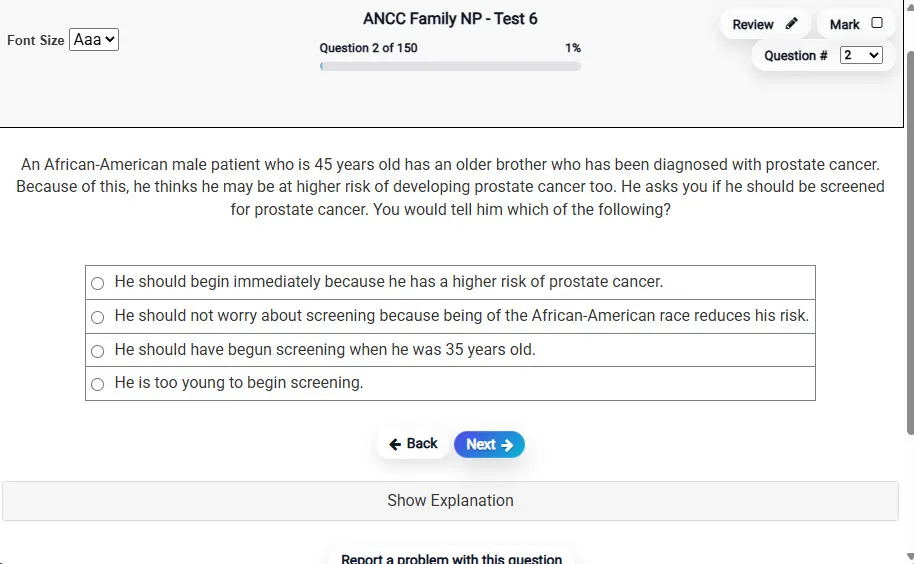
Answering a Question screen – Multiple-choice item view with navigation controls and progress tracker.
Answering a Question Multiple-choice item view with navigation controls and progress tracker.

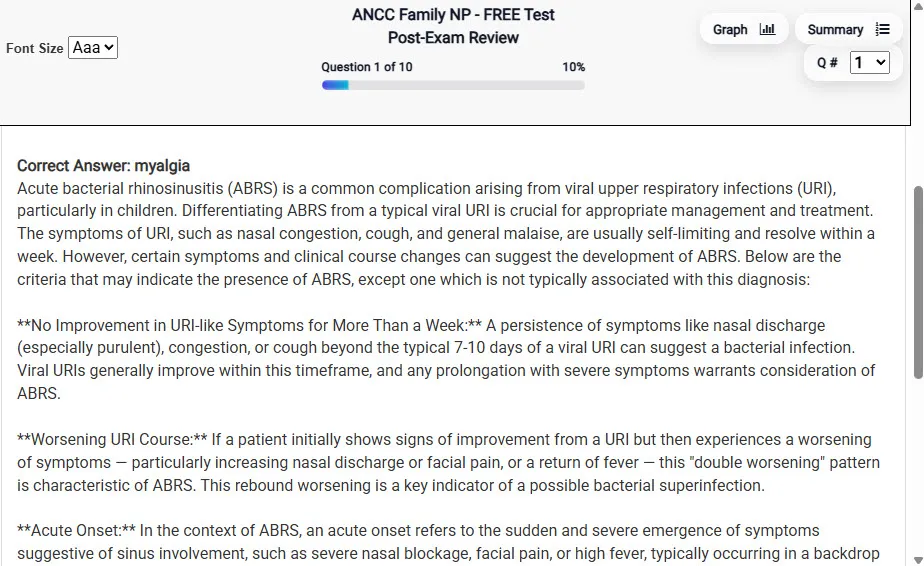
                           Detailed Explanation screen – 
                         Review mode showing chosen answer and rationale and references.
Detailed Explanation Review mode showing chosen answer and rationale and references.

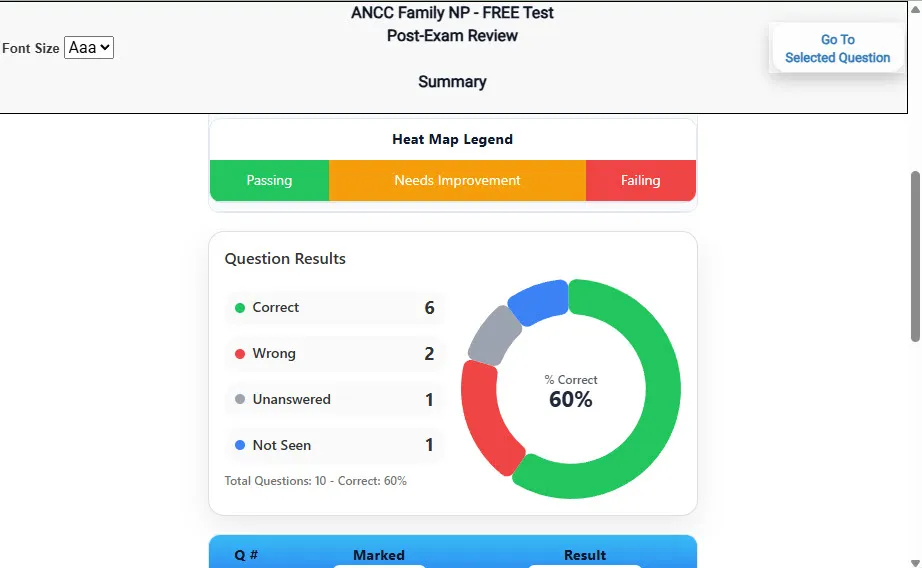
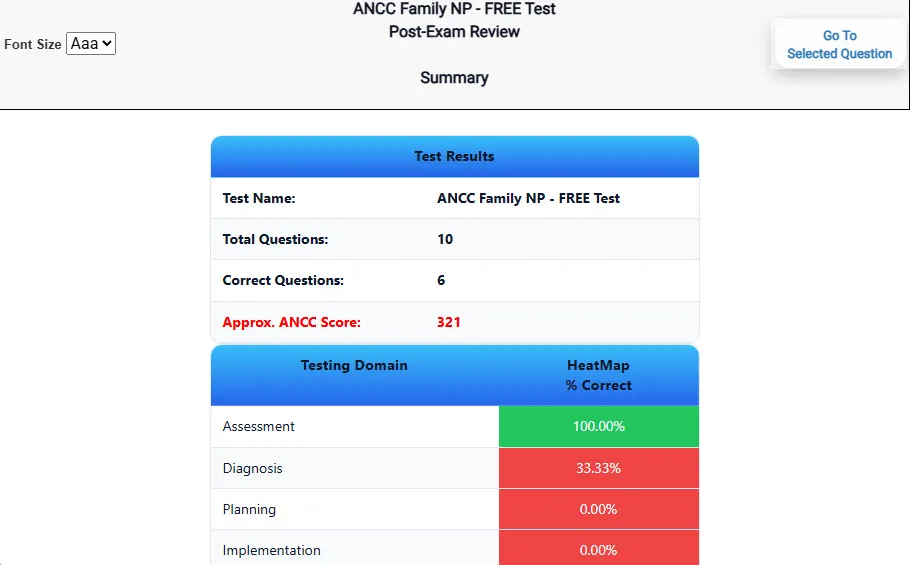
                           Review Summary 1 screen – 
                         Summary with counts for correct/wrong/unanswered and not seen items.
Review Summary 1 Summary with counts for correct/wrong/unanswered and not seen items.

                           Review Summary 2 screen – 
                         Advanced summary with category/domain breakdown and performance insights.
Review Summary 2 Advanced summary with category/domain breakdown and performance insights.

What Each Screen Shows

Answer Question Screen

  • Clean multiple-choice interface with progress bar.
  • Mark for review feature.
  • Matches real test pacing.

Detailed Explanation

  • Correct answer plus rationale.
  • Key concepts and guidelines highlighted.
  • Move between questions to fill knowledge gaps.

Review Summary 1

  • Overall results with total questions and scaled score.
  • Domain heatmap shows strengths and weaknesses.
  • Quick visual feedback on study priorities.

Review Summary 2

  • Chart of correct, wrong, unanswered, not seen.
  • Color-coded results for easy review.
  • Links back to missed items.

Top 10 Reasons to Use Exam Edge for your FTCE Prekindergarten Primary PK-3 - Subtest 1 Developmental Knowledge Exam Prep

  1. Focused on the FTCE Prekindergarten Primary PK-3 - Subtest 1 Developmental Knowledge Exam

    Our practice tests are built specifically for the FTCE Pre-K / Primary - Subtest 1 Dev Knowledge exam — every question mirrors the real topics, format, and difficulty so you're studying exactly what matters.

  2. Real Exam Simulation

    We match the per-question time limits and pressure of the actual FTCE exam, so test day feels familiar and stress-free.

  3. 15 Full Practice Tests & 825 Unique Questions

    You'll have more than enough material to master every FTCE Pre-K / Primary - Subtest 1 Dev Knowledge concept — no repeats, no fluff.

  4. Lower Cost Than a Retake

    Ordering 5 practice exams costs less than retaking the FTCE Prekindergarten Primary PK-3 - Subtest 1 Developmental Knowledge exam after a failure. One low fee could save you both time and money.

  5. Flexible Testing

    Need to step away mid-exam? Pick up right where you left off — with your remaining time intact.

  6. Instant Scoring & Feedback

    See your raw score and an estimated FTCE Prekindergarten Primary PK-3 - Subtest 1 Developmental Knowledge score immediately after finishing each practice test.

  7. Detailed Explanations for Every Question

    Review correct and incorrect answers with clear, step-by-step explanations so you truly understand each topic.

  8. Trusted & Accredited

    We're fully accredited by the Better Business Bureau and uphold the highest standards of trust and transparency.

  9. Web-Based & Always Available

    No software to install. Access your FTCE Pre-K / Primary - Subtest 1 Dev Knowledge practice exams 24/7 from any computer or mobile device.

  10. Expert Support When You Need It

    Need extra help? Our specialized tutors are highly qualified and ready to support your FTCE exam prep.


Pass the FTCE Prekindergarten Primary PK-3 - Subtest 1 Developmental Knowledge Exam with Realistic Practice Tests from Exam Edge

Preparing for your upcoming FTCE Prekindergarten Primary PK-3 - Subtest 1 Developmental Knowledge (531) Certification Exam can feel overwhelming — but the right practice makes all the difference. Exam Edge gives you the tools, structure, and confidence to pass on your first try. Our online practice exams are built to match the real FTCE Pre-K / Primary - Subtest 1 Dev Knowledge exam in content, format, and difficulty.

  • 📝 15 FTCE Prekindergarten Primary PK-3 - Subtest 1 Developmental Knowledge Practice Tests: Access 15 full-length exams with 55 questions each, covering every major FTCE Prekindergarten Primary PK-3 - Subtest 1 Developmental Knowledge topic in depth.
  • Instant Online Access: Start practicing right away — no software, no waiting.
  • 🧠 Step-by-Step Explanations: Understand the reasoning behind every correct answer so you can master FTCE Pre-K / Primary - Subtest 1 Dev Knowledge exam concepts.
  • 🔄 Retake Each Exam Up to 4 Times: Build knowledge through repetition and track your improvement over time.
  • 🌐 Web-Based & Available 24/7: Study anywhere, anytime, on any device.
  • 🧘 Boost Your Test-Day Confidence: Familiarity with the FTCE format reduces anxiety and helps you perform under pressure.

These FTCE Prekindergarten Primary PK-3 - Subtest 1 Developmental Knowledge practice exams are designed to simulate the real testing experience by matching question types, timing, and difficulty level. This approach helps you get comfortable not just with the exam content, but also with the testing environment, so you walk into your exam day focused and confident.


Exam Edge FTCE Reviews


Very helpful test, much better than buying any books. Highly recommend

Jessica , Homestead, Florida

I spent $47 and all I was able to get was one sample test. I tried getting another one, but it's charging me.

Lizbeth , clermont , Florida

I bought 5 practice tests for the Engineering and Technology test. I took the actual test today and passed. Just wanted to comment that I thought your tests were a good representation of actual test content and an accurate predictor of my score. Thank you.

Rebecca , FL

I just ordered your test last night, took my Gen. Knowledge exam today and passed it on the first attempt!!! I am sooooo excited!!!! Thank you for this practice!!! I really am glad I found it!!!

Courtney , North Port

For those of you planning to take the FTCE General Knowledge exams, these practice tests are very similar to the actual test with regard to exam content and structure. The practice tests offered a variety of question types in all three content areas, as well as provided varying levels of difficulty ...
Read More
Brittany, Orlando

Great so far.

Miriam , Kissimmee , Florida


FTCE Prekindergarten Primary PK-3 - Subtest 1 Developmental Knowledge Aliases Test Name

Here is a list of alternative names used for this exam.

  • FTCE Prekindergarten Primary PK-3 - Subtest 1 Developmental Knowledge
  • FTCE Prekindergarten Primary PK-3 - Subtest 1 Developmental Knowledge test
  • FTCE Prekindergarten Primary PK-3 - Subtest 1 Developmental Knowledge Certification Test
  • FTCE Pre-K / Primary - Subtest 1 Dev Knowledge test
  • FTCE
  • FTCE 531
  • 531 test
  • FTCE Prekindergarten Primary PK-3 - Subtest 1 Developmental Knowledge (531)
  • Prekindergarten Primary PK-3 - Subtest 1 Developmental Knowledge certification