This is the content of the pop-over!

Lightning Deal Alert – 12% Off Ends at Midnight!

Strike while the savings are hot! Use promo code FlashSale at checkout for 12% off any Exam Edge test or bundle. Hurry—the clock is ticking!

FTCE Earth-Space Science (008) Practice Tests & Test Prep by Exam Edge


FTCE Earth-Space Science 6-12  product image
(4.6)
Based on 25 Reviews

  • Real Exam Simulation: Timed questions and matching content build comfort for your FTCE Earth-Space Science test day.
  • Instant, 24/7 Access: Web-based FTCE Earth-Space Science 6-12 practice exams with no software needed.
  • Clear Explanations: Step-by-step answers and explanations for your FTCE exam to strengthen understanding.
  • Boosted Confidence: Reduces anxiety and improves test-taking skills to ace your FTCE Earth-Space Science 6-12 (008).

Featured on

FTCE Earth-Space Science 6-12 Online Practice Test Bundles

BEST VALUE
15 practice tests

$149.25

$599.25

SAVE $450

Only $9.95 per test!

  • 100% Pass Guarantee
  • 15 online practice tests
  • 100 questions per test
  • Bonus: 100 Flash Cards + Study Guide
  • Instant access
  • Detailed Explanations
  • Practice tests never expire
  • Timed, untimed, or study guide mode
MOST POPULAR
10 practice tests

$99.50

$399.50

SAVE $300

Only $9.95 per test!

  • 10 online practice tests
  • 100 questions per test
  • Bonus: 100 Flash Cards + Study Guide
  • Instant access
  • Detailed Explanations
  • Practice tests never expire
  • Timed, untimed, or study guide mode
5 practice tests

$69.75

$199.75

SAVE $130

Only $13.95 per test!

  • 5 online practice tests
  • 100 questions per test
  • Bonus: 100 Flash Cards
  • Instant access
  • Detailed Explanations
  • Practice tests never expire
  • Timed, untimed, or study guide mode
1 practice test

$39.95

  • 1 online practice test
  • 100 questions per test
  • Instant access
  • Detailed Explanations
  • Practice tests never expire
  • Timed, untimed, or study guide mode
Quick Select
Tap to choose a bundle

** All Prices are in US Dollars (USD) **


FTCE Earth-Space Science (008) Resources

Jump to the section you need most.

Understanding the exact breakdown of the FTCE Earth-Space Science 6-12 test will help you know what to expect and how to most effectively prepare. The FTCE Earth-Space Science 6-12 has 100 multiple-choice questions . The exam will be broken down into the sections below:

FTCE Earth-Space Science 6-12 Exam Blueprint
Domain Name % Number of
Questions
Knowledge of the nature of science 16% 16
Knowledge of the composition - characteristics
structure of Earth
9% 9
Knowledge of plate tectonics and related processes 9% 9
Knowledge of Earth's surface processes 8% 8
Knowledge of mapping and remote sensing 4% 4
Knowledge of the scope and measurement of geologic time 6% 6
Knowledge of the characteristics and management of
Earth's resources
8% 8
Knowledge of oceans and coastal processes 8% 8
Knowledge of factors that influence atmospheric
conditions and weather
8% 8
Knowledge of Earth's climate patterns 9% 9
Knowledge of astronomical objects and processes 9% 9
Knowledge of space exploration 6% 6

FTCE Earth-Space Science 6-12 Study Tips by Domain

  • Differentiate hypothesis, theory, and law—on FTCE, a “theory” is a well-supported explanatory framework, not a guess (red flag: choosing an answer that treats “theory” as unproven).
  • Identify independent vs. dependent variables and controls—only the independent variable is intentionally changed (common trap: calling the control group the independent variable).
  • Evaluate experimental design for validity—replication and adequate sample size matter, and one trial is rarely sufficient (priority rule: reproducibility over a single dramatic result).
  • Recognize correlation vs. causation—a strong correlation does not prove cause without a plausible mechanism and controlled tests (red flag: claims that “A causes B” from observational data alone).
  • Apply measurement concepts—distinguish accuracy vs. precision and use significant figures consistent with instrument limits (common trap: reporting extra digits beyond the tool’s resolution).
  • Interpret uncertainty and bias—random error affects scatter while systematic error shifts results in one direction (red flag: a consistent offset that indicates calibration or procedural bias).
  • Differentiate Earth’s compositional layers (crust, mantle, core) from mechanical layers (lithosphere, asthenosphere, mesosphere, outer/inner core)—common trap is using “asthenosphere” as a composition term.
  • Know key discontinuities and what changes there (Moho, Gutenberg, Lehmann) plus the evidence type (seismic velocity/density)—red flag: confusing the Moho with the core–mantle boundary.
  • Use seismic-wave behavior to infer structure: S-waves do not travel through liquids and P-waves refract/slow in low-velocity zones—priority rule for questions about the outer core is “S-wave shadow = liquid.”
  • Relate density and composition to Earth’s differentiation (Fe-Ni to core; silicates to mantle/crust) driven by early melting—common trap is claiming the mantle is mostly iron like the core.
  • Connect heat sources and transfer to interior structure (radiogenic decay, primordial heat; conduction vs convection) and resulting properties (asthenosphere ductile)—red flag: stating convection occurs in the rigid lithosphere rather than the mantle.
  • Recognize crust types and typical properties: oceanic (basaltic, denser, thinner, younger) vs continental (granitic, less dense, thicker, older)—threshold cue: oceanic crust is usually <10 km thick while continental often exceeds ~30 km.
  • Distinguish mechanical vs chemical weathering and link each to climate; red flag: calling frost wedging or salt crystal growth “erosion” instead of weathering.
  • Explain how soil forms (parent material, climate, organisms, relief, time) and identify horizons; common trap: assuming the A-horizon is always thickest regardless of vegetation and rainfall.
  • Compare mass-wasting types (falls, slides, slumps, flows, creep) by water content and movement style; priority rule: saturation plus steep slopes is the highest landslide-risk combo.
  • Analyze stream processes (gradient, discharge, base level) and resulting landforms (meanders, floodplains, deltas); red flag: confusing a braided stream (high sediment load) with a meandering stream (lower gradient, lateral erosion).
  • Relate groundwater flow to porosity vs permeability and features like springs, artesian wells, and karst; common trap: thinking clay has high permeability because it can hold a lot of water (high porosity, low permeability).
  • Connect glacial erosion/deposition to diagnostic features (U-shaped valleys, moraines, drumlins, eskers); red flag: identifying a U-shaped valley as river-cut (V-shaped) based on “valley” alone.
  • Distinguish map projections (e.g., Mercator vs. equal-area) and predict which property is distorted; red flag: any projection that preserves area cannot also preserve shape everywhere.
  • Use topographic maps to calculate gradient and interpret contour patterns; common trap: closer contours mean steeper slope, and “V”s in contours point upstream where they cross streams.
  • Apply scale conversions (representative fraction, verbal, bar) to compute real distance/area; priority rule: always convert units first (e.g., cm to km) before multiplying by scale.
  • Interpret latitude/longitude and time zones, including the International Date Line; red flag: moving east across the IDL subtracts a day, moving west adds a day.
  • Differentiate remote sensing platforms and resolutions (spatial, spectral, temporal, radiometric) and select the best dataset for a task; common trap: higher spatial resolution usually means smaller swath and less frequent revisit.
  • Read aerial/satellite imagery using tone/color, texture, pattern, shadow, and false-color composites; contraindication: never interpret false-color vegetation as “green”—healthy plants often appear red in NIR composites.
  • Apply relative dating laws (superposition, cross-cutting, inclusions, faunal succession) to sequence events; red flag: an unconformity represents missing time, not a single “event” layer.
  • Recognize and interpret unconformities (angular, disconformity, nonconformity) and what they imply about erosion/nondeposition; common trap: assuming parallel strata means no time gap.
  • Use radiometric dating concepts (half-life, parent/daughter ratios, closure) to estimate absolute ages; priority rule: once a system is “open” (metamorphism/alteration), the date may reflect resetting, not formation.
  • Select appropriate isotopic systems and materials for age questions (e.g., 14C for recent organic material, U-Pb in zircon for ancient rocks); contraindication: using 14C for dinosaur fossils or igneous rocks.
  • Read and apply the geologic time scale (eons, eras, periods, epochs) and major boundaries (e.g., K–Pg, Permian–Triassic) using index fossils; red flag: confusing “Precambrian” as a single era rather than a long supereon.
  • Interpret stratigraphic correlation tools (index fossils, marker beds, magnetostratigraphy) across regions; common trap: matching layers by thickness or rock type alone without time-diagnostic evidence.
  • Distinguish renewable vs. nonrenewable resources (e.g., timber vs. fossil fuels) and evaluate sustainability using time scale as the priority rule—red flag: calling groundwater or soil “renewable” without noting recharge/formation rates.
  • Relate resource distribution to geologic processes (ore deposits, petroleum traps, aquifers) and identify why certain settings concentrate resources—common trap: assuming resources are randomly located rather than controlled by rock type, structure, and depositional environment.
  • Apply basic groundwater concepts (porosity, permeability, confined/unconfined aquifers) to management decisions—red flag: confusing porosity with permeability when predicting well yield or contaminant movement.
  • Analyze impacts and mitigation of extraction (mining, drilling, logging) with an emphasis on reclamation and best practices—common trap: overlooking acid mine drainage risk in sulfide-rich rocks and its long-term water-quality consequences.
  • Interpret resource-related tradeoffs using cost–benefit and environmental constraints (habitat, water use, emissions)—priority rule: prefer solutions that reduce demand first (efficiency/conservation) before increasing supply.
  • Recognize contamination pathways and management strategies for air, soil, and water (point vs. nonpoint sources)—red flag: treating nonpoint pollution (e.g., runoff) as easy to trace or regulate like a single discharge pipe.
  • Distinguish wind-driven surface currents from density-driven thermohaline circulation; red flag: assuming the Coriolis effect reverses between hemispheres (it deflects right in the Northern Hemisphere, left in the Southern).
  • Relate wave energy to wind speed, duration, and fetch and recognize that waves transmit energy more than water mass; common trap: confusing wave period/height changes in deep water vs shoaling near shore.
  • Explain tides using lunar gravity, solar gravity, and Earth–Moon barycenter effects; priority rule: spring tides occur at new/full moon, neap tides at first/third quarter.
  • Predict longshore current direction from wave approach angle and identify depositional/erosional features (spits, barrier islands, tombolos); red flag: treating groins/jetties as “fixes” that don’t increase downdrift erosion.
  • Connect coastal hazards to processes—storm surge, rip currents, and shoreline retreat; contraindication: underestimating storm surge risk by focusing only on Saffir–Simpson wind category.
  • Interpret ocean data patterns (temperature, salinity, dissolved oxygen, upwelling) and link them to productivity and El Niño/La Niña; common trap: stating El Niño strengthens coastal upwelling off Peru (it typically suppresses it).
  • Connect uneven solar heating to pressure gradients and winds using the pressure-gradient force vs. Coriolis vs. friction; red flag: Coriolis deflects motion but does not start air moving.
  • Interpret fronts and air masses (cP, mT, etc.) with expected weather: cold fronts often bring brief heavy rain/thunder then clearing; common trap: assuming all fronts produce the same precipitation type and duration.
  • Use stability cues (environmental lapse rate vs. dry/moist adiabatic rates) to predict clouds and convection; priority rule: saturated rising air cools more slowly (moist adiabatic) because latent heat is released.
  • Relate humidity measures (relative humidity, dew point, specific humidity) to condensation and fog; threshold cue: when air cools to the dew point, RH reaches ~100% and condensation becomes likely.
  • Explain precipitation formation (collision-coalescence vs. Bergeron process) and how lift mechanisms (orographic, convection, frontal) drive it; common trap: mixing up supercooled water and ice-crystal growth in cold clouds.
  • Analyze global circulation (Hadley/Ferrel/Polar cells, jet streams) and ocean-atmosphere patterns (El Niño/La Niña) as drivers of regional weather; red flag: confusing “weather” events with longer-term “climate” patterns like ENSO.
  • Differentiate weather vs climate and interpret 30-year normals; red flag: using a single extreme event to claim a climate trend.
  • Explain differential heating and global circulation (Hadley/Ferrel/Polar cells) and relate to pressure belts; common trap: reversing prevailing wind directions between hemispheres (Coriolis).
  • Connect ocean circulation to climate (thermohaline vs surface currents) and recognize El Niño/La Niña impacts; cue: ENSO shifts typical precipitation patterns rather than changing seasons.
  • Use the energy budget to justify greenhouse effect vs ozone depletion; red flag: claiming the ozone hole is the primary cause of global warming.
  • Relate climate zones to latitude, elevation, continentality, and rain shadows; priority rule: leeward sides of mountains are typically warmer and drier due to adiabatic warming.
  • Interpret paleoclimate evidence (ice cores, tree rings, sediment cores) and distinguish proxy vs direct measurements; common trap: assuming proxies provide exact thermometer-like temperatures without calibration/uncertainty.
  • Use the HR diagram to relate luminosity, temperature, and size; red flag: thinking color indicates brightness rather than surface temperature (blue is hotter than red).
  • Apply Kepler’s laws qualitatively (inner planets move faster and have shorter periods); common trap: assuming planets move at constant speed along their orbits.
  • Explain lunar phases from Sun–Earth–Moon geometry (phase depends on viewing angle); red flag: attributing phases to Earth’s shadow except during a lunar eclipse.
  • Distinguish solar vs. lunar eclipses and why they’re rare (orbital tilt/line of nodes); priority rule: totality requires precise alignment and a narrow path.
  • Use Doppler shift and parallax conceptually to infer motion and distance; common trap: reversing redshift/blueshift (redshift indicates moving away).
  • Compare spectra (continuous, emission, absorption) to identify composition and temperature; red flag: assuming absorption lines are produced by the hot source rather than cooler gas in front of it.
  • Know the “why” behind mission types (flyby, orbiter, lander/rover, sample return) and match each to the data it can realistically collect; red flag: choosing a flyby for long-term surface monitoring.
  • Compare chemical rockets, ion/electric propulsion, and gravity assists in terms of thrust, efficiency, and travel time; common trap: assuming ion engines provide high thrust for launch from Earth.
  • Interpret basic orbital concepts (LEO vs GEO, inclination, Hohmann transfer) and what each enables for observations or communications; priority rule: GEO works best for continuous coverage of the same region, not polar imaging.
  • Understand major hazards to humans and hardware (radiation, microgravity, vacuum, temperature extremes, micrometeoroids) and key mitigations; contraindication: EVA without adequate radiation/thermal protection is not feasible.
  • Distinguish remote sensing instruments (optical, IR, radar, spectrometers) and what physical property each measures; common trap: treating radar as dependent on sunlight like visible imaging.
  • Know basic planetary protection and contamination controls (clean rooms, sterilization, sample handling) and the rationale for forward/back contamination; red flag: proposing unsterilized landers for life-detection targets (e.g., Mars, Europa).


Built to Fit Into Your Busy Life

Everything you need to prepare with confidence—without wasting a minute.

Three Study Modes

Timed, No Time Limit, or Explanation mode.

Actionable Analytics

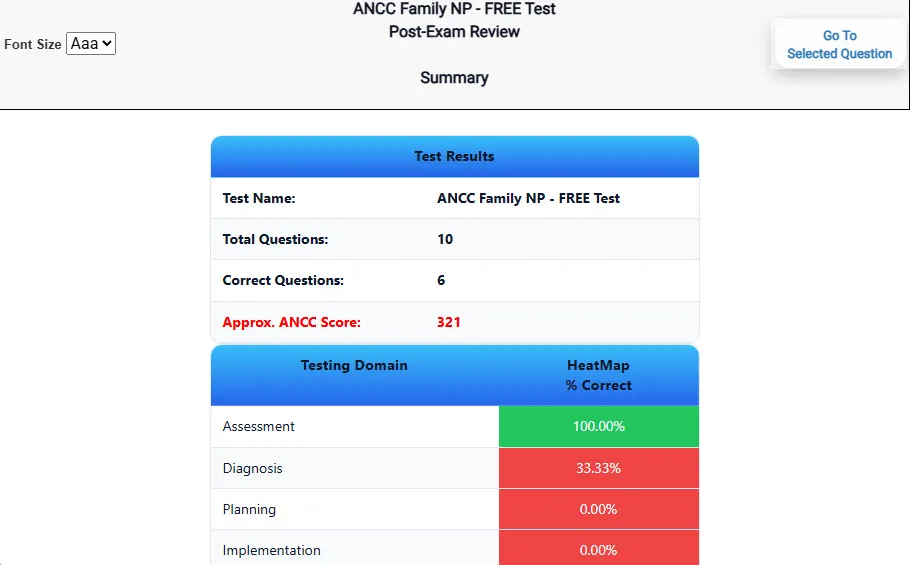
Heatmaps and scaled scores highlight weak areas.

High-Yield Rationales

Concise explanations emphasize key concepts.

Realistic Interface

Matches the feel of the actual exam environment.

Accessible by Design

Clean layout reduces cognitive load.

Anytime, Anywhere

Web-based access 24/7 on any device.
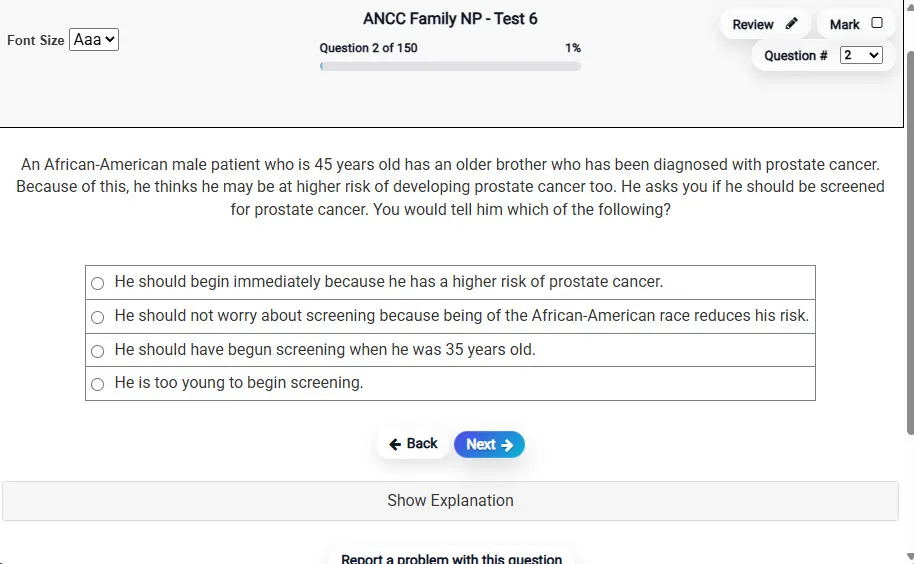
Answering a Question screen – Multiple-choice item view with navigation controls and progress tracker.
Answering a Question Multiple-choice item view with navigation controls and progress tracker.

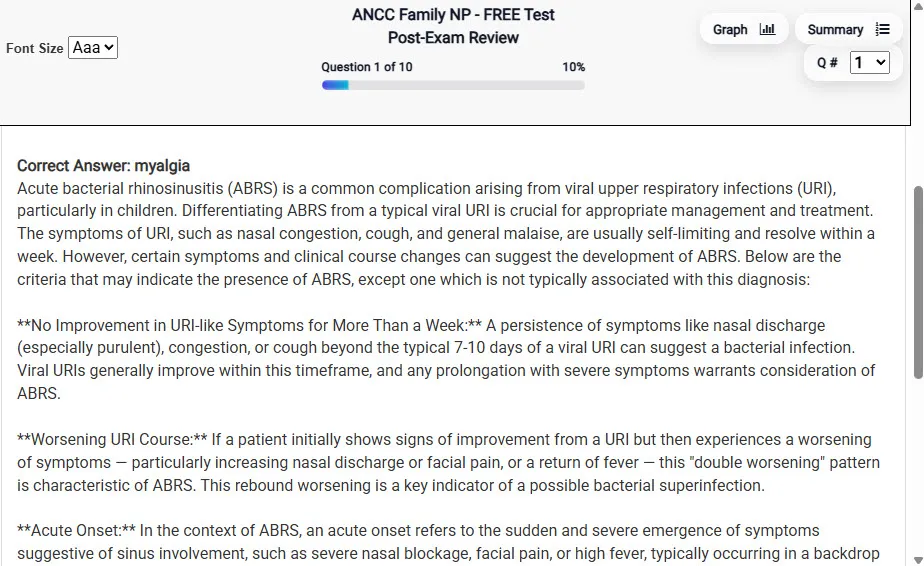
                           Detailed Explanation screen – 
                         Review mode showing chosen answer and rationale and references.
Detailed Explanation Review mode showing chosen answer and rationale and references.

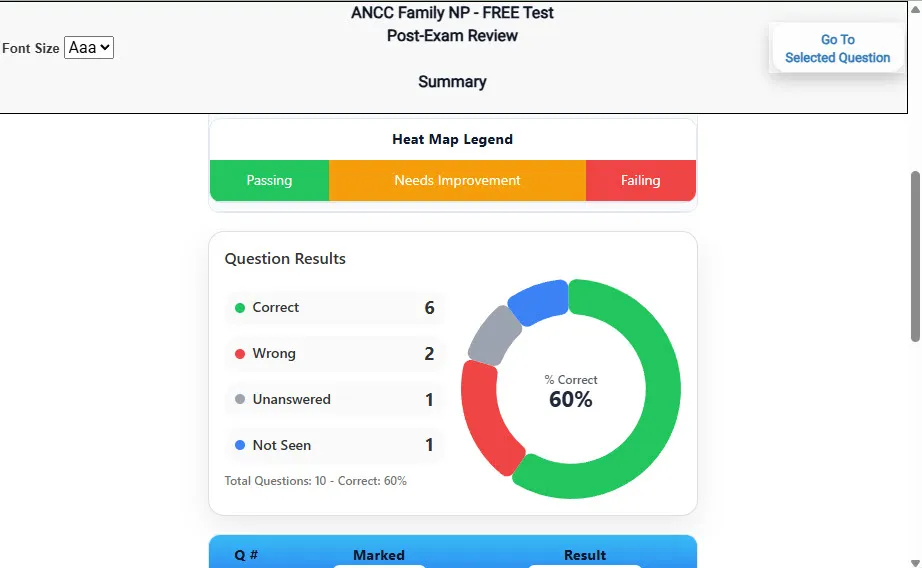
                           Review Summary 1 screen – 
                         Summary with counts for correct/wrong/unanswered and not seen items.
Review Summary 1 Summary with counts for correct/wrong/unanswered and not seen items.

                           Review Summary 2 screen – 
                         Advanced summary with category/domain breakdown and performance insights.
Review Summary 2 Advanced summary with category/domain breakdown and performance insights.

What Each Screen Shows

Answer Question Screen

  • Clean multiple-choice interface with progress bar.
  • Mark for review feature.
  • Matches real test pacing.

Detailed Explanation

  • Correct answer plus rationale.
  • Key concepts and guidelines highlighted.
  • Move between questions to fill knowledge gaps.

Review Summary 1

  • Overall results with total questions and scaled score.
  • Domain heatmap shows strengths and weaknesses.
  • Quick visual feedback on study priorities.

Review Summary 2

  • Chart of correct, wrong, unanswered, not seen.
  • Color-coded results for easy review.
  • Links back to missed items.

Top 10 Reasons to Use Exam Edge for your FTCE Earth-Space Science 6-12 Exam Prep

  1. Focused on the FTCE Earth-Space Science 6-12 Exam

    Our practice tests are built specifically for the FTCE Earth-Space Science exam — every question mirrors the real topics, format, and difficulty so you're studying exactly what matters.

  2. Real Exam Simulation

    We match the per-question time limits and pressure of the actual FTCE exam, so test day feels familiar and stress-free.

  3. 15 Full Practice Tests & 1,500 Unique Questions

    You'll have more than enough material to master every FTCE Earth-Space Science concept — no repeats, no fluff.

  4. Lower Cost Than a Retake

    Ordering 5 practice exams costs less than retaking the FTCE Earth-Space Science 6-12 exam after a failure. One low fee could save you both time and money.

  5. Flexible Testing

    Need to step away mid-exam? Pick up right where you left off — with your remaining time intact.

  6. Instant Scoring & Feedback

    See your raw score and an estimated FTCE Earth-Space Science 6-12 score immediately after finishing each practice test.

  7. Detailed Explanations for Every Question

    Review correct and incorrect answers with clear, step-by-step explanations so you truly understand each topic.

  8. Trusted & Accredited

    We're fully accredited by the Better Business Bureau and uphold the highest standards of trust and transparency.

  9. Web-Based & Always Available

    No software to install. Access your FTCE Earth-Space Science practice exams 24/7 from any computer or mobile device.

  10. Expert Support When You Need It

    Need extra help? Our specialized tutors are highly qualified and ready to support your FTCE exam prep.


Pass the FTCE Earth-Space Science 6-12 Exam with Realistic Practice Tests from Exam Edge

Preparing for your upcoming FTCE Earth-Space Science 6-12 (008) Certification Exam can feel overwhelming — but the right practice makes all the difference. Exam Edge gives you the tools, structure, and confidence to pass on your first try. Our online practice exams are built to match the real FTCE Earth-Space Science exam in content, format, and difficulty.

  • 📝 15 FTCE Earth-Space Science 6-12 Practice Tests: Access 15 full-length exams with 100 questions each, covering every major FTCE Earth-Space Science 6-12 topic in depth.
  • Instant Online Access: Start practicing right away — no software, no waiting.
  • 🧠 Step-by-Step Explanations: Understand the reasoning behind every correct answer so you can master FTCE Earth-Space Science exam concepts.
  • 🔄 Retake Each Exam Up to 4 Times: Build knowledge through repetition and track your improvement over time.
  • 🌐 Web-Based & Available 24/7: Study anywhere, anytime, on any device.
  • 🧘 Boost Your Test-Day Confidence: Familiarity with the FTCE format reduces anxiety and helps you perform under pressure.

These FTCE Earth-Space Science 6-12 practice exams are designed to simulate the real testing experience by matching question types, timing, and difficulty level. This approach helps you get comfortable not just with the exam content, but also with the testing environment, so you walk into your exam day focused and confident.


Exam Edge FTCE Reviews


I failed the Earth Space Science test 3 times... on the second time I started using Exam Edge. I was taking the practice tests but I wasn't using them as a serious study tool. I really thought I was never going to pass the test, when I began taking the practice test just like I would the real th ...
Read More
Londann , FL

I just passed my FTCE Earth/Space Science 6-12 exam, and I used your practice tests to study! it was excellent and super helpful. I love the way that each of the choices are explained for the questions, and the format is basically identical to the real test. Definitely the highest value use of my st ...
Read More
Jason K, Michigan

Just wanted to let you guys know that your tests really helped me prepare for the ftce math exam. I took it yesterday and passed. I will tell other people about your site.

Shawna M, Florida

I passed my FTCE today! This was the second time I took the test. My first time I scored 192 and then I took your tests and passed on my second try. Taking your practice tests helped me a great deal, because several types of questions on the real test were also on your practice tests. Thanks so mu ...
Read More
TIm F, Florida

For the last year, I have been trying to pass the reading section of the FTCE. I had taken it six times and if I did not pass it this month, then I could not take my college courses in education. I went to Google and typed in practice reading tests and your website came up. I clicked on, signed up a ...
Read More
Stacy S, Florida

Thank you so much for your reading tests. I just passed the real FTCE Reading test by 12 points! After failing it 3 other times, I thought I would have to quit. I've already told everyone in my class about your site.

Sara L, Florida


FTCE Earth-Space Science 6-12 Aliases Test Name

Here is a list of alternative names used for this exam.

  • FTCE Earth-Space Science 6-12
  • FTCE Earth-Space Science 6-12 test
  • FTCE Earth-Space Science 6-12 Certification Test
  • FTCE Earth-Space Science test
  • FTCE
  • FTCE 008
  • 008 test
  • FTCE Earth-Space Science 6-12 (008)
  • Earth-Space Science 6-12 certification