This is the content of the pop-over!

FTCE Biology (002) Practice Tests & Test Prep by Exam Edge


FTCE Biology 6-12  product image
(4.6)
Based on 17 Reviews

  • Real Exam Simulation: Timed questions and matching content build comfort for your FTCE Biology test day.
  • Instant, 24/7 Access: Web-based FTCE Biology 6-12 practice exams with no software needed.
  • Clear Explanations: Step-by-step answers and explanations for your FTCE exam to strengthen understanding.
  • Boosted Confidence: Reduces anxiety and improves test-taking skills to ace your FTCE Biology 6-12 (002).

Featured on

FTCE Biology 6-12 Online Practice Test Bundles

BEST VALUE
20 practice tests

$174.00

$799.00

SAVE $625

Only $8.70 per test!

  • 100% Pass Guarantee
  • 20 online practice tests
  • 100 questions per test
  • Bonus: 100 Flash Cards + Study Guide
  • Instant access
  • Detailed Explanations
  • Practice tests never expire
  • Timed, untimed, or study guide mode
MOST POPULAR
10 practice tests

$99.50

$399.50

SAVE $300

Only $9.95 per test!

  • 10 online practice tests
  • 100 questions per test
  • Bonus: 100 Flash Cards + Study Guide
  • Instant access
  • Detailed Explanations
  • Practice tests never expire
  • Timed, untimed, or study guide mode
5 practice tests

$69.75

$199.75

SAVE $130

Only $13.95 per test!

  • 5 online practice tests
  • 100 questions per test
  • Bonus: 100 Flash Cards
  • Instant access
  • Detailed Explanations
  • Practice tests never expire
  • Timed, untimed, or study guide mode
1 practice test

$39.95

  • 1 online practice test
  • 100 questions per test
  • Instant access
  • Detailed Explanations
  • Practice tests never expire
  • Timed, untimed, or study guide mode
Quick Select
Tap to choose a bundle

** All Prices are in US Dollars (USD) **


FTCE Biology (002) Resources

Jump to the section you need most.

Understanding the exact breakdown of the FTCE Biology 6-12 test will help you know what to expect and how to most effectively prepare. The FTCE Biology 6-12 has 100 multiple-choice questions . The exam will be broken down into the sections below:

FTCE Biology 6-12 Exam Blueprint
Domain Name % Number of
Questions
Knowledge of the investigative processes of science 18% 18
Knowledge of the interactions between science - technology -
and society
4% 4
Knowledge of the chemical processes of living things 14% 14
Knowledge of the interactions between cell structure and
cell function
7% 7
Knowledge of genetic principles - processes applications 11% 11
Knowledge of the structural and functional diversity of viruses
and prokaryotic organisms
4% 4
Knowledge of the structural and functional diversity of protists -
fungi plants
8% 8
Knowledge of the structural and functional diversity of animals 13% 13
Knowledge of ecological principles and processes 11% 11
Knowledge of evolutionary mechanisms 10% 10

FTCE Biology 6-12 Study Tips by Domain

  • Identify independent vs. dependent variables and constants in experimental design; red flag: changing more than one variable makes causal claims invalid.
  • Choose appropriate controls (negative/positive) and justify them; common trap: calling an untreated group a control when it doesn’t match all conditions except the variable tested.
  • Apply measurement concepts (precision, accuracy, significant figures, SI units) consistently; priority rule: report the fewest sig figs supported by the least precise measurement.
  • Interpret graphs/tables (slope, intercepts, error bars, correlation vs. causation); red flag: overlapping error bars often indicate no clear difference without statistical support.
  • Evaluate sampling and study type (random sample, sample size, observational vs. experimental); common trap: biased sampling (e.g., convenience samples) limits generalizability.
  • Assess reliability and validity using replication, peer review, and statistical tests (p-value meaning); contraindication: rejecting the null based solely on a single trial or p>0.05.
  • Differentiate science (testable explanations) from technology (tools/solutions); red flag: claiming a new gadget “proves” a hypothesis without controlled evidence.
  • Evaluate benefits/risks of biotechnologies (e.g., GMOs, gene therapy, CRISPR) using data and trade-offs; common trap: treating “natural” as automatically safer than engineered.
  • Apply ethical frameworks (informed consent, privacy, equity) to biomedical research; priority rule: human-subject studies require voluntary informed consent and protections for vulnerable groups.
  • Interpret how funding, peer review, and conflicts of interest can shape research questions and reporting; red flag: undisclosed industry sponsorship when outcomes favor the sponsor.
  • Use environmental policy examples (endangered species, water quality, climate mitigation) to connect scientific evidence to societal decisions; common trap: confusing correlation in monitoring data with causation for policy claims.
  • Assess reliability of scientific information in media by checking source credibility, sample size, controls, and replication; threshold cue: single small-study headlines are weak evidence without independent replication.
  • Track enzyme behavior with conditions: reaction rate rises with temperature/pH only to an optimum, then drops from denaturation—red flag if a graph shows rate increasing indefinitely.
  • Link ATP to coupled reactions: exergonic processes (e.g., ATP hydrolysis) drive endergonic work—common trap is saying ATP “stores” energy in the phosphate bond itself rather than energy released by hydrolysis and product stability.
  • Differentiate respiration vs. fermentation: aerobic respiration yields far more ATP with O2 as final electron acceptor; priority rule—NADH must be reoxidized (to NAD+) or glycolysis halts.
  • Follow photosynthesis electron flow: light reactions make ATP/NADPH and release O2 from H2O, while the Calvin cycle fixes CO2—common trap is claiming plants “make oxygen from CO2.”
  • Use macromolecule tests correctly: Benedict’s (reducing sugars), iodine (starch), Biuret (protein), Sudan (lipids)—red flag if results are interpreted without a control or with the wrong color change.
  • Apply water chemistry: hydrogen bonding drives cohesion, high specific heat, and solvent properties—common trap is confusing hydrophilic (polar/ionic) vs. hydrophobic (nonpolar) interactions in membrane formation.
  • Relate organelles to specific functions (e.g., rough ER → secreted proteins, smooth ER → lipids/detox) — red flag: calling ribosomes “membrane-bound” instead of “free vs. bound to ER.”
  • Explain membrane structure (fluid mosaic) and transport types (diffusion, osmosis, facilitated diffusion, active transport) — common trap: mixing up hypertonic vs. hypotonic effects on animal vs. plant cells (lysis vs. plasmolysis/turgor).
  • Connect surface area-to-volume ratio to cell size limits and adaptations (microvilli, folds, biconcave RBC shape) — priority rule: increasing surface area improves exchange without greatly increasing volume.
  • Link the cytoskeleton (microtubules, microfilaments, intermediate filaments) to movement, shape, and division — red flag: confusing cilia/flagella (9+2 microtubules) with bacterial flagella (different structure and mechanism).
  • Describe cell cycle checkpoints, mitosis vs. meiosis outcomes, and how structure supports division (spindle fibers, centrosomes) — common trap: claiming DNA replicates during mitosis rather than S phase of interphase.
  • Compare prokaryotic vs. eukaryotic cell structure (nucleoid vs. nucleus, 70S vs. 80S ribosomes, peptidoglycan cell wall) — contraindication cue: antibiotics targeting peptidoglycan won’t affect animal cells lacking cell walls.
  • Apply Mendelian genetics (segregation, independent assortment) to monohybrid/dihybrid crosses and use testcrosses; red flag: confusing genotype vs phenotype when multiple alleles or dominance patterns exist.
  • Interpret non-Mendelian inheritance (incomplete dominance, codominance, multiple alleles, sex-linked traits, mitochondrial inheritance); common trap: assuming X-linked traits pass father-to-son—they do not.
  • Link meiosis (crossing over, independent assortment) to genetic variation and map genes with recombination frequency (1% = 1 map unit); priority rule: recombination frequencies cannot exceed 50%.
  • Predict outcomes of chromosomal abnormalities (nondisjunction, deletions, duplications, inversions, translocations) using karyotypes; red flag: mixing up trisomy (2n+1) with monosomy (2n−1).
  • Use molecular genetics concepts (DNA replication, transcription/translation, mutations, gene regulation) to connect genotype to phenotype; common trap: claiming silent mutations never matter—they can affect splicing or translation efficiency.
  • Evaluate genetics applications (pedigrees, PCR/gel electrophoresis, DNA sequencing, GMOs, CRISPR, cloning) with ethical/medical context; red flag: equating presence of a band/allele with certainty of disease without considering penetrance and environment.
  • Differentiate viral structure (capsid, envelope, genome type) and function—red flag: envelopes are lipid and easily disrupted by detergents, so enveloped viruses are generally less environmentally stable than nonenveloped viruses.
  • Contrast lytic vs lysogenic cycles (and retroviral integration); common trap: latency can occur in lysogeny/prophage states without immediate host-cell lysis.
  • Identify prokaryotic cell features (nucleoid, plasmids, 70S ribosomes, peptidoglycan cell wall) and their roles; priority rule: antibiotics targeting 70S ribosomes typically spare eukaryotic cytosolic 80S ribosomes.
  • Compare Bacteria vs Archaea (cell wall composition, membrane lipids, gene expression similarities to eukaryotes); common trap: archaea lack peptidoglycan and are not classified as bacteria even when they look similar microscopically.
  • Explain bacterial reproduction and gene transfer (binary fission, conjugation, transformation, transduction); red flag: conjugation transfers plasmids via a pilus and can rapidly spread antibiotic resistance in a population.
  • Distinguish bacterial structures tied to survival and pathogenicity (endospores, capsules, flagella, biofilms); contraindication-style cue: endospores resist heat and many disinfectants, so standard cleaning may fail without sporicidal methods.
  • Distinguish protists by functional traits (e.g., algae are photosynthetic producers, protozoa are ingestive consumers) and note the red flag that “protist” is a catch-all group, not a single clade.
  • Compare fungal structure to function: chitin cell walls, hyphae/mycelium for absorption, and extracellular digestion; common trap—confusing fungi with plants because both are often stationary.
  • Identify major fungal life strategies (saprotrophs, parasites, mutualists like mycorrhizae/lichens) and prioritize mycorrhizae as a key plant nutrient/water uptake enhancer on ecosystem questions.
  • Differentiate plant groups by vascular tissue and reproduction: bryophytes (nonvascular, water-dependent gametes) vs seedless vascular (ferns) vs gymnosperms vs angiosperms; red flag—seeds/pollen reduce dependence on free water for fertilization.
  • Link plant anatomy to transport and support: xylem (water/minerals, lignin) vs phloem (sugars, source-to-sink); common trap—reversing xylem/phloem roles on graph/data items.
  • Recognize alternation of generations and dominance shifts (gametophyte-dominant in bryophytes, sporophyte-dominant in vascular plants) and use the cue that spores are typically haploid dispersal units while seeds contain an embryo.
  • Distinguish major animal phyla by signature traits (e.g., Porifera lack true tissues; Cnidaria have cnidocytes; Echinodermata have water vascular system)—red flag: confusing radial vs bilateral symmetry.
  • Compare body plans (acoelomate, pseudocoelomate, coelomate) and developmental patterns (protostome vs deuterostome)—common trap: mixing up blastopore fate (mouth vs anus).
  • Relate form to function in respiration and circulation (diffusion in small/invertebrates; gills vs lungs; open vs closed circulatory systems)—priority rule: increased activity/size generally requires greater internal transport capacity.
  • Explain thermoregulation and osmoregulation strategies (ectotherm vs endotherm; freshwater hyperosmotic vs marine hypoosmotic regulation)—red flag: assuming all marine fish drink seawater and all excrete concentrated urine.
  • Compare nervous/sensory organization and support structures (nerve nets to cephalization; hydrostatic vs exoskeleton vs endoskeleton)—common trap: attributing cephalization to radially symmetric animals.
  • Connect reproductive mode to life history (external vs internal fertilization; oviparous/viviparous/ovoviviparous; complete vs incomplete metamorphosis)—red flag: assuming metamorphosis occurs only in amphibians or only in insects.
  • Track energy flow with the 10% rule across trophic levels; red flag: confusing energy loss as “destroyed” rather than dissipated as heat via respiration.
  • Distinguish primary productivity measures—GPP, NPP (NPP = GPP − R); common trap: treating biomass at a trophic level as equal to annual productivity.
  • Use population models appropriately: exponential growth requires unlimited resources, logistic growth includes carrying capacity (K); priority cue: if resources are limited or competition is mentioned, default to logistic reasoning.
  • Interpret survivorship curves and r/K-selected life-history traits; red flag: assuming Type I survivorship is common in most species (it’s relatively rare compared with Type III).
  • Apply community interactions (competition, predation, mutualism, commensalism, parasitism) and keystone species effects; common trap: calling any dominant species “keystone” without evidence of disproportionate impact.
  • Connect biogeochemical cycles (carbon, nitrogen, phosphorus) to limiting nutrients and human impacts; threshold cue: phosphorus often limits freshwater systems while nitrogen is commonly limiting in marine/coastal systems.
  • Explain evolution as change in allele frequencies in a population over time—red flag: statements that individuals evolve within their lifetime.
  • Compare mechanisms (natural selection, genetic drift, gene flow, mutation, nonrandom mating) and predict outcomes—common trap: confusing drift (chance, strongest in small populations) with selection (differential fitness).
  • Use Hardy–Weinberg (p + q = 1; p2 + 2pq + q2 = 1) to test whether evolution is occurring—cue: any violation of the 5 assumptions means the population is not in equilibrium.
  • Relate selection types to trait distributions (directional, stabilizing, disruptive) and interpret graphs—priority rule: stabilizing selection reduces variation around the mean, not necessarily shifting the mean.
  • Apply speciation concepts (reproductive isolation; prezygotic vs. postzygotic; allopatric vs. sympatric) to scenarios—common trap: geographic isolation alone isn’t speciation until gene flow is reduced and isolation persists.
  • Evaluate evidence for evolution (fossils, homologous vs. analogous structures, vestigial traits, embryology, molecular data, phylogenies)—red flag: using analogous traits to infer close relatedness instead of convergent evolution.


Built to Fit Into Your Busy Life

Everything you need to prepare with confidence—without wasting a minute.

Three Study Modes

Timed, No Time Limit, or Explanation mode.

Actionable Analytics

Heatmaps and scaled scores highlight weak areas.

High-Yield Rationales

Concise explanations emphasize key concepts.

Realistic Interface

Matches the feel of the actual exam environment.

Accessible by Design

Clean layout reduces cognitive load.

Anytime, Anywhere

Web-based access 24/7 on any device.
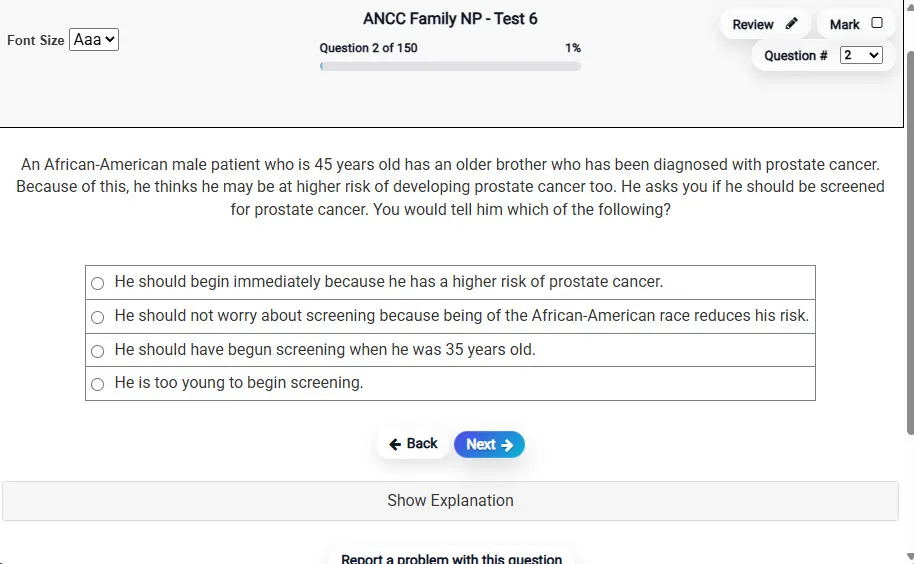
Answering a Question screen – Multiple-choice item view with navigation controls and progress tracker.
Answering a Question Multiple-choice item view with navigation controls and progress tracker.

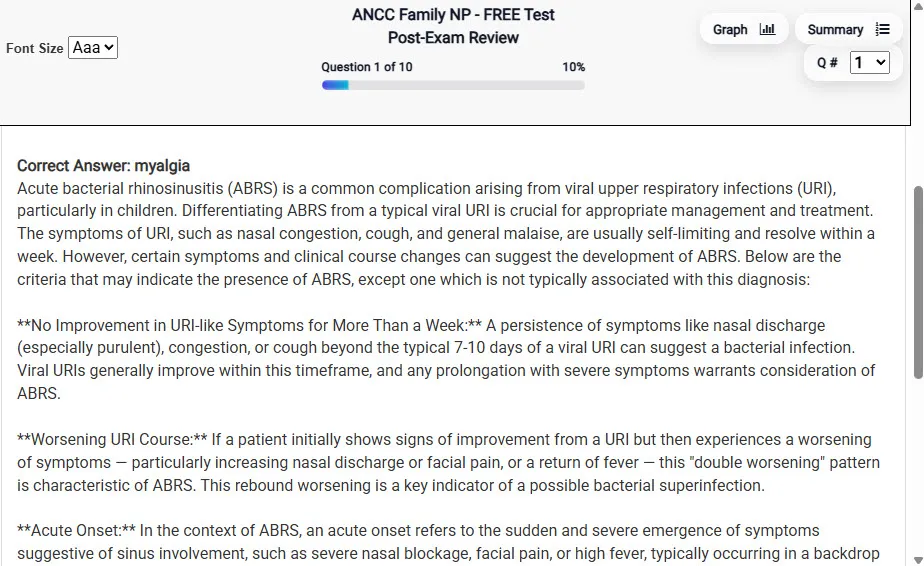
                           Detailed Explanation screen – 
                         Review mode showing chosen answer and rationale and references.
Detailed Explanation Review mode showing chosen answer and rationale and references.

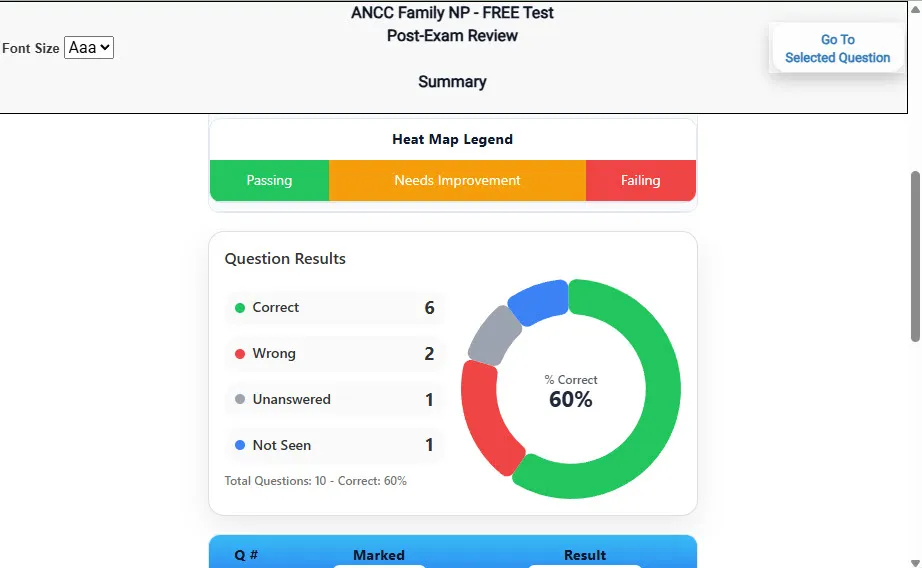
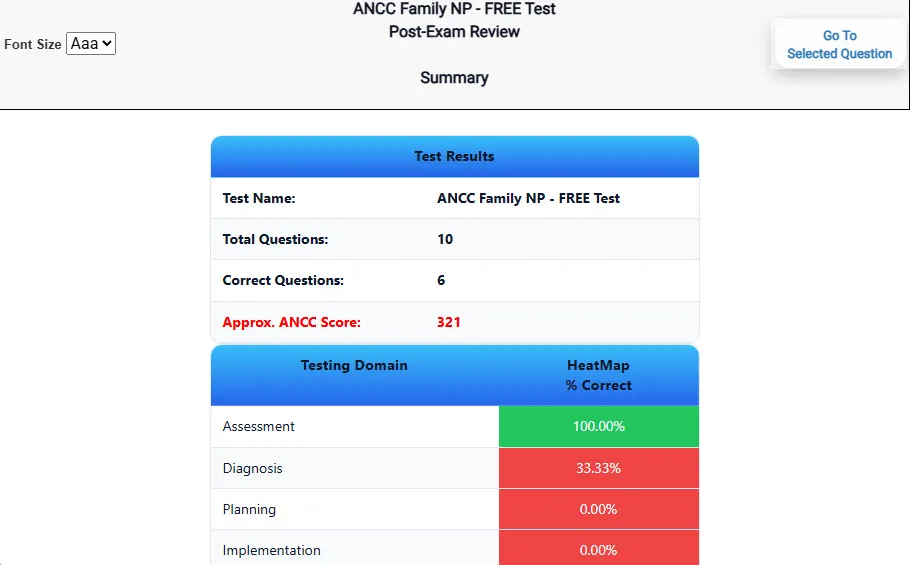
                           Review Summary 1 screen – 
                         Summary with counts for correct/wrong/unanswered and not seen items.
Review Summary 1 Summary with counts for correct/wrong/unanswered and not seen items.

                           Review Summary 2 screen – 
                         Advanced summary with category/domain breakdown and performance insights.
Review Summary 2 Advanced summary with category/domain breakdown and performance insights.

What Each Screen Shows

Answer Question Screen

  • Clean multiple-choice interface with progress bar.
  • Mark for review feature.
  • Matches real test pacing.

Detailed Explanation

  • Correct answer plus rationale.
  • Key concepts and guidelines highlighted.
  • Move between questions to fill knowledge gaps.

Review Summary 1

  • Overall results with total questions and scaled score.
  • Domain heatmap shows strengths and weaknesses.
  • Quick visual feedback on study priorities.

Review Summary 2

  • Chart of correct, wrong, unanswered, not seen.
  • Color-coded results for easy review.
  • Links back to missed items.

Top 10 Reasons to Use Exam Edge for your FTCE Biology 6-12 Exam Prep

  1. Focused on the FTCE Biology 6-12 Exam

    Our practice tests are built specifically for the FTCE Biology exam — every question mirrors the real topics, format, and difficulty so you're studying exactly what matters.

  2. Real Exam Simulation

    We match the per-question time limits and pressure of the actual FTCE exam, so test day feels familiar and stress-free.

  3. 20 Full Practice Tests & 2,000 Unique Questions

    You'll have more than enough material to master every FTCE Biology concept — no repeats, no fluff.

  4. Lower Cost Than a Retake

    Ordering 5 practice exams costs less than retaking the FTCE Biology 6-12 exam after a failure. One low fee could save you both time and money.

  5. Flexible Testing

    Need to step away mid-exam? Pick up right where you left off — with your remaining time intact.

  6. Instant Scoring & Feedback

    See your raw score and an estimated FTCE Biology 6-12 score immediately after finishing each practice test.

  7. Detailed Explanations for Every Question

    Review correct and incorrect answers with clear, step-by-step explanations so you truly understand each topic.

  8. Trusted & Accredited

    We're fully accredited by the Better Business Bureau and uphold the highest standards of trust and transparency.

  9. Web-Based & Always Available

    No software to install. Access your FTCE Biology practice exams 24/7 from any computer or mobile device.

  10. Expert Support When You Need It

    Need extra help? Our specialized tutors are highly qualified and ready to support your FTCE exam prep.


Pass the FTCE Biology 6-12 Exam with Realistic Practice Tests from Exam Edge

Preparing for your upcoming FTCE Biology 6-12 (002) Certification Exam can feel overwhelming — but the right practice makes all the difference. Exam Edge gives you the tools, structure, and confidence to pass on your first try. Our online practice exams are built to match the real FTCE Biology exam in content, format, and difficulty.

  • 📝 20 FTCE Biology 6-12 Practice Tests: Access 20 full-length exams with 100 questions each, covering every major FTCE Biology 6-12 topic in depth.
  • Instant Online Access: Start practicing right away — no software, no waiting.
  • 🧠 Step-by-Step Explanations: Understand the reasoning behind every correct answer so you can master FTCE Biology exam concepts.
  • 🔄 Retake Each Exam Up to 4 Times: Build knowledge through repetition and track your improvement over time.
  • 🌐 Web-Based & Available 24/7: Study anywhere, anytime, on any device.
  • 🧘 Boost Your Test-Day Confidence: Familiarity with the FTCE format reduces anxiety and helps you perform under pressure.

These FTCE Biology 6-12 practice exams are designed to simulate the real testing experience by matching question types, timing, and difficulty level. This approach helps you get comfortable not just with the exam content, but also with the testing environment, so you walk into your exam day focused and confident.


Exam Edge FTCE Reviews


Thank you for all the biology practice. Your tests were exactly what I needed to pass! I recommended your website to my friends.

Ashley K., Kingsport

Just wanted to let you guys know that your tests really helped me prepare for the ftce math exam. I took it yesterday and passed. I will tell other people about your site.

Shawna M, Florida

I passed my FTCE today! This was the second time I took the test. My first time I scored 192 and then I took your tests and passed on my second try. Taking your practice tests helped me a great deal, because several types of questions on the real test were also on your practice tests. Thanks so mu ...
Read More
TIm F, Florida

I wanted to take a minute to let you know that I passed the math portion of the Florida Teacher Certification Exam thanks to you. I had previously failed the test 2 other times and purchased your product a month ago. I cannot express to you enough how much your practice tests prepared me for the tes ...
Read More
Kathy , Orlando Florida

All I can say is Thank God for this testing site! With the tremendous help of this website, I bought a few of the practice exams and managed to finally conquer my GKT Math Exam. Previous to taking this exam, I had failed it 8 TIMES (literally) and had felt completely hopeless. The school district ce ...
Read More
Travis , Orlando, FL

For the last year, I have been trying to pass the reading section of the FTCE. I had taken it six times and if I did not pass it this month, then I could not take my college courses in education. I went to Google and typed in practice reading tests and your website came up. I clicked on, signed up a ...
Read More
Stacy S, Florida


FTCE Biology 6-12 Aliases Test Name

Here is a list of alternative names used for this exam.

  • FTCE Biology 6-12
  • FTCE Biology 6-12 test
  • FTCE Biology 6-12 Certification Test
  • FTCE Biology test
  • FTCE
  • FTCE 002
  • 002 test
  • FTCE Biology 6-12 (002)
  • Biology 6-12 certification