This is the content of the pop-over!

Lightning Deal Alert – 12% Off Ends at Midnight!

Strike while the savings are hot! Use promo code FlashSale at checkout for 12% off any Exam Edge test or bundle. Hurry—the clock is ticking!

NPTE - National Physical Therapy Examinations (NPTE) Practice Tests & Test Prep by Exam Edge


National Physical Therapy Examinations  product image
(4.6)
Based on 34 Reviews

  • Real Exam Simulation: Timed questions and matching content build comfort for your NPTE - National Physical Therapy Examinations test day.
  • Instant, 24/7 Access: Web-based National Physical Therapy Examinations practice exams with no software needed.
  • Clear Explanations: Step-by-step answers and explanations for your FSBPT exam to strengthen understanding.
  • Boosted Confidence: Reduces anxiety and improves test-taking skills to ace your National Physical Therapy Examinations (NPTE).

Featured on

National Physical Therapy Examinations Online Practice Test Bundles

BEST VALUE
15 practice tests

$149.25

$599.25

SAVE $450

Only $9.95 per test!

  • 100% Pass Guarantee
  • 15 online practice tests
  • 100 questions per test
  • Bonus: 100 Flash Cards + Study Guide
  • Instant access
  • Detailed Explanations
  • Practice tests never expire
  • Timed, untimed, or study guide mode
MOST POPULAR
10 practice tests

$99.50

$399.50

SAVE $300

Only $9.95 per test!

  • 10 online practice tests
  • 100 questions per test
  • Bonus: 100 Flash Cards + Study Guide
  • Instant access
  • Detailed Explanations
  • Practice tests never expire
  • Timed, untimed, or study guide mode
5 practice tests

$69.75

$199.75

SAVE $130

Only $13.95 per test!

  • 5 online practice tests
  • 100 questions per test
  • Bonus: 100 Flash Cards
  • Instant access
  • Detailed Explanations
  • Practice tests never expire
  • Timed, untimed, or study guide mode
1 practice test

$39.95

  • 1 online practice test
  • 100 questions per test
  • Instant access
  • Detailed Explanations
  • Practice tests never expire
  • Timed, untimed, or study guide mode
Quick Select
Tap to choose a bundle

** All Prices are in US Dollars (USD) **


NPTE - National Physical Therapy Examinations (NPTE) Resources

Jump to the section you need most.

Understanding the exact breakdown of the National Physical Therapy Examinations test will help you know what to expect and how to most effectively prepare. The National Physical Therapy Examinations has 250 multiple-choice questions . The exam will be broken down into the sections below:

National Physical Therapy Examinations Exam Blueprint
Domain Name % Number of
Questions
Clinical Application of Foundational Science 14.5% 36
Examination 13.0% 33
Foundations for Evaluation - Differential Diagnosis Prognosis 23.5% 59
Interventions 18% 45
Equipment & Devices; Therapeutic Modalities 11% 28
Safety & Professional Roles; Teaching/Learning; Research 20% 50

National Physical Therapy Examinations Study Tips by Domain

  • Link tissue healing phase to load selection: inflammatory/acute favors protection and gentle ROM, while proliferative/remodeling supports graded strengthening; red flag—aggressive resistance or stretching in early healing that increases swelling or night pain.
  • Use biomechanics to reduce joint stress: shorten moment arms, adjust lever lengths, and cue alignment to offload painful structures; common trap—adding weight before correcting compensations (e.g., knee valgus with squats).
  • Interpret pain physiology accurately: delayed onset muscle soreness peaks 24–72 hours and should not cause sharp focal pain; red flag—severe pain with loss of function or progressive neurologic symptoms after exercise.
  • Apply cardiopulmonary responses to activity dosing: monitor HR, BP, SpO2, and RPE to set safe intensity and rest; priority rule—stop and reassess if SpO2 drops below facility threshold (commonly <90%) or symptoms escalate.
  • Use neurophysiology to guide motor control: emphasize task-specific practice, external focus cues, and appropriate feedback frequency; common trap—constant manual correction that fosters dependency and limits carryover.
  • Integrate pharmacology and systems effects into clinical decisions: steroids can impair tissue healing and anticoagulants increase bruising risk; red flag—unexplained ecchymosis, dizziness, or bleeding that warrants medical referral.
  • Prioritize safety screening first in every exam—check vitals and red flags (e.g., unexplained weight loss, saddle anesthesia, progressive neuro deficits); a common trap is proceeding with special tests before ruling out urgent referral.
  • Choose tests with good sensitivity when you want to rule out and good specificity when you want to rule in; red flag: using a highly specific test to screen (you’ll miss cases) or a highly sensitive test to confirm (false positives).
  • Match the exam sequence to tissue irritability and acuity—observe/AROM before PROM and resisted tests; common trap: early provocation that flares symptoms and invalidates later findings.
  • For neurologic exams, document a complete pattern (dermatomes, myotomes, reflexes) and re-test after an intervention if appropriate; red flag: recording isolated weakness without distinguishing nerve root vs peripheral nerve vs pain inhibition.
  • During gait and functional testing, standardize conditions (device use, speed, footwear) and quantify (distance, time, cadence); common trap: qualitative descriptions only, which limits objective progress tracking and defensibility.
  • When special tests are used, interpret them in clusters and in context of history and baseline measures; red flag: treating a single positive test as diagnostic without considering pre-test probability and symptom reproduction.
  • History & systems review: screen for red flags that require referral (e.g., night pain unrelieved by rest, unexplained weight loss, saddle anesthesia, sudden neuro deficits)—FSBPT commonly tests when PT should stop and refer.
  • Test selection: choose measures with strong diagnostic utility (SnNout/SpPin)—common trap is ordering low-specificity cluster tests to “confirm” rather than using high-sensitivity tests to rule out serious pathology early.
  • Differential diagnosis: distinguish musculoskeletal vs cardiopulmonary vs neurologic sources using symptom behavior and objective findings; red flag is treating “mechanical” back/shoulder pain that has exertional chest/arm symptoms or autonomic signs.
  • Prognosis: identify factors that worsen outcomes (high pain catastrophizing, fear-avoidance, prolonged symptom duration, central sensitization) and adjust plan—trap is overpromising recovery timelines despite poor prognostic indicators.
  • Clinical prediction/decision rules: apply inclusion/exclusion criteria and recognize when rules don’t generalize (different age, comorbidities, acuity)—priority rule is to default to safety screening when criteria aren’t met.
  • Outcome measures & goal setting: pick valid, reliable tools aligned to diagnosis and set measurable functional goals; contraindication is using impairment-only measures to justify discharge or prognosis without functional change documentation.
  • Select intervention intensity/dose using objective measures (e.g., RPE, vitals, pain) and progress only when the patient meets criteria; red flag: progressing despite worsening neuro symptoms, disproportionate pain, or abnormal vital response.
  • Use impairment- and task-specific training (strength, endurance, motor control, balance, gait) tied to functional goals; common trap: chasing isolated “perfect form” exercises that don’t translate to the patient’s key activity limitations.
  • For cardiopulmonary interventions, follow monitoring thresholds (BP, HR, SpO2, symptoms) and stop/modify with concerning signs (e.g., chest pain, dizziness, marked desaturation); priority rule: safety overrides completing the planned session.
  • When using manual therapy or stretching, screen for contraindications (e.g., fracture, malignancy, severe osteoporosis, cord/cauda equina signs) and choose the least risky technique first; red flag: new bowel/bladder changes or progressive weakness after treatment.
  • Prescribe assistive devices/orthoses to optimize function and safety, and train proper fit and sequencing; common trap: issuing a device without confirming height, hand placement, and gait pattern (increasing fall risk).
  • Integrate patient education and home program with teach-back and measurable adherence checks; priority rule: simplify and anchor to daily routines when cognition, health literacy, or pain flare-ups threaten compliance.
  • Confirm device safety parameters before use (e.g., pacemaker, pregnancy, impaired sensation)—red flag: applying e-stim, diathermy, or ultrasound without screening implanted electronic/metal devices.
  • Choose gait assistive devices by stability need and gait pattern, then set height correctly (cane at greater trochanter/wrist crease; ~20–30° elbow flexion)—common trap: cane held on the involved side instead of the contralateral side.
  • Match wheelchair features to function (seat width, depth, cushion type, brakes, anti-tippers) and protect skin—priority rule: anyone with limited sensation/immobility needs pressure relief education and an appropriate pressure-redistributing cushion.
  • For superficial heat/cold, use timed dosing and frequent skin checks—contraindication cue: avoid thermal agents over areas with impaired circulation or sensation and stop immediately with mottling, excessive erythema, or burning pain.
  • When using electrotherapy (TENS/NMES), set parameters to the goal (sensory vs motor) and ensure good electrode contact—common trap: cranking intensity to compensate for poor placement/skin prep, increasing burn risk.
  • For therapeutic ultrasound, select frequency (3 MHz superficial, 1 MHz deeper) and keep the sound head moving with coupling medium—red flag: treating over growth plates, eyes, reproductive organs, or using stationary head causing hot spots.
  • Apply standard precautions every patient, every time; red flag: missing hand hygiene or PPE sequence is an automatic safety breach on NPTE-style items.
  • Know mandatory reporting and duty-to-warn triggers (e.g., suspected abuse/neglect, imminent harm); common trap: thinking patient confidentiality always overrides legal reporting.
  • Screen and respond to adverse events and emergencies (syncope, chest pain, anaphylaxis)—priority rule: stop treatment, ensure ABCs, activate emergency response, then document and notify per facility policy.
  • Use clean documentation and communication standards (timely, objective, measurable); red flag: altering a record after the fact without an addendum and date/time stamp.
  • Tailor patient education using health literacy and teach-back; common trap: equating nodding with understanding instead of verifying comprehension and carryover.
  • Interpret research for clinical decisions: prioritize systematic reviews/RCTs for efficacy, consider MCID/MDC for meaningful change; red flag: statistical significance without clinical relevance.


Built to Fit Into Your Busy Life

Everything you need to prepare with confidence—without wasting a minute.

Three Study Modes

Timed, No Time Limit, or Explanation mode.

Actionable Analytics

Heatmaps and scaled scores highlight weak areas.

High-Yield Rationales

Concise explanations emphasize key concepts.

Realistic Interface

Matches the feel of the actual exam environment.

Accessible by Design

Clean layout reduces cognitive load.

Anytime, Anywhere

Web-based access 24/7 on any device.
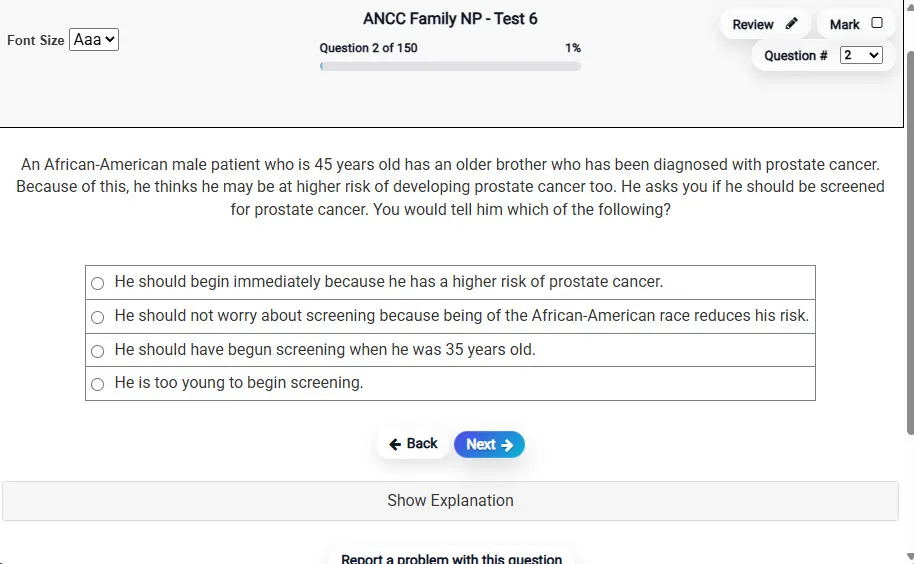
Answering a Question screen – Multiple-choice item view with navigation controls and progress tracker.
Answering a Question Multiple-choice item view with navigation controls and progress tracker.

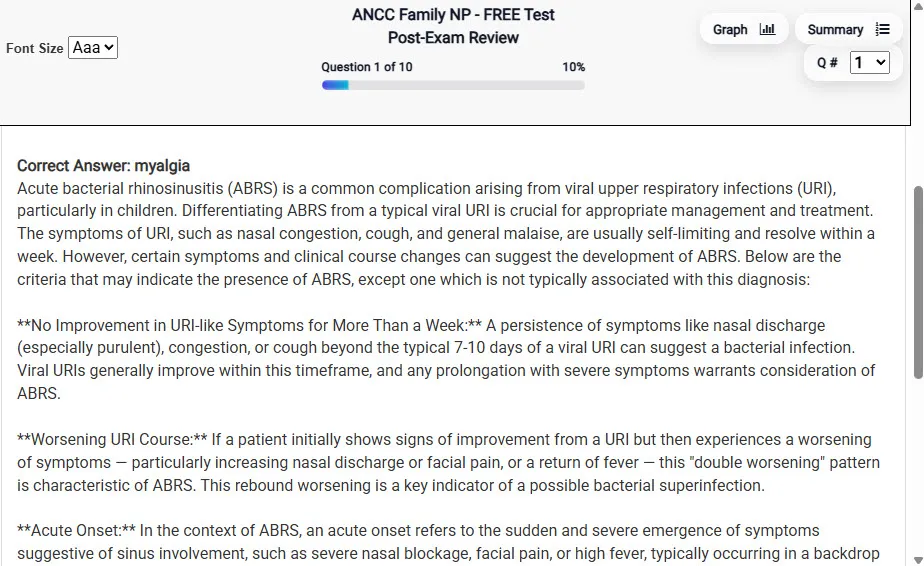
                           Detailed Explanation screen – 
                         Review mode showing chosen answer and rationale and references.
Detailed Explanation Review mode showing chosen answer and rationale and references.

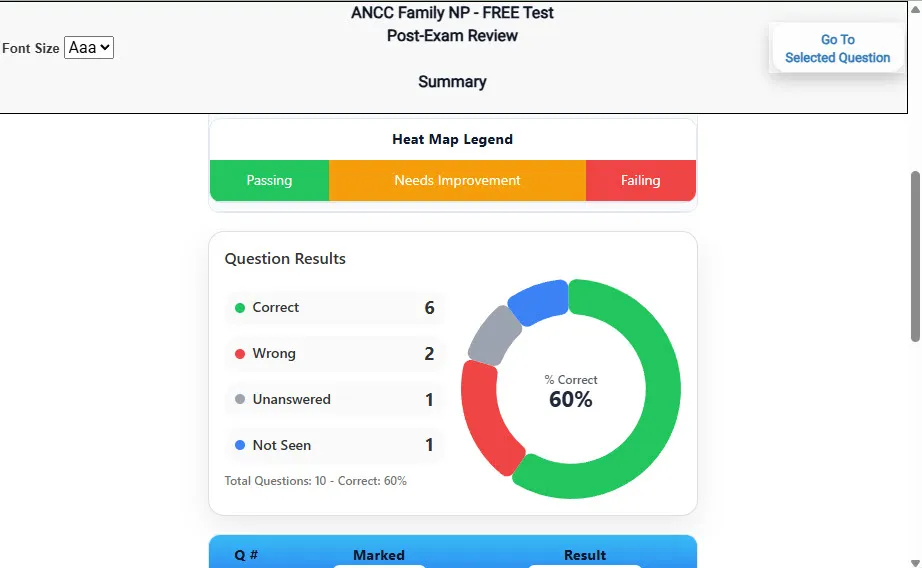
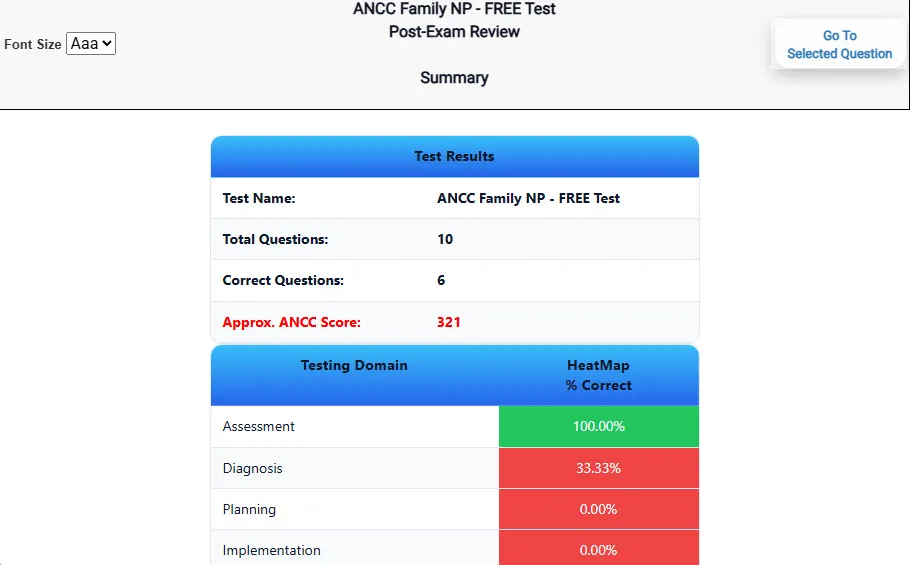
                           Review Summary 1 screen – 
                         Summary with counts for correct/wrong/unanswered and not seen items.
Review Summary 1 Summary with counts for correct/wrong/unanswered and not seen items.

                           Review Summary 2 screen – 
                         Advanced summary with category/domain breakdown and performance insights.
Review Summary 2 Advanced summary with category/domain breakdown and performance insights.

What Each Screen Shows

Answer Question Screen

  • Clean multiple-choice interface with progress bar.
  • Mark for review feature.
  • Matches real test pacing.

Detailed Explanation

  • Correct answer plus rationale.
  • Key concepts and guidelines highlighted.
  • Move between questions to fill knowledge gaps.

Review Summary 1

  • Overall results with total questions and scaled score.
  • Domain heatmap shows strengths and weaknesses.
  • Quick visual feedback on study priorities.

Review Summary 2

  • Chart of correct, wrong, unanswered, not seen.
  • Color-coded results for easy review.
  • Links back to missed items.

Top 10 Reasons to Use Exam Edge for your National Physical Therapy Examinations Exam Prep

  1. Focused on the National Physical Therapy Examinations Exam

    Our practice tests are built specifically for the NPTE - National Physical Therapy Examinations exam — every question mirrors the real topics, format, and difficulty so you're studying exactly what matters.

  2. Real Exam Simulation

    We match the per-question time limits and pressure of the actual FSBPT exam, so test day feels familiar and stress-free.

  3. 15 Full Practice Tests & 1,500 Unique Questions

    You'll have more than enough material to master every NPTE - National Physical Therapy Examinations concept — no repeats, no fluff.

  4. Lower Cost Than a Retake

    Ordering 5 practice exams costs less than retaking the National Physical Therapy Examinations exam after a failure. One low fee could save you both time and money.

  5. Flexible Testing

    Need to step away mid-exam? Pick up right where you left off — with your remaining time intact.

  6. Instant Scoring & Feedback

    See your raw score and an estimated National Physical Therapy Examinations score immediately after finishing each practice test.

  7. Detailed Explanations for Every Question

    Review correct and incorrect answers with clear, step-by-step explanations so you truly understand each topic.

  8. Trusted & Accredited

    We're fully accredited by the Better Business Bureau and uphold the highest standards of trust and transparency.

  9. Web-Based & Always Available

    No software to install. Access your NPTE - National Physical Therapy Examinations practice exams 24/7 from any computer or mobile device.

  10. Expert Support When You Need It

    Need extra help? Our specialized tutors are highly qualified and ready to support your FSBPT exam prep.


Pass the National Physical Therapy Examinations Exam with Realistic Practice Tests from Exam Edge

Preparing for your upcoming National Physical Therapy Examinations (NPTE) Certification Exam can feel overwhelming — but the right practice makes all the difference. Exam Edge gives you the tools, structure, and confidence to pass on your first try. Our online practice exams are built to match the real NPTE - National Physical Therapy Examinations exam in content, format, and difficulty.

  • 📝 15 National Physical Therapy Examinations Practice Tests: Access 15 full-length exams with 100 questions each, covering every major National Physical Therapy Examinations topic in depth.
  • Instant Online Access: Start practicing right away — no software, no waiting.
  • 🧠 Step-by-Step Explanations: Understand the reasoning behind every correct answer so you can master NPTE - National Physical Therapy Examinations exam concepts.
  • 🔄 Retake Each Exam Up to 4 Times: Build knowledge through repetition and track your improvement over time.
  • 🌐 Web-Based & Available 24/7: Study anywhere, anytime, on any device.
  • 🧘 Boost Your Test-Day Confidence: Familiarity with the FSBPT format reduces anxiety and helps you perform under pressure.

These National Physical Therapy Examinations practice exams are designed to simulate the real testing experience by matching question types, timing, and difficulty level. This approach helps you get comfortable not just with the exam content, but also with the testing environment, so you walk into your exam day focused and confident.


Exam Edge FSBPT Reviews


Excellent and great price!!

Jessica , Woodbridge, Virginia


National Physical Therapy Examinations Aliases Test Name

Here is a list of alternative names used for this exam.

  • National Physical Therapy Examinations
  • National Physical Therapy Examinations test
  • National Physical Therapy Examinations Certification Test
  • NPTE - National Physical Therapy Examinations test
  • FSBPT
  • FSBPT NPTE
  • NPTE test
  • National Physical Therapy Examinations (NPTE)
  • National Physical Therapy Examinations certification