This is the content of the pop-over!

DHA Veterinary (DHA-VET) Practice Exams & Test Prep


DHA Veterinary  product image
(4.9)
Based on 32 Reviews

  • Real Exam Simulation: Timed questions and matching content build comfort for your DHA Veterinary test day.
  • Instant, 24/7 Access: Web-based DHA Veterinary practice exams with no software needed.
  • Clear Explanations: Step-by-step answers and explanations for your DHA exam to strengthen understanding.
  • Boosted Confidence: Reduces anxiety and improves test-taking skills to ace your DHA Veterinary (DHA-VET).

Featured on

DHA Veterinary Online Practice Test Bundles

BEST VALUE
15 practice tests

$149.25

$599.25

SAVE $450

Only $9.95 per test!

  • 100% Pass Guarantee
  • 15 online practice tests
  • 100 questions per test
  • Bonus: 100 Flash Cards + Study Guide
  • Instant access
  • Detailed Explanations
  • Practice tests never expire
  • Timed, untimed, or study guide mode
MOST POPULAR
10 practice tests

$99.50

$399.50

SAVE $300

Only $9.95 per test!

  • 10 online practice tests
  • 100 questions per test
  • Bonus: 100 Flash Cards + Study Guide
  • Instant access
  • Detailed Explanations
  • Practice tests never expire
  • Timed, untimed, or study guide mode
5 practice tests

$69.75

$199.75

SAVE $130

Only $13.95 per test!

  • 5 online practice tests
  • 100 questions per test
  • Bonus: 100 Flash Cards
  • Instant access
  • Detailed Explanations
  • Practice tests never expire
  • Timed, untimed, or study guide mode
1 practice test

$39.95

  • 1 online practice test
  • 100 questions per test
  • Instant access
  • Detailed Explanations
  • Practice tests never expire
  • Timed, untimed, or study guide mode
Quick Select
Tap to choose a bundle

** All Prices are in US Dollars (USD) **


DHA Veterinary (DHA-VET) Resources

Jump to the section you need most.

Understanding the exact breakdown of the DHA Veterinary test will help you know what to expect and how to most effectively prepare. The DHA Veterinary has multiple-choice questions . The exam will be broken down into the sections below:

DHA Veterinary Exam Blueprint
Domain Name % Number of
Questions
Pharmacy & Pharmacology 12% 12
Surgical Nursing 11% 11
Dentistry 7% 7
Laboratory Procedures 12% 12
Animal Care and Nursing 22% 22
Diagnostic Imaging 7% 7
Anesthesia 16% 16
Emergency Medicine/Critical Care 6% 6
Pain Management/Analgesia 7% 7

DHA Veterinary Study Tips by Domain

  • Verify dose calculations using kg body weight and concentration (mg/mL) before dispensing; red flag: any order written in lb or with a missing decimal point should be recalculated and clarified.
  • Apply species sensitivities when selecting drugs; common trap: giving cats acetaminophen or permethrin, or using fluoroquinolones in growing dogs without considering cartilage effects.
  • Check for contraindications and required monitoring with high-risk classes; priority rule: NSAIDs + corticosteroids together are a “no” due to GI ulceration risk, and ACE inhibitors/diuretics warrant renal perfusion monitoring.
  • Use controlled-substance safeguards aligned with DHA expectations; red flag: any discrepancy between log, inventory count, and patient record requires immediate reconciliation and documented witness procedures.
  • Handle compounding, labeling, and storage precisely; common trap: dispensing without beyond-use date, route-specific instructions (e.g., “shake well”), or proper cold-chain control for vaccines/biologics.
  • Antimicrobial stewardship is testable and operationally important; priority rule: culture and susceptibility before escalation when feasible, and avoid under-dosing or premature discontinuation that selects for resistance.
  • Verify patient, procedure, and surgical site marking before induction; red flag: any mismatch between consent, cage card, and planned approach is a hard stop for a formal time-out.
  • Maintain strict aseptic technique with proper surgical scrub, gowning, and gloving; common trap: reaching below the sterile field or touching non-sterile anesthesia tubing without changing gloves.
  • Instrument and sponge counts must be performed (baseline and closure) and discrepancies escalated immediately; priority rule: never close until a missing item is found or documented per facility policy.
  • Prepare and drape the patient to maintain normothermia and prevent pressure injury; red flag: prolonged dorsal recumbency without padding or active warming increases hypothermia and neuropathy risk.
  • Monitor and document intraoperative parameters and fluid therapy per protocol; common trap: failing to adjust fluid rates for small patients or hemorrhage (watch for tachycardia, pale MM, prolonged CRT).
  • Handle tissues and suture materials correctly and anticipate surgeon needs; contraindication: using the wrong suture type/size for contaminated wounds (avoid braided/slow-absorbing in infected or high-contamination sites).
  • Perform a full oral exam and charting (gingiva, pocket depth, mobility, furcation, fractures) before any dental procedure—red flag: skipping pre-anesthetic oral assessment commonly misses abscesses or resorptive lesions that change the plan.
  • Dental radiographs are required for definitive diagnosis and extraction planning—common trap: extracting “by look” without radiographs risks retained roots, mandibular fracture, or missing periapical disease.
  • Use proper scaling sequence (supragingival then subgingival) and polish after scaling—priority rule: avoid excessive ultrasonic time/pressure to prevent thermal pulpal injury and enamel damage.
  • Endotracheal intubation with a cuffed tube and throat pack helps prevent aspiration during dentistry—red flag: not protecting the airway can lead to pneumonia from water/debris, especially in brachycephalic or debilitated patients.
  • Apply correct extraction technique (mucoperiosteal flap, alveolar bone removal when needed, section multi-rooted teeth, gentle elevation)—contraindication: excessive leverage on feline mandibles/maxillae increases fracture risk.
  • Post-op care must include pain control, soft diet guidance, and recheck timing—common trap: under-treating dental pain (e.g., no opioid/NSAID plan when appropriate) leads to anorexia and delayed healing.
  • Patient/sample ID is non-negotiable—use two identifiers and label at collection; red flag: “mystery” tubes or relabeled samples are a common DHA audit and exam trap.
  • Choose the right tube/additive and fill correctly (e.g., EDTA for CBC, citrate filled to the line for coag tests); trap: underfilled citrate falsely prolongs PT/aPTT.
  • Control pre-analytical error by proper handling and timing—separate serum/plasma promptly and store/ship at correct temperature; red flag: hemolysis/lipemia can invalidate chemistry and potassium.
  • Use quality control with every run (controls, calibration, reagent lot/expiry checks) and document actions; priority rule: do not report patient results when QC is out of range.
  • Microscopy fundamentals matter—scan at low power, confirm at high power, and note artifacts; trap: platelet clumps, rouleaux, or stain precipitate misread as parasites/bacteria.
  • Follow biosafety and waste rules—PPE, sharps disposal, and spill response with appropriate disinfectant contact time; red flag: uncapped centrifuge or aerosol-generating steps without protection risks exposure and is a compliance failure.
  • Perform rapid triage using ABCs (airway, breathing, circulation) and treat any compromise first; red flag: open-mouth breathing in cats or cyanosis requires immediate oxygen and minimal handling.
  • Calculate and document accurate body weight in kg for all dosing, fluids, and nutrition; common trap: mixing lb/kg or using an estimated weight without recheck leads to systematic medication errors.
  • Implement infection control with species-appropriate isolation and PPE; priority rule: any patient with vomiting/diarrhea, ectoparasites, or unknown vaccination status should be treated as potentially contagious until proven otherwise.
  • Provide nursing monitoring with defined frequency (e.g., q15–30 min in unstable patients) of TPR, mentation, mucous membranes, CRT, and pain score; red flag: rising HR with pale gums or prolonged CRT suggests decompensation even if temperature is normal.
  • Maintain safe restraint and low-stress handling protocols; contraindication: avoid scruffing or excessive pressure on the thorax in dyspneic animals and use chemical restraint per policy when safety is at risk.
  • Support nutrition, hydration, and elimination with accurate input/output records; common trap: failure to measure urine output (target often ≥1 mL/kg/hr) delays recognition of dehydration, shock, or urinary obstruction.
  • Verify patient ID, laterality, and study type before exposure; red flag: any mismatch between requisition and limb/side requires a stop-and-clarify to prevent wrong-site imaging.
  • Use ALARA with proper collimation and shielding; common trap: repeat radiographs due to poor positioning—use sandbags/foam wedges and clear positioning landmarks to reduce retakes.
  • For radiography, optimize technique (kVp for penetration/contrast, mAs for density) and check exposure index if available; red flag: motion blur often means inadequate restraint or too long exposure time.
  • Contrast studies (GI, urinary, vascular) require screening for contraindications; priority rule: avoid barium if perforation suspected and use water-soluble iodinated contrast instead.
  • Ultrasound prep matters for image quality; common trap: inadequate clipping/gel and poor probe orientation—confirm marker direction and use a systematic organ-by-organ scan to avoid missed lesions.
  • Radiation safety and monitoring are DHA priorities; red flag: anyone holding a patient without PPE or dosimeter—use mechanical restraint, distance, and time minimization, and document exposures per facility policy.
  • Pre-anesthetic assessment must document ASA status, airway risk, and fasting history; red flag: proceed with elective anesthesia without stabilizing dehydration, shock, or significant electrolyte/acid–base derangements.
  • Calculate and record all drug doses in mg/kg (and infusion rates in μg/kg/min when used); common trap: confusing mg/mL concentration leading to 10× dosing errors, especially with potent opioids or alpha-2 agonists.
  • Airway management requires correct tube size, cuff inflation to seal without overpressure, and secure fixation; red flag: absent capnography waveform or sudden loss of ETCO2 suggesting esophageal intubation or disconnection.
  • Monitor ventilation and oxygenation continuously (SpO2, ETCO2, RR) and intervene early; priority rule: treat hypoventilation (rising ETCO2) with ventilation support rather than simply increasing oxygen flow.
  • Maintain perfusion with vigilant BP and ECG monitoring; threshold cue: address hypotension promptly (e.g., MAP < 60–65 mmHg) by reducing anesthetic depth, giving fluid bolus when appropriate, and escalating to vasoactive support if persistent.
  • Recovery is a high-risk phase requiring thermoregulation and airway vigilance; red flag: extubating before swallow/gag reflex returns or leaving an obstructed brachycephalic airway unattended, increasing risk of hypoxia and aspiration.
  • Triage by ABCDE and treat the biggest threat first; red flag: don’t delay oxygen, airway control, or hemorrhage control while waiting for diagnostics.
  • For shock, start rapid IV crystalloids (dogs ~20–30 mL/kg bolus, cats ~10–15 mL/kg) and reassess perfusion endpoints (MM color, CRT, pulse quality, lactate); common trap: giving repeated large boluses without monitoring for fluid overload (esp. cats).
  • Act on life-threatening dysrhythmias and arrest rhythms per CPR priorities (high-quality compressions, ventilation, defibrillation when indicated); priority rule: minimize hands-off time—pauses should be <10 seconds.
  • Manage respiratory distress with minimal stress handling, flow-by/O2 cage, and sedation when needed; red flag: a dyspneic cat can crash with restraint—delay radiographs until stable.
  • Control active hemorrhage and coagulopathy early (direct pressure, bandaging, TXA if protocol allows, and blood products guided by PCV/TS and coagulation tests); common trap: relying on crystalloids alone in hemorrhagic shock.
  • Monitor critical patients with trendable parameters (TPR, SpO2, BP, ECG, urine output, mentation, glucose); red flag threshold: urine output <1 mL/kg/hr suggests poor perfusion or renal compromise and needs prompt reassessment.
  • Use multimodal analgesia (e.g., opioid + NSAID + local/regional) to reduce dose-related adverse effects; red flag: relying on a single agent often results in breakthrough pain post-op.
  • NSAIDs are contraindicated with dehydration/hypovolemia, renal disease, GI ulcer risk, or concurrent corticosteroids; common trap: giving an NSAID before stabilizing a shocky patient.
  • Opioids can cause respiratory depression, bradycardia, dysphoria, and ileus/constipation; priority rule: monitor ventilation and temperature closely after full mu agonists, especially in brachycephalics.
  • Local anesthetics (lidocaine/bupivacaine) have dose limits and toxicity risks (CNS signs, arrhythmias); red flag: accidental IV administration or exceeding mg/kg when combining multiple blocks.
  • Assess pain with a validated scale and reassess after interventions; common trap: assuming a quiet or immobile animal is comfortable—cats may mask pain and need proactive dosing.
  • Plan perioperative analgesia timing (preemptive and scheduled dosing) and taper appropriately; red flag: abrupt cessation of long-term opioids or gabapentin can cause rebound pain or withdrawal-like signs.


Built to Fit Into Your Busy Life

Everything you need to prepare with confidence—without wasting a minute.

Three Study Modes

Timed, No Time Limit, or Explanation mode.

Actionable Analytics

Heatmaps and scaled scores highlight weak areas.

High-Yield Rationales

Concise explanations emphasize key concepts.

Realistic Interface

Matches the feel of the actual exam environment.

Accessible by Design

Clean layout reduces cognitive load.

Anytime, Anywhere

Web-based access 24/7 on any device.
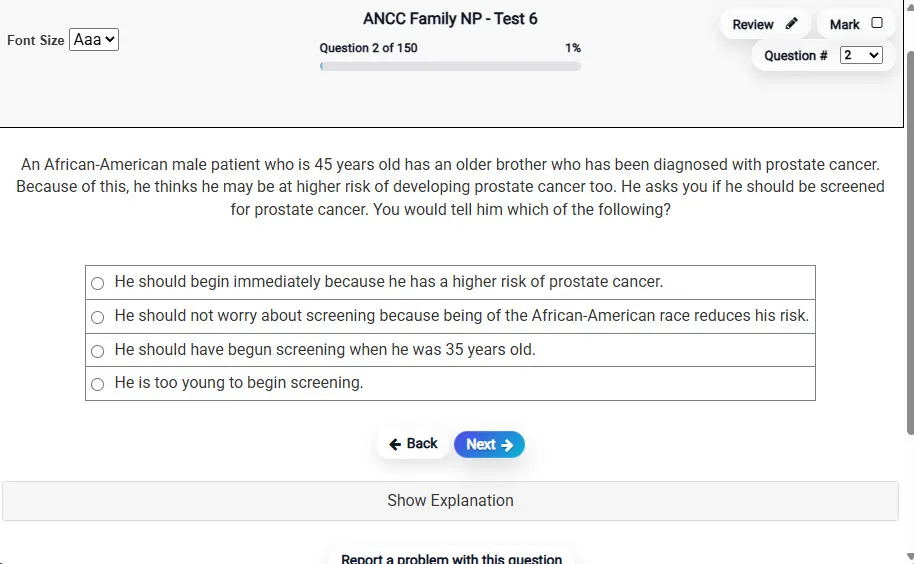
Answering a Question screen – Multiple-choice item view with navigation controls and progress tracker.
Answering a Question Multiple-choice item view with navigation controls and progress tracker.

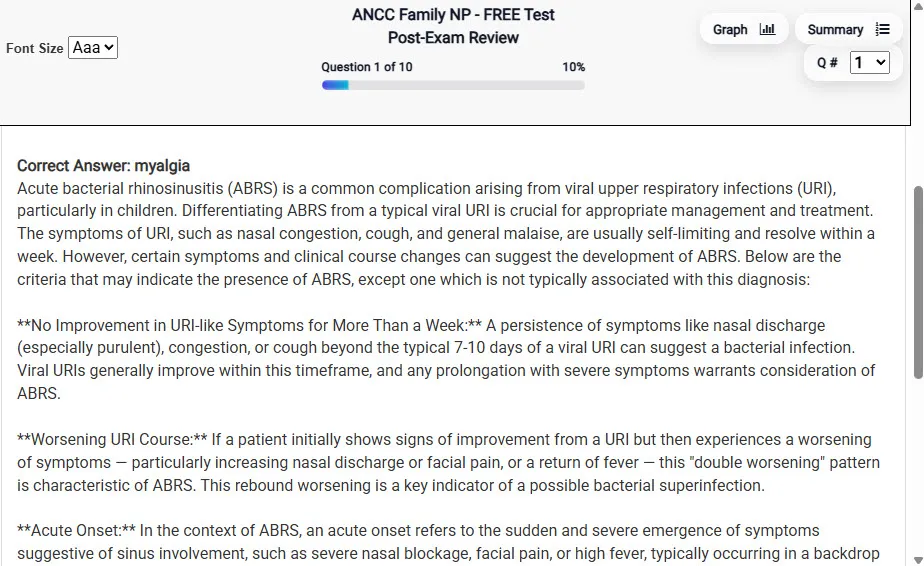
                           Detailed Explanation screen – 
                         Review mode showing chosen answer and rationale and references.
Detailed Explanation Review mode showing chosen answer and rationale and references.

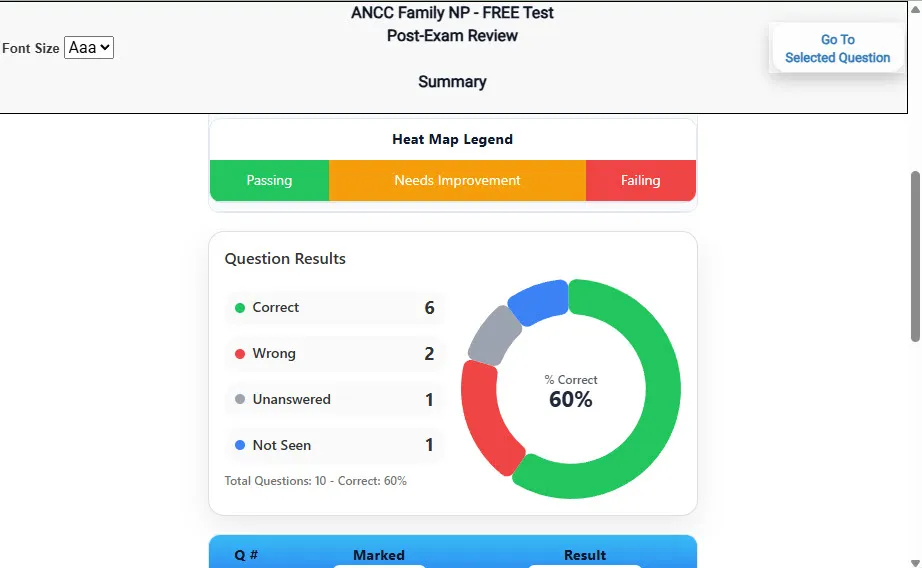
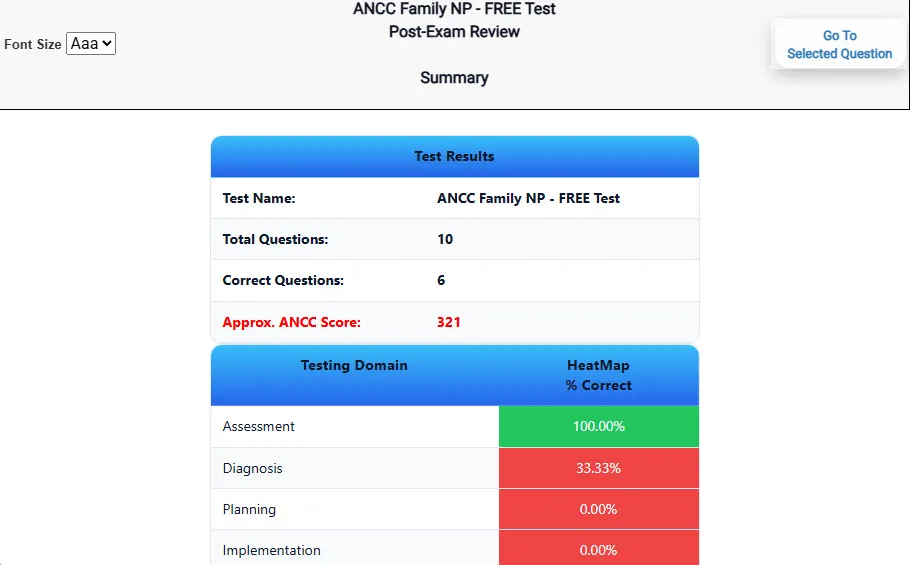
                           Review Summary 1 screen – 
                         Summary with counts for correct/wrong/unanswered and not seen items.
Review Summary 1 Summary with counts for correct/wrong/unanswered and not seen items.

                           Review Summary 2 screen – 
                         Advanced summary with category/domain breakdown and performance insights.
Review Summary 2 Advanced summary with category/domain breakdown and performance insights.

What Each Screen Shows

Answer Question Screen

  • Clean multiple-choice interface with progress bar.
  • Mark for review feature.
  • Matches real test pacing.

Detailed Explanation

  • Correct answer plus rationale.
  • Key concepts and guidelines highlighted.
  • Move between questions to fill knowledge gaps.

Review Summary 1

  • Overall results with total questions and scaled score.
  • Domain heatmap shows strengths and weaknesses.
  • Quick visual feedback on study priorities.

Review Summary 2

  • Chart of correct, wrong, unanswered, not seen.
  • Color-coded results for easy review.
  • Links back to missed items.

Top 10 Reasons to Use Exam Edge for your DHA Veterinary Exam Prep

  1. Focused on the DHA Veterinary Exam

    Our practice tests are built specifically for the DHA Veterinary exam — every question mirrors the real topics, format, and difficulty so you're studying exactly what matters.

  2. Real Exam Simulation

    We match the per-question time limits and pressure of the actual DHA exam, so test day feels familiar and stress-free.

  3. 15 Full Practice Tests & 1,500 Unique Questions

    You'll have more than enough material to master every DHA Veterinary concept — no repeats, no fluff.

  4. Lower Cost Than a Retake

    Ordering 5 practice exams costs less than retaking the DHA Veterinary exam after a failure. One low fee could save you both time and money.

  5. Flexible Testing

    Need to step away mid-exam? Pick up right where you left off — with your remaining time intact.

  6. Instant Scoring & Feedback

    See your raw score and an estimated DHA Veterinary score immediately after finishing each practice test.

  7. Detailed Explanations for Every Question

    Review correct and incorrect answers with clear, step-by-step explanations so you truly understand each topic.

  8. Trusted & Accredited

    We're fully accredited by the Better Business Bureau and uphold the highest standards of trust and transparency.

  9. Web-Based & Always Available

    No software to install. Access your DHA Veterinary practice exams 24/7 from any computer or mobile device.

  10. Expert Support When You Need It

    Need extra help? Our specialized tutors are highly qualified and ready to support your DHA exam prep.


Pass the DHA Veterinary Exam with Realistic Practice Tests from Exam Edge

Preparing for your upcoming DHA Veterinary (DHA-VET) Certification Exam can feel overwhelming — but the right practice makes all the difference. Exam Edge gives you the tools, structure, and confidence to pass on your first try. Our online practice exams are built to match the real DHA Veterinary exam in content, format, and difficulty.

  • 📝 15 DHA Veterinary Practice Tests: Access 15 full-length exams with 100 questions each, covering every major DHA Veterinary topic in depth.
  • Instant Online Access: Start practicing right away — no software, no waiting.
  • 🧠 Step-by-Step Explanations: Understand the reasoning behind every correct answer so you can master DHA Veterinary exam concepts.
  • 🔄 Retake Each Exam Up to 4 Times: Build knowledge through repetition and track your improvement over time.
  • 🌐 Web-Based & Available 24/7: Study anywhere, anytime, on any device.
  • 🧘 Boost Your Test-Day Confidence: Familiarity with the DHA format reduces anxiety and helps you perform under pressure.

These DHA Veterinary practice exams are designed to simulate the real testing experience by matching question types, timing, and difficulty level. This approach helps you get comfortable not just with the exam content, but also with the testing environment, so you walk into your exam day focused and confident.


Exam Edge DHA Reviews


Hi Ma'am, thank you so much. I cleared my DHA exam, and this time the question papers helped me a lot. I will surely recommend DHA prep to all my friends. Thanks once again.

Shafana ,

Very helpful and quick response.

Roxan , United Kingdom


DHA Veterinary Aliases Test Name

Here is a list of alternative names used for this exam.

  • DHA Veterinary
  • DHA Veterinary test
  • DHA Veterinary Certification Test
  • DHA
  • DHA DHA-VET
  • DHA-VET test
  • DHA Veterinary (DHA-VET)
  • Veterinary certification