This is the content of the pop-over!

Lightning Deal Alert – 12% Off Ends at Midnight!

Strike while the savings are hot! Use promo code FlashSale at checkout for 12% off any Exam Edge test or bundle. Hurry—the clock is ticking!

DHA Dental Assistant (DHA-DA) Practice Tests & Test Prep by Exam Edge


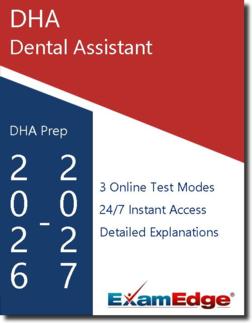
DHA Dental Assistant  product image
(4.6)
Based on 34 Reviews

  • Real Exam Simulation: Timed questions and matching content build comfort for your DHA Dental Assistant test day.
  • Instant, 24/7 Access: Web-based DHA Dental Assistant practice exams with no software needed.
  • Clear Explanations: Step-by-step answers and explanations for your DHA exam to strengthen understanding.
  • Boosted Confidence: Reduces anxiety and improves test-taking skills to ace your DHA Dental Assistant (DASST).

Featured on

DHA Dental Assistant Online Practice Test Bundles

BEST VALUE
30 practice tests

$238.50

$1,198.50

SAVE $960

Only $7.95 per test!

  • 100% Pass Guarantee
  • 30 online practice tests
  • 100 questions per test
  • Bonus: 100 Flash Cards + Study Guide
  • Instant access
  • Detailed Explanations
  • Practice tests never expire
  • Timed, untimed, or study guide mode
MOST POPULAR
15 practice tests

$149.25

$599.25

SAVE $450

Only $9.95 per test!

  • 15 online practice tests
  • 100 questions per test
  • Bonus: 100 Flash Cards + Study Guide
  • Instant access
  • Detailed Explanations
  • Practice tests never expire
  • Timed, untimed, or study guide mode
5 practice tests

$69.75

$199.75

SAVE $130

Only $13.95 per test!

  • 5 online practice tests
  • 100 questions per test
  • Bonus: 100 Flash Cards
  • Instant access
  • Detailed Explanations
  • Practice tests never expire
  • Timed, untimed, or study guide mode
1 practice test

$39.95

  • 1 online practice test
  • 100 questions per test
  • Instant access
  • Detailed Explanations
  • Practice tests never expire
  • Timed, untimed, or study guide mode
Quick Select
Tap to choose a bundle

** All Prices are in US Dollars (USD) **


DHA Dental Assistant (DASST) Resources

Jump to the section you need most.

Understanding the exact breakdown of the DHA Dental Assistant test will help you know what to expect and how to most effectively prepare. The DHA Dental Assistant has 100 multiple-choice questions . The exam will be broken down into the sections below:

DHA Dental Assistant Exam Blueprint
Domain Name
Dental Anatomy  
Dental Assistant  
Dental Health  
Dental Materials  
Dental Radiography  
Infection Control  
Preventive Dentistry  
Supplies and Logistics  
Communication and Patient Education  
Ethics  

DHA Dental Assistant Study Tips by Domain

  • Differentiate dentitions and tooth numbering/charting accurately (primary vs permanent; quadrant/system used locally)—red flag: mixing primary letters with permanent numbers leads to wrong-tooth errors.
  • Identify tooth surfaces and line angles (mesial/distal, buccal/lingual, occlusal/incisal)—common trap: confusing lingual vs palatal and mislabeling surfaces during charting.
  • Recognize crown and root anatomy (cusps, ridges, fossae, cingulum; single vs multi-rooted)—priority rule: molars commonly have multiple roots, so expect complex furcations when discussing periodontal findings.
  • Know eruption timing and sequence basics for primary and permanent teeth—threshold cue: delayed eruption beyond expected age range warrants noting medical/dental history factors (e.g., endocrine or local obstruction).
  • Relate supporting structures (enamel, dentin, pulp, cementum, PDL, alveolar bone, gingiva) to function—red flag: pain to cold/sweet suggests dentin/pulp involvement rather than enamel-only defects.
  • Understand occlusion terminology (overjet/overbite, Angle Class I/II/III, centric vs eccentric contacts)—common trap: documenting an open bite or crossbite incorrectly can mislead treatment planning and referrals.
  • Follow four-handed dentistry principles: transfer instruments in the transfer zone and keep the operator’s eyes on the field; red flag—passing over the patient’s face or breaking the operator’s line of sight increases injury risk.
  • Prepare the operatory with correct tray setup and equipment checks (suction, handpieces, light, emergency kit); common trap—starting without verifying suction and water flow leads to delays and contamination.
  • Manage chairside suction and retraction to maintain a dry field and protect soft tissues; priority rule—position high-volume evacuation close to the aerosol source to reduce spatter and patient aspiration risk.
  • Assist with local anesthesia and medications only within delegated duties and with clear documentation; red flag—administering, advising dose changes, or handling controlled drugs without authorization is a compliance breach.
  • Provide post-procedure support: give written aftercare, schedule follow-up, and document materials, tooth numbers, and patient responses; common trap—missing tooth/arch notation or failing to record complications undermines legal defensibility.
  • Recognize and respond to medical emergencies using basic life support steps (scene safety, call for help, airway-breathing-circulation); threshold cue—any loss of consciousness, chest pain, or breathing difficulty requires immediate activation of emergency protocol.
  • Recognize common oral disease patterns—caries, gingivitis/periodontitis, candidiasis, and aphthous ulcers—and treat unexplained swelling, fever, or facial asymmetry as a red flag needing urgent dentist referral.
  • Screen for xerostomia risk (e.g., polypharmacy, diabetes, radiotherapy) because it accelerates caries; practical cue: a patient reporting “sticky mouth” and frequent sipping should trigger high-caries preventive advice.
  • Identify oral cancer warning signs—nonhealing ulcer >2 weeks, indurated lesion, persistent white/red patch—and do not reassure without evaluation; priority rule: document site/size and refer promptly.
  • Understand systemic links: diabetes worsens periodontal status and periodontal inflammation can affect glycemic control; common trap: proceeding with lengthy appointments when the patient reports poorly controlled glucose or symptoms of hypoglycemia.
  • Give smoking and tobacco counseling cues: tobacco use is strongly associated with periodontitis and oral cancer; red flag: painless white/red lesion in a smoker warrants immediate escalation rather than “watch and wait.”
  • Know medication-related oral effects—anticoagulants/antiplatelets increase bleeding, bisphosphonates risk osteonecrosis, and antihypertensives may cause gingival enlargement; practical cue: never advise stopping prescribed meds without dentist/physician direction.
  • Choose restorative material by indication: composite for esthetics and small-to-moderate posterior lesions, amalgam for high-load/moisture-challenged areas—red flag: placing composite without reliable isolation increases sensitivity and early failure.
  • Mixing rules matter: follow manufacturer powder/liquid ratio and mixing time for cements (GI, ZOE, polycarboxylate); common trap: adding extra liquid to “extend working time” weakens the set and compromises retention.
  • Understand setting reactions: resin materials are light-cured (wavelength and exposure time critical) while many cements are acid-base reactions—priority rule: always verify curing light output/clean tip because under-curing leaves soft resin and marginal leakage.
  • Impression materials: alginate is hydrophilic and time-sensitive; red flag: delayed pouring causes syneresis/imbibition distortion, so pour promptly (or store briefly in a sealed humid environment per instructions).
  • Gypsum products: select type (II plaster, III stone, IV die stone) based on strength/detail needs—common trap: over-watering reduces strength and increases setting expansion errors in dies.
  • Bonding and liners: use etch/primer/bond sequence as directed and place liners only when indicated (deep caries/pulp protection); contraindication cue: placing thick bases unnecessarily reduces restorative bulk and can increase fracture risk.
  • Verify patient identity, procedure, and pregnancy status before exposing; red flag: taking radiographs without documented indication or consent discussion increases DHA compliance risk.
  • Apply ALARA with correct exposure factors and collimation; common trap: retaking films due to poor receptor placement rather than adjusting technique and positioning.
  • Use proper receptor placement and beam alignment (paralleling or bisecting-angle as indicated); priority rule: correct vertical/horizontal angulation first when correcting cone-cuts and overlapping contacts.
  • Maintain radiation safety: lead apron/thyroid collar as required, operator at least 6 ft away and 90–135° to the beam; red flag: holding the receptor or tube head during exposure is contraindicated.
  • Prevent image errors by recognizing artifacts and handling receptors properly; common trap: bending/scratching PSP plates or contaminating sensors leads to repeat exposures.
  • Follow processing and quality assurance controls (e.g., correct time–temperature, chemical strength, and routine test strips for digital/film systems); red flag: inconsistent density/contrast across patients suggests equipment or processing drift needing corrective action.
  • Hand hygiene is non-negotiable—perform before donning gloves and immediately after glove removal; red flag: using alcohol rub when hands are visibly soiled (use soap and water instead).
  • Use appropriate PPE for the procedure (mask, eye protection/face shield, gown, gloves) and change when compromised; common trap: wearing the same mask between patients or leaving the operatory with contaminated gloves.
  • Process instruments in the correct flow: transport (closed container) → cleaning → packaging with indicators → sterilization → dry storage; priority rule: any torn/wet package is considered non-sterile and must be reprocessed.
  • Differentiate cleaning vs disinfection vs sterilization—use EPA-approved intermediate-level disinfectant for clinical contact surfaces; red flag: wiping without required wet contact time (surface must stay visibly wet for the labeled time).
  • Sharps safety is a high-risk DHA compliance area—never recap needles with two hands; use one-hand scoop or a recapping device and discard into a puncture-resistant sharps container before it reaches the fill line.
  • Manage exposure incidents immediately: wash/flush, report, document, and follow post-exposure protocol; common trap: delaying reporting after a needlestick or failing to verify HBV vaccination/antibody status.
  • Perform caries-risk–based prevention: high-risk patients need more frequent fluoride varnish and dietary counseling; red flag—recent caries or xerostomia should trigger intensified recall and home-care instructions.
  • Apply fluoride correctly (varnish/gel/foam): check age and swallow risk; common trap—using high-concentration fluoride in young children without strict post-op instructions (no eating hard foods, minimal brushing for several hours).
  • Provide pit-and-fissure sealants with strict isolation and timing: etch, rinse, dry to “frosty” enamel, place, cure, and check occlusion; red flag—saliva contamination after etching means re-etch before sealing.
  • Deliver plaque control education using a teach-back method: demonstrate brushing (modified Bass) and interdental cleaning; common trap—recommending flossing when the patient lacks dexterity—suggest interdental brushes or floss holders instead.
  • Manage periodontal prevention with tailored instructions and maintenance: emphasize daily interdental cleaning and professional scaling intervals; red flag—bleeding on brushing is not a reason to stop—it signals inflammation and need for improved technique.
  • Support tobacco-cessation and dietary counseling as preventive measures: document use, advise quitting, and refer; priority rule—frequent sugary snacks/drinks are more cariogenic than the total amount, so focus on reducing exposure frequency.
  • Maintain minimum stock levels for critical items (sterilization pouches, PPE, anesthetic carpules, impression materials)—red flag: discovering shortages only when the patient is seated.
  • Use FEFO (first-expire, first-out) and log lot/expiry for materials and medicaments—common trap: keeping newer stock in front and inadvertently using expired fluoride varnish or local anesthetic.
  • Verify storage conditions (temperature, light, humidity) for composites, bonding agents, and certain disinfectants—priority rule: if storage requirements are unknown or breached, quarantine the product before use.
  • Track controlled/regulated items (e.g., local anesthetic, sharps) with secure storage and usage documentation—red flag: missing counts or unsecured sharps containers in clinical areas.
  • Standardize ordering with approved vendor lists, item codes, and reorder points to prevent duplicates—common trap: ordering “similar” products that are incompatible with existing systems (e.g., impression cartridges/dispensing guns).
  • Inspect deliveries immediately for damage, correct quantities, and integrity of sterile packaging—contraindication: do not use any item with torn packaging, broken seals, or compromised indicators.
  • Use open-ended questions and teach-back for key instructions (e.g., post-op care, oral hygiene); red flag: patient repeats directions incorrectly or can’t demonstrate the technique.
  • Obtain and document informed consent elements (procedure, risks, benefits, alternatives) before assisting; common trap: assuming a signed form alone equals valid consent without patient understanding.
  • Adapt communication to patient needs (child, anxious, medically compromised, language barrier) and use approved interpreter support when needed; red flag: relying on a family member to translate sensitive clinical information.
  • Deliver post-treatment instructions in plain language and provide written take-home guidance; priority rule: emphasize time-critical warnings (e.g., uncontrolled bleeding, swelling, fever) and when to return/seek urgent care.
  • Manage difficult interactions professionally (anger, fear, non-compliance) using calm tone and clear boundaries; common trap: arguing or giving clinical opinions beyond the assistant’s scope.
  • Maintain confidentiality in all communications (chairside, phone, messaging, records); red flag: discussing patient details in public areas or sharing images/information without explicit authorization.
  • Maintain patient confidentiality at all times—red flag: discussing cases in waiting areas, elevators, or on personal social media is an immediate breach even if you omit names.
  • Obtain valid informed consent before procedures; common trap: assuming a prior consent covers a new intervention (or a change in plan) without re-explaining risks, benefits, and alternatives.
  • Stay within the dental assistant scope and follow dentist supervision requirements—priority rule: if you are unsure whether a task is permitted, stop and clarify before proceeding.
  • Document honestly and contemporaneously; red flag: altering dates/times, backdating entries, or “fixing” charting after an incident can be treated as falsification.
  • Manage professional boundaries and conflicts of interest; common trap: accepting gifts, discounts, or incentives that could influence clinical or purchasing decisions without disclosure and approval.
  • Report unsafe, unethical, or illegal conduct through the clinic’s chain of command; priority rule: imminent risk to a patient requires immediate escalation rather than waiting for routine review.


Built to Fit Into Your Busy Life

Everything you need to prepare with confidence—without wasting a minute.

Three Study Modes

Timed, No Time Limit, or Explanation mode.

Actionable Analytics

Heatmaps and scaled scores highlight weak areas.

High-Yield Rationales

Concise explanations emphasize key concepts.

Realistic Interface

Matches the feel of the actual exam environment.

Accessible by Design

Clean layout reduces cognitive load.

Anytime, Anywhere

Web-based access 24/7 on any device.
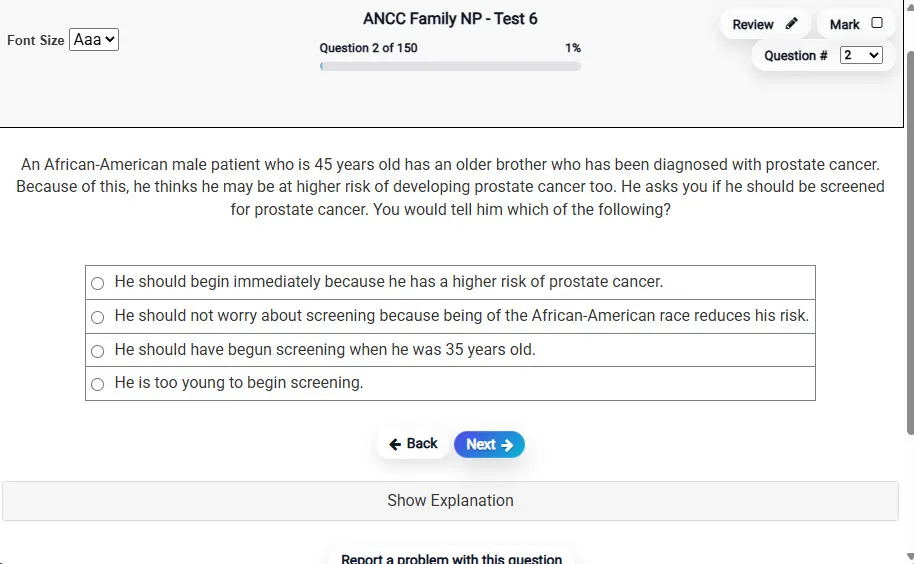
Answering a Question screen – Multiple-choice item view with navigation controls and progress tracker.
Answering a Question Multiple-choice item view with navigation controls and progress tracker.

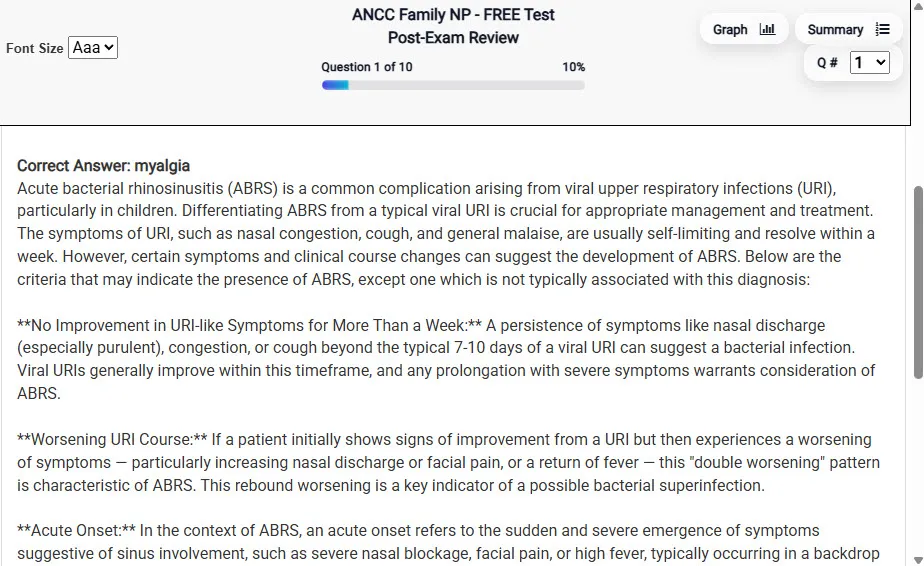
                           Detailed Explanation screen – 
                         Review mode showing chosen answer and rationale and references.
Detailed Explanation Review mode showing chosen answer and rationale and references.

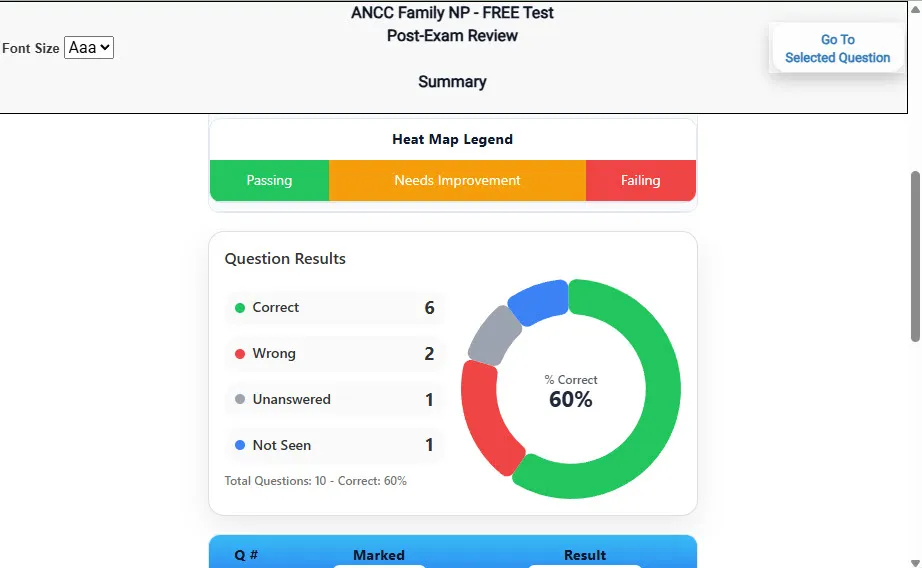
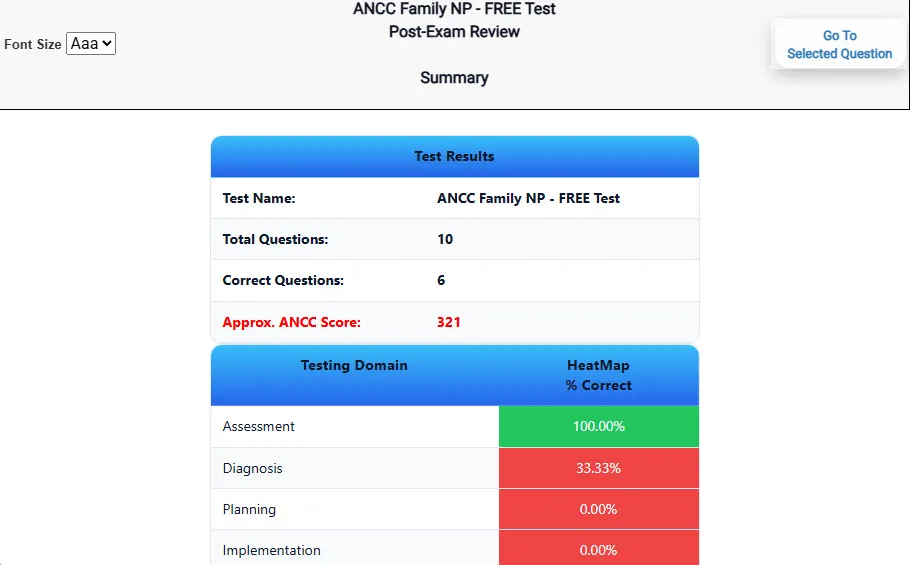
                           Review Summary 1 screen – 
                         Summary with counts for correct/wrong/unanswered and not seen items.
Review Summary 1 Summary with counts for correct/wrong/unanswered and not seen items.

                           Review Summary 2 screen – 
                         Advanced summary with category/domain breakdown and performance insights.
Review Summary 2 Advanced summary with category/domain breakdown and performance insights.

What Each Screen Shows

Answer Question Screen

  • Clean multiple-choice interface with progress bar.
  • Mark for review feature.
  • Matches real test pacing.

Detailed Explanation

  • Correct answer plus rationale.
  • Key concepts and guidelines highlighted.
  • Move between questions to fill knowledge gaps.

Review Summary 1

  • Overall results with total questions and scaled score.
  • Domain heatmap shows strengths and weaknesses.
  • Quick visual feedback on study priorities.

Review Summary 2

  • Chart of correct, wrong, unanswered, not seen.
  • Color-coded results for easy review.
  • Links back to missed items.

Top 10 Reasons to Use Exam Edge for your DHA Dental Assistant Exam Prep

  1. Focused on the DHA Dental Assistant Exam

    Our practice tests are built specifically for the DHA Dental Assistant exam — every question mirrors the real topics, format, and difficulty so you're studying exactly what matters.

  2. Real Exam Simulation

    We match the per-question time limits and pressure of the actual DHA exam, so test day feels familiar and stress-free.

  3. 30 Full Practice Tests & 3,000 Unique Questions

    You'll have more than enough material to master every DHA Dental Assistant concept — no repeats, no fluff.

  4. Lower Cost Than a Retake

    Ordering 5 practice exams costs less than retaking the DHA Dental Assistant exam after a failure. One low fee could save you both time and money.

  5. Flexible Testing

    Need to step away mid-exam? Pick up right where you left off — with your remaining time intact.

  6. Instant Scoring & Feedback

    See your raw score and an estimated DHA Dental Assistant score immediately after finishing each practice test.

  7. Detailed Explanations for Every Question

    Review correct and incorrect answers with clear, step-by-step explanations so you truly understand each topic.

  8. Trusted & Accredited

    We're fully accredited by the Better Business Bureau and uphold the highest standards of trust and transparency.

  9. Web-Based & Always Available

    No software to install. Access your DHA Dental Assistant practice exams 24/7 from any computer or mobile device.

  10. Expert Support When You Need It

    Need extra help? Our specialized tutors are highly qualified and ready to support your DHA exam prep.


Pass the DHA Dental Assistant Exam with Realistic Practice Tests from Exam Edge

Preparing for your upcoming DHA Dental Assistant (DASST) Certification Exam can feel overwhelming — but the right practice makes all the difference. Exam Edge gives you the tools, structure, and confidence to pass on your first try. Our online practice exams are built to match the real DHA Dental Assistant exam in content, format, and difficulty.

  • 📝 30 DHA Dental Assistant Practice Tests: Access 30 full-length exams with 100 questions each, covering every major DHA Dental Assistant topic in depth.
  • Instant Online Access: Start practicing right away — no software, no waiting.
  • 🧠 Step-by-Step Explanations: Understand the reasoning behind every correct answer so you can master DHA Dental Assistant exam concepts.
  • 🔄 Retake Each Exam Up to 4 Times: Build knowledge through repetition and track your improvement over time.
  • 🌐 Web-Based & Available 24/7: Study anywhere, anytime, on any device.
  • 🧘 Boost Your Test-Day Confidence: Familiarity with the DHA format reduces anxiety and helps you perform under pressure.

These DHA Dental Assistant practice exams are designed to simulate the real testing experience by matching question types, timing, and difficulty level. This approach helps you get comfortable not just with the exam content, but also with the testing environment, so you walk into your exam day focused and confident.


Exam Edge DHA Reviews


Hi Ma'am, thank you so much. I cleared my DHA exam, and this time the question papers helped me a lot. I will surely recommend DHA prep to all my friends. Thanks once again.

Shafana ,

Very helpful and quick response.

Roxan , United Kingdom


DHA Dental Assistant Aliases Test Name

Here is a list of alternative names used for this exam.

  • DHA Dental Assistant
  • DHA Dental Assistant test
  • DHA Dental Assistant Certification Test
  • DHA
  • DHA DASST
  • DASST test
  • DHA Dental Assistant (DASST)
  • Dental Assistant certification