This is the content of the pop-over!

Lightning Deal Alert – 12% Off Ends at Midnight!

Strike while the savings are hot! Use promo code FlashSale at checkout for 12% off any Exam Edge test or bundle. Hurry—the clock is ticking!

CSET Multiple Subjects - Subtest III (103) Practice Tests & Test Prep by Exam Edge


CSET Multiple Subjects - Subtest III Physical Education; Human Development; Visual and Performing Arts product image
(4.7)
Based on 29 Reviews

  • Real Exam Simulation: Timed questions and matching content build comfort for your CSET Multiple Subjects - Subtest III test day.
  • Instant, 24/7 Access: Web-based CSET Multiple Subjects - Subtest III Physical Education; Human Development; Visual and Performing Arts practice exams with no software needed.
  • Clear Explanations: Step-by-step answers and explanations for your CSET exam to strengthen understanding.
  • Boosted Confidence: Reduces anxiety and improves test-taking skills to ace your CSET Multiple Subjects - Subtest III Physical Education; Human Development; Visual and Performing Arts (103).

Featured on

CSET Multiple Subjects - Subtest III Physical Education; Human Development; Visual and Performing Arts Online Practice Test Bundles

BEST VALUE
15 practice tests

$149.25

$599.25

SAVE $450

Only $9.95 per test!

  • 100% Pass Guarantee
  • 15 online practice tests
  • 39 questions + 3 essays per test
  • Bonus: 100 Flash Cards + Study Guide
  • Instant access
  • Detailed Explanations
  • Practice tests never expire
  • Timed, untimed, or study guide mode
MOST POPULAR
10 practice tests

$99.50

$399.50

SAVE $300

Only $9.95 per test!

  • 10 online practice tests
  • 39 questions + 3 essays per test
  • Bonus: 100 Flash Cards + Study Guide
  • Instant access
  • Detailed Explanations
  • Practice tests never expire
  • Timed, untimed, or study guide mode
5 practice tests

$69.75

$199.75

SAVE $130

Only $13.95 per test!

  • 5 online practice tests
  • 39 questions + 3 essays per test
  • Bonus: 100 Flash Cards
  • Instant access
  • Detailed Explanations
  • Practice tests never expire
  • Timed, untimed, or study guide mode
1 practice test

$39.95

  • 1 online practice test
  • 39 questions + 3 essays per test
  • Instant access
  • Detailed Explanations
  • Practice tests never expire
  • Timed, untimed, or study guide mode
Quick Select
Tap to choose a bundle

** All Prices are in US Dollars (USD) **


CSET Multiple Subjects - Subtest III (103) Resources

Jump to the section you need most.

Understanding the exact breakdown of the CSET Multiple Subjects - Subtest III Physical Education; Human Development; Visual and Performing Arts test will help you know what to expect and how to most effectively prepare. The CSET Multiple Subjects - Subtest III Physical Education; Human Development; Visual and Performing Arts has 39 multiple-choice questions and 3 essay questions. The exam will be broken down into the sections below:

CSET Multiple Subjects - Subtest III Physical Education; Human Development; Visual and Performing Arts Exam Blueprint
Domain Name
Subtest III: Physical Education; Human Development; Visual and Performing Arts  
     Movement Skills and Movement Knowledge  
     Self-Image and Personal Development  
     Social Development  
Subject Matter Understanding and Skill in Human Development  
     Cognitive Development from Birth Through Adolescence  
     Social and Physical Development from Birth Through Adolescence  
     Influences on Development from Birth Through Adolescence  
Visual and Performing Arts  
     Dance  
     Music  
     Theatre  
     Visual Art  

CSET Multiple Subjects - Subtest III Physical Education; Human Development; Visual and Performing Arts Study Tips by Domain

  • Read the constructed-response prompts first and allocate time across Physical Education, Human Development, and Visual and Performing Arts so no area is left blank—CTC scoring commonly penalizes incomplete domain coverage.
  • Anchor every answer in TK–8 classroom practice (clear objective, developmentally appropriate strategy, and how you’d assess it); a common trap is giving theory-only responses with no observable evidence of learning.
  • Use correct content vocabulary (e.g., locomotor vs. nonlocomotor, formative vs. summative, elements of dance/music/theatre/visual art) and define briefly in context—red flag: vague terms like “students will understand” without specifics.
  • Match expectations to developmental level and safety/access needs (equipment size, space, supervision, accommodations); priority rule: when in doubt, choose the safer, more inclusive option.
  • When citing development, connect it to instruction and behavior (e.g., attention span, peer influence, identity formation) and avoid overgeneralizing stages—contraindication: claiming all students develop at the same rate.
  • For arts responses, address both creating/performing and responding (critique/analysis) with a clear criterion or rubric cue—common trap: describing an activity without stating what proficiency looks like.
  • Distinguish locomotor (run, hop), nonlocomotor (bend, twist), and manipulative skills (throw, catch)—red flag: describing a dribble as locomotor rather than manipulative.
  • Apply key biomechanical cues (base of support, center of gravity, force absorption, follow-through) to improve performance—common trap: coaching “keep your eye on the ball” without an actionable body-position cue.
  • Identify mature versus immature movement patterns using observable criteria (e.g., opposition, trunk rotation, step with throw)—priority rule: assess form, not just outcome (distance/accuracy).
  • Use principles of practice (specificity, progression, variability, feedback timing) to build skill—red flag: giving constant corrective feedback that creates dependency instead of fading to promote self-correction.
  • Explain components of health-related fitness (cardiorespiratory endurance, muscular strength/endurance, flexibility, body composition) versus skill-related fitness (agility, balance, coordination, power, reaction time, speed)—common trap: labeling agility as health-related.
  • Address safety and rule knowledge in movement contexts (space awareness, equipment checks, spotting, hydration/heat precautions)—contraindication: pushing maximal-intensity drills in extreme heat or with pain as a “normal” response.
  • Distinguish self-concept (descriptive “who I am”) from self-esteem (evaluative “how I feel about me”); red flag: assuming high achievement automatically means high self-esteem.
  • Identify Erikson stage tasks (e.g., identity vs. role confusion in adolescence) and expected behaviors; common trap: labeling normal identity exploration as pathology.
  • Explain how attribution patterns shape motivation (effort vs. fixed ability) and learned helplessness; priority rule: praise strategy/effort over traits to avoid a fixed mindset.
  • Recognize early signs of stress, anxiety, or depression affecting functioning (sleep/appetite changes, withdrawal, irritability); contraindication: ignoring persistent symptoms lasting ≥2 weeks.
  • Describe protective factors that build resilience (supportive adult, self-regulation skills, belonging) versus risk factors (chronic stress, trauma, isolation); red flag: abrupt behavior change after a major life event.
  • Apply basic principles of goal setting and self-management (specific, measurable goals; monitoring; reinforcement); common trap: setting vague goals (“do better”) that can’t be tracked.
  • Track social-emotional milestones across ages (e.g., parallel → associative → cooperative play) and flag a common trap: expecting stable empathy/perspective-taking in early childhood before it typically consolidates.
  • Use Erikson and relate each stage to classroom behavior (initiative vs. guilt, industry vs. inferiority, identity vs. role confusion); red flag: interpreting stage-typical resistance or peer focus in adolescence as defiance without context.
  • Explain peer group dynamics (friendship formation, cliques/crowds, peer pressure) and apply a priority rule: evaluate the function of behavior (belonging/status) before choosing an intervention.
  • Differentiate prosocial behavior, aggression, relational aggression, and bullying; threshold cue: bullying involves repetition and a power imbalance, so one-time conflict is a common mislabeling trap.
  • Connect family and cultural socialization (attachment patterns, parenting styles, collectivist vs. individualist norms) to student interaction; red flag: treating culturally different communication styles (eye contact, turn-taking) as disrespect.
  • Identify protective factors and supports (secure relationships, clear norms, SEL skill-building) for at-risk students; contraindication cue: public shaming or zero-tolerance responses often escalate social conflict and undermine belonging.
  • Differentiate major developmental theories (e.g., Piaget, Vygotsky, Erikson) by what changes “drive” development; red flag: treating stage sequences as rigid timetables rather than typical ranges with variability.
  • Use a lifespan, domain-based lens (cognitive, social-emotional, physical) when analyzing a child scenario; common trap: attributing behavior to only one domain (e.g., “defiance”) when language, sleep, or sensory factors may be primary.
  • Apply nature–nurture and gene–environment interaction concepts (e.g., protective vs. risk factors) to explain outcomes; priority rule: cite at least one modifiable environmental factor before concluding a trait is “innate.”
  • Interpret milestone information as screening, not diagnosis (e.g., language, motor, social reciprocity); red flag: a consistent delay across multiple areas or loss of previously acquired skills warrants prompt referral rather than “wait and see.”
  • Connect identity, self-concept, and motivation to development (e.g., autonomy, industry, peer comparison); common trap: using praise that focuses on fixed traits (“you’re smart”) instead of effort/strategies, which can undermine persistence.
  • Recognize how culture, family systems, and context shape development and assessment; contraindication: interpreting culturally normative communication styles or caregiving practices as deficits without considering culturally responsive expectations.
  • Track Piaget stages with age ranges as a quick-check (sensorimotor 0–2, preoperational 2–7, concrete operational 7–11, formal operational 11+); red flag: expecting abstract hypothetical reasoning before formal operations.
  • Use Vygotsky’s ZPD to justify scaffolds (modeling, prompts, guided practice) that fade over time; common trap: giving independent work that is below/above the ZPD so the student either coasts or shuts down.
  • Differentiate executive functions (inhibition, working memory, cognitive flexibility) from general intelligence; priority rule: improvement is often seen through task-structure supports (checklists, chunking, time cues) rather than more content repetition.
  • Apply information-processing limits (attention span, working-memory capacity) when planning instruction; red flag: long multi-step directions without visual supports for younger students leads to “noncompliance” that is actually cognitive overload.
  • Identify language-development milestones tied to cognition (rapid vocabulary growth in early childhood, metalinguistic awareness emerging in school years); common trap: confusing typical second-language acquisition patterns with a cognitive delay.
  • Recognize moral and perspective-taking development (e.g., moving from egocentrism to decentration, from rule-as-fixed to rule-as-negotiable); red flag: interpreting a concrete thinker’s literalism as defiance instead of developmental level.
  • Track physical growth patterns from infancy through adolescence (e.g., head-to-body proportion changes, puberty timing) and treat wide variation in pubertal onset as typical unless paired with functional impairment—red flag: sudden weight loss, delayed puberty, or rapid growth change without explanation.
  • Map gross/fine motor milestones and later coordination (running, catching, handwriting) to age-appropriate ranges; common trap: labeling normal developmental variability as pathology rather than looking for persistent asymmetry or loss of previously mastered skills.
  • Explain brain maturation effects on behavior (e.g., improving executive function and impulse control into adolescence) and avoid assuming adult-like self-regulation in early adolescence—priority rule: scaffold routines and cues before applying punitive consequences.
  • Identify typical changes in sleep, nutrition, and activity needs across stages and connect them to school performance; red flag: chronic sleep deprivation in teens (e.g., consistent <8 hours) presenting as inattention or mood lability.
  • Describe adolescent risk-taking as influenced by peer presence and developing judgment, and distinguish experimentation from patterns suggesting harm; common trap: ignoring context (family stress, bullying, substance availability) when interpreting behavior.
  • Recognize signs of potential abuse, neglect, eating disorders, or self-harm in physical presentation (unexplained injuries, extreme weight change, frequent somatic complaints) and follow CTC-aligned mandated reporting procedures—contraindication: do not investigate beyond necessary facts or promise confidentiality.
  • Apply an ecological lens (family, school, community, culture, media) to explain developmental differences; red flag: attributing outcomes to “personality” alone without considering context.
  • Differentiate risk and protective factors (e.g., poverty, chronic stress, stable caregiving, supportive relationships) and predict likely impacts; common trap: assuming one risk factor deterministically causes delay.
  • Recognize the role of temperament–environment “goodness of fit” in behavior and adjustment; cue: mismatch often shows up as persistent conflict across settings rather than a single classroom issue.
  • Identify effects of adverse experiences (e.g., abuse, neglect, exposure to violence) versus trauma-informed supports; priority rule: interpret behavior as possible coping and avoid punitive escalation without assessing safety and supports.
  • Explain how culture, language, and identity shape socialization and expectations; red flag: labeling culturally normative behaviors (eye contact, proximity, turn-taking) as deficits.
  • Connect peer influence and media/technology to self-concept, motivation, and risk-taking, especially in adolescence; practical cue: rapid changes in sleep, grades, or friend group can signal problematic influence rather than “normal teen” behavior.
  • Apply the elements of art and principles of design (line, shape, color/value, texture, space; balance, contrast, emphasis, movement, pattern, rhythm, unity) to analyze student work—red flag: describing a piece only by subject matter without citing formal elements.
  • Use dance vocabulary to distinguish locomotor/nonlocomotor actions, levels, pathways, and shapes, and connect them to choreographic devices (canon, repetition, contrast)—common trap: calling any repeated sequence “canon” (canon requires staggered entrances).
  • Identify core music concepts (steady beat vs rhythm, melody, harmony, tempo, dynamics, timbre, form like ABA/round) and appropriate classroom practices—priority rule: “beat” is the underlying pulse; confusing beat with rhythm is a frequent error.
  • Analyze theatre using terms for plot structure, character objectives, conflict, and staging (blocking, stage directions, upstage/downstage)—red flag: writing “stage left” from the audience perspective instead of the actor’s.
  • Connect arts instruction to safe, developmentally appropriate practice (tool/material handling, vocal health, movement safety)—contraindication: unsupervised cutting/adhesives or forcing loud singing/extended high range with young students.
  • Integrate arts with assessment and cultural/historical context by using observable criteria (rubrics for technique, creativity, and reflection) rather than taste—common trap: grading primarily on “neatness” or personal preference instead of stated criteria.
  • Demonstrate the elements of dance (body, space, time, energy) by naming how a change in one element alters meaning—red flag: describing a move without identifying the element (e.g., “fast” = time).
  • Identify and apply choreographic structures (AB, ABA, canon, rondo, theme and variation) to build a short study—common trap: calling any repeat an “ABA” without a contrasting B section.
  • Use safe alignment and biomechanics (neutral spine, knee tracking over toes, landing through plié/roll-through) when analyzing technique—priority rule: pain, buckling knees, or forced turnout are contraindications.
  • Connect dance to cultural/historical contexts (e.g., social, ceremonial, theatrical forms) and explain how context shapes movement choices—red flag: stereotyping or treating a cultural dance as a generic style.
  • Differentiate improvisation, composition, and performance and state what evidence shows each in a lesson segment—common trap: equating improvisation with “no structure” rather than guided constraints.
  • Apply dance literacy: read/describe movement using clear vocabulary (levels, pathways, locomotor vs. axial, gesture) and critique with criteria—red flag: evaluative comments (“good/bad”) without referencing a stated criterion.
  • Identify meter (duple/triple/compound) and rhythmic values in notation; red flag: confusing 6/8 (compound duple) with 3/4 (simple triple) because both can feel like “three”.
  • Recognize key signatures, major/minor scales, and the difference between relative vs. parallel minor; common trap: calling C major/A minor “parallel” when they are relative.
  • Apply basic harmony functions (I, IV, V/V7) and cadences (authentic, half, plagal); priority rule: V–I authentic cadence is the strongest sense of closure.
  • Distinguish melodic motion and interval types (step, skip, leap; consonant vs. dissonant); red flag: mislabeling an octave as a “unison” because both share the same letter name.
  • Match instrument families and common timbres (strings, woodwinds, brass, percussion, keyboard/voice) to sound; common trap: classifying saxophone as brass because it’s metal despite being a woodwind (reed).
  • Interpret expressive elements in scores and performance (dynamics, tempo markings, articulation, texture); red flag: treating accent (>) and staccato (.) as interchangeable when they cue different attacks/length.
  • Differentiate dramatic genres and purposes (tragedy, comedy, melodrama, farce, satire) and justify choices with evidence from script and staging; red flag: describing a genre without linking it to specific conventions (e.g., reversal, exaggeration, catharsis).
  • Apply core structure terms—plot, conflict, exposition, rising action, climax, falling action, resolution, subtext—to analyze or plan a scene; common trap: confusing theme with plot or stating a “message” without identifying the character’s objective and obstacles.
  • Use acting fundamentals (objective, tactics, given circumstances, beats, motivation) to guide performance choices; priority rule: choices must be playable actions, not emotions (e.g., “to persuade” not “to be sad”).
  • Identify how technical theatre elements (lights, sound, costumes, makeup, props, set) shape meaning and audience focus; red flag: suggesting an effect that violates basic stage safety or sightlines (e.g., blinding angles, unsafe rigging, blocked exits).
  • Explain stage space and movement (proscenium vs. thrust vs. arena, blocking, stage directions, levels, focus, composition) and how they support storytelling; common trap: giving blocking that causes upstaging or masks key action for the audience.
  • Distinguish theatre roles and processes (director, stage manager, designers, dramaturg, playwright, ensemble) and the rehearsal-to-performance workflow; priority cue: stage manager is the communication and cueing hub—do not assign the SM creative authority over directorial concept.
  • Differentiate elements of art (line, shape, form, color, value, texture, space) from principles of design (balance, contrast, emphasis, movement, pattern, rhythm, unity)—common trap: calling “balance” an element.
  • Know color relationships (primary/secondary/tertiary, complementary, analogous, warm/cool) and practical effects on emphasis and mood—red flag: assuming black and white are colors rather than value extremes.
  • Identify major media and processes (drawing, painting, printmaking, sculpture, ceramics, collage, digital) and what makes them distinct—priority rule: printmaking produces multiple impressions from a prepared matrix (block/plate/screen).
  • Connect two-dimensional vs. three-dimensional works to techniques that create depth (overlap, size change, linear perspective, atmospheric perspective, shading)—common trap: mixing up linear perspective (converging lines/vanishing point) with atmospheric perspective (softening/dulling with distance).
  • Use art criticism steps (describe, analyze, interpret, judge) with evidence from the work—red flag: jumping to interpretation before description (e.g., stating meaning without citing observable features).
  • Recognize basic safety and classroom management for visual art (non-toxic materials, ventilation, tool handling, cleanup/disposal)—contraindication: using aerosol fixatives or solvent-based products without proper ventilation and supervision.


Built to Fit Into Your Busy Life

Everything you need to prepare with confidence—without wasting a minute.

Three Study Modes

Timed, No Time Limit, or Explanation mode.

Actionable Analytics

Heatmaps and scaled scores highlight weak areas.

High-Yield Rationales

Concise explanations emphasize key concepts.

Realistic Interface

Matches the feel of the actual exam environment.

Accessible by Design

Clean layout reduces cognitive load.

Anytime, Anywhere

Web-based access 24/7 on any device.
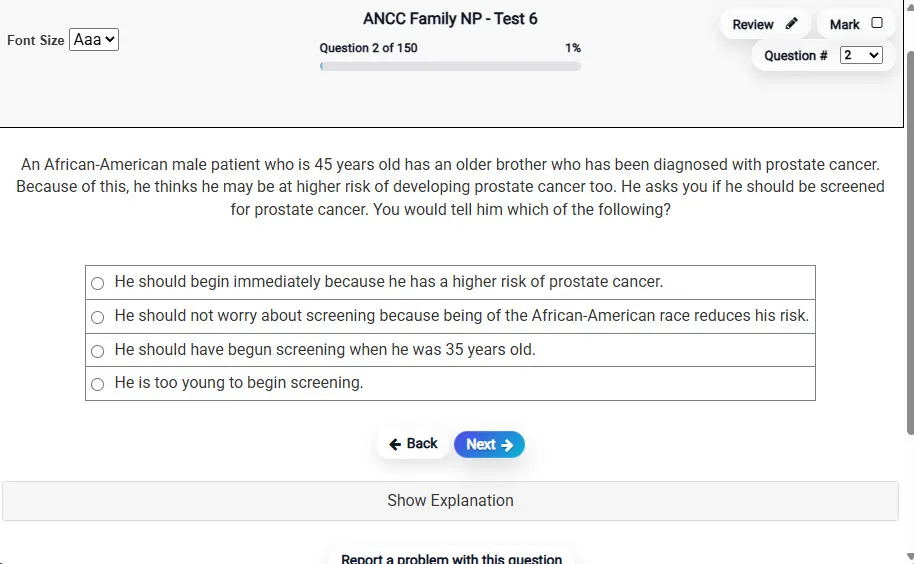
Answering a Question screen – Multiple-choice item view with navigation controls and progress tracker.
Answering a Question Multiple-choice item view with navigation controls and progress tracker.

                           Detailed Explanation screen – 
                         Review mode showing chosen answer and rationale and references.
Detailed Explanation Review mode showing chosen answer and rationale and references.

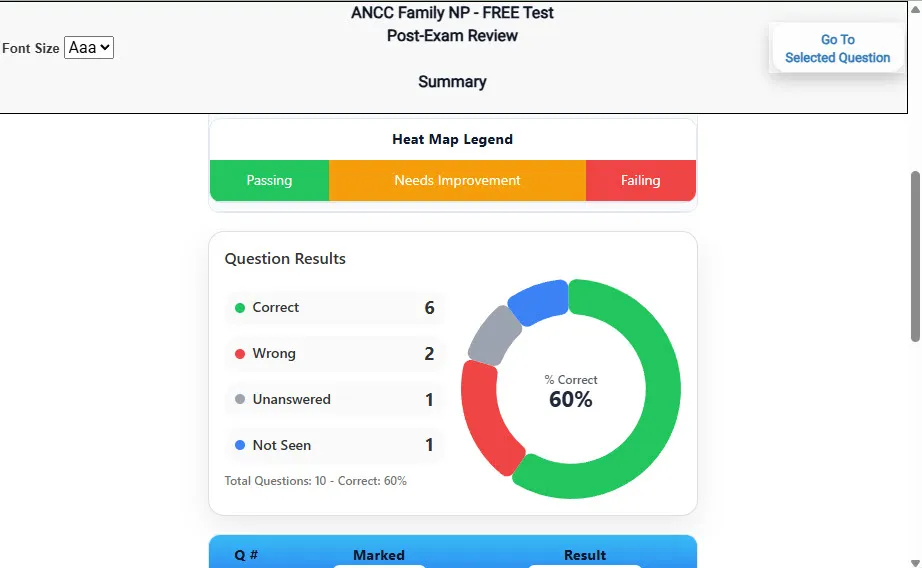
                           Review Summary 1 screen – 
                         Summary with counts for correct/wrong/unanswered and not seen items.
Review Summary 1 Summary with counts for correct/wrong/unanswered and not seen items.

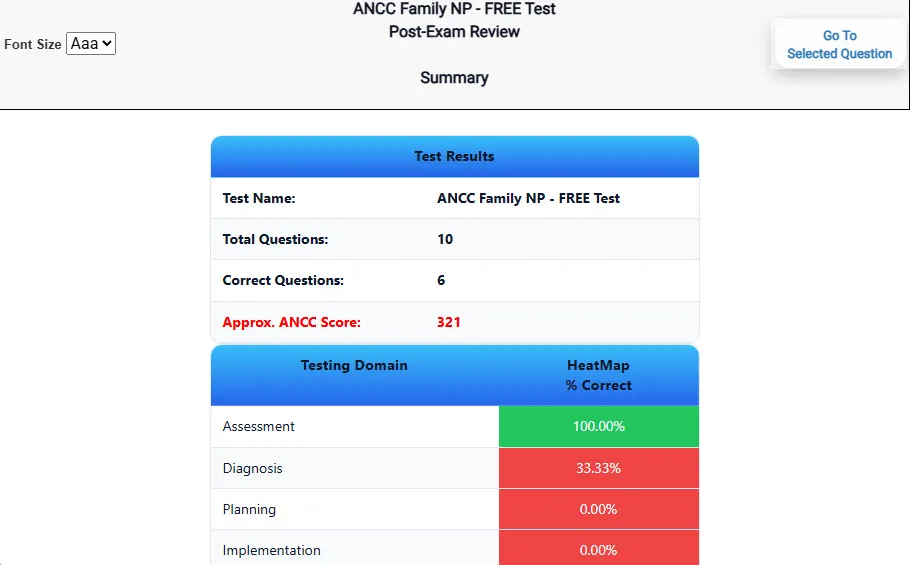
                           Review Summary 2 screen – 
                         Advanced summary with category/domain breakdown and performance insights.
Review Summary 2 Advanced summary with category/domain breakdown and performance insights.

What Each Screen Shows

Answer Question Screen

  • Clean multiple-choice interface with progress bar.
  • Mark for review feature.
  • Matches real test pacing.

Detailed Explanation

  • Correct answer plus rationale.
  • Key concepts and guidelines highlighted.
  • Move between questions to fill knowledge gaps.

Review Summary 1

  • Overall results with total questions and scaled score.
  • Domain heatmap shows strengths and weaknesses.
  • Quick visual feedback on study priorities.

Review Summary 2

  • Chart of correct, wrong, unanswered, not seen.
  • Color-coded results for easy review.
  • Links back to missed items.

Top 10 Reasons to Use Exam Edge for your CSET Multiple Subjects - Subtest III Physical Education; Human Development; Visual and Performing Arts Exam Prep

  1. Focused on the CSET Multiple Subjects - Subtest III Physical Education; Human Development; Visual and Performing Arts Exam

    Our practice tests are built specifically for the CSET Multiple Subjects - Subtest III exam — every question mirrors the real topics, format, and difficulty so you're studying exactly what matters.

  2. Real Exam Simulation

    We match the per-question time limits and pressure of the actual CSET exam, so test day feels familiar and stress-free.

  3. 15 Full Practice Tests & 630 Unique Questions

    You'll have more than enough material to master every CSET Multiple Subjects - Subtest III concept — no repeats, no fluff.

  4. Lower Cost Than a Retake

    Ordering 5 practice exams costs less than retaking the CSET Multiple Subjects - Subtest III Physical Education; Human Development; Visual and Performing Arts exam after a failure. One low fee could save you both time and money.

  5. Flexible Testing

    Need to step away mid-exam? Pick up right where you left off — with your remaining time intact.

  6. Instant Scoring & Feedback

    See your raw score and an estimated CSET Multiple Subjects - Subtest III Physical Education; Human Development; Visual and Performing Arts score immediately after finishing each practice test.

  7. Detailed Explanations for Every Question

    Review correct and incorrect answers with clear, step-by-step explanations so you truly understand each topic.

  8. Trusted & Accredited

    We're fully accredited by the Better Business Bureau and uphold the highest standards of trust and transparency.

  9. Web-Based & Always Available

    No software to install. Access your CSET Multiple Subjects - Subtest III practice exams 24/7 from any computer or mobile device.

  10. Expert Support When You Need It

    Need extra help? Our specialized tutors are highly qualified and ready to support your CSET exam prep.


Pass the CSET Multiple Subjects - Subtest III Physical Education; Human Development; Visual and Performing Arts Exam with Realistic Practice Tests from Exam Edge

Preparing for your upcoming CSET Multiple Subjects - Subtest III Physical Education; Human Development; Visual and Performing Arts (103) Certification Exam can feel overwhelming — but the right practice makes all the difference. Exam Edge gives you the tools, structure, and confidence to pass on your first try. Our online practice exams are built to match the real CSET Multiple Subjects - Subtest III exam in content, format, and difficulty.

  • 📝 15 CSET Multiple Subjects - Subtest III Physical Education; Human Development; Visual and Performing Arts Practice Tests: Access 15 full-length exams with 42 questions each, covering every major CSET Multiple Subjects - Subtest III Physical Education; Human Development; Visual and Performing Arts topic in depth.
  • Instant Online Access: Start practicing right away — no software, no waiting.
  • 🧠 Step-by-Step Explanations: Understand the reasoning behind every correct answer so you can master CSET Multiple Subjects - Subtest III exam concepts.
  • 🔄 Retake Each Exam Up to 4 Times: Build knowledge through repetition and track your improvement over time.
  • 🌐 Web-Based & Available 24/7: Study anywhere, anytime, on any device.
  • 🧘 Boost Your Test-Day Confidence: Familiarity with the CSET format reduces anxiety and helps you perform under pressure.

These CSET Multiple Subjects - Subtest III Physical Education; Human Development; Visual and Performing Arts practice exams are designed to simulate the real testing experience by matching question types, timing, and difficulty level. This approach helps you get comfortable not just with the exam content, but also with the testing environment, so you walk into your exam day focused and confident.


Exam Edge CTC Reviews


For the last year, I have been trying to pass the reading section of the CBEST. I had taken it six times and if I did not pass it this month, then I could not take my college courses in education. I went to Google and typed in practice reading tests and your website came up. I clicked on it, signed ...
Read More
Stacy S, California

Thank you so much for your reading tests. I just passed the real CBEST Reading test by 4 points! After failing it 3 other times, I thought I would have to quit. I already told everyone in my class about your site.

Sara L, Oregon

For the last year, I have been trying to pass my cset exam. I had taken it six times and was running out of hope I would ever pass. I went to Google and your website came up. I clicked on, signed up and took the free test. I knew that I would buy a couple of tests after taking that one. I ended up b ...
Read More
Stacy,

I bought the CSET Physics practice test bundle (5 tests) for somewhere around $50. Although most of the questions were related to Physics, the style and rigor of the questions didn't match up to my actual exam :(

Precious , San Jose, California

I used your site to take all three Subtests I, II, and III in one day (I didn't realize until too late that that's not required!). I studied your material so much and passed all three tests the first time! I felt that your site really did prepare me perfectly for the tests. While I was taking the te ...
Read More
Laura, Long Beach, CA.

Just wanted to let you guys know that your tests really helped me prepare for the CBEST math exam. I took it yesterday and passed with a 47! I will tell other people about your site.

Shawna M, California


CSET Multiple Subjects - Subtest III Physical Education; Human Development; Visual and Performing Arts Aliases Test Name

Here is a list of alternative names used for this exam.

  • CSET Multiple Subjects - Subtest III Physical Education; Human Development; Visual and Performing Arts
  • CSET Multiple Subjects - Subtest III Physical Education; Human Development; Visual and Performing Arts test
  • CSET Multiple Subjects - Subtest III Physical Education; Human Development; Visual and Performing Arts Certification Test
  • CSET Multiple Subjects - Subtest III test
  • CTC
  • CTC 103
  • 103 test
  • CSET Multiple Subjects - Subtest III Physical Education; Human Development; Visual and Performing Arts (103)
  • CSET Multiple Subjects - Subtest III Physical Education; Human Development; Visual and Performing Arts certification