This is the content of the pop-over!

NYSTCE CST Visual Arts (167) Practice Tests & Test Prep by Exam Edge


NYSTCE CST Visual Arts  product image
(4.8)
Based on 37 Reviews

  • Real Exam Simulation: Timed questions and matching content build comfort for your NYSTCE CST Visual Arts test day.
  • Instant, 24/7 Access: Web-based NYSTCE CST Visual Arts practice exams with no software needed.
  • Clear Explanations: Step-by-step answers and explanations for your NYSTCE exam to strengthen understanding.
  • Boosted Confidence: Reduces anxiety and improves test-taking skills to ace your NYSTCE CST Visual Arts (167).

Featured on

NYSTCE CST Visual Arts Online Practice Test Bundles

BEST VALUE
20 practice tests

$174.00

$799.00

SAVE $625

Only $8.70 per test!

  • 100% Pass Guarantee
  • 20 online practice tests
  • 90 questions + 1 essay per test
  • Bonus: 100 Flash Cards + Study Guide
  • Instant access
  • Detailed Explanations
  • Practice tests never expire
  • Timed, untimed, or study guide mode
MOST POPULAR
10 practice tests

$99.50

$399.50

SAVE $300

Only $9.95 per test!

  • 10 online practice tests
  • 90 questions + 1 essay per test
  • Bonus: 100 Flash Cards + Study Guide
  • Instant access
  • Detailed Explanations
  • Practice tests never expire
  • Timed, untimed, or study guide mode
5 practice tests

$69.75

$199.75

SAVE $130

Only $13.95 per test!

  • 5 online practice tests
  • 90 questions + 1 essay per test
  • Bonus: 100 Flash Cards
  • Instant access
  • Detailed Explanations
  • Practice tests never expire
  • Timed, untimed, or study guide mode
1 practice test

$39.95

  • 1 online practice test
  • 90 questions + 1 essay per test
  • Instant access
  • Detailed Explanations
  • Practice tests never expire
  • Timed, untimed, or study guide mode
Quick Select
Tap to choose a bundle

** All Prices are in US Dollars (USD) **


NYSTCE CST Visual Arts (167) Resources

Jump to the section you need most.

Understanding the exact breakdown of the NYSTCE CST Visual Arts test will help you know what to expect and how to most effectively prepare. The NYSTCE CST Visual Arts has 90 multiple-choice questions and 1 essay questions. The exam will be broken down into the sections below:

NYSTCE CST Visual Arts Exam Blueprint
Domain Name % Number of
Questions
Artistic Processes 20% 18
Visual Literacy 20% 18
Historical and Cultural Context 20% 18
Art Criticism - Integration Community Engagement 20% 18
Pedagogical Content Knowledge (Constructed-Response) 20% 18

NYSTCE CST Visual Arts Study Tips by Domain

  • Show a complete studio workflow—ideation, planning, production, revision, and reflection; common trap: presenting a finished piece without documenting iterations or decision points.
  • Demonstrate command of elements/principles as intentional choices (e.g., value for emphasis, scale for hierarchy); red flag: describing techniques without linking them to a stated artistic purpose.
  • Use correct media-specific procedures (e.g., acrylic layering from lean to thick, ceramic scoring/slipping, safe printmaking cleanup); priority rule: safety and proper tool handling are always assessed before aesthetics.
  • Explain how to select and combine processes (drawing, painting, sculpture, printmaking, digital) based on constraints like time, budget, and classroom setup; common trap: proposing materials that are impractical for a school setting.
  • Address craftsmanship and presentation standards (mounting, labeling, archival considerations, drying/curing times); threshold cue: weak construction/adhesion often undermines an otherwise strong concept.
  • Include critique-informed revision as part of making (artist statements, process journals, peer feedback protocols); red flag: treating critique as an end-of-unit activity rather than a driver of process decisions.
  • Analyze how elements and principles (e.g., line, value, balance, contrast) create meaning—don’t just name them; cue: if you can’t cite a specific visual evidence point, your interpretation is too generic.
  • Interpret signs, symbols, and metaphor in images with attention to context; red flag: assuming a symbol has a universal meaning without supporting details from the work.
  • Read composition deliberately (focal point, hierarchy, scale, cropping, negative space) to infer artist intent; common trap: describing the subject matter without addressing how it’s arranged.
  • Evaluate media and technique clues (materials, processes, mark-making, digital tools) to explain visual effects; cue: match claims to observable texture/edge/finish rather than guessing the medium.
  • Assess point of view and potential bias in images (who is represented, who is missing, how framing guides interpretation); priority rule: separate observation from inference to avoid overclaiming.
  • Use precise art vocabulary in a short, evidence-based visual analysis (describe → analyze → interpret → judge); contraindication: skipping the description step often leads to unsupported conclusions.
  • Place artworks on a defensible timeline by linking style, materials, and purpose to a specific period or movement; red flag: relying on “looks old/modern” without citing concrete contextual evidence.
  • Explain how geography, religion, politics, and patronage shape form and content (e.g., who paid, where shown, and why made); common trap: treating art as purely personal expression divorced from commissioning and audience.
  • Distinguish cultural appropriation from influence/exchange by addressing power dynamics, consent, and benefit; priority rule: name the source culture and avoid pan-ethnic labels (e.g., “African”) when a specific nation/people is identifiable.
  • Connect historical events and technologies (printing, photography, industrialization, digital media) to shifts in production and dissemination; red flag: ignoring how new tools change access, authorship, and authenticity.
  • Compare cross-cultural functions of art (ritual, propaganda, devotion, identity, commerce) using evidence from iconography and setting; common trap: imposing Western “fine art” categories on objects made for communal or ceremonial use.
  • Address provenance and museum ethics (looting, repatriation, contested objects) when interpreting collections; threshold cue: if origin or acquisition is unclear, flag it as a limitation and avoid definitive claims about cultural ownership.
  • Use a repeatable critique protocol (e.g., description → analysis → interpretation → judgment) and cite observable evidence first; red flag: starting with “I like it” without formal/technical support.
  • Integrate art criticism with ELA and social studies by requiring claim-evidence reasoning tied to visual elements and context; common trap: turning integration into a vocabulary list instead of an evidence-based argument.
  • Design critique prompts that name specific elements/principles (value contrast, scale, balance) and a purpose/audience; priority rule: every student response must reference at least one concrete visual feature.
  • Build community engagement through local artists, museums, and culturally responsive works aligned to learning targets; red flag: field trips or guest talks that aren’t assessed with a rubric connected to standards.
  • Use inclusive discussion norms and multiple access points (sentence stems, visual supports, small-group protocols) to reduce bias in critique; contraindication: grading based on personal taste or culturally narrow “quality” criteria.
  • Connect critique outcomes to revision plans (what to change, why, and how) and document growth with artist statements; common trap: critique that ends at feedback with no actionable next steps.
  • Anchor constructed responses in NYS Learning Standards for the Arts—explicitly name the standard/benchmark and align objectives, instruction, and assessment; red flag: describing a “fun project” with no standards-based learning target.
  • Write measurable objectives (e.g., “Students will use value contrast to model form”) and match them to criteria; common trap: using vague verbs like “understand” or “appreciate” without observable evidence.
  • Differentiate by readiness, language, and IEP/504 needs using concrete scaffolds (visual exemplars, sentence frames for critique, choice of tools); red flag: offering only “extra time” as the sole support.
  • Assess with an analytic rubric tied to elements/principles and process habits (planning, revision, craftsmanship) and include formative checks; priority rule: cite at least one formative assessment before the final product.
  • Plan safe, inclusive studio routines (material handling, cleanup, allergies/ventilation, tool safety) and procedures for equitable participation; contraindication: assigning potentially hazardous materials without safety steps or alternatives.
  • Use critique protocols (describe–analyze–interpret–judge) with respectful norms and culturally responsive prompts; common trap: letting critique become preference-based (“I like it”) instead of evidence-based observations.


Built to Fit Into Your Busy Life

Everything you need to prepare with confidence—without wasting a minute.

Three Study Modes

Timed, No Time Limit, or Explanation mode.

Actionable Analytics

Heatmaps and scaled scores highlight weak areas.

High-Yield Rationales

Concise explanations emphasize key concepts.

Realistic Interface

Matches the feel of the actual exam environment.

Accessible by Design

Clean layout reduces cognitive load.

Anytime, Anywhere

Web-based access 24/7 on any device.
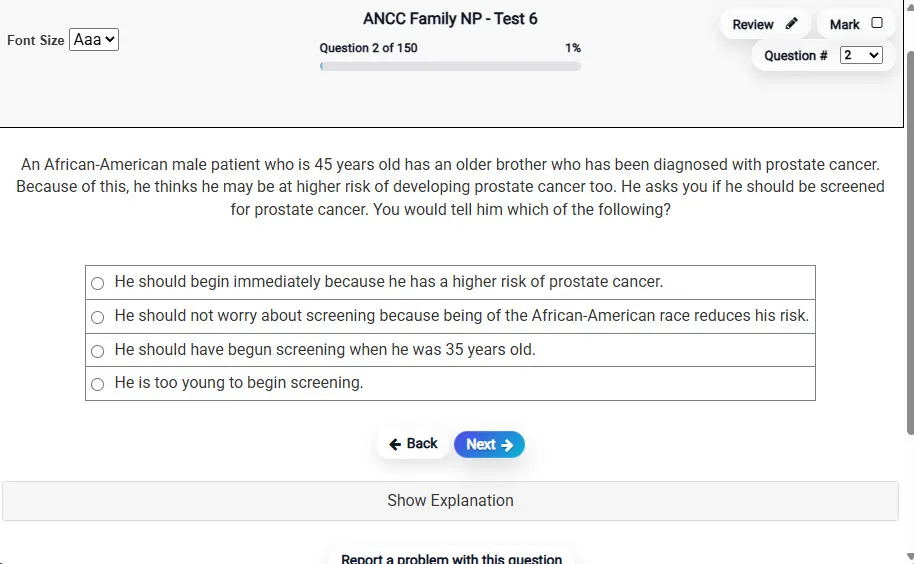
Answering a Question screen – Multiple-choice item view with navigation controls and progress tracker.
Answering a Question Multiple-choice item view with navigation controls and progress tracker.

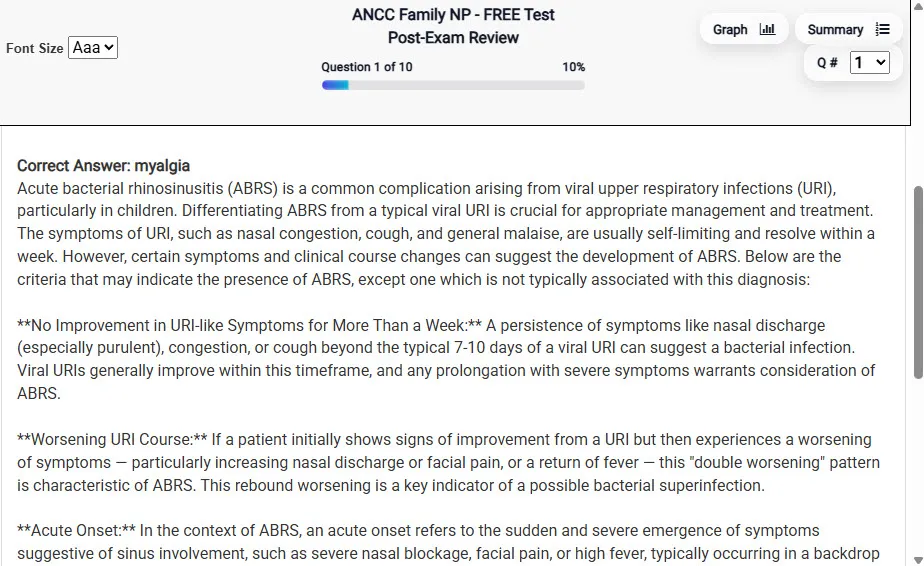
                           Detailed Explanation screen – 
                         Review mode showing chosen answer and rationale and references.
Detailed Explanation Review mode showing chosen answer and rationale and references.

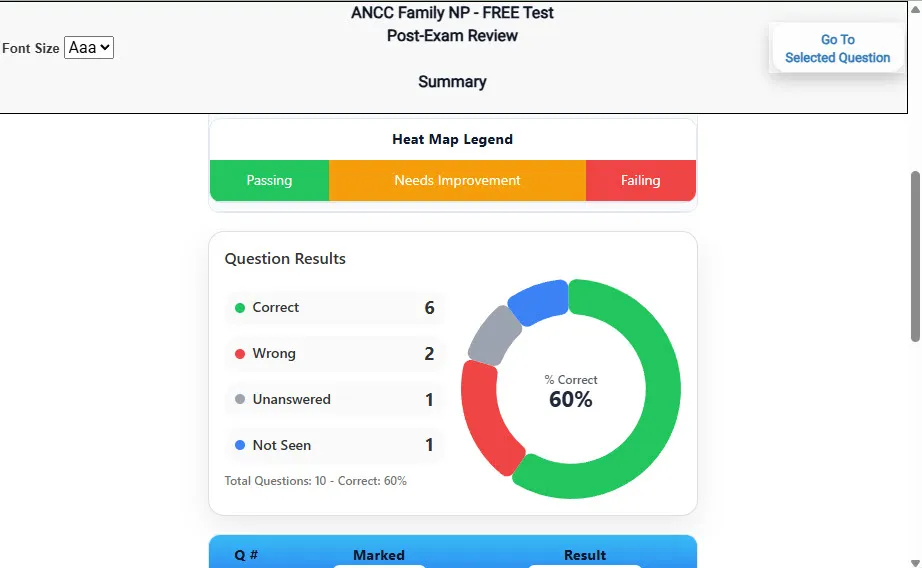
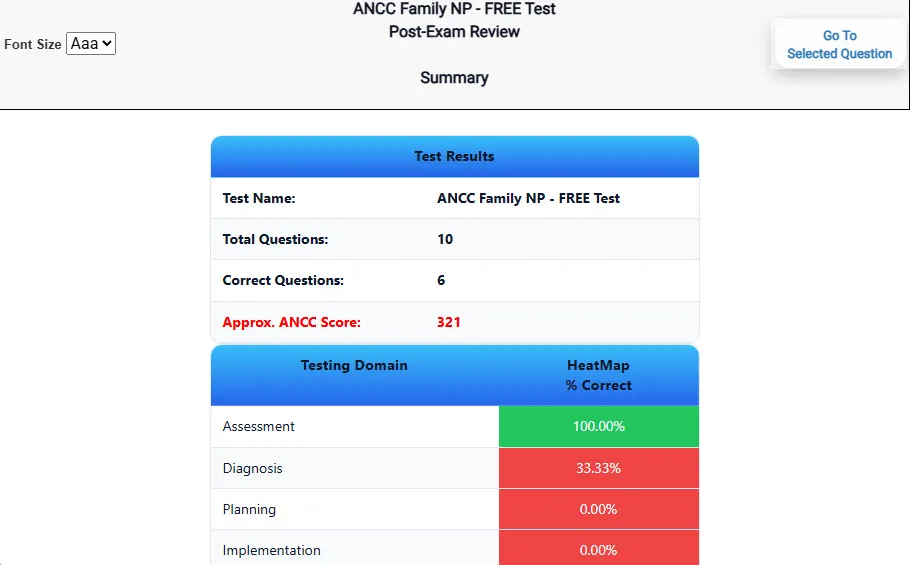
                           Review Summary 1 screen – 
                         Summary with counts for correct/wrong/unanswered and not seen items.
Review Summary 1 Summary with counts for correct/wrong/unanswered and not seen items.

                           Review Summary 2 screen – 
                         Advanced summary with category/domain breakdown and performance insights.
Review Summary 2 Advanced summary with category/domain breakdown and performance insights.

What Each Screen Shows

Answer Question Screen

  • Clean multiple-choice interface with progress bar.
  • Mark for review feature.
  • Matches real test pacing.

Detailed Explanation

  • Correct answer plus rationale.
  • Key concepts and guidelines highlighted.
  • Move between questions to fill knowledge gaps.

Review Summary 1

  • Overall results with total questions and scaled score.
  • Domain heatmap shows strengths and weaknesses.
  • Quick visual feedback on study priorities.

Review Summary 2

  • Chart of correct, wrong, unanswered, not seen.
  • Color-coded results for easy review.
  • Links back to missed items.

Top 10 Reasons to Use Exam Edge for your NYSTCE CST Visual Arts Exam Prep

  1. Focused on the NYSTCE CST Visual Arts Exam

    Our practice tests are built specifically for the NYSTCE CST Visual Arts exam — every question mirrors the real topics, format, and difficulty so you're studying exactly what matters.

  2. Real Exam Simulation

    We match the per-question time limits and pressure of the actual NYSTCE exam, so test day feels familiar and stress-free.

  3. 20 Full Practice Tests & 1,820 Unique Questions

    You'll have more than enough material to master every NYSTCE CST Visual Arts concept — no repeats, no fluff.

  4. Lower Cost Than a Retake

    Ordering 5 practice exams costs less than retaking the NYSTCE CST Visual Arts exam after a failure. One low fee could save you both time and money.

  5. Flexible Testing

    Need to step away mid-exam? Pick up right where you left off — with your remaining time intact.

  6. Instant Scoring & Feedback

    See your raw score and an estimated NYSTCE CST Visual Arts score immediately after finishing each practice test.

  7. Detailed Explanations for Every Question

    Review correct and incorrect answers with clear, step-by-step explanations so you truly understand each topic.

  8. Trusted & Accredited

    We're fully accredited by the Better Business Bureau and uphold the highest standards of trust and transparency.

  9. Web-Based & Always Available

    No software to install. Access your NYSTCE CST Visual Arts practice exams 24/7 from any computer or mobile device.

  10. Expert Support When You Need It

    Need extra help? Our specialized tutors are highly qualified and ready to support your NYSTCE exam prep.


Pass the NYSTCE CST Visual Arts Exam with Realistic Practice Tests from Exam Edge

Preparing for your upcoming NYSTCE CST Visual Arts (167) Certification Exam can feel overwhelming — but the right practice makes all the difference. Exam Edge gives you the tools, structure, and confidence to pass on your first try. Our online practice exams are built to match the real NYSTCE CST Visual Arts exam in content, format, and difficulty.

  • 📝 20 NYSTCE CST Visual Arts Practice Tests: Access 20 full-length exams with 91 questions each, covering every major NYSTCE CST Visual Arts topic in depth.
  • Instant Online Access: Start practicing right away — no software, no waiting.
  • 🧠 Step-by-Step Explanations: Understand the reasoning behind every correct answer so you can master NYSTCE CST Visual Arts exam concepts.
  • 🔄 Retake Each Exam Up to 4 Times: Build knowledge through repetition and track your improvement over time.
  • 🌐 Web-Based & Available 24/7: Study anywhere, anytime, on any device.
  • 🧘 Boost Your Test-Day Confidence: Familiarity with the NYSTCE format reduces anxiety and helps you perform under pressure.

These NYSTCE CST Visual Arts practice exams are designed to simulate the real testing experience by matching question types, timing, and difficulty level. This approach helps you get comfortable not just with the exam content, but also with the testing environment, so you walk into your exam day focused and confident.


Exam Edge NYSTCE Reviews


I purchased the 5 practice exams for the NYSTCE Visual Arts 167 exam CST and I spent 2 weeks going over the 5 exams 2x getting better scores each time. When I took the CST I felt confident and ready. I received the report today and I am so happy that I passed. Thank you for the explanations and essa ...
Read More
Tyla V, NY

Not a user friendly experience

Amelia , Rochester, New York

Didn't really reflect the questions that were on the test for the most part. Also, they totally got the format of the constructed response question wrong, which never changes. Overall OK if you have nothing else, but definitely not worth the price they charge in my opinion.

Randy , Queens, New York

It was a good test run. Now I know what to expect and what I need to study.

Timothy , Eden, New York

The experience was very practical and I did well.

Trina , Silver Spring , MD

Very easy to navigate.

Collene , Silver Spring , MD


NYSTCE CST Visual Arts Aliases Test Name

Here is a list of alternative names used for this exam.

  • NYSTCE CST Visual Arts
  • NYSTCE CST Visual Arts test
  • NYSTCE CST Visual Arts Certification Test
  • NYSTCE
  • NYSTCE 167
  • 167 test
  • NYSTCE CST Visual Arts (167)
  • CST Visual Arts certification