This is the content of the pop-over!

Safety Net Technology Education (977) Practice Tests & Test Prep by Exam Edge


NYSTCE Safety Net Technology Education CST   product image
(4.8)
Based on 34 Reviews

  • Real Exam Simulation: Timed questions and matching content build comfort for your Safety Net Technology Education test day.
  • Instant, 24/7 Access: Web-based NYSTCE Safety Net Technology Education CST practice exams with no software needed.
  • Clear Explanations: Step-by-step answers and explanations for your NYSTCE exam to strengthen understanding.
  • Boosted Confidence: Reduces anxiety and improves test-taking skills to ace your NYSTCE Safety Net Technology Education CST (977).

Featured on

NYSTCE Safety Net Technology Education CST Online Practice Test Bundles

BEST VALUE
15 practice tests

$149.25

$599.25

SAVE $450

Only $9.95 per test!

  • 100% Pass Guarantee
  • 15 online practice tests
  • 90 questions per test
  • Bonus: 100 Flash Cards + Study Guide
  • Instant access
  • Detailed Explanations
  • Practice tests never expire
  • Timed, untimed, or study guide mode
MOST POPULAR
10 practice tests

$99.50

$399.50

SAVE $300

Only $9.95 per test!

  • 10 online practice tests
  • 90 questions per test
  • Bonus: 100 Flash Cards + Study Guide
  • Instant access
  • Detailed Explanations
  • Practice tests never expire
  • Timed, untimed, or study guide mode
5 practice tests

$69.75

$199.75

SAVE $130

Only $13.95 per test!

  • 5 online practice tests
  • 90 questions per test
  • Bonus: 100 Flash Cards
  • Instant access
  • Detailed Explanations
  • Practice tests never expire
  • Timed, untimed, or study guide mode
1 practice test

$39.95

  • 1 online practice test
  • 90 questions per test
  • Instant access
  • Detailed Explanations
  • Practice tests never expire
  • Timed, untimed, or study guide mode
Quick Select
Tap to choose a bundle

** All Prices are in US Dollars (USD) **


Safety Net Technology Education (977) Resources

Jump to the section you need most.

Understanding the exact breakdown of the NYSTCE Safety Net Technology Education CST test will help you know what to expect and how to most effectively prepare. The NYSTCE Safety Net Technology Education CST has 90 multiple-choice questions and 1 essay questions. The exam will be broken down into the sections below:

NYSTCE Safety Net Technology Education CST Exam Blueprint
Domain Name % Number of
Questions
Fundamentals of Technology 30% 30
Communication Systems 12% 12
Power and Energy Systems 12% 12
Manufacturing and Construction Systems 12% 12
Transportation Systems 12% 12
Bio-related Systems 12% 12

NYSTCE Safety Net Technology Education CST Study Tips by Domain

  • Apply the engineering design process (define criteria/constraints, prototype, test, iterate) and document decisions; red flag: a “final” design with no evidence of testing or trade-off analysis.
  • Use measurement and tolerances correctly (precision vs accuracy, significant figures, SI/US units, dimensional analysis); common trap: mixing units or ignoring tolerance stack-up when parts must fit.
  • Interpret technical drawings and standards (orthographic/isometric views, dimensioning, symbols, scale) and verify against specifications; cue: missing/ambiguous dimensions is a stop-and-clarify issue, not a guess.
  • Prioritize lab and tool safety (PPE, machine guards, lockout/tagout, chemical handling, ventilation) and follow NYSTCE-style compliance thinking; red flag: bypassing a guard or using damaged cords/tools.
  • Select appropriate materials based on properties (strength, hardness, ductility, conductivity, corrosion resistance) and processing implications; common trap: choosing a material on cost alone that fails temperature, load, or environment requirements.
  • Apply basic electricity/electronics and troubleshooting fundamentals (Ohm’s law, series/parallel, power, grounding, meter use) with safe practices; priority rule: de-energize and verify absence of voltage before working on a circuit.
  • Differentiate analog vs. digital communication and specify when sampling/quantization applies; red flag: forgetting Nyquist (sample at least 2× the highest frequency) leads to aliasing and distorted signals.
  • Explain basic network types and topologies (LAN/WAN; star/bus/ring/mesh) with reliability tradeoffs; common trap: assuming a bus topology is fault-tolerant—a single backbone failure can take down the whole segment.
  • Identify OSI/TCP-IP layers and map common protocols/devices to the correct layer; cue: if you can’t place a switch at Layer 2 and a router at Layer 3, your troubleshooting logic will break.
  • Apply fundamental signal and media concepts (bandwidth, attenuation, noise, impedance) across copper, fiber, and wireless; priority rule: fiber is preferred for long distance/high EMI environments—copper near motors/transformers is a noise risk.
  • Use core troubleshooting steps (isolate physical layer first, then addressing, then services) with concrete checks (link lights, continuity, IP/subnet/gateway); red flag: changing multiple variables at once prevents finding root cause.
  • Address safety, privacy, and cybersecurity basics in communication systems (proper grounding, cable management, lockout/tagout where applicable, strong authentication); contraindication: working in live telecom/electrical closets without PPE and verified de-energization is unacceptable.
  • Differentiate energy forms and conversions (mechanical, electrical, thermal, chemical) and apply efficiency math; red flag: mixing up power (W) with energy (Wh/kWh) or ignoring conversion losses.
  • Analyze basic AC/DC circuit behavior using Ohm’s Law and power relationships (P=VI, P=I2R); common trap: treating series/parallel rules backwards when finding equivalent resistance.
  • Apply electrical safety and code-aligned practices (grounding, GFCI/AFCI purpose, lockout/tagout); priority rule: de-energize and verify absence of voltage before work—never rely on a switch position alone.
  • Compare power generation methods (fossil, nuclear, hydro, wind, solar) by capacity factor, emissions, and constraints; cue: intermittent renewables require storage/dispatch planning—don’t assume nameplate equals delivered power.
  • Explain transformers and power distribution (step-up/step-down, transmission losses, three-phase basics); threshold cue: higher voltage reduces I and I2R loss—calculate current before claiming a line is “efficient.”
  • Evaluate energy storage and end-use efficiency (batteries, flywheels, thermal storage, motor efficiency, power factor); common trap: ignoring power factor penalties in AC systems—low PF can increase current and heating without increasing useful work.
  • Differentiate major manufacturing processes (casting, forming, machining, joining) and select based on tolerance, material, and production volume—red flag: choosing machining for high-volume parts when forming or casting is more appropriate.
  • Apply construction drawing literacy (plans, elevations, sections, schedules, symbols) and verify scale/units before estimating—common trap: mixing imperial and metric dimensions leading to material overages or shortages.
  • Identify structural systems (load-bearing walls, frames, trusses) and trace load paths from roof to foundation—priority rule: never alter a member without confirming it is nonstructural.
  • Use measurement and layout tools correctly (levels, squares, calipers, laser measures) and account for kerf, shrinkage, and waste factors—threshold cue: add a documented waste percentage in estimates rather than “exact” counts.
  • Follow shop and jobsite safety for fabrication and construction (PPE, guarding, lockout/tagout, ventilation, hot-work controls)—red flag: bypassed machine guards or uncontrolled dust from cutting composites/treated lumber.
  • Compare construction materials and fasteners (wood species/grades, steel shapes, concrete mixes, adhesives, nails/screws/bolts) and match to environment—contraindication: using non-rated fasteners in treated lumber or exterior assemblies due to corrosion risk.
  • Differentiate transportation modes (highway, rail, air, marine, pipeline) by capacity, speed, cost, and typical cargo/passenger use—red flag: assuming the same safety/regulatory constraints apply across all modes.
  • Apply basic vehicle dynamics (traction, braking distance, turning radius, load transfer, stopping sight distance) when analyzing safety scenarios—common trap: ignoring how speed and mass increase kinetic energy and stopping distance nonlinearly.
  • Explain core powertrain layouts (ICE, hybrid, battery-electric) and drivetrain components (transmission, differential, final drive)—priority rule: always relate gear ratios to torque vs. speed tradeoffs rather than memorizing parts lists.
  • Identify key control and safety systems (ABS, ESC, traction control, air bags, crumple zones, ADAS sensors) and their intended operating conditions—contraindication: ABS reduces wheel lockup but does not guarantee shorter stops on loose gravel/snow.
  • Interpret maintenance and inspection considerations (tire condition/pressure, brake wear, fluid leaks, lighting, alignment) with a focus on risk—threshold cue: uneven tire wear or bulges are immediate service red flags, not “watch items.”
  • Use transportation infrastructure concepts (roadway geometry, signage/markings, signals, grade crossings, intermodal hubs) to assess system performance—common trap: overlooking human factors (visibility, reaction time, workload) when proposing engineering fixes.


Built to Fit Into Your Busy Life

Everything you need to prepare with confidence—without wasting a minute.

Three Study Modes

Timed, No Time Limit, or Explanation mode.

Actionable Analytics

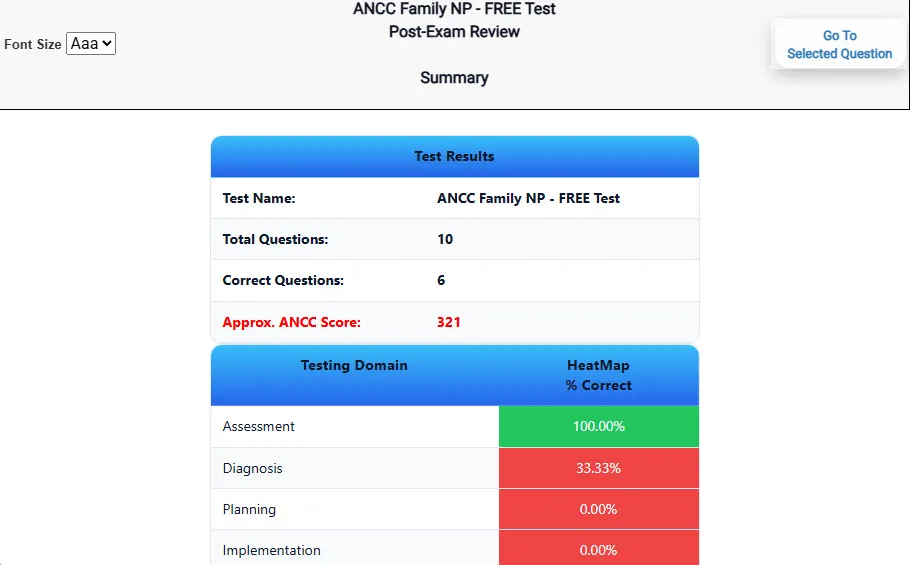
Heatmaps and scaled scores highlight weak areas.

High-Yield Rationales

Concise explanations emphasize key concepts.

Realistic Interface

Matches the feel of the actual exam environment.

Accessible by Design

Clean layout reduces cognitive load.

Anytime, Anywhere

Web-based access 24/7 on any device.
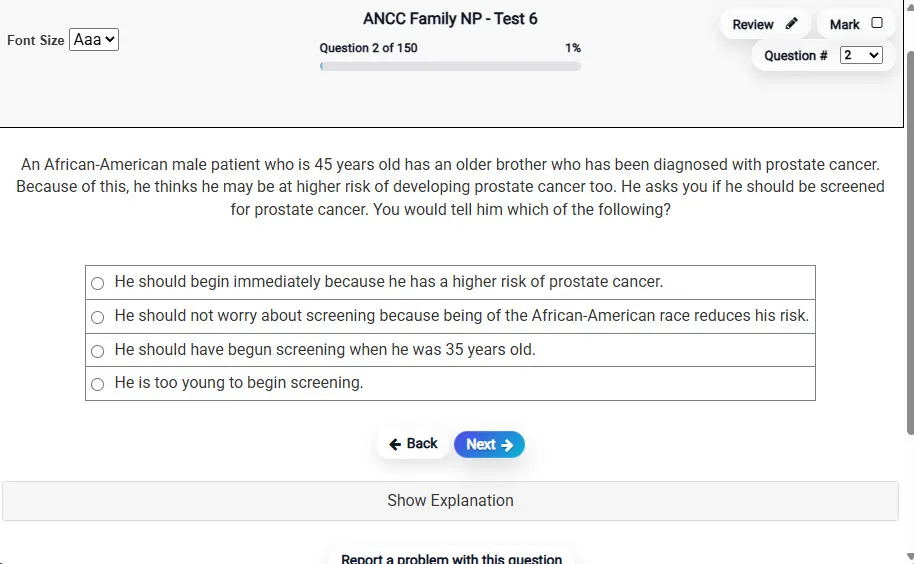
Answering a Question screen – Multiple-choice item view with navigation controls and progress tracker.
Answering a Question Multiple-choice item view with navigation controls and progress tracker.

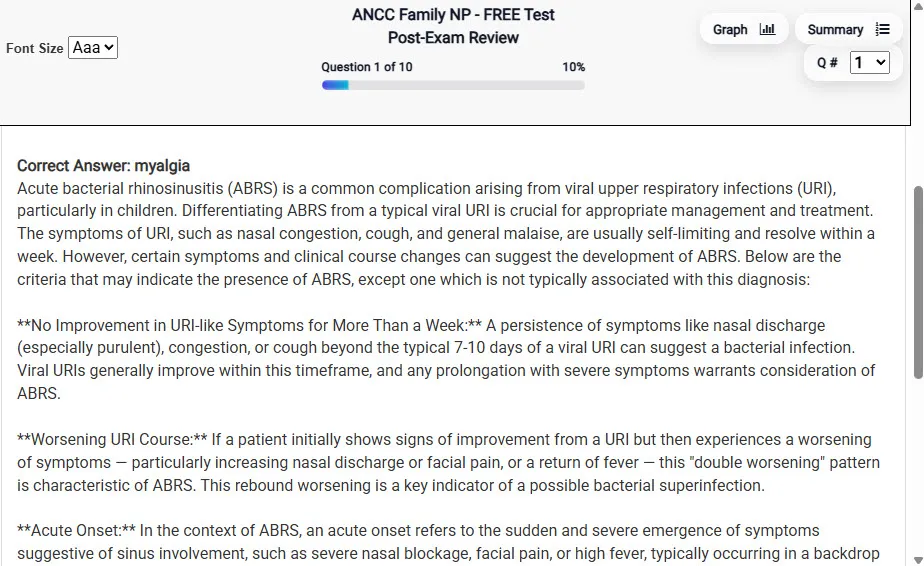
                           Detailed Explanation screen – 
                         Review mode showing chosen answer and rationale and references.
Detailed Explanation Review mode showing chosen answer and rationale and references.

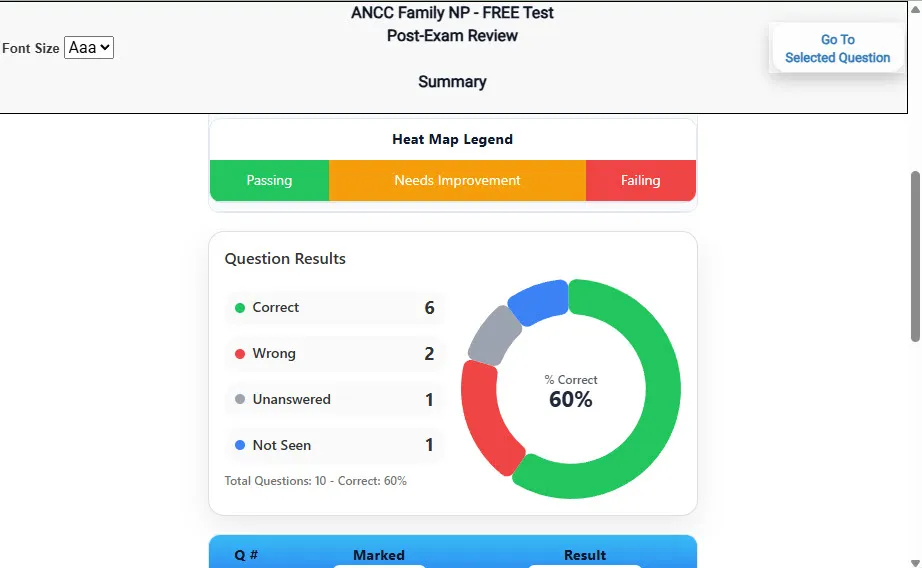
                           Review Summary 1 screen – 
                         Summary with counts for correct/wrong/unanswered and not seen items.
Review Summary 1 Summary with counts for correct/wrong/unanswered and not seen items.

                           Review Summary 2 screen – 
                         Advanced summary with category/domain breakdown and performance insights.
Review Summary 2 Advanced summary with category/domain breakdown and performance insights.

What Each Screen Shows

Answer Question Screen

  • Clean multiple-choice interface with progress bar.
  • Mark for review feature.
  • Matches real test pacing.

Detailed Explanation

  • Correct answer plus rationale.
  • Key concepts and guidelines highlighted.
  • Move between questions to fill knowledge gaps.

Review Summary 1

  • Overall results with total questions and scaled score.
  • Domain heatmap shows strengths and weaknesses.
  • Quick visual feedback on study priorities.

Review Summary 2

  • Chart of correct, wrong, unanswered, not seen.
  • Color-coded results for easy review.
  • Links back to missed items.

Top 10 Reasons to Use Exam Edge for your NYSTCE Safety Net Technology Education CST Exam Prep

  1. Focused on the NYSTCE Safety Net Technology Education CST Exam

    Our practice tests are built specifically for the Safety Net Technology Education exam — every question mirrors the real topics, format, and difficulty so you're studying exactly what matters.

  2. Real Exam Simulation

    We match the per-question time limits and pressure of the actual NYSTCE exam, so test day feels familiar and stress-free.

  3. 15 Full Practice Tests & 1,350 Unique Questions

    You'll have more than enough material to master every Safety Net Technology Education concept — no repeats, no fluff.

  4. Lower Cost Than a Retake

    Ordering 5 practice exams costs less than retaking the NYSTCE Safety Net Technology Education CST exam after a failure. One low fee could save you both time and money.

  5. Flexible Testing

    Need to step away mid-exam? Pick up right where you left off — with your remaining time intact.

  6. Instant Scoring & Feedback

    See your raw score and an estimated NYSTCE Safety Net Technology Education CST score immediately after finishing each practice test.

  7. Detailed Explanations for Every Question

    Review correct and incorrect answers with clear, step-by-step explanations so you truly understand each topic.

  8. Trusted & Accredited

    We're fully accredited by the Better Business Bureau and uphold the highest standards of trust and transparency.

  9. Web-Based & Always Available

    No software to install. Access your Safety Net Technology Education practice exams 24/7 from any computer or mobile device.

  10. Expert Support When You Need It

    Need extra help? Our specialized tutors are highly qualified and ready to support your NYSTCE exam prep.


Pass the NYSTCE Safety Net Technology Education CST Exam with Realistic Practice Tests from Exam Edge

Preparing for your upcoming NYSTCE Safety Net Technology Education CST (977) Certification Exam can feel overwhelming — but the right practice makes all the difference. Exam Edge gives you the tools, structure, and confidence to pass on your first try. Our online practice exams are built to match the real Safety Net Technology Education exam in content, format, and difficulty.

  • 📝 15 NYSTCE Safety Net Technology Education CST Practice Tests: Access 15 full-length exams with 90 questions each, covering every major NYSTCE Safety Net Technology Education CST topic in depth.
  • Instant Online Access: Start practicing right away — no software, no waiting.
  • 🧠 Step-by-Step Explanations: Understand the reasoning behind every correct answer so you can master Safety Net Technology Education exam concepts.
  • 🔄 Retake Each Exam Up to 4 Times: Build knowledge through repetition and track your improvement over time.
  • 🌐 Web-Based & Available 24/7: Study anywhere, anytime, on any device.
  • 🧘 Boost Your Test-Day Confidence: Familiarity with the NYSTCE format reduces anxiety and helps you perform under pressure.

These NYSTCE Safety Net Technology Education CST practice exams are designed to simulate the real testing experience by matching question types, timing, and difficulty level. This approach helps you get comfortable not just with the exam content, but also with the testing environment, so you walk into your exam day focused and confident.


Exam Edge NYSTCE Reviews


Not a user friendly experience

Amelia , Rochester, New York

Didn't really reflect the questions that were on the test for the most part. Also, they totally got the format of the constructed response question wrong, which never changes. Overall OK if you have nothing else, but definitely not worth the price they charge in my opinion.

Randy , Queens, New York

It was a good test run. Now I know what to expect and what I need to study.

Timothy , Eden, New York

The experience was very practical and I did well.

Trina , Silver Spring , MD

Very easy to navigate.

Collene , Silver Spring , MD

Exam Edge was terrific. Even better than I hoped. Just completing and reviewing the tests are a great learning experience. I can't wait to take the certification test. Tom S.

Thomas , Port Washington, NY


NYSTCE Safety Net Technology Education CST Aliases Test Name

Here is a list of alternative names used for this exam.

  • NYSTCE Safety Net Technology Education CST
  • NYSTCE Safety Net Technology Education CST test
  • NYSTCE Safety Net Technology Education CST Certification Test
  • Safety Net Technology Education test
  • NYSTCE
  • NYSTCE 977
  • 977 test
  • NYSTCE Safety Net Technology Education CST (977)
  • Safety Net Technology Education CST certification